The Complete Guide to Healthcare in Ireland for Expats (2027)
Moving to Ireland is a dream for many, but the reality of the administrative burden often hits hardest when you try to see a doctor. Many expats arrive assuming the system is a carbon copy of the UK’s NHS or a purely private model like in the US, only to find themselves stuck on waiting lists or facing 70-euro bills for a basic consultation. This guide demystifies the Irish healthcare system to ensure you are never left without essential care.
Understanding the Irish Healthcare Architecture
The Irish healthcare system is a unique, often confusing hybrid of public and private services. Managed by the Health Service Executive (HSE), the public side is theoretically available to everyone, but it is not "free" at the point of use for everyone in the way some might expect. To navigate this, you first need to understand how the HSE categorizes people. In Ireland, your eligibility for health services is not based on your nationality or the taxes you pay, but on your status as an "ordinary resident."
The Public System and the HSE
The Health Service Executive is the massive body responsible for providing public health and social services to everyone living in Ireland. When you hear locals talking about "the public system," they are referring to HSE-run hospitals and community care services. For a newcomer, the most important thing to grasp is that the public system operates on two tiers of eligibility: Category 1 (Full Eligibility) and Category 2 (Limited Eligibility). Most working expats fall into Category 2, meaning you have to pay for GP visits, medicines, and certain hospital charges, though these are often capped.
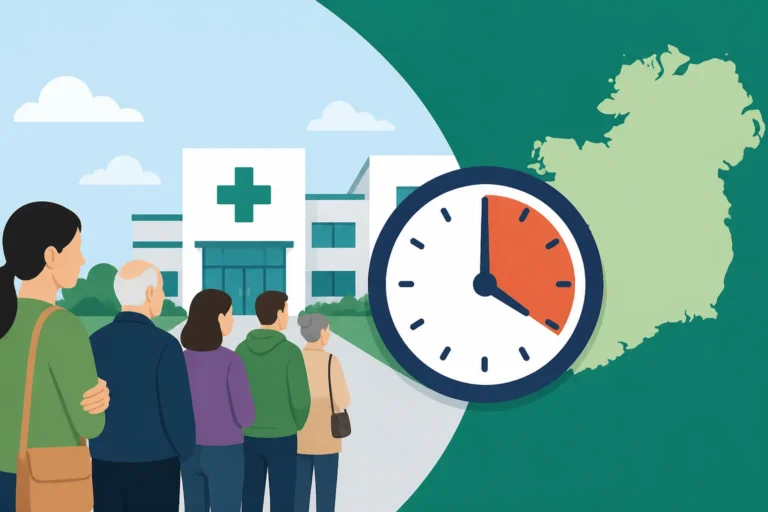
To get a better grip on these nuances, it is helpful to read about How Ireland's Health System Works: The HSE vs Private Explained (2027). I remember when I first arrived, I was shocked to find that even though I was paying my PRSI taxes, I still had to shell out cash every time I had a sinus infection. The public system is heavily utilized and, as a result, suffers from significant wait times for non-emergency procedures. This is the primary reason why about half the population also holds private health insurance.
The Private Healthcare Alternative
Private healthcare in Ireland functions alongside the public system rather than replacing it. If you have private insurance, you can bypass the lengthy public waiting lists for consultants and diagnostic tests like MRIs or CT scans. Private patients are treated in private hospitals, such as the Mater Private or the Blackrock Clinic, or as private patients within public hospitals. The care isn't necessarily "better" in terms of medical expertise—the doctors are often the same people—but the speed of access and the comfort of the facilities are significantly higher.
Choosing between the two is a major decision for any newcomer. You should weigh your options by looking at Public vs Private Healthcare in Ireland: Which Should Expats Choose? to see which fits your budget and health needs. Many expats find that while the public system is excellent for emergencies, the private system is essential for maintaining peace of mind regarding elective surgeries or specialized consultations.
The Concept of Ordinary Residence
You cannot simply land in Dublin Airport and claim full health entitlements. To be considered an "ordinary resident," you must prove to the HSE that you intend to live in Ireland for at least one year. This is a crucial administrative hurdle. You will often need to show a utility bill, a lease agreement, or an employment contract to prove your intent. Once you are deemed an ordinary resident, you are entitled to the same health services as an Irish citizen.
If you are in that awkward transition period where you have just landed and haven't yet secured your long-term documents, you might feel vulnerable. This is where services like SafetyWing can be a lifesaver, providing a bridge of coverage before you are fully integrated into the Irish system. Having that safety net prevents a minor accident from becoming a major financial disaster during your first month in the country.
Primary Care and the Gatekeeper System
In Ireland, the General Practitioner (GP) is the absolute gatekeeper of the healthcare system. You cannot simply walk into a hospital to see a specialist or get a prescription for anything other than basic over-the-counter meds without a referral from a GP. This is a system designed to filter patients and ensure that hospital resources are reserved for those who truly need them, but for an expat, it can feel like an extra layer of bureaucracy.
Finding and Registering with a GP
One of the biggest frustrations for expats in recent years is the "GP shortage." Many practices in major cities like Dublin, Cork, and Galway have closed their lists to new patients. Unlike in some countries where you are automatically assigned a doctor based on your address, in Ireland, you must find one yourself. It often requires calling a dozen different clinics and asking if they are taking new "private patients."
When you do find a practice, the registration process is relatively straightforward but requires patience. For a detailed walkthrough, check out Registering with a GP in Ireland: The Complete Expat Guide (2027). I recommend doing this the very week you arrive. Don't wait until you are sick with the flu to start looking for a doctor; by then, you’ll be too miserable to play the "phone lottery" with local clinics.
The Real Cost of a GP Visit
If you do not have a Medical Card or a GP Visit Card, you will pay for every appointment. As of 2026, a standard GP consultation usually costs between 60 and 80 Euros. This fee usually covers a 10 to 15-minute consultation. If you need follow-up blood tests or a specific procedure like a cryotherapy session, there will be additional charges. It is a transactional relationship that can be jarring for those used to "free" primary care.
For many, these costs add up quickly, especially for families with young children. While children under a certain age are entitled to a free GP visit card, adults often find themselves paying out of pocket. It is worth investigating How Much Does a GP Visit Cost in Ireland Without a Card? to budget accordingly. Many expats use SafetyWing during their initial relocation phase specifically to handle unexpected costs like these before their Irish private insurance or HSE status is fully sorted.
Out-of-Hours Services and Minor Injury Units
Sickness rarely follows a 9-to-5 schedule. If you get ill at 10 PM on a Saturday, your regular GP surgery will be closed. In Ireland, GPs cooperate to provide "Out-of-Hours" services, such as "DubDoc" in Dublin or "SouthDoc" in the Munster region. You call a central number, speak to a triage nurse, and then are given an appointment at a central clinic. These visits are generally more expensive than daytime visits, often costing 80 to 100 Euros.
For minor physical injuries like a suspected broken wrist or a deep cut, you should avoid the main hospital Emergency Rooms (A&E), where wait times can exceed 12 hours. Instead, look for a HSE Minor Injury Unit. They are much faster and specifically designed to treat non-life-threatening injuries. Knowing the difference between these services can save you a whole night of sitting on a plastic chair in a crowded waiting room.
Public Health Entitlements and Assistance Cards
The Irish government provides several schemes to help residents manage the cost of healthcare. These are based on income, age, and medical need. As an expat, you should check your eligibility immediately, as these cards can save you thousands of Euros over the course of a year.
The Medical Card vs. The GP Visit Card
The most coveted document in the Irish health system is the Medical Card. This card entitles you to free GP visits, free hospital care, and nearly free prescription medications (there is a small "prescription charge" per item, usually capped per month). However, it is strictly means-tested. Unless your income is quite low or you have a specific long-term illness, you likely won't qualify as a working professional.
The "consolation prize" is the GP Visit Card. This covers the cost of seeing the doctor but does not cover the cost of medicines or hospital stays. The income thresholds for the GP Visit Card are much higher than the Medical Card, meaning many more middle-income expats qualify for it. You can find more details in The Expat Guide to the Medical Card and GP Visit Card in Ireland (2027). Applying for these cards is done through the HSE’s online portal and requires proof of income and your PPS (Personal Public Service) number.
The Drugs Payment Scheme (DPS)
Even if you don't qualify for any health cards, the Drugs Payment Scheme is a lifesaver that every expat should register for immediately. Under the DPS, an individual or a family only has to pay a maximum fixed amount per month for approved prescribed drugs and medicines. Currently, this cap is around 80 Euros. If your prescriptions cost 300 Euros in a month, you pay the first 80, and the government covers the rest.
This is not automatic; you must apply for a DPS card. It is one of the most effective ways the Irish system protects residents from the high cost of chronic illness. To understand the application process and what is covered, see Understanding the Drugs Payment Scheme (DPS) in Ireland. Whether you are a single person or a family of five, the cap applies to the entire household, making it an essential financial tool.
| Scheme | Who It's For | Key Benefit |
|---|---|---|
| Medical Card | Low-income residents | Free GP, hospital, and meds (small fee) |
| GP Visit Card | Middle-income residents | Free GP consultations only |
| DPS Card | All ordinary residents | Monthly drug costs capped at ~80 Euro |
| Long-Term Illness Scheme | People with specific conditions | Free drugs for that specific condition |
Long-Term Illness Scheme and Other Supports
If you have a chronic condition such as diabetes, epilepsy, or multiple sclerosis, you may be eligible for the Long-Term Illness Scheme. This scheme allows you to get the medications and medical appliances related to your condition free of charge, regardless of your income. It is separate from the Medical Card and is based purely on your medical diagnosis.
Applying for this requires your GP to sign off on your condition. For an expat moving with a pre-existing condition, this is a top priority. You will need to bring your medical records from your home country to your new Irish GP to facilitate this. Transitioning your care for a chronic condition can be stressful, so having a flexible plan like SafetyWing during your move can provide peace of mind while you navigate the HSE's paperwork.
Private Health Insurance for Expats
While the public system provides a safety net, private health insurance is often considered a necessity by expats who want to ensure quick access to consultants and semi-private or private hospital rooms. The Irish health insurance market is highly regulated and operates on a "community rating" basis, which is quite different from the risk-based models found in many other countries.
Why Expats Choose Private Insurance
The primary driver for buying private insurance in Ireland is the waiting list. In the public system, seeing a specialist for a non-urgent issue—like a persistent knee problem or a dermatological concern—can take months, if not years. With private insurance, you can often see a consultant within a few weeks. Furthermore, private insurance gives you access to high-tech hospitals like the Beacon or the Mater Private, which offer state-of-the-art facilities.
Another major benefit is the "day-to-day" cover. Many plans allow you to claim back a portion of your GP fees, physiotherapist visits, and even dental check-ups. This helps mitigate the high cost of primary care. If you are wondering about the financial commitment, take a look at How Much Does Private Health Insurance Cost in Ireland in 2026? to get a realistic idea of the premiums.
The Main Providers: VHI, Laya, and Irish Life
There are three main players in the Irish health insurance market: VHI Healthcare (the state-owned provider), Laya Healthcare, and Irish Life Health. Because of community rating, every person pays the same premium for a specific plan, regardless of their age or health status (though there are some exceptions for those entering the market late).
- VHI: Often has the most extensive network and is the traditional choice for many Irish families.
- Laya: Known for excellent digital tools and quick claims processing.
- Irish Life: Offers innovative benefits like "back-up" programs for spinal health and mental health supports.
When you are just starting out, it can be overwhelming to compare hundreds of different plans. Many expats use SafetyWing as a temporary solution while they take the time to research these local providers and find a plan that fits their specific life stage, whether they are single, a couple, or a family.
Waiting Periods and Lifetime Community Rating (LCR)
This is the part that catches most expats off guard. When you first take out health insurance in Ireland, you are subject to "waiting periods." For new conditions, the wait is usually 26 weeks. For pre-existing conditions, you may have to wait up to five years before the insurance covers hospital costs related to that specific illness. However, you are covered immediately for accidents and emergencies.
Furthermore, if you are over the age of 34 and have never had health insurance in Ireland (or a qualifying country), you will be subject to Lifetime Community Rating (LCR) loadings. This means your premium will be 2% higher for every year you are over 34. For example, if you move to Ireland at 44 and get insurance for the first time, you’ll pay 20% more than a 34-year-old for the same plan. This loading lasts for 10 years. Understanding these rules is vital to avoid paying more than necessary.
Specialized Care: Referrals and Consultants
If your GP decides that your condition needs more specialized attention, they will issue a referral. This is where the road forks between the public and private paths. How you handle this referral will determine how long you wait and how much you pay.
The Referral Process
Once your GP writes a referral letter, it is sent to a consultant. In the public system, you are placed on a central waiting list. You will receive a letter acknowledging your place on the list, but it may not give you a specific date for months. In the private system, your GP gives you the letter (or sends it directly to a private consultant of your choice), and you call the consultant's office to book an appointment yourself.
The consultant’s initial fee in a private setting is typically between 150 and 250 Euros. If you have the right insurance plan, you can claim a significant portion of this back. Without insurance, specialized care becomes prohibitively expensive very quickly. For a deeper dive into this process, read about How Specialist and Consultant Referrals Work in Ireland.
Public Waiting Lists vs. Private Speed
It is no secret that Ireland’s public waiting lists are a major political and social issue. For elective procedures like hip replacements or cataract surgeries, the wait can be grueling. However, the government has introduced the National Treatment Purchase Fund (NTPF), which sometimes pays for public patients to have their procedures done in private hospitals if they have been waiting longer than a certain period.
In contrast, the private system is all about speed. If you need a diagnostic scan, you can often get it done the same week. This efficiency is why many expats view insurance as a non-negotiable expense. During your first few months, if you are still waiting for your Irish insurance to pass the waiting periods, having SafetyWing can provide a level of secondary protection for unexpected medical needs that might arise.
Accessing Mental Health Services
Mental health care in Ireland is provided through a mix of HSE services and private practitioners. Publicly, your GP can refer you to a local Primary Care Psychology service or a Community Mental Health Team (CMHT). Unfortunately, these services are often overstretched. Many expats choose to see private therapists or counselors.
Private therapy usually costs between 60 and 100 Euros per session. Some health insurance plans offer a limited number of subsidized sessions. There are also excellent organizations like Pieta House (for crisis support) and Jigsaw (for young people) that offer free or low-cost services. Navigating these options is easier when you know what to look for, so check out How to Access Mental Health Services in Ireland as an Expat for a comprehensive list of resources.
Emergency and Hospital Services
In a true emergency, the Irish system is remarkably efficient. If you are in a serious accident or have a sudden, life-threatening illness, you will be treated in a public hospital, and the level of care is generally world-class.
A&E Charges and Procedures
If you attend a public hospital Emergency Department (A&E) without a referral letter from a GP, you will be charged a flat fee of 100 Euros. If you have a referral letter, this fee is waived. This is another way the system encourages people to use GPs for non-emergencies. If you are admitted to the hospital from A&E, you are subject to daily inpatient charges, though these are capped annually.
It is important to know that these fees do not apply if you have a Medical Card. For everyone else, knowing How Do I Pay the A&E Charge at a Hospital in Ireland? is a practical necessity. Most hospitals have a "pay station" similar to a parking garage, or they will send you an invoice in the mail. For tourists or those in the very first days of their move, SafetyWing can cover these sudden emergency costs, which is a massive relief when you're already dealing with the stress of an injury.
Ambulance Services
In Ireland, the emergency numbers are 999 and 112. Both work exactly the same way and connect you to the National Ambulance Service. Unlike in some countries where an ambulance ride can cost thousands of dollars, the cost in Ireland is relatively low or often fully covered for residents. However, there can be a charge if the ambulance is deemed "not medically necessary."
For more details on what to do in a crisis, see Understanding Emergency Numbers (112 and 999) and Ambulance Care in Ireland. Always remember that for life-threatening issues like chest pain or severe breathing difficulties, you should never wait for a GP; call an ambulance immediately.
Hospital Admissions: Public vs. Private Wards
If you are admitted to a hospital, your experience will depend on your insurance. In a public hospital, you will likely be in a ward with several other patients. If you have private insurance, you are entitled to a semi-private (2-4 beds) or private (1 bed) room, although these are subject to availability.
Private hospitals offer a much more "hotel-like" experience, with better food, more flexible visiting hours, and generally quieter environments. Most major surgeries and complex treatments are performed in public hospitals, but the private hospitals handle a vast amount of elective and diagnostic work.
Maternity and Dental Care
Two areas where the Irish system has very specific rules are maternity care and dental work. If you are planning a family or just need a cleaning, you need to know how the "schemes" work.
The Maternity and Infant Care Scheme
Ireland offers a fantastic program called the Maternity and Infant Care Scheme. This provides a program of shared care between your GP and an obstetrician at a hospital. Most importantly, it is free for all ordinary residents. This covers your prenatal visits, the birth itself, and postnatal check-ups for both mother and baby.
You do not need a Medical Card to access this; you simply need to be an ordinary resident. You can read more about the specifics in Understanding Maternity and Prenatal Care Under the HSE in Ireland. While the public care is excellent, some women choose "private maternity care" to ensure they see the same consultant at every visit, though this can cost between 3,000 and 5,000 Euros out of pocket.
Dental Care and the PRSI Scheme
Dental care in Ireland is almost entirely private. You find a dentist, book an appointment, and pay the fee (usually 50-80 Euros for a check-up). However, if you are working and paying PRSI (social insurance), you are entitled to one free dental exam per year and a subsidized cleaning (the "Treatment Benefit Scheme").
For more complex work like root canals or crowns, the costs are high. Many people find it useful to look into Understanding Dental Care, the PRSI Scheme and Costs in Ireland before committing to a major procedure. Some people even travel abroad for dental work, though with the PRSI subsidy, basic maintenance is affordable.
Optical and Aural Services
Similar to dental care, optical and aural (hearing) services are mostly private but subsidized by the PRSI scheme. If you have enough PRSI contributions, you are entitled to a free eye test and a contribution toward the cost of glasses or contact lenses every two years. High-street chains like Specsavers or Vision Express are ubiquitous in Ireland and are well-versed in handling these PRSI claims on your behalf.
Practical Tips for Your First 90 Days
The first three months in Ireland are a whirlwind of PPS numbers, bank accounts, and house hunting. Healthcare often falls to the bottom of the list until something goes wrong. Here is a quick roadmap to stay ahead of the curve.
Setting Up Your Health File
Before you leave your home country, gather your medical records, a list of current medications (using their generic names), and your immunization records. Irish doctors will need these to get you into the system quickly. If you have children, their vaccination history is essential for school enrollment.
Once you arrive, your priority should be finding a GP and applying for your DPS card. Don't leave it until you are out of medication. Having a clear record of your medical history will also help if you need to apply for any specialized schemes like the Long-Term Illness Scheme.
Managing Chronic Conditions
If you take regular medication, bring a three-month supply with you. You cannot use a foreign prescription in an Irish pharmacy. You must see an Irish GP, who will then issue an Irish prescription. This initial consultation is also a good time to discuss any specialist care you were receiving back home.
If you find that a specific medication is not available in Ireland or is prohibitively expensive before you get your DPS card, this is another scenario where having a plan like SafetyWing can offer a financial cushion. It allows you to navigate the local system without the immediate pressure of catastrophic costs.
Taking Advantage of Tax Relief
One of the best-kept secrets of the Irish health system is that you can claim tax relief on nearly all un-reimbursed medical expenses. If you pay for a GP visit, a consultant, or a prescription and don't get the money back from insurance or a health card, you can claim 20% of that cost back at the end of the year through Revenue’s online portal.
This applies to everything from dental treatments (certain non-routine ones) to IVF. Keeping your receipts is crucial. You can find out exactly how to do this in How to Claim Tax Relief on Medical Expenses in Ireland. It's a simple process that can result in a nice refund check in January, helping you recoup some of those high relocation costs.
Disclaimer
This guide is for informational purposes only and does not constitute medical or legal advice. Healthcare regulations and costs in Ireland can change frequently. Always consult with the Health Service Executive (HSE) or a qualified healthcare professional for the most up-to-date information regarding your specific circumstances.