Public vs Private Healthcare in Ireland: Which Should Expats Choose?
One of the most confusing hurdles for newcomers in Ireland is realizing that the "universal" healthcare system operates on a complex, two-tier model that often leaves expats stuck between long public waiting lists and expensive private premiums. This guide meticulously compares the HSE and private sectors to help you decide which path ensures your family's health and peace of mind.
Understanding the Irish Healthcare Landscape
When I first landed in Dublin, I assumed that because I was paying my PRSI (social insurance) taxes, I could just walk into a clinic and be seen for free, similar to the NHS in the UK or systems in Scandinavia. I was wrong. Ireland’s system is a hybrid. The Health Service Executive (HSE) runs the public side, but nearly half the population holds some form of private health insurance. Understanding this duality is the first step toward not getting caught out when you actually need a doctor.
What is the HSE?
The HSE is the government body responsible for providing all of Ireland's public health and social services. It is funded through general taxation and is technically available to anyone "ordinarily resident" in Ireland. This means if you intend to live here for at least a year, you are eligible for public services. However, "eligible" does not mean "free." Unless you have a Medical Card, you will still pay for GP visits, prescriptions, and certain hospital charges.
The public system is world-class when it comes to emergency care. If you are in a car accident or have a heart attack, the HSE will move heaven and earth to save you. However, for "elective" or non-emergency issues—like a persistent knee injury or a specialist dermatology appointment—the system can feel incredibly sluggish. This is why many expats look for an Expat's Roadmap (2026) to navigate these early days.
The Reality of Public Waiting Lists
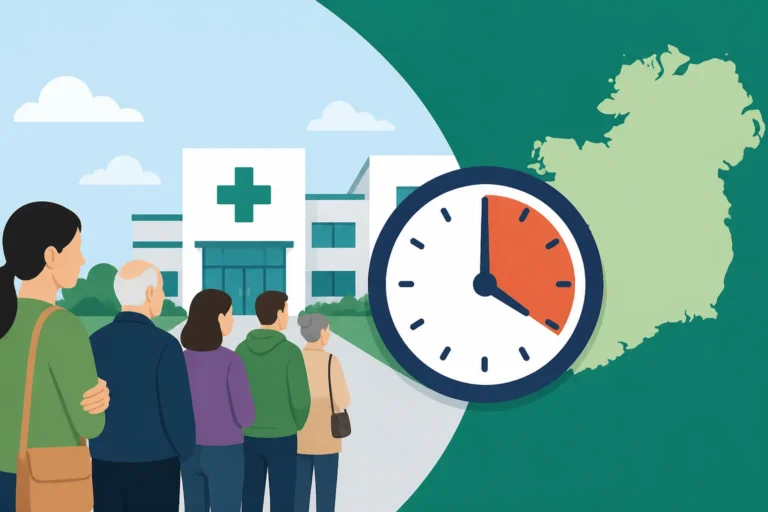
The "dirty secret" of Irish healthcare is the length of the public waiting lists. For non-urgent procedures, it is not uncommon to wait 12 to 24 months just for an initial consultation with a consultant, and even longer for the actual surgery. I remember a friend waiting nearly three years for a relatively simple gallstone procedure because she wasn't considered an "emergency" case.
This is the primary reason people opt for private care. In the private system, that same consultation might happen in two weeks. When you are trying to balance a new job and a new life in a foreign country, you often don't have the luxury of waiting years for a health issue to be resolved. Understanding How Long Are Waiting Lists in the Public Health System in Ireland? is crucial before you decide to rely solely on the HSE.
Public Hospital Charges and Eligibility
If you don't have a Medical Card, the costs can add up. While the government recently abolished inpatient charges for public hospitals, you still face a €100 fee for attending an Accident & Emergency (A&E) department without a GP referral. This fee is designed to discourage people from using the emergency room for minor issues that a family doctor could handle.
Eligibility for the Medical Card is strictly means-tested. Most working expats earning a standard salary will not qualify, though they might qualify for a GP Visit Card, which covers the cost of seeing a doctor but not prescriptions or hospital stays. You can find more detail by Understanding the Medical Card Means Test in Ireland to see where your income falls on the scale.
How Private Healthcare Works in Ireland
Private healthcare in Ireland isn't about having "different" doctors—often, the same consultants work in both public and private hospitals—it’s about access and speed. When you go private, you are essentially paying to jump the queue and stay in a nicer room. It provides a level of predictability that the public system currently struggles to offer.
The Role of Private Health Insurance (PHI)
In Ireland, we have what is called "Community Rating." This is great news for expats. It means that the insurance company cannot charge you more based on your health status, age (with some caveats), or gender. Everyone pays the same for the same plan. The big three providers are VHI, Laya Healthcare, and Irish Life Health.
However, there is a catch called Lifetime Community Loading (LCL). If you are over the age of 34 and don't have private insurance, you will pay a 2% loading for every year you are over that age when you finally do sign up. This makes it financially wise to Buy Private Health Insurance as a Newcomer in Ireland as soon as you arrive to lock in lower lifetime rates.
Accessing Private Hospitals
Ireland has a network of excellent private hospitals, particularly in the larger cities. In Dublin, names like the Mater Private, the Beacon Hospital, and the Blackrock Clinic are synonymous with high-end care. These facilities feel more like hotels than hospitals, offering private rooms, better food, and much faster diagnostic imaging (like MRIs or CT scans).
For a newcomer, the peace of mind that comes with knowing you can get an appointment at the Beacon within a few days is immense. While the public system is struggling with capacity, the private sector remains a reliable safety net. You should research How to Use Private Hospitals Like the Mater, Beacon and Blackrock in Ireland to see which facilities are covered by your specific insurance plan.
Consultant-Led Care vs. Public Teams
One of the major draws of the private system is "consultant-led care." In the public system, you are treated by a team. You might see a different junior doctor or registrar every time you visit the clinic. While the quality of care is high, the continuity of care is often low.
In the private system, you choose your consultant. That specific specialist is responsible for your journey from the first consultation to the final follow-up. This relationship-based care is particularly comforting for expats who are navigating a new system without a local support network. It is often worth the premium just to have one person who knows your entire medical history.
Key Differences: Public vs. Private Facilities
The physical experience of being a patient in Ireland differs wildly depending on which "side" you are on. While the medical expertise is generally equivalent, the environment and timing are worlds apart.
Accommodation and Hospital Rooms
If you are admitted to a public hospital, you will likely be in a ward with four to six other people. These wards can be noisy, and privacy is limited to a curtain pulled around your bed. In a private hospital, or if you have private insurance in a public hospital, you are much more likely to get a semi-private or fully private room.
Having your own bathroom and a quiet space to recover can significantly impact your mental well-being during a health crisis. When comparing options, many expats ask Is Public or Private Healthcare Better for Expats in Ireland? based specifically on these comfort factors.
Speed of Access for Non-Emergencies
We’ve touched on waiting lists, but it’s worth emphasizing the difference in diagnostic speed. If your GP suspects a non-life-threatening issue and refers you for an ultrasound in the public system, you might wait months. Privately, you could often have it done the same week.
For families with children, this speed is vital. You don't want your child waiting months for a simple procedure like getting grommets or having tonsils removed. While you're in the transition period, using a service like SafetyWing can provide a temporary bridge, but long-term, local private insurance is usually the goal for speed. SafetyWing is particularly useful for digital nomads or those who haven't yet secured their PPS number.
The Quality of Medical Care
It is important to state clearly: the medical care in the public system is excellent. The doctors and nurses are highly trained, and the equipment in major teaching hospitals like St. James’s or Beaumont is state-of-the-art. You are not buying "better" medicine when you go private; you are buying "sooner" medicine and a "quieter" room.
In fact, for extremely complex, multi-organ trauma or rare diseases, the public system is often the only place equipped to handle the case. Private hospitals are great for elective surgeries and diagnostics, but they often transfer critical patients to major public ICUs if things get too complicated.
| Feature | Public Healthcare (HSE) | Private Healthcare |
|---|---|---|
| Cost | Low (Free for Medical Card holders) | High (Premiums + Excess) |
| Waiting Lists | Can be years for elective care | Usually days or weeks |
| Choice of Doctor | Hospital assigns a team | You choose your consultant |
| Room Type | Shared wards (4-6 beds) | Private or semi-private rooms |
| A&E Access | Long waits, open to all | Faster access in private A&E |
| Prescriptions | Capped via Drugs Payment Scheme | Capped via Drugs Payment Scheme |
Costs and Financial Implications for Expats
Money is usually the deciding factor for most of us. Ireland is expensive, and healthcare is no exception. You need to budget not just for insurance, but for the day-to-day costs of being sick.
Out-of-Pocket Expenses in the Public System
Even without insurance, you'll be reaching for your wallet. A standard GP visit in Dublin or Cork will cost you between €60 and €75. If you need blood tests, that might be another €30. If you go to a public A&E without a referral letter from your GP, you’ll be handed a bill for €100.
These "incidental" costs are why many expats feel the system is expensive. It is worth knowing How Much a GP Visit Costs in Ireland Without a Card in your specific neighborhood so you aren't shocked when the receptionist asks for payment before you even see the doctor.
Private Health Insurance Premiums and Lifetime Loading
A decent private health insurance plan for a single adult will range from €1,100 to €2,000 per year, depending on the level of hospital cover. While this sounds steep, many Irish employers offer health insurance as a benefit (though you still pay "Benefit in Kind" tax on it).
If you arrive in Ireland after age 34, remember that LCL. If you are 40 and haven't had Irish insurance before, your premium will be 12% higher than a 34-year-old's for the rest of your life. This is why many veteran expats suggest getting a basic plan immediately upon arrival. For those first few weeks before your company plan kicks in, a global policy like SafetyWing can offer essential protection against catastrophic accidents.
Tax Relief and Financial Planning
The silver lining is that the Irish government provides tax relief on medical insurance premiums. This is usually applied "at source," meaning the price you see advertised already has the 20% tax relief deducted. You can also claim tax relief on other unreimbursed medical expenses, like GP visits, at the end of the year.
By Claiming Tax Relief on Medical Expenses in Ireland, you can recoup some of your health-related spending. Keep every receipt—from the GP to the physiotherapist. It all adds up and can result in a nice refund during tax season.
Navigating Primary Care: GPs and Specialists
Your GP (General Practitioner) is the gatekeeper of the Irish medical world. You cannot see a specialist (public or private) without a referral letter from a GP. This is a non-negotiable rule that often frustrates those coming from systems where you can book a dermatologist directly.
Finding and Registering with a GP
Finding a GP who is taking new patients is currently one of the biggest challenges in Ireland due to a nationwide shortage. It can be a frustrating process of calling ten different clinics only to be told their lists are full. I always recommend newcomers start this search the week they move.
Don't wait until you are sick to find a doctor. Look for a clinic near your home or office and ask to be registered. For more tips, check out How to Find and Register with a Local GP Practice in Ireland. Having a local doctor who knows you makes the entire process of getting referrals much smoother.
Referral Pathways: The Public vs. Private Route
Once your GP writes a referral, you have a choice. You can ask them to send it to the public system (where you wait on the HSE list) or to a private consultant. If you choose the private route, you are responsible for the consultant's fee, which usually ranges from €150 to €250 for the first visit.
If you have insurance, your policy might cover some of this "outpatient" cost, but usually only after you hit a certain "excess" or deductible. Even so, paying €200 to be seen in two weeks is often a better deal than waiting two years for a "free" appointment.
Prescription Costs and the Drugs Payment Scheme
Medicine is not free in Ireland unless you have a Medical Card. However, the government protects families from massive bills through the Drugs Payment Scheme (DPS). Under this scheme, no individual or family pays more than €80 per month for approved prescription medications.
This is a fantastic safety net. If you have a chronic condition requiring expensive biologics or daily pills, your costs are capped. Every expat should Understand the Drugs Payment Scheme (DPS) in Ireland and register for it immediately. There is no means test; you just need to be a resident.
Specialized Care: Maternity and Mental Health
Specific life stages require different approaches to the public vs. private debate. Maternity care, in particular, is an area where the public system shines, while mental health care remains a significant challenge.
Maternity Care Options
In Ireland, maternity care is free for everyone under the Maternity and Infant Care Scheme. This is a "combined care" model where your GP and a hospital obstetrician share your care. It is an excellent, robust system.
However, some people choose "Private Maternity" care, which costs between €3,000 and €5,000 out of pocket (insurance usually only covers the hospital stay, not the consultant's fee). This gives you the same consultant for every visit and a private room after birth. You should weigh up How to Choose Between Public and Private Maternity Care in Ireland based on your budget and desire for continuity.
Accessing Mental Health Services
Mental health services in the public sector are, unfortunately, stretched very thin. Waiting lists for public counseling or psychiatry can be prohibitively long. Most expats find that they must go private for mental health support.
Many private insurance plans offer some coverage for counseling sessions, but there is often a limit on the number of sessions or the amount reimbursed. If you need help, don't wait for the HSE; Access Mental Health Services in Ireland as an Expat through private practitioners to get the timely support you need. SafetyWing also offers some coverage for crisis support, which can be a lifeline during the stressful first few months of a move.
Pediatric Care and Vaccinations
Children under the age of 8 in Ireland are entitled to a free GP Visit Card, regardless of the family's income. This is a massive relief for expat parents, as it covers all those inevitable "daycare colds" and ear infections.
The childhood vaccination schedule is also free and administered by your GP. The system is very efficient in this regard. If you are moving with little ones, Understanding Childhood Vaccination Schedules in Ireland will help you ensure your child's records are up to date and compatible with the local requirements.
Making the Choice: Which System is Right for You?
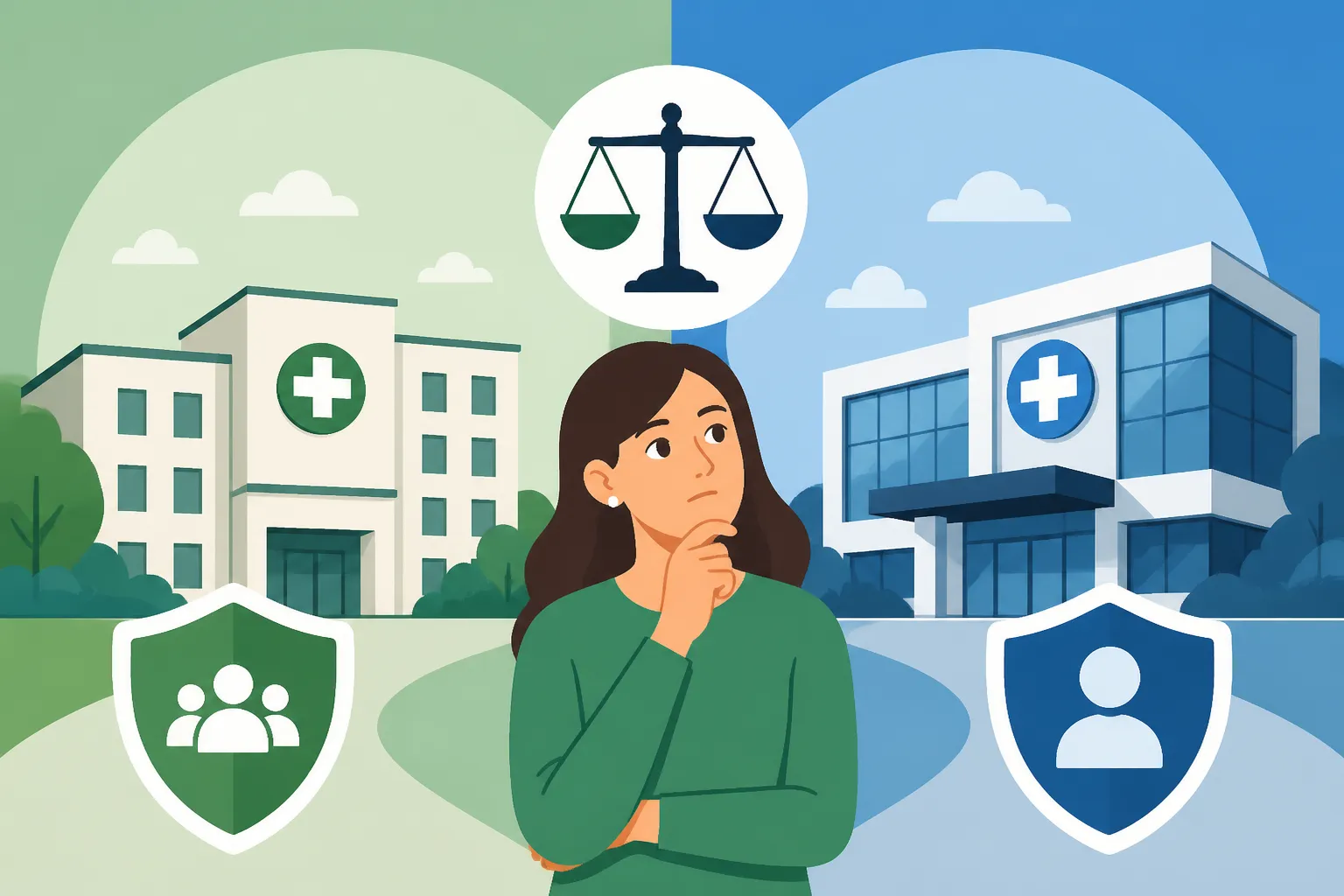
Deciding whether to pay for private insurance depends on your stage of life, your health history, and your tolerance for risk. There is no one-size-fits-all answer, but there are some common patterns.
Factors to Consider: Age, Health, and Budget
If you are young, single, and healthy, you might feel that the public system is enough. However, remember the Lifetime Community Loading. If you plan to stay in Ireland long-term, it is usually cheaper to get a basic "plan 1" insurance policy now than to pay a 20% penalty when you turn 45.
If you have a chronic condition or a history of needing specialists, private insurance is almost mandatory. The ability to access a consultant quickly is the difference between a minor interruption and a life-altering delay. Before you sign a contract, Understand Private Health Insurance Plans in Ireland to ensure your specific needs are covered.
The Mixed Approach: Best of Both Worlds
Most expats (and locals) use a "mixed" approach. They use the public system for emergencies and their GP for minor illnesses, but keep private insurance for when they need a specialist or a diagnostic scan.
This hybrid strategy allows you to benefit from the high-tech emergency capabilities of the HSE while bypassing the long waits for everything else. It’s about having a "plan B" in your pocket at all times.
Transitioning as a Newcomer
Your first 90 days are the most vulnerable. You don't have a PPS number yet, you haven't registered with a GP, and you might not have started your job. During this gap, having a global health policy is essential.
A provider like SafetyWing is perfect for this transition. It ensures that if you trip on a cobblestone in Temple Bar or get the flu while house hunting, you aren't stuck with a massive hospital bill before you've even received your first Irish paycheck. Once you are settled and have your IRP Card and Registering with Immigration, you can then move onto a local Irish provider.
Practical Steps for New Expats
To wrap this up, let’s look at the actual "to-do" list for your healthcare. Don't wait until you have a fever to figure this out.
Securing Initial Coverage
Before you even board the plane, make sure you have some form of travel or expat insurance. If you are coming from the EU, bring your EHIC card. If you are coming from outside the EU, look into SafetyWing or similar providers. This covers you for the "unforeseen" while you navigate the local bureaucracy.
SafetyWing is particularly popular with the digital nomad and expat community in Dublin because it’s flexible and doesn't require a permanent address to start. It buys you the time you need to find a flat, get your PPS number, and eventually Register with a GP in Ireland: The Complete Expat Guide (2026).
Getting Your PPS Number and Medical Card Eligibility
Once you arrive, your PPS (Personal Public Service) number is your key to the kingdom. You need it for everything, including the Drugs Payment Scheme. Apply for this as soon as you have your proof of address.
Once you have your salary details, check if you are Eligible for a Medical Card in Ireland?. Even if you think you earn too much, the math changes if you have children or high rent, so it is always worth a quick check on the HSE website.
Building Your Irish Medical Toolkit
Finally, create a "medical folder" (digital or physical). Include your vaccination records from home, a list of current medications with their generic names (brand names differ in Ireland), and your insurance policy numbers.
Find your nearest 24-hour pharmacy and note the location of the nearest public A&E and private "Urgent Care" center (like the VHI SwiftCare clinics). Being prepared is the best way to handle the stress of getting sick in a new country.
Disclaimer
This guide is for informational purposes only and does not constitute medical, legal, or financial advice. Healthcare regulations and costs in Ireland can change frequently. Always consult with the Health Service Executive (HSE), a qualified insurance broker, or a medical professional regarding your specific circumstances and eligibility for services. Internal links are provided for further context and were accurate at the time of writing.