How to Buy Private Health Insurance as a Newcomer in Ireland
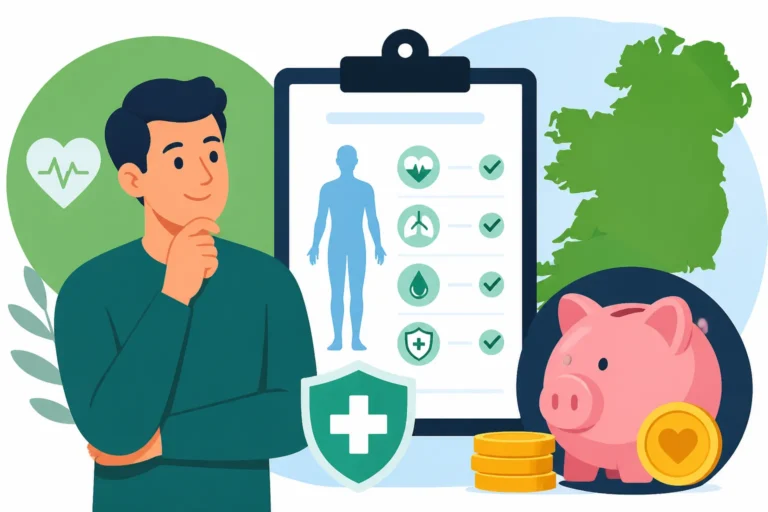
Landing in Ireland often feels like a whirlwind of PPS number appointments, frantically searching for a rental in a housing crisis, and trying to figure out if you actually need an umbrella or just a very good raincoat. One of the most confusing hurdles for newcomers is the healthcare system, which sits in a strange grey area between public and private. This guide solves the mystery of the Irish private health insurance market, walking you through the "Big Three" providers, explaining why the timing of your purchase matters for your wallet, and helping you secure coverage before those dreaded waiting periods kick in.
Why Newcomers Should Prioritize Private Health Insurance
When I first moved here, I assumed that because Ireland has a public health system (the HSE), I could just wing it. I quickly learned that while the HSE is staffed by some of the most hard-working people you’ll ever meet, it is also buckling under the weight of massive demand. If you’re coming from a country with a fully socialized system or a robust private one, the "hybrid" nature of Ireland can be a shock. Private insurance isn't just a luxury here; for many expats, it’s the only way to avoid multi-year waiting lists for non-emergency procedures.
The Reality of Public Hospital Waiting Lists
The most significant pain point for any expat is discovering that "non-emergency" can cover a lot of ground. If you have a nagging sports injury, need a diagnostic scan for a non-critical issue, or require a consultation with a specialist for something like dermatology or ENT, the public system might have you waiting for eighteen months or more. By purchasing private insurance, you gain access to private hospitals like the Mater Private or the Blackrock Clinic, where those wait times often shrink from years to weeks. Understanding the Difference Between Public and Private Hospitals in Ireland is crucial before you settle on a plan, as it dictates which buildings you can actually enter for treatment.
Avoiding the Lifetime Community Rating Surcharge
Ireland has a unique rule called Lifetime Community Rating (LCR). Essentially, the government wants people to buy insurance when they are young and healthy. If you are over the age of 34 and you wait more than nine months after moving to Ireland to buy a local private health insurance policy, you will be hit with a 2% loading fee for every year you are over 34. For someone moving here at 45, that’s a permanent 22% increase on their premium. As a newcomer, you have a "grace period," but the clock starts ticking the moment you establish residency. Getting your head around Health Insurance Waiting Periods and Lifetime Loading in Ireland early on can save you thousands of euros over a decade.
GP Access and Day-to-Day Costs
Finding a family doctor in Ireland is currently a monumental task. Many practices are at capacity and aren't taking new patients. Even if you find one, a single visit usually costs between €60 and €75. Most private health insurance plans in Ireland offer a "day-to-day" or "outpatient" element that allows you to claim back a portion of these costs. For a family with young children who seem to catch every bug going around the school, these rebates are a lifesaver. You’ll want to look closely at How Much a GP Visit Cost in Ireland Without a Card to see how quickly those costs add up without a good insurance plan to buffer the blow.
The Major Players in the Irish Insurance Market
The Irish health insurance market is highly regulated by the Health Insurance Authority (HIA). Unlike some countries where you have hundreds of small providers, Ireland is dominated by three main local companies. Each has its own personality, strengths, and quirks. There are also international options like SafetyWing that many newcomers use as a "bridge" while they are getting settled or if they are working remotely and haven't yet qualified for the local system.
VHI Healthcare: The Semi-State Stalwart
VHI is the largest and oldest health insurer in Ireland. For a long time, they were the only game in town. Because of their history, they have massive bargaining power and an extensive network. Many expats find VHI’s "SwiftCare" clinics to be one of their best features—these are urgent care centers where you can go for minor injuries or stitches without sitting in a public A&E (Emergency Room) for 12 hours. VHI plans can be a bit more traditional in their structure, but they are generally seen as the "safe" bet for comprehensive hospital cover.
Laya Healthcare and Irish Life Health
Laya is the second-largest provider and is known for having a very user-friendly mobile app and excellent customer service. They often lead the way with innovative benefits, like free digital GP consultations or heart screenings. Irish Life Health is the third major player, and they often appeal to a younger, tech-savvy demographic with "select" hospital lists that can keep premiums lower. When you are looking at Private Health Insurance Plans in Ireland, you’ll find that these two often compete fiercely on price for mid-range family plans.
International Insurance and Bridge Coverage
For many expats, there is a gap between arriving in Ireland and actually being "eligible" for a local plan or even having the PPS number required to sign up. This is where a provider like SafetyWing becomes incredibly useful. If you are a digital nomad or an expat who hasn't yet secured a long-term contract, SafetyWing offers the flexibility that local Irish insurers—who usually demand a 12-month commitment—simply don't. While it doesn't count toward avoiding the LCR surcharge in the long run, SafetyWing is an excellent solution for that first month or two when you are still living in a suitcase and haven't quite figured out How Ireland's Health System Works in its entirety.
Decoding Policy Jargon: What Do You Actually Need?
Irish health insurance brochures are notorious for being fifty pages long and filled with terms that don't make sense to anyone without a medical degree. As a newcomer, you need to strip away the fluff and look at three core pillars: Hospital Cover, Excess, and Day-to-Day Benefits.
Public vs. Private Hospital Cover
The most basic plans only cover you in a public hospital as a private patient. This sounds like a contradiction, but it essentially means you get a semi-private room (if available) and your consultant is paid privately. However, the real value for expats is "Private Hospital" cover. This gives you access to the high-tech hospitals that aren't part of the HSE. If your plan says "Full Cover in Private Hospitals," you are in the top tier. If it says "Cover in Public Hospitals only," you might still face those long HSE waiting lists. It is worth reading the Expat Guide to Healthcare in Ireland to understand the geography of these hospitals.
Understanding the Excess
The "excess" is the amount you pay out of pocket for a hospital stay before the insurance kicks in. In Ireland, this is usually per claim, not per year. You might see a plan with a €150 excess. This means if you go in for a procedure, you pay the first €150 and the insurer pays the rest of the €5,000 bill. Lowering your excess will raise your monthly premium. If you are young and healthy, a higher excess is usually a smart way to save money on your monthly bills.
Day-to-Day Benefits and Digital GPs
This is where the insurance feels "real" on a weekly basis. Does the plan give you €30 back every time you see a physiotherapist? Does it offer a free dental cleaning once a year? In a country where Dental Care and Costs in Ireland can be surprisingly high, these small "back-to-hand" payments make the premium feel much more manageable. Many modern plans now include "Digital GP" services, where you can have a video call with a doctor in 15 minutes and get a prescription sent to your phone. For a newcomer who hasn't found a local doctor yet, this is arguably the most valuable feature you can have.
| Feature | Basic Plan (Public Only) | Mid-Range Plan (Private) | Comprehensive Plan (High-Tech) |
|---|---|---|---|
| Hospital Access | Public Hospitals Only | Most Private Hospitals | All Hospitals + High-Tech |
| Room Type | Semi-private (if available) | Semi-private in Private | Private Room |
| GP Visits | No refund | 25% – 50% refund | 50% – 75% refund |
| Excess | Often €0 – €150 | €125 – €250 | €0 – €150 |
| LCR Protection | Yes | Yes | Yes |
The Step-by-Step Buying Process for Expats
You cannot simply walk into a shop and buy health insurance. The process in Ireland is digital and requires a bit of preparation. Because of the LCR rules mentioned earlier, you want to get this sorted within your first 9 months, but ideally within your first 30 days so you are covered for accidents immediately.
Step 1: Secure Your PPS Number and Address
Most local insurers will ask for your PPS number (Personal Public Service number). While some may allow you to sign up without it and "add it later," it makes the process much smoother to have it. You also need a permanent or long-term Irish address. If you are still in an Airbnb, you might find it difficult to register for a local plan. This is again why having Health Insurance as a Newcomer often involves using an international provider like SafetyWing for the first 4-8 weeks while the paperwork for your PPS number clears.
Step 2: Use the HIA Comparison Tool
The Health Insurance Authority (HIA) website is your best friend. It has a tool that allows you to compare every single plan on the market side-by-side. Do not try to do this by visiting the VHI, Laya, and Irish Life websites individually—you will go insane. Use the HIA tool to filter by "Private Hospital Cover" and "Day to Day." Take note of the plan names, as they often have confusing titles like "Focus Plan 250" or "Inspire Plus." Once you find a plan you like, you can usually buy it directly on the insurer’s website.
Step 3: Check for Corporate Plan Equivalence
In Ireland, insurers are legally required to offer "Corporate Plans" to the general public if they ask for them. These plans are often better value than the ones marketed to individuals because they were designed for big companies like Google or Intel. When you call an insurer, ask: "What is your most popular corporate plan with private hospital cover?" They have to tell you. This one tip can save you €200 a year for the exact same level of medical care.
Dealing with Pre-Existing Conditions and Waiting Periods
This is the part that catches most newcomers off guard. Even if you buy the most expensive plan tomorrow, you aren't fully covered for everything immediately. There are "waiting periods" designed to stop people from only buying insurance when they find out they need surgery.
The Initial Waiting Period
For a new customer who has never had insurance in Ireland before, there is usually a 26-week waiting period for "illness." This means if you get sick (e.g., appendicitis or a sudden infection) three months after buying the plan, you are covered. However, if you have a condition that existed before you bought the policy, the wait is much longer. For accidents and injuries, however, cover is usually immediate. If you fall and break your leg the day after your policy starts, you are typically covered.
Pre-Existing Condition Waiting Periods
If you have a chronic condition—like asthma, diabetes, or a previous back injury—the waiting period for that specific condition is usually five years. This sounds terrifying, but remember: you still have access to the Public Health System in Ireland during this time. The insurance just won't pay for private hospital treatment for that specific condition until the five years are up. It’s a bitter pill to swallow, but it’s why moving to Ireland requires a long-term strategy for managing your health.
Switching from International Cover
If you are moving from another EU country and had a private policy there, or if you had a very specific type of international cover, you might be able to get some of your waiting periods waived. However, this is rare and usually requires the old policy to be "equivalent" to an Irish one. Most people moving from the US or Asia will have to start their waiting periods from scratch. This is another reason to get the policy started as soon as you land—the sooner you start, the sooner those five years are behind you.
Maximizing Your Value: Tax Relief and Credits
One of the few pleasant surprises in the Irish system is how tax relief is handled. In many countries, you have to keep receipts and file a complex tax return at the end of the year to get any money back on your insurance. In Ireland, it’s much more efficient.
Tax Relief at Source (TRS)
When you look at a price on an insurer's website, that price almost always includes "Tax Relief at Source." The government gives a 20% tax credit on health insurance premiums (up to a certain cap). Instead of you paying the full price and claiming it back, the insurer simply charges you 80% of the cost and they collect the other 20% directly from the government. The price you see is the price you pay. This makes The Cost of Healthcare in Ireland feel slightly more competitive when comparing it to other European nations.
Claiming for Non-Insured Expenses
Even with the best insurance, you will likely have some out-of-pocket medical costs. Maybe your insurance only covers €30 of a €65 GP visit. You can claim 20% tax relief on that remaining €35 at the end of the year through Revenue's "myAccount." Keep every single receipt for medicine, GP visits, and even non-routine dental work. Learning How to Claim Tax Relief on Medical Expenses in Ireland is an essential skill for any expat looking to balance their budget in a high-cost country.
Adding Dependants
If you are moving with a spouse or children, you don't necessarily all need to be on the same plan. You can put the adults on a high-level private hospital plan and the children on a cheaper plan that focuses more on day-to-day GP visits and developmental checks. Most insurers allow for "split policies" where everyone is on one bill but has different levels of cover. This is a pro-tip for families trying to manage the Cost of Living in Ireland while still maintaining a safety net.
Summary Checklist for Newcomers
Buying health insurance is one of those "boring but essential" tasks that will define your first year in Ireland. To recap, here is your immediate action plan:
- Bridge the Gap: If you don't have your PPS number yet, consider an international provider like SafetyWing so you aren't walking around Dublin completely uninsured.
- Watch the Clock: Make sure you have your local Irish policy active before your 9-month anniversary of moving to avoid the LCR surcharge.
- HIA Comparison: Use the official government tool to find three plans that fit your budget.
- Ask for Corporate: Call the insurers directly and ask for the public equivalent of their best corporate plans.
- Check Waiting Periods: Understand that for the first six months, you are mainly covered for accidents and new illnesses, not old ones.
- Register with Revenue: Ensure you are set up on the Revenue myAccount so you can claim back the 20% on any medical costs your insurance doesn't cover.
Disclaimer
This guide is for informational purposes only and does not constitute financial or medical advice. Health insurance rules, LCR loadings, and waiting periods in Ireland are subject to change by the Health Insurance Authority and the Department of Health. Always verify the specific terms and conditions of a policy with the provider before signing a contract.