How to Choose Between Public and Private Maternity Care in Ireland
Navigating the Irish healthcare system while pregnant can feel like a part-time job, especially when you are trying to decipher the nuances between public and private options. This guide clarifies the differences in costs, care quality, and facilities, ensuring you can make an informed decision for your family's future and health during this transformative life event.
Understanding the Irish Maternity System: Public, Private, and Semi-Private
When you first discover you are pregnant in Ireland, the sheer number of choices can be overwhelming. Unlike some countries where there is a singular path, Ireland offers a tiered system. Every person who is "ordinarily resident" in Ireland—meaning you intend to live here for at least a year—is entitled to free maternity care through the HSE. However, many expats and locals alike choose to opt for private or semi-private paths for various reasons ranging from continuity of care to hospital room preferences.
The Public Maternity Pathway
The public system is managed under the HSE Maternity and Infant Care Scheme. This is a remarkably comprehensive service that is technically free of charge for residents. In this model, your care is shared between your local General Practitioner (GP) and the maternity hospital staff. You do not choose a specific consultant; instead, you are seen by the team of midwives and doctors who are on duty during your appointments and delivery.
The medical standard in the public system is exceptionally high. Ireland’s maternity hospitals, such as the National Maternity Hospital on Holles Street or the Rotunda, are world-renowned. Many people wonder Is Childbirth Free Under the HSE in Ireland? and the answer is yes, including all prenatal visits, the birth itself, and postnatal care. The trade-off is often found in the administrative experience: waiting rooms can be crowded, and you will likely see a different face at every appointment. If you are a newcomer still getting your bearings, Understanding the HSE Maternity and Infant Care Scheme in Ireland is a vital first step in your journey.
The Private Maternity Experience
Choosing the private route means you are essentially hiring a specific consultant obstetrician to manage your entire pregnancy and delivery. You will visit their private rooms for every check-up, and they will generally aim to be present for the birth of your child, provided they are not attending another emergency. This path is often chosen by those who have specific medical concerns or those who simply find comfort in knowing exactly who will be in the room when the big moment arrives.
The costs for this path are significant. You are paying for the consultant’s professional fees, which typically range from 3,000 to 5,000 Euro, as well as hospital charges if your insurance does not cover the full stay. It is worth noting that even with the best intention, if your consultant is unavailable, a colleague from their private group will step in. For those transitioning from abroad, using a flexible provider like SafetyWing can sometimes help bridge the gap in general health coverage while you are setting up local private insurance, though you must always check specific maternity waiting periods.
The Semi-Private Middle Ground
Semi-private care is an attempt to bridge the gap between the two. You are seen in a "semi-private clinic" within the hospital. You are still under the care of a consultant-led team, but you do not have a one-on-one relationship with a single doctor like you would in the full private system. The fees are lower than full private care, and the primary benefit is often the hope of a semi-private ward (usually 4 to 6 beds) rather than a large public ward.
In reality, the semi-private option is often the most confusing for expats. You are paying a fee—often around 1,000 to 1,500 Euro—but you are still mostly seeing various members of a medical team. It is essential to weigh whether this middle ground provides enough "extra" value for your specific needs. Before committing, it is wise to research Public vs Private Healthcare in Ireland: Which Should Expats Choose? to see how maternity fits into your wider healthcare strategy.
Key Differences in Prenatal Care and Consultant Access
The most visceral difference you will notice between public and private care isn't actually the medical treatment—which is standardized across the board—but the continuity and the environment of your prenatal appointments. For many, the peace of mind that comes with a familiar face is the deciding factor.
Continuity of Care and Medical Relationships
In the private system, the relationship with your consultant is the cornerstone. You will see the same doctor at 12 weeks, 20 weeks, 36 weeks, and every milestone in between. This allows for a deep understanding of your medical history and personal preferences. If you have a high-risk pregnancy, this continuity is often viewed as a necessity rather than a luxury.
In the public system, care is midwife-led. Midwives in Ireland are highly skilled and manage the vast majority of normal, healthy pregnancies. If a complication arises, you are immediately referred to the hospital’s medical team. While you won't see the same person every time, the collective expertise of the hospital staff is always at your disposal. If you are curious about the general landscape of Irish health, How Ireland's Health System Works: The HSE vs Private Explained (2027) offers a broader look at this dual-track approach.
Appointment Scheduling and Waiting Times
Wait times are a common grievance in the public system. It is not unusual to spend two or three hours in a hospital waiting room for a ten-minute check-up. These clinics are high-volume and can feel quite anonymous. For a working professional, taking half a day off for every routine appointment can be a significant logistical burden.
Private appointments are generally much more punctual. Because you are visiting a consultant's private suite, usually located on the hospital grounds or nearby, the environment is calmer, and the appointments are more likely to run on time. For many expats, this "customer service" aspect of healthcare is a major factor in choosing private care. If you are just arriving in the country, you might be looking at The Complete Guide to Healthcare in Ireland for Expats (2027) to understand how to even begin the registration process for any of these services.
Access to Scans and Specialist Testing
In the public system, you are generally entitled to two main scans: the dating scan (around 12 weeks) and the anatomy scan (around 20 weeks). Any additional scans are only performed if there is a clinical medical necessity. In private care, most consultants will perform a "mini-scan" at every single visit, allowing you to see the baby's progress more frequently.
While these extra scans are not strictly medically necessary for a healthy pregnancy, they provide a level of reassurance that many parents find invaluable. Furthermore, private patients often have easier access to non-invasive prenatal testing (NIPT) like the Harmony test, though this still carries an extra out-of-pocket cost regardless of your care pathway. If you are worried about the initial stages of moving, SafetyWing can be a helpful safety net for general accidents or illnesses while you are navigating the complexities of the Irish maternity waitlists.
Hospital Facilities and the Birthing Experience
When the time comes to actually deliver your baby, the hospital environment becomes the focal point. This is where the distinctions between public and private can become a bit blurred, as both types of patients often share the same delivery suites but differ in where they spend their recovery time.
Accommodation: Wards vs. Private Rooms
The biggest "selling point" for private care in Ireland is the promise of a private room for postnatal recovery. In a public ward, you might be sharing a room with five to eleven other mothers and their newborns. This can be loud, bright, and make it difficult to rest. A private room offers a sanctuary where your partner can often stay longer and you have your own bathroom.
However, there is a major caveat: private rooms are never guaranteed. They are allocated based on clinical need first and then on availability. If the hospital is extremely busy, a private patient may end up on a public ward for a night or two. You will not be charged the "room rate" for those nights, but it can be a disappointment after paying high consultant fees. When choosing your hospital, such as looking for What Is the Best Maternity Hospital in Dublin?, it is worth asking about their private room capacity.
Delivery Options and Pain Management
Regardless of your status, the delivery rooms are generally the same. If you need an emergency C-section or an epidural, you will receive it whether you are a public or private patient. The medical staff in the delivery suite—the midwives and the on-call registrars—are the ones who do the heavy lifting in most births.
The difference is that a private patient’s consultant will be notified when they go into labor and will aim to be there for the final stages of delivery. In the public system, you will be delivered by the midwife on duty, with a doctor stepping in only if complications arise. Many women find the midwife-led approach in the public system to be more holistic and less medicalized, which is a significant pro for those seeking a natural birth.
Postnatal Support and Length of Stay
The length of stay in an Irish maternity hospital is typically short. For a standard delivery, you might be home in 24 to 48 hours. For a C-section, it is usually 3 to 4 days. Private patients sometimes have the option to stay an extra day if the room is available, but the HSE generally encourages a quick return to the home environment where community midwives will then take over.
Community midwife visits are a fantastic feature of the Irish system. A midwife will visit your home several times in the first week to check on both you and the baby, regardless of whether you were a public or private patient. This level of postnatal care is something many expats find superior to their home countries. If you are already looking ahead, you should consider How to Add Dependants to Your Health Insurance Plan in Ireland to ensure your newborn is covered from day one.
Breaking Down the Costs: What You Will Actually Pay
The financial aspect is often the most stressful part of the decision. Because Ireland has a mixed healthcare system, you need to understand where the HSE's responsibility ends and yours begins.
Out-of-Pocket Expenses for Private Patients
If you choose private care, you are essentially paying two different fees. First is the consultant fee (professional fee), which is paid directly to the doctor's office. This is rarely covered by insurance and is an out-of-pocket expense. Second is the hospital charge for the stay and the delivery.
| Care Type | Consultant Fee | Hospital Stay Cost | Total Estimated Out-of-Pocket |
|---|---|---|---|
| Public | €0 | €0 | €0 |
| Semi-Private | €1,000 – €1,500 | Covered by Insurance | €1,000 – €1,500 |
| Full Private | €3,000 – €5,000 | Covered by Insurance | €3,000 – €5,500 |
It is crucial to verify How Much Does a Private Birth cost in Ireland? before signing any contracts. Additionally, remember that while the hospital stay might be covered by your insurance, you may still have a "per night" excess depending on your specific plan.
The Role of Private Health Insurance
In Ireland, private health insurance is designed to cover the hospital side of the bill. However, most plans have a "waiting period" for maternity care—often 52 weeks. This means you must have had the insurance for a full year before you can claim for a private maternity stay. If you are already pregnant and don't have insurance, you will likely have to go the public route or pay the full hospital bill (which can be upwards of €10,000) yourself.
You should carefully review Is Maternity Care Covered by Private Insurance in Ireland? to see if your current policy is sufficient. For digital nomads or those moving to Ireland on shorter notice, SafetyWing offers excellent international travel medical insurance that can cover you for various medical needs while you wait for your Irish private insurance waiting periods to expire, though it is not a replacement for long-term local maternity coverage.
Tax Relief on Medical Expenses
One small silver lining to the high cost of private care in Ireland is the ability to claim tax relief. You can claim 20% of your out-of-pocket medical expenses (including consultant fees) back through Revenue at the end of the tax year. For a €5,000 consultant fee, this means you could get €1,000 back in your tax refund.
Always keep every receipt from your consultant visits, scans, and any prescriptions. These add up quickly, and the tax relief is a significant help for expat families. This is a standard part of the Irish system, much like Understanding the HSE Maternity and Infant Care Scheme in Ireland is a standard for your care path.
Practical Considerations for Expats and Newcomers
Moving to a new country is hard enough without adding a pregnancy into the mix. As an expat, you have a few extra hurdles to jump through when choosing your care pathway.
Navigating Choice When New to the Country
If you arrive in Ireland already pregnant, your options might be limited by the insurance waiting periods mentioned earlier. Most expats in this situation find the public system to be a godsend. It is high quality, free, and removes the stress of dealing with insurance claims during a move.
If you have the financial means and value the relationship with a doctor, you can still choose private care even without insurance by paying the "self-pay" rates, but this is exceptionally expensive. Most people find that the public system, supplemented by some private scans for "peace of mind," is a balanced approach. If you are in the early stages of your move, checking The Complete Guide to Healthcare in Ireland for Expats (2027) can help you organize your PPS number and other requirements needed to access these services.
Emergency Scenarios and Specialist Referrals
One thing to remember is that if things go wrong, everyone ends up in the same place. Ireland’s maternity hospitals are integrated. If a private patient has a serious complication, they are treated by the same specialists and use the same Neonatal Intensive Care Unit (NICU) as a public patient.
The private fee does not buy you "better" emergency care; it buys you more personalized routine care. In a true medical emergency, the Irish system is egalitarian. This is a comfort to many who worry that the public system might be "second class." It is absolutely not. For more on how emergencies are handled, read Emergency Medical Care in Ireland: What Every Expat Needs to Know.
Choosing Your Hospital
In Dublin, you generally have a choice between the Rotunda, the Coombe, and Holles Street. Outside of Dublin, you will likely go to the regional maternity hospital for your county. Each hospital has its own culture and reputation. Some are known for being more pro-natural birth, while others are seen as more medicalized.
Talk to other expat parents in your area. Facebook groups and local meetups are great for getting the "real story" on things like ward cleanliness, food quality, and midwife attitudes. While you're at it, make sure you understand How Ireland's Health System Works: The HSE vs Private Explained (2027) so you know exactly what to expect when you walk through those hospital doors. SafetyWing remains a solid option for your initial months in the country to cover non-maternity emergencies while you're getting your "ordinarily resident" status sorted.
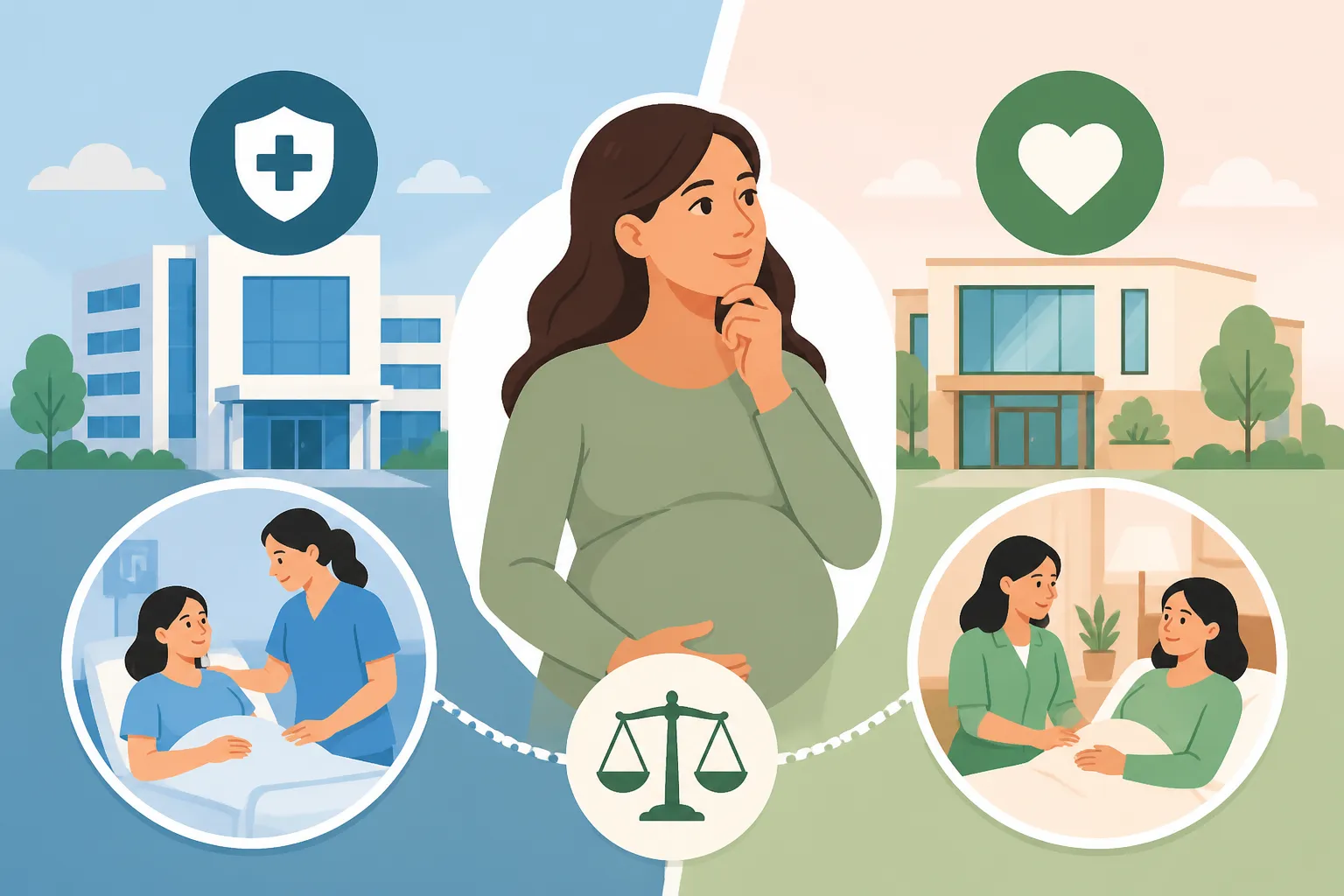
Summary: Comparing Public and Private Maternity Care
| Feature | Public Care | Private Care |
|---|---|---|
| Cost | Free (for residents) | €3,000 – €6,000+ |
| Consultant | Whoever is on duty | Your chosen doctor |
| Prenatal Visits | Often long wait times | Generally on time |
| Delivery | Midwife-led | Consultant-led |
| Postnatal Room | Public ward (shared) | Private room (if available) |
| Medical Quality | Excellent | Excellent |
| Scan Frequency | 2 standard scans | Scan at every visit |
Disclaimer
The information provided in this guide is for informational purposes only and does not constitute medical or legal advice. Healthcare policies, insurance waiting periods, and HSE schemes in Ireland are subject to change. Always consult with a qualified medical professional and your insurance provider to confirm your specific entitlements and coverage options before making healthcare decisions.