Emergency Medical Care in Ireland: What Every Expat Needs to Know
Landing in a new country brings a whirlwind of excitement, but nothing grounds that high faster than a sudden medical crisis. Whether it is a midnight fever, a kitchen accident, or a more serious cardiac event, navigating a foreign healthcare system under pressure is a terrifying prospect. This guide demurs the complexities of Irish emergency services, ensuring you know exactly where to go and what you will pay before an emergency strikes.
Understanding the Irish Emergency Response System
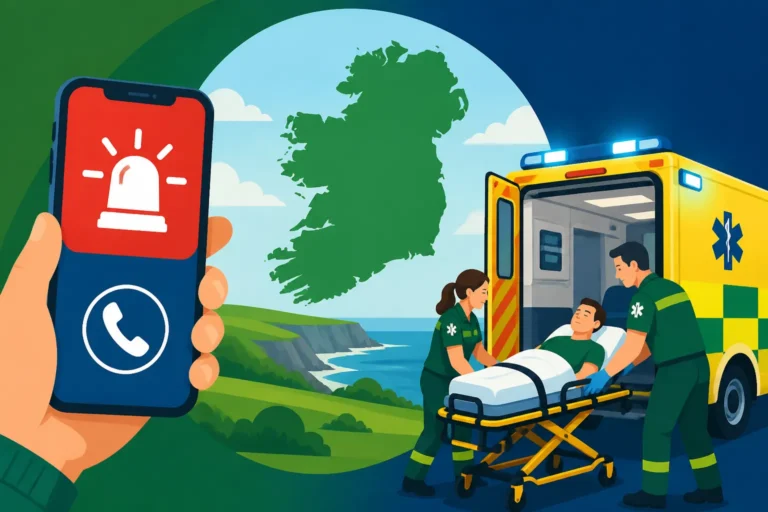
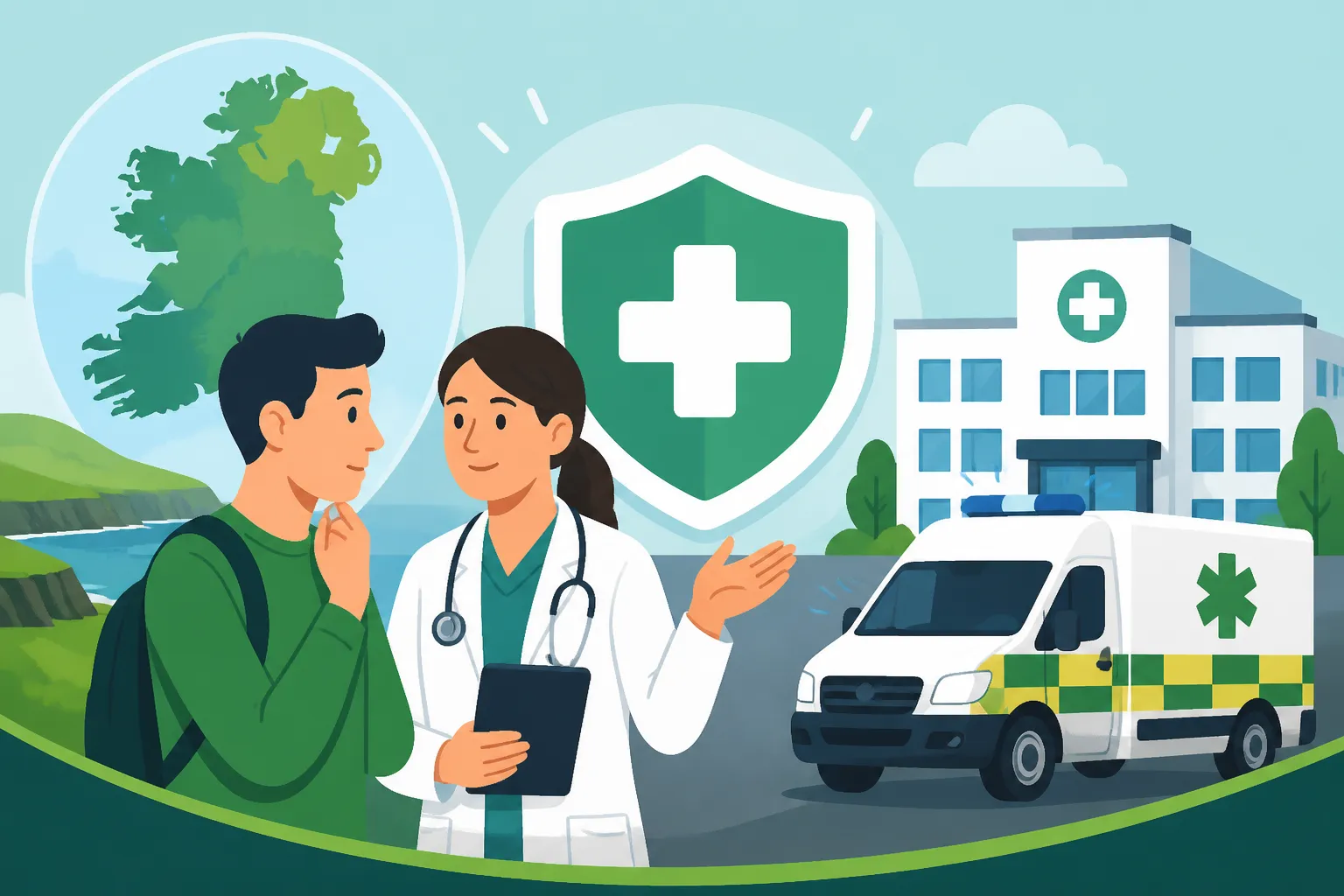
When you first arrive in Ireland, the sight of the green-and-yellow ambulances might feel familiar, but the protocols behind them are uniquely Irish. The emergency response system is managed by the National Ambulance Service (NAS) and, in parts of Dublin, the Dublin Fire Brigade. It is a high-pressure, highly efficient network, but it operates under significant strain, meaning it is vital to know when to engage it and when to seek alternatives.
When to Call 999 vs Heading to the A&E
The distinction between a life-threatening emergency and an urgent medical need is the first hurdle any expat must clear. In Ireland, 999 and 112 are the primary numbers for life-threatening situations like chest pain, severe blood loss, or loss of consciousness. If you are mobile and the condition is not immediately life-threatening—such as a broken bone or a deep but controlled laceration—it is often faster to have someone drive you to the nearest Accident & Emergency (A&E) department.
I have seen many newcomers hesitate to call an ambulance because they fear the cost or the "fuss," but if someone is struggling to breathe, every second counts. Conversely, calling an ambulance for a minor ailment does not get you seen faster at the hospital; you will still go through the same triage process once you arrive. Understanding Emergency Numbers (112 and 999) and Ambulance Care in Ireland is the first step in being prepared for the worst-case scenario.
What Happens During an Emergency Call
When you dial 999, the dispatcher will ask for your Eircode immediately. If you have just moved into a new rental and haven't memorized your Eircode yet, find it now and stick it on your fridge. Without it, finding a specific apartment in a complex or a rural cottage becomes a guessing game for the driver. The dispatcher is trained to give life-saving instructions over the phone, such as how to perform CPR or use an automated external defibrillator (AED), while the crew is en route.
The paramedics who arrive are highly skilled clinicians. They will stabilize the patient and decide which hospital is best equipped to handle the specific trauma. It might not always be the closest hospital; for example, certain Dublin hospitals specialize in strokes or cardiac arrests. This "bypass" protocol ensures you get the right care, even if the drive takes an extra ten minutes.
Ambulance Services and Costs
One of the most common questions I get from expats is, "How much will the ambulance cost me?" In Ireland, if you are transported to a public hospital via the National Ambulance Service, there is generally no separate bill for the ambulance itself if you are subsequently charged the standard A&E fee. However, the rules can feel opaque. Generally, emergency ambulance transport is seen as part of the public health provision for residents.
For those who are still in their first few weeks of relocation and haven't yet sorted their PPS numbers or residency status, having a bridge plan like SafetyWing can offer immense peace of view. SafetyWing is particularly useful for digital nomads or those on short-term contracts who might not yet qualify for full "ordinary residence" status. Knowing that your initial emergency transport and stabilization are covered allows you to focus on recovery rather than the administrative fallout of a 999 call.
Navigating Public Accident & Emergency Departments
The A&E is the heartbeat of the Irish public health system, but it is also where the system's "waiting list" reputation is most visible. Almost every major public hospital in cities like Dublin, Cork, Galway, and Limerick has an A&E department. These are open 24/7, 365 days a year, but the experience can vary wildly depending on the time of day and the severity of your condition.
The Triage System and Waiting Times
When you walk into a public A&E, you won't be seen in the order you arrived. You will first see a triage nurse who categorizes your urgency from Category 1 (immediate life-saving intervention) to Category 5 (non-urgent). If you are a Category 4 or 5, be prepared for a long stay. It is not uncommon for waiting times in Dublin's Mater or St. Vincent’s hospitals to exceed 10 or 12 hours during peak winter months.
This is often a shock for expats coming from systems with faster throughput. The reality of the Irish system is that the sickest patients are treated with world-class speed, while those with minor injuries must wait. If you find yourself in this situation, bring a charger, a bottle of water, and plenty of patience. Understanding How Long Are Public Hospital Waiting Lists in Ireland can help set realistic expectations for your visit.
Public Hospital Charges and Exemptions
Unless you have a Medical Card, a visit to the A&E in Ireland comes with a statutory charge of €100. This is a flat fee for the visit, which includes any X-rays, blood tests, or consultations performed during that stay. If you are referred to the A&E by your GP (Family Doctor) with a formal referral letter, this €100 fee is waived. This is a crucial "pro-tip" for expats: if it’s not an absolute emergency, see a GP first.
There are also caps on inpatient charges. If your A&E visit results in you being admitted to a ward, you will face a daily charge, usually around €80 per day, up to a maximum of €800 in a rolling 12-month period. For those worried about these costs, reading up on Understanding Public Hospital Charges and the A&E Fee in Ireland provides a clear breakdown of the financial landscape.
Finding Your Nearest A&E in Major Cities
In Dublin, the main public A&E departments are at Beaumont (northside), the Mater (city center), St. James's (south city), and St. Vincent’s (southside). In Cork, the Cork University Hospital (CUH) is the primary trauma center. Galway residents rely on University Hospital Galway. It is worth noting that some smaller hospitals have closed their A&E departments in recent years, converting them into Urgent Care or Injury Units.
Before you need it, look up Where Is the Nearest HSE Health Centre in Dublin or your respective city. Mapping the route from your home and office to the nearest A&E is an essential "first week" task. You do not want to be googling directions while someone is bleeding or in pain.
Private Emergency Care Options for Expats
Ireland has a robust private healthcare sector that operates alongside the public HSE system. For expats with private insurance or those willing to pay out-of-pocket, private emergency rooms (often called "Urgent Care Centers") can provide a significantly faster and more comfortable experience for non-life-threatening emergencies.
Private Emergency Rooms vs Public A&E
Hospitals like the Blackrock Clinic, the Beacon Hospital, and the Mater Private in Dublin offer private emergency or urgent care services. The primary advantage here is speed. While a public A&E might have a 10-hour wait, a private urgent care center often sees patients within an hour or two. The environment is generally quieter, and you are likely to see a consultant (specialist) much sooner.
However, there is a catch: private emergency rooms are not always equipped for major trauma. If you are in a major car accident or have a massive stroke, the ambulance will almost always take you to a public hospital because they have the "heavy-duty" intensive care and neurosurgical facilities. Private units are best for things like suspected fractures, high fevers, or sudden infections. Knowing How to Use Private Hospitals Like the Mater, Beacon and Blackrock in Ireland is vital if you choose this route.
Using Private Health Insurance for Emergency Admissions
If you have a policy with VHI, Laya, or Irish Life, your insurance might cover the cost of a private A&E visit, or at least a portion of it. Most private A&Es charge an initial "triage fee" (often between €150 and €250) which you pay upfront and then claim back depending on your plan. If you are admitted from a private A&E into a private bed, your insurance usually handles the bulk of the costs.
For newcomers, it is important to check the Understanding Health Insurance Waiting Periods and Lifetime Loading in Ireland rules. If you have a pre-existing condition, your private insurance might not cover an emergency related to that condition for the first few years. This is another area where a flexible plan like SafetyWing can provide a safety net for those in-between stages of residency.
Minor Injury Units: Faster Alternatives
The HSE has opened several "Minor Injury Units" across the country to take the pressure off A&Es. These units treat broken bones, dislocations, sprains, wounds, and minor burns. They are staffed by expert nurses and doctors and often have much shorter wait times than a full A&E. If you have a broken wrist, going to an Injury Unit is almost always a better choice than the A&E.
| Facility Type | Best For | Typical Cost (No Card) | Average Wait |
|---|---|---|---|
| Public A&E | Life-threatening trauma, chest pain | €100 (Free with GP letter) | 6 – 14 Hours |
| Minor Injury Unit | Broken bones, stitches, minor burns | €75 | 1 – 3 Hours |
| Private Urgent Care | Non-life-threatening but urgent illness | €150 – €250 | 1 – 2 Hours |
| GP Out-of-Hours | High fever, infections, earaches | €70 – €95 | Appointment based |
Out-of-Hours GP Services and Urgent Care
Emergency care isn't just about hospitals. Often, you need a doctor at 8 PM on a Tuesday or 4 AM on a Sunday for something that isn't an "emergency" but can't wait until Monday morning. This is where the Irish GP Co-operative system comes in.
GP Co-ops: Your Night-time Lifeline
In Ireland, GPs group together to provide "Out-of-Hours" services. In Dublin, this is often "Doctor on Duty" or "Northdoc." In other regions, you might see "SouthDoc," "WestDoc," or "ShannonDoc." These are not walk-in clinics; you must call them first. A triage nurse will speak to you and either give advice, schedule an appointment at a local center, or, in some cases, arrange a house call.
The cost for an out-of-hours visit is generally higher than a daytime visit, usually ranging from €70 to €95. If you have a Medical Card, the service is free. For everyone else, it’s a necessary expense. I always recommend that expats save their local Co-op number in their phone. You can find more details in the guide on How Much Does a GP Visit Cost in Ireland Without a Card?.
Pharmacies and Emergency Prescriptions
Irish pharmacists are highly trained and can be a fantastic resource for urgent but minor issues. Many pharmacies in major cities stay open until 9 PM or 10 PM. If you have an urgent need for a repeat medication and cannot reach your doctor, a pharmacist may, under specific emergency circumstances, provide a small "emergency supply" to tide you over, though this is at their professional discretion and usually requires proof of previous prescription.
However, you cannot get antibiotics or high-level painkillers over the counter in Ireland. If you suspect an infection, you must see a doctor. For those unfamiliar with the local landscape, Prescription Medications and Pharmacies in Ireland: The Complete Guide offers a deep dive into how to manage your meds.
Dealing with Urgent Pediatric Needs
For parents, a child’s sudden illness is the ultimate stress test. In Dublin, pediatric emergency care is centralized at Children's Health Ireland (CHI) at Crumlin, Temple Street, and Tallaght. These hospitals are dedicated entirely to children. There is also a pediatric urgent care center at Connolly Hospital in Blanchardstown for less severe issues.
If you are outside Dublin, your local A&E will have a pediatric section. Always trust your gut—if your child has a non-blanching rash, difficulty breathing, or is inconsolable, head straight to the nearest pediatric emergency department. Understanding How Do I Register My Newborn for Healthcare in Ireland is a good proactive step for new parents moving to the Emerald Isle.
Financial Implications of Emergency Care in Ireland
The "is it free?" question is a source of constant confusion for expats. While Ireland has a public health system, it is not "free at the point of use" for everyone in the same way the UK’s NHS is. Understanding the financial side prevents a "billing shock" after you’ve already been through a medical trauma.
Understanding Public Hospital Billing
If you are treated in a public hospital, you will receive a bill in the post a few weeks later. The HSE is generally quite efficient at this. If you don't pay the €100 A&E fee on the day, they will send a reminder. It is important to pay these, as unpaid hospital debt can occasionally cause issues with certain administrative processes later.
If you have private insurance, you should provide your details to the hospital admissions desk immediately. They will often have you sign a form that allows them to bill your insurer directly for the "private" or "semi-private" bed rate if you are admitted. For more on the breakdown, see The Cost of Healthcare in Ireland: A Complete Breakdown for Foreigners (2026).
The Role of the Medical Card in Emergencies
The Medical Card is the "golden ticket" of the Irish health system. If you have one, your A&E visits, GP visits, and prescriptions are free. Eligibility is primarily based on a means test (income level). Many expats on standard working visas will not qualify initially unless their income is below a certain threshold.
However, even if you don't qualify for a full Medical Card, you might qualify for a GP Visit Card. While this doesn't cover hospital stays, it makes the "GP referral to A&E" route much more accessible. You can learn more about the Understanding the Medical Card Means Test in Ireland to see if you might be eligible.
How Travel and Global Health Insurance Help
For those who are in Ireland as tourists, on a Working Holiday Visa, or in the process of moving, your domestic insurance from home likely won't cover you. This is where SafetyWing shines. Unlike traditional health insurance that requires a long-term commitment and local residency, SafetyWing acts as a flexible safety net.
If you are a digital nomad spending three months in Galway and you trip on the cobblestones, a plan like SafetyWing can cover the A&E costs and specialized care that a "resident" might have to wait months for in the public system. It bridges the gap while you are Navigating the Irish Healthcare System: An Expat's Roadmap (2027) and setting up your permanent Irish life.
Practical Steps for Every Expat’s First 90 Days
The best time to prepare for an emergency is when you don't have one. As a veteran expat, I have learned the hard way that a little bit of legwork in your first month can save hours of agony later.
Setting Up Your Emergency Contact List
Don't just rely on 999. Your "In Case of Emergency" (ICE) list should be on your phone and printed out for the house. It should include:
- The Eircode of your home.
- The phone number of the nearest GP out-of-hours co-op.
- The address of the nearest A&E and the nearest Minor Injury Unit.
- Your PPS number (once you have it).
- Your private insurance policy number.
Registering with a Local GP Early
This is the single most important piece of advice I can give. Many GPs in Ireland are at capacity and are not taking new patients. If you wait until you are sick to find a doctor, you might find yourself calling ten clinics only to be turned away. Register as soon as you have a permanent address.
Having a registered GP means you can get that vital referral letter for the A&E, saving you the €100 fee and ensuring your medical records are centralized. Follow the steps in Registering with a GP in Ireland: The Complete Expat Guide (2027) as soon as you unpack your boxes.
Documenting Your Medical History for Irish Doctors
Irish doctors are thorough, but they don't have access to your medical records from your home country. If you have a complex history, allergies, or are on specific medications, keep a summary in a cloud folder or a physical folder. In an emergency, being able to show a paramedic a list of your medications in English is life-saving. Knowing What Documents Do I Need to See a Doctor in Ireland? will help you keep your "emergency folder" up to date.
Specialized Emergency Situations
Not every emergency is a physical injury. Ireland has specific pathways for mental health, dental, and poisoning emergencies that operate slightly differently than the general A&E.
Mental Health Crisis Support
If you or a loved one is experiencing a mental health crisis, you can attend any A&E. Most major hospitals have a psychiatric liaison team on-site. Alternatively, organizations like Pieta House or Samaritans provide urgent support. For a more structured look at long-term support, check out How to Access Mental Health Services in Ireland as an Expat.
Dental Emergencies on Weekends
Dental pain can be excruciating, but public hospitals rarely have dentists on staff. For a weekend dental emergency, you will likely need to find a private dentist who offers emergency slots. These are usually advertised online as "Emergency Dentist Dublin" or similar. Expect to pay a premium for a Sunday morning extraction or filling. Read more about Understanding Dental Care, the PRSI Scheme and Costs in Ireland to understand your options.
Poison Control and Specialized Hotlines
The National Poisons Information Centre (NPIC) based in Beaumont Hospital is the authority on accidental ingestion of chemicals, plants, or medicines. They provide a public helpline that is invaluable for parents. Similarly, if you are an expat working in a specialized field, knowing the direct lines for specialized trauma centers is part of your professional due diligence.
Emergency Medical Care in Ireland Disclaimer
The information provided in this guide is for general informational purposes only and does not constitute professional medical or legal advice. While every effort has been made to ensure the accuracy of the details regarding the Irish healthcare system as of 2026, policies and costs are subject to change by the Health Service Executive (HSE) and private providers. Always dial 999 or 112 in a life-threatening emergency. The author and publisher are not liable for any actions taken based on this content. Consult with a qualified healthcare professional or your insurance provider for specific medical or financial guidance.