How Do I Register with a GP in Ireland?
Moving to Ireland often feels like a series of wins followed by unexpected bureaucratic puzzles. One of the most common shocks for newcomers is realizing that finding a local doctor isn't as simple as walking into a clinic. Many expats find themselves stuck in a loop of "closed lists" and high consultation fees, but this guide provides a clear, actionable roadmap to successfully registering with a GP, navigating the public-private divide, and ensuring your family's health is protected from day one.
Understanding the Irish GP System: More Than Just a Doctor
When you first arrive in Ireland, you might assume the healthcare system works like a centralized utility. In reality, General Practitioners (GPs) operate largely as private contractors. They are the essential "gatekeepers" of the entire Irish medical infrastructure. If you need a blood test, a specialist consultation for a persistent skin issue, or even just a standard prescription renewal, you generally cannot bypass your GP. This makes the question of How to Register with a GP (Family Doctor) in Ireland one of the most critical administrative tasks you will face.
The system is split between "Medical Card" holders (public) and "Private Patients." If you are a private patient, you will pay out-of-pocket for every visit, usually ranging from 60 to 80 Euro. If you have a Medical Card or a GP Visit Card, the state covers these costs. However, regardless of your status, the biggest hurdle is often the "closed list." Because of a national shortage of doctors, many practices are simply not taking on new patients. This can be incredibly frustrating when you are trying to figure out How Ireland's Health System Works: The HSE vs Private Explained (2027) while managing the stress of a move.
You should also be aware that your GP is the person who maintains your medical history in Ireland. Unlike some countries where records are held in a central national database accessible by any hospital, Irish medical records are often siloed within the specific GP practice. This means that once you find a doctor, you tend to stay with them for years. It is a relationship-based system, which can feel quite old-fashioned but also provides a level of continuity of care that is highly valued in Irish society.
The Gatekeeper Role and Referrals
In Ireland, you cannot simply call up a cardiologist or a dermatologist and book an appointment as a new patient. You must first see your GP, who will then issue a referral letter. This applies even if you have top-tier private health insurance. Without that GP referral, your insurance provider might refuse to cover the specialist's fees. This is why many newcomers find themselves in a panic when they realize they need a How Specialist and Consultant Referrals Work in Ireland guide just to see a consultant they were already seeing back in their home country.
Furthermore, the GP is responsible for issuing "Sick Certs" for your employer. If you are unwell and need to miss more than two days of work, your employer will likely require a certificate from an Irish-registered GP. If you haven't registered with a clinic yet, getting a same-day appointment as a "walk-in" patient is nearly impossible in major cities like Dublin, Cork, or Galway. This is where having a backup plan, such as international health coverage from SafetyWing, can be a lifesaver, providing you with remote options or coverage while you navigate the local registration process.
Public vs. Private Patient Status
Your experience of Registering with a GP in Ireland: The Complete Expat Guide (2027) will differ significantly based on your eligibility for state support. Most working expats will start as private patients. This means you have more flexibility in which doctor you choose—provided they have space—but you will bear the full cost of consultations.
On the other hand, if you qualify for a Medical Card based on your income, the process involves more paperwork. You must find a GP who participates in the General Medical Services (GMS) scheme and who is willing to accept you onto their panel. If you are struggling to understand your eligibility, you might want to look into Understanding the Medical Card Means Test in Ireland to see if you can avoid the 65 Euro per-visit fee. Even if you don't qualify for the full Medical Card, you might be eligible for the GP Visit Card, which covers the doctor's fees but not the cost of medications.
Step-by-Step Guide to Finding and Registering with a GP
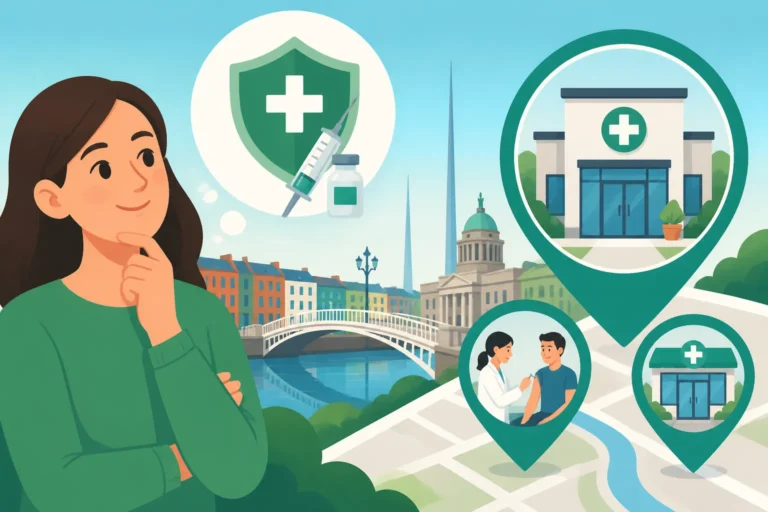
The actual process of registration is less about filling out a central form and more about "neighborhood scouting." I remember spending my first two weeks in Ranelagh calling every single clinic within a 5km radius, only to be told their lists were full. To avoid this, you need a systematic approach. Start by using the HSE (Health Service Executive) "Find a GP" map tool. This tool allows you to search by county and town to see a list of all registered practices.
Once you have a list, don't just email them. In Ireland, a phone call is often much more effective. When you call, be prepared to state your address (as they usually only take patients within a specific catchment area) and your PPS Number. If you don't have this yet, you should prioritize How to Register for Tax and Get a PPS Number in Ireland as it is the key to almost every service in the country. If a clinic says they are full, ask if they have a waiting list. Sometimes, being polite and persistent can get you a spot when a spot opens up a few weeks later.
Locating a GP Practice Near You
Proximity is the most important factor for Irish GPs. Because of the sheer volume of patients, many clinics in dense areas like Dublin 1, 2, 7, and 8 will strictly refuse anyone living outside their immediate postal code. If you are living in a more suburban area, such as Malahide or Greystones, you might find the lists are slightly more flexible, but the "catchment area" rule still generally applies.
When searching, look for "Family Practices" or "Primary Care Centres." The latter are often larger hubs that house multiple doctors, nurses, and sometimes even physiotherapists. These larger centers are sometimes more likely to have an opening for a new patient than a small, single-doctor operation. If you are a newcomer and haven't secured a permanent address yet, getting a GP can be nearly impossible. In these gap periods, having flexible travel or expat insurance like SafetyWing is essential to ensure you aren't left without any medical recourse if an emergency arises.
The Initial Registration Appointment
Once you find a clinic that will take you, they will usually ask you to come in for an "initial consultation." This isn't just a formality; it’s a full check-up where they record your medical history, current medications, and any chronic conditions. You will be expected to pay the standard consultation fee for this visit.
Be sure to bring a list of any ongoing prescriptions. The doctor will need to "Irish-ify" these prescriptions, meaning they will issue them on Irish prescription pads so you can use them at local pharmacies. If you are wondering about the cost of these follow-up steps, check out The Cost of Healthcare in Ireland: A Complete Breakdown for Foreigners (2026). Some GPs might also request that you have your previous medical records transferred from your home country, though this isn't always mandatory for healthy adults.
Registering for the GMS Scheme (Medical Card Holders)
If you have already secured a Medical Card or GP Visit Card, the registration process involves a specific form that both you and the GP must sign. The GP must be part of the GMS scheme to accept the card. If you are having trouble finding a doctor who will take a new Medical Card patient, you are not alone. This is a significant point of tension in the Irish healthcare system.
If you are a cardholder and have been refused by at least three GPs, you can contact the HSE. They have the power to "assign" you to a doctor's list. This is a slow process, but it is your legal right to have access to a GP if you are a cardholder. While waiting for this administrative wheel to turn, you may need to use private walk-in clinics, which can be expensive. Ensuring you have comprehensive coverage through SafetyWing during these bureaucratic delays can help mitigate the financial sting of paying for private care when you are technically entitled to public care.
Overcoming Common Hurdles and The "Closed List" Crisis
The "closed list" is the most significant barrier to How to Find and Register with a Local GP Practice in Ireland. You will often hear the phrase, "We are only taking family members of existing patients." While this feels discriminatory, it is a result of the system being over-capacity. If you find yourself in this situation, do not despair.
One trick is to check for brand-new clinics. When a new Primary Care Centre opens, they usually have a recruitment drive to fill their panels. Another option is to look at "GP Cooperatives" like D-Doc or South-Doc. These are primarily for out-of-hours care, but they can sometimes point you toward clinics that are currently expanding. If you are really stuck, you might need to broaden your search to the next town over, though this can make getting a home visit (rare but possible in Ireland) much more difficult.
The Three-Doctor Rule for Assignments
As mentioned, if you hold a Medical Card and cannot find a doctor, the HSE must step in. To trigger this, you must keep a record of the three doctors who refused you. You will need their names and the dates you contacted them. You then submit this to the National General Practitioner Recruitment and Monitoring Unit.
This process doesn't apply to private patients. If you are a private patient and can't find a GP, the state generally considers it a "market issue," and you are left to keep searching. This is a major reason why many expats choose to keep an international health insurance policy like SafetyWing active for their first year in Ireland. It provides a safety net that the local system sometimes fails to offer to those who don't yet "fit" into a specific GP's list.
Digital Health and Telehealth as a Bridge
While you are waiting to get on a list, Ireland has seen a surge in digital GP services. Companies like VideoDoc or the digital portals provided by major insurers (Laya, VHI, Irish Life) offer webcam consultations. These are excellent for minor ailments, repeat prescriptions, or getting a quick sick cert.
However, remember that a digital doctor cannot physically examine you. They cannot listen to your chest or palpate your abdomen. They are a bridge, not a permanent solution. For long-term health management, especially for children or those with chronic conditions, a physical GP in your local area is non-negotiable. If you are still weighing your options between the public and private routes, reading Public vs Private Healthcare in Ireland: Which Should Expats Choose? can help you decide if the digital-first approach of private insurance is worth the premium.
| Service Type | Estimated Cost (Private) | Availability | Notes |
|---|---|---|---|
| Standard GP Consultation | €60 – €85 | By Appointment Only | Usually 10-15 minutes. |
| Nurse Consultation | €30 – €50 | Better availability | Good for vitals and vaccines. |
| Blood Tests | €20 – €40 | Requires GP referral | Usually done in the morning. |
| Out-of-Hours (Doc-on-Duty) | €80 – €100 | Evenings/Weekends | Only for urgent, non-emergency care. |
| Telehealth / Video GP | €35 – €60 | Same-day | Great for prescriptions/certs. |
Practical Requirements and Essential Documentation
To make your registration as smooth as possible, you should have a "registration folder" ready. Irish administrative staff appreciate it when you have all your ducks in a row. It reduces the back-and-forth and makes it more likely they will "squeeze you in" if they see you are a low-maintenance, prepared patient.
The most important document is proof of address. This can be a utility bill or a bank statement. If you are struggling with this, see The Expat Guide to Setting Up Utilities (Electricity, Gas, Water) in Ireland for tips on getting that first bill in your name. Without proof that you live in the area, most GPs will not even entertain the conversation.
Essential Paperwork Checklist
- PPS Number: Essential for all residents.
- Proof of Address: A recent utility bill or rental agreement.
- Photo ID: Passport or Irish Driving Licence.
- Medical Card / GP Visit Card: If applicable.
- Immunization Records: Especially important for Understanding Childhood Vaccination Schedules in Ireland.
- Current Medication List: Including dosages and brand names.
If you are moving from outside the EU, your previous records might not be easily accessible. It is a good idea to have a digital copy of your most recent major test results (like MRIs or blood panels) on your phone or a USB drive. While the Irish GP might want to run their own tests, having the history helps them build your local profile much faster.
Navigating Costs and Insurance Claims
If you have private health insurance, you might be able to claim back a portion of your GP fees. Most mid-to-high-level plans allow you to claim €20 to €35 back per visit, up to a certain yearly limit. You usually do this by uploading a photo of your receipt to your insurer's app. If you are still shopping for a plan, Health Insurance in Ireland: VHI, Laya, Irish Life and Options Explained provides a great comparison of these benefits.
For those who are in Ireland temporarily or are waiting for their local insurance waiting periods to end, SafetyWing can be a vital financial cushion. It covers unexpected medical needs that might arise before you are fully settled into the Irish system. Remember, the "waiting period" for pre-existing conditions in Ireland can be up to five years for private insurance, so having an international plan that bridges the gap is a common strategy for savvy expats.
Navigating the Irish Healthcare Roadmap (2026) Disclaimer
This guide is intended for informational purposes only and does not constitute professional medical or legal advice. Healthcare regulations, GMS scheme eligibility, and GP availability in Ireland are subject to change. Always consult the Health Service Executive (HSE) or a qualified legal professional regarding your specific residency status and healthcare entitlements. While we strive to keep information current, the administrative landscape in Ireland can shift rapidly.