How Do I Find an Optician or Eye Doctor in Ireland?
One of the many things that can catch you off guard when you first move to Ireland is figuring out how the healthcare system works, especially when it comes to something as specific as eye care. Back home, you might have had a straightforward process, but here, it’s a bit different, and the terminology can be confusing. This guide will walk you through everything you need to know about finding an optician or eye doctor in Ireland, from understanding the different professionals to navigating costs and appointments, ensuring your vision stays clear.
Understanding Eye Care Professionals in Ireland
Before you even start looking for someone to check your eyes, it's really helpful to understand the different types of eye care professionals you'll encounter in Ireland. It’s not a one-size-fits-all situation, and knowing who does what can save you a lot of time and potential frustration.
Opticians vs. Ophthalmologists: What's the Difference?
This is perhaps the most common point of confusion for newcomers. In many countries, the terms might be used interchangeably or refer to the same general practitioner, but in Ireland, there's a clear distinction, much like elsewhere in Europe.
An optician (often referred to as an optometrist in Ireland, which we'll get to in a moment) is your primary port of call for routine eye care. Think of them as your General Practitioner (GP) for your eyes. They are trained to perform eye tests, diagnose common vision problems like short-sightedness (myopia), long-sightedness (hyperopia), and astigmatism, and prescribe corrective lenses (glasses and contact lenses). They also screen for eye diseases and other abnormalities. If they spot something serious that needs further medical investigation or treatment, they will refer you to an ophthalmologist. You don't need a referral from your GP to see an optician; you can book an appointment directly. They work in dedicated optical practices, which you'll find on most high streets and in shopping centres across Ireland. Popular chains include Specsavers, Vision Express, and Optical Express, alongside many excellent independent practices.
An ophthalmologist, on the other hand, is a medical doctor who has specialised in eye and vision care. They are surgeons and can diagnose and treat all eye diseases, perform eye surgery, and prescribe medication. If you have a complex eye condition, an eye injury, or require surgery for conditions like cataracts, glaucoma, or retinal problems, an ophthalmologist is the specialist you need. You usually get referred to an ophthalmologist by your GP or your optician. These professionals typically work in hospitals (both public and private) or in specialist eye clinics. Accessing an ophthalmologist directly without a referral is almost unheard of in the public system and usually requires a private referral, which can be quite costly.
The Role of Optometrists
To make things a little clearer, or perhaps more confusing depending on how you look at it, the term "optometrist" is widely used in Ireland and generally refers to the professional who conducts eye examinations and prescribes glasses and contact lenses. This is essentially what many people in other parts of the world would call an optician. So, when you're looking for an eye test to update your glasses prescription or check for general eye health, you're looking for an optometrist working within an optical practice. They are skilled in detecting early signs of eye conditions and can provide initial advice and referrals. They are regulated by the Optical Registration Board, under CORU (the Health and Social Care Professionals Council), ensuring they meet high standards of practice. This distinction is really important because it sets the expectation for who you’ll see and what services they can provide without a referral from another medical professional.
Navigating the Irish Eye Care System as an Expat
As an expat, understanding how to access eye care without the familiar systems of your home country can be a hurdle. Ireland has a blend of public and private services, and eye care often falls into a somewhat grey area between the two, depending on what you need.
Public vs. Private Eye Care Services
Ireland’s healthcare system, run largely by the Health Service Executive (HSE), primarily focuses on medical needs rather than routine vision care in its public offerings. This is a crucial distinction to grasp.
Public Eye Care: For the most part, routine eye exams, glasses, and contact lenses are not covered by the public healthcare system unless you qualify for specific schemes or have certain medical conditions. Public ophthalmology services, however, are available. If you have a serious eye condition that requires specialist medical attention or surgery, your GP or optician can refer you to a public hospital ophthalmology department. Be prepared for potentially long waiting lists for non-urgent public appointments, which is a common frustration across the Irish healthcare system. For example, if you're referred for something like cataracts but it's not deemed urgent, you could be waiting for many months, sometimes even over a year, depending on the severity and the hospital’s capacity. This is where How Long Are Waiting Lists in the Public Health System in Ireland? often becomes a real concern for expats.
Private Eye Care: This is where most expats will access routine eye care. Private optical practices (opticians/optometrists) are plentiful and offer a wide range of services from eye exams to fitting designer frames and contact lenses. You can simply book an appointment directly, without a referral. Wait times for private opticians are generally very short – often you can get an appointment within a few days, sometimes even the same day. For private ophthalmology, you’ll typically need a referral from your GP or optician. Private ophthalmologists work in private hospitals like the Blackrock Clinic, Beacon Hospital, or Mater Private, as well as in smaller private clinics. While more expensive, the wait times are significantly shorter, and you often have more choice in terms of appointment times.
Costs and Coverage: What to Expect
The financial aspect of eye care can be a bit of a shock if you're used to a system where vision is fully covered. Generally, routine eye care is not free in Ireland, even for residents.
An eye test with a private optician typically costs anywhere from €30 to €60. This fee covers the examination, and then you'll pay extra for glasses, lenses, or any other services. Frames and lenses can vary wildly in price, from budget options starting at €50-€100 to designer brands that easily run into several hundred euros. For contact lenses, you’ll have the cost of the lenses themselves plus a separate contact lens fitting and aftercare fee, usually annually.
For specialist private ophthalmology appointments, the costs are much higher. An initial consultation could be €150-€250, with follow-up appointments costing less. Procedures and surgeries would be in the thousands. This is why many expats consider Health Insurance in Ireland: VHI, Laya, Irish Life and Options Explained as a crucial part of their financial planning, as it can significantly mitigate these costs.
Here's a quick overview of potential costs:
| Service | Typical Cost (Out-of-Pocket) | Notes |
|---|---|---|
| Routine Eye Exam (Optician) | €30 – €60 | Often includes basic prescription. |
| Basic Prescription Glasses | €50 – €150+ | Varies greatly by frame, lens type (single vision, varifocal), and coatings. |
| Contact Lens Fitting & Aftercare | €50 – €100 (annual) | Excludes cost of lenses. |
| Monthly Disposable Lenses | €20 – €40 per month | Depending on brand and type. |
| Specialist Opthalmologist Consult | €150 – €250 (initial) | Requires referral. May be covered by private health insurance. |
| Eye Surgery (e.g., Cataract) | €2,000 – €5,000+ | Can be significantly higher. Often covered by private health insurance. Public option has long wait times. |
It's clear that these costs can add up, so exploring your options for coverage is essential.
Step-by-Step Guide to Finding an Optician or Eye Doctor
Alright, so you know the difference between an optician and an ophthalmologist, and you have an idea of the costs. Now, how do you actually find one? Don't worry, it's not as complex as some other administrative hurdles here in Ireland.
Online Search and Directories
The easiest and most common way to start your search is online.
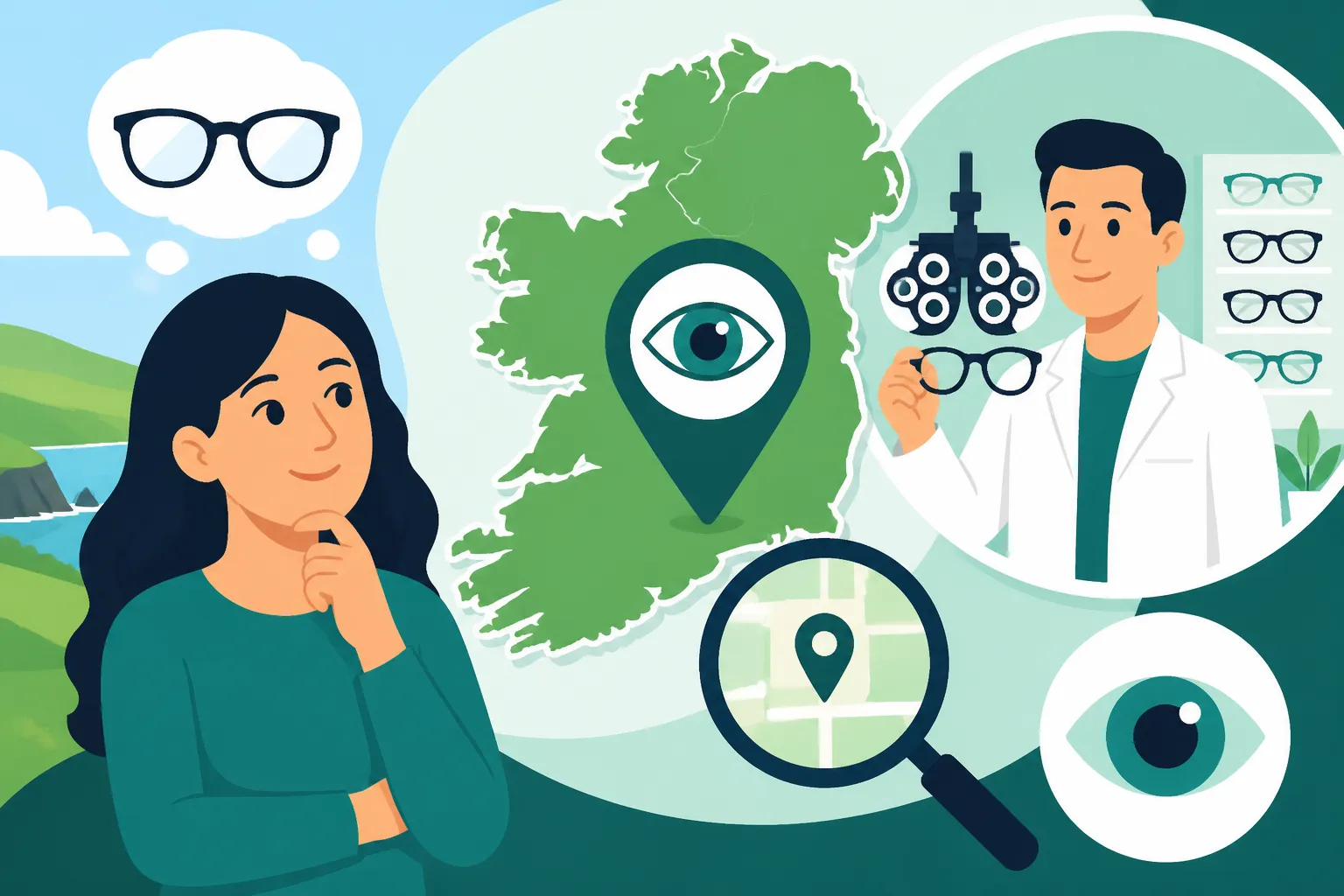
- Google Maps: A simple "optician near me" or "eye doctor Dublin" search on Google Maps will bring up a list of local practices. This is great for finding places that are convenient to your home or workplace. You'll often see user reviews, opening hours, and direct contact details.
- Chain Stores: Major optical chains like Specsavers, Vision Express, and Optical Express have extensive presences across Ireland. Their websites usually have a store locator feature where you can search by town or postcode. These chains often have promotional offers, like two-for-one glasses or discounted eye tests, which can be appealing.
- Irish Optometrists Association (AOI): The Association of Optometrists Ireland (AOI) has a "Find an Optometrist" tool on their website. This is an excellent resource for finding qualified professionals and can offer a sense of reassurance, knowing you're going to a recognised and regulated practitioner.
- Private Hospital Websites: If you know you need to see an ophthalmologist and are looking at private options, check the websites of private hospitals like Blackrock Clinic, Beacon Hospital, or Mater Private Hospital. They list their consultants and their specialities. Remember, though, you'll still need that referral from your GP or optometrist.
Recommendations and Local Knowledge
Sometimes, the best advice comes from people who've already been through it.
- Fellow Expats: Ask in expat groups on social media (Facebook groups for "Expats in Dublin" or "Irish Life for Foreigners" are goldmines), or reach out to colleagues and friends who have been in Ireland for a while. They can offer personal recommendations, share experiences about specific practices, and even warn you about places to avoid.
- GP Recommendations: Your GP (General Practitioner) is another excellent source. While you don't need a referral for a routine eye test, your GP can certainly recommend reputable opticians in your area. If you need to see an ophthalmologist, your GP is the one who will give you that formal referral, and they'll likely have a list of specialists they trust. This ties into the broader process of Registering with a GP in Ireland: The Complete Expat Guide (2027), which is one of the first things you should do upon arrival.
- Local Pharmacies: Pharmacists are highly knowledgeable about local health services. If you pop into your local pharmacy, they might be able to suggest a good optician nearby, especially if you’re looking for an independent practice rather than a large chain.
Booking Your Appointment and What to Bring
Once you've chosen an optician or eye doctor, booking an appointment is usually straightforward.
- Calling Directly: The most common method is to simply call the practice. Be prepared to state your purpose (e.g., "I'd like to book an eye test for glasses," or "I need a contact lens check-up").
- Online Booking: Many larger chains and some independent opticians now offer online booking through their websites, which can be very convenient.
- Referral for Specialists: If you're booking an appointment with an ophthalmologist, ensure you have your referral letter from your GP or optometrist ready. The ophthalmologist's office will almost certainly ask for it.
What to Bring to Your Appointment:
- Previous Glasses/Contact Lenses: Bring your current glasses and any contact lens packaging. This gives the optician a baseline of your previous prescription.
- Old Prescription: If you have it, bring your most recent eye prescription.
- PPS Number: While not always strictly necessary for a private optician, it’s always good to have your PPS (Personal Public Service) number on hand for any health-related appointment, especially if you're hoping to claim PRSI benefits or tax relief.
- Medical Card/GP Visit Card: If you have one, bring your Medical Card or GP Visit Card. While these generally don't cover routine eye tests, there are specific entitlements for children, students, and those with certain medical conditions, which we'll discuss shortly.
- Health Insurance Details: If you have private health insurance, bring your policy details.
- List of Medications: Be ready to list any medications you are currently taking, as these can sometimes affect your eye health.
- Questions: Prepare any questions you might have about your vision, eye health, or potential treatments.
It’s worth noting that if you're newly arrived, you might only have travel insurance like SafetyWing. While SafetyWing provides comprehensive travel medical insurance for emergencies, it typically won't cover routine eye exams or the cost of glasses. It's designed for unexpected medical issues, so if you're planning a long-term stay, you’ll eventually want to look into local private health insurance or see if you qualify for state support.
Services Offered by Opticians and Eye Doctors in Ireland
The range of services offered by eye care professionals in Ireland is quite broad, covering everything from simple vision checks to complex surgical procedures. Knowing what each type of professional can do for you will help you direct your needs appropriately.
Routine Eye Exams and Prescriptions
Your standard optician (optometrist) visit is primarily for a routine eye exam. This isn't just about figuring out if you need glasses; it's a comprehensive check of your overall eye health. During an exam, the optometrist will:
- Test Visual Acuity: Reading letters on a chart to measure how well you see at various distances.
- Refraction Test: Using different lenses to determine your precise prescription for glasses or contact lenses.
- Eye Muscle Movement and Coordination: Checking how well your eyes move and work together.
- Peripheral Vision: Testing your side vision.
- Intraocular Pressure (IOP) Measurement: This is often done with a puff of air (the dreaded "puff test"!) or a gentler contact method, to screen for glaucoma.
- Retinal Examination: Looking into the back of your eye (the retina) to check the optic nerve and blood vessels. This can sometimes involve dilating your pupils with drops, so be aware that your vision might be blurry for a few hours afterwards, and you shouldn’t drive.
If issues are found, the optometrist will then provide you with a prescription for corrective lenses and explain your options. They can also often dispense the glasses or contact lenses right there in the practice. If they detect signs of an eye disease or a more serious condition, they will refer you to an ophthalmologist for further diagnosis and treatment.
Contact Lens Services
Many opticians offer comprehensive contact lens services. This goes beyond just providing the lenses; it’s about ensuring they are the right fit for your eyes and lifestyle.
- Contact Lens Consultation and Fitting: If you’re new to contact lenses or looking to switch brands, you'll need a consultation. The optometrist will assess your eye health, measure your eye shape, and determine the best type of lens for you (daily disposables, monthly, toric for astigmatism, multifocal, etc.). They’ll also teach you how to insert, remove, and care for your lenses properly.
- Aftercare Appointments: Regular contact lens aftercare appointments are crucial, usually annually. These check that your lenses are still fitting well, your eyes are healthy, and there are no signs of complications from lens wear. This service ensures your continued comfort and eye health. Always adhere to the recommended aftercare schedule, as improper contact lens use can lead to serious eye infections.
Glaucoma, Cataract, and Other Eye Conditions
While opticians screen for these conditions, the diagnosis and treatment of serious eye diseases typically fall under the purview of an ophthalmologist.
- Glaucoma: This condition involves damage to the optic nerve, often due to high eye pressure. Opticians will screen for it during routine exams, but an ophthalmologist provides definitive diagnosis, monitors progression, and prescribes treatment (usually eye drops, sometimes laser treatment or surgery).
- Cataracts: A clouding of the eye's natural lens, leading to blurry vision. Opticians can identify cataracts, but an ophthalmologist will evaluate their severity and perform cataract surgery, which involves replacing the cloudy lens with an artificial one.
- Macular Degeneration: A common age-related condition affecting central vision. Again, opticians can detect signs, but an ophthalmologist manages the condition, potentially with injections or other treatments to slow its progression.
- Diabetic Retinopathy: A complication of diabetes that affects the eyes. Regular screening for diabetic patients is vital, often through specialist services coordinated by the HSE, and an ophthalmologist will manage any treatment required.
- Eye Injuries and Infections: For minor eye infections like conjunctivitis, your GP or a pharmacist might be able to help (see Prescription Medications and Pharmacies in Ireland: The Complete Guide for more). However, for serious infections or injuries, you'll need to see an ophthalmologist. In an emergency, you'd go to an A&E department, which might then refer you to an on-call ophthalmologist.
Understanding these roles helps ensure you get the right care without unnecessary delays.
Paying for Eye Care: Insurance, Schemes, and Out-of-Pocket
This is where it can get a bit complex, especially if you're new to Ireland's system. While basic eye tests are relatively affordable, the costs of glasses, contact lenses, or specialist treatment can quickly add up. Let’s break down the different ways you might get help with the bill.
PRSI Entitlements and Medical Card
The Irish state does offer some assistance, primarily through PRSI (Pay Related Social Insurance) entitlements and the Medical Card.
- PRSI Optical Benefits: If you're employed or self-employed and have made enough PRSI contributions, you may be entitled to a free eye examination every two years. This is a significant benefit. Many opticians are registered to provide this service, and you simply need to provide your PPS number. The optician can then check your eligibility directly with the Department of Social Protection. Be aware, this usually covers the eye test itself, but not necessarily the full cost of glasses or contact lenses, though some providers might offer a discount on frames if you've claimed your PRSI test. This is one of the more practical benefits of Understanding PRSI, the State Pension and Retirement in Ireland.
- Medical Card and GP Visit Card:
- Medical Card: If you hold a Medical Card (which is means-tested – meaning your income and assets must be below a certain threshold), you are generally entitled to a free eye test and, in some cases, a pair of standard spectacles. The specific entitlements can vary, and it's best to check with your optician or the HSE. Applying for a Medical Card is a thorough process, and not all expats will qualify, as it's primarily for those on lower incomes or with significant medical needs. For more details, you can look at Understanding the Medical Card Means Test in Ireland.
- GP Visit Card: A GP Visit Card only covers visits to your GP; it does not cover eye tests or glasses from an optician, nor does it cover private specialist consultations. It’s useful for general health concerns, but not directly for eye care.
- Children and Students: There are specific schemes for children under 16 with a Medical Card, and sometimes for students over 16, which can cover eye tests and provide an allowance towards glasses. Always check current eligibility rules, as these can change.
Private Health Insurance Coverage
For many expats, especially those who don't qualify for a Medical Card or want faster access to specialist care, private health insurance is the primary way to get significant coverage for eye care.
- Optional Extras: Most standard private health insurance plans in Ireland (from providers like VHI, Laya Healthcare, and Irish Life Health) offer some level of outpatient cover, which can include a portion of the cost of eye tests and prescription glasses/contact lenses. Often, this is part of an "everyday" or "routine care" package. You might get a fixed amount back (e.g., €30-€50 for an eye test, €100-€200 for glasses/lenses) per year or every two years.
- Specialist Consultations: Crucially, private health insurance will often cover a significant portion, or even all, of the cost of specialist ophthalmologist consultations and procedures, provided they are medically necessary and you have a valid referral. This is where private health insurance truly shines, potentially saving you thousands of euros if you need surgery or long-term specialist treatment.
- Waiting Periods: Be mindful that private health insurance plans often have waiting periods before you can claim for certain benefits, especially for pre-existing conditions or more significant treatments. For routine eye care, the waiting periods are usually shorter, but always check your policy. When you're new to the country, it's wise to consider your health coverage from day one. Some expats opt for international health insurance solutions like SafetyWing in their initial period, which focuses on comprehensive travel medical insurance but might not cover routine optical needs until you transition to a full Irish private health plan. Understanding How to Buy Private Health Insurance as a Newcomer in Ireland will be very beneficial.
Understanding Out-of-Pocket Expenses
Even with PRSI benefits or private insurance, you should expect to have some out-of-pocket expenses for eye care in Ireland.
- Co-payments/Excess: Your private health insurance plan might have an "excess" (an amount you pay yourself before the insurer covers the rest) or a "co-payment" (a percentage you contribute).
- Beyond Coverage Limits: If your glasses are very expensive, or you choose high-end frames or advanced lens coatings, you'll likely pay the difference beyond what your insurance or PRSI benefit covers.
- Non-Covered Services: Services like cosmetic procedures or certain non-essential contact lens types may not be covered at all.
You can also claim tax relief on certain medical expenses, including those related to eye care, through Revenue (Ireland's tax authority). This usually involves submitting a Med 1 form. For more on this, check out How to Claim Tax Relief on Medical Expenses in Ireland.
What to Expect During Your Eye Exam
Going for an eye exam in a new country can feel a bit daunting, even for a routine check-up. But honestly, it's quite similar to what you might be used to, and the professionals here are very good at making you feel at ease.
The Examination Process
Once you arrive at the optician's practice, you'll usually check in at the reception. You might be asked to fill out a short form detailing your medical history, any current medications, and your reason for the visit. This is standard procedure and helps the optometrist understand your background.
The actual eye exam will typically take about 20-30 minutes, sometimes longer if it's a comprehensive first visit or if you're getting fitted for contact lenses. The optometrist will lead you through various tests, which might include:
- Pre-tests: Often, a technician or assistant will perform some initial tests before you see the optometrist. This might include automated vision screening, the "puff test" for glaucoma (which measures eye pressure), and sometimes digital retinal photography, which takes a picture of the back of your eye.
- Visual Acuity Test: You'll sit in front of a chart (Snellen chart) and read letters of decreasing size. They'll test each eye individually and then together.
- Refraction Test: This is where the optometrist will put different lenses in front of your eyes in a device called a phoropter, asking "Which is better, number one or number two?" to fine-tune your prescription. This determines the exact power needed for your glasses or contact lenses.
- Eye Health Assessment: The optometrist will use special lights and magnifiers to examine the external and internal structures of your eyes. This is a crucial part of the exam, as it helps detect early signs of eye diseases, even if you don't have any symptoms. They'll look at your eyelids, cornea, iris, lens, and retina. They might use eye drops to dilate your pupils for a clearer view of the retina, which means you'll experience temporary blurry vision and light sensitivity for a few hours afterward. If this happens, you absolutely shouldn't drive yourself home, so plan accordingly.
- Visual Field Test: Occasionally, if there's a concern about conditions like glaucoma or neurological issues, they might do a visual field test, where you look at a central point and click a button when you see lights appear in your peripheral vision.
Throughout the process, the optometrist will explain what they are doing and why. Don't be shy about asking questions if something is unclear. They're there to help!
Interpreting Your Prescription and Next Steps
Once the examination is complete, the optometrist will discuss their findings with you. If you need a new prescription, they will explain the changes and give you a written copy of your prescription. This prescription will have numbers like sphere (SPH), cylinder (CYL), axis, and sometimes add (ADD) for multifocals, along with the pupillary distance (PD). These numbers are essential for getting your new glasses or contact lenses made correctly.
They will also inform you about the health of your eyes. If they detected any concerns, such as early signs of cataracts, glaucoma, or other conditions, they will explain what these mean, what to look out for, and crucially, whether you need a referral to an ophthalmologist.
What happens next?
- Choosing Eyewear: If you need glasses, you'll typically be guided to the dispensing area within the practice. Here, you can choose frames and discuss lens options (e.g., anti-glare coatings, blue light filters, thinning lenses for high prescriptions, varifocals, or bifocals). The staff will help you find frames that fit your face and budget.
- Ordering Contact Lenses: If you’re opting for contact lenses, they'll confirm your prescription, discuss your preferred type (daily, monthly), and place an order. You might also get a supply of trial lenses.
- Referral: If an ophthalmologist referral is necessary, the optometrist will either provide you with the referral letter to take to your GP or send it directly to your GP. Your GP will then process the referral to a specialist. This is a crucial step if a serious eye condition is suspected.
- Follow-up: The optometrist will usually recommend when your next eye exam should be, typically in one or two years, or sooner if there's a specific condition to monitor.
Remember, finding an optician or eye doctor in Ireland is usually a smooth process, especially for routine care. It's just about knowing the local distinctions and how to best navigate the system to get the quality eye care you need.
Disclaimer
The information provided in this guide is for general informational purposes only and does not constitute medical or legal advice. While we strive to provide accurate and up-to-date information, healthcare regulations, services, and costs in Ireland can change. Always consult with a qualified healthcare professional or legal expert for advice tailored to your specific situation.