The Expat Guide to Setting Up Utilities (Electricity, Gas, Water) in Ireland
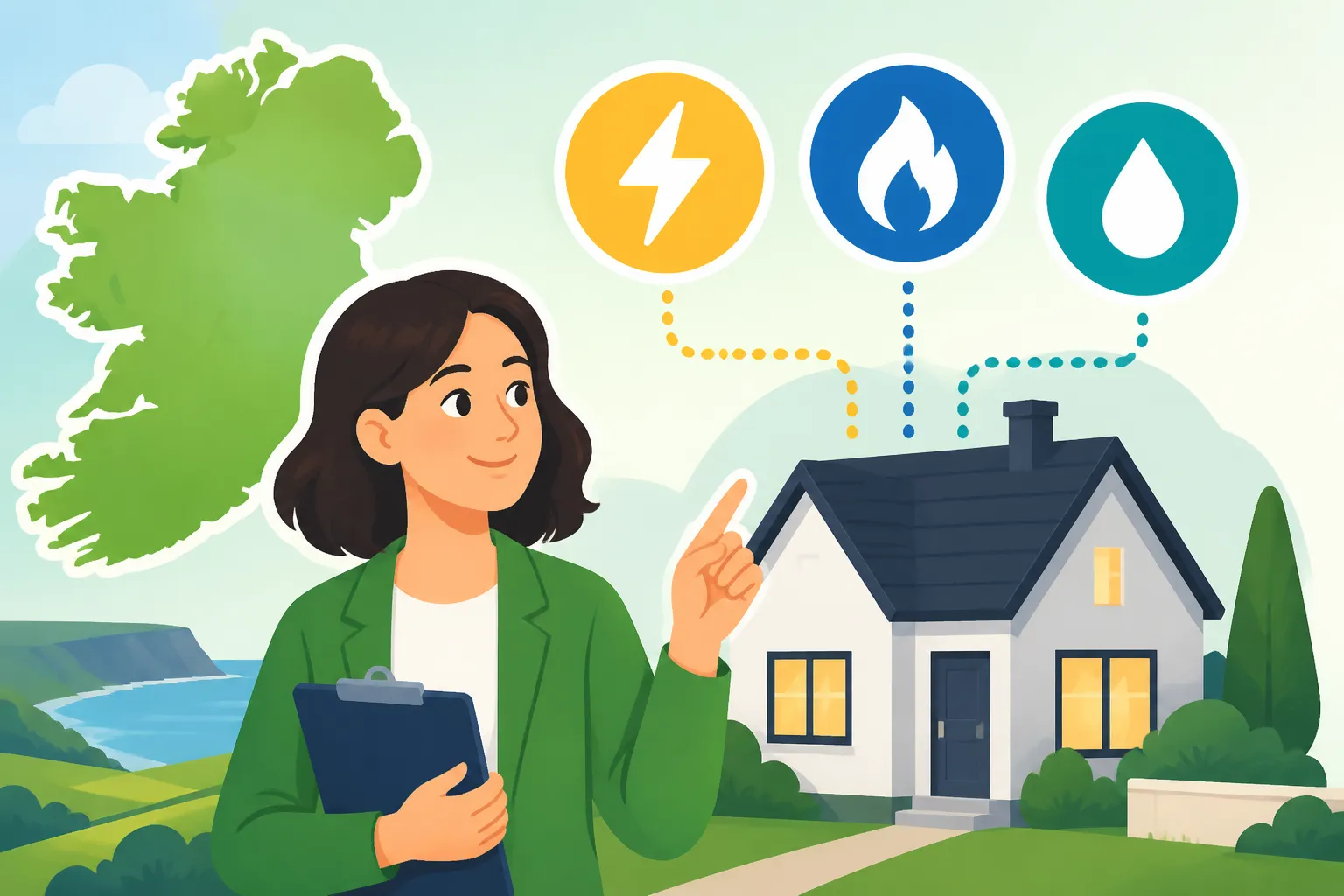
Ah, the joys of moving to a new country! You’ve finally landed in Ireland, found a place that feels like home, only to be hit with the perplexing maze of setting up utilities. It’s not just about flipping a switch; it’s a whole new language of MPRNs, GPRNs, and supplier choices that can leave even the most seasoned expat scratching their head. This guide is here to untangle that knot, walking you through everything you need to know about getting your electricity, gas, and water up and running smoothly in your Irish abode.
Understanding the Irish Utilities Landscape
Before you even think about plugging in your kettle or turning on the heating, it's crucial to understand how Ireland’s utility system operates. Unlike some countries where a single entity handles everything, Ireland’s setup is a mix of regulated networks and competitive retail markets. It can feel a bit fragmented at first, but once you get the hang of it, you'll see there's a method to the madness.
Electricity Providers and the Deregulated Market
When it comes to electricity, Ireland operates a deregulated retail market. This means while the actual infrastructure – the poles, wires, and meters – is managed by a single entity, ESB Networks, you have a choice of several companies (suppliers) from whom to buy your electricity. This competition is generally a good thing for consumers, as it means suppliers are constantly vying for your business with different tariffs and offers.
You'll find familiar names like Electric Ireland, which is the incumbent supplier, alongside others such as Bord Gáis Energy, SSE Airtricity, and Energia, to name just a few. Each of these companies purchases electricity on the wholesale market and then sells it to residential and business customers. Their pricing structures can vary wildly, often including introductory discounts, loyalty bonuses, or specific tariffs for different times of the day. It’s a bit like choosing a mobile phone provider; the underlying network is the same, but the plans and perks differ.
Gas Networks Ireland and Retail Suppliers
Gas in Ireland functions in a similar way to electricity, with a clear separation between the network operator and the retail suppliers. Gas Networks Ireland (GNI) is responsible for the natural gas pipeline network across the country. They maintain the infrastructure, ensure safety, and transport gas to your home. However, GNI does not sell gas directly to you.
Instead, you'll choose a gas supplier from the competitive retail market. Many of the same companies that supply electricity also supply gas, making it convenient to bundle services if you prefer. Suppliers like Bord Gáis Energy (the original gas provider, hence the name!), Electric Ireland, and SSE Airtricity are prominent players. Again, the competition means a range of tariffs, including standard rates, discounted online rates, and dual-fuel options. It’s important to note that natural gas isn't available in all parts of Ireland, particularly in very rural areas, so always check if your new home is connected before assuming you can get it.
Water and Wastewater Services: Uisce Éireann
Water services in Ireland have a slightly different story, and frankly, they’ve been a bit of a political hot potato for years. Residential water charges for supply and wastewater were suspended by the government in 2017. This means that, for now, most households do not pay directly for their domestic water usage. This is a massive relief for many expats who might be used to hefty monthly water bills elsewhere.
However, that doesn't mean water services are unregulated or non-existent. Uisce Éireann, formerly known as Irish Water, is the national utility company responsible for providing public water and wastewater services. Even though you might not be paying a direct bill, it’s still important to be aware of their role, especially regarding new connections, maintenance, and any potential future changes in policy. They manage the pipes, treatment plants, and ensure your tap water is safe to drink. While direct residential charges are currently suspended, businesses and non-domestic users still pay for water. You can learn more about this by checking out our guide on Understanding Water Charges and Irish Water Uisce Eireann.
Setting Up Electricity in Your New Irish Home
Getting your electricity connected is often one of the first things you'll tackle when moving into a new place in Ireland. It’s essential for everything from lighting and heating to charging your phone, so understanding the process is key. Don't worry, it's not as daunting as it might seem.
Finding Your Meter and MPRN
Your electricity supply is uniquely identified by a Meter Point Reference Number, or MPRN. This is a crucial 11-digit number that acts like a postcode for your electricity meter. You absolutely need this when you're setting up a new account with a supplier. Without it, they simply won't know which property to connect.
So, how do you find your MPRN?
- Check Previous Bills: If you have access to old electricity bills for the property (sometimes left by the previous occupant or provided by the landlord/letting agent), the MPRN will be clearly displayed on it.
- Ask the Landlord/Agent: Your landlord or letting agent should definitely have this number. It's standard practice for them to provide it when you're moving in.
- Find the Meter: The MPRN is often printed on the electricity meter itself. Meters can be located inside your home (under the stairs, in a utility cupboard), or outside (in a box on an exterior wall).
- Contact ESB Networks: If all else fails, you can contact ESB Networks directly. With your address, they should be able to provide you with the MPRN for your property.
Once you have your MPRN, make sure to also take a meter reading on the day you move in. This is vital to ensure you're only charged for the electricity you actually use, and not for the previous tenant's consumption.
Choosing an Electricity Supplier: What to Look For
This is where the competitive market comes into play, and you have some decisions to make! With multiple suppliers offering different deals, it pays to shop around. Here’s what to consider:
- Tariff Type:
- Standard Meter: This is the most common, where you pay a flat rate per unit (kWh) of electricity, regardless of the time of day.
- Day/Night Meter (Economy 7): If your home has a dual-rate meter, you'll pay a lower rate for electricity used during off-peak night hours and a higher rate during peak day hours. This can be cost-effective if you use a lot of electricity at night (e.g., for storage heaters or charging an electric car).
- Prepay Meter: Some properties might have a prepay meter, where you top up a card or key with credit and insert it into the meter. This is great for budgeting but can sometimes have slightly higher unit rates.
- Pricing and Discounts: Many suppliers offer attractive introductory discounts for new customers, often lasting for 12 months. Be wary of these "honeymoon" rates; always check what the price reverts to after the discount period. Look at the unit rate (cents per kWh), the standing charge (a daily or monthly fixed fee), and any PSO levy (Public Service Obligation levy, a government charge).
- Contract Length: Most deals are for 12 months. Early exit fees might apply if you switch before the contract is up.
- Customer Service & Online Features: Consider a supplier’s reputation for customer service. Do they have a good online portal or app for managing your account and submitting meter readings?
- Green Energy Options: If environmental impact is important to you, check if suppliers offer 100% renewable electricity tariffs. Electric Ireland, for instance, offers various green options.
It’s often a good idea to use a price comparison website, like bonkers.ie or switcher.ie, to get a clear overview of the current deals available. They’ll ask for your MPRN and estimated annual consumption to give you tailored quotes.
The Step-by-Step Activation Process
Once you've chosen a supplier, the actual activation process is relatively straightforward.
- Contact Your Chosen Supplier: Call them or sign up online. You’ll need your MPRN, your new address, your move-in date, and your initial meter reading.
- Provide Personal Details: They will ask for your name, contact information, and often your PPS Number (Personal Public Service Number) for identification purposes. Having your PPS Number sorted is essential for many administrative tasks in Ireland, so if you haven't already, make sure to consult our guide on How to Register for Tax and Get a PPS Number in Ireland.
- Set Up Payment: Most suppliers will encourage you to set up a direct debit. This is usually the cheapest way to pay as some suppliers charge extra for non-direct debit payments. You can also pay by cash, cheque, or through their app/online portal.
- Confirm Connection: In most cases, if the electricity was previously connected to the property, the switch will be seamless and happen "behind the scenes." You won't typically experience a power cut. If the electricity was disconnected for a long time, an ESB Networks technician might need to visit to reconnect it, which could take a few working days. They will let you know if this is necessary.
- Submit Regular Readings: Remember to submit meter readings regularly (monthly or bi-monthly) to avoid estimated bills, which can sometimes be inaccurate and lead to over or underpayment.
Here's a quick comparison of common electricity supplier offerings in Ireland:
| Supplier Name | Common Offerings | Typical Features | Payment Methods | Green Options |
|---|---|---|---|---|
| Electric Ireland | Standard, Day/Night, Prepay, Fixed-Price | Loyalty bonuses, online discounts, smart meter plans | Direct Debit, Online, Post | Yes |
| Bord Gáis Energy | Standard, Day/Night, Dual Fuel, Smart Meter | New customer discounts, Boiler servicing, Hive smart home products | Direct Debit, Online, Prepay | Yes |
| SSE Airtricity | Standard, Day/Night, Dual Fuel, 100% Green Energy | Introductory offers, bundle discounts, rewards | Direct Debit, Online, Prepay | Yes |
| Energia | Standard, Day/Night, Dual Fuel, Fixed-Price, Smart | Cashback offers, competitive unit rates | Direct Debit, Online | Yes |
| Panda Power | Standard, Dual Fuel, Prepay | Simpler tariffs, new customer deals | Direct Debit, Online, Prepay | Varies by plan |
Note: Offerings and features can change frequently. Always check directly with the supplier or a comparison site for the most up-to-date information.
Getting Your Gas Connected in Ireland
If your new home in Ireland is hooked up to the natural gas network, you’ll want to get that sorted for heating and cooking. It's generally more efficient and often cheaper than electric-only alternatives, especially for heating. The process is similar to electricity but has its own unique identifiers and safety considerations.
Identifying Your GPRN and Gas Supply Type
Just like electricity has an MPRN, your gas supply has a unique 7-digit Gas Point Reference Number, or GPRN. This number identifies your specific connection point to the national gas network. You'll need this when opening a new account with any gas supplier.
Ways to find your GPRN:
- Previous Bills: The GPRN will be printed on past gas bills for the property.
- Landlord/Letting Agent: They are the best source for this information.
- Gas Meter: The GPRN might be on a sticker or plate on the gas meter itself, which is usually found outside the property in a meter box.
- Gas Networks Ireland: If you can't find it elsewhere, Gas Networks Ireland (GNI) can provide it based on your address.
Also, it's good to know your supply type. Most residential properties will have a standard credit meter where you pay for gas after you use it. However, some homes, particularly older rentals or those with previous tenants who struggled with bills, might have a prepay gas meter. These require you to top up a card or key before you can use gas. Make sure you know which type you have, as it affects your choice of supplier and payment methods.
Selecting a Gas Supplier and Understanding Tariffs
The choice of gas supplier is usually straightforward, as many of the electricity providers also offer gas. Opting for a dual-fuel package (electricity and gas from the same provider) can sometimes lead to additional discounts, so it’s worth investigating if that makes sense for your usage.
When comparing gas suppliers and tariffs, consider:
- Unit Rate: This is the cost per unit (kWh) of gas you consume.
- Standing Charge: A fixed daily or monthly charge, regardless of how much gas you use.
- Discounts: Look for new customer discounts or dual-fuel savings. These can significantly reduce your bill in the first year.
- Contract Terms: Check the length of the contract and any early exit fees.
- Payment Method: Direct debit is usually the cheapest way to pay.
As with electricity, comparison websites like bonkers.ie and switcher.ie are excellent tools for comparing deals across different suppliers. They’ll allow you to input your GPRN and get accurate quotes. Make sure to consider not just the initial savings but the overall cost after any introductory periods.
The Connection and Safety Check Process
Connecting your gas involves a few extra safety steps that electricity doesn't require, and it's something many expats don't realise until they're in the thick of it.
- Contact Your Chosen Supplier: Provide your GPRN, move-in date, and initial meter reading.
- New Connection vs. Reconnection:
- Existing Supply (Credit Meter): If the gas supply was active when you moved in and you’re just changing the account into your name, it's usually a swift, administrative switch. No physical visit is typically required.
- Disconnected Supply: If the previous tenant disconnected the gas, or if the property has been vacant for a while, Gas Networks Ireland (GNI) may need to send a technician to reconnect it at the meter. This is usually free of charge but requires you to be home and can take a few working days to schedule.
- New Installation: If your home has never had a gas supply, or the meter box is empty, you’ll need a new installation. This is a more involved process coordinated by GNI, and there might be connection fees and a longer waiting time. This is less common for existing homes but can happen if a property has been extensively renovated.
- Safety First – Gas Safety Check: This is the critical step often missed by newcomers. If the gas supply to the property was disconnected, or if you're taking over an old connection, your chosen gas supplier is legally obliged to ensure a Registered Gas Installer (RGI) completes a safety check of your internal gas appliances and pipework before restoring the supply. You’ll typically need to arrange and pay for this yourself. This is non-negotiable for safety reasons.
- What to expect: An RGI will inspect your boiler, gas cooker, and any other gas appliances for leaks or faults. They will issue you a 'Declaration of Conformance' (DC) certificate if everything is safe.
- Finding an RGI: You can find a list of registered installers on the Gas Safe Register Ireland website. Your gas supplier might also be able to recommend local RGIs or even offer this service as part of a package (e.g., Bord Gáis Energy often includes boiler servicing).
- Supply Restored: Once the RGI certifies your internal gas system is safe, and GNI has done their part (if a physical reconnection was needed), your gas supply will be fully restored.
Remember, never try to tamper with gas pipes or meters yourself. Always use a Registered Gas Installer for any work on internal gas appliances. Safety is paramount when dealing with gas.
Navigating Water Services with Uisce Éireann
The topic of water charges in Ireland has been a complex one, and as an expat, it’s understandable if you're confused. The good news is that for most residential customers, the process is far simpler than electricity or gas, at least for now!
Understanding Residential Water Charges (or lack thereof)
domestic residential water charges in Ireland are suspended. This means that households do not receive a bill from Uisce Éireann for the water they use or for wastewater services. This suspension has been in place since April 2017 and has continued. It's a significant difference from many other countries where water bills can be a substantial part of household expenses.
This doesn't mean water is 'free' in the sense that no one pays for it. The cost of providing water and wastewater services is now covered by general taxation. So, while you won't get a separate bill, you are contributing to the system indirectly through your taxes. This also doesn't apply to commercial or industrial properties, which still pay for their water usage.
For expats, this means one less utility bill to worry about directly, which can be a pleasant surprise when you're calculating your overall The Complete Guide to Cost of Living in Ireland for Expats (2026).
Registering with Uisce Éireann (formerly Irish Water)
Even with charges suspended, it’s still generally advisable to register your details with Uisce Éireann (which was formerly known as Irish Water). This isn't usually a mandatory step for residential customers with suspended charges, but it helps them keep their records accurate, especially for properties that might have specific service needs or issues.
You might want to register if:
- You are moving into a newly built home.
- You are experiencing issues with your water supply or wastewater.
- You want to receive updates from Uisce Éireann regarding local water works, boil water notices, or other service alerts.
The process for registering is quite simple and can typically be done online through the Uisce Éireann website. You'll need your address and contact details. They might ask for your PPS Number or other identification, but given the lack of direct billing, the urgency or strictness around this is lower compared to electricity and gas. You won't be setting up a direct debit or choosing a tariff, just updating their database.
Water Quality and Supply Issues
While you might not be paying directly, you still want to ensure your water is safe and readily available! Ireland has a robust system for monitoring water quality, and tap water is generally safe to drink across the country. Uisce Éireann regularly tests water supplies and publishes reports on water quality.
If you encounter any issues with your water supply, such as:
- No water: This could be due to local maintenance work, a burst pipe, or other issues.
- Low pressure: Might indicate a leak or a localised problem.
- Discoloured water: Could be due to pipe maintenance in the area.
- Boil Water Notices: In rare instances, usually due to heavy rainfall or specific plant issues, Uisce Éireann may issue a 'Boil Water Notice' for a particular area. This means you must boil all tap water before consuming it or using it for food preparation. These notices are widely publicised locally and on the Uisce Éireann website.
In any of these situations, your first port of call should be the Uisce Éireann customer service line or their online 'Supply and Service Updates' map, where you can check for known issues in your area. They are responsible for resolving these problems up to your property's boundary.
Managing Your Utility Bills and Payments
Once you've navigated the initial setup, the next step is managing your ongoing utility costs. It’s easy to let things slide, but understanding your bills and staying on top of payments can save you a lot of hassle and money in the long run.
Decoding Your Bills: Understanding Charges and Tariffs
Irish utility bills can sometimes look like a foreign language, even if they're in English! It's a common source of expat frustration. However, once you know what to look for, they become much clearer. Your electricity and gas bills will typically break down into several key components:
- Unit Rate (kWh price): This is the cost per unit of electricity or gas you’ve consumed. It’s usually expressed in cents per kilowatt-hour (kWh). Different tariffs will have different unit rates.
- Standing Charge: A fixed daily or monthly charge that covers the cost of providing and maintaining the network, regardless of how much energy you use. This is non-negotiable.
- PSO Levy (Electricity only): The Public Service Obligation (PSO) levy is a government-mandated charge added to electricity bills. It's designed to support renewable energy and peat generation.
- Carbon Tax (Gas only): A government tax applied to natural gas usage, aimed at reducing carbon emissions.
- VAT: Value Added Tax, currently 9% for domestic energy in Ireland.
- Meter Reading Type: Your bill will indicate whether it’s based on an actual meter reading (A) or an estimated reading (E). Always strive for actual readings to avoid discrepancies.
- Previous Balance/Payments: Details of any outstanding amounts or recent payments you’ve made.
- Total Amount Due: The grand total you need to pay by the due date.
Understanding these components allows you to scrutinize your bill for any errors, compare it against your chosen tariff, and identify areas where you might be able to save energy.
Payment Methods and Avoiding Late Fees
Utility suppliers offer various ways to pay your bills, and some methods are definitely more advantageous than others.
- Direct Debit: This is almost always the cheapest and most convenient option. Most suppliers offer a discount if you pay by direct debit, and it ensures you never miss a payment. You set it up once with your bank, and the amount is automatically deducted on the due date. Many expats prefer this, as it reduces administrative burden.
- Online/App Payments: You can typically pay using a debit or credit card through your supplier's website or mobile app. This is good if you prefer to manually control each payment.
- Post Office/Payzone/An Post: For those with prepay meters, or who prefer to pay cash, you can often top up or pay your bill at designated payment points, usually Post Offices or shops displaying the Payzone/An Post logo.
- Cheque/Postal Order: Less common now, but still an option for some.
Crucially, avoid late fees. Irish utility companies will apply late payment charges if your bill isn’t paid by the due date. Repeated late payments can also negatively impact your credit history, making it harder to get loans or other services in the future. If you foresee a problem paying a bill, contact your supplier immediately; they are often willing to work out a payment plan.
Dealing with Billing Disputes and Customer Service
Mistakes happen, and sometimes your bill just doesn't look right. Maybe you've been hit with an estimated bill that's wildly inaccurate, or you've been charged for a service you didn't receive. Don't stew over it – take action!
- Contact Your Supplier First: The first step is always to contact your electricity or gas supplier directly. Have your account number, the disputed bill, and any relevant meter readings ready. Clearly explain the issue. Most companies have dedicated customer service lines and online chat options.
- Keep Records: Make a note of who you spoke to, the date and time, and what was discussed. If you communicate via email, keep copies of all correspondence. This is invaluable if the issue escalates.
- Submit a Complaint: If you're not satisfied with the initial response, follow your supplier’s formal complaints procedure. This usually involves putting your complaint in writing.
- Escalate to the CRU: If you’ve exhausted your supplier’s internal complaints process and still aren’t happy, you can escalate your complaint to the Commission for Regulation of Utilities (CRU). The CRU is Ireland's independent energy regulator and has a dedicated complaints process for consumers. They can investigate your case and mediate a resolution.
This process can be frustrating, especially if there's a language barrier or you're unfamiliar with the system. Remember to be patient but persistent.
Energy Efficiency and Cost Savings for Expats
Living in Ireland, you'll quickly realise that energy costs can be quite high, especially for heating during the colder months. As an expat, understanding how to be energy efficient and save money isn't just about being thrifty; it's about making your new home more comfortable and sustainable.
Switching Suppliers and Comparing Deals
One of the most effective ways to save money on your electricity and gas bills is by regularly switching suppliers. The Irish energy market is competitive, and companies frequently offer attractive introductory discounts (often called "new customer offers" or "cashback deals") to entice you to switch.
- Annual Review: Make it a habit to review your electricity and gas tariffs at least once a year, particularly as your initial discount period ends. Don't be afraid to switch providers if you find a better deal. Loyalty often doesn't pay in the energy market.
- Comparison Websites: Use independent comparison websites like bonkers.ie or switcher.ie. These platforms allow you to input your usage data (from a recent bill) and instantly compare hundreds of deals from all suppliers. They'll show you the estimated annual savings.
- Dual Fuel vs. Separate: Decide if a dual fuel package (both electricity and gas from the same supplier) is best for you, or if you get better deals by taking them separately from different suppliers. Comparison sites will help you figure this out.
- Exit Fees: Be mindful of exit fees. If you're on a fixed-term contract (e.g., 12 months) and you switch before the term is up, you might incur a fee. Factor this into your calculations.
Switching is generally straightforward and can be done entirely online. Your new supplier handles the transfer, so you won't experience any interruption to your supply.
Government Grants and Schemes for Energy Upgrades
The Irish government, through the Sustainable Energy Authority of Ireland (SEAI), offers various grants and schemes to help homeowners improve the energy efficiency of their homes. While these are primarily aimed at homeowners, if you're planning to buy property in Ireland, or if your landlord is considering upgrades, these are definitely worth knowing about.
- Warmer Homes Scheme: Provides free energy upgrades for eligible homeowners in receipt of certain welfare payments.
- Individual Energy Upgrade Grants: Grants are available for specific measures like insulation (attic, wall), heat pump installation, and solar thermal systems.
- One Stop Shop Service: This service provides a complete home energy upgrade package, managing the entire process for you, including grant applications.
These grants aim to reduce energy consumption, lower bills, and improve the comfort of homes. If you’re considering buying a property, look for homes with a good Building Energy Rating (BER) or consider what upgrades could be made with the help of these grants to improve energy performance.
Smart Metering and Energy Monitoring
Ireland is in the process of rolling out smart electricity meters across the country. A smart meter is a new generation of electricity meter that digitally records your electricity consumption in real-time and communicates this information back to ESB Networks.
- Benefits:
- Accurate Bills: No more estimated bills! Smart meters provide actual usage data.
- Detailed Usage Data: You can access detailed information about your electricity consumption, often through your supplier’s app or online portal. This helps you identify energy-hungry appliances or times of high usage.
- Smart Tariffs: Many suppliers are introducing smart tariffs that offer different prices at different times of the day, allowing you to save money by shifting your usage to cheaper, off-peak periods.
- No More Manual Readings: The meter sends readings automatically.
If you haven't received a smart meter yet, ESB Networks is rolling them out in phases. You'll be notified when it's time for your area. If you already have one, ensure you're on a smart tariff with your supplier to truly leverage its benefits. Some smart home devices, like those by Hive or Nest, can also integrate with your heating system to further optimise energy use.
Moving Out: Disconnecting Utilities and Finalising Accounts
Just as it's important to set up your utilities correctly when you move in, it's equally important to properly disconnect and finalise everything when you move out. This prevents you from being charged for future consumption at your old address and ensures a smooth handover for the next occupant.
Notifying Your Suppliers and Final Meter Readings
This is a critical step that many expats, in the rush of relocation, sometimes overlook. As soon as you have a confirmed move-out date, contact your electricity and gas suppliers.
- Give Notice: Inform your suppliers of your move-out date. Most require at least 2-5 working days' notice.
- Provide a Final Meter Reading: On your last day in the property, take a final, accurate meter reading for both electricity and gas. This is paramount. If you don't provide a reading, the supplier will use an estimate, which could lead to you being overcharged. Take a photo of the meter with the date clearly visible for your records.
- Provide Your Forwarding Address: Ensure you give your suppliers a new address (either in Ireland or abroad) where they can send your final bill. This is also where any refund of overpayment will be sent.
- Disconnect vs. Transfer: Be clear with your supplier. You want to close your account for that property, not just change the name. If you’re moving to another address in Ireland, you can often "transfer" your account, but you'll still need to provide final readings for the old property and new readings for the new one.
Neglecting this step can result in you continuing to be billed for a property you no longer live in, which can be a real headache to sort out from overseas.
Closing Accounts and Receiving Final Bills
After you've provided your final meter readings and forwarding address, your suppliers will process your final bill.
- Final Bill Calculation: The final bill will be calculated based on your last actual meter reading up to your move-out date, incorporating any outstanding charges or credits.
- Refunds/Payments: If you've overpaid, you should receive a refund, usually by cheque to your forwarding address or by direct transfer if you paid by direct debit. If you owe money, you'll need to pay the final balance.
- Proof of Closure: It's a good idea to keep a record of your final bills or confirmation emails stating your accounts have been closed. This can be useful if any disputes arise later.
For water services with Uisce Éireann, as residential charges are suspended, there’s generally no account to formally "close" in terms of billing. However, if you had previously registered with them (e.g., for updates), you might want to inform them of your change of address, especially if you're leaving Ireland permanently or moving to a different Irish address.
Transferring Utilities for New Tenants (if applicable)
If you're a landlord, or if you're the last tenant leaving a property, understanding how utility accounts are transferred to new occupants is important for a smooth transition.
- Landlord's Role: Many landlords prefer to take utilities back into their own name during vacant periods between tenants. This ensures the supply remains active and makes it easier for new tenants to connect.
- New Tenant's Responsibility: Ultimately, it's the new tenant's responsibility to set up their own utility accounts. They will need the MPRN and GPRN, a move-in date, and initial meter readings. They should contact their chosen suppliers immediately upon moving in.
- Avoiding Overlap: The outgoing tenant's final meter reading becomes the incoming tenant's opening meter reading. This ensures there's no overlap in billing.
Good communication between landlords, outgoing tenants, and incoming tenants (or their letting agents) can prevent many common utility-related headaches during property changeovers. If you're moving your belongings with a service like Sirelo, they often have checklists to help you remember these administrative tasks, which can be a lifesaver.
Essential Tips and Common Pitfalls for Expats
Moving to Ireland is an exciting adventure, but the administrative tasks can be a minefield. When it comes to utilities, a little foresight and preparation can save you a lot of grief. Here are some essential tips and common pitfalls to watch out for.
Gathering Required Documents and Personal Information
Irish administrative processes, including utility setup, often require specific documentation. Being prepared will make the process much smoother and faster.
- PPS Number: As mentioned before, your Personal Public Service Number is vital for most official interactions in Ireland, including setting up utility accounts. Make sure you have yours sorted.
- Proof of Address: You'll likely need a form of proof of address. This can be a rental agreement, a letter from your landlord, or a bank statement addressed to your new Irish home. If you're fresh off the boat and don't have this yet, it can be a catch-22, so aim to get your rental agreement signed and an Irish bank account opened quickly. Our guide on The Expat Guide to Opening a Bank Account in Ireland can help you with this.
- Photo ID: Your passport or Irish Residence Permit (IRP card) will be your primary form of photo identification.
- Previous Utility Bills (if possible): If the previous tenant left bills, they are gold! They contain the MPRN and GPRN, saving you a lot of searching. Take photos if you can’t keep the physical copies.
- Bank Account Details: Have your Irish bank account details ready for setting up direct debits.
Having a physical folder or a digital file with all these documents easily accessible will be a game-changer when you're making those calls or filling out online forms.
Dealing with Rental Property Handover
Renting in Ireland can be competitive, and the handover process sometimes feels rushed. Be diligent about utility checks during this period.
- Meter Readings on Day 1: This cannot be stressed enough. On the day you move in, take photos of your electricity and gas meters with the date and time clearly visible. Send these to your landlord/letting agent and your chosen utility suppliers. This protects you from being charged for the previous tenant's usage.
- Check for Existing Suppliers: Ask your landlord or letting agent which suppliers the property was previously with. This can sometimes speed up the process of switching, as you'll have the correct MPRN/GPRN.
- Prepay vs. Credit Meters: Confirm if the property has prepay or credit meters for electricity and gas. If it's prepay, ensure you're given the top-up card/key and understand how to use it. If you prefer a credit meter, you might be able to request a switch from your supplier, though this can sometimes incur a fee or require a minimum contract.
- Boiler Servicing: If your rental has a gas boiler, ask your landlord for proof of its last service. Landlords are legally obliged to ensure gas appliances are safe. If the gas was disconnected, remember you'll need that RGI safety check.
For a broader overview of renting, our guide on The Complete Guide to Renting a Home in Ireland (2027) will be an invaluable resource.
Additional Utility Considerations: Broadband & Mobile
While electricity, gas, and water are your core utilities, don't forget about staying connected! Broadband internet and mobile phone services are equally crucial for modern living.
- Broadband: Setting up broadband can take a little time, especially if a new line needs to be activated. Do your research on providers like Eir, Virgin Media, Sky, and Vodafone. Compare speeds, data limits, and prices. It's often wise to arrange this before you move in, if possible, to minimise downtime. You can get more detailed advice in our guide on How to Set Up Broadband and TV in Ireland.
- Mobile Phone: Getting an Irish SIM card is usually quick and easy. If you want to use your existing phone, ensure it's unlocked. Many expats opt for eSIMs like those offered by Airalo when they first arrive for instant connectivity, before settling on a local plan with providers like Three, Vodafone, or Eir. This ensures you can access maps, communicate, and stay in touch from day one.
- TV Licence: Don't forget that if you have a TV set or equipment capable of receiving a television signal, you need a TV Licence in Ireland. This applies regardless of whether you actually watch live broadcasts.
Navigating the initial setup of utilities and connectivity can feel like a full-time job. Take it one step at a time, refer to your documents, and don’t hesitate to contact the service providers for clarification. They deal with new connections every day, and while the system might be new to you, it's routine for them.
Disclaimer
This article is for general informational purposes only and does not constitute professional advice. Laws, prices and regulations vary by location and change over time. Consult a qualified professional for guidance on your specific situation.