How Do I Choose Between Dublin, Cork and Galway to Live In?
Moving to a new country like Ireland is an exhilarating adventure, but the sheer number of choices, even down to which city to call home, can feel utterly overwhelming. You’ve likely heard snippets about Dublin’s buzz, Cork’s charm, and Galway’s bohemian spirit, but how do you cut through the noise to find your perfect fit? This guide will dive deep into what makes each of these fantastic Irish cities unique, helping you weigh the pros and cons based on the realities of expat life, your career goals, and your desired lifestyle.
Dublin: The Bustling Capital – Pros and Cons
Dublin, the capital city, is often the first place expats consider, and for good reason. It’s the engine room of Ireland, a vibrant, multicultural hub that offers a fast-paced environment with a global outlook. However, this dynamism comes with its own set of challenges, particularly for newcomers trying to navigate the city's unique rhythms.
The Allure of Opportunity and Connectivity
Let’s be honest, for many of us, the primary draw of Dublin is the abundance of job opportunities. If you're coming from abroad, particularly in sectors like tech, finance, or pharmaceuticals, Dublin is where you'll find the lion's share of international companies and thriving industries. Think Google, Meta, Apple, Pfizer, and countless financial institutions – they all have significant presences here. This means a more competitive, but also more diverse, job market with higher average salaries. Landing a good role can often happen quite quickly if your skills are in demand. You can explore The Expat Guide to Finding a Job in Ireland (2027) for more insights.
Beyond work, Dublin is also Ireland’s main international gateway, home to Dublin Airport, which connects you to practically anywhere in the world. For expats who travel frequently for work or to visit family back home, this connectivity is a massive plus. The public transport network within the city is also the most extensive in the country, with buses, the Luas (tram), and DART (commuter rail) making it relatively easy to get around, even if it has its quirks and delays. You can truly experience the feeling of a global city, with diverse cuisines, international events, and people from every corner of the globe. When you first land, getting connected with a reliable mobile network is essential, and brands like Airalo offer eSIMs that can get you online almost instantly, saving you the hassle of hunting for a local SIM card right after you step off the plane. It’s a small thing, but it removes one less stressor from those initial frantic days.
The Reality of Cost and Pace
Now, for the dose of reality. The main challenge, and arguably the biggest frustration for any expat in Dublin, is the cost of living. It’s no secret that Dublin is one of the most expensive cities in Europe, particularly when it comes to housing. The housing shortage is a very real, tangible problem here, and you'll quickly discover that securing a rental can be a brutal, competitive sport. You can check out How Much Does It Cost to Rent in Dublin in 2026? to prepare yourself. You might find yourself in bidding wars or facing rents that seem astronomical compared to your home country, especially for anything decent within a reasonable commute. It's a stark contrast to the welcoming vibe you get from the people, and it can be genuinely disheartening.
The pace of life in Dublin is also considerably faster than in other Irish cities. While some thrive on this energy, others find it overwhelming. Commutes can be long and congested, and the city can feel crowded, especially during peak tourist season or major events. Socialising often revolves around pubs, which are fantastic, but the constant buzz can sometimes leave you longing for a bit more tranquility. Utilities, groceries, and even a simple pint can feel pricier than expected. It's a trade-off: unparalleled opportunity and global connection versus a higher financial burden and a more frantic pace.
Cork: The Rebel City's Charms – A Balanced Perspective
Often referred to as the "real capital" by its proud inhabitants, Cork offers a compelling alternative to Dublin. It's a city that manages to blend urban sophistication with a strong sense of community and a more relaxed pace of life, all while boasting a rapidly growing economy.
Emerging Opportunities and Authentic Irish Life
Cork has truly come into its own over the past decade, attracting significant foreign investment, particularly in the pharmaceutical, medical technology, and IT sectors. Major employers like Dell EMC, Apple (which has a huge campus here), Pfizer, and Johnson & Johnson have established large operations, creating a robust job market that is diverse and competitive, though not quite on the same scale as Dublin. If your industry aligns with these sectors, Cork could offer fantastic career progression without the intense competition of Dublin. It’s a strong contender if you’re looking for The Expat Guide to Finding a Job in Ireland (2027) outside the capital.
What really sets Cork apart is its distinctive character. It feels more authentically "Irish" in many ways, with a charming city centre nestled on an island in the River Lee. The people are famously friendly and possess a dry wit that can take some getting used to, but once you're in, you're in. There’s a vibrant arts and food scene, with a strong emphasis on local produce, epitomised by the famous English Market. The cost of living, while still higher than average for Ireland, is generally more manageable than Dublin, especially when it comes to rent. You might get a bit more bang for your buck on accommodation here, which can make a huge difference to your quality of life. The community feel is also much stronger; you're more likely to recognise faces and feel a part of something bigger than just a fleeting visitor.
The Trade-offs of Size and Specialisation
While Cork’s job market is growing, it’s still smaller and more specialised than Dublin’s. If your professional field isn't in one of the dominant sectors, your options might be more limited, potentially leading to a longer job search. This is a crucial consideration, as a city's allure can quickly fade if you're struggling to find work that matches your skills.
From a connectivity perspective, Cork Airport offers international flights, primarily to the UK and Europe, but it's not the global hub that Dublin is. This means that for longer-haul flights or destinations not served directly, you'll often find yourself having to travel to Dublin, which can add time and cost to your journeys home. Public transport within Cork is decent for its size, but it certainly doesn't have the extensive network of trams and trains that Dublin boasts. You might find yourself relying more on buses, or even a car, especially if you live outside the immediate city centre.
For those used to the non-stop cultural calendar of a truly major metropolis, Cork might feel a tad quieter. While it has a fantastic local scene, it doesn't host the same volume of international concerts, exhibitions, or large-scale events as Dublin. This isn't necessarily a bad thing, but it's something to consider based on your personal preferences for entertainment and cultural immersion. The healthcare system, while comprehensive, might also mean travelling to Dublin for very specialised treatment in certain circumstances, which is a factor worth considering, as detailed in Registering with a GP in Ireland: The Complete Expat Guide (2027). Overall, Cork offers a wonderful balance, but it's about accepting a slightly smaller scale for a richer, more integrated local experience.
Galway: The Cultural Heart of the West – Lifestyle and Community
Galway, nestled on the west coast where the River Corrib meets the Atlantic, offers a distinctively different flavour of Irish city life. It’s renowned for its vibrant arts scene, its natural beauty, and a charm that draws people back time and again.
The Bohemian Vibe and Stunning Scenery
If you dream of a life steeped in culture, surrounded by breathtaking natural landscapes, then Galway might just be your spiritual home. It's often described as Ireland's most bohemian city, a hub for artists, musicians, and creatives. The city centre is a delightful maze of colourful streets, independent shops, and lively pubs where traditional Irish music session can erupt spontaneously. The atmosphere is incredibly welcoming and laid-back, fostering a strong sense of community that many expats adore. You’ll quickly find yourself immersed in local festivals, theatre, and the thriving street art scene. If you're pondering The Best Places to Live in Ireland for Expats: A Complete Guide (2027), Galway consistently ranks high for its unique character.
Beyond the city itself, Galway is the gateway to the Wild Atlantic Way and the rugged beauty of Connemara. Weekend trips to the Cliffs of Moher, the Aran Islands, or hiking through stunning national parks are easily accessible. This proximity to nature is a huge draw for those who value outdoor pursuits and a more serene environment away from urban sprawl. The cost of living in Galway, while increasing, is generally more affordable than both Dublin and Cork, offering a bit more breathing room financially, especially when considering accommodation. For moving your belongings to Ireland, services like Sirelo can be incredibly helpful in finding reliable movers, ensuring your transition to this picturesque city is as smooth as possible. They can take the headache out of the logistics, leaving you more time to explore your new surroundings.
Limited Professional Avenues and Western Isolation
However, Galway isn't without its compromises. The job market, while having some notable players in medical devices (Medtronic, Boston Scientific) and IT, is significantly smaller and less diverse than Dublin or Cork. If your profession isn't within these specific niches, finding suitable employment can be a real challenge. Many expats find they have to compromise on salary or role compared to what they might find in the larger cities. This often means the romantic ideal of living in Galway meets the practical reality of job hunting, a feeling many foreign residents grapple with. For a broader understanding of salaries across Ireland, it's worth checking How Much Is the Average Salary in Ireland in 2026?.
Connectivity is another factor. Galway does not have its own international airport, meaning you'll almost certainly fly into Shannon (about an hour's drive) or Dublin (about two-and-a-half hours away). While train and bus services connect Galway to the rest of the country, it can feel a bit more isolated from major European and international travel routes. The public transport within the city is also less developed than in Dublin, primarily relying on buses, which means having a car might be more of a necessity for exploring the wider region.
The weather on the west coast is also a consideration – it's notoriously wetter and windier than the east, adding to that 'rugged charm' but perhaps not for everyone. While the community is tight-knit and welcoming, the smaller size of the city means that the international expat network might not be as extensive or diverse as what you'd find in Dublin. It’s a city that offers an unparalleled lifestyle for some, but you need to be realistic about its professional limitations.
Making Your Choice: Factors to Consider
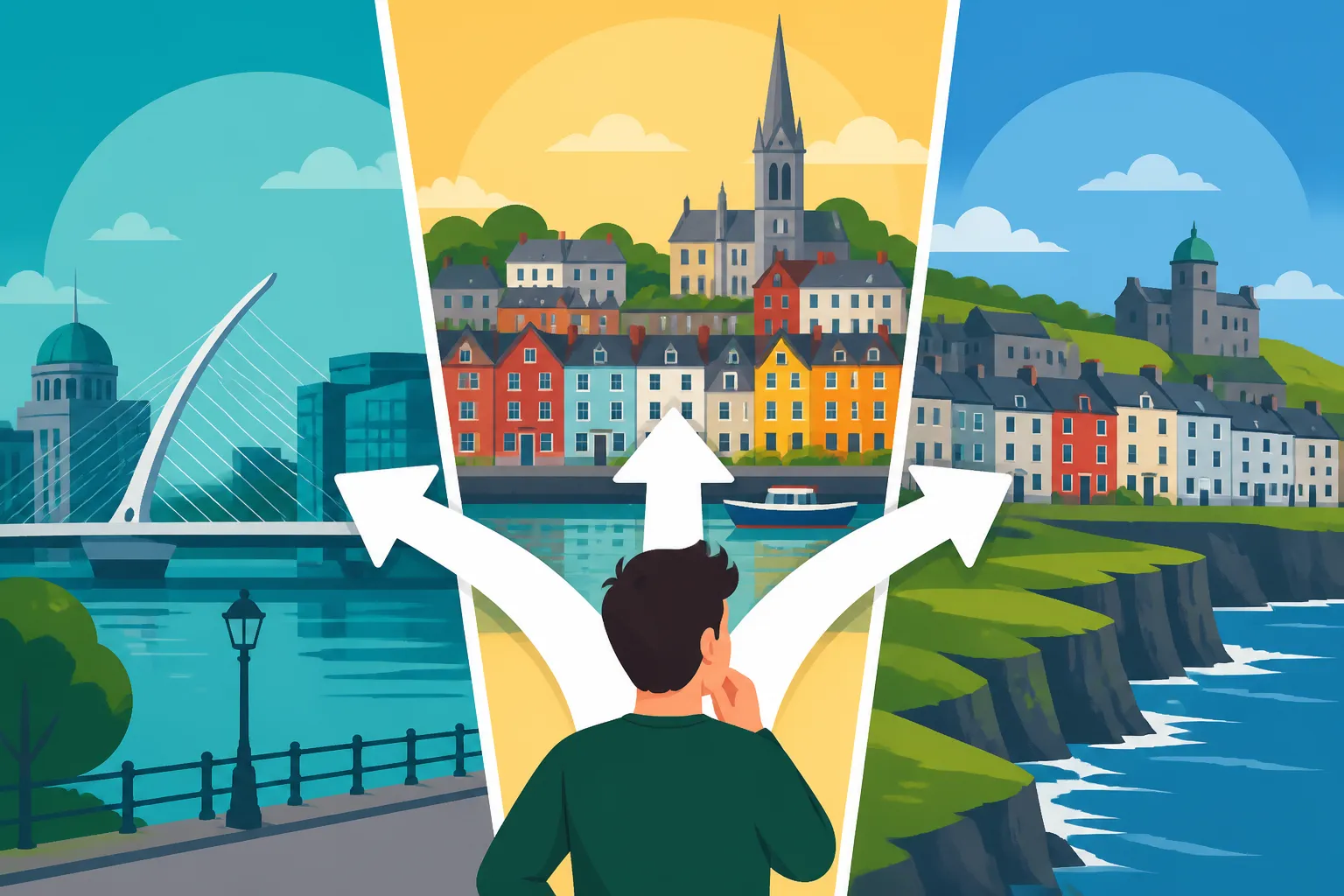
Deciding between these three incredible cities isn't just about listing pros and cons; it’s about understanding what truly matters to you in your expat journey. Your personal circumstances and priorities will dictate which city ultimately feels like home.
Career Aspirations and Industry Fit
This is often the deal-breaker for many expats. Are you in tech, finance, or a highly specialised field? Dublin is likely to offer the most opportunities, fastest progression, and highest salaries. The sheer volume of multinational corporations here is undeniable. If you're in pharma, medical devices, or perhaps a niche IT role, Cork or Galway could be excellent fits, offering a strong industry presence without the relentless pace of the capital.
For those in creative industries, hospitality, or education, all three cities have options, but Dublin offers scale, Cork a growing scene, and Galway a deeply embedded artistic community. Take a hard look at your industry and see where the jobs truly are. Don't let the allure of a city override your career trajectory, as securing stable employment is the foundation of a successful expat life. Dive deeper into specific sectors by reading Working in Ireland's Tech, Pharma and Finance Sectors: The Expat Guide (2027).
Lifestyle and Social Scene Preference
Do you thrive in a bustling, multicultural metropolis with endless events and a constant hum of activity? Dublin is probably your best bet. If you prefer a more balanced urban experience, with a strong local flavour, friendly community, and still plenty to do, Cork offers a fantastic compromise. For those who yearn for a bohemian spirit, a strong connection to nature, a slower pace, and a close-knit community, Galway will likely call to your soul.
Consider your social life too. Are you looking to integrate deeply into local Irish life, or do you prefer a diverse international expat bubble? Dublin has a very large and varied expat community, making it easy to find people from your home country or diverse backgrounds. Cork and Galway's expat communities are smaller but often more tightly knit. If you have a family, think about schools, green spaces, and community activities. Schools and Education in Ireland: A Complete Guide for Expat Families provides valuable insights here.
Budget and Cost of Living Realities
This is where the rubber meets the road. While salaries in Dublin might be higher, the cost of living, particularly rent, often negates much of that advantage. You might find yourself spending a significant portion of your income on just keeping a roof over your head. Cork offers a slightly better balance, and Galway is generally the most affordable of the three, though prices are always on the rise across Ireland.
Take the time to create a realistic budget for each city. Look up average rental prices on sites like Daft.ie, consider utility costs, and factor in daily expenses like groceries, transport, and socialising. Don't forget about mobile data – getting a local or eSIM like Airalo early on can help you manage communication costs from the get-go. Understanding The Complete Guide to Cost of Living in Ireland for Expats (2026) is paramount before making your final decision. What you save on rent in Galway might allow for a higher quality of life or more travel experiences compared to living in Dublin on the same take-home pay.
Here’s a simplified comparison to give you a clearer picture of some key aspects:
| Feature | Dublin | Cork | Galway |
|---|---|---|---|
| Job Market | Largest, most diverse (tech, finance, pharma) | Strong (pharma, med-tech, IT) | Niche (med-tech, IT, tourism, arts) |
| Cost of Living | Very High (especially rent) | High (lower than Dublin, higher than national avg) | Moderate to High (lower than Dublin/Cork generally) |
| Pace of Life | Fast-paced, busy | Balanced, urban sophistication | Relaxed, bohemian, cultural |
| Connectivity | Excellent (international airport, extensive public transport) | Good (European airport, decent bus network) | Moderate (Shannon/Dublin airports needed, bus/train) |
| Expat Community | Large, diverse | Growing, integrated | Smaller, close-knit |
| Culture/Vibe | Global, modern, vibrant | Authentic Irish, strong local identity | Artistic, traditional, close to nature |
Ultimately, there's no single "best" city. It's about finding the place that aligns with your individual priorities and dreams for your new life in Ireland. Perhaps a trial visit to each, if possible, could really help you get a feel for the different atmospheres before you commit to The Complete Guide to Moving to Ireland: Your First 90 Days (2027). The more research you do, and the more honest you are with yourself about what you truly need and want, the clearer your decision will become. And remember, Ireland is a small country; you can always visit the others!
Disclaimer
The information provided in this guide is for general informational purposes only and does not constitute professional advice. While we strive to ensure accuracy, details such as costs, regulations, and market conditions in Ireland can change rapidly. Always consult official government websites, financial advisors, and immigration experts for the most up-to-date and personalised guidance before making any decisions related to moving, working, or living in Ireland.