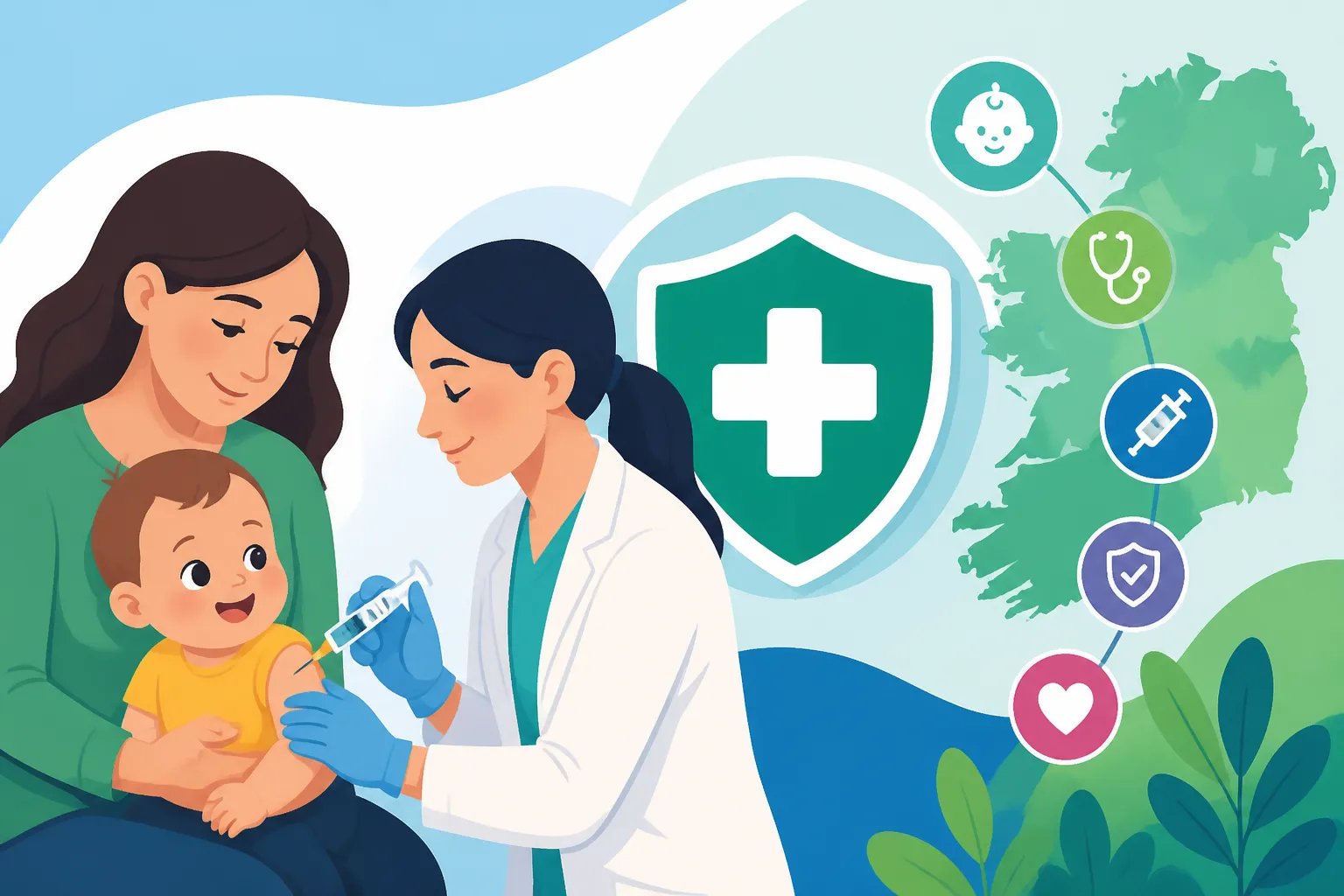
Understanding Childhood Vaccination Schedules in Ireland
Moving to a new country with children involves a mountain of paperwork, but few things feel as high-stakes as ensuring your child's medical records align with local requirements. This guide deciphers the Irish Health Service Executive (HSE) vaccination timeline, explaining how to transition foreign records, manage catch-up schedules, and access the free immunisation services available to every resident family in Ireland.
The Structure of the Irish Immunisation Programme
When you first arrive in Ireland, the healthcare system can feel like a labyrinth of acronyms and different "Stamps" of residency. However, one of the most reassuring aspects of the Irish system is the Primary Childhood Immunisation Programme. Managed by the Health Service Executive (HSE), this programme is designed to provide a uniform standard of protection against infectious diseases. Unlike some countries where healthcare is strictly tied to insurance, the childhood vaccination schedule in Ireland is provided free of charge to all children, regardless of their parents' immigration status or whether they hold a Medical Card.
The philosophy behind the Irish system is one of "informed consent" and "universal access." While vaccinations are not strictly mandatory by law for school entry—a point of confusion for many American or European expats—they are very strongly encouraged and are the norm across the country. Most Irish parents follow the schedule meticulously, and the public health infrastructure is built to support this. As an expat, your first point of contact will usually be a General Practitioner (GP). You will find that How Ireland's Health System Works: The HSE vs Private Explained (2027) provides a broader context, but for vaccinations, the GP is your gatekeeper and primary provider.
It is important to understand that while the vaccines themselves and the GP's time for administering them are free under the national programme, this only applies to the specific vaccines on the HSE schedule. If you are coming from a country where the Chickenpox (Varicella) vaccine or the Hepatitis A vaccine is standard, you might be surprised to find they are not part of the routine Irish schedule. Accessing these requires a private prescription and a fee, which is where having a clear understanding of your family's broader health coverage becomes vital.
The Primary Schedule Birth to 13 Months
For those who have a baby in Ireland or arrive with an infant, the schedule is quite busy during the first year of life. The HSE has carefully timed these doses to coincide with the periods when a child's natural maternal antibodies begin to wane. The schedule usually begins at two months of age. This can be a shock for parents from countries where the first round happens at birth or six weeks. In Ireland, the "Two-Month Visit" is a major milestone.
At two, four, and six months, your child will receive the "6-in-1" vaccine. This single injection protects against Diphtheria, Tetanus, Whooping Cough (Pertussis), Hib (Haemophilus influenzae type b), Polio, and Hepatitis B. Alongside this, they receive vaccines for Meningococcal B (MenB) and Rotavirus (which is an oral drop, not a needle). The inclusion of MenB is a relatively recent and very welcome addition to the Irish schedule, as Ireland historically had higher rates of meningitis than some of its neighbors. Understanding How Do I Register My Newborn for Healthcare in Ireland? is the first step to ensuring you are in the system to receive these notifications.
The second half of the infant schedule occurs at 12 and 13 months. This is often the most tearful round for parents because it involves several injections at once. At 12 months, the MMR (Measles, Mumps, Rubella) and the MenC vaccine are administered. At 13 months, the child receives a booster for Hib/MenC and the PCV (Pneumococcal Conjugate Vaccine). It is a lot for a small toddler to handle, and GPs in Ireland are very accustomed to parents feeling anxious. They will typically advise you to have liquid paracetamol (locally known by the brand name Calpol) ready at home, especially after the MenB doses which are known to cause a high fever in infants.
School Age Boosters and Secondary School Programmes
Once your child moves past the toddler years, the vaccination rhythm slows down significantly until they enter the primary school system. In Ireland, "Junior Infants" is the first year of primary school (usually ages 4 or 5). During this year, the HSE school immunisation teams—or sometimes your local GP, depending on the county—will administer the "4-in-1" booster (Diphtheria, Tetanus, Whooping Cough, and Polio) and a second dose of the MMR.
As an expat, you need to be proactive here. If you move to Ireland when your child is six, you may have missed the school-based "sweep." You must check your child's records against the requirements for What Vaccinations Are Required for Children in Irish Schools? to ensure they aren't left unprotected in a classroom environment. The school will usually send home consent forms; it is your responsibility to sign and return them. If you miss the school date, you will often have to arrange the booster privately or through a catch-up clinic, which can be more logistically challenging.
The secondary school programme is equally robust and focuses on older children (roughly ages 12 to 15). This includes the HPV (Human Papillomavirus) vaccine, the MenACWY vaccine, and the Tdap booster (Tetanus, low-dose Diphtheria, and low-dose Whooping Cough). The HPV programme in Ireland is now gender-neutral, offered to both boys and girls in their first year of secondary school. This is a significant public health initiative in Ireland, and the uptake rates are quite high. For families moving from countries where these are not standard, it is worth discussing the benefits with your Irish GP.
Comparison of the Irish Childhood Vaccination Schedule
| Age | Vaccine Administered | Diseases Protected Against |
|---|---|---|
| 2 Months | 6-in-1, PCV, MenB, Rotavirus | Diphtheria, Tetanus, Pertussis, Polio, Hib, Hep B, Pneumococcal, MenB, Rotavirus |
| 4 Months | 6-in-1, MenB, Rotavirus | Diphtheria, Tetanus, Pertussis, Polio, Hib, Hep B, MenB, Rotavirus |
| 6 Months | 6-in-1, PCV, MenB | Diphtheria, Tetanus, Pertussis, Polio, Hib, Hep B, Pneumococcal, MenB |
| 12 Months | MMR, MenC | Measles, Mumps, Rubella, Meningococcal C |
| 13 Months | Hib/MenC booster, PCV | Hib, MenC, Pneumococcal |
| 4-5 Years | 4-in-1, MMR | Diphtheria, Tetanus, Pertussis, Polio, Measles, Mumps, Rubella |
| 12-13 Years | HPV, Tdap, MenACWY | Human Papillomavirus, Tetanus, Diphtheria, Pertussis, MenA, C, W, Y |
Navigating the Transition for International Families
The biggest headache for expat parents is the "Gap." You arrive from South Africa, the US, or Poland, and your child's vaccination card looks nothing like the Irish one. Some vaccines were given earlier, some later, and some—like the BCG for Tuberculosis—might have been given at birth in your home country but are no longer routinely administered in Ireland. The first thing you must do is have your child’s records translated into English if they aren't already. A GP cannot guess what a foreign medical stamp represents.
Once translated, make an appointment with your local doctor. If you are still in the process of finding one, guides like How Do I Register with a GP in Ireland? are essential. During this initial consultation, the GP will perform a "record audit." They will look at what your child has received and compare it to the Irish National Immunisation Office guidelines. If there are gaps—for example, if your home country didn't include the MenB vaccine—the GP will order a "catch-up" schedule. These catch-up vaccines are generally still free under the HSE programme for children under the age of 18 who are resident in Ireland.
One thing many newcomers struggle with is the lack of a "Yellow Book" or a centralized physical passport that parents keep. While the HSE is moving toward better digital records, much of the reporting still relies on the GP sending forms to the local health office. I always recommend that parents keep their own meticulous digital folder. Scan every piece of paper the GP gives you after a vaccination. If you ever move again or need to prove immunisation status for a summer camp or a high school sports team, you will be glad you didn't rely on the HSE's administrative filing system.
The Role of Private Healthcare and Insurance
While the core schedule is public and free, there is a secondary layer of "optional" vaccines that many expat families choose to pursue. The most common is the Chickenpox (Varicella) vaccine. In the UK and Ireland, the public health stance has historically been that chickenpox is a mild childhood illness and does not require a universal vaccination programme. However, many parents from the US or Canada are horrified at the idea of their child suffering through the virus. If you want this vaccine, you must ask your GP for a private prescription, buy the vaccine at a pharmacy, and pay the GP a consultation fee to administer it.
This is where understanding your insurance coverage becomes vital. If you are a new arrival and don't yet have your Health Insurance in Ireland: VHI, Laya, Irish Life and Options Explained sorted, you will be paying for these extras out of pocket. For families in the middle of a move, using a flexible provider like SafetyWing can provide a necessary safety net for general medical issues while you settle into the long-term Irish system. SafetyWing is particularly useful for those initial months when you are neither here nor there, ensuring that an unexpected illness doesn't derail your transition.
Furthermore, if your child has a reaction to a vaccine or needs a specialist consultation regarding an underlying condition before they can be immunised, the public waiting lists can be daunting. As explored in Public vs Private Healthcare in Ireland: Which Should Expats Choose?, having private cover allows you to bypass the HSE's often lengthy queues for pediatric specialists. While the vaccines themselves remain the same, the speed at which you can resolve medical concerns surrounding them is significantly faster in the private sector.
Managing Practicalities and Common Frustrations
One of the most frequent complaints from expats is the difficulty of getting a GP appointment. In many parts of Ireland, especially Dublin and the commuter belt, GP practices are at capacity. You might find that even though the vaccines are free, finding a doctor who will take you on as a new patient is the real hurdle. You should start this process the moment you have a permanent address. If you have a Medical Card or a GP Visit Card, the process is slightly different; you can learn more about this in The Expat Guide to the Medical Card and GP Visit Card in Ireland (2027).
When you do secure an appointment, be prepared for the "Irish way" of doing things. The clinics can sometimes feel a bit informal compared to the hyper-sterilized environments in other countries. However, the nursing staff who usually handle the immunisations are incredibly experienced. They see hundreds of children a week and are excellent at calming both the child and the frantic parent. It is also worth noting that in Ireland, you are often expected to stay in the waiting room for about 15 minutes after the injection to ensure there is no immediate allergic reaction.
Another tip for the realistic expat: the HSE often sends out "invitation" letters for school-age vaccinations. These letters are sent to the address registered with the child's PPS (Personal Public Service) number. If you move house and don't update your address with the Department of Social Protection and the HSE, you will miss these notices. Always keep your contact details updated across all government departments. It sounds like a chore, but it prevents the "12-year-old missing their HPV shot" scenario that many of us have faced.
Looking Ahead to Travel and Special Circumstances
Ireland is a fantastic base for exploring Europe, but travel brings its own set of vaccination requirements. The standard childhood schedule does not cover things like Rabies, Yellow Fever, or even the Flu (though the children's nasal flu vaccine is now offered seasonally in Ireland for free). If you are planning a family trip back home or to a tropical destination, you will need to visit a specialized travel clinic.
Travel vaccinations are never free under the HSE. They can be quite expensive, and again, you’ll want to check if your supplemental insurance, like SafetyWing, covers any aspects of travel-related healthcare. For most expats, a trip to the tropical medical bureau in Dublin or a local travel-certified GP is a standard part of life. They will look at your child's Irish HSE records and add whatever is necessary for your destination.
Finally, keep in mind that the Irish schedule is updated periodically based on new clinical evidence. For example, the introduction of the MenB and Rotavirus vaccines changed the timeline for many families who had older children vs. younger ones. As a veteran expat, my advice is to never assume that what applied to your first child will apply to your second. Stay in close contact with your GP, keep your foreign records safe, and embrace the fact that while the paperwork is a nuisance, the actual healthcare your child receives in Ireland is world-class and remarkably accessible once you are through the initial administrative gate.
Disclaimer
This guide is for informational purposes only and does not constitute medical advice. Vaccination schedules and public health policies in Ireland are subject to change by the HSE and the National Immunisation Office. Always consult with a qualified General Practitioner (GP) or medical professional in Ireland to discuss your child's specific health needs and to confirm the most current immunisation requirements. No expat guide can replace the clinical judgment of a healthcare provider.