How to Find an English-Speaking Doctor in Ireland
Arriving in a new country like Ireland is an exhilarating adventure until you wake up with a persistent chest infection and realize you have no idea how to navigate the local medical landscape. While English is the primary language, the administrative hurdles of the Irish healthcare system can feel like they are written in a foreign tongue, leaving many newcomers feeling stranded. This guide explains exactly how to secure a reliable doctor and navigate the current GP shortage.
Understanding the Primary Care Landscape in Ireland
When you first land in Dublin, Cork, or Galway, you might assume that finding a doctor is as simple as walking into a clinic. However, the Irish General Practitioner (GP) system operates as the gatekeeper to all other medical services. Unlike some countries where you can go directly to a specialist, in Ireland, you almost always need a referral from a GP. This is why establishing a relationship with a local doctor is one of the most critical steps in your relocation process.
The Distinction Between Public and Private Patients
The first thing you will notice is that the system is split into two categories: Medical Card holders (public) and private patients. If you are working and earning above a certain threshold, you will likely be a private patient. This means you will pay out of pocket for every visit, usually ranging from 60 to 75 Euro per consultation. For those just starting out, Understanding the Difference Between Public and Private Hospitals in Ireland can help clarify how these two paths diverge once you move past the GP stage.
If you have a lower income, you might qualify for a GP Visit Card or a full Medical Card. This allows you to see a doctor for free. However, the catch is that many doctors have reached their "cap" for public patients. As an expat, you may find that practices are willing to take you as a private patient but will refuse you if you are seeking to register with a Medical Card. This is a common frustration that requires patience and a bit of strategic communication when you are calling around.
Why the Language Question is Unique in Ireland
While you are specifically looking for an English-speaking doctor, the reality in Ireland is that English is the universal language of medicine. However, the Irish medical workforce is incredibly diverse. You will find doctors from all over the world, including many from South Asia, Africa, and Eastern Europe, as well as home-grown Irish doctors. The "language barrier" expats often face isn't a lack of English, but rather a lack of familiarity with the specific Irish medical terminology and the heavy local accents that can vary wildly from County Donegal to County Kerry.
Furthermore, Irish GPs tend to have a very conversational, holistic approach. They often want to know about your lifestyle, your stress levels, and your "story." This can be a refreshing change if you come from a system where appointments are strictly ten minutes of clinical data. Being able to communicate your history clearly in English is vital, and thankfully, you will find that almost every practitioner in the country is highly proficient. If you are worried about the cost of these long-range conversations, The Cost of Healthcare in Ireland: A Complete Breakdown for Foreigners (2026) provides a deeper look at what you should budget for.
Strategic Methods for Locating a Practice
Finding a doctor who is actually "taking new patients" is the real challenge in the current Irish climate. Since the pandemic, the population has grown faster than the medical infrastructure, leading to many closed lists. You cannot simply rely on Google Maps; you need a more proactive strategy to get your foot in the door.
Navigating the HSE Service Finder
The Health Service Executive (HSE) maintains a digital "Service Finder" map. This is your starting point. You can filter by "GP" and enter your Eircode (postal code). The tool will provide a list of every registered practice in your vicinity, along with their phone numbers and addresses. It is a vital resource, but it comes with a caveat: the "taking new patients" status on the website is often outdated.
When using the finder, do not just look at the practice closest to your house. In cities like Dublin, you might need to look two or three neighborhoods over. Use the list to create a spreadsheet of at least ten practices. You should also check if they offer specific services you might need, such as Understanding Maternity and Prenatal Care Under the HSE in Ireland if you are planning to start a family. The HSE site is the foundation, but your success will depend on how you use the data it provides.
The Power of Local Community Intelligence
In Ireland, word of mouth is still the most effective currency. Before you start cold-calling, join local Facebook groups like "Expats in Ireland," "Dublin Renters," or town-specific community pages. Post a polite query asking if anyone knows of a GP currently accepting private patients. Locals and fellow expats often know exactly when a new doctor has joined a practice or when a list has briefly reopened.
Don't underestimate the "mammy network" or your coworkers. Ask your Irish colleagues who they see. Sometimes, a practice that claims to be closed will make an exception if you are recommended by an existing patient. This isn't a formal rule, but in a small country like Ireland, personal connections frequently smooth over administrative hurdles. While you are hunting for a permanent GP, you might want to look into How to Find and Register with a Local GP Practice in Ireland for a step-by-step breakdown of the paperwork involved.
The Phone Call Strategy vs. Digital Inquiries
If there is one piece of veteran advice to take to heart, it is this: stop emailing doctors. Most GP practices in Ireland are run by a small administrative staff who are overwhelmed with phone calls and walk-ins. An email from a stranger asking to join the practice is likely to sit in an inbox for weeks.
Pick up the phone between 10:00 AM and 12:00 PM or 2:00 PM and 4:00 PM. Be incredibly polite to the receptionist—they are the gatekeepers. State clearly that you are a new resident in the area, you are a private patient (if applicable), and you are looking to establish a long-term relationship with a family doctor. If they say no, ask if they can recommend any other practice nearby that might have space. Sometimes they will give you a "tip" about a clinic that hasn't updated its website yet.
Navigating the "Closed List" Crisis
It can be soul-destroying to call fifteen doctors and hear "no" fifteen times. Many expats feel like they are being rejected personally, but it is truly a systemic issue. If you find yourself in this position, you need to know about the "assigned doctor" rules and your alternative options for care while you wait for a permanent spot.
The Three Refusals Rule
If you have a Medical Card and cannot find a doctor, the HSE has a legal obligation to assign you one. You must obtain written or emailed proof of refusal from three different GPs in your area. Once you have these three refusals, you can contact the HSE National Medical Card Unit. They will then assign a doctor to you, and that doctor is legally required to accept you onto their GMS (General Medical Services) list.
For private patients, this rule is less straightforward, as you aren't "entitled" to a specific private business's services. However, if you are struggling, you can still reach out to the HSE local health office for a list of clinics that have recently received funding to expand their capacity. For more on this, The Expat Guide to the Medical Card and GP Visit Card in Ireland (2027) explains the nuances of eligibility and the application process in detail.
Utilizing Private Medical Clinics and Hubs
While you wait for a local neighborhood GP to take you on, you can utilize larger private health hubs. Facilities like the Blackrock Clinic, the Beacon Hospital, or the Mater Private often have "Urgent Care" or "GP Suites" that are much easier to access for one-off appointments. They are more expensive than a local GP, but they offer high-end diagnostic tools on-site.
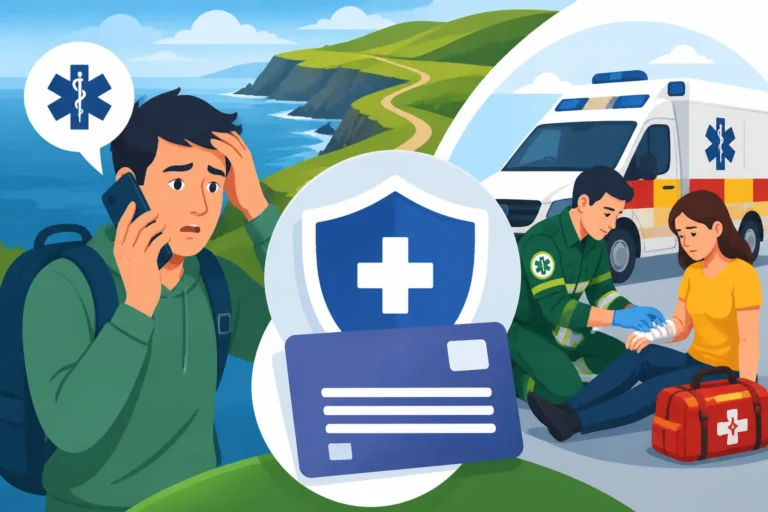
If you are a newcomer and haven't secured permanent residency or a PPS number yet, you may find that these private clinics are more flexible with documentation. During this transitional period, having a reliable insurance provider is essential. For instance, SafetyWing offers specialized coverage that can bridge the gap while you are navigating the local Irish system. Having a policy from a provider like SafetyWing ensures that if you need to visit an expensive private clinic for an emergency, you aren't stuck with a massive bill that derails your relocation budget.
Telehealth and Video Consultations
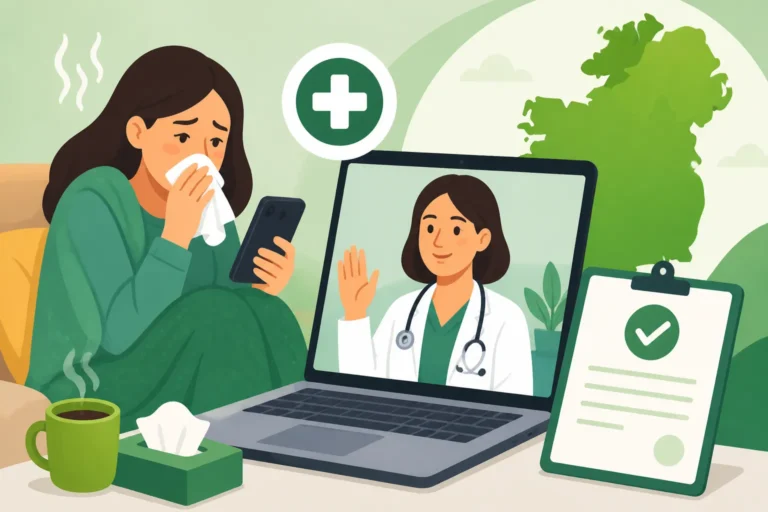
Ireland has seen a massive surge in video GP services. Apps like Laya Healthcare’s GPlive, VHI’s SwiftCare, or independent platforms like Webdoctor.ie allow you to speak to a registered, English-speaking Irish GP via your phone within hours. These doctors can issue prescriptions to your local pharmacy and even write referral letters to specialists.
Telehealth is an excellent solution for minor issues like sinus infections, skin rashes, or prescription renewals. It isn't a replacement for a doctor who knows your physical history, but it is a vital tool for the modern expat. For those using SafetyWing, you might find that digital nomads and remote workers prefer this flexibility, as it allows you to get medical advice without having to spend a day calling around local clinics. It is a perfect "stop-gap" while you search for a physical clinic in your neighborhood.
What to Expect at Your First Appointment
Once you finally secure an appointment, the experience might be different from what you are used to back home. Irish medical culture is a mix of high-tech medicine and old-school "bedside manner." Knowing how to prepare will ensure you get the most out of your 15-minute slot.
Transferring Medical Records
Ireland does not have a centralized national electronic health record system yet. This means your new GP in Dublin won't automatically have access to your records from New York, London, or Sydney. You should bring a printed summary of your medical history, including any chronic conditions, past surgeries, and a full list of current medications.
If you are on specific long-term medications, be aware that some brand names differ in Ireland. Bring the generic names of your drugs. Your GP will need to "validate" these before they can issue an Irish prescription. For a deep dive into how pharmacies handle these transfers, see Prescription Medications and Pharmacies in Ireland: The Complete Guide. Having this information ready saves time and ensures your continuity of care isn't interrupted.
Understanding Fees and Payments
Unless you have a Medical Card, you will be expected to pay at the front desk before or immediately after your consultation. Most practices accept debit and credit cards, though some smaller rural practices might still prefer cash (it is always worth checking when you book).
| Service Type | Typical Cost (Private) | Wait Time | Best For |
|---|---|---|---|
| Standard GP Visit | €60 – €75 | 1 – 3 Days | General illness, referrals, chronic care |
| Video Consultation | €35 – €50 | Same Day | Minor ailments, prescriptions |
| Out-of-Hours (D-Doc) | €70 – €90 | Hours | Urgent issues at night/weekends |
| Emergency Room (A&E) | €100* | 8 – 14 Hours | Life-threatening emergencies |
| Private Urgent Care | €150+ | 1 – 4 Hours | Broken bones, minor trauma |
*The A&E fee is waived if you have a GP referral letter.
If you have private health insurance, you can often claim a portion of the GP fee back. You should keep every receipt. If you are covered by SafetyWing, the process of claiming back expenses for unexpected medical visits is usually straightforward, which is why it is a popular choice for those in the "settling in" phase of their move.
The Referral Process to Specialists
If your GP decides you need to see a consultant—perhaps a dermatologist, cardiologist, or orthopedist—they will write a referral letter. You then have a choice: the public route or the private route. The public route is free but can have waiting lists spanning months or even years. The private route is fast (often within two weeks) but requires you to pay the consultant's fee, which usually starts at €200 for an initial consultation.
This is where Understanding How Specialist and Consultant Referrals Work in Ireland becomes essential. If you have insurance, check if your policy covers the specific consultant or hospital. Many expats find that they use the public system for "bread and butter" healthcare but pivot to the private system for anything requiring a specialist to avoid the daunting public waiting lists.
Emergency and Out-of-Hours Alternatives
Illness doesn't always happen between 9:00 AM and 5:00 PM. If you get sick on a Saturday night or a Bank Holiday Monday, your regular GP practice will be closed. Knowing how to access the "out-of-hours" system will save you from a stressful and unnecessary trip to the hospital.
The Role of Out-of-Hours Cooperatives
Ireland has a fantastic network of GP cooperatives. Depending on where you live, you will use services like D-Doc (Dublin), K-Doc (Kildare), South-Doc (Cork/Kerry), or West-Doc (Galway). These are not walk-in clinics; you must call them first. A nurse will triaging you over the phone and, if necessary, book you an appointment at a local treatment center.
These services are staffed by local GPs who take turns doing the "night shift." It is a professional, reliable way to get an English-speaking doctor in an emergency without clogging up the hospital emergency rooms. For more details on these numbers and locations, check Emergency Medical Care in Ireland: What Every Expat Needs to Know.
When to Visit the Emergency Department (A&E)
You should only go to the Accident & Emergency (A&E) department for life-threatening situations or serious trauma. In Ireland, the wait times in public A&E departments are notoriously long—sometimes exceeding 12 hours. If you turn up with a minor ailment, you will be triaged to the bottom of the list and will likely spend a very uncomfortable night in a waiting room chair.
If you do go to the A&E without a referral from a GP, you will be charged a flat fee of €100. However, if your GP sees you first and writes a letter saying you need emergency admission, this fee is waived. This is another reason why finding a GP is so important; they can literally save you a hundred Euro and hours of waiting. If you find yourself in a situation where you aren't sure where to go, How Do I Pay the A&E Charge at a Hospital in Ireland? covers the payment logistics.
The "Chemist" as a First Line of Defense
In Ireland, pharmacists (locally called "chemists") are highly trained medical professionals who can provide advice on a wide range of minor ailments. Before you spend €70 on a GP visit for a cold, a mild skin irritation, or a stomach upset, talk to the pharmacist.
Under the "Minor Ailment Scheme," pharmacists can even provide certain treatments directly. They are also the best people to ask if you are looking for an English-speaking doctor, as they deal with all the local GPs daily and know whose offices are currently running efficiently. They are an underutilized resource for many expats who are used to more restrictive pharmacy systems.
Essential Tips for the Expat Patient
As you settle into the Irish rhythm, you will realize that healthcare here is about persistence and preparation. It might feel "broken" when you are on your twentieth phone call, but once you are in the system, the quality of care is generally excellent.
- Get your PPS Number immediately: You cannot easily register for long-term public schemes without your Personal Public Service number.
- Apply for the Drugs Payment Scheme: Even if you don't have a Medical Card, this scheme caps your monthly prescription costs. Understanding the Drugs Payment Scheme (DPS) in Ireland explains how this can save you thousands over a year.
- Register your children first: GP practices are much more likely to find space for a child than an adult. Once the child is a patient, it is often easier for the parents to be "vouched in."
- Keep a digital copy of your IRP card: You may be asked for proof of residence when registering with a GP to prove you live within their "catchment area."
- Consider interim insurance: If you are a digital nomad or waiting for employer-based insurance to kick in, SafetyWing is a fantastic, flexible option that provides medical coverage globally, including in Ireland. It is particularly useful for those who might be moving between counties or even countries frequently.
Finding a doctor in Ireland is often the final hurdle in feeling "at home." It requires a bit of that famous Irish "gift of the gab" and a lot of persistence on the telephone. By understanding the system, utilizing tools like the HSE finder, and having a backup plan like SafetyWing, you can ensure that your health is protected while you enjoy everything the Emerald Isle has to offer. For more information on the overarching structure of the system, don't miss Navigating the Irish Healthcare System: An Expat's Roadmap (2027).
Disclaimer
This guide is provided for informational purposes only and does not constitute professional medical or legal advice. Healthcare regulations and GP availability in Ireland can change rapidly. Always consult with the Health Service Executive (HSE) or a qualified medical professional for specific advice regarding your health and entitlements.