Understanding Sick Leave and Statutory Sick Pay in Ireland
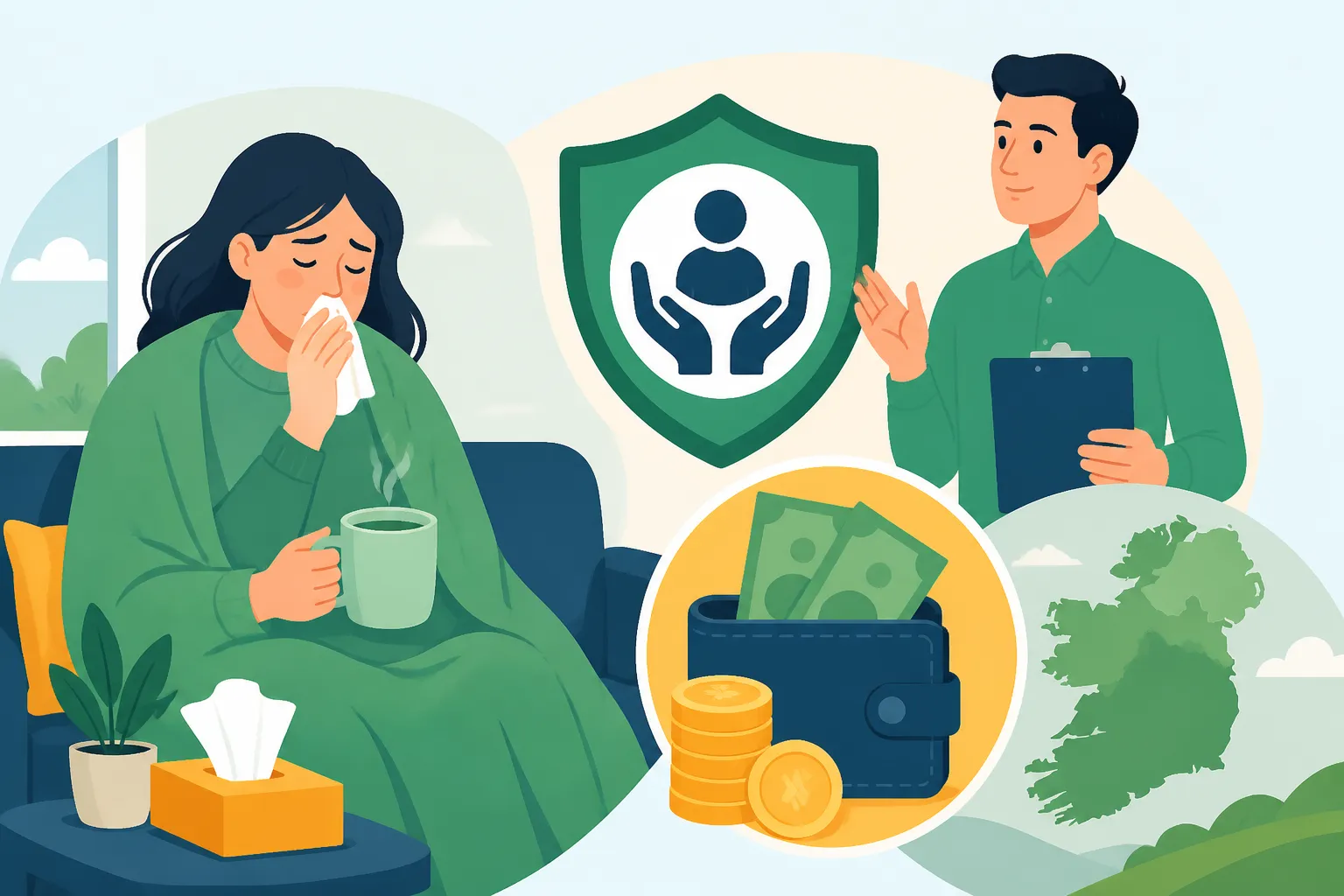
One of the most stressful experiences as an expat in Ireland is waking up with a heavy chest and a fever, wondering if your paycheck will survive the week. Understanding the maze of Irish labor laws and healthcare documentation is vital for your financial security. This guide breaks down exactly how Statutory Sick Pay works, how to get paid, and your rights as a worker.
The Reality of Falling Ill as an Expat in Ireland
When you first move to the Emerald Isle, everything is a whirlwind of PPS numbers, apartment hunting, and figuring out which tap is actually the drinking water. But the moment the damp Irish winter hits, your immune system might take a hit. For many foreigners, the concept of "sick leave" is fraught with anxiety. You might come from a country where sick pay is entirely at the whim of the employer, or conversely, a place where it is unlimited from day one. In Ireland, we sit somewhere in the middle, and the rules have shifted significantly over the last few years.
Navigating the Cultural Shift from Your Home Country
In the United States, for example, there is no federal law requiring paid sick leave, leading many to work through illnesses. In contrast, many European countries have robust, state-funded systems. Ireland recently modernized its approach with the Sick Leave Act, which was a massive relief for those of us in the private sector. However, the cultural expectation here is still very much "documentation first." You cannot simply "call in sick" for three days and expect to be paid without following a very specific administrative trail.
The Irish workplace values politeness, but when it comes to the "sick cert" (medical certificate), it is strictly business. I remember my first bout of the flu in Dublin; I thought a quick email to my manager would suffice. It didn't. I was quickly informed that without a GP’s note, my absence would be marked as unpaid. Understanding The Cost of Healthcare in Ireland: A Complete Breakdown for Foreigners (2026) is the first step in realizing that being sick actually costs money up-front before the pay kicks in.
The Anxiety of Missing Work in a New System
There is a unique type of panic that sets in when you are on a Critical Skills permit or a General Employment permit and you have to miss work. You start worrying about your "reckonable residence" or whether your employer will view you as unreliable. It is important to validate these fears—they are real. However, the Irish system is designed to protect you, provided you know the rules.
If you are a digital nomad or a freelancer not yet fully integrated into the Irish PAYE (Pay As You Earn) system, you might find yourself in a bit of a gray area. This is where international options like SafetyWing can be a lifesaver. While the Irish state system covers those in traditional employment, SafetyWing provides a safety net for those who travel frequently or work outside the standard 9-to-5 Irish contract structure, ensuring that a week in bed doesn't result in a month of financial ruin.
Statutory Sick Pay (SSP) Explained: What You Need to Know
The Statutory Sick Pay (SSP) scheme in Ireland has fully matured. What started as a modest three-day entitlement has expanded to provide much better coverage for workers. This is a legal right, not a "perk" that your boss can choose to ignore. If you are working in a coffee shop in Galway or a tech giant in the Silicon Docks, the law applies to you equally.
Eligibility Requirements and the Service Length Hurdle
The most important thing to know is that you don't get sick pay on your very first day of work. To qualify for SSP, you must have been working for your employer for at least 13 weeks of continuous service. This is a crucial detail for new arrivals. If you move to Ireland in January and catch a nasty virus in February, your employer is not legally obligated to pay you for your time off.
This 13-week rule often catches expats off guard. During this "waiting period," you are essentially on your own unless your contract offers a private sick pay scheme. For those in this transitional phase, having supplemental coverage like SafetyWing is highly recommended. It bridges the gap between your arrival and the moment you become fully entitled to Irish state-mandated benefits. Also, remember that Understanding Irish Employment Law and Worker Rights (2027) is your best defense against any employer who tries to tell you that the 13-week rule doesn't count if you are "on probation." (Spoiler: It still counts).
How Much Will You Actually Get Paid
The math of Irish sick pay is relatively straightforward but has its limits. You are entitled to 70% of your normal daily wage, but this is capped at €110 per day. If you are a high earner, this might feel like a significant drop in income. However, for the average worker, it covers the basics like groceries and heat.
In 2026, the entitlement has increased to 10 days of paid sick leave per year. These days can be taken consecutively or as single days throughout the calendar year. It is important to note that these are "working days." If you are sick on a Saturday but you usually only work Monday to Friday, the Saturday does not count toward your 10-day total. For a deeper look at how this fits into your overall earnings, you might want to read about Understanding PAYE, PRSI and USC Deductions for Employees in Ireland.
The Documentation Process: Medical Certificates and Proof
This is where the Irish "bureaucracy of health" truly begins. To claim your Statutory Sick Pay, you must provide a medical certificate from a registered GP. There is no "grace period" for the first day under the SSP rules; if you want to be paid from day one, you need that paper from day one.
Getting Your Sick Cert from an Irish GP
Finding a GP in Ireland is notoriously difficult due to the current GP shortage. If you haven't already, you should prioritize Registering with a GP in Ireland: The Complete Expat Guide (2027) as soon as you land. When you are shivering with a 102-degree fever, the last thing you want to do is call twenty different clinics in Dublin 8 only to be told they aren't taking new patients.
Once you do get an appointment—which will likely cost you between €60 and €75—the doctor will assess you. If they deem you unfit for work, they will issue a "sick cert." This note will usually state that you are "unfit for work" and give an estimated return date. It typically does not disclose your specific medical condition to your employer, preserving your privacy. However, you should also be aware of How to Get a Sick Cert from a Doctor in Ireland to understand the specific nuances of what must be included for the document to be legally valid for HR purposes.
Digital vs. Paper Certificates in the Workplace
Most modern Irish employers now accept digital copies or scans of sick certificates, but some "old school" firms might still ask for the physical paper. Always clarify this with your HR department or manager during your first week on the job. If you are using a telehealth service (which has become much more common in Ireland), ensure the doctor is registered with the Irish Medical Council, or your employer might reject the certificate.
For expats who might be used to more streamlined digital health systems, the Irish approach can feel a bit archaic. It is a system built on trust and physical signatures. If you are struggling to find a local doctor, some people turn to private clinics like the Blackrock Clinic or the Mater Private for faster (though much more expensive) consultations. Always weigh the cost of the GP visit against the pay you will receive; sometimes, the €75 doctor's fee is nearly as much as the €110 daily sick pay cap.
What Happens After Statutory Sick Pay Ends
What if your illness is serious? If you are facing a recovery that lasts longer than the 10 days provided by the state, you move into a different phase of the Irish social welfare system. This transition can be confusing because the source of your money changes from your employer’s bank account to the government’s coffers.
Transitioning to Illness Benefit from Social Welfare
Once your 10 days of SSP are exhausted, you may be eligible for "Illness Benefit." This is a payment from the Department of Social Protection. Unlike SSP, which is paid by your boss, Illness Benefit is paid by the state. To qualify, you must have enough PRSI (Pay Related Social Insurance) contributions. For a newcomer, this can be tricky. If you haven't been in Ireland long enough to build up these "stamps," you might find yourself ineligible for this benefit.
Navigating the Understanding the Role of the HSE in Irish Healthcare and the Department of Social Protection requires a Public Services Card (PSC) and a MyWelfare.ie account. The application for Illness Benefit is usually done via a specific form called an "IB1," which your GP can help you submit electronically. There are "waiting days" for Illness Benefit (usually the first three days of your illness), but since your SSP covers those initial days, the transition should theoretically be seamless.
Company Sick Pay Schemes: The Extra Layer
Many of the large multinationals in Ireland—think Google, Meta, or Pfizer—offer "Company Sick Pay" which is far more generous than the legal minimum. Some of these schemes pay 100% of your salary for six months or more. Always check your specific employment contract. If your company has a private scheme, they usually use the SSP as a "base" and top up the rest.
If you are lucky enough to have such a scheme, make sure you understand the "notification requirements." Often, these private contracts have even stricter rules about calling in by a certain hour or using specific company portals. For a broader understanding of the benefits landscape, check out The Complete Guide to Working in Ireland as a Foreigner (2027).
Practical Steps When You Feel the Flu Coming On
When that tickle in your throat turns into a full-blown Irish "head cold," you need a plan. Don't wait until you can't lift your head off the pillow to figure out who to call.
Notifying Your Employer According to Procedure
Your contract will state how and when you must notify your employer. Usually, this is "as soon as reasonably practicable," often before 10:00 AM on the first day of absence. A text message might be okay in a casual café job, but in an office environment, a formal email or a phone call to your direct supervisor is the standard. Be clear about your expected return date, but don't feel pressured to over-explain your symptoms. "I am unwell and will be seeking medical advice" is a complete sentence in Ireland.
Managing the Cost of a Doctor's Visit
As mentioned, the cost of a GP visit can be a barrier. If you have a low income, you might qualify for a Medical Card or a GP Visit Card, which makes these visits free. It is worth checking The Expat Guide to the Medical Card and GP Visit Card in Ireland (2027) to see if you meet the "means test" requirements. If you don't qualify, and you are worried about the high costs of Irish private medicine, having an international health plan like SafetyWing can provide peace of mind, especially if your illness requires specialized care or diagnostics that go beyond a simple GP visit.
| Feature | Statutory Sick Pay (SSP) | Illness Benefit (State) |
|---|---|---|
| Who Pays? | Your Employer | The Department of Social Protection |
| Duration (2026) | Up to 10 days per year | Long-term (up to 2 years) |
| Rate | 70% of pay (capped at €110/day) | Fixed weekly rate based on PRSI |
| Eligibility | 13 weeks of service | Sufficient PRSI contributions |
| Documentation | GP Sick Cert required | IB1 Form + GP Certification |
| Waiting Period | None (if you have the cert) | Usually 3 "waiting days" |
Understanding Your Rights and Employment Protections
One of the biggest fears for expats is that taking sick leave will jeopardize their visa status or their job security. In Ireland, the law is very much on the side of the worker when it comes to genuine illness.
Can You Be Fired for Taking Sick Leave
Generally, no. You cannot be legally dismissed simply because you are sick, provided you follow the correct notification and certification procedures. However, if your absence becomes very long-term, an employer might eventually argue that the contract is "frustrated" (meaning you can no longer fulfill your duties). This is a very high legal bar to meet and usually involves a long process of medical assessments.
If you feel you are being bullied or pressured to return to work before you are ready, you should document everything. Irish employers are required to make "reasonable accommodations" for people returning from illness, especially if the illness qualifies as a disability under the Employment Equality Acts. This might include a "phased return" (working part-time for the first two weeks).
Disputes and the Workplace Relations Commission
If your employer refuses to pay your Statutory Sick Pay or treats you unfairly because you took leave, you have the right to take a case to the Workplace Relations Commission (WRC). This is a free service, although it can be slow. For many expats, the threat of "going to the WRC" is often enough to make a difficult manager follow the law. You can learn more about this process in Understanding the Workplace Relations Commission (WRC) in Ireland.
Being sick in a foreign country is never fun. It is lonely, expensive, and stressful. But by knowing the difference between the public and private systems—perhaps by reading Understanding the Difference Between Public and Private Hospitals in Ireland—and ensuring you have the right documentation, you can focus on what actually matters: getting better and getting back to enjoying life in Ireland. Whether you rely on the state system or supplemental coverage like SafetyWing, your health should always come before your spreadsheet.
Disclaimer
The information provided in this guide is for informational purposes only and does not constitute legal or professional medical advice. While every effort has been made to ensure the accuracy of the details regarding Irish labor law and social welfare as of 2026, regulations are subject to change. Always consult with a qualified legal professional or the Workplace Relations Commission (WRC) for specific employment disputes, and seek advice from a registered medical practitioner for any health concerns.