How to Apply for a GP Visit Card in Ireland
Moving to Ireland often comes with a significant "sticker shock" when you first visit a local doctor and realize a standard fifteen-minute consultation can cost upwards of 70 Euro. Many newcomers struggle to balance these high out-of-pocket medical costs while waiting for residency documents to clear. This guide provides a comprehensive roadmap for applying for a GP Visit Card to significantly reduce your healthcare spending.
What exactly is a GP Visit Card?
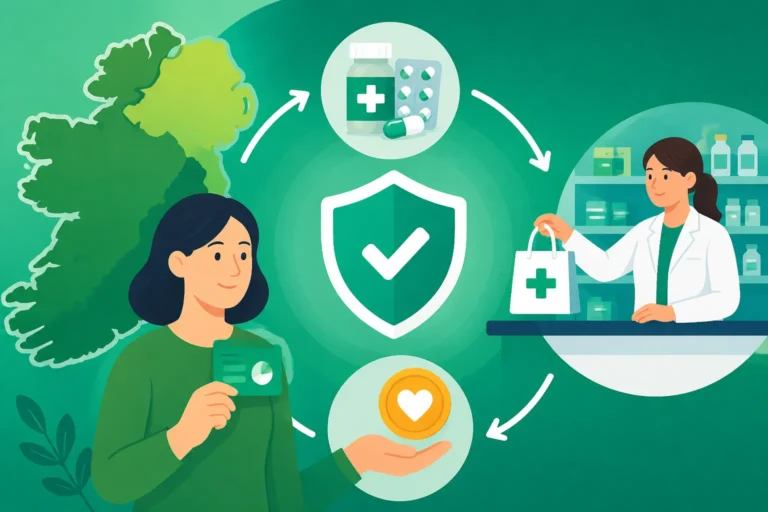
The GP Visit Card is a specific tier of the Irish public healthcare system designed to make primary care accessible to those who may not qualify for a full Medical Card but still face financial pressure. When I first arrived in Dublin, I assumed healthcare was either entirely free or entirely private, but the reality is much more nuanced. The GP Visit Card essentially allows you to visit a participating family doctor for free, while you remain responsible for the costs of medicines and other hospital charges.
The Difference Between a GP Visit Card and a Medical Card
Understanding the distinction between these two is vital for any expat navigating the Health Service Executive (HSE). A Medical Card is the "all-access pass" of the Irish system; it covers GP visits, prescription drugs (subject to a small co-payment), and public hospital stays. The GP Visit Card is more restricted. It covers the consultation fee with your doctor, but when you walk across the street to the pharmacy with a script, you will have to pay for those medications out of pocket.
For many, the GP Visit Card acts as a safety net. It ensures that if you or your children feel unwell, you don't have to debate whether you can afford the 65 Euro fee to get a professional opinion. However, it is worth noting that for everything else, you are still operating within the standard public system. For a broader view of how these pieces fit together, you should read How Ireland's Health System Works: The HSE vs Private Explained (2027). Knowing the hierarchy of care prevents you from expecting a free MRI just because your GP visit was covered.
Who is Eligible for a GP Visit Card?
Eligibility for the card is primarily determined by three factors: your age, your residency status, and your financial means. In a major policy shift recently, the Irish government expanded the card to include all children under the age of 8 and all adults over the age of 70, regardless of income. If you fall outside those age brackets, you must undergo a means test.
As an expat, you must also prove you are "ordinarily resident" in Ireland. This means you intend to live here for at least one year. This is where many newcomers hit a wall, as the HSE often asks for proof of address, an Irish employment contract, or a valid IRP card for non-EU nationals. If you are in the early stages of your move and haven't yet secured these documents, you might consider short-term coverage like SafetyWing to protect yourself until your Irish paperwork is finalized. It is a common mistake to think that just landing in Shannon or Dublin Airport makes you eligible for state benefits immediately.
The Financial Side: Understanding the Means Test
The means test is the administrative hurdle that causes the most frustration for expats. It isn't just about how much you earn; it is about your "disposable" income after specific, essential expenses are deducted. The HSE looks at your gross income and then starts stripping away "allowable expenses" to see if you fall below the threshold for your family size and age group.
Qualifying Based on Income Thresholds
The income thresholds are updated periodically, usually during the annual budget. For a single person living alone under the age of 66, the weekly basic income limit is significantly higher than that of the full Medical Card. If you are part of a couple, the limit increases, and there are additional allowances for every child or dependent living with you.
I’ve seen many expats dismiss the idea of applying because they think their salary is too high. However, the Irish system is surprisingly generous regarding what it considers "allowable." When you are calculating your potential eligibility, you should refer to Understanding the Medical Card Means Test in Ireland to see the exact Euro amounts currently in play. Remember, if you are even one Euro over the limit after deductions, the automated system might reject you, though there is a "hardship" clause for those with exceptional medical expenses.
Allowable Expenses and Deductions
This is where the magic happens for your application. The HSE doesn't just look at your payslip; they allow you to deduct the actual cost of your rent or mortgage, your travel-to-work expenses, and even your childcare costs. Given the current state of the Irish housing market, your monthly rent might be the very thing that pushes you under the threshold and qualifies you for the card.
For example, if you are a single professional in Cork paying 1,200 Euro a month in rent and spending 150 Euro a month on a commuter rail ticket, those costs are subtracted from your weekly income before the means test is applied. You should also include any costs related to maintaining a home, such as mortgage protection insurance. Many people skip these details on the form, which is a major reason for initial rejections. If you're wondering about the overall costs you'll face outside of these subsidies, check out The Cost of Healthcare in Ireland: A Complete Breakdown for Foreigners (2026).
Automatic Eligibility for Under 8s and Over 70s
If you are moving with young children, the process is significantly easier. Every child under 8 residing in Ireland is entitled to a GP Visit Card. There is no means test for this. You simply register the child online with their PPS number and your choice of doctor. The same applies if you are an expat who has retired to Ireland and is over 70.
While the "Under 8s" card is universal, it still requires an active application. It doesn't happen automatically when you register for a PPSN. I often advise parents to do this the moment their child’s PPS number arrives in the post. While waiting for the card to be processed, having a plan like SafetyWing can give you peace of mind, especially during the winter months when "crèche germs" lead to frequent, and expensive, doctor visits. For more details on the logistics of these universal cards, see How to Apply for a GP Visit Card in Ireland.
Step-by-Step: How to Apply for Your GP Visit Card
The application process has moved almost entirely online, which is a relief for those of us who have spent hours in Irish post offices. However, the online portal can be finicky, and you need to have all your digital ducks in a row before you hit "start."
Gathering Your Documentation
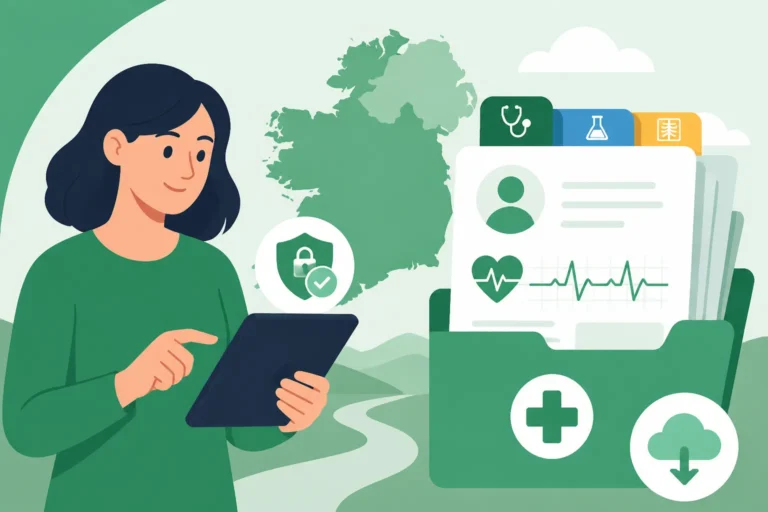
Before you open the HSE website, create a folder on your computer with clear scans of the following: your most recent payslips (usually the last three months), your tenancy agreement or a letter from your landlord, proof of your PPS number, and your IRP card if you are from outside the EEA. If you are self-employed, you will need your most recent Notice of Assessment from Revenue.
A common pitfall for expats is the "proof of address" requirement. If you are currently in temporary accommodation or a "digs" situation, the HSE might be skeptical. You need a formal utility bill or a bank statement in your name at that address. If you haven't set up your local banking yet, look into How to Open a Bank Account at an Irish Bank as a Foreigner to get that crucial piece of evidence. Without a valid Irish address, the application simply won't proceed.
Completing the Online vs. Paper Application
The online system at mymedicalcard.ie is generally the fastest route. It uses a series of logic gates to determine if you should be applying for a Medical Card or a GP Visit Card. Even if you only want the GP Visit Card, the system will evaluate you for both. If you prefer the old-school route, you can download a Form MC1 and mail it to the National Medical Card Unit in Manorhamilton, County Leitrim.
The paper form is sometimes better if your situation is complex—for instance, if you are claiming a "Hardship" case due to a chronic illness that requires weekly specialist visits. However, paper applications are notoriously slower. Whether online or on paper, you will be asked to name your preferred GP. This is a critical step because that GP must actually agree to take you on as a patient under the GMS (General Medical Services) scheme. You can find more advice on this in How to Find and Register with a Local GP Practice in Ireland.
Finding a GP Who Accepts the Card
This is the "hidden" hurdle of the Irish healthcare system. Just because you qualify for a card doesn't mean every doctor has to accept it. Many GP practices, especially in high-density areas like Dublin 1, 2, or 8, have reached their "GMS quota" and are not taking on new cardholders. They might take you as a private, paying patient, but they will refuse to sign your GP Visit Card application.
If you cannot find a doctor willing to accept your card after contacting three different practices, the HSE can eventually assign you to one. This is a slow, bureaucratic process that involves getting "refusal" notes or emails from the doctors who turned you down. To avoid this headache, I recommend checking Registering with a GP in Ireland: The Complete Expat Guide (2027) for tips on how to talk to receptionists and find clinics with open lists.
Life After Approval: Using Your Card and Renewals
Once that plastic card arrives in the mail, it feels like a major victory. But having the card is only half the battle; knowing how to use it effectively without getting unexpected bills is the other half.
What Is and Is Not Covered
When you book an appointment, you must inform the receptionist that you have a GP Visit Card. Upon arrival, you present the card, and the consultation fee is waived. This also covers "out-of-hours" GP services like D-Doc or South-Doc, which are essential when your child gets a fever on a Sunday night. Without the card, these services can cost 80 Euro or more per visit.
What isn't covered? Almost everything else. If your GP refers you to a consultant, you enter the public waiting list, which can be quite long. If you want to skip the queue and see a private consultant, your GP Visit Card will not help with those fees. This is why many expats choose to maintain a hybrid approach, using the GP Visit Card for day-to-day issues while holding a policy like SafetyWing or a local private insurer for major emergencies or specialist care. For a deeper look at the public side, check What Is Covered by the Public Health System in Ireland?.
The Renewal Process and Changes in Circumstance
GP Visit Cards are not for life. They usually come with an expiry date, often one or two years from the issue date. The HSE will typically send you a renewal notice three months before the card expires. It is your responsibility to complete the review. If your income has increased—perhaps you got a promotion or a new job—you must declare it.
If you fail to renew or if your income now exceeds the threshold, the card will be cancelled. I have seen people caught out at the pharmacy or the doctor’s office because they ignored a renewal letter buried in their junk mail. If you're worried about losing coverage during a job transition, make sure you understand the rules around Understanding Sick Leave and Statutory Sick Pay in Ireland, as your medical needs might increase just as your income changes.
Challenges and Frustrations for Expats
Let's be realistic: the Irish healthcare system is under significant strain. Even with a GP Visit Card, you will face hurdles that can be incredibly frustrating for those coming from systems with more immediate access.
Dealing with GP Waiting Lists and Full Practices
The "GP shortage" is a frequent headline in Irish news. In many rural towns or rapidly growing suburbs, it is virtually impossible to find a doctor taking new patients. You might have the card in your hand, but if the only clinic in your town is full, you are stuck commuting to a different town for a basic checkup.
This pressure is one reason why many expats feel forced to go private even when they qualify for state aid. It’s the paradox of the Irish system: you are entitled to free care, but the "queue" to get into a practice can take months. If you find yourself in this limbo, How Much Does a GP Visit Cost in Ireland Without a Card? will help you budget for the private fees you might have to pay in the interim.
Managing Costs While Waiting for Approval
The application for a GP Visit Card can take anywhere from a few weeks to several months, depending on how "busy" the HSE is and how clear your documentation is. During this waiting period, you are still a "private" patient. You will have to pay the full 60–75 Euro for every visit.
I always suggest that newcomers don't wait until they are sick to start this process. Apply as soon as you have your PPS number and your proof of address. To bridge the gap, having a flexible international plan like SafetyWing can be a lifesaver, especially since it covers you from the moment you land, long before the HSE even knows your name. It acts as a financial buffer while the Irish bureaucracy grinds through your paperwork.
Comparison Table: GP Visit Card vs. Other Options
| Feature | GP Visit Card | Full Medical Card | Private Health Insurance |
|---|---|---|---|
| GP Consultation Cost | Free | Free | Paid (often 50% – 75% back) |
| Prescription Costs | Full Price | €1.50 per item (capped) | Full Price |
| Hospital Charges | Standard Public Fees | Free | Covered (Private/Semi-Private) |
| Means Tested? | Yes (Higher Limit) | Yes (Lower Limit) | No |
| Waiting Times | Public System | Public System | Significantly Shorter |
| Specialist Access | GP Referral (Public) | GP Referral (Public) | Direct/Fast Track (Private) |
As you can see from the table above, the GP Visit Card is a middle-ground solution. It solves the immediate pain of the doctor’s bill but leaves the rest of the healthcare costs on your shoulders. For many, combining this card with a high-quality private plan is the sweet spot for living in Ireland. If you are still trying to decide which route is best for your family, take a look at Public vs Private Healthcare in Ireland: Which Should Expats Choose? for a detailed breakdown of the pros and cons.
Navigating the HSE might feel like a part-time job during your first year in Ireland, but the savings provided by the GP Visit Card make it worth the effort. By staying organized, keeping your receipts, and understanding the income thresholds, you can take a massive bite out of your monthly living expenses and focus on enjoying your new life in the Emerald Isle.
Disclaimer
This guide is intended for informational purposes only and does not constitute legal or professional medical advice. Healthcare regulations and income thresholds in Ireland are subject to frequent changes by the HSE and the Irish Government. Always verify current requirements on official government websites or consult with a qualified professional before making financial or healthcare decisions.