What Is the Fastest Route to Work in Ireland Legally?
Trying to figure out the quickest way to legally work in Ireland can feel like navigating a maze blindfolded, especially when you’re eager to make the move and start your new life here. The bureaucracy and specific requirements can be daunting, leading to endless hours of online searching and head-scratching. This guide aims to cut through the confusion, offering a realistic, step-by-step breakdown of the fastest routes to securing employment permission and beginning your career journey in the Emerald Isle.
The Initial Hurdle: Understanding Employment Permits and Eligibility
Before we even talk about "fastest," it's crucial to understand the fundamental requirement for working legally in Ireland if you're not from the European Economic Area (EEA) or Switzerland. Unlike some countries where you can arrive and then search for a job, Ireland generally requires a job offer and an associated employment permit before you can legally begin working. This initial hurdle is often where the clock starts ticking for many hopeful expats.
Who Needs an Employment Permit?
Let's get this straight: if you're a citizen of an EU/EEA country or Switzerland, you're one of the lucky ones. You generally don't need an employment permit to work in Ireland. Your right to live and work here comes from your EU/EEA citizenship, though you'll still need to register your presence after a certain period if you plan to stay long-term. For everyone else, essentially all non-EEA nationals, an employment permit is almost always a non-negotiable step to working here. This includes citizens from countries like the USA, Canada, Australia, India, and the UK (post-Brexit, unfortunately).
There are various types of employment permits, each designed for different situations and skill sets, but for those seeking the fastest route, we'll primarily focus on the two most common and relevant: the Critical Skills Employment Permit and the General Employment Permit. Understanding who falls into which category is your very first step in determining your potential timeline. If you're an EU/EEA national and are curious about your general path to moving here, our guide on How EU/EEA and Non-EEA Citizens Move to Ireland: The Full Guide (2027) provides a comprehensive overview.
General Requirements for All Permits
Regardless of the type of permit you're aiming for, there are some universal truths and requirements you'll need to satisfy. The most significant one is a genuine job offer from an eligible employer in Ireland. This isn't a "come here and look" situation; you need the offer in hand before you can even apply for the permit.
Here’s what you’ll generally need:
- A Job Offer: This must be from a company registered with the Revenue Commissioners in Ireland. It can't be a hypothetical offer; it needs to be concrete, with a specific start date and salary.
- Minimum Salary Thresholds: Each permit type has a minimum gross annual salary requirement. This is non-negotiable and is checked rigorously. These figures change periodically, so always check the most current information. As of January 1, 2025, for example, the thresholds are set to increase.
- Relevant Qualifications and Experience: You'll need to demonstrate that you have the education, skills, and work experience necessary for the role you've been offered. This usually means providing academic transcripts, professional certifications, and detailed CVs.
- Passport Validity: Your passport must be valid for a sufficient period, typically well beyond your intended stay.
- Clean Record: You'll usually need to declare any criminal convictions and may be asked for a police clearance certificate from previous countries of residence.
The application process for these permits is managed by the Department of Enterprise, Trade and Employment through their Employment Permits Online System (EPOS). It's an entirely online process, which is handy, but it requires meticulous attention to detail and accurate documentation.
The "Fastest" Routes: Critical Skills vs. General Employment Permits
When expats talk about the "fastest route," they're almost always referring to the Critical Skills Employment Permit. It’s designed for highly skilled professionals in sectors where Ireland has a significant shortage, making the process smoother and quicker. However, not everyone qualifies, which brings us to the General Employment Permit. Let's compare these two directly to give you a clear picture. For a broader look at the options, our article Understanding the Difference Between Critical Skills and General Employment Permits breaks down all the nuances.
The Critical Skills Employment Permit: A Quicker Path
If your skills are on Ireland's "Critical Skills Occupations List," you're in a prime position for a faster route to employment. This list includes roles in high-demand sectors like ICT, engineering, healthcare (doctors, nurses, some allied health professionals), science, and certain financial services. The Irish government actively encourages these professionals to move here because they contribute significantly to the economy and fill crucial gaps.
Here's why it's generally faster:
- No Labour Market Needs Test: This is the biggest time-saver. For a Critical Skills permit, your prospective employer does not need to advertise the job on national and European job boards for a specified period (typically 28 days) to prove that no suitable candidate from within the EEA could be found. The government already acknowledges the shortage.
- Faster Processing Times: Because there's no Labour Market Needs Test, and these applications are prioritised, the processing times are significantly shorter than for General Employment Permits. While official processing times can fluctuate, Critical Skills permits are often processed within a few weeks, sometimes even less, if all documentation is in order. You can check current processing times on the Department's website, but historically, they are the quickest.
- Salary Threshold: The minimum annual salary for most occupations on the Critical Skills List is currently €32,000 (as of 2024), increasing to €38,000 from January 1, 2025. For roles not on the list but deemed critically skilled, the threshold is higher, typically €64,000 (also increasing to €64,000 from Jan 1, 2025, but this is the general higher threshold). You'll need a degree relevant to the role or significant professional experience.
- Path to Long-Term Residency: The Critical Skills permit offers a much clearer and quicker pathway to long-term residency (Stamp 4) after two years, allowing you much greater flexibility in employment. You can read more about this in How to Apply for Stamp 4 After a Critical Skills Permit in Ireland.
- Family Benefits: Spouses and dependants of Critical Skills permit holders can also apply for a Stamp 1G dependant permission, allowing them to live and work in Ireland without needing their own separate employment permit. This is a massive bonus for families hoping to move together.
The key to this route is ensuring your occupation is indeed on the Critical Skills list and that you meet the salary and qualification criteria. You'll find a detailed breakdown in our guide, The Expat Guide to the Critical Skills Employment Permit in Ireland (2027).
The General Employment Permit: Broader but Slower
If your occupation isn't on the Critical Skills List, don't despair! The General Employment Permit is the more common route for many other roles. It covers a vast range of occupations, but it comes with a few more hoops to jump through, primarily designed to protect the Irish labour market.
Here's why it's generally a slower path:
- Labour Market Needs Test (LMNT): This is the main reason for the extended timeline. Your employer must genuinely try to fill the position with an Irish or EEA citizen first. This means advertising the job for at least 28 days on specific government-approved platforms (EURES and jobsireland.ie), and sometimes in national newspapers. Only if no suitable candidate is found can they then apply for your General Employment Permit. This advertising period alone adds a month to the process.
- Processing Times: After the LMNT is satisfied, the application itself goes through a processing queue. Due to the volume and complexity, General Employment Permits generally take longer to process than Critical Skills permits. It can often be several months.
- Salary Threshold: The minimum annual salary for a General Employment Permit is currently €30,000 (as of 2024), increasing to €34,000 from January 1, 2025. There are some exceptions for specific healthcare roles, where the threshold can be as low as €30,000 from January 1, 2025.
- Ineligible Occupations: There's also an "Ineligible List of Occupations for Employment Permits" – essentially, jobs that the government has deemed there are enough qualified residents for, or that don't meet the economic needs for foreign workers. This list includes roles like general administrative assistants, retail assistants, and various care worker positions (though some specific healthcare roles are eligible). If your job is on this list, you simply cannot get a General Employment Permit for it.
Comparison Table: Critical Skills vs. General Employment Permit
| Feature | Critical Skills Employment Permit | General Employment Permit |
|---|---|---|
| Eligibility | Occupations on the Critical Skills Occupations List | All other occupations, not on the Ineligible List |
| Labour Market Test | Not Required | Required: Employer must advertise for 28 days |
| Minimum Salary | From €38,000 (for listed occupations from Jan 2025); €64,000 (others, from Jan 2025) | From €34,000 (most roles from Jan 2025); €30,000 (specific healthcare roles from Jan 2025) |
| Processing Time | Generally faster (weeks to a few months) | Generally slower (several months, including LMNT) |
| Path to Stamp 4 | After 2 years | Generally after 5 years |
| Family Reunification | Spouses/dependants can apply for Stamp 1G (work permission) | Spouses/dependants generally apply for Stamp 3 (no work permission initially, can convert later based on circumstances) |
| Example Roles | Software Developer, Civil Engineer, Doctor, Nurse, Data Scientist | Accountant, Marketing Executive, Graphic Designer, Chef |
The table clearly illustrates why the Critical Skills permit is the "fastest route." If you have the qualifications and experience for a role on that list, it significantly cuts down on the waiting period and offers more immediate benefits for you and your family.
Beyond the Permit: Getting Your Foot in the Door and Other Considerations
Even with the "fastest" permit in mind, securing it isn't the only time-consuming part of the journey. The job search itself, and then the post-arrival administrative tasks, all contribute to your overall timeline. It's a holistic process, and rushing any single part can lead to delays.
The Job Search and Application Process
This is where the real work begins for many. Finding a job offer is the prerequisite for any employment permit, and for non-EEA nationals, this can be an uphill battle if not approached strategically.
- Start Early: Begin your job search well in advance of your desired move date. Recruiters and hiring managers need time, and the permit application adds further time.
- Target Critical Skills Roles: If speed is your priority, focus your efforts exclusively on roles that fall under the Critical Skills Occupations List. This means researching the list thoroughly and tailoring your applications.
- Irish-Style CVs: Adapt your CV (resume) to the Irish standard. Generally, this means a concise, achievement-focused document, often without a photo, and a strong cover letter. Our guide, How to Improve Your CV for the Irish Job Market, offers some excellent tips.
- Leverage Online Platforms: Websites like IrishJobs.ie, LinkedIn, Indeed.ie, and public sector recruitment sites are your primary tools. Don't underestimate the power of networking, even virtually.
- Be Patient and Persistent: The Irish job market, especially for non-EEA candidates, can be competitive. It might take numerous applications and interviews before you land the right offer from an employer willing to sponsor a permit.
Remember, getting a job offer from an Irish employer who is willing and able to sponsor your permit is the critical first step. Without it, none of the permit discussions matter.
Registering Your Presence and Practicalities
Once you have your employment permit and, if required, an entry visa, you’re ready to actually move to Ireland. But even after you land, there are crucial administrative steps that need to be completed promptly to legally live and work here.
- IRP Card Registration: Within 90 days of arrival (or sooner if your visa is for a shorter period), you must register your immigration permission and get your Irish Residence Permit (IRP) card. This is your proof of legal residence in Ireland. You'll book an appointment at the Garda National Immigration Bureau (GNIB) in Dublin or a local Garda (police) station for outside Dublin. Be prepared with all your documents, including your passport, employment permit, job contract, and proof of address. Our article The Complete Guide to the IRP Card and Registering with Immigration (2027) walks you through this in detail.
- PPS Number Application: A Personal Public Service (PPS) Number is essential. It's like a national identification number used for all dealings with public services, including tax, social welfare, and healthcare. You cannot be paid legally without one. You apply for this through the Department of Social Protection. You’ll need proof of identity and address. Learn more about this process in How to Register for Tax and Get a PPS Number in Ireland.
- Bank Account: You’ll need an Irish bank account to receive your salary. This can sometimes be tricky without a fixed address, but it's a priority. Traditional banks like AIB and Bank of Ireland, or digital options like Revolut or N26, are common choices. Our The Expat Guide to Opening a Bank Account in Ireland offers practical advice on navigating this.
- Health Insurance: While public healthcare is available once you're settled and contributing, many expats opt for private health insurance like Cigna Global to cover them from day one, offering peace of mind during those first few months. It's a significant consideration, especially for non-EEA nationals, as the public system can have waiting lists.
- Accommodation and Moving: The housing market in Ireland, particularly in major cities, is challenging. Start looking for accommodation as soon as you can, and be realistic about what you can afford and where. Once that permit is in hand, you'll be scrambling to arrange your move, and services like Sirelo can be a real lifeline for comparing quotes and finding movers to help get your belongings to Ireland efficiently.
Navigating the Visa and Immigration Process
For many non-EEA nationals, even with an employment permit, an entry visa is another hurdle that adds time to the process.
Applying for Your Entry Visa
If you are a citizen of a visa-required country (check the Irish Immigration Service Delivery website for the full list), you will need to apply for an entry visa after your employment permit has been approved and before you travel to Ireland. This is usually a 'D' Long Stay visa.
- Separate Application: Understand that the employment permit and the entry visa are two separate applications, though one usually depends on the other. Your employment permit allows you to work; your entry visa allows you to enter Ireland.
- Required Documents: You'll need your employment permit approval letter, your job offer, passport, financial statements, and other supporting documents. The application is made online, followed by submitting physical documents to your nearest Irish Embassy or Consulate.
- Waiting Times: Visa processing times can vary significantly depending on the embassy and the time of year. Factor this into your overall timeline. It's not uncommon for visa processing to take several weeks or even a few months. Our comprehensive guide, How to Apply for an Irish Entry Visa (Short Stay and Long Stay), delves deeper into this process.
Registering for Your IRP Card
Once you arrive in Ireland with your valid visa (if required) and employment permit, registering for your Irish Residence Permit (IRP) card is a mandatory step. This card is vital; it's your tangible proof that you have legal permission to reside in Ireland.
- Booking an Appointment: You must schedule an appointment with the Garda National Immigration Bureau (GNIB) in Dublin or a local Garda immigration office outside Dublin. These appointments can sometimes have a waiting list, so try to book one as soon as you know your arrival date.
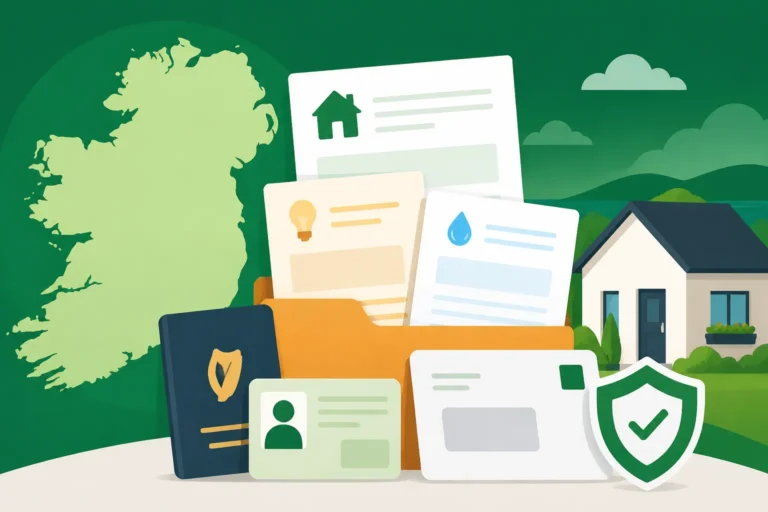
- Documents for Registration: Bring your passport, your employment permit approval letter, your job contract, proof of Irish address (e.g., a utility bill or bank statement in your name, or a letter from your landlord), and the applicable registration fee.
- Importance: Failing to register your permission within the specified timeframe (usually 90 days, or the validity of your short-stay visa) can lead to complications with your immigration status. This is not a step to delay. You'll find more details on this essential step in our The Complete Guide to the IRP Card and Registering with Immigration (2027) article.
By carefully considering each of these stages and planning accordingly, you can streamline your journey and make your move to work in Ireland as efficient as possible. The "fastest route" isn't just about the permit processing; it's about being prepared for every step of the relocation process.
Disclaimer
The information provided in this guide is for general informational purposes only and does not constitute legal, financial, or immigration advice. While we strive to keep the information up-to-date and accurate, regulations and procedures in Ireland can change frequently. Always consult with official government sources (such as the Irish Immigration Service Delivery, the Department of Enterprise, Trade and Employment, and Revenue) or seek professional advice from qualified immigration lawyers or advisors for your specific situation.