Can I Bring My Whole Family on a Critical Skills Permit to Ireland?
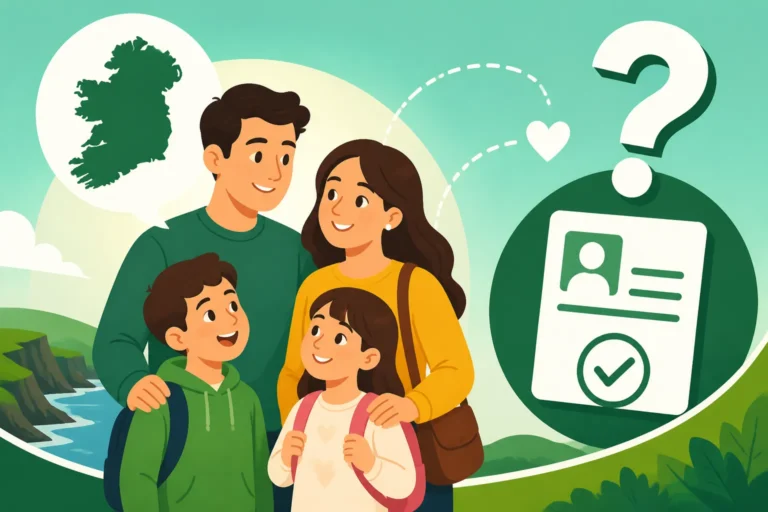
Moving to Ireland for a new professional chapter on a Critical Skills Employment Permit is a monumental step, filled with excitement and ambition. But for many of us, that excitement is immediately tempered by a huge, pressing question: can my loved ones join me in this new adventure? The thought of navigating Irish immigration for your spouse and children can feel like deciphering an ancient scroll, complex and often anxiety-inducing. This guide is here to untangle that knot, offering a clear, empathetic, and realistic roadmap to bringing your entire family along on your journey to Ireland.
Understanding the Critical Skills Employment Permit and Family Eligibility
When you secure a Critical Skills Employment Permit (CSEP) in Ireland, you've already jumped through a significant hoop. This permit is designed to attract highly skilled non-EEA nationals to specific, in-demand occupations, and a major benefit it offers is the pathway for family reunification. Unlike some other employment permits, the CSEP grants your dependants the right to apply for a Dependant Employment Permit or a Stamp 1G (Spouse/Partner of CSEP holder) from day one, without having to wait a year. This is a huge relief for many, myself included, who couldn't imagine leaving their family behind for an extended period.
Who Qualifies as a Dependant?
The term "dependant" in the context of Irish immigration generally refers to your spouse or civil partner, and your minor children. It’s important to understand the definitions clearly, as these are strict under Irish law.
- Spouse or Civil Partner: This means someone you are legally married to or in a registered civil partnership with. Common-law partners or those in de facto relationships generally have a separate, more complex application process, but for CSEP holders, a de facto partner can apply to reside with you on a Stamp 1G, provided you can prove a long-standing, committed relationship akin to marriage. This is usually defined as having lived together for at least two years. The documentation for this can be quite rigorous, requiring joint bank accounts, utility bills, rental agreements, and even photographs together to establish the genuine nature and duration of your relationship.
- Minor Children: Children must generally be under the age of 18 at the time of application. In some limited circumstances, adult children between 18 and 23 years old may qualify as dependants if they are unmarried and still financially dependent on you, for instance, if they are enrolled in full-time education. However, this is not a guaranteed entitlement and is assessed on a case-by-case basis. Children who are already married or economically independent will generally not be considered dependants.
It's crucial to gather all necessary legal documents, such as marriage certificates, birth certificates, and proof of relationships, as these will be meticulously checked during the application process. Any discrepancies or missing information can cause significant delays, turning an already stressful situation into an absolute nightmare.
The Immediate Family Reunification Benefit
One of the standout advantages of the Critical Skills Employment Permit is the immediate right to family reunification. With other employment permits, a waiting period, typically 12 months, is often imposed before your family can apply to join you. This can be a real emotional and financial strain. With a CSEP, however, your eligible family members can apply for their immigration permission at the same time as you, or soon after you receive your permit. This means less time apart and a smoother transition for everyone involved.
For your spouse or de facto partner, they will typically apply for a Stamp 1G permission. This is particularly advantageous because it allows them to work in Ireland without the need for a separate employment permit, offering significant flexibility and contributing to the family's financial stability. For your children, they will typically receive a Stamp 3, which allows them to reside with you and attend school. For a deeper dive into the different permissions, check out our guide on "Understanding the Irish Immigration Stamp System (Stamp 1, 2, 4) (2026)".
The Step-by-Step Process for Bringing Your Dependants to Ireland
Getting your CSEP is the first step, but bringing your family over is a whole different ball game. It involves meticulous planning, mountains of paperwork, and a good deal of patience. The process varies slightly depending on whether your dependants are visa-required or not, but the core steps remain similar.
Visa Application (If Required) and Pre-Clearance
If your dependants are from a country whose nationals require a visa to enter Ireland, they will first need to apply for an Irish long-stay (D) visa under the category of "Join Family (Employment)". This is done through the Irish Naturalisation and Immigration Service (INIS) website. Even if they don't require an entry visa, it is highly recommended for spouses and de facto partners of CSEP holders to apply for a 'pre-clearance' for a Stamp 1G to ensure smooth entry and registration. This step confirms their eligibility before they even set foot in Ireland, saving a lot of potential headaches down the line.
The visa or pre-clearance application will require a comprehensive set of documents, including:
- Your CSEP details and a copy of your permit.
- Proof of relationship (marriage certificate, birth certificates).
- Your financial capacity to support your dependants without recourse to public funds. This is a critical point; you must demonstrate that you can financially sustain your family in Ireland.
- Accommodation details in Ireland.
- Your passport and your dependants' passports.
- A letter of support from you, outlining your intention for your family to join you.
Remember, every document needs to be accurate, up-to-date, and often translated into English by a certified translator. Any errors can lead to delays or even refusal. For general information on visas, you might find our article "How to Get a Visa to Work in Ireland?" helpful.
Entering Ireland and Registering with Immigration
Once the visa (if applicable) or pre-clearance is granted, your dependants can travel to Ireland. Upon arrival, they will go through immigration control. They should present their visa/pre-clearance letter, passport, and copies of your CSEP and supporting documents. The immigration officer will then grant them a temporary entry stamp, usually for a period of up to 90 days.
Within this initial period, your dependants must register their immigration permission with the Immigration Service Delivery (ISD). This usually involves an appointment at a local Garda National Immigration Bureau (GNIB) office if you're outside Dublin, or at the Burgh Quay Registration Office in Dublin. For your spouse or de facto partner, they will typically apply for Stamp 1G permission, and for children, it will usually be Stamp 3. Upon successful registration, they will receive their Irish Residence Permit (IRP) card. This card is their official proof of residence in Ireland and is absolutely essential. For detailed guidance on this, see "The Complete Guide to the IRP Card and Registering with Immigration (2026)".
Here’s a quick overview of the typical journey for dependants:
| Dependant Type | Initial Application | Typical Immigration Stamp | Right to Work? | Notes |
|---|---|---|---|---|
| Spouse/Civil Partner | Visa (if req.)/Pre-clearance | Stamp 1G | Yes | Allows employment without separate work permit. |
| De Facto Partner | Visa (if req.)/Pre-clearance | Stamp 1G | Yes | Requires proof of a durable, exclusive relationship (2+ years cohabitation). |
| Minor Child (<18) | Visa (if req.) | Stamp 3 | No | Allows residence and schooling; cannot take up employment. |
| Adult Child (18-23) | Visa (if req.) | Stamp 3 (case-by-case) | No | Must be unmarried & financially dependent; proof of full-time education often needed. |
Renewing Immigration Permission
The IRP card and immigration permission for your dependants will have an expiry date, usually aligning with your CSEP. Before this expiry date, you’ll need to apply to renew their permission. The renewal process is similar to the initial registration, often requiring proof that you still hold a valid CSEP, that you continue to meet the financial requirements, and that you and your family have resided in Ireland in line with your permissions. It's a recurring administrative task, so mark your calendars well in advance! You can find more information in our guide "How to Renew Your IRP and Immigration Permission in Ireland".
Life for Families in Ireland: Settling In and Support Systems
Bringing your family to a new country isn't just about visas and stamps; it's about building a new life. Ireland, with its rich culture and friendly people, can be a wonderful place for families, but it's not without its initial challenges. Getting established is a process, and having a good support network and understanding the local systems makes all the difference.
Healthcare for Your Family
Once your family has registered their immigration permission and received their IRP cards, they are generally entitled to access public healthcare services in Ireland. However, the system can be complex, and waiting times for certain specialist services in the public system can be long. This is where private health insurance often comes into play, especially for those who want quicker access or more choice. Many expats, myself included, choose to supplement public care with private plans. Providers like Cigna Global offer comprehensive international health insurance policies that can be invaluable for families, covering everything from GP visits to hospital stays, often with direct access to private facilities like Beacon Hospital or Mater Private. It’s a good idea to research options like "Health Insurance in Ireland: VHI, Laya, Irish Life and Options Explained" well before your family arrives. For an overall picture of healthcare, check out "The Complete Guide to Healthcare in Ireland for Expats (2026)".
Registering with a General Practitioner (GP) for your family is one of the first things you should do. GPs are the gatekeepers to most medical services in Ireland. Finding a GP accepting new patients can sometimes be a challenge, especially in urban areas, so start this search early.
Education and Childcare
If you're bringing children, securing school places is paramount. Ireland has a robust education system, comprising primary (ages 4/5-12) and secondary (ages 12-18) schools. Places, especially in popular urban areas like Dublin or Cork, can be competitive. It's advisable to research schools and apply well in advance of your arrival. You'll need to understand the different types of schools – national schools, Educate Together, Gaelscoileanna (Irish-speaking), and private international schools – to find the best fit for your children. Our article on "Schools and Education in Ireland: A Complete Guide for Expat Families" provides a detailed overview.
Childcare for younger children (under school age) can be very expensive and also has long waiting lists. Crèches and pre-schools are common, but the cost can significantly impact your budget. Be prepared to put your child's name down for childcare months, if not a year, in advance, particularly in cities.
Housing and Cost of Living
Finding suitable family housing in Ireland, particularly in urban centres, can be one of the biggest challenges for new arrivals. The rental market is highly competitive, and rents are notoriously high. You'll need to demonstrate your income and ability to pay, often requiring multiple references. It’s not uncommon for families to temporarily stay in short-term rentals or even hotels while they search for a permanent home.
When budgeting, consider that the cost of living in Ireland, especially in cities, is higher than in many other European countries. Groceries, utilities, transportation, and leisure activities all add up. For a detailed breakdown of expenses, our "The Complete Guide to Cost of Living in Ireland for Expats (2026)" can offer invaluable insights. Once your family is settled and their immigration is sorted, you'll need to open bank accounts for everyday finances. Our guide, "The Expat Guide to Opening a Bank Account in Ireland", walks you through the process.
Navigating Common Challenges and Planning Ahead for Your Family's Move
Moving your entire life, and the lives of your family, to a new country is a monumental undertaking. Even with the best preparation, you're bound to encounter bumps along the way. Understanding common challenges and planning strategically can help mitigate the stress.
Emotional and Cultural Adjustment
While Ireland is known for its warmth and welcoming nature, adjusting to a new culture can be tough for both adults and children. Everything from the education system and social norms to the weather can feel different. Be patient with yourselves and your family. Seek out expat communities, join local clubs or groups, and encourage your children to participate in school activities. Building a new social circle takes time, but it’s vital for mental well-being. The initial days and weeks can be isolating, so make an effort to connect with others.
Logistics of the Move
Beyond the immigration paperwork, there are the physical logistics of moving your household. Deciding what to bring, what to sell, and what to store is a big decision. International moving companies can be a lifesaver, handling everything from packing to customs clearance. Comparing services through platforms like Sirelo can help you find reputable movers and get quotes, ensuring your belongings arrive safely and without undue stress. Planning this well in advance can prevent last-minute panic and unexpected costs. Remember, if your spouse is coming on a Stamp 1G, they will be able to seek employment. For more information, you could refer to "Understanding Irish Employment Law and Worker Rights (2026)".
Financial Planning and Unexpected Costs
Even with a good salary on a Critical Skills Employment Permit, the initial costs of moving a family can be substantial. Beyond visa fees and travel, you'll face deposits for rent, setting up utilities, purchasing school uniforms, and other essential items for your new home. Having a robust financial buffer for at least the first three to six months is highly recommended. Don't underestimate the "hidden" costs, like getting your foreign driving license exchanged or the Vehicle Registration Tax (VRT) if you plan to import a car.
It’s an immense privilege to bring your loved ones with you on your expat journey, and while Ireland makes it easier for CSEP holders, it still requires diligent effort. Take it one step at a time, gather your documents, and don't hesitate to seek advice from fellow expats or immigration professionals. The reward of seeing your family thrive in their new Irish home is absolutely worth it.
Disclaimer
Please note that immigration laws and policies in Ireland are subject to change. The information provided in this guide is for general informational purposes only and does not constitute legal advice. Always consult with the official Irish Immigration Service Delivery (ISD) website or a qualified immigration solicitor for the most current and personalised advice regarding your specific situation and applications.