Do EU Citizens Need Permission to Live in Ireland?
Oh, the age-old question that causes a bit of a head-scratch for so many of you arriving from other parts of Europe! It seems like it should be straightforward, doesn't it? You're an EU citizen, Ireland is in the EU, so surely you just rock up, settle in, and get on with it? And largely, you’d be right! But, like many things in the administrative world, there are nuances and specific steps that, while not requiring "permission" in the traditional sense, definitely require your attention. This guide is here to cut through the confusion and explain exactly what an EU citizen needs to do (or not do) to live in Ireland.
The Principle of Free Movement: Your Fundamental Right
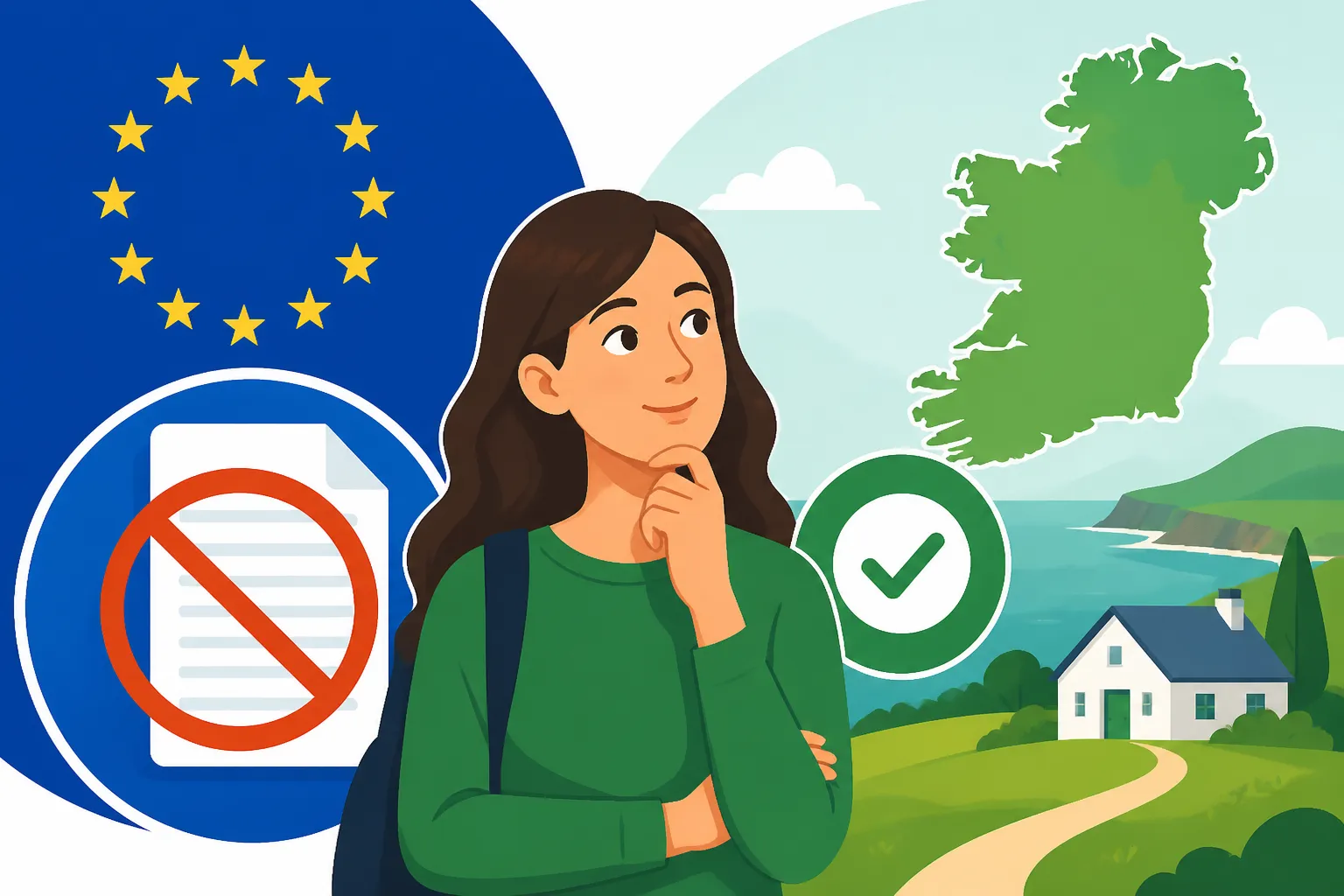
Let's start with the absolute basics, because this is where the power of your EU passport truly shines. As a citizen of an EU/EEA country or Switzerland, you have the fundamental right to move to and reside in another Member State, including Ireland, without needing a visa or formal immigration "permission" to enter or stay. This is enshrined in EU law and it’s a big deal – it means your status here is vastly different from someone arriving from outside the European Economic Area.
Entering Ireland and the Initial Three Months
When you first land on Irish soil, waving your EU passport, you're free as a bird. You don't need to pass through any specific immigration checks, and certainly don't need to ask for permission to enter. Think of it like moving from one county to another within your own country; there are no border controls and no immediate bureaucratic hoops to jump through.
You have an automatic right to reside in Ireland for up to three months without any conditions or formalities. This period is a grace period, a chance for you to explore, get a feel for the place, and decide if Ireland is truly where you want to put down roots. During these initial months, you can look for a job, check out places to live, and generally get acquainted with your new surroundings. It’s a wonderful freedom that many expats from non-EU countries can only dream of.
Exercising Treaty Rights: Beyond the Initial Period
Now, if you decide to stay longer than three months – and let's face it, most of us do! – your right to reside in Ireland becomes conditional on "exercising your EU Treaty Rights." This isn't as scary or complicated as it sounds; it simply means you need to be doing something productive or possess the means to support yourself.
What does "exercising treaty rights" actually entail in practical terms? It typically means one of the following:
- You're Working: This is the most common scenario. You've found employment in Ireland, whether full-time or part-time. Your employer doesn't need to sponsor you or apply for a work permit, unlike for non-EU citizens. You simply get a job.
- You're Self-Employed: You’ve set up your own business or are working as a freelancer. Again, no special permits are required beyond the standard business registrations for anyone operating in Ireland.
- You're Studying: You’re enrolled in an approved educational institution, be it a university, college, or language school.
- You're Self-Sufficient: You have sufficient financial resources to support yourself and any family members, so you won't become a burden on the Irish social welfare system. This is often the case for retirees or those with passive income.
- You're a Job-Seeker: You're actively looking for employment and have a genuine chance of finding a job. There's usually a reasonable period for this, often extending beyond the initial three months, as long as you can show genuine efforts and prospects.
In essence, as long as you fit into one of these categories, your right to reside in Ireland is secure. It's not about seeking permission, but about fulfilling these basic criteria of being a contributing or self-sufficient resident. If you're planning your move, services like Sirelo can be incredibly helpful for sorting out the logistics of getting your belongings over, which is often the first big hurdle once you’ve decided Ireland is the spot for you.
When Registration Becomes a Formal Step
While you don't need "permission" to live in Ireland as an EU citizen, there are definitely administrative steps you’ll want, and in some cases need, to take to fully integrate and access public services. This is where the lines often blur, and new arrivals sometimes incorrectly assume they need some form of immigration approval.
The True Gateway: Your PPS Number
For most practical purposes, the most crucial thing you'll need as an EU citizen settling in Ireland is a Personal Public Service Number (PPSN). This isn't an immigration document, but a unique reference number that helps you access social welfare benefits, public services, and information in Ireland. It's like your tax identification number, social security number, and sometimes even a pseudo-ID number rolled into one. Without a PPSN, you can't get paid by an employer, register for tax, access public healthcare, or apply for many other services.
Applying for a PPSN is a straightforward process, but it does require proof of identity (passport) and proof of address in Ireland, along with evidence of why you need the PPSN (e.g., a letter from an employer or a job offer). The Department of Social Protection handles these applications. It's often the first and most important piece of Irish bureaucracy you'll tackle. You can find more detailed guidance on How to Register for Tax and Get a PPS Number in Ireland.
Addressing the IRP Card Confusion
Here's a common point of confusion for many EU citizens, especially those who might have lived in non-EU countries or have friends from outside the EU: the Irish Residence Permit (IRP) card.
As an EU/EEA/Swiss citizen, you do not generally apply for or receive an IRP card. The IRP card is the residence permit issued to non-EU/EEA/Swiss nationals, confirming their registration with immigration and their permission to live in Ireland. It explicitly states their immigration "stamp" (e.g., Stamp 1 for employment, Stamp 2 for students, Stamp 4 for long-term residents) and outlines their entitlements.
Because your right to reside is automatic under EU law, you don't need this physical card to prove your immigration status. Your passport is usually sufficient. This is a significant difference from non-EU citizens who must go through the process of The Complete Guide to the IRP Card and Registering with Immigration (2027). Understanding this distinction can save you a lot of worry and unnecessary inquiries at immigration offices!
The EU Citizen Certificate of Registration
While not mandatory, as an EU citizen, you can apply for a "Certificate of Registration" if you wish. This is a document that officially confirms your right to reside in Ireland as an EU citizen exercising Treaty Rights. It's not the same as an IRP card, and many EU citizens live in Ireland for years without ever needing one.
However, some people find it useful as an additional layer of proof for certain administrative hurdles, such as very conservative banks or specific government agencies unfamiliar with EU citizens' rights. It might be helpful if you anticipate needing a document explicitly stating your residence status, particularly if you're not working and rely on self-sufficiency. For the vast majority of day-to-day life and basic services, however, your passport and PPSN will suffice.
Practicalities of Settling: Beyond the Formalities
Once you’ve got your head around the initial steps, you can focus on the practical side of making Ireland your home. This is where your EU rights truly simplify things, even if some local processes still require a bit of patience!
Work and Employment Rights
One of the biggest advantages you have as an EU citizen is the unrestricted right to work in Ireland. You do not need an employment permit, a visa specifically for work, or any form of employer sponsorship. This means you can apply for any job you're qualified for, directly competing with Irish citizens. It streamlines the job search immensely, removing a huge barrier that non-EU nationals face.
Your main task here will be to secure a job and then get your PPSN so your employer can pay you and deduct taxes correctly. Many expats find their first job through online portals like IrishJobs.ie or LinkedIn, or even by just networking once they've arrived. The job market, especially in sectors like tech, pharma, and finance, is quite robust for those with the right skills. You can delve deeper into this with The Expat Guide to Finding a Job in Ireland (2027).
Accessing Public Services and Healthcare
With your PPSN in hand and proof of ordinary residence, you'll generally have access to public services in Ireland, including healthcare, education, and social welfare benefits (if eligible).
- Healthcare: As a resident, you're entitled to access public healthcare services, though it's important to understand how the system works. It’s not "free" at the point of use for everyone; there can be charges for GP visits (unless you have a Medical Card or GP Visit Card) and A&E. Many expats, even EU citizens, opt for private health insurance to bypass public waiting lists and access private hospitals. Providers like Cigna Global offer comprehensive plans that can give you peace of mind, covering everything from specialist consultations to private hospital stays. Understanding The Complete Guide to Healthcare in Ireland for Expats (2027) is vital.
- Education: If you have children, they have the right to attend primary and secondary schools in Ireland. The process of enrolment is typically linked to your residential address.
- Social Welfare: Should you find yourself in need, you may be eligible for certain social welfare payments, such as Jobseeker's Benefit, once you've made sufficient PRSI (Pay Related Social Insurance) contributions through employment. Understanding PAYE, PRSI and USC Deductions for Employees in Ireland is a good starting point for your contributions.
Banking and Accommodation
Setting up a bank account and finding accommodation are two critical steps for any newcomer, and again, your EU citizenship simplifies some aspects, while others remain a common expat challenge.
- Banking: Irish banks like AIB, Bank of Ireland, and Permanent TSB will require proof of identity (your passport) and, crucially, proof of your Irish address to open an account. This can sometimes be a Catch-22 situation for new arrivals, as you need an address to get a bank account, but sometimes need a bank account for an address (e.g., utilities). Utility bills or letters from government departments (like the PPSN allocation letter) are usually accepted. Digital banks like Revolut or N26 can often bridge this gap as you get settled. Learn more about The Expat Guide to Opening a Bank Account in Ireland.
- Accommodation: Finding a place to live, especially in major cities like Dublin or Cork, is a challenge for everyone in Ireland right now, not just expats. It's often highly competitive and can be expensive. Landlords and letting agents won't ask for immigration permission from EU citizens, but they will require references, proof of income (to show you can afford the rent), and a deposit. The best advice here is to start looking well in advance and be prepared to move quickly. The Understanding the Cost of Living in Ireland for Expats (2026) article gives a good overview of what to expect.
The Complexities for Non-EU Family Members
While your EU citizenship grants you significant freedoms, it's important to remember that these rights don't automatically extend to all family members if they are not also EU/EEA/Swiss citizens. This is where things get a bit more complex, and where the term "permission to live" truly applies.
Derived Rights for Non-EU Family Members
The good news is that the free movement directive does extend rights to certain non-EU/EEA/Swiss family members of an EU citizen. This means if you, as an EU citizen, are exercising your Treaty Rights in Ireland, your non-EU spouse, children (under 21, or dependent older children), and dependent parents can generally join you. Their right to reside in Ireland is derived from your status as the EU citizen exercising your rights.
Visa and Residence Card Requirements for Non-EU Family
Unlike you, your non-EU family members will need to apply for appropriate documentation.
- Entry Visa: Depending on their nationality, they may need an entry visa to even enter Ireland. This is a standard short-stay or long-stay visa application, but they apply as "family members of an EU citizen," which streamlines the process and usually waives application fees.
- Residence Card: Once in Ireland, they must apply for a "Residence Card of a Family Member of a Union Citizen." This is their form of "permission to live" in Ireland and replaces any entry visa they might have used. Upon approval, they will receive an Irish Residence Permit (IRP) card, which confirms their right to reside and work in Ireland. This IRP card will typically state their immigration stamp, usually a Stamp 4EUFam, which grants them the right to work without a separate employment permit.
The application process for non-EU family members can be quite detailed, requiring proof of your EU citizenship, your exercise of Treaty Rights in Ireland, and clear evidence of the family relationship (marriage certificates, birth certificates, etc.). This is a critical distinction, and something to plan for well in advance of their arrival. For more in-depth information, check out Family Reunification in Ireland: Bringing Your Spouse and Children (2027) and How to Apply for a De Facto Partner or Spouse Visa in Ireland.
Here's a quick comparison to highlight the key differences:
| Aspect | EU/EEA/Swiss Citizen | Non-EU/EEA/Swiss Citizen (Family Member of EU Citizen) |
|---|---|---|
| Entry Visa | Not required for entry to Ireland | Required for entry, unless exempt by nationality |
| Permission to Live | Automatic right, no "visa" or "stamp" required | Requires an application for a Residence Card of a Family Member of a Union Citizen |
| Immigration Card | Do not receive an IRP card | Receives an Irish Residence Permit (IRP) card upon approval |
| Work Permit | Not required, right to work freely | Not required once residence card is granted, right to work freely |
| PPS Number | Required for employment, taxes, services | Required for employment, taxes, services |
| Registration Formality | Not strictly mandatory, but can apply for Certificate of Registration | Mandatory to register presence and obtain IRP card |
So, to wrap it up: as an EU citizen, you absolutely do not need permission to live in Ireland in the way a non-EU citizen does. Your right is inherent. However, you do need to understand the administrative steps – primarily securing your PPSN and ensuring you're exercising your Treaty Rights – to fully access all the benefits of living here. For your non-EU family members, the process is more formal and involves specific visa and residence card applications, but their rights are still derived from your EU status, making their journey simpler than that of independent non-EU applicants.
The overall message is one of freedom, with a healthy dose of administrative homework! Your passport is your key, and your PPSN is your membership card to daily life. Welcome to Ireland!
Disclaimer
The information provided in this guide is for general informational purposes only and does not constitute legal or professional advice. Immigration rules and regulations can change frequently. While every effort has been made to ensure accuracy, readers are advised to consult with the official Irish Immigration Service Delivery (ISD) or a qualified immigration solicitor for the most up-to-date and personalised advice regarding their specific circumstances. We cannot be held responsible for any inaccuracies or outdated information.