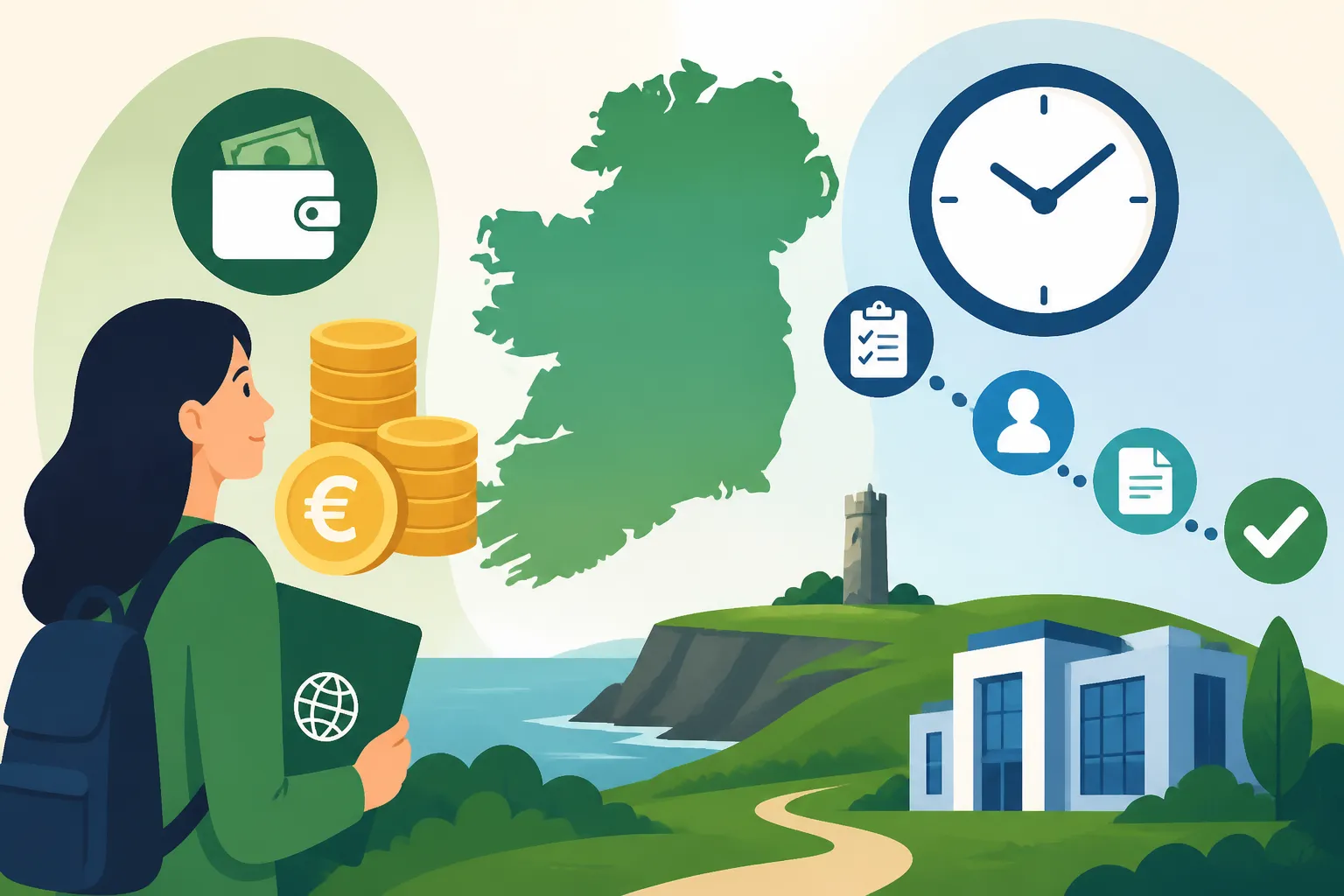
Understanding the Cost and Timeline of the Immigration Process in Ireland
Moving to Ireland is an exciting adventure, but let's be honest, the entire immigration process can feel like a labyrinth of forms, fees, and frustratingly vague timelines. It’s enough to make even the most organised among us feel completely overwhelmed and, dare I say, a bit skint. This comprehensive guide is here to walk you through the realistic costs and typical timelines you can expect when navigating the Irish immigration system, offering a clear roadmap so you can budget both your finances and your patience.
The Initial Sticker Shock: Understanding Visa and Permit Application Fees
When you first start looking into moving to Ireland, the sheer number of different permits and visas can be dizzying. Each one comes with its own set of requirements, and yes, its own price tag. These initial fees are often just the tip of the iceberg, but they’re mandatory and unavoidable. It’s crucial to understand what you’re paying for right from the get-go.
Entry Visa Costs: Short Stay vs. Long Stay
First things first, not everyone needs an entry visa to come to Ireland. If you're from an EU/EEA country or a visa-exempt country like the United States, Canada, or Australia, you can typically enter Ireland without needing an entry visa. However, if you're from a non-visa-exempt country, you will absolutely need to secure an entry visa before you travel.
There are generally two types of entry visas: short-stay (C) and long-stay (D). A short-stay visa is for visits up to 90 days, for purposes like tourism, visiting family, or short business trips. A long-stay visa, on the other hand, is what you’ll need if you intend to live, work, or study in Ireland for longer than 90 days. The application fees are fixed, but it's important to differentiate between them. A single entry short-stay visa currently costs around €60, while a multiple-entry short-stay visa is €100. For a long-stay visa, the fee is typically €60, which sounds deceptively low. This fee covers the initial processing of your application to enter Ireland. It does not cover the immigration permission itself that allows you to remain and reside here, which comes later with your IRP card. It’s a common point of confusion for newcomers, who assume the visa is the end-all, be-all.
Employment Permit Application Fees
If your plan is to work in Ireland, then an employment permit is likely on your horizon. This is where the costs can really start to add up, and the fees differ based on the type of permit and its duration. The two most common types for expats are the Critical Skills Employment Permit and the General Employment Permit. You can learn more about these in our guide on how to get an employment permit to work in Ireland.
For a Critical Skills Employment Permit, which is often granted for two years initially and doesn't require a Labour Market Needs Test, the current fee for the application is €1,000. If you're applying for a General Employment Permit, the fee is also €1,000 for a two-year permit or €500 for a six-month permit. These fees are paid by either you or your prospective employer, depending on the agreement. It's not uncommon for employers, especially for critical roles, to cover this cost, so always clarify this during your job offer negotiations. Remember, these fees are non-refundable, even if your application is refused. This can be a tough pill to swallow if things don’t go your way, adding another layer of risk to the process.
Other Initial Fees: Translations, Certifications, and Courier Services
Beyond the official application fees, there's a whole host of smaller, but equally important, costs that can quickly accumulate. Imagine you've got all your documents ready, but then you realise your birth certificate from your home country isn't in English. Irish immigration authorities generally require all supporting documents not in English or Irish to be accompanied by a certified translation. The cost for these translations can vary wildly depending on the document's length and complexity, often ranging from €30-€100 per page. You'll need to find a certified translator, and sometimes even have the translation notarised, adding another layer of expense.
Then there are the certifications. Many official documents, particularly academic qualifications or marriage certificates, might need to be apostilled or authenticated by your home country's foreign affairs department. This process confirms the authenticity of the document for international use and can incur its own fees, typically between €20-€50 per document. And don't forget courier services. While some applications can be submitted online, many still require hard copies of documents to be sent to the Department of Justice or the Department of Enterprise, Trade and Employment. Sending these important documents internationally via secure, trackable courier can cost anywhere from €30-€80, sometimes even more for express services, particularly if you need to send multiple packages or receive original documents back. These seemingly minor costs can easily add up to a few hundred euros before you've even properly begun your journey to Ireland.
Beyond the Application: The True Cost of Settling In
Getting your visa or permit approved is a huge hurdle overcome, but don't pop the champagne just yet. There are still several significant financial commitments awaiting you once you actually arrive in Ireland, which often catch new expats off guard. These costs are essential for legal residency and ensuring your well-being.
Immigration Registration (IRP Card) Fees
Once you've arrived in Ireland with your long-stay visa or employment permit approval, your next critical step is to register your permission with the immigration authorities and get your Irish Residence Permit (IRP) card. This card is your proof of legal residency in Ireland and is absolutely essential. It confirms your immigration stamp – be it a Stamp 1 for employment, a Stamp 2 for students, or a Stamp 4 for long-term residents. Understanding the Irish Immigration Stamp System (Stamp 1, 2, 4) is key here.
The IRP card registration costs a hefty €300 per person. And yes, that includes children if they are over 16 and need their own permission, though generally, children under 16 are covered by their parents' permission and don't require their own IRP cards. This fee is paid directly at your registration appointment, usually via debit or credit card, and is non-refundable. For a family, this can quickly become a significant expense. For example, a couple moving to Ireland will immediately face a €600 charge just for their IRP cards. If you're living in Dublin or Cork, you'll typically register with the Garda National Immigration Bureau (GNIB). In other areas, you'll register at your local Garda station. This process is crucial, and you can find a more detailed walkthrough in our guide, The Complete Guide to the IRP Card and Registering with Immigration (2027).
Medical Examinations and Insurance Requirements
Depending on your nationality or the type of visa you’re applying for, you might be required to undergo a medical examination as part of your immigration process. While this isn't universally required for all nationalities moving to Ireland, some countries may have specific health requirements, or the Irish authorities might request one if there are particular health concerns. If required, these examinations are conducted by approved medical practitioners and the costs are entirely your responsibility. This could involve a general check-up, specific blood tests, or chest X-rays, all adding up to potentially hundreds of euros.
Beyond that, health insurance is a non-negotiable for many non-EEA nationals. If you're on a Stamp 1 employment permit, your employer might provide health insurance. However, if you’re moving under certain other permits, or if your employer’s coverage isn’t comprehensive enough, you’ll need to secure private health insurance. This is particularly true for students on Stamp 2, who are generally required to show proof of private health insurance for the duration of their studies. For a single person, basic private health insurance can start from around €400-€500 per year, but comprehensive plans, especially for families or those wanting access to private hospitals, can easily exceed €1,500-€2,000 annually. It’s not just a nice-to-have; it’s a must-have for peace of mind and, often, a legal requirement to maintain your immigration status. Companies like Cigna Global offer various expat health insurance plans that might suit your needs, providing essential coverage during those initial, vulnerable months. You can dive deeper into options with our article, Health Insurance in Ireland: VHI, Laya, Irish Life and Options Explained.
Professional Accreditation and Qualification Recognition
For many skilled professionals, the journey to working in Ireland isn't complete with just an employment permit. You might also need to have your professional qualifications recognised by the relevant Irish regulatory body. This is a particularly common requirement for professions like doctors, nurses, engineers, teachers, and lawyers. The process can be time-consuming and, predictably, costly.
Each regulatory body has its own application fees for assessing your qualifications. For example, the Medical Council for doctors, the Nursing and Midwifery Board of Ireland (NMBI) for nurses, or Engineers Ireland. These fees can range from €100 to over €500, depending on the profession and the complexity of the assessment. You might also need to provide certified copies of transcripts, course syllabi, and professional references, all of which might require further translation or authentication costs. In some cases, you might even be required to undertake additional training, exams, or adaptation programmes in Ireland to meet local standards, incurring further tuition fees and living expenses. This is an often-underestimated part of the immigration process, both in terms of cost and time. Our guide on how to get your foreign qualification recognised in Ireland provides more in-depth information on this essential step.
Navigating the Timeline: From Application to Arrival
One of the most anxiety-inducing aspects of moving to Ireland, for many expats, is the unknown waiting period. The timelines provided by official government websites are often estimates, and real-world experiences can vary significantly. Managing your expectations and understanding potential delays is critical for a smooth transition.
General Processing Times for Visas and Permits
The official processing times can be a bit of a moving target, depending on where you're applying from, the time of year, and the volume of applications. For example, a long-stay D visa application, if submitted from outside Ireland, might officially take 8-12 weeks, but in reality, it could be less or more. Employment permit applications, similarly, have published service standards. For a Critical Skills Employment Permit, the Department of Enterprise, Trade and Employment aims to process applications within 2-4 weeks. General Employment Permits, due to the additional Labour Market Needs Test, can take longer, sometimes 8-12 weeks.
It's vital to remember that these are just averages. Peak seasons (like summer or the lead-up to academic terms) can see significant backlogs. My own experience, and that of many friends, shows that patience is indeed a virtue. I recall one friend waiting nearly four months for their spouse visa to be processed, completely derailing their initial travel plans. It’s not about how quickly you submit your documents; it’s about how long the queue is when they finally get to your application. Always check the Immigration Service Delivery (ISD) and Department of Enterprise, Trade and Employment websites for the most up-to-date processing times for your specific type of application.
Factors Affecting Processing Delays
Oh, the delays! They are a constant source of frustration for anyone trying to navigate the immigration system. Several factors can throw a wrench into even the most meticulously planned timeline. The most common culprit is incomplete documentation. Missing one signature, an uncertified copy, or a document not translated correctly can send your application straight back to you, adding weeks or even months to the process. It's a truly disheartening experience when you've waited patiently, only to be told your application is being returned because of a minor oversight.
Another significant factor is the volume of applications. If there's a surge in demand, processing times can naturally extend. Global events, changes in policy, or even staff shortages within the processing departments can also cause unforeseen delays. Then there's the 'complexity' factor. Applications involving dependants, specific professional registrations, or those with unusual circumstances (e.g., criminal record checks, previous visa refusals) will inevitably take longer as they require more in-depth review. The key here is proactive preparation: double-check everything, then check it again. Consider utilising the services of a professional immigration consultant, though this, of course, adds to the cost.
Post-Arrival Registration and IRP Card Appointments
Even once you've landed in Ireland, the clock is still ticking. Non-EEA nationals with long-stay permission typically have 90 days from their arrival to register their permission and get their IRP card. This might sound like a generous timeframe, but in reality, securing an appointment, especially in busy urban centres like Dublin, can be surprisingly difficult. In Dublin, for example, appointments for the Garda National Immigration Bureau (GNIB) are released online at specific times and are snapped up within minutes. It can feel like trying to get concert tickets for a sold-out show!
You need to be persistent, logging on regularly and at the right times. If you can't get an appointment within your 90-day window, don't panic, but do keep evidence of your attempts to book. It’s always a good idea to start trying to book your IRP appointment as soon as you have your flight details confirmed, even before you arrive. Delaying this can cause unnecessary stress and, in extreme cases, may put your immigration status at risk. Our guide on how to register for an IRP Card with Immigration in Ireland offers practical tips for securing an appointment.
Long-Term Commitments: Renewals, Extensions, and Citizenship
Immigration to Ireland isn't usually a one-and-done process. For many, it's a multi-year journey involving renewals, extensions, and potentially, a path to Irish citizenship. Each stage comes with its own financial and temporal demands, requiring foresight and continued diligence.
Costs and Timelines for Permit Renewals
Your initial employment permit or student permission won't last forever. Most employment permits are issued for two years, and student permissions are typically tied to your course duration, usually renewed annually. Renewing your employment permit incurs another fee, currently €1,000 for a two-year extension or €500 for a one-year extension. These renewal applications need to be submitted well in advance of your current permit's expiration – ideally, 3-4 months before – to avoid any gaps in your permission to work or reside.
The processing times for renewals are generally quicker than initial applications, often taking 2-3 weeks for Critical Skills Permits. However, it’s still crucial to be organised. You’ll need updated letters from your employer, proof of continued employment, and sometimes payslips. For IRP card renewals, the €300 fee applies again each time you renew your permission. So, if you're on a two-year permit, you'll pay this fee every two years. This repeated fee can be a bit of a shock to the system for those used to one-off charges in other countries. Our guide, How to Renew Your IRP and Immigration Permission in Ireland, details this process thoroughly.
Applying for Long-Term Residency (Stamp 4)
After a certain period of continuous legal residence and employment on specific permits (most commonly the Critical Skills Employment Permit), you might become eligible to apply for a Stamp 4 permission. A Stamp 4 typically grants you the right to reside in Ireland without the need for an employment permit, and often allows you to be self-employed or start your own business. It's a significant milestone on the path to long-term stability in Ireland.
To be eligible for a Stamp 4 from a Critical Skills Employment Permit, you generally need to have held two consecutive Critical Skills Permits for a total of two years. The application for Stamp 4 itself, through the Department of Justice, doesn't typically have a separate application fee beyond the IRP card fee of €300. However, the preparation of the application, gathering all necessary documents, and ensuring continuous reckonable residence can be time-consuming. Processing times for Stamp 4 applications can vary, but generally, expect to wait a few months for the decision after submission. It's not an automatic process, and you need to provide clear evidence of your eligibility and good character.
The Journey to Irish Citizenship by Naturalisation
For many expats, the ultimate goal is to become an Irish citizen. The path to Irish citizenship by naturalisation is a serious long-term commitment, both in terms of time and money. To be eligible, you generally need to have accumulated 5 years of reckonable residence in the State out of the last 9 years, with the last year being one of continuous residence.
The application fee for naturalisation is a substantial €175, which is non-refundable. If your application is successful, there's a further certification fee of €950 (or €200 for minors) to obtain your Certificate of Naturalisation. This means a total cost of €1,125 per adult, not including any legal fees if you choose to get assistance with your application. The timeline for naturalisation applications can be lengthy. Officially, the Immigration Service Delivery aims to process applications within 12 months, but in practice, it can often take 18-24 months, or even longer in some complex cases. It's a testament to your long-term commitment to Ireland, and the process reflects that. You can explore this further in our guide, How to Apply for Irish Citizenship by Naturalisation.
Practical Strategies for Managing Costs and Time
Navigating the costs and timelines of Irish immigration can feel like a full-time job. However, with some strategic planning and smart choices, you can minimise the financial strain and the stress of uncertainty.
Budgeting for the Immigration Process
Effective budgeting is your best friend when moving to Ireland. Don't just factor in the headline visa and permit fees; dig deeper. Create a comprehensive spreadsheet that includes:
- Pre-arrival costs: Entry visa fees, employment permit application fees, document translation and certification, international courier services, potentially medical exams, and initial health insurance.
- Post-arrival initial costs: IRP card registration fee (€300 per person), first month's rent and security deposit (typically 2-3 months' rent upfront – e.g., €3000-€4500 for a €1500/month apartment), setting up utilities (potentially activation fees for broadband or electricity), initial groceries, public transport (a Leap Card is your friend here, details in The Expat Guide to Public Transport in Ireland).
- Contingency fund: Always, always, always budget for unexpected expenses and delays. I recommend having at least an extra 10-20% of your total estimated costs set aside. This could cover anything from a delayed flight, a higher-than-expected utility bill, or the need for a last-minute document translation. I remember one friend who had to suddenly fly home for a family emergency shortly after arriving, and having that buffer saved them a lot of financial distress.
Be realistic about the cost of living in Ireland. While a budget of €3,000-€5,000 might seem sufficient for the immigration fees themselves, you need to add significant funds for housing, daily expenses, and unforeseen circumstances, especially for The Complete Guide to Moving to Ireland: Your First 90 Days (2026).
Utilising Relocation Services and Support
While the do-it-yourself approach can save money on consultation fees, the complexities of Irish immigration sometimes warrant professional help. Relocation services and immigration consultants can be invaluable, especially for more complex cases or for those with demanding jobs who simply don't have the time to research every detail.
Companies like Sirelo can assist with the broader relocation process, from finding housing to shipping your belongings, which can ease the burden of logistical planning. For specific immigration advice, a qualified Irish immigration solicitor can provide precise guidance, review your application, and represent you if needed. While their fees can be substantial (ranging from €500-€3,000+ depending on the service), they can potentially save you from costly mistakes, delays, or even refusals. Think of it as an investment in peace of mind. They know the intricacies of the system, the common pitfalls, and the most up-to-date requirements, which can be particularly helpful when dealing with questions about specific visa types like The Expat Guide to the Critical Skills Employment Permit in Ireland (2027).
Preparing for Delays and Unexpected Expenses
The golden rule of Irish immigration is to expect delays. Seriously, factor them into your mental timeline. Avoid making irreversible plans based on minimum processing times. Don't book non-refundable accommodation for a specific date if your visa approval is still pending. Don't resign from your current job until you have your employment permit firmly in hand (or at least written confirmation of approval and your entry visa if required).
Emotionally, prepare yourself for the waiting game. It can be frustrating, especially when you're eager to start your new life. Maintain open communication with your prospective employer (if applicable) and keep them updated on your status. Financially, as mentioned earlier, that contingency fund is your safety net. This could cover an extra month's rent if your move-in date is delayed, or emergency travel if a family situation arises back home before your IRP card is fully processed. The key is to remain flexible and resilient. The Irish immigration system, like any other, has its quirks and frustrations, but with careful planning and a good dose of patience, you will get through it.
Disclaimer
The information provided in this guide is for general informational purposes only and does not constitute legal or professional advice. Immigration laws and fees in Ireland are subject to change without notice. While every effort has been made to ensure accuracy as of the publication date, specific circumstances may vary. It is strongly recommended that you consult official government websites (such as the Immigration Service Delivery and the Department of Enterprise, Trade and Employment) or seek independent legal advice from a qualified immigration solicitor for personalised guidance on your specific immigration situation.