How Do I Renew My Family’s Immigration Permission in Ireland?
Navigating immigration in Ireland can feel like a never-ending saga, and when you have a whole family relying on your good graces with the Immigration Service Delivery (ISD), the pressure ratchets up tenfold. Many expat families find themselves in a constant cycle of paperwork, anxiously watching expiry dates, and dreading the renewal process. This comprehensive guide is here to walk you through exactly how to renew your family's immigration permission in Ireland, offering practical, empathetic advice to ease the burden and ensure everyone stays legally covered.
Navigating the Complexities of Family Immigration Permission in Ireland
When you first moved to Ireland, you likely sorted your own immigration permission, perhaps a Stamp 1 linked to an employment permit. But for those of us who arrived with partners and children, or who started a family here, the landscape of "permission" expands. It's not just your Indigenious Residency Permit (IRP) card with its expiry date; it's a web of linked permissions, each dependent on the primary permit holder and your family circumstances.
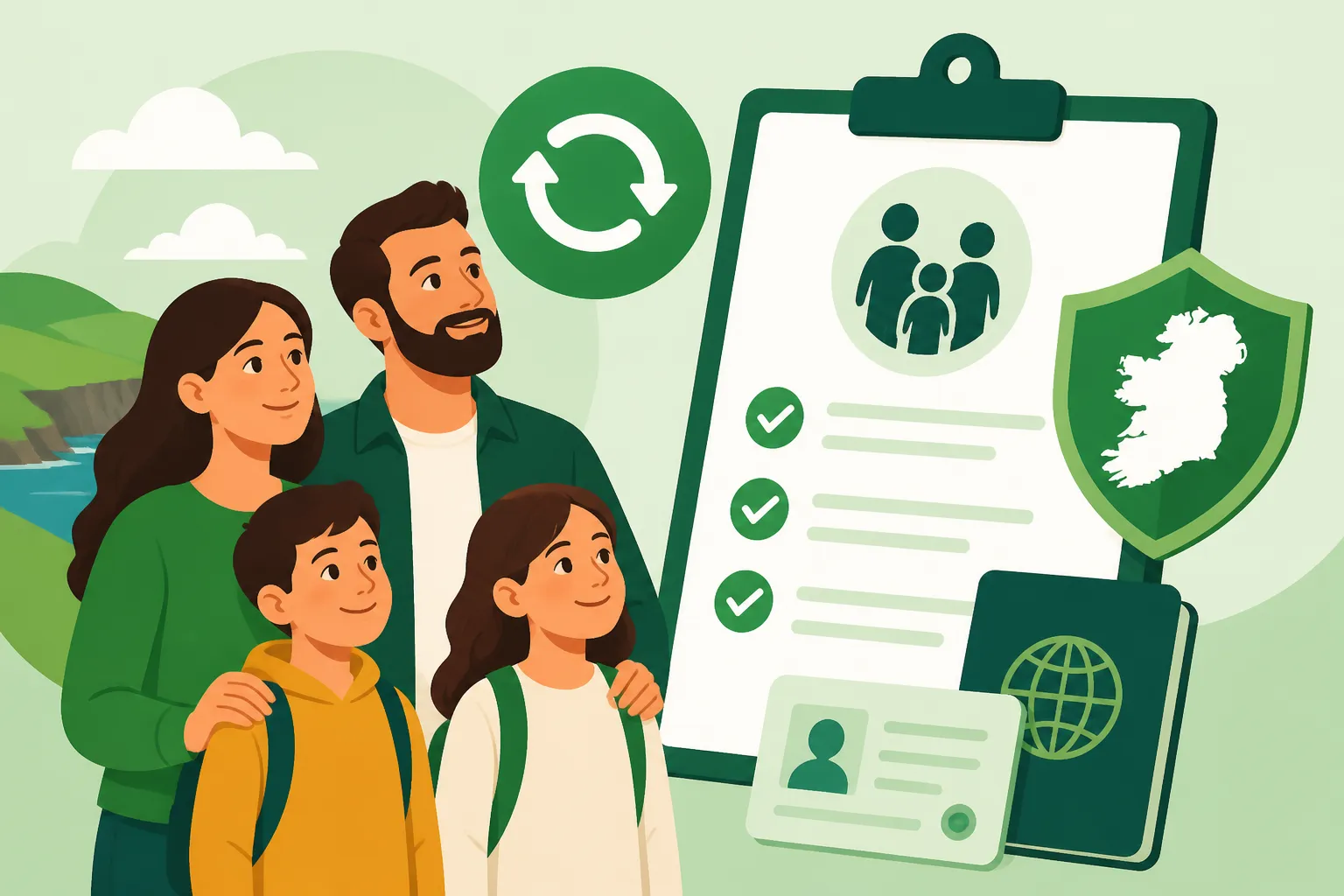
Each member of your family, from your spouse to your youngest child, needs their own valid immigration permission to live and reside in Ireland. This typically manifests as an IRP card, which is the physical proof of their registration with immigration. For a spouse or de facto partner, they might hold a Stamp 1G (if granted the right to work as a dependent) or a Stamp 3, while children typically hold a Stamp 2 (if studying) or a Stamp 3. The crucial thing to remember is that these permissions are often contingent on the primary permit holder's status. If your permission expires, it can throw a wrench into everyone else's. I've heard stories of families getting caught out because one person's card expired before another's, leading to unnecessary stress and last-minute scrambles. It's vital to view your family's immigration status as a collective unit, constantly monitoring each individual's IRP card and understanding its specific stamp type.
The Immigration Service Delivery (ISD) is the main body overseeing these permissions, and their online portal is your go-to for most renewal applications now, whether you're living in Dublin or outside the capital. While in the past, those outside of Dublin had to register and renew at their local Garda National Immigration Bureau (GNIB) office, the process has largely moved online to streamline things for everyone. This shift means less queuing but more meticulous online form-filling and document uploading. Always double-check the latest guidance on the official ISD website, as processes can, and do, change. For a deeper dive into the different categories of permission, you might find our article on Understanding the Irish Immigration Stamp System (Stamp 1, 2, 4) (2027) incredibly helpful.
The Step-by-Step Process for Renewing Your Family's Permissions
Renewing immigration permission for your entire family can feel like compiling a small book, but breaking it down makes it much more manageable. The golden rule here is early preparation. Don't wait until the last minute. The ISD advises applying at least six weeks before the expiry date, but honestly, I'd say give yourself two to three months to be safe. You never know what documents might go missing, or what unexpected delays might crop up.
Online Renewal Through the Immigration Service Delivery Portal
Since 2022, nearly all IRP card renewals, including those for family members and dependents, are processed online through the ISD's e-registration portal. This is a massive improvement from the days of long queues at Burgh Quay in Dublin or waiting weeks for an appointment at a local Garda station. You'll create an account (or log in if you already have one), and then each family member will have their own application initiated.
The primary permit holder (the person whose original work permit or visa brought the family to Ireland, typically on a Stamp 1) will usually renew first or simultaneously. Once their permission is secured or in progress, the applications for dependents can proceed, often relying on the primary holder's updated status. Each application requires careful attention to detail. You’ll be asked to input personal information, details of your current permission, and upload digital copies of supporting documents. Make sure these scans are clear and legible; fuzzy pictures will only lead to delays.
Essential Documents for Each Family Member
This is where the "small book" analogy comes into play. For each family member, you'll need a core set of documents, plus some specific ones depending on their relationship to the primary permit holder and their current stamp type. Organise these meticulously; perhaps create a separate digital folder for each family member.
Here's a general checklist, but remember to always consult the specific requirements on the ISD website for your exact situation:
- Valid Passport: For each family member. Ensure it has at least six months validity beyond your intended renewed permission.
- Current IRP Card: The physical card for each person whose permission you are renewing.
- Proof of Relationship:
- For a spouse/civil partner: Original Marriage Certificate (with official translation if not in English).
- For children: Original Birth Certificates (with official translation if not in English).
- For de facto partners: Extensive evidence of a durable relationship (utility bills in joint names, joint bank accounts, shared tenancy agreements, photos, correspondence addressed to both at the same address, etc.). This needs to show at least two years of cohabitation.
- Primary Permit Holder's Current Immigration Permission: A copy of their IRP card and, if applicable, their employment permit or other relevant permission document. This is critical for dependents, as their permission is linked.
- Proof of Financial Means: Bank statements showing sufficient funds to support the family without recourse to public funds. The specific amount can vary, but generally, you need to demonstrate stability.
- Proof of Address in Ireland: Recent utility bills, tenancy agreements, or bank statements addressed to each adult family member at your current address.
- Medical Insurance: Evidence of private medical insurance, particularly if you are not eligible for a Medical Card or GP Visit Card. Many expats opt for comprehensive private health insurance.
- For Children over 16: If they are still in full-time education, you will need a letter from their school or college confirming their enrollment.
- Passport-style Photos: Digital copies may be required for the online application.
Understanding Fees and Processing Times
Each family member requiring an IRP card renewal will need to pay the standard fee, which is currently €300 per person. This fee is paid online during the application process. Make sure you have a valid credit or debit card ready. There are specific exemptions for EU/EEA/Swiss citizens and certain categories, so check if these apply to your family.
Processing times can vary significantly depending on the volume of applications and the complexity of your case. While the ISD aims for certain turnaround times, it's not uncommon for renewals to take longer, especially if documents are missing or if there are queries about your application. This is why applying well in advance is so crucial. During periods of high demand, like at the end of academic years, delays are more frequent. You can usually check the current average processing times on the ISD website, but treat them as a guideline, not a guarantee. The waiting period can be incredibly stressful, particularly when the validity of your family's stay hangs in the balance.
To help you get organised, here’s a simplified table of key documents:
| Document Type | Required For | Notes |
|---|---|---|
| Valid Passport | All Family Members | Minimum 6 months validity from renewal date. |
| Current IRP Card | All Family Members (if applicable) | |
| Marriage Cert. | Spouses/Civil Partners | Original, translated if not in English. |
| Birth Certificates | Children | Original, translated if not in English. |
| Primary Holder's Permission | Dependents (Spouse/Children) | Copy of IRP and employment permit, if relevant. |
| Proof of Address | All Adult Family Members | Recent utility bill, bank statement, tenancy agreement. |
| Proof of Funds | Primary Holder (demonstrating family support) | Bank statements. |
| Medical Insurance | All Family Members (if applicable) | Required unless covered by specific public health schemes. |
| School/College Letter | Children over 16 (in full-time education) |
For a comprehensive guide on all aspects of your residency, check out The Complete Guide to Irish Visas and Immigration Permission for Expats (2027).
Common Pitfalls and How to Avoid Them During Renewal
Renewing your family's immigration permission isn't just about ticking boxes; it's about navigating potential bureaucratic quicksand. Over my years here, I've seen countless expats caught out by seemingly small details that snowball into big problems.
Missing Documentation: The Bane of Every Expat's Existence
This is, hands down, the most common reason for delays. The ISD requires specific documents for a reason, and if something is missing, incomplete, or not in the correct format, your application will be put on hold or even rejected. This isn't about being difficult; it's about ensuring compliance. For instance, if you submit a marriage certificate that's not in English, you must provide a certified translation. A photocopy of a birth certificate won't cut it; they often want the original (or a certified copy) to be scanned.
My advice? Create a checklist specific to each family member based on the ISD's current guidelines for their stamp type and relationship. Then, methodically gather and scan everything. Before you hit "submit," have someone else (a trusted friend, a legal professional, or even your spouse) review all the uploaded documents to ensure everything is there, clear, and correct. This extra pair of eyes can save you weeks of stress. If you're struggling to obtain original documents or certified copies from back home, legal services can sometimes help with getting these apostilled or authenticated. Our guide on How to Get Your Documents Apostilled for Irish Immigration provides crucial information on this often overlooked step.
Timing Is Everything: Why Early Application Matters
I cannot stress this enough: do not leave it to the last minute. While the ISD usually provides a temporary extension of your permission if you've applied before your current one expires and your application is still pending, this isn't a guarantee, and it causes immense anxiety. More importantly, late applications can lead to gaps in your legal residency, which can have severe implications for future applications, such as for long-term residency (Stamp 4) or Irish citizenship.
Imagine the stress of having your IRP card expire while your application is still being processed. You can't travel internationally, you might face issues with employers, or even with accessing certain services. Aim to submit your family’s applications at least two to three months before the earliest expiry date among your family members. This buffer time allows for any back-and-forth with the ISD if they request further information, or simply for the normal processing delays that are, unfortunately, a reality of immigration systems worldwide. Proactive planning is your best friend here. If you need to renew your own IRP, this information also applies, and you can get more specific details on How Do I Renew My IRP Card in Ireland?.
Changes in Family Circumstances: How Life Events Affect Renewals
Life happens, and sometimes it throws a curveball that impacts your immigration status. A new baby, a separation or divorce, a job loss for the primary permit holder, or even a child turning 18 can all complicate the renewal process.
- New Baby: If you've had a baby in Ireland, you'll need to apply for their first immigration permission. This is usually straightforward, applying for a Stamp 3 based on their parents' permission, but requires their birth certificate and your current permissions.
- Separation/Divorce: This is a more complex situation. If the primary permit holder and their spouse separate, the dependent spouse's permission is directly affected. They might need to seek independent legal advice to explore options for maintaining their residency, which could include applying for a different stamp type based on their own circumstances, or even a specific permission if they are victims of domestic violence.
- Job Loss (Primary Holder): If the primary permit holder loses their job, especially if their Stamp 1 is tied to that specific employment, it can immediately impact their permission and, by extension, their family's. It's crucial to understand the terms of your employment permit (e.g., Critical Skills permit holders can change employers more easily after a certain period). Seek advice from a solicitor specialising in immigration law immediately if this happens.
- Child Turning 18: When a child turns 18, they are no longer considered a minor dependent under Irish immigration law. They will need to apply for their own independent immigration permission, typically a Stamp 2 if they are pursuing third-level education, or a Stamp 1G if they are a graduate and eligible under the Third Level Graduate Programme. This transition requires careful planning and a new application tailored to their individual circumstances.
Always remember that for any significant change, it's best to seek professional legal advice to ensure you navigate the situation correctly and don't inadvertently jeopardise your family's status.
Navigating Different Stamp Types for Family Members
As mentioned earlier, your family members might hold different types of immigration stamps. For example, a spouse might be on a Stamp 1G (which allows them to work), while a child might be on a Stamp 3 (no right to work, typically for minors or non-working dependents). If your child is enrolled in university, they might have a Stamp 2. When renewing, you need to ensure you understand the specific requirements for each stamp type.
For instance, if your spouse is on a Stamp 1G, their renewal might require evidence of their own employment or job-seeking efforts, in addition to their link to your primary permission. For a child on a Stamp 2, a letter confirming their continued enrollment in an educational institution will be crucial. The ISD portal will guide you through the documents required for each specific stamp type during the renewal process, but being aware of these nuances beforehand can save you from last-minute scrambles. More on how these different stamps affect long-term residency can be found in Understanding Long-Term Residency and the Stamp 4 in Ireland.
Looking Ahead: Long-Term Residence and Citizenship for Your Family
Renewing immigration permission is often just one step in a longer journey for expat families in Ireland. Many eventually aspire to secure long-term residency or even Irish citizenship, providing a greater sense of permanence and belonging.
The Journey to Stamp 4 for Dependents
For many expat families, the ultimate goal after several years of renewals is to obtain Stamp 4 permission. A Stamp 4 grants a person permission to reside in Ireland and to take up employment or establish a business without needing an employment permit. It's a significant milestone, offering much more flexibility and security than a Stamp 1 or Stamp 3.
Typically, dependents (spouses and children) of Critical Skills Employment Permit holders or certain other long-term residents can apply for Stamp 4 after a specific period, usually two to five years, provided the primary permit holder has also progressed to a Stamp 4. The requirements for Stamp 4 are rigorous and will involve demonstrating continuous legal residency, adherence to all immigration laws, and often a minimum income threshold for the primary permit holder. Each family member must meet the criteria individually. Starting your journey, you'll find our guide on The Complete Guide to the IRP Card and Registering with Immigration (2027) a solid resource. For those eligible, How to Apply for Stamp 4 After a Critical Skills Permit in Ireland is an essential read.
Pathways to Irish Citizenship: For Primary and Secondary Applicants
Irish citizenship offers the ultimate stability and all the rights and responsibilities of an Irish national, including the right to vote and hold an Irish passport. There are several pathways to citizenship:
- Citizenship by Naturalisation: This is the most common route for expats. Generally, you must have accumulated a certain period of "reckonable residence" in Ireland – usually five years out of the last nine, including one year of continuous residence immediately before the application. Each adult family member must apply for naturalisation individually, meeting their own residence criteria. Children can sometimes be included in a parent's application or apply individually. The criteria for reckonable residence are strict, so keeping careful records of all your immigration permissions and dates of entry/exit from Ireland is paramount. Our article on Irish Citizenship: Naturalisation and Citizenship by Descent Explained (2027) explains this in detail.
- Citizenship by Descent (Foreign Births Register): If you or your children have an Irish grandparent or, in some cases, a great-grandparent born in Ireland, you might be eligible for citizenship by descent through the Foreign Births Register. This is a direct route and does not require a period of residence in Ireland.
- Citizenship through Marriage/Civil Partnership: While there isn't a direct "marriage visa," being married to an Irish citizen can make the path to naturalisation slightly different, potentially reducing the reckonable residence requirement.
The application for citizenship is a lengthy and detailed process, requiring a comprehensive set of documents and often a significant fee. It’s a decision many expat families consider once they’ve established strong roots in Ireland. To prepare for this, Understanding the Reckonable Residence Requirement for Citizenship in Ireland will be invaluable.
Maintaining Good Records: A Habit to Cultivate from Day One
I cannot overemphasise the importance of meticulous record-keeping. From the moment you apply for your first visa to the day you potentially apply for citizenship, every single document, every email from the ISD, every IRP card, every employment permit, and every utility bill is a piece of your family's immigration puzzle.
Create a dedicated physical and digital filing system. Scan everything. Keep copies of every application you submit, along with proof of postage or submission confirmation. Note down dates of appointments, reference numbers, and the names of any officials you speak with. This isn't just for renewals; it's for any future application, whether it's for a mortgage, a new job, or eventually, citizenship. When you're dealing with multiple family members, this level of organisation becomes even more critical. You’ll thank yourself later when you need to pull up a document from five years ago for an application!
The journey of renewing your family's immigration permission in Ireland is a continuous one, filled with administrative hurdles, but with careful planning, meticulous record-keeping, and a clear understanding of the process, you can navigate it successfully.
Disclaimer
The information provided in this guide is for general informational purposes only and does not constitute legal or professional advice. Immigration laws and procedures in Ireland are subject to change and depend heavily on individual circumstances. We strongly recommend consulting with the official Immigration Service Delivery (ISD) website or an independent Irish immigration solicitor for advice tailored to your specific situation and for the most up-to-date requirements.