The Complete Guide to Irish Visas and Immigration Permission for Expats (2027)
Oh, the infamous Irish visa and immigration system! If you're feeling a knot in your stomach just thinking about the paperwork, the acronyms, and the seemingly endless wait times, please know you are absolutely not alone. So many of us expats have been there, staring blankly at forms, wondering if we’ll ever truly understand the hoops we need to jump through. This guide is designed to cut through the confusion, offering a comprehensive, empathetic walkthrough of Irish visas and immigration permissions, tailored specifically for those of us navigating life in Ireland from abroad.
Understanding the Landscape of Irish Immigration for Expats
When you first start looking into moving to Ireland, whether it’s for work, study, or to join family, the sheer volume of information can be overwhelming. It feels like you need a degree in bureaucracy just to figure out where to begin. The truth is, the system can be complex, but with the right guidance and a good dose of patience, it’s entirely manageable. Many of us have come out the other side, I promise!
The Initial Shock: Why Irish Immigration Feels Complex
For many coming from countries with more straightforward, or at least differently structured, immigration processes, the Irish system can feel like a labyrinth. There isn't always one single portal or one clear-cut set of instructions that applies to everyone, which can be incredibly frustrating. You might find yourself piecing together information from various government websites, community forums, and well-meaning but sometimes outdated advice.
One of the biggest pain points is the difference between an 'entry visa' and 'immigration permission.' Many people conflate the two, leading to confusion. An entry visa simply grants you permission to enter Ireland. Once you're here, you need to apply for and register your immigration permission, which dictates your legal status and what you're allowed to do (like work or study) during your stay. This two-step dance often trips up newcomers. Add to that the constant updates and changes to policies, and it's easy to see why expats feel like they're trying to hit a moving target. Remember, the key is to take it one step at a time and not get bogged down by the entirety of the process at once.
Key Authorities and What They Do
Navigating the Irish immigration system means getting to know a few key players. These are the governmental bodies responsible for processing your applications and granting your permissions. Understanding their roles will help you direct your queries and know where to submit which piece of paper.
First up, you'll be dealing with the Immigration Service Delivery (ISD), which is part of the Department of Justice. The ISD is your primary point of contact for most immigration matters once you're on Irish soil. They handle the registration of your immigration permission, the issuance of your Irish Residence Permit (IRP) card, and processes related to citizenship, family reunification, and various other permissions. Think of them as the gatekeepers and record-keepers of your legal stay here. You'll likely interact with their online portal or visit a registration office, particularly if you're living outside of Dublin and dealing with your local Garda National Immigration Bureau (GNIB) office.
Then there's the Department of Enterprise, Trade and Employment (DETE). These folks are crucial if your move to Ireland is work-related. They are the ones who process and issue employment permits, which are absolutely essential if you’re a non-EEA national looking to work here. Without an employment permit, even with a visa, you generally won't be allowed to take up employment. Understanding the requirements for these permits, such as salary thresholds and eligible occupations, is vital. It's not uncommon to deal with both the ISD and the DETE simultaneously, or in quick succession, so it helps to know which office handles what.
EU/EEA vs. Non-EU/EEA Nationals: A Fundamental Divide
This is perhaps the most significant distinction in Irish immigration, creating two vastly different pathways to living and working in Ireland. Where you fall on this spectrum dictates almost every aspect of your application process.
If you're a citizen of an EU member state, an EEA country (Iceland, Liechtenstein, Norway), or Switzerland, congratulations! Your path is considerably smoother. You generally have the right to live, work, and study in Ireland without needing an employment permit or an entry visa. This is thanks to the principle of free movement of persons. While you don't need a visa, you will still need to register your presence if you plan to stay for more than three months, particularly if you're taking up residence. This typically involves registering with the relevant local authority or sometimes with the Garda National Immigration Bureau, primarily for record-keeping. While less burdensome, it's still a necessary step to formalise your residency. You can find more specific details on How EU/EEA and Non-EEA Citizens Move to Ireland: The Full Guide (2027).
However, if you're a non-EU/EEA national, your journey involves more stringent requirements. You will almost certainly need an entry visa to get into Ireland (unless you're from a visa-exempt country like the USA, Canada, Australia, etc.), and you will definitely need a specific immigration permission, such as an employment permit, student permission, or family reunification permission, to reside and engage in activities like working or studying. This is where most of the administrative heavy lifting comes in, involving detailed applications, substantial documentation, and often longer processing times. The rules are much stricter, and there are specific categories you must fit into. It’s a completely different ballgame, and it's crucial to understand which category applies to you from the very beginning.
Navigating Irish Entry Visas: Your First Hurdle
So, you’ve decided Ireland is the place for you. Fantastic! Now, before you even think about booking your flights, you need to figure out if you need an entry visa. This is literally your ticket to crossing the border. Skipping this step or getting it wrong can lead to a lot of heartbreak at the airport.
Who Needs an Entry Visa and Who Doesn't?
The requirement for an entry visa depends entirely on your nationality. Ireland has a list of 'visa-required countries' and 'non-visa-required countries.' If your passport is from one of the countries on the visa-required list, you must apply for and obtain an entry visa before travelling to Ireland. This applies even if you are simply transiting through Ireland on your way to another destination, unless you qualify for a specific transit visa waiver.
On the other hand, citizens of countries like the United States, Canada, Australia, New Zealand, and many others, are considered 'non-visa-required nationals.' This means you don't need an entry visa to come to Ireland for short stays (typically up to 90 days). However, this does not mean you can waltz in and stay indefinitely or start working. It just means the initial barrier of entry is lower. Once you arrive, if you plan to stay longer than 90 days or if your purpose is to work or study, you still need to engage with immigration authorities and get the appropriate permission and an Irish Residence Permit (IRP). It's a common misconception that being visa-exempt means you have more rights; it simply means fewer hurdles at the initial entry point.
Types of Entry Visas: Short-Stay (C) vs. Long-Stay (D)
Once you've established that you do need a visa, the next step is to choose the correct type. Ireland differentiates between two main categories of entry visas, based on the intended length and purpose of your stay.
A Short-Stay 'C' Visa is for those who intend to stay in Ireland for a maximum of 90 days. This category covers various purposes:
- Tourist Visa: For holidays and sightseeing. You cannot work, study, or engage in any long-term activity on this visa.
- Business Visa: For attending meetings, conferences, or short-term business engagements. Again, no employment is permitted.
- Visit Visa: To visit family or friends.
- Conference/Event Visa: For attending specific events.
- Transit Visa: If you're passing through Ireland to another country.
The critical thing to remember with a 'C' visa is that it is strictly for short visits. You cannot extend it beyond 90 days, nor can you switch to a long-term immigration permission while in Ireland. If your intention is to live or work in Ireland, a 'C' visa is simply not the correct route. For more on entry visas, check out How to Apply for an Irish Entry Visa (Short Stay and Long Stay).
A Long-Stay 'D' Visa is what you need if you intend to stay in Ireland for longer than 90 days, with the purpose of working, studying, or joining family. This is the visa that aligns with your ultimate immigration permission. Examples include:
- Employment Visa: Issued to those who have secured an employment permit from the Department of Enterprise, Trade and Employment.
- Student Visa: For individuals accepted into a recognised course of study at an Irish educational institution.
- Family Reunification Visa: For joining a family member who is already legally resident in Ireland, such as a spouse or child.
It's absolutely vital to apply for the correct 'D' visa type that matches your intended long-term activity. Applying for a tourist visa with the intention of switching to a work visa once you arrive is simply not allowed and will lead to refusal or complications.
The Application Process: Step-by-Step for Long-Stay Visas
Applying for a Long-Stay 'D' visa can feel like a rigorous bureaucratic exercise, but it’s manageable if you follow the steps meticulously. This is where attention to detail is paramount.
Step 1: Determine Your Visa Type. As discussed, decide whether you need a work, study, or family reunification visa. For a work visa, you must have an employment permit approved by the Department of Enterprise, Trade and Employment before you apply for your visa. This is a non-negotiable prerequisite.
Step 2: Complete the Online Application Form. Head over to the Irish Immigration website and complete the application form accurately. You'll need to provide personal details, passport information, and details about your intended stay. Be honest and thorough. Any discrepancies can cause delays or outright refusal.
Step 3: Gather Supporting Documentation. This is the most crucial part. The required documents will vary depending on your visa type, but generally include:
- Your original passport (valid for at least 6 months beyond your intended stay).
- A printed summary of your online application form.
- Two passport-sized colour photographs.
- A letter of application (personal statement) explaining your reasons for coming to Ireland, your plans, and your commitment to abiding by the visa conditions.
- Proof of finances: Bank statements showing sufficient funds to support yourself without recourse to public funds.
- Proof of accommodation arrangements.
- Proof of private health insurance for your initial period. Many expats choose comprehensive plans like those offered by Cigna Global to cover their bases from day one, especially as Irish public healthcare has its own complexities and waiting periods.
- For work visas: Your original employment permit and a letter from your employer.
- For student visas: An acceptance letter from a recognised Irish educational institution, proof of course payment, and evidence of English language proficiency.
- For family reunification: Evidence of your relationship with the Irish resident, their immigration status, and their financial capacity to support you.
- A comprehensive travel itinerary and, if applicable, details of your moving company. Many expats find tools like Sirelo helpful for comparing international movers when planning this logistical step.
Step 4: Pay the Fee. There is a non-refundable fee for processing your visa application.
Step 5: Submit Your Application. Submit all your documents and the printed application summary to the relevant Irish embassy or consulate in your country of residence. Some countries may have specific application centres. Ensure you know the correct submission method and address. You may be asked to attend an interview.
Step 6: Await a Decision. Processing times can vary significantly, from a few weeks to several months, depending on the visa type, the volume of applications, and your country of origin. Be prepared for a wait and avoid making irreversible travel plans until your visa is approved. Once approved, you'll receive a visa sticker in your passport. Remember, this is only permission to enter Ireland; you still need to register your immigration permission upon arrival.
Employment Permits: Your Gateway to Working in Ireland
For most non-EU/EEA nationals, securing an employment permit is the cornerstone of their plan to work in Ireland. Without one, the opportunities are incredibly limited. This is where the Department of Enterprise, Trade and Employment comes in, and understanding their criteria is absolutely crucial. This is usually the toughest hurdle for many.
Critical Skills Employment Permit: The Golden Ticket
The Critical Skills Employment Permit (CSEP) is often referred to as the 'golden ticket' because it offers the most favourable path for skilled non-EEA workers. It's designed to attract highly skilled individuals in specific, in-demand occupations that are experiencing shortages in Ireland. Think IT, engineering, certain healthcare professions, and so on.
The main advantages of a CSEP are significant:
- Direct Route to Long-Term Residency: After just two years on a CSEP, you become eligible to apply for Stamp 4 permission, which grants you the right to live and work in Ireland without needing further employment permits. This is a huge step towards long-term settlement and even citizenship.
- Family Reunification: CSEP holders can apply for immediate family reunification, meaning their spouse/partner and dependent children can apply for an immigration permission (typically a Stamp 1G for spouses) that allows them to live and work in Ireland from the outset, without needing a separate employment permit. This is a massive relief for families planning to move together.
- No Labour Market Needs Test: Employers don't need to demonstrate that they couldn't find an Irish or EEA candidate for the role, which simplifies the application process significantly.
To qualify for a CSEP, your job must be on the Critical Skills Occupations List, and it must meet a certain salary threshold. As of 2024, the minimum annual remuneration for most eligible occupations is typically €38,000 for specific jobs with a relevant degree qualification, or €64,000 for all other eligible occupations. It's vital to check the most up-to-date lists and thresholds on the Department of Enterprise, Trade and Employment website, as these can change. Securing a CSEP is a significant achievement and sets you up well for a future in Ireland. For a deeper dive, read The Expat Guide to the Critical Skills Employment Permit in Ireland (2027).
General Employment Permit: For Other Valued Roles
If your occupation isn't on the highly selective Critical Skills Occupations List, don't despair! The General Employment Permit (GEP) is another viable option for many roles, albeit with slightly different conditions. These permits cover a much wider range of occupations but are subject to a few more conditions than the CSEP.
Key aspects of the GEP include:
- Labour Market Needs Test: Unlike the CSEP, your employer will generally need to conduct a Labour Market Needs Test (LMNT). This means they must advertise the position nationally (on EURES, JobsIreland, and a national newspaper) for a specific period (usually 28 days) to demonstrate that no suitable Irish or EEA candidate was available for the role. This step is designed to protect the domestic labour market.
- Salary Thresholds: There are specific salary requirements for GEPs, which are reviewed periodically. As of recent updates, the minimum annual remuneration for a GEP is typically €30,000. It's crucial to ensure your offered salary meets or exceeds this.
- Eligible Occupations: While broader than the Critical Skills list, there are still specific occupations that are not eligible for a GEP. These are typically listed on the Ineligible List of Occupations for Employment Permits, which includes roles where there is already sufficient supply of Irish/EEA workers or those not considered highly skilled.
- Renewals and Pathways: GEPs are typically granted for two years, and you can apply for renewal. After a certain period (usually five years) on a GEP, you may become eligible for long-term residency (Stamp 4), though the path is longer than with a CSEP.
Applying for a GEP requires diligent preparation from both the employer and the employee. The employer is typically the applicant, but the onus is on both parties to ensure all criteria are met and all documentation is accurate. For a detailed guide on how to apply, refer to How to Get an Employment Permit to Work in Ireland (2027).
Other Employment Permit Types
Beyond the Critical Skills and General Employment Permits, Ireland offers a few other specialised employment permits for specific situations. While less common, they are vital for those who fit their specific criteria.
- Intra-Company Transfer Permit: This permit is designed for senior management, key personnel, or trainees who are being transferred from an overseas branch of a multinational corporation to its Irish branch. It facilitates internal company mobility and is typically for a fixed period. The employee must have been working for the overseas company for a minimum period (e.g., 6 months). This permit is crucial for international businesses with a presence in Ireland.
- Dependent/Spouse/Civil Partner Employment Permit: This permit is for spouses, civil partners, or de facto partners of CSEP holders. As mentioned, CSEP holders' families can usually gain permission to work without needing a separate employment permit. This permit essentially formalises that right for the spouse/partner. It's a significant benefit that helps families settle quickly and contribute to the Irish economy.
- Sport and Cultural Employment Permit: This permit is for non-EEA nationals with an offer of employment in a sporting or cultural activity. It caters to specific talents and unique contributions to Irish society in these sectors.
- Exchange Agreement Employment Permit: For individuals coming to Ireland under international exchange agreements, such as cultural exchange programmes.
- Internship Employment Permit: For non-EEA students currently enrolled in a foreign third-level institution who wish to undertake a specific internship in Ireland as a mandatory part of their course of study.
Each of these permits has its own specific eligibility criteria, application process, and documentation requirements. It's essential to research thoroughly to ensure you apply for the correct permit that aligns with your specific circumstances.
The Irish Immigration Stamp System: Decoding Your Permission
Once you've successfully navigated the visa and employment permit stages, you'll arrive in Ireland. But your journey with Irish immigration isn't over yet! The next crucial step is to register your immigration permission and receive an 'immigration stamp.' These stamps are essentially categories of permission that dictate what you can and cannot do during your stay.
Understanding the Stamp Numbers (1, 1G, 2, 2A, 3, 4, 5, 6)
The Irish immigration system uses a numbering system for different permissions, commonly referred to as 'stamps.' This might sound a bit old-fashioned, but it's how your legal status is officially categorised and recorded. When you register with the Garda National Immigration Bureau (GNIB) or Immigration Service Delivery (ISD), you'll be granted one of these stamps, which will then be printed on your Irish Residence Permit (IRP) card. Each stamp comes with specific rights and responsibilities.
Here's a breakdown of the most common stamps relevant to expats:
- Stamp 1: This is typically for people who have an Employment Permit (Critical Skills or General) or those who are self-employed and have permission to establish a business. A Stamp 1 allows you to work full-time in Ireland. If you are a Stamp 1 holder through an employment permit, your family (spouse and children) may be eligible for a Stamp 1G (spouse) and Stamp 2/2A (children) respectively, allowing them to join you.
- Stamp 1G: This is specifically for spouses/partners of Critical Skills Employment Permit holders or for eligible graduates under the Third Level Graduate Programme. A Stamp 1G for spouses allows them to work without needing a separate employment permit, offering great flexibility. For graduates, it provides a period (usually 12 or 24 months) to seek eligible employment.
- Stamp 2: This is for students attending a full-time course on the National Framework of Qualifications. Stamp 2 holders are permitted to work part-time (up to 20 hours per week during term time and up to 40 hours during holiday periods). They cannot engage in full-time employment.
- Stamp 2A: For students attending a non-degree programme (e.g., language courses) not on the National Framework of Qualifications. Crucially, Stamp 2A holders are not permitted to work.
- Stamp 3: This is typically for volunteers, ministers of religion, or those joining family members who are not Critical Skills Employment Permit holders (e.g., non-EEA family members of Irish citizens, but who don't have an automatic right to work). Stamp 3 holders are not permitted to work for remuneration.
- Stamp 4: This is a highly sought-after permission, signifying long-term residency. It generally allows you to work without an employment permit, establish a business, and access state services. It's typically granted after a certain period of legal residence on other stamps (e.g., two years on a Critical Skills Employment Permit or five years on a General Employment Permit). This is a major step towards stability and potentially citizenship. See How to Apply for Stamp 4 After a Critical Skills Permit in Ireland for more.
- Stamp 5: This is for individuals who have already completed a continuous period of legal residence (usually eight years) and want permission to remain in Ireland without specific conditions on their length of stay.
- Stamp 6: This is issued to Irish citizens who have acquired foreign citizenship but wish to retain their connection to Ireland and document their Irish citizenship with immigration authorities.
Understanding the Irish Immigration Stamp System (Stamp 1, 2, 4) (2027) is critical, as it directly impacts your daily life and future plans in Ireland.
How Stamps Dictate Your Rights and Responsibilities
Your immigration stamp is more than just a number; it's the legal basis for your presence in Ireland and defines your entitlements and obligations. Ignoring or misunderstanding your stamp can lead to severe consequences, including issues with employment, accessing services, and even future immigration applications.
For example, if you hold a Stamp 2 (student visa) but decide to take on a full-time job, you are in breach of your immigration conditions. This can result in your permission being revoked, deportation, and a ban from re-entering Ireland. Similarly, if you are on a Stamp 3, you cannot legally be employed. Many expats, eager to find work, mistakenly believe that once they are physically in Ireland, the rules loosen up. This is absolutely not the case. The Irish authorities are very strict about adherence to your immigration conditions.
Your stamp also affects your eligibility for certain state services. While private health insurance from providers like Cigna Global is crucial for everyone, especially upon arrival, your stamp can impact your access to public healthcare services or social welfare benefits later on. Generally, Stamp 4 holders have much broader access to services compared to those on Stamps 1, 2, or 3, who may have limited or no access to social welfare, and more restricted access to public healthcare depending on their circumstances. Always check the specific conditions attached to your stamp and seek advice if you are unsure.
The Importance of Maintaining Your Immigration Status
Maintaining your immigration status is not just a suggestion; it's a fundamental requirement for building a life in Ireland. This means several things:
- Renewing on Time: Your stamp has an expiry date. It is your responsibility to apply for renewal before your current permission expires. Falling out of status, even for a short period, can create significant problems for future applications, including long-term residency or citizenship. The ISD website provides clear guidance on how and when to renew your permission.
- Adhering to Conditions: As mentioned, always abide by the conditions of your specific stamp. If your circumstances change (e.g., you change jobs, switch from studying to working, or get married), you must check if your current stamp still covers your activities, or if you need to apply for a different permission. For example, if you move from a Critical Skills Permit role to another job, you might need to ensure the new role still qualifies or if you need to switch to a General Employment Permit.
- Keeping Records: Maintain meticulous records of all your immigration documents, correspondence, employment contracts, payslips, and proofs of address. You'll need these for renewals and future applications for long-term residency or citizenship. This is often where many expats fall short, losing vital paperwork during moves or simply not realising its importance. Consider having a dedicated folder, physical and digital, for all immigration-related documents.
Staying on top of your immigration status ensures a smooth journey through the Irish system and allows you to focus on enjoying your life in Ireland rather than worrying about your legal standing.
The Irish Residence Permit (IRP) Card: Your Proof of Residence
Once you have your immigration permission (your 'stamp'), it will be officially recorded on your Irish Residence Permit (IRP) card. This card is an incredibly important document – it's your physical proof that you are legally registered in Ireland and indicates the type of immigration permission you have. Think of it as your Irish ID card for immigration purposes.
Registering for Your IRP: The Post-Arrival Essential
The IRP card isn't something you apply for before arriving in Ireland; it's issued after you've entered the country and formally registered your immigration permission. This is a mandatory step for all non-EEA nationals who intend to stay for more than 90 days.
The Registration Process:
- Arrive in Ireland: Upon arrival, your passport will be stamped, usually for an initial 90-day period. This gives you time to complete your registration.
- Gather Documents: You'll need your passport, your visa (if applicable), proof of your employment permit or student acceptance letter, proof of address in Ireland, and sometimes proof of private medical insurance. For work permit holders, your original employment permit is crucial.
- Book an Appointment: For those residing in Dublin, you must book an appointment online with the Burgh Quay Registration Office. These appointments can be notoriously hard to get, so start trying to book as soon as you have a confirmed address in Ireland. For those living outside Dublin, you will register at your local Garda National Immigration Bureau (GNIB) office. The process for booking appointments varies by location, so check your local Garda station's website or contact them directly.
- Attend Your Appointment: At your appointment, an immigration officer will review your documents, confirm your permission (e.g., Stamp 1, Stamp 2), and take your fingerprints and a photograph. You'll pay the registration fee (currently €300 for most permissions, but always check the most up-to-date fee).
- Receive Your IRP Card: Your IRP card will typically be mailed to your Irish address within 5-10 working days after your registration appointment.
It's vital to register within the initial 90-day period of your entry stamp. Failing to do so can lead to being illegally overstaying, which can have severe consequences for your current and future immigration status. For more detailed instructions, see The Complete Guide to the IRP Card and Registering with Immigration (2027).
Renewing and Replacing Your IRP Card
Your IRP card has an expiry date, which corresponds to the length of your immigration permission. It's your responsibility to keep it valid.
Renewing Your IRP:
- Online Portal: Most IRP renewals (for Stamps 1, 1G, 2, 2A, 3, and 4) can now be done online through the Immigration Service Delivery (ISD) portal. This has significantly streamlined the process for many expats. You'll need to upload copies of your documents, pay the fee, and your new card will be mailed to you.
- Timely Application: Always apply for renewal before your current IRP card expires. The ISD recommends applying a few weeks in advance to allow for processing time. If your card expires while your renewal is being processed, you will typically receive a letter or email confirming your permission is under review, which you can use as temporary proof.
- Documentation: For renewal, you'll need updated documents demonstrating that you continue to meet the conditions of your stamp. For example, Stamp 1 holders will need a current employment contract and payslips; Stamp 2 holders will need proof of current enrolment and attendance at their educational institution.
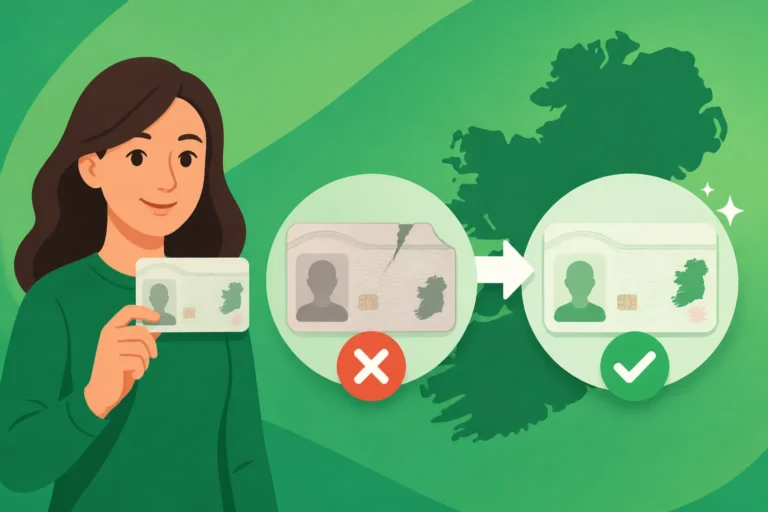
Replacing a Lost, Stolen, or Damaged IRP Card:
Losing your IRP card is stressful, but it's a common issue. If your card is lost or stolen, it's crucial to act quickly:
- Report to Gardaí: Immediately report the loss or theft to your local Garda (police) station. You will receive an incident report number, which is essential for your replacement application.
- Apply for Replacement: You can apply for a replacement IRP card online through the ISD portal. You'll need to provide your incident report number, personal details, and pay the replacement fee.
- Travel: Without your IRP card, travel in and out of Ireland can be complicated. While your passport is your primary travel document, the IRP card is proof of your Irish residency. If you need to travel urgently, contact the ISD for advice.
What to Do If Your IRP Card is Lost or Stolen
It's a sinking feeling when you realise your IRP card is gone, whether misplaced or stolen. But panicking won't help; taking immediate, structured steps will.
First and foremost, if it's stolen, or you suspect it might have been, head straight to the nearest Garda station. File a report and make sure you get a Pulse number or an incident report form. This isn't just a formality; it's a critical piece of documentation you'll need for your replacement application and for any potential insurance claims. Having that official report also protects you should your card be misused.
Once you have your Garda report, go online to the Immigration Service Delivery (ISD) website. They have a specific section for replacing lost or stolen IRP cards. The process is similar to a renewal, but you'll have to indicate that your card is lost/stolen and provide the Garda report details. You'll need to upload your passport, current proof of address, and any other documents requested. There's a fee for replacement, which is currently €300, so be prepared for that. The ISD will process your application, and a new IRP card will be sent to your registered address in Ireland.
It’s also important to remember that while your IRP card is essential proof of your immigration permission, your passport remains your primary travel document. However, when re-entering Ireland, immigration officials will expect to see proof of your right to reside, which the IRP card provides. If you absolutely must travel before your replacement card arrives, contact the ISD for advice on what documentation you can use. They might be able to provide a letter confirming your permission, but always check directly with them before making travel plans without your IRP card. Losing this card is a hassle, but it's a well-trodden path, and the system is in place to help you get a replacement.
Family Reunification: Bringing Your Loved Ones to Ireland
For many expats, moving to Ireland is part of a bigger family plan. The idea of leaving loved ones behind indefinitely is a non-starter. Fortunately, Ireland has provisions for family reunification, but like everything else, it comes with its own set of rules, requirements, and plenty of paperwork. This is a deeply personal and often emotionally charged part of the immigration journey.
Spouses and De Facto Partners: Navigating the Application
Bringing your spouse, civil partner, or de facto partner to Ireland is a priority for many, and the process largely depends on your own immigration status.
If you hold a Critical Skills Employment Permit (CSEP) or Stamp 4: This is the most straightforward route. As a CSEP holder, your spouse or de facto partner is eligible to apply for a 'Stamp 1G (Spouse/De Facto Partner of CSEP Holder)' permission. This is fantastic news because it grants them permission to work in Ireland without needing to secure their own employment permit. The application involves proving your relationship (marriage certificate, civil partnership certificate, or extensive evidence for de facto partners), your financial capacity to support them, and your valid CSEP/Stamp 4. The application is usually made online or directly to the ISD, and once approved, they'll register for their IRP card. This pathway is generally much quicker and less administratively burdensome compared to other family reunification routes.
If you hold a General Employment Permit (GEP) or other non-CSEP Stamps: The process is more challenging. Spouses/partners of GEP holders generally do not have an automatic right to work upon arrival. They will need to apply for their own separate employment permit if they wish to work, or they will be granted a Stamp 3, which does not permit employment. The family reunification application also requires you to demonstrate that you meet specific income thresholds (to prove you can financially support your family without recourse to public funds) and that you have appropriate accommodation. The income threshold can be substantial and must be maintained for a certain period. For de facto partners, the evidence required to prove a genuine and subsisting relationship is extensive, often spanning several years of cohabitation and shared financial responsibilities. This route often involves more scrutiny and can have longer processing times. More details on this can be found in Understanding Family Reunification Rules and Income Thresholds in Ireland.
Children and Dependants: Ensuring Their Place
Bringing your children to Ireland is another key aspect of family reunification. Similar to spouses, the process is linked to the primary applicant's immigration status.
For children of CSEP or Stamp 4 holders: Dependent children can usually apply for a Stamp 2 or Stamp 2A permission, which allows them to reside in Ireland and attend school. If they are of working age, their ability to work will depend on their individual circumstances and education, mirroring the student stamp conditions. The application will require their birth certificates, your marriage certificate, evidence of your immigration status, and proof of your financial capacity to support them. As with spouses, this process is generally more streamlined for CSEP holders.
For children of GEP or other non-CSEP stamp holders: Children will also apply for a Stamp 2 or Stamp 2A. The financial thresholds for supporting dependants will apply, and you will need to demonstrate adequate accommodation for the entire family. The applications for children are usually made concurrently with the spouse/partner applications, if applicable.
General considerations for all child dependants:
- Age Limits: Generally, children must be under 18 years old to be considered dependants. If they are over 18 but still financially dependent (e.g., attending higher education), specific criteria might apply, and the application will be subject to more intense scrutiny.
- Documentation: Comprehensive documentation is required, including original birth certificates, school enrollment letters (if applicable), and medical records.
- Health Insurance: Ensure all family members have adequate private health insurance, especially upon arrival, as public healthcare access can be limited or subject to waiting periods. This is where comprehensive plans from providers like Cigna Global can offer peace of mind during the initial settlement period.
The Financial Thresholds and Documentation Maze
The financial aspect of family reunification is often the biggest hurdle for non-EEA nationals, particularly for those not on a Critical Skills Employment Permit. The Irish government wants to ensure that any family joining a resident can be supported without becoming a burden on the state.
Financial Thresholds: The exact income thresholds are determined by the Immigration Service Delivery and are subject to change. They are usually based on the number of dependants you wish to bring. For example, you might need to show consistent earnings above a certain amount (e.g., €30,000-€40,000 for a single dependant, increasing with more family members) for a specified period (e.g., 12-24 months prior to application). This must be after tax and PRSI deductions. The logic is that you should be able to support yourself and your family independently. You'll need to provide extensive proof: payslips, P60s, employment letters, and bank statements.
Documentation: The 'documentation maze' is real. You'll need original documents (with certified translations if not in English) for everything:
- Proof of Relationship: Marriage certificates, birth certificates, adoption papers. For de facto partners, this means utility bills in joint names, joint bank statements, shared tenancy agreements, photographs, affidavits from friends/family, and any other evidence of a long-term, committed relationship.
- Accommodation: Tenancy agreements, property ownership documents, demonstrating sufficient space for your entire family.
- Financial Capacity: Payslips, P60s, bank statements, employment contracts, and a letter from your employer confirming your salary and permanent position.
- Immigration Status: Copies of your IRP card, employment permit, or other immigration permission.
- Medical Insurance: Proof of private health insurance for all family members.
- Character References/Police Certificates: In some cases, you may need police certificates from any country where family members have resided for over six months in the last X years.
Each document needs to be exactly as requested, and incomplete applications are routinely refused or significantly delayed. It's a test of patience and organisation, but getting it right means your family can build a life with you in Ireland. Remember, organisations like Sirelo can assist with the logistics of moving your entire household once all the immigration paperwork is sorted, reducing one major stress point.
Pathways to Long-Term Residency and Irish Citizenship
For many expats, the goal isn't just a temporary stay; it's to build a long-term life in Ireland. This involves understanding the pathways to more permanent residency and, ultimately, Irish citizenship. It's a journey that requires patience, consistent adherence to immigration rules, and forward planning.
From Employment Permits to Stamp 4: The Journey to Long-Term Residency
Stamp 4 is a significant milestone for non-EEA nationals in Ireland. It grants you the right to reside in Ireland without needing an employment permit, and it allows for much greater flexibility in terms of work, study, and accessing public services (though some restrictions still apply, particularly regarding social welfare access for new Stamp 4 holders). It’s a huge step towards feeling truly settled and integrated.
Pathways to Stamp 4:
- Critical Skills Employment Permit Holders: This is the most expedited route. After successfully completing 24 months (two years) of employment on a Critical Skills Employment Permit, you are eligible to apply for Stamp 4 permission. You must have adhered to all conditions of your permit and maintained continuous employment in an eligible occupation.
- General Employment Permit Holders: The path for GEP holders is longer. You typically need to complete 60 months (five years) of continuous employment on a General Employment Permit. During this period, you must have renewed your GEP as required and maintained your immigration status. After five years, you become eligible to apply for Stamp 4.
- Spouses/Civil Partners of Irish Citizens: After a period of marriage/civil partnership and residency in Ireland (typically five years on a Stamp 4 EUFam or Stamp 3 permission, sometimes less depending on individual circumstances), you can apply for Stamp 4.
- Other Long-Term Residents: There are also provisions for other long-term residents who have completed a specified period (e.g., five years) on certain other stamps (like Stamp 3 for specific family categories), provided they meet certain criteria and can demonstrate strong ties to Ireland.
Applying for Stamp 4 usually involves submitting an application to the Immigration Service Delivery (ISD), providing comprehensive documentation of your continuous lawful residence, employment history, tax compliance, and lack of criminal record. It's crucial to apply for Stamp 4 before your current permission expires. This is a critical transition point, offering much greater freedom and stability. For more insights on this transition, refer to How to Apply for Stamp 4 After a Critical Skills Permit in Ireland.
Irish Citizenship by Naturalisation: Becoming Truly Irish
If you've spent a significant portion of your life in Ireland and truly feel it's your home, the ultimate step for many is applying for Irish citizenship through naturalisation. This grants you all the rights and responsibilities of an Irish citizen, including the right to an Irish passport and the ability to vote in all elections.
Key Requirements for Naturalisation:
- Reckonable Residence: This is the most crucial requirement. You must have a specified amount of 'reckonable residence' in Ireland. Generally, this means:
- One year (12 months) of continuous residence immediately before the date of your application.
- Plus, a total of four years (48 months) residence in the eight years preceding that one-year period.
- This means, in most cases, you need to have completed 5 years of reckonable residence out of the last 9 years.
- There are some exceptions for spouses/civil partners of Irish citizens, who may qualify after three years of reckonable residence.
- "Reckonable residence" refers to periods when you had a valid immigration permission (i.e., you were not illegally residing in Ireland). Every stamp you've held contributes to this. For a comprehensive guide, see Irish Citizenship: Naturalisation and Citizenship by Descent Explained (2027).
- Good Character: You must be of good character, meaning you should not have a serious criminal record. This is assessed through Garda vetting.
- Intention to Reside: You must declare your intention to continue to reside in Ireland after naturalisation.
- Application Form & Fee: Complete the detailed application form and pay the non-refundable application fee.
- Documentation: Provide extensive documentation to prove your residence (utility bills, bank statements, employment history, tax records, P60s, IRP card history), personal identity (passport, birth certificate), and good character.
The naturalisation process can take a significant amount of time, often 1-2 years, from application to the citizenship ceremony. It's a thorough process, and the Department of Justice will review your entire immigration history. Being meticulous with your application and documentation is key.
Citizenship by Descent and Through Marriage: Other Avenues
Beyond naturalisation based on long-term residency, there are other avenues to Irish citizenship that may apply to you.
- Citizenship by Descent (Foreign Births Register): If one of your grandparents was born in Ireland, or if one of your parents was an Irish citizen at the time of your birth (and you were born outside Ireland), you may be eligible for Irish citizenship by descent. This involves applying to have your birth entered onto the Foreign Births Register. Once registered, you are an Irish citizen, and you can apply for an Irish passport. This is a fantastic option for many with Irish heritage, providing a direct link to citizenship.
- Citizenship Through Marriage/Civil Partnership to an Irish Citizen: While not automatic, being married to an Irish citizen can expedite the naturalisation process. As mentioned, you may be eligible to apply for naturalisation after three years of reckonable residence (compared to five for others), provided you meet the other criteria like good character and intention to reside. The marriage/civil partnership must be genuine and subsisting, and you'll need to provide extensive proof of this. This is not a 'marriage of convenience' route; it's for those genuinely integrated into Irish society through their relationship.
Understanding these different pathways is crucial as you plan your long-term future in Ireland. Each route has its specific requirements and benefits, and choosing the right one for your circumstances is the first step towards achieving full Irish citizenship.
Common Challenges and Essential Advice for Expats
Even with all the information in the world, navigating Irish immigration as an expat comes with its unique set of challenges. It's not just about filling out forms; it's about managing expectations, overcoming bureaucratic hurdles, and dealing with the emotional toll of uncertainty.
The Waiting Game: Managing Expectations with Processing Times
Perhaps the most common frustration among expats is the 'waiting game.' Immigration processing times in Ireland can be notoriously long and unpredictable. Whether it's for an employment permit, a visa, an IRP card, or citizenship, you can expect to wait weeks, months, or even over a year for some applications.
- Lack of Transparency: One of the biggest difficulties is the lack of specific, real-time updates on individual applications. You'll often be given a general processing timeframe, but your individual application might take longer without clear reasons. This uncertainty can be incredibly stressful, especially if your ability to work, travel, or bring your family depends on the outcome.
- Impact on Life Plans: Long waiting times can delay job starts, force family separations, or interrupt educational plans. It's not uncommon for people to arrive in Ireland with a visa, only to wait weeks for an IRP appointment, and then more weeks for the card to be delivered.
- Tips for Coping:
- Apply Early: Always submit your application as far in advance as possible.
- Follow Up Politely: If processing times exceed the published guidelines, you can send a polite email query, but be prepared that specific updates are rare.
- Have a Buffer: Don't make irreversible plans (like quitting your job, selling your house, or booking expensive non-refundable flights) until your permit or visa is actually in hand.
- Patience, Patience, Patience: Cultivate extreme patience. This is part of the expat journey here.
Documentation Disasters: Getting Everything Right the First Time
Ah, documentation. The bane of every expat's existence. The Irish immigration authorities are extremely particular about the documents they require. Missing even one seemingly small detail can lead to delays, requests for further information, or outright refusal. This is not the place for guesswork.
- Originals vs. Copies: Always clarify whether originals or certified copies are required. If an original is sent, make sure you have a scan or copy for your records. For documents not in English, certified translations are almost always required.
- Proof of Address: This is a surprisingly common stumbling block. Newcomers often struggle to provide sufficient 'proof of address' (e.g., utility bills in their name, bank statements with their Irish address) when they've just arrived and haven't had time to set these up. A letter from your employer or landlord confirming your address might suffice initially, but always check the specific requirements for your application.
- Bank Statements: When proving financial capacity, recent, consecutive bank statements are usually required. Screenshots or incomplete statements won't cut it.
- The Affidavit: For de facto partners or specific family reunification cases, affidavits are often required. These are sworn statements and must be done correctly, often with the help of a solicitor.
- Avoiding Refusal: The best way to avoid a 'documentation disaster' is to meticulously check the official Immigration Service Delivery website for the exact list of documents required for your specific application. Double-check everything before submitting. Use checklists, get a second pair of eyes to review, and don't hesitate to seek professional advice if you're unsure.
Leveraging Support and Resources (Immigration Lawyers, Community Groups)
You don't have to go through this alone. There are invaluable resources available to help you navigate the Irish immigration system, and leveraging them can save you a lot of stress, time, and potential heartache.
- Immigration Lawyers/Solicitors: For complex cases, such as refusals, appeals, specific family reunification scenarios, or if you simply want peace of mind that your application is perfect, engaging an immigration solicitor is highly recommended. They specialise in this field and can provide expert guidance, review your documentation, and even represent you. While an added cost, their expertise can be invaluable for high-stakes applications.
- Citizens Information Board: This is a fantastic free resource in Ireland. They provide comprehensive, independent information on public services and entitlements, including immigration. You can visit their offices, call their helpline, or browse their extensive website. They can help you understand the requirements for various permissions and point you in the right direction.
- Expat Forums and Community Groups: Online forums (like Reddit's r/Ireland or various expat groups on Facebook) and local expat community groups can be great sources of practical advice and emotional support. While always cross-referencing information with official sources, hearing about others' experiences and tips can be incredibly helpful. People often share insights into current processing times, tips for booking IRP appointments, or recommended moving companies like Sirelo.
- Your Employer/Educational Institution: If you're coming to Ireland for work or study, your employer or university often has a dedicated HR or international student office that can provide guidance and support with your visa and permit applications. They usually have experience with the process and can assist with required letters or documents.
Remember, the journey to living in Ireland is a marathon, not a sprint. Be patient with the process, be thorough with your paperwork, and don't be afraid to ask for help. Many of us have been where you are now, and with a bit of grit and good information, you'll get there too.
| Immigration Stamp | Primary Purpose | Main Activities Permitted | Common Pathways to Obtain | Eligibility for Family Reunification | Path to Stamp 4 |
|---|---|---|---|---|---|
| Stamp 1 | Employment / Business | Work full-time; establish business | Critical Skills/General Emp. Permit, Atypical Work | Spouses/Partners of CSEP get Stamp 1G (work); others get Stamp 3 (no work) | 2 years on CSEP, 5 years on GEP |
| Stamp 1G | Graduate / CSEP Spouse | Seek employment (grad); Work full-time (CSEP spouse) | Third Level Graduate Programme; Spouse of CSEP holder | N/A (for CSEP spouse); Dependant of graduate on case-by-case | 2 years on CSEP spouse; Convert from graduate to Emp. Permit then Stamp 4 |
| Stamp 2 | Student (NFQ) | Study full-time; Work part-time (20 hrs term, 40 hrs holidays) | Acceptance on recognised course (NFQ) | Generally not eligible (for dependants) | Not directly; Convert to Emp. Permit first |
| Stamp 2A | Student (non-NFQ) | Study full-time; NO WORK PERMITTED | Acceptance on non-NFQ course | Generally not eligible | Not directly; Convert to Emp. Permit first |
| Stamp 3 | Visitor / Dependent | NO WORK PERMITTED (volunteer, minister of religion, some family) | Family member of non-CSEP permit holder; Volunteer | N/A | Varies (e.g., 5 years for some family members) |
| Stamp 4 | Long-Term Residency | Work freely; Establish business; Access certain state services | After 2 yrs CSEP/5 yrs GEP; Spouse of Irish Citizen | Yes, generally easier | Long-term residency, path to citizenship |
| Stamp 5 | Indefinite Leave | Indefinite permission to reside in Ireland | Usually after 8 years continuous legal residence | Yes | Final stage of residency before citizenship |
| Stamp 6 | Irish Citizenship | All rights of an Irish Citizen | Naturalised Irish Citizen with foreign citizenship | Yes | Full citizenship |
Disclaimer
The information provided in this guide is for general informational purposes only and does not constitute legal advice. Immigration laws and policies in Ireland are subject to change, and individual circumstances can significantly impact application outcomes. While we strive to keep this information accurate and up-to-date, we strongly recommend consulting the official Immigration Service Delivery (ISD) website, the Department of Enterprise, Trade and Employment website, or a qualified immigration solicitor for the most current and personalised advice regarding your specific situation. Reliance on any information provided in this guide is solely at your own risk.