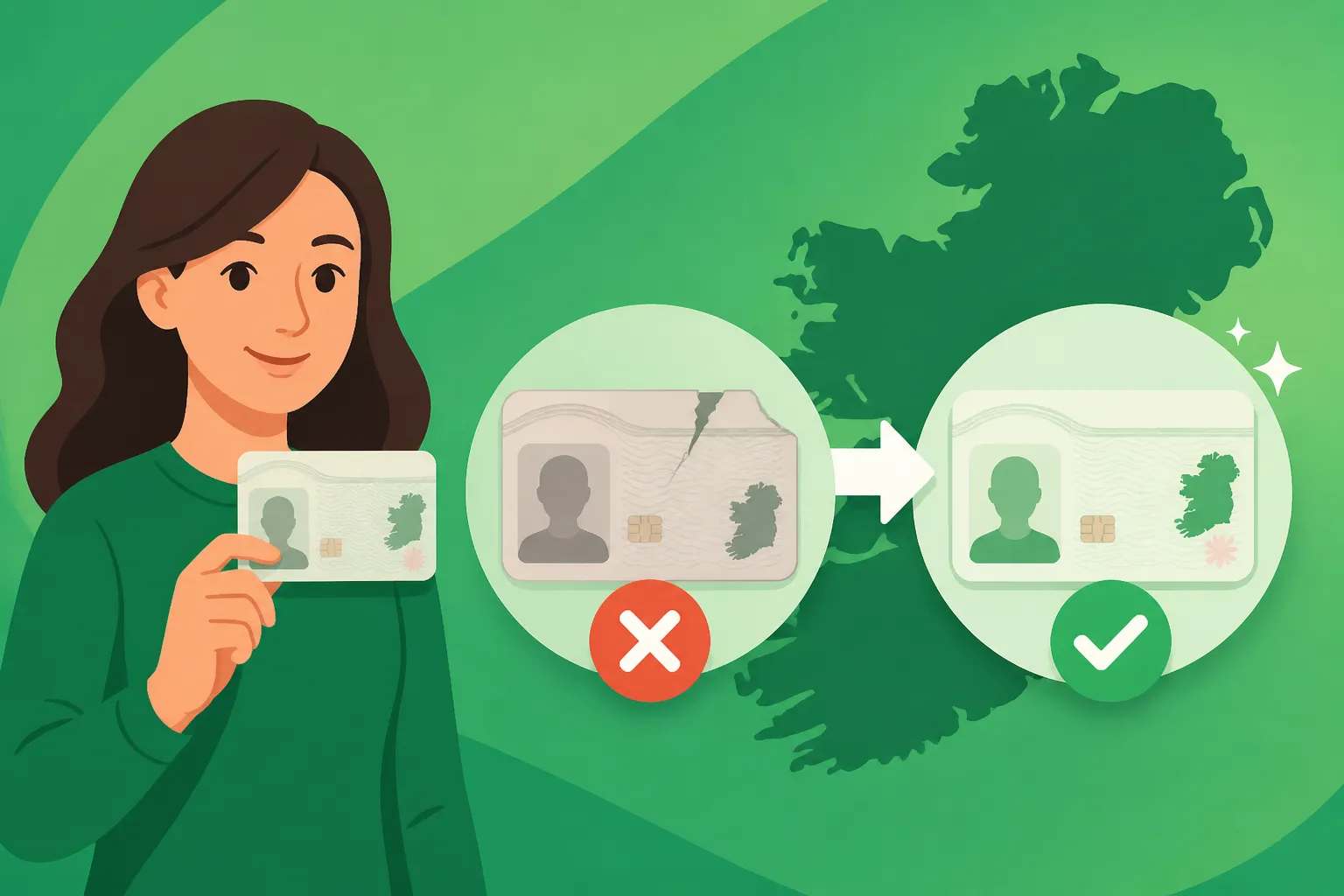
How to Renew or Replace Your IRP Card in Ireland
Alright, let's be honest: moving to Ireland, getting settled, and navigating the immigration system is a marathon, not a sprint. Just when you think you've got your head around the initial permits and registrations, another administrative hurdle pops up. One of the most common headaches for expats is managing their Irish Residence Permit (IRP) card – especially when it comes to renewing it or, God forbid, having to replace it if it goes missing. This guide is here to walk you through exactly how to tackle those IRP challenges, offering practical, empathetic advice from someone who's been there, done that, and probably filled out more forms than I care to admit.
Understanding Your IRP Card and Its Importance
Before we dive into the nitty-gritty of renewals and replacements, let's take a moment to truly appreciate what your IRP card represents in Ireland. It's more than just a piece of plastic; it's your official connection to lawful residence in this beautiful, albeit bureaucratically complex, country.
What Exactly is an IRP Card?
The IRP card, or Irish Residence Permit, is the physical manifestation of your permission to reside in Ireland. It's issued by the Immigration Service Delivery (ISD), which used to be known as the Irish Naturalisation and Immigration Service (INIS) and often works through the Garda National Immigration Bureau (GNIB) depending on where you live. This little card contains your personal details, your unique registration number, a photo of you, and most importantly, it states your 'stamp' type – be it Stamp 1, Stamp 1G, Stamp 2, Stamp 3, or Stamp 4, which dictates what you're permitted to do here, such as work, study, or reside without conditions.
It's your primary proof that you've registered with the Irish immigration authorities. Think of it as your official ID for all things immigration-related. You'll need it for practically everything, from opening a bank account (if you haven't already with a provisional letter) to dealing with Revenue, securing employment, or even proving your legal right to be in the country if asked by authorities. It’s an essential document that confirms your status and shows you are genuinely contributing to or participating in Irish society under valid permission. For a deeper dive into the overall immigration framework, you might find "The Complete Guide to Irish Visas and Immigration Permission for Expats (2027)" incredibly helpful.
Why Renewing or Replacing is Non-Negotiable
Having a valid IRP card isn't just a suggestion; it's a legal requirement. Living in Ireland with an expired or non-existent IRP card is like trying to drive without a valid licence – you're simply not allowed to do it. The consequences of letting your IRP expire or failing to replace a lost one can range from minor inconveniences to serious legal problems. Imagine being stopped for a routine check and not being able to produce valid proof of your immigration status. That's a conversation you really don't want to have.
Beyond legal ramifications, an expired IRP can cause a ripple effect in your daily life. Your employer might question your right to work, banks could freeze your accounts, and your ability to travel internationally could be severely hampered, especially when trying to re-enter Ireland. It's not uncommon to hear stories of expats facing unnecessary stress and financial strain because they overlooked the expiry date. This is why being proactive and understanding the processes for both renewal and replacement is absolutely crucial for any expat in Ireland. Don't wait until the last minute; start preparing well in advance to avoid any unwelcome surprises.
The IRP Card Renewal Process: A Step-by-Step Guide
Renewing your IRP card might feel like a daunting task, especially if it's your first time navigating the Irish immigration system independently. But fear not, it's a well-trodden path, and with the right information, you can get through it smoothly. The key is to be organised and to understand the slightly different procedures depending on your location.
When and How to Initiate Renewal
Generally, it's advised to apply for your IRP card renewal approximately 6-8 weeks before its expiry date. For some specific stamps, like certain Stamp 4 permissions, you might even be able to apply up to 12 weeks in advance. The immigration authorities want you to be timely, but they also don't want you applying too early. Check the expiry date on your current card and mark your calendar with a reminder that gives you ample time.
The "how" of initiating renewal depends largely on where you reside in Ireland. If you live in Dublin City or County, you'll be using the Immigration Service Delivery's (ISD) online renewal portal. This system has been a game-changer for many, allowing you to submit your application, upload documents, and pay the fee from the comfort of your home. It’s supposed to streamline the process, though like all online government portals, it can have its quirks. For those living outside Dublin, the process typically involves dealing with your local Garda National Immigration Bureau (GNIB) registration office. While some regions are slowly transitioning to online systems, many still require an in-person appointment at your local Garda station that handles immigration matters. This often means securing an appointment well in advance and preparing for a face-to-face interaction. For a general overview of the renewal process, the guide on "How to Renew Your IRP and Immigration Permission in Ireland" offers comprehensive advice.
Required Documents for Renewal
Gathering your documents is arguably the most critical part of the renewal process. Missing even one piece of paper can lead to frustrating delays. While specific requirements can vary slightly depending on your immigration stamp type (e.g., if you're on a Critical Skills Employment Permit vs. a Stamp 2 student visa), a core set of documents is almost universally needed:
- Your current IRP card: You'll need to submit details from this, and often present the physical card.
- Your passport: Ensure it's valid and has enough remaining validity.
- Proof of address: This is vital. Think recent utility bills (electricity, gas, broadband), a bank statement issued within the last month or two, or a formal letter from your landlord. The address must match what's on file.
- Proof of your permission status: For example, if you're on a Critical Skills Employment Permit, you'll need your employment permit letter. If you're a student, a letter from your university confirming your enrolment. If you're renewing a Stamp 4 based on previous Stamp 1 permissions, you might need payslips and P60s to prove continuous employment.
- Proof of financial self-sufficiency: This is particularly relevant for students or those on Stamp 3 permissions. You might need recent bank statements showing sufficient funds.
- The renewal fee: Currently €300 per person. This is usually paid online via credit or debit card during the application process.
For Dublin online renewals, you'll also need a recent passport-style digital photograph that meets specific criteria. It's a pain, but get it right the first time. The ISD website has clear guidelines, and sometimes it's easier to get a professional photo taken and then resized. Always keep both original documents and good quality copies handy. Being meticulously organised here will save you a lot of grief. To ensure you have everything covered, cross-referencing with "What Documents Do I Need to Register with Immigration in Ireland?" can be very helpful.
Navigating the Online Renewal Portal (Dublin Residents)
For those of you fortunate enough to be renewing within Dublin, the online portal is your gateway. While it offers convenience, it also demands precision. You'll need to create an account if you haven't already, or log in with your existing credentials. The system will guide you through a series of forms, asking for personal details, your immigration history, and information pertinent to your current stamp.
The trickiest part for many is often the document upload section. Each document type will have specific size and format requirements (e.g., PDF, JPEG, maximum file size). It's incredibly frustrating when you've scanned everything perfectly, only for the system to reject it. My advice? Take your time. Convert everything to PDF where possible, ensure clarity, and double-check file sizes. The passport photo also has strict dimensions and background rules, so make sure it complies. Once all documents are uploaded, you'll proceed to the payment section to pay the €300 fee. After successful submission and payment, you'll receive a confirmation email. Keep this email safe, as it’s your temporary proof of application and often contains instructions on when and how your new IRP card will be delivered. Remember, a common frustration is that the system can time out if you take too long, so gather everything before you start.
In-Person Renewal (Outside Dublin and Specific Cases)
If you're residing outside of Dublin, or if your specific case requires an in-person attendance even in Dublin, you'll be dealing with your local Garda National Immigration Bureau (GNIB) office. The first step is usually to secure an appointment. This can be a challenge in itself, as slots fill up quickly, especially in larger towns and cities like Cork, Galway, or Limerick. Some offices have online booking systems, while others still rely on phone calls or even walk-in queues. Start trying to book your appointment as soon as you know your renewal window is opening.
When it's finally your appointment day, arrive early and bring all your original documents, along with a full set of photocopies. The experience at a GNIB office can vary, but generally, you'll present your documents, have your biometric data (fingerprints, photo) taken, and possibly answer some questions about your residence and activities in Ireland. The officer will review your application, and if everything is in order, they will process your renewal. You'll typically pay the €300 fee directly at the office via card. Once approved, your new IRP card will usually be posted to your registered address within a few weeks. The in-person approach can feel a bit more personal, but it demands patience and meticulous preparation. Don't underestimate the time it takes. To understand more about the initial registration process, which shares many similarities with in-person renewals, check out "How to Register for an IRP Card with Immigration in Ireland".
Replacing a Lost, Stolen, or Damaged IRP Card
Losing your IRP card is every expat's nightmare. Whether it's been stolen, misplaced, or even accidentally put through the washing machine, the thought of being without this crucial document can send a shiver down your spine. But take a deep breath; while it's a hassle, there's a clear process to get a replacement.
Immediate Steps for a Missing Card
The moment you realise your IRP card is gone, your first and most crucial step is to report it to the Gardaí (Irish police) immediately. This isn't just a suggestion; it's absolutely essential. Head to your nearest Garda station and explain that your Irish Residence Permit card has been lost or stolen. They will take a report and provide you with a Garda incident number or a report form. This document is invaluable. It serves as official proof that your card is missing and helps protect you in case your card is misused. Without this Garda report, your application for a replacement card will almost certainly be rejected.
Once you have your Garda report, your next step is to inform the Immigration Service Delivery (ISD). If you're in Dublin, this typically means starting an online application for a replacement. If you're outside Dublin, you'll need to contact your local GNIB office, explaining the situation and arranging for the replacement process. The Garda report will be a key document in your replacement application, so ensure you keep it safe and have copies. Remember, until you get a replacement, you don't have definitive proof of your immigration permission, which can cause issues with travel and other daily activities. While "How to Renew or Replace Your IRP Card in Ireland" is the title of this post, a quick search for the reporting aspect of a lost card would point you back to the urgency of informing the Gardaí, which is paramount.
The Application Process for a Replacement Card
The process for applying for a replacement IRP card is very similar to a renewal, but with the added requirement of your Garda report. The general steps are as follows:
- For Dublin residents: You'll use the same online renewal portal on the ISD website. When you initiate the application, there will typically be an option to select "replacement for lost/stolen/damaged card" instead of "renewal." You will then be prompted to upload a copy of your Garda report along with your other supporting documents.
- For residents outside Dublin: You will contact your local GNIB office to schedule an appointment. During your appointment, you'll present your passport, proof of address, any other relevant supporting documents for your specific immigration stamp, and crucially, the original Garda report.
Regardless of your location, the standard replacement fee of €300 will apply. Ensure you have all the necessary documentation ready, including your passport, up-to-date proof of address, and any specific documents relevant to your immigration stamp (e.g., employment permit, student letter). The immigration authorities will want to confirm your identity and your continued eligibility to reside in Ireland. The processing time for a replacement can sometimes be a bit longer than a standard renewal, as there's an additional verification step involving the missing card report.
What to Do While Awaiting Your New Card
Waiting for any immigration document in Ireland can test your patience, and waiting for a replacement IRP card is no different. The most important thing to be aware of during this period is international travel. It is strongly advised not to travel outside of Ireland until you have received your new IRP card. While your application is pending, you do not have the physical proof of your permission to re-enter Ireland. Attempting to re-enter without it can lead to significant delays, questioning, and even refusal of entry, depending on your nationality and specific circumstances.
Domestically, you might also face challenges. If your employer, bank, or any other authority asks for proof of your immigration status, you can present your passport, the Garda report, and any confirmation email or receipt from your replacement application. Keep these documents together and readily accessible. If you're concerned about proving your status for employment, it's wise to inform your employer immediately and provide them with copies of your application confirmation and Garda report. They should understand, as this is a common occurrence. It's a tricky limbo period, but by keeping all your paperwork in order and avoiding international travel, you can minimise the potential headaches.
Common Challenges and Troubleshooting
Let's face it, dealing with bureaucracy in any country can be challenging, and Ireland is no exception. While the immigration system aims to be straightforward, real-world experience often throws up a few curveballs. Knowing what to expect and how to navigate common issues can save you a lot of stress.
Delays in Processing and Communication Gaps
One of the most frequently heard complaints from expats is about the sometimes glacial pace of processing IRP cards and the often frustrating lack of clear communication from the immigration authorities. You might be told your card will arrive in 10-15 business days, only for weeks to turn into months. This isn't unique to you; it's a systemic issue that many expats have faced. It can be incredibly stressful, especially if you have upcoming travel plans or need to prove your status for employment.
What can you do? Patience, my friend, is your greatest asset. While it's tempting to bombard the ISD with emails or calls, their response times can be slow. Keep meticulous records of your application submission, any confirmation emails, and the Garda report number if it's a replacement. If delays extend significantly beyond the communicated timeframe (e.g., several weeks past the maximum estimate), you can try sending a polite follow-up email to the relevant immigration email address, citing your application reference number. However, be realistic about response times. Understand that you are one of thousands of applications, and sometimes, things just take longer. The "Understanding the Cost and Timeline of the Immigration Process in Ireland" article really nails the reality of these often extended periods.
Dealing with Document Issues or Rejections
A common reason for delays or even outright rejection of an IRP application is incorrect or missing documentation. This could be anything from an expired passport to a blurry scan of a utility bill, or even a digital photo that doesn't meet the precise specifications. Immigration authorities are very strict about the quality and completeness of submissions. It’s their job, after all, to ensure everything is above board.
If your application is rejected or you're asked for additional documents, don't panic. The communication (usually email) should clearly state what the issue is. Your best course of action is to address the issue directly, making sure you provide exactly what they've requested. Sometimes, it's as simple as resubmitting a clearer scan or a new photo. In other cases, you might need to provide a different form of proof of address or an updated letter from your employer. If you had to use foreign documents in your initial visa application, remember that many official Irish processes require documents to be apostilled or legalised to be accepted. This is a crucial step that many overlook, as detailed in "How to Get Your Documents Apostilled for Irish Immigration". Take the time to ensure the corrected submission is perfect; rushing it could lead to further delays.
Travel Considerations Without a Valid IRP
As mentioned earlier, the golden rule is: do not travel internationally without a valid, physical IRP card. This cannot be stressed enough. Your IRP card is your proof of permission to reside in Ireland. While your passport proves your nationality, your IRP card proves your legal right to live in the country. Without it, you are essentially gambling with your re-entry. Airlines might even refuse to let you board a flight back to Ireland if you cannot produce a valid IRP card, as they are liable for carrying passengers without proper documentation.
If you absolutely must travel in an emergency before receiving your new card, you need to understand the significant risks. For non-EEA nationals, you might require a re-entry visa, which is a separate application process and takes time. Simply having proof of your replacement application or a Garda report is generally not enough for seamless re-entry. It's a stressful situation, and the best advice is to plan your travel around the validity of your IRP card, ensuring you have enough time for renewal or replacement before your departure. If you find yourself in a bind, contact the ISD directly for advice, but be prepared for a firm stance on not travelling without valid documentation.
Life Beyond Your IRP Card: Planning Ahead
Your IRP card is a snapshot of your current immigration status, but your life in Ireland is a journey. Understanding how your current status connects to future aspirations, whether that's long-term residency or even moving on, is an important part of expat life.
Tracking Your Reckonable Residence for Long-Term Goals
For many expats, their IRP card is a stepping stone towards more permanent residency or even Irish citizenship. Each valid IRP card and the 'stamp' it represents contributes to your "reckonable residence" – the period of time you've legally resided in Ireland that counts towards naturalisation. Consistent, timely renewals of your IRP card are absolutely vital for accurately tracking this reckonable residence. Any gaps or late renewals can complicate your application for a Stamp 4 (long-term residency) or citizenship down the line.
The Irish Naturalisation and Immigration Service (ISD) looks at your continuous residence when you apply for citizenship by naturalisation. Therefore, keeping a meticulous record of all your IRP cards, their issue dates, expiry dates, and proof of renewal is crucial. You might think it’s just a formality now, but when you're accumulating those years, every single one counts. This continuous record will be invaluable when you reach the point of applying for Stamp 4, as detailed in "Understanding Long-Term Residency and the Stamp 4 in Ireland", or later, for citizenship. For more on how those precious years add up, "Understanding the Reckonable Residence Requirement for Citizenship in Ireland" is an excellent resource.
Preparing for Future Moves and Changes in Status
Life as an expat is inherently dynamic. Your IRP card reflects your current status, but what happens when that status changes? Perhaps you secure a new job, get married, or decide to leave Ireland altogether. Each of these life events has implications for your IRP. If your circumstances change significantly (e.g., changing stamp type, or a major change in employment that impacts your permit), you might need to apply for a change of status or a new IRP. Always check with ISD or your immigration solicitor if you're unsure.
When the time comes to leave Ireland, you're expected to return your IRP card to the immigration authorities. This is a small but important final step in closing out your immigration record here. It’s a courtesy and also ensures your record is updated correctly. You can typically post it to a specific ISD address, which will be provided on their website or upon inquiry.
And let's be real, many of us expats are serial movers! When you eventually decide to pack up your life again, whether it's moving within Ireland or to another country entirely, services like Sirelo can be an absolute lifesaver. They can help you compare quotes from various moving companies, taking a huge chunk of stress out of the logistical nightmare of relocating your belongings. Similarly, if your journey takes you beyond Ireland, or even if you're looking for broader health coverage while here, a global health insurance provider like Cigna Global can offer peace of mind, covering you not just in Ireland but wherever your expat adventure continues. Understanding your health coverage needs, both inside and outside Ireland, is vital, and you can learn more about general healthcare in Ireland in "The Complete Guide to Healthcare in Ireland for Expats (2027)". Finally, for detailed instructions on the final steps of leaving Ireland, including the return of your IRP, refer to "How to Cancel My Immigration Registration When Leaving Ireland?".
| Feature | IRP Card Renewal | IRP Card Replacement |
|---|---|---|
| Purpose | Extend validity of existing immigration permission. | Obtain a new card due to loss, theft, or damage of an existing, valid card. |
| Timing | Apply 6-8 weeks (or sometimes 12 weeks) before current card's expiry date. | Immediately after losing/damaging card; report to Gardaí first if lost/stolen. |
| Key Requirement | Proof of continued eligibility for current immigration stamp (e.g., employment). | Garda report (for lost/stolen), or clear photo of damaged card. Proof of identity. |
| Documents | Passport, existing IRP, proof of address, proof of permission/funds. | Passport, proof of address, Garda report (if applicable), proof of original IRP details. |
| Fee | €300 (standard). | €300 (standard). |
| Process | Online (Dublin) or in-person appointment (outside Dublin). | Online (Dublin) or in-person appointment (outside Dublin). |
| Travel Advice | Avoid international travel if your current IRP is about to expire or while waiting for new card. | Absolutely avoid international travel without your new IRP card. |
Disclaimer
The information provided in this guide is for general informational purposes only and does not constitute legal or immigration advice. While every effort has been made to ensure accuracy and reflect current procedures in Ireland as of 2026, immigration policies and regulations can change without notice. Always consult the official Immigration Service Delivery (ISD) website, your local Garda National Immigration Bureau (GNIB), or a qualified immigration solicitor for the most up-to-date and personalised advice regarding your specific circumstances. Relying solely on the information presented here without official verification is at your own risk.