Can I Get an Employment Permit as a Freelancer in Ireland?
Arriving in Ireland with a head full of dreams, perhaps you’ve envisioned continuing your freelance career, offering your specialist skills to clients here, or even setting up your own small business. But let me tell you, as someone who’s seen countless expats navigate this emerald isle, the reality of freelancing on an employment permit for non-EEA nationals is often a rude awakening. This guide is here to shed light on why the standard employment permit system isn't designed for freelancers and to walk you through the very specific, and often challenging, pathways that might lead you to legally work for yourself in Ireland.
Understanding Freelance Work in Ireland's Immigration Context
When you first land in Ireland, especially if you're coming from outside the European Economic Area (EEA), you might assume that if you have a visa or an employment permit, you have the flexibility to freelance. Many countries offer pathways for self-employed individuals or those looking to work for multiple clients. However, Ireland's immigration framework, particularly concerning employment permits, operates quite differently. It's a common point of confusion and, frankly, frustration for many skilled professionals.
The General Stance on Freelancing for Non-EEA Nationals
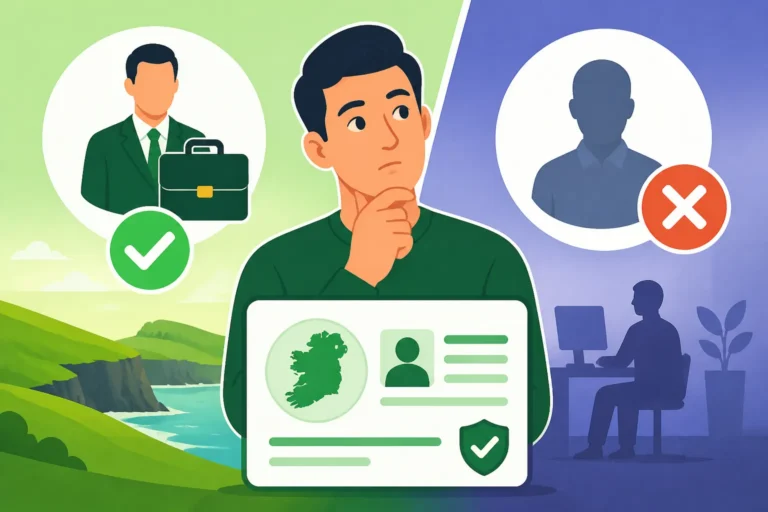
Here’s the straight truth, and it's a bitter pill for some: generally, you cannot get an employment permit in Ireland specifically for freelancing or general self-employment as a non-EEA national. The entire system of employment permits, such as the Critical Skills Employment Permit or the General Employment Permit, is designed around a very traditional employer-employee relationship.
When you apply for an employment permit, you need a confirmed job offer from a specific Irish-based employer. This employer then sponsors your permit application for a particular role, with a defined salary and specific duties. The permit is tied directly to that employer and that job. It’s not a general work permit that allows you to pick and choose clients or start your own venture from scratch. If you have a Critical Skills Employment Permit, for instance, you're expected to work for the employer listed on that permit, and any deviation, like freelancing on the side, could put your immigration status at risk. It’s a rigid system that prioritises filling specific labour market gaps with direct hires. For a comprehensive overview of how permissions work, you might want to read our guide on how non-EEA nationals get permission to work in Ireland.
Why Standard Employment Permits Don't Fit Freelance Models
The very essence of freelancing – working independently for multiple clients, often on a project-by-project basis, without a single, dedicated employer – clashes fundamentally with the requirements of Ireland's standard employment permits.
Imagine you're a graphic designer. With a standard employment permit, you'd need one Irish company to hire you as a full-time graphic designer. Your permit would state their company name, your salary, and your role. You wouldn't be able to take on design gigs for other companies on the side, even if they were small projects. Your permit is not a "freelance visa"; it's a permit for that specific job. The Department of Enterprise, Trade and Employment, which manages employment permits, is very clear on this. Their focus is on ensuring a genuine employment relationship exists and that the permit holder is not displacing an Irish or EEA worker. This structure makes it incredibly challenging, if not impossible, to fit a typical freelance model into the existing employment permit categories. It’s designed to bring in talent for direct employment, not to facilitate independent contractors.
The Nuances of Self-Employment vs. Freelancing in Ireland
It’s important to clarify the terminology here because "freelancing" and "self-employment" can sometimes be used interchangeably, but for immigration purposes in Ireland, the distinction is subtle but critical.
- Freelancing: Often implies project-based work for multiple clients, typically without forming a registered company. You might invoice clients directly as an individual.
- Self-Employment: This is a broader term that encompasses running your own business, whether as a sole trader, a partner in a business, or the director of your own limited company.
From an Irish immigration perspective, both "freelancing" and "self-employment" generally fall outside the scope of standard employment permits. If you're a non-EEA national, you are typically not permitted to engage in any form of self-employment (which includes freelancing) unless your immigration permission explicitly allows it. Standard employment permits (like Stamp 1) only grant permission to work for the named employer in the named occupation. There is no general "freelance permit" or "self-employment permit" available for new non-EEA arrivals seeking to start their own ventures from day one, unless they fall into very specific, often high-investment, categories. Understanding the various Irish immigration stamp system will make this clearer, as each stamp dictates what you are permitted to do in Ireland.
Exploring Potential Avenues (and Their Limitations)
While the direct path to freelancing on an employment permit is largely closed for most non-EEA individuals, there have been, and still are, very specific and often highly selective avenues that might allow for self-employment or business ownership. However, these are not for the typical freelancer looking to offer their design or writing services. They usually involve significant investment or a pre-existing long-term residency.
The Immigrant Investor Programme (IIP) and Start-up Entrepreneur Programme (STEP)
Ireland previously offered the Immigrant Investor Programme (IIP), which allowed non-EEA nationals to obtain residency permission in return for a significant investment in the Irish economy. This could include investments in Irish enterprises, which in theory could encompass your own business, thereby allowing you to be self-employed. However, it's crucial to note that the Immigrant Investor Programme officially closed for new applications on February 15, 2023. So, this particular door is now shut.
The Start-up Entrepreneur Programme (STEP), on the other hand, is still active but is highly specific and not for everyone. STEP is designed for innovative entrepreneurs with a viable high-potential start-up business idea. The criteria are stringent:
- You must have an innovative business proposal.
- The business must be capable of creating at least 10 jobs in Ireland.
- It must be able to achieve a turnover of €1 million within three to four years of starting up.
- You need to have access to at least €50,000 in funding for your business.
This programme is clearly aimed at scaling businesses and job creators, not individual freelancers. It's a significant commitment and requires a robust business plan, substantial funding, and the ambition to grow rapidly. It's not a path for someone who wants to work independently for multiple clients without the aim of building a large enterprise. For a broader view on all visa and immigration permissions, our guide to the complete guide to Irish visas and immigration permission for expats (2026) might be helpful.
Atypical Working Scheme
The Atypical Working Scheme (AWS) is another limited option that sometimes comes up in discussions about unusual work arrangements. However, it’s not a route for ongoing freelancing. The AWS is administered by the Immigration Service Delivery (ISD) and is for non-EEA nationals who wish to undertake work in Ireland that does not fit into an existing employment permit category and where the proposed employment is for a short duration (typically less than 90 days).
Think of it for highly specialised expertise for a specific project, an artist performing for a short engagement, or a unique cross-border service provision. It's explicitly not for:
- General self-employment or freelancing.
- Long-term or open-ended work.
- Work that could be done by an Irish or EEA national.
Therefore, while it exists, the AWS is highly unlikely to be a viable option for someone seeking to establish an ongoing freelance career in Ireland. It’s for very specific, short-term, unusual circumstances and not a general mechanism for independent contractors.
Long-Term Residency (Stamp 4) and its Implications for Self-Employment
This is where the most realistic opportunity for non-EEA nationals to genuinely freelance or be self-employed in Ireland lies. Once you have acquired a long-term residency permission, typically a Stamp 4, your options open up considerably.
What is Stamp 4? A Stamp 4 immigration permission indicates that you are permitted to reside in Ireland and take up employment or establish a business without needing an employment permit. It signifies a significant step towards long-term residency in Ireland.
How do you get Stamp 4? The most common pathway for non-EEA skilled professionals is through employment. If you hold a Critical Skills Employment Permit for two years, and you have complied with its terms (i.e., working for the specified employer), you can then apply for Stamp 4. Similarly, those who have held a General Employment Permit for five years can also typically apply for Stamp 4. There are other routes, like being the spouse or civil partner of an Irish citizen or Stamp 4 holder, or through specific family reunification schemes.
Once you have that coveted Stamp 4, the world of self-employment and freelancing truly opens up to you. With Stamp 4, you are no longer tied to a specific employer and are free to:
- Work for any employer in Ireland without an employment permit.
- Set up your own business as a sole trader.
- Become a director of your own limited company.
- Work as an independent contractor or freelancer for multiple clients, both within Ireland and internationally, as long as you're physically resident in Ireland.
This is the golden ticket for many expats who initially arrive on employment permits but eventually want the flexibility of working for themselves. It rewards long-term commitment and contribution to the Irish economy. It is important to understand the path from employment permit to long-term residency in Ireland to plan your journey effectively.
Here's a quick comparison of immigration permissions and their implications for self-employment:
| Immigration Stamp/Permit Type | Self-Employment/Freelancing Permitted? | Conditions/Notes |
|---|---|---|
| Employment Permits (e.g., Critical Skills, General Employment Permit) | No | Tied to a specific employer, specific job, and salary. No freelancing or working for other clients allowed. |
| Atypical Working Scheme (AWS) | No (generally) | For very short-term, specific, and unusual work engagements. Not for ongoing freelance or self-employment. |
| Start-up Entrepreneur Programme (STEP) | Yes | Specifically for innovative, high-potential start-ups. Requires significant funding, job creation, and high turnover targets. Not for individual freelancers. |
| Stamp 2 (Student) | No | Primarily for full-time study. Limited part-time work allowed (20 hours/week during term, 40 hours/week during holidays) for an employer, not self-employment. |
| Stamp 1G (Graduate) | Yes | Allows graduates to seek and take up employment without an employment permit. Includes permission to be self-employed. |
| Stamp 4 (Long-Term Residency) | Yes | Grants full permission to reside, take up employment (any employer), or establish and operate a business/freelance career without needing an employment permit. Most flexible option. |
| Irish/EEA Citizen | Yes | No immigration restrictions on employment or self-employment. |
Practical Steps Towards Self-Employment (Once Legally Permitted)
So, you've managed to secure that coveted Stamp 4, or you've met the stringent criteria for STEP. Congratulations! Now that the immigration hurdles are (mostly) behind you, it’s time to actually get down to business and legally set yourself up as a self-employed individual or freelancer in Ireland. This isn't just about finding clients; it's about formalising your status with the Irish authorities.
Registering as a Sole Trader with Revenue
For most freelancers or small business owners, the simplest and most common way to start is by registering as a sole trader with Revenue (Ireland’s tax authority). This is straightforward and means you operate your business as an individual. You are personally responsible for all aspects of the business, including its debts.
Here’s a step-by-step guide:
- Get Your PPS Number: If you don't already have one, this is your Personal Public Service Number, essential for all tax and social welfare matters.
- Register with Revenue: You can do this online through the Revenue's myAccount service. You’ll need to register for Income Tax and, if applicable, for VAT (though most small freelancers won't hit the VAT threshold initially). When registering, you'll specify that you are commencing self-employment.
- Choose a Business Name: While not legally required if you trade under your own name, many sole traders choose a business name. You can register this name with the Companies Registration Office (CRO) if you want to protect it or use a name other than your own.
- Keep Meticulous Records: As a self-employed individual, you'll be responsible for keeping track of all your income and expenses. This is crucial for filing your annual tax return.
- Understand Your Tax Liabilities: You’ll pay income tax on your profits, Pay Related Social Insurance (PRSI), and potentially Universal Social Charge (USC). We’ll delve into this a bit more below.
Starting as a sole trader is typically the path of least resistance for new self-employed individuals. If you're planning this, you'll find our guide on how to register as a sole trader with Revenue in Ireland incredibly useful.
Understanding Tax Obligations and PRSI for Self-Employed Individuals
This is where things can get a bit different from being a PAYE (Pay As You Earn) employee. When you're self-employed, you're responsible for calculating and paying your own taxes to Revenue.
- Income Tax: Your business profits are subject to income tax. Ireland operates a progressive tax system with different tax bands. You’ll pay tax on your net profit (income minus allowable expenses).
- Universal Social Charge (USC): This is another tax on your gross income, similar to income tax, but with its own rates and bands.
- Pay Related Social Insurance (PRSI): As a self-employed person, you pay a different class of PRSI (Class S) compared to employees (Class A). Class S PRSI contributions typically entitle you to certain social welfare benefits, such as the State Pension (Contributory) and Maternity Benefit, but generally not Jobseeker's Benefit. It's important to note that the level of benefits for self-employed individuals can be different from those for PAYE employees. For more detail, understanding PAYE, PRSI and USC deductions for employees in Ireland might provide a good contrast, but remember, the self-employed system is distinct.
You'll usually pay your taxes through a system called Preliminary Tax, where you pay an estimate of your current year's tax liability by 31 October of the current tax year, with the balance due by 31 October of the following year when you file your actual tax return (Form 11).
The tax system for self-employed people can feel like a maze, so it’s always a good idea to consult with an accountant, especially in your first year. Our guide to the complete guide to taxes in Ireland for expats (2026) offers a broader context on the tax landscape.
Business Bank Accounts and Financial Planning
Once you're legally able to earn money as a freelancer, you’ll need to sort out your finances. While you can initially use your personal bank account as a sole trader, it's highly recommended to open a separate business bank account. This simplifies accounting, makes it easier to track income and expenses, and presents a more professional image to clients.
Most Irish banks, like AIB, Bank of Ireland, and Permanent TSB, offer business accounts. You'll typically need your PPS number, proof of address, and potentially your Revenue registration details. Some challenger banks or fintech solutions might also offer options, though it's always wise to check their suitability for self-employed individuals and tax reporting. Our guide on the expat guide to opening a bank account in Ireland can help you get started with the banking basics.
Beyond just a bank account, consider your overall financial planning:
- Emergency Fund: Freelance income can be unpredictable. Having a solid emergency fund is crucial.
- Pension: As a self-employed person, you won't have an employer contributing to a pension. Setting up a Personal Retirement Savings Account (PRSA) is vital for your long-term financial security.
- Insurance: Beyond health insurance, think about professional indemnity insurance, public liability insurance, or even income protection, depending on your field. This is a crucial area where providers like Cigna Global can offer tailored plans for self-employed expats, ensuring you have the right coverage for your unique circumstances without the safety net of an employer's group plan.
Considerations Before Taking the Leap
Even if you have the legal right to freelance or be self-employed, making the jump requires careful thought and preparation. Ireland, like any country, has its unique economic landscape, and independent work comes with its own set of challenges and benefits.
Financial Viability and Proof of Funds
Before you dive into self-employment, you need to ensure your venture is financially viable. For immigration purposes, particularly for any business-related visa category like STEP (though less so once you have a Stamp 4), demonstrating access to sufficient funds is paramount. This isn't just about the initial setup costs; it's about proving you can sustain yourself and your business during the lean periods.
- Market Research: Is there a demand for your freelance services in Ireland? Or are your target clients primarily international? Understanding your market is key.
- Pricing Strategy: Are your rates competitive yet sustainable in the Irish context?
- Start-up Costs: Even as a freelancer, you might have costs for software, equipment, marketing, or professional memberships.
- Living Expenses: Crucially, you need to ensure you can cover your personal cost of living in Ireland, which, particularly in cities like Dublin, can be quite high. Having several months of living expenses saved up is a wise move for any freelancer.
It’s often a good idea to validate your business idea with potential clients or networks before fully committing, and to have a robust financial plan in place.
Navigating Insurance Needs as a Self-Employed Expat
When you're working for an employer, a lot of your insurance needs, like health insurance and sometimes even income protection, might be handled or subsidised by your company. As a freelancer, all of that falls squarely on your shoulders.
- Health Insurance: This is probably the biggest concern. While Ireland has a public healthcare system, most expats opt for private health insurance to access a wider range of services, shorter waiting lists, and more choice in hospitals. Companies like Cigna Global specialise in expat health insurance and can provide comprehensive plans that cover you whether you're working for yourself or moving between contracts. It's vital to research and secure adequate health coverage, as being self-employed means you're solely responsible for any medical bills. Understanding health coverage for the self-employed in Ireland is crucial to making informed decisions.
- Professional Indemnity Insurance: If your work involves giving advice or professional services, this protects you against claims of negligence or errors.
- Public Liability Insurance: If clients visit your home office, or you visit client premises, this covers claims for injury or property damage.
- Income Protection: This provides you with a replacement income if you're unable to work due to illness or injury.
Don't underestimate the importance of robust insurance coverage when you're self-employed. It’s your safety net. If you're a newcomer, you might find our guide on how to buy private health insurance as a newcomer in Ireland helpful.
The Broader Expat Experience: Relocation Support
Becoming self-employed is a significant life change, and doing it in a new country adds another layer of complexity. The initial excitement of moving to Ireland can quickly be overshadowed by the sheer volume of administrative tasks. Remember, if you are planning an international move, particularly with a lot of personal belongings, services like Sirelo can be incredibly helpful for comparing moving quotes and finding reliable movers. They reduce a lot of the logistical stress, allowing you to focus on the intricate details of setting up your new life and business.
Relocating and integrating into a new country involves more than just work permissions; it’s about finding your feet, understanding local customs, building a support network, and generally feeling at home. The complete guide to moving to Ireland: your first 90 days (2026) touches on many of these initial challenges. Balancing the demands of a new business with the adjustments of expat life requires resilience and a good support system.
Disclaimer
Please remember that immigration laws and policies in Ireland are subject to change. While every effort has been made to provide accurate and up-to-date information, this guide is for informational purposes only and does not constitute legal advice. Always consult with an immigration solicitor or the official Irish Immigration Service Delivery (ISD) website for the most current and specific guidance pertaining to your individual circumstances.