Can I Get Irish Citizenship Through My Grandparents?
It’s a common tale, isn't it? You've got that whisper of Irish blood running through your veins, a story of grandparents who left the Emerald Isle, and suddenly, the idea of getting an Irish passport feels like unlocking a secret part of yourself. But navigating the Irish citizenship process through your grandparents? That, my friends, can feel like trying to untangle a particularly stubborn knot of family history and bureaucracy. Don't worry, you're not alone in feeling overwhelmed; this guide is here to walk you through exactly what you need to know and do to claim your ancestral right to Irish citizenship.
Understanding the Core Eligibility for Irish Citizenship by Descent
Many expats dream of reconnecting with their heritage and gaining the benefits of Irish citizenship, which importantly includes being a citizen of the European Union. For those whose parents weren't born in Ireland but their grandparents were, the path exists, but it requires a careful understanding of the rules. It’s not simply a matter of having an Irish last name or a family legend; there are specific criteria that must be met to successfully claim citizenship through descent.
Who Qualifies: The Grandparent Connection
The primary requirement for obtaining Irish citizenship through your grandparents is that at least one of your grandparents was born on the island of Ireland. This is the bedrock of your application, and without this direct lineage, the path becomes much more difficult, often requiring a parent to have already registered on the Foreign Births Register (FBR) before your birth. Let's break down a couple of scenarios to make this clearer:
- Scenario 1: Your Parent was Born Before Your Irish Grandparent Registered with the Foreign Births Register (FBR) (if applicable). If your Irish-born grandparent had a child (your parent) outside of Ireland, and your parent was then born before your Irish grandparent got around to registering their foreign-born children (your parent) on the FBR, then your parent would need to be registered on the FBR first. Once your parent is registered, then you, as their child, can apply for FBR registration, provided you were born after your parent’s registration. It's a generational chain that needs to be unbroken and registered correctly.
- Scenario 2: Your Parent was Born After Your Irish Grandparent Registered with the FBR (if applicable), or Your Parent was Born in Ireland. This is the more straightforward path for your parent. If your Irish-born grandparent ensured their foreign-born child (your parent) was registered on the FBR, or if your parent was born in Ireland themselves, then you can apply directly to the FBR, provided you were born after your parent became an Irish citizen (either by birth or through FBR registration). Essentially, your parent needed to be an Irish citizen at the time of your birth for you to qualify.
The critical takeaway here is that the chain of citizenship needs to be established and verifiable. The "island of Ireland" part is also crucial. This includes grandparents born in what is now the Republic of Ireland or Northern Ireland before 1922. If your grandparent was born in Northern Ireland after 1922, they would generally be considered British citizens, but thanks to the Good Friday Agreement, people born in Northern Ireland can claim both Irish and British citizenship. For the purposes of the Foreign Births Register, a grandparent born anywhere on the island of Ireland generally satisfies the initial birthright requirement.
The Importance of the Foreign Births Register
The Foreign Births Register (FBR) is not just a formality; it is the official mechanism through which those born outside the island of Ireland, whose parents or grandparents were Irish citizens, can claim their own citizenship by descent. Without registration on the FBR, you are not considered an Irish citizen, even if you meet all the other criteria. Think of it as the legal bridge connecting your ancestral roots to your modern-day status.
Many people assume that because their parent or grandparent was Irish, they automatically are too. Unfortunately, that's not how it works for citizenship by descent. Your eligibility is established, but your citizenship is conferred through this registration process. This is the main route for individuals to formally assert their claim to citizenship when it's based on a grandparent's birth in Ireland, and it's a critical step towards eventually applying for an Irish passport. You might also want to read up on the broader context of citizenship in Ireland in our guide, "Irish Citizenship: Naturalisation and Citizenship by Descent Explained (2027)".
The Foreign Births Register: Your Crucial Gateway
Once you’ve established your eligibility, the real work begins: navigating the application process for the Foreign Births Register. This isn't a race, but a marathon that demands patience, meticulous attention to detail, and a commitment to gathering a substantial amount of documentation.
Step-by-Step Application Process
The process generally starts online, but culminates in a physical submission of original or certified documents. Here's a breakdown:
- Online Application Form: You'll begin by accessing the Foreign Births Register application portal on the Department of Foreign Affairs website. This form will ask for detailed information about yourself, your parents, and your Irish-born grandparent(s). Fill this out accurately and thoroughly.
- Payment of Fees: There’s an application fee, which can change, so always check the most current fees on the official government website. This fee is typically non-refundable, regardless of the outcome of your application.
- Gathering Documents: This is where the detective work comes in. You’ll need a stack of documents to prove your lineage. We'll delve deeper into this shortly, but know that it involves collecting original or certified copies of birth, marriage, and death certificates across three generations (you, your parent, your Irish grandparent).
- Submission: Once you've completed the online form and paid the fee, you’ll print out the declaration form, sign it, and then send it along with all your original or certified supporting documents to the Foreign Births Registration Section of the Department of Foreign Affairs, either in Ireland or through your nearest Irish Embassy or Consulate. It's highly recommended to send documents via registered post or a secure courier service to ensure they don't get lost.
It’s tempting to rush, but a single missing document or incorrect detail can lead to your application being returned, causing significant delays. Remember, accuracy is key, and if you’re planning a move to Ireland, remember that reliable international movers like Sirelo can help you manage your belongings while you navigate these bureaucratic steps.
Gathering Essential Documents
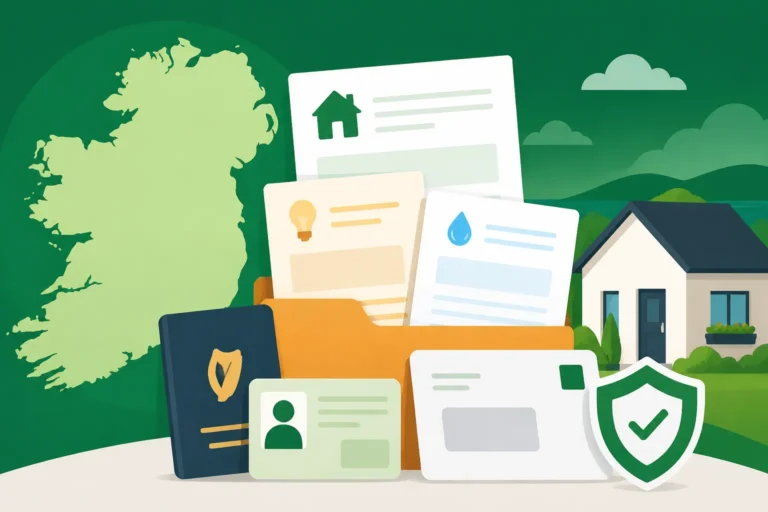
This is arguably the most challenging part of the application for many people. You need to prove your lineage beyond a shadow of a doubt. The Department of Foreign Affairs is incredibly strict about the authenticity and completeness of these records.
Here's a general list of documents you'll need. Always check the official website for the most up-to-date and specific requirements:
- Your Own Documents:
- Your original long-form civil birth certificate (showing your parents' names).
- Your civil marriage certificate (if applicable).
- Proof of your current address (e.g., utility bill).
- Clear colour copy of your current passport (data page).
- Four passport-sized photographs (signed on the back).
- Your Parents' Documents:
- Your parent's original long-form civil birth certificate.
- Your parents' original civil marriage certificate (if applicable, to establish the link between them).
- A certified copy of your Irish parent’s passport (if they are already an Irish citizen).
- Your Irish parent’s FBR certificate (if they obtained citizenship this way and were born outside Ireland).
- Your Irish Grandparent's Documents:
- Your Irish-born grandparent's original long-form civil birth certificate (this is the cornerstone!).
- Your Irish grandparents' original civil marriage certificate (if applicable, to link them to your parent).
- Original death certificate (if deceased).
Important Note on Original vs. Certified Copies: The Department typically requires original civil certificates (birth, marriage, death) for all generations. These are returned to you once the application is processed. Photocopies, even notarized ones, are generally not accepted for these vital records unless they are certified copies issued by the relevant civil registration office (e.g., General Register Office for Ireland, or equivalent body in your country). For non-civil documents like passports, good quality colour copies are usually sufficient. For documents from certain countries, you might also need to get your documents apostilled for Irish immigration.
It's a lot, I know. I’ve seen countless hopeful applicants get tripped up here. Take your time, reach out to the relevant government departments in your birth country and Ireland to obtain these documents well in advance. Consider this process akin to an archaeological dig into your family's past!
Preparing Your Application: Documents and What to Expect
Even with the right documents in hand, preparing the application correctly and managing expectations around processing times are crucial for maintaining your sanity during this process. This isn't a quick fix, and delays are, unfortunately, a common feature.
Navigating Document Obstacles
It’s not uncommon to hit snags when trying to gather documents, especially if records are old, poorly kept, or from countries with different administrative systems. Here are a few common obstacles and how to tackle them:
- Missing Records: Sometimes, records genuinely can’t be found. If a birth or marriage wasn't officially registered, you might need to provide alternative evidence, such as baptismal certificates, census records, or sworn affidavits from family members. This is where it gets tricky and often requires specific advice from the Department or a legal professional specialising in Irish immigration law.
- Name Changes: Women traditionally changed their surnames upon marriage, and this can sometimes cause confusion if not clearly documented through marriage certificates. Ensure that the chain of names is perfectly clear through successive marriage certificates or deed polls.
- Obtaining Certified Copies from Abroad: If your parents or you were born outside Ireland, you’ll need to contact the General Register Office (or equivalent) in those countries to obtain official, long-form civil certificates. Be prepared for varying processing times and fees.
- Apostille or Legalisation: Depending on your country of origin, some documents may need to be "apostilled" or legally certified by the issuing government authority to be accepted by the Irish authorities. Our article on "How to Get Your Documents Apostilled for Irish Immigration" provides more detailed guidance on this.
Always double-check the Department of Foreign Affairs website for specific requirements regarding document certification from different countries. Don't assume; verify everything!
Processing Times and Expectations
This is probably the biggest source of frustration for applicants. The processing times for the Foreign Births Register can be notoriously long. We're not talking weeks or a couple of months; often, it can stretch to over a year, sometimes even longer. This is due to the sheer volume of applications and the meticulous nature of the checks involved.
- Current Delays: Due to various factors, including increased applications and past administrative backlogs, delays are common. The Department often provides updates on their website regarding current processing times, so make sure to check there regularly.
- Managing Expectations: The best advice I can give is to be patient. Once you’ve submitted your complete application, try to settle in for a wait. Chasing them up frequently will likely not speed things up, though you can usually check the status online. Use this waiting period wisely! If you’re dreaming of living in Ireland, start researching things like "The Complete Guide to Cost of Living in Ireland for Expats (2026)" or even "How EU/EEA and Non-EEA Citizens Move to Ireland: The Full Guide (2027)" so you're prepared for what comes next.
Cost and Financial Planning
Beyond the sentimental value, there's a financial cost involved in obtaining Irish citizenship by descent.
- Application Fees: As mentioned, there’s a non-refundable application fee for the FBR itself.
- Document Fees: Obtaining original or certified copies of birth, marriage, and death certificates from various jurisdictions can add up. Some countries charge significant fees for these services, and expedited processing often comes at an extra cost.
- Postage/Courier: Secure, tracked shipping for your sensitive original documents isn't cheap, but it's essential for peace of mind.
- Translation Costs: If any of your documents are not in English, you will need certified translations, which incurs another cost.
- Professional Help: While many people successfully apply themselves, if your case is complex (e.g., missing records, adoptions, non-traditional family structures), you might consider consulting an immigration solicitor or a genealogist. Their fees can be substantial but might save you headaches in the long run.
Be sure to budget for these expenses. It's an investment in your future and your connection to Ireland. While you're waiting for your citizenship to process, if you plan to visit or move, securing good health coverage is paramount. Providers like Cigna Global offer plans that can cover you worldwide, giving you peace of mind regarding unexpected medical costs.
What Happens After You're Registered? Embracing Your Irish Connection
After what feels like an eternity, receiving that Foreign Births Register certificate is an incredibly proud moment. It’s the culmination of tracing your family history and navigating the bureaucracy, and it officially confirms your status as an Irish citizen. But what does that mean for you practically?
The Benefits of Irish Citizenship
Holding an Irish passport opens up a world of opportunities, especially for those from non-EU countries.
- Irish Passport: The most immediate and tangible benefit is the ability to apply for an Irish passport. This document is a powerful tool, granting you visa-free travel to many countries worldwide and, crucially, allowing you to live, work, and study anywhere within the European Union.
- EU Rights: As an Irish citizen, you are automatically an EU citizen. This means you have the right to free movement, to reside, and to seek employment in any of the 27 EU member states, as well as in Iceland, Liechtenstein, Norway, and Switzerland (EFTA countries). This is a game-changer for many who have previously been restricted by visa requirements and immigration permissions. You can delve into the broader topic of "The Complete Guide to Irish Visas and Immigration Permission for Expats (2027)" for context.
- Living in Ireland: You have an automatic right to live in Ireland without any immigration restrictions. This eliminates the need for employment permits or long-stay visas that non-EU citizens typically require. You can arrive and settle, though you'll still need to sort out your PPS number and other administrative steps, as detailed in "The Expat Guide to Moving to Ireland: Your First 90 Days (2026)".
- Voting Rights: You gain the right to vote in all Irish elections (Presidential, Dáil, local, and European Parliament elections).
It’s truly a wonderful thing to be able to connect with your heritage in such a profound way, opening doors you might not have even considered before.
Long-Term Implications and Considerations
While the benefits are significant, it's also important to be aware of some long-term implications, particularly if you decide to move to Ireland or if you hold citizenship in other countries.
- Tax Residency: Gaining Irish citizenship doesn't automatically make you an Irish tax resident. Tax residency is determined by the amount of time you spend in Ireland. However, if you do move to Ireland, you will become subject to Irish tax laws. It’s always wise to understand the implications, especially if you have assets or income in other countries. Our guide on "The Complete Guide to Taxes in Ireland for Expats (2027)" can shed some light on this complex area.
- Dual Citizenship: Ireland generally permits dual citizenship, so you typically won't have to renounce your current citizenship when you become an Irish citizen. However, it's crucial to check the laws of your other country of citizenship, as some countries do not permit dual nationality and may require you to choose.
- Health and Social Services: If you move to Ireland, as an Irish citizen, you will generally be eligible for public healthcare services through the HSE. However, understanding the nuances of the system, including potential waiting lists or the benefits of private health insurance, is still important. You might want to refer to "How Ireland's Health System Works: The HSE vs Private Explained (2027)" for a comprehensive overview. Don't forget, for peace of mind, especially during the initial transition, exploring international health insurance providers like Cigna Global can be a good idea.
- Passing on Citizenship: Once you are registered on the Foreign Births Register, you too can potentially pass on Irish citizenship to your children, provided they are born after your registration, and you meet the other requirements. This is how the chain continues!
Gaining Irish citizenship through your grandparents is a journey, not a destination. It’s a profound way to honour your family’s past and open up a future with broader horizons. The bureaucracy can be daunting, but the reward of holding that green passport and truly feeling connected to your Irish roots is well worth the effort.
Summary of Key Eligibility & Documents
To help you keep track, here's a quick table outlining the main requirements:
| Requirement Category | Specific Criteria | Key Documents Needed | Notes |
|---|---|---|---|
| Applicant (You) | Must be born after your parent became an Irish citizen (either by birth or FBR registration). | Your original long-form birth certificate, current passport copy, proof of address, passport photos. | Your name and date of birth must match exactly across documents. |
| Your Parent | Must be an Irish citizen at the time of your birth. This is either by being born in Ireland or by being registered on the Foreign Births Register before your birth. | Your parent's original long-form birth certificate, marriage certificate (if applicable), proof of Irish citizenship (e.g., FBR certificate or Irish passport copy). | If your parent was born outside Ireland, they must have been registered on the FBR. |
| Your Grandparent | At least one grandparent must have been born on the island of Ireland. | Your Irish grandparent's original long-form birth certificate, marriage certificate (if applicable), death certificate (if deceased). | This is the crucial link to Irish heritage. |
| Application Method | Submit complete application form and all required original/certified documents to the Department of Foreign Affairs or an Irish Embassy/Consulate. | Application form, declaration form, payment receipt. | Use registered mail or courier. Expect long processing times. |
Disclaimer
The information provided in this guide is intended for general informational purposes only and does not constitute legal advice. While we strive to keep the information up-to-date and accurate, immigration laws and procedures in Ireland can change. It is always recommended to consult the official website of the Irish Department of Foreign Affairs, the Irish Immigration Service Delivery (ISD), or seek advice from a qualified immigration solicitor for the most current and specific guidance pertaining to your individual circumstances.