The Expat Guide to the Medical Card and GP Visit Card in Ireland (2027)
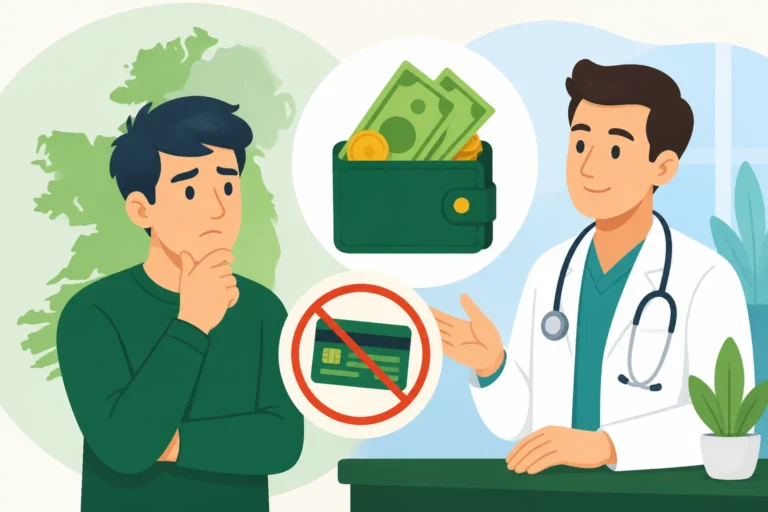
Moving to Ireland is an exhilarating experience, but the first time you walk into a doctor’s office and are asked for seventy or eighty Euro just for a ten-minute consultation, the "Emerald Isle" can start feeling very expensive. Many newcomers assume that because Ireland has a public health system, everything is free at the point of use, but that is rarely the case for most working adults. This guide meticulously breaks down the Medical Card and GP Visit Card systems to help you navigate the eligibility rules, the application hurdles, and the actual benefits you can expect as an expat in 2026.
Understanding the Medical Card and GP Visit Card in Ireland
The Irish healthcare system is a complex hybrid of public and private services. At its core are two primary "safety net" cards issued by the Health Service Executive (HSE): the Medical Card and the GP Visit Card. For an expat, understanding the difference between these two is the difference between having almost all medical costs covered and simply avoiding the out-of-pocket cost of a family doctor. Most people who move here for high-paying tech or pharma jobs will find themselves over the income limit, but for students, retirees, or those on more modest salaries, these cards are essential.
What is the Medical Card and Who Qualifies?
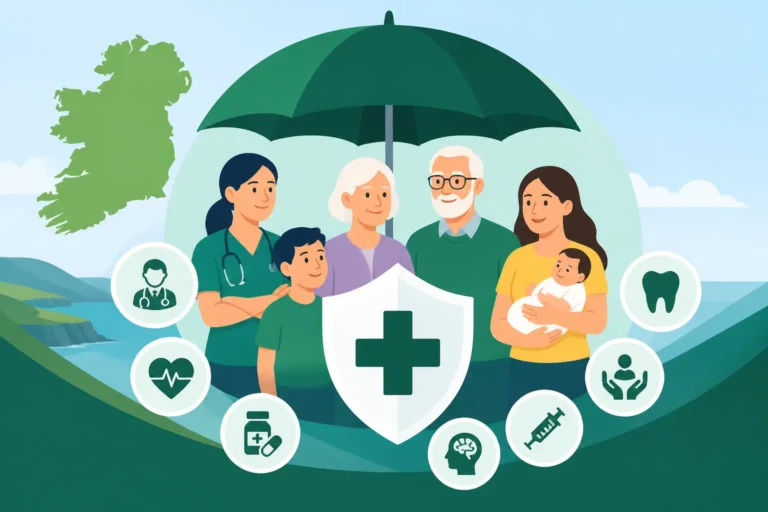
The Medical Card is the "gold standard" of public health coverage in Ireland. If you hold one, you are entitled to a vast array of services for free, including GP visits, all in-patient and out-patient public hospital services, and dental, optical, and aural screenings. While it is primarily meant for those on low incomes, eligibility is also extended to people with certain specific life circumstances or health conditions. For a detailed overview of the broader landscape, you should consult The Complete Guide to Healthcare in Ireland for Expats (2027).
In 2026, the qualification process remains strictly tied to a means test for most applicants under the age of 70. The HSE looks at your weekly income after certain allowable expenses are deducted. As an expat, you must also prove that you are "ordinarily resident" in Ireland, which means you have lived here or intend to live here for at least one year. This is often the biggest hurdle for new arrivals who haven't yet built up a paper trail of utility bills or long-term leases.
What is the GP Visit Card and How Does It Differ?
If your income is slightly too high for a full Medical Card, you may still qualify for a GP Visit Card. As the name suggests, this card only covers the cost of visiting your General Practitioner. It does not cover the cost of medications (though you may still use the Drugs Payment Scheme), nor does it cover hospital stays or dental work. However, given that GP fees in Dublin, Cork, and Galway have continued to rise, having this card can save a family hundreds of Euro a year. You can find more specifics on the differences in our guide on What Is the Difference Between a Medical Card and a GP Visit Card?.
The income thresholds for the GP Visit Card are significantly higher than those for the Medical Card. In recent years, the Irish government has expanded eligibility to include all children under the age of 8 and many people on median incomes. Even if you think you earn too much, it is always worth checking the updated 2026 thresholds, as the "allowable expenses" like rent and childcare can bring your "reckonable income" down substantially.
Why Expats Often Struggle with the Concept of "Public" Care
Coming from countries with the NHS or universal socialized medicine, the Irish system feels counter-intuitive. You are essentially a "private" patient by default unless you prove you are poor enough to be a "public" patient. This creates a psychological barrier for many expats who feel they are "taking from the system" by applying. In reality, these cards are a statutory right for anyone who meets the criteria.
Wait times in the public system are a notorious frustration. Even with a Medical Card, you might wait months for a specialist referral. This is why many expats choose to supplement their public entitlements with private coverage. While you are waiting for your HSE application to be processed, which can take several weeks or months, having a flexible plan from a provider like SafetyWing can provide much-needed peace of mind for any sudden illnesses or accidents that occur during that administrative limbo.
The Financial Thresholds and the Means Test Process
The heart of the application is the means test. This is a cold, calculated look at your financial life. The HSE doesn't just look at your salary; they look at your savings, your property, and even any income you might be receiving from abroad. For expats, this can get complicated if you still have rental income from a home in your home country or if you are receiving a foreign pension. To understand the mechanics, read our breakdown of Understanding the Medical Card Means Test in Ireland.
How the HSE Calculates Your Weekly Income
The calculation is based on your "net" weekly income. This is your pay after tax, PRSI, and the Universal Social Charge (USC) have been deducted. If you are self-employed, the process is slightly different and requires a more detailed set of accounts or a recent Notice of Assessment from Revenue. The HSE is very specific about the documentation they require, and any missing pay slips will result in your application being "pended" or delayed.
For those moving to Ireland mid-year, the HSE will generally look at your current weekly income rather than your total annual earnings from the previous year in another country. This is a common point of confusion. If you have just arrived and are currently looking for work, or are on a lower starting salary, you should apply immediately based on your Irish income. It is important to know the means test before you start the process.
Allowable Deductions and Expenses
This is where many people who think they are over the limit actually qualify. The HSE allows you to deduct specific "reasonable" expenses from your net income. The most significant of these is housing. Whether you are paying a mortgage or rent, that entire amount (within certain reasonable limits) is deducted from your income before the threshold is applied. With Irish rents at historic highs, this deduction often brings people into eligibility.
Other allowable expenses include the cost of travel to work, childcare costs, and even payments toward a private pension. If you have a long commute from a suburb into Dublin or Cork, those fuel and toll costs add up and can be the deciding factor in your application. For a deep dive into these costs, see our article on How Much Does Childcare Cost in Ireland?. Always keep your receipts for childcare and travel, as the HSE may audit these figures during the assessment.
The Means Test for Couples and Families
The thresholds are higher for couples (whether married or cohabiting) and increase further for every child or dependent you have. The HSE considers the combined income of the household. If one partner is working a high-paying job and the other is not working, the household may still be over the limit. However, the childcare and housing deductions are applied to the total household income, which often balances the scales.
It is vital to be honest in these applications. The HSE has the power to cross-reference data with the Department of Social Protection and Revenue. If you are an expat with significant assets abroad, such as a second home or a large stock portfolio, the "notional income" from those assets will be added to your weekly total. This ensures that the cards are reserved for those who truly need financial assistance with their medical bills.
| Feature | Medical Card | GP Visit Card | Private Insurance (e.g., SafetyWing) |
|---|---|---|---|
| GP Visits | Free | Free | Reimbursed (depending on plan) |
| Prescriptions | Small levy (€1.50 – €2.00) | Full Price (up to DPS limit) | Covered if part of inpatient/outpatient |
| Public Hospital | Free | Fees Apply (€80/day) | Covered (Private/Semi-Private) |
| Dental/Optical | Basic services free | Not covered | Often an add-on |
| Eligibility | Low income / Specific Needs | Medium income / All Under 8s | Anyone can purchase |
The Ordinary Residence Rule for Expats
You cannot simply land at Dublin Airport and apply for a Medical Card the next morning. The HSE requires you to be "ordinarily resident." This is a legal term that means you are living in Ireland and intend to remain living here for at least one year. For EU citizens, this is relatively easy to prove, but for non-EU citizens on various visas (Stamp 1, Stamp 4, etc.), the documentation requirements can be more stringent.
Proving Your Intention to Stay in Ireland for One Year
The HSE will look for a "trail" of residency. This usually includes a long-term tenancy agreement registered with the Residential Tenancies Board (RTB), a letter from your employer stating your contract length, or evidence that your children are enrolled in a local school. If you are living in short-term Airbnb accommodation or a hotel while you look for a permanent home, you will likely find your application rejected on residency grounds.
Expats often find themselves in a "Catch-22" situation: they need the card because they are currently living on savings while settling in, but they can't get the card because they haven't settled in long enough. During this initial 3-to-6-month period, many veterans of the expat scene recommend using an international provider like SafetyWing. It fills the gap while you are waiting to meet the "ordinarily resident" criteria and gather the necessary Irish paperwork. You can learn more about this in How Ordinary Residence Affects Your Healthcare Entitlement in Ireland.
Necessary Documentation for Non-EU and EU Citizens
For EU, EEA, and Swiss nationals, your passport and proof of address are usually sufficient. However, for non-EEA nationals, you must provide a copy of your Irish Residence Permit (IRP) card. The "Stamp" on your IRP matters. For instance, people on a Stamp 2 (Student) visa are eligible for a Medical Card if they meet the income criteria, but they must still prove they intend to stay for the duration of their course.
The HSE may also ask for a PPS Number (Personal Public Service Number). You cannot get a Medical Card without one. Getting a PPSN is its own administrative hurdle, often requiring an in-person appointment and several weeks of waiting. You should prioritize getting your PPSN as the very first step of your move to Ireland, even before you start looking for a GP.
What Happens If You Are Moving Mid-Year?
If you move to Ireland in July, the HSE doesn't care about the high salary you earned in New York or London from January to June. They are interested in your current means in Ireland. However, they may ask for "P60" equivalents or bank statements from your previous country to ensure you don't have millions in savings that would disqualify you via the "capital" portion of the means test.
It is a common misconception that the European Health Insurance Card (EHIC) covers you for the long term. The EHIC is for temporary visitors only. Once you become a resident, you must transition to the Irish system and apply for a Medical Card if you are eligible. To understand the legalities of your stay, check Understanding the Irish Immigration Stamp System (Stamp 1, 2, 4) (2027).
Benefits and Coverage: What is Actually Included?
If you are lucky enough to be granted a full Medical Card, the relief is immense. But it is important to know exactly what is—and isn't—covered so you don't get a surprise bill. The coverage is broad but often limited to "clinically necessary" procedures within the public health framework.
Prescription Charges and the Drugs Payment Scheme
With a Medical Card, you do not pay the full price for medicines. Instead, you pay a small "prescription charge" or levy for each item. In 2026, this is typically around €1.50 per item, capped at a maximum of €15 or €20 per month per family. This is a massive saving for anyone with a chronic condition requiring multiple daily medications.
If you only have a GP Visit Card, you are not entitled to these lower rates. You must pay the full price at the pharmacy. However, everyone in Ireland is entitled to the Drugs Payment Scheme (DPS), which caps the monthly spend on approved medications at a specific amount (currently €80). For a more in-depth look at this, read Understanding the Drugs Payment Scheme (DPS) in Ireland. Even if you have private insurance through a provider like SafetyWing, you should still register for the DPS as a backup for your outpatient drug costs.
Public Hospital Services and Emergency Care
One of the biggest fears for expats is ending up in Accident & Emergency (A&E) and facing a massive bill. For those without a Medical Card or a GP referral, the standard charge for attending A&E is €100. If you are admitted to a public ward, the daily charge is around €80, capped at €800 a year. With a Medical Card, all of these charges are waived. You walk in, receive treatment, and walk out without ever seeing a bill.
However, the "Medical Card" doesn't give you a private room or shorter wait times. You will be in a public ward, often with 4 to 6 other people, and you will wait on the same lists as everyone else. This is why people ask, Is Public or Private Healthcare Better for Expats in Ireland?? The answer usually depends on how much you value comfort and speed over cost-free care.
Dental, Optical, and Aural Services
The Medical Card covers a basic level of dental care, usually one exam per year and emergency extractions or fillings. It does not cover cosmetic work, braces, or high-end crowns. Similarly, it covers a basic eye test and a contribution toward a standard pair of glasses every two years.
For many expats, the "public" dental list is extremely long, and many dentists in cities like Dublin have stopped taking new Medical Card patients because the government reimbursement rates are so low. You might have the card but still find yourself paying for a private dentist simply because no one else will see you. This is a recurring theme in Irish healthcare: entitlement does not always equal access. To prepare for this, check out How Much Does Dental Treatment Cost in Ireland Without Insurance?.
Step-by-Step Guide to Applying for Your Health Card
The application process has moved almost entirely online, which is a blessing compared to the old paper forms. However, it still requires a high level of attention to detail. One small mistake can lead to a rejection and another three-month wait.
Applying Online via the HSE MyMedicalCard Portal
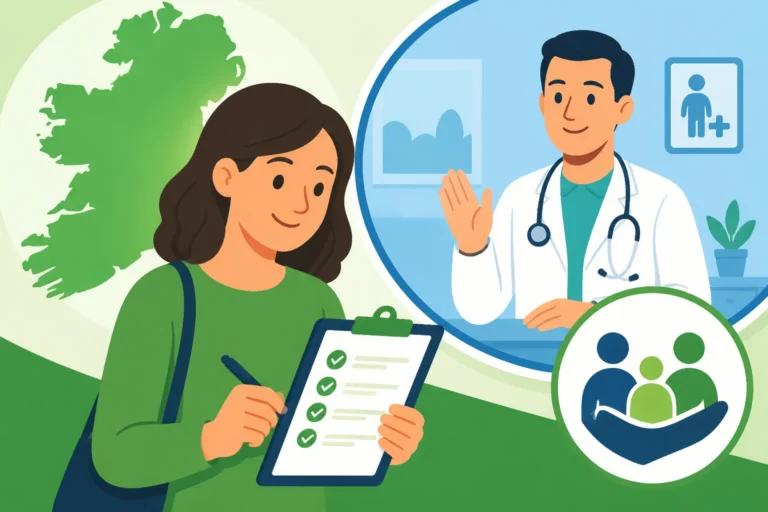
The portal (mymedicalcard.ie) is the most efficient way to apply. You will need to create an account using your PPS Number. The system will guide you through a series of questions about your income, your family, and your expenses. You will be required to upload digital copies of pay slips, bank statements, and your tenancy agreement or mortgage statement.
If you are not tech-savvy or prefer the old-fashioned way, you can still download a paper form (MC1 for those under 70), fill it out, and mail it to the Primary Care Reimbursement Service (PCRS) in Finglas, Dublin. However, the paper route is significantly slower. For those who are confused about the forms, read How Do I Apply for a Medical Card Online in Ireland?.
Finding a GP Who is Accepting Medical Card Patients
This is arguably the hardest part of the process. Ireland is facing a severe shortage of General Practitioners. Many practices have "closed lists," meaning they are not taking any new patients, whether they are private or Medical Card holders. Before you even submit your application to the HSE, you must find a doctor who is willing to sign your form.
If you contact three GPs in your area and they all refuse to take you, the HSE can eventually assign you to a doctor. This involves a separate process where you must prove the refusals. It is a frustrating bureaucratic dance that many expats find demoralizing. We have a specific guide on How to Find and Register with a Local GP Practice in Ireland that offers tips on how to talk to practice managers and find openings.
What to Do While You Wait for Approval
Approval can take anywhere from two weeks to three months. During this time, you are effectively a private patient. If you need to see a doctor, you will have to pay the €70 fee. If your card is eventually granted, it is usually not backdated to cover those costs, although in some cases of extreme hardship, you can appeal.
While you are in this "waiting room" phase of your expat life, having a robust health plan is vital. Many expats use SafetyWing during their first year specifically because it covers those unexpected gaps. It allows you to settle into Ireland without the constant fear that a single flu or a broken ankle will drain your relocation savings. For more on this period, see The Complete Guide to Moving to Ireland: Your First 90 Days (2027).
Specialized Eligibility: Under 8s, Over 70s, and Chronic Illness
Not every health card in Ireland is based on a means test. There are several categories where the government has decided that care should be universal, regardless of how much you earn. As an expat family, these are often the easiest benefits to access.
The Universal GP Visit Card for Children Under 8
Every child living in Ireland under the age of 8 is entitled to a GP Visit Card. This is not means-tested. Even if you are a multi-millionaire, your 4-year-old gets free doctor visits. You still have to register the child online at the HSE website, and you still need a GP who is willing to accept them as a patient.
This scheme is a lifesaver for parents, as young children are notorious for picking up bugs in creche. Without this card, you could easily spend €500 a year just on "peace of mind" visits to the doctor. When you move, registering your children for this should be top of your to-do list. Check the HSE website for the latest updates.
Medical Cards for Seniors and the Over 70s Rule
The rules for people over 70 are much more generous. The income thresholds are significantly higher than for the general population. In fact, most retirees moving to Ireland find that they qualify for at least a GP Visit Card, and many qualify for a full Medical Card. This makes Ireland an attractive place for "retirement expats," provided they can navigate the housing market.
If you are bringing an elderly parent to live with you in Ireland, you should look into How Do I Bring My Elderly Parents to Ireland?. The process for seniors is slightly different and focuses heavily on their specific pension income and any savings they have brought with them from abroad.
Long-Term Illness Scheme vs. The Medical Card
If you have a specific chronic condition—such as Diabetes, Epilepsy, or Multiple Sclerosis—you may be eligible for the Long-Term Illness (LTI) Scheme. This is separate from the Medical Card. The LTI scheme covers the cost of all medications and appliances related specifically to your condition, regardless of your income.
Many expats who are over the income limit for a Medical Card still qualify for the LTI. You could be earning €100,000 a year, but if you have Type 1 Diabetes, the HSE will still provide your insulin and monitors for free. You can find more about this in our guide on Long-Term Illness Scheme.
Common Pitfalls and Rejection Reasons for Foreigners
Even with the best intentions, many expat applications are rejected on the first try. The HSE is a massive bureaucracy, and they operate on a "tick-box" mentality. If one box isn't ticked, the whole application is kicked back.
Missing Documentation and the PPS Number Hurdle
The number one reason for rejection is incomplete documentation. Expats often provide bank statements that aren't translated or pay slips that don't clearly show the tax deductions. You must provide exactly what they ask for: the last three months of bank statements, the last four pay slips, and a copy of your IRP card.
As mentioned earlier, the PPS Number is the key that unlocks everything. If you don't have one, or if you provide a temporary one, the system will reject you. The delay in getting a PPSN is often what pushes people into using private options like SafetyWing for the first six months. To avoid these traps, read How Do I Get a PPS Number in Ireland?.
Calculating Income Incorrectly (Gross vs. Net)
The HSE uses "Net" income, but many expats mistakenly provide their "Gross" (pre-tax) salary figures. This makes them look much wealthier on paper than they actually are. Additionally, people often forget to include their "Allowable Expenses." If you don't list your rent or your childcare costs, the HSE will assume you have zero expenses, which will almost certainly put you over the limit.
It is worth taking the time to sit down with a calculator and our guide on Understanding the Medical Card Means Test in Ireland before you hit "submit." Double-check that your weekly figures are accurate. If your income varies (e.g., you receive bonuses or commission), you should provide an average over the last three to six months.
The "Doctor Refusal" Problem in the Current Housing Crisis
The shortage of GPs is at a crisis point. You may have a perfectly valid Medical Card, but if no GP in your town will accept you, the card is just a piece of plastic. This is a harsh reality for many expats moving to rural areas or high-density Dublin suburbs.
If you find yourself in this position, don't panic. You must get three written refusals from local GPs. Once you have these, you can contact the HSE and they will eventually "assign" you to a practice. It might be a practice that is a 30-minute drive away, but they will be legally required to see you. For more advice on this, check Registering with a GP in Ireland: The Complete Expat Guide (2027).
Summary Table of Expat Healthcare Options
| Scenario | Best Option | Why? |
|---|---|---|
| New arrival, looking for work | Medical Card + SafetyWing | Covers you during the "Ordinary Residence" waiting period. |
| Tech worker, high salary | Private Insurance + GP Visit Card | Salary too high for Medical Card, but kids get free GP visits. |
| Student (non-EU) | Medical Card (if low income) | Essential for long-term stays; covers hospital emergencies. |
| Retiree over 70 | Senior Medical Card | High thresholds make it accessible for most pensioners. |
| Remote worker for US/UK company | Private Insurance | HSE may struggle to categorize foreign income; private is simpler. |
Disclaimer
This guide is for informational purposes only and does not constitute legal or professional medical advice. Healthcare regulations and income thresholds in Ireland are subject to change by the Health Service Executive (HSE) and the Department of Health. Always verify the latest requirements on the official HSE website or consult with a qualified professional before making financial or medical decisions. The mention of brands like SafetyWing is based on typical expat needs and does not replace a full review of your personal insurance requirements.