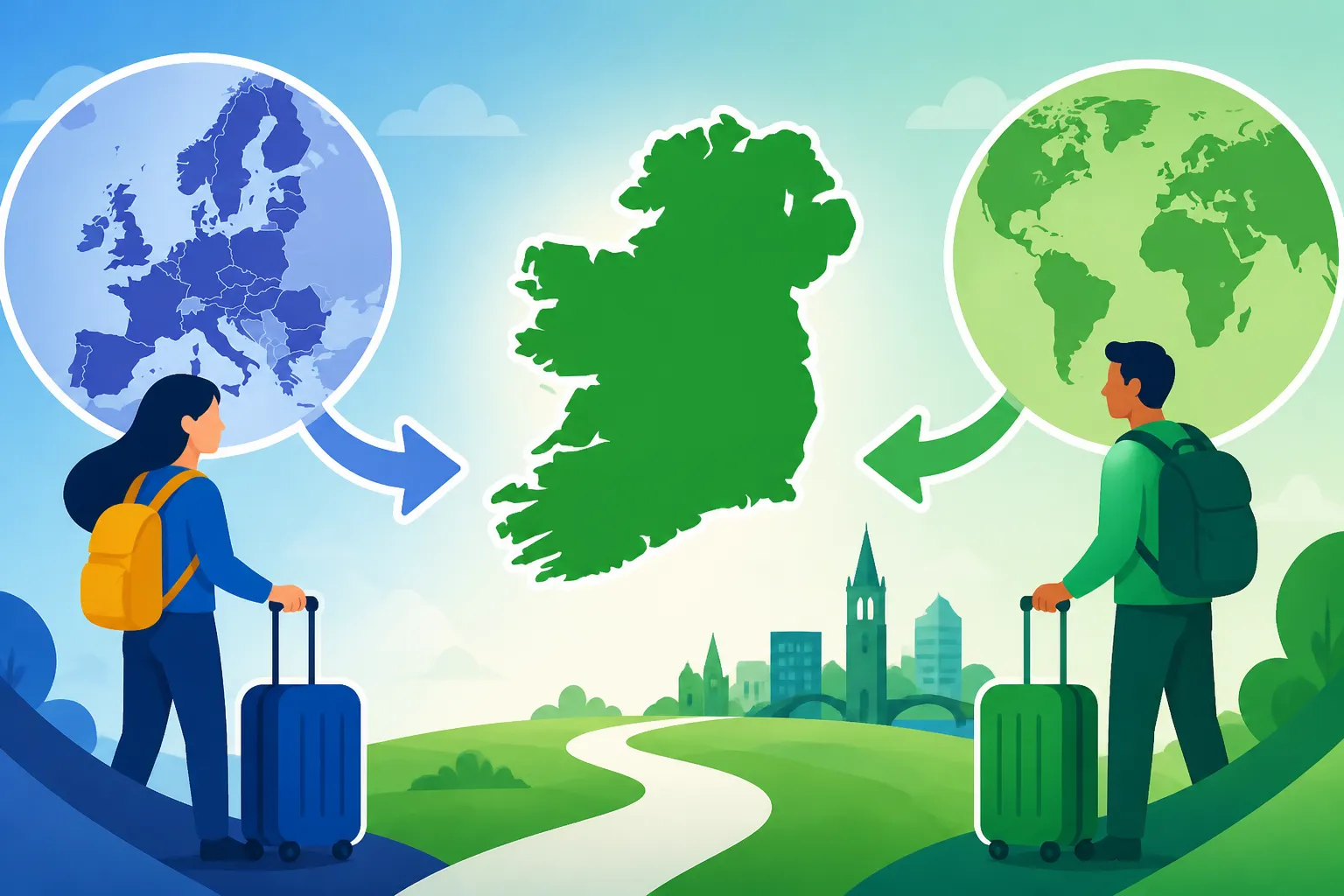
How EU/EEA and Non-EEA Citizens Move to Ireland: The Full Guide (2027)
Moving to Ireland can feel like an exhilarating adventure, but let's be honest, the immigration process can quickly turn that excitement into a tangle of bureaucracy and paperwork. Whether you're an EU/EEA citizen relishing the thought of seamless movement or a non-EU/EEA citizen bracing for visa applications, understanding the precise steps and requirements is paramount to making your dream a reality without undue stress. This comprehensive guide will walk you through everything you need to know, from initial entry requirements to long-term residency and even citizenship, offering a clear roadmap for both EU/EEA and non-EU/EEA nationals hoping to call the Emerald Isle home.
Understanding the Basics: EU/EEA vs. Non-EU/EEA
The very first thing you need to grasp when considering a move to Ireland is which category you fall into: an EU/EEA citizen or a non-EU/EEA citizen. This distinction fundamentally dictates the entire process you'll navigate, from the moment you consider packing your bags to your long-term settlement. It's not just a minor detail; it's the foundation upon which your entire journey is built, and misunderstanding it can lead to significant headaches down the line.
The Freedom of Movement for EU/EEA and Swiss Citizens
If you're a citizen of an EU member state, an EEA country (Iceland, Liechtenstein, Norway), or Switzerland, you're in a much more fortunate position when it comes to moving to Ireland. The cornerstone of the European Union is the principle of free movement, which means you generally do not need a visa or an employment permit to enter, live, or work in Ireland. This isn't just a courtesy; it's a fundamental right that significantly simplifies the relocation process compared to those from outside this bloc.
However, "no visa required" doesn't mean "no bureaucracy at all." While you won't be grappling with complex visa applications, you'll still have administrative hoops to jump through once you arrive. These are typically related to proving your economic self-sufficiency or your intent to work or study, and registering your presence with the authorities if you plan to stay for an extended period. Think of it less as permission to enter, and more as a registration of your presence and intent to integrate into Irish society, ensuring you can access public services and officially establish your life here.
The Hurdles for Non-EU/EEA Citizens
Now, for those of you hailing from outside the EU/EEA or Switzerland, prepare for a more involved process. The reality is, moving to Ireland as a non-EU/EEA citizen requires careful planning, a clear purpose for your move, and adherence to specific visa and immigration requirements. You cannot simply arrive in Ireland with the intention of settling and then figure things out; you need to secure the appropriate permission before you even set foot on Irish soil. This often involves obtaining an entry visa, followed by an employment permit or study visa, and then registering your permission to reside with the Irish immigration authorities.
I've seen countless expats get caught out by this – assuming their tourist visa will allow them to job hunt, only to realise it’s a non-starter. This is a common and understandable frustration, but it's vital to know that Irish immigration law is quite strict on this point. Without the correct pre-approved visa or permit, you won't be granted the right to work or reside long-term, and attempting to circumvent this can lead to serious issues, including deportation. The system is designed to control immigration, and while it can feel overwhelming, understanding these initial hurdles is your first step towards a smooth transition. To truly get a grasp of the entire landscape, you might want to look into The Complete Guide to Irish Visas and Immigration Permission for Expats (2027), which covers the broader spectrum of permissions.
Moving to Ireland as an EU/EEA or Swiss Citizen
Even with the ease of free movement, there are still crucial steps you need to take upon arrival to firmly establish yourself in Ireland. It's not just about showing up; it's about making your presence official so you can fully participate in Irish life, from employment to healthcare.
Arrival and Initial Steps
The good news is, as an EU/EEA or Swiss citizen, you can typically fly into Ireland without needing to pre-apply for any entry visa. Just show up with your valid passport or national identity card, and you'll usually be waved through. However, this immediate freedom quickly leads to the practicalities of setting up your new life. The very first administrative hurdle for many is securing a Personal Public Service (PPS) number. This is absolutely essential for almost everything here – getting paid, accessing social welfare benefits, applying for a driving licence, and even registering for a GP.
You usually apply for a PPS number through the Department of Social Protection. You'll need proof of identity (passport/ID card) and proof of address in Ireland. This can be tricky if you've just arrived and haven't secured permanent housing yet, but usually, a letter from an employer or a utility bill in your name at a temporary address will suffice. Don't underestimate the importance of this number; it's like your unique identifier in the Irish system and without it, you'll find yourself hitting brick wall after brick wall when trying to sort out your initial essentials.
Exercising Treaty Rights and Residency
While you don't need a visa, if you plan to stay in Ireland for more than three months, you are expected to be "exercising your Treaty Rights." This basically means you need to be either:
- Working (employed or self-employed)
- Studying at an approved educational institution
- Self-sufficient, meaning you have sufficient financial resources to support yourself and any family members, and comprehensive health insurance.
- A jobseeker who has a genuine prospect of finding work and can support yourself in the meantime.
After living in Ireland for three months, if you intend to stay longer, you don't necessarily need to register your residency in the same way non-EU citizens do with an IRP card, but you can if you wish to formalise your status. For example, some people apply for a Stamp 4 EUFam if they are a non-EU family member of an EU citizen, but for the EU citizen themselves, it's generally automatic after 5 years if you’ve been consistently exercising your treaty rights. If you need to prove your legal residence for any reason, such as applying for citizenship, maintaining records of employment, tax returns, and utility bills becomes incredibly important.
Bringing Family Members
For EU/EEA and Swiss citizens, bringing your immediate family members to Ireland is also generally straightforward, though it can become a bit more complex if they are non-EU/EEA nationals themselves. If your spouse, children, or dependent relatives are also EU/EEA citizens, they enjoy the same freedom of movement rights as you do.
If your family members are non-EU/EEA nationals, they will need to apply for an 'EU Treaty Rights' visa or permission to join you. This involves demonstrating their relationship to you, and that you (the EU citizen) are exercising your Treaty Rights in Ireland (i.e., working, studying, or self-sufficient). While it's generally a more permissive route than a standard employment permit, it still requires documentation, and they will need to register with immigration authorities upon arrival and receive an IRP card (./how-to-register-for-an-irp-card-with-immigration-in-ireland). This can sometimes be a bureaucratic maze, especially proving dependency for adult relatives, so it’s wise to gather all civil documentation (marriage certificates, birth certificates, etc.) well in advance, ensuring they are apostilled or legalised if required.
Navigating the Employment Permit System for Non-EU/EEA Citizens
For those outside the EU/EEA, the cornerstone of your move to Ireland will be the employment permit system. This is where most people get tangled up, and for good reason—it's intricate, with different permits catering to different skills and situations. You must have an offer of employment from an Irish-based employer before you can apply for most types of permits. The days of coming to Ireland to "find work" on a tourist visa are long gone for non-EU/EEA nationals. You might find more general information on this topic in How Non-EEA Nationals Get Permission to Work in Ireland.
The Critical Skills Employment Permit (CSEP)
The Critical Skills Employment Permit (CSEP) is the golden ticket for many highly skilled professionals. Ireland's economy, particularly in sectors like tech, pharma, and finance, has specific talent needs that can't always be met domestically. The CSEP is designed to attract these individuals. If your occupation is on the "Critical Skills Occupations List" – which typically includes roles like software developers, engineers, certain healthcare professionals, and scientists – and you meet the salary threshold, this is likely your best route. As of 2026, the salary thresholds are generally around €38,000 for a degree-level qualification in a critical skill occupation, or €64,000 for any occupation not on the ineligible list. These are usually reviewed annually, so always double-check the latest figures.
The benefits of a CSEP are significant: there’s no Labour Market Needs Test (meaning your employer doesn't have to prove they couldn't find an Irish/EU candidate), it has a faster processing time, and, crucially, it offers immediate family reunification rights. This means your spouse and dependent children can apply for a Stamp 1G (Spouse of CSEP holder) or Stamp 3 permission, allowing your spouse to work in Ireland without needing a separate employment permit. After two years on a CSEP, you can generally apply for Stamp 4, which offers far greater flexibility and fewer restrictions. You can delve deeper into this specific permit with The Expat Guide to the Critical Skills Employment Permit in Ireland (2027).
The General Employment Permit (GEP)
If your profession isn't on the highly sought-after Critical Skills list, you might be eligible for a General Employment Permit (GEP). This permit covers a much broader range of occupations, but it comes with stricter conditions. The primary difference is the "Labour Market Needs Test." This means your prospective employer must advertise the position nationally and/or across the EU/EEA for a specified period (usually 28 days) to demonstrate that they genuinely could not find an Irish or EU/EEA candidate for the role. This can often make it a longer and more challenging process for employers.
The salary threshold for a GEP is typically lower than for a CSEP, around €30,000 as of 2026, but again, check the most current figures. Family reunification for GEP holders is not immediate; your family members generally cannot apply to join you until you have been legally working in Ireland for 12 months. Your spouse would also need to apply for their own employment permit to work, rather than receiving an automatic right. Understanding the nuances here is key, and you'll find a comparative breakdown in Understanding the Difference Between Critical Skills and General Employment Permits. This route is absolutely viable, but requires more patience and meticulous planning.
Other Employment Permit Categories
Beyond the CSEP and GEP, there are several other specific employment permit categories designed for various situations. These include:
- Intra-Company Transfer Permit: For employees being transferred from an overseas branch of a multinational company to its Irish branch.
- Dependent/Partner/Spouse Employment Permit: For the non-EEA spouse or civil partner of a Critical Skills Employment Permit holder (as mentioned above) or researchers.
- Sport and Cultural Employment Permit: For specific roles in the arts, entertainment, or sports sectors.
- Exchange Agreement Employment Permit: For individuals coming to Ireland under international exchange agreements.
- Internship Employment Permit: For non-EEA students seeking to undertake an internship that is an integral part of their studies.
Each of these has its own specific criteria, salary thresholds, and application processes, so it’s vital to ensure you are applying for the correct permit for your individual circumstances. Always check the official Irish Immigration Service Delivery (ISD) website for the most up-to-date information and application forms.
The Irish Residence Permit (IRP) Card and Immigration Stamps
Once your employment permit or visa is approved and you've arrived in Ireland, the next critical step for non-EU/EEA citizens is to officially register your presence and obtain your Irish Residence Permit (IRP) card. This card is your legal proof of residence in Ireland and is absolutely necessary for various aspects of daily life.
What is the IRP Card?
The Irish Residence Permit (IRP) card is a physical card, similar to a credit card, that confirms your registration with the Irish immigration authorities. It includes your personal details, your photograph, your immigration stamp (which dictates your rights in Ireland), and the expiry date of your permission to reside. Crucially, it replaces the old GNIB (Garda National Immigration Bureau) card. You'll need this card for almost everything official in Ireland: opening a bank account, proving your right to work to an employer, accessing healthcare, renewing your driving licence, and certainly when travelling in and out of the country.
Without a valid IRP card, your residence in Ireland is not considered legal. It's a key piece of documentation that you should carry with you, though not necessarily all the time, but certainly keep it safe and accessible. The process to get it involves attending an appointment with either the Garda National Immigration Bureau (GNIB) in Dublin or your local Garda District Headquarters with an immigration officer if you're outside Dublin. It can be a bit of a queue-and-wait game, so patience is a virtue here. For a detailed walkthrough, refer to How to Register for an IRP Card with Immigration in Ireland.
Understanding the Different Immigration Stamps
The "stamp" on your IRP card is perhaps the most important detail, as it defines what you are permitted to do in Ireland – whether you can work, study, or just reside. Here’s a breakdown of the most common stamps for expats:
- Stamp 1: This is typically granted to those with employment permits (CSEP, GEP, etc.) or business permissions. A Stamp 1 allows you to work full-time in Ireland. It's tied to your employment permit, so if your permit has conditions (like working for a specific employer), your Stamp 1 will reflect those.
- Stamp 1G (Graduate or Spouse of CSEP):
- Graduate: Granted to non-EU/EEA graduates of Irish universities under the Third Level Graduate Programme, allowing them to seek employment for a period (e.g., 12 or 24 months depending on the level of qualification).
- Spouse of CSEP Holder: Granted to the spouse or civil partner of a Critical Skills Employment Permit holder, allowing them to work in Ireland without needing their own employment permit. This is a huge benefit for families!
- Stamp 2/2A: For students. Stamp 2 is for degree-level students permitted to work part-time (up to 20 hours per week during term and full-time during holidays). Stamp 2A is for students on non-degree courses, with no entitlement to work.
- Stamp 3: This is for individuals who have permission to reside in Ireland but not to work or run a business. This often applies to non-EEA spouses or family members of Irish citizens or certain non-CSEP employment permit holders (who typically get Stamp 3 first and then need a separate employment permit if they wish to work). You cannot work or engage in business activities with a Stamp 3.
- Stamp 4: This is a highly sought-after stamp as it signifies long-term residency permission and grants much more flexibility. It allows you to work without an employment permit, establish a business, and access state services and funds. You can typically apply for Stamp 4 after living in Ireland legally for a certain number of years (often two years on a CSEP, or five years on a GEP, though conditions apply). This is often a significant milestone on the path to Irish citizenship.
- Stamp 5: This is indefinite leave to remain in Ireland, usually granted after having had Stamp 4 for a specific period (e.g., five years). It means you can live in Ireland without any time limit on your permission, although you still need a valid passport.
- Stamp 6: This is for Irish citizens who have also registered their foreign birth with the Department of Foreign Affairs and want their non-Irish passport to be endorsed as such. This isn't really an "immigration" stamp in the same way as the others, as it's for citizens.
Each stamp has very specific implications for your rights and responsibilities, so understanding yours is paramount. You can learn more about the intricacies of these stamps in Understanding the Irish Immigration Stamp System (Stamp 1, 2, 4) (2027).
Registering Your Presence and Renewals
The process for registering your presence and obtaining your IRP card involves an appointment with the Irish Immigration Service Delivery (ISD) or the Garda National Immigration Bureau (GNIB). If you're in Dublin, you'll generally go to the Burgh Quay Registration Office. Outside Dublin, you register at your local Garda station that has an immigration officer. You'll need your passport, your employment permit/visa letter, proof of Irish address, and sometimes proof of private health insurance (especially for students or the self-sufficient). There's also a fee, currently €300, payable by credit/debit card.
My advice? Book your appointment as soon as you can, even before you arrive if possible for Dublin, as slots fill up quickly. For renewals, it's the same process, but you'll need to show continued eligibility for your specific stamp. Always mark your renewal date well in advance and start gathering your documents. It's a common expat rite of passage to nervously check the ISD website for renewal slots! You don't want to accidentally overstay your welcome, as that can jeopardise future applications.
Family Reunification: Bringing Loved Ones to Ireland
Moving abroad is often a family affair, and Ireland understands the importance of keeping families together. However, the ease of bringing your family over depends heavily on your own immigration status. This is one area where the type of employment permit you hold, or your citizenship, makes a tangible difference. The difficulties here can be a real source of frustration for expats, so let's try to demystify it. A broader look at this topic can be found in Family Reunification in Ireland: Bringing Your Spouse and Children (2027).
For Critical Skills Employment Permit Holders
If you are a holder of a Critical Skills Employment Permit (CSEP), you are in a much more advantageous position regarding family reunification. One of the key benefits of the CSEP is the automatic right for your non-EU/EEA spouse/civil partner and dependent children to apply for permission to reside and, crucially, for your spouse to work in Ireland without needing to secure their own employment permit. This is a game-changer for many families, allowing partners to seek employment without additional bureaucratic hurdles.
Your family members would typically apply for an 'Entry Visa' if they are visa-required nationals, explicitly stating their intention to join a CSEP holder. Upon arrival, they register with the immigration authorities and are usually granted a Stamp 1G (Spouse of CSEP holder) for your spouse and a Stamp 3 for your dependent children. The Stamp 1G for a spouse allows them to work or start a business, truly integrating them into Irish society. For dependent children, they are granted Stamp 3, which permits them to reside and attend school. You'll need to provide original marriage and birth certificates (often apostilled), evidence of your CSEP, and proof of your relationship.
For General Employment Permit Holders and Others
For those holding a General Employment Permit (GEP) or other non-CSEP permissions, the path to family reunification is more challenging and restrictive. Unlike the CSEP, there is no automatic right for family members to join you immediately. Generally, GEP holders must reside and work in Ireland for a period, typically 12 months, before their non-EU/EEA family members can apply to join them. This year-long separation can be incredibly tough on families, and it's a frustration I've heard echoed by many expats.
Once the 12-month period is fulfilled, your family members can apply for a family reunification visa. This application is subject to various criteria, including strict income thresholds (you must prove you can financially support your family without recourse to public funds) and suitable accommodation. Even if approved, your spouse would typically receive a Stamp 3, which does not give them an automatic right to work. They would then need to apply for their own separate employment permit (like a GEP) if they wish to seek employment, which means navigating the Labour Market Needs Test themselves. This can sometimes create a Catch-22 situation, making it very difficult for spouses to find work and establish careers. It's a system that truly tests your resilience and patience, but with careful planning and robust documentation, it is achievable.
Pathways to Long-Term Residency and Citizenship
For many expats, Ireland isn't just a temporary stop; it's a place they hope to call home indefinitely. The journey from initial arrival to long-term residency and even citizenship is a significant one, marked by various milestones.
Long-Term Residency (Stamp 4 and Stamp 5)
The most common pathway to long-term residency in Ireland for non-EU/EEA citizens is through consistently renewing your immigration permissions until you qualify for a Stamp 4.
- Qualifying for Stamp 4: The exact path depends on your initial permit. As mentioned, CSEP holders can typically apply for Stamp 4 after two years, provided they have adhered to the conditions of their permit and continued in employment. General Employment Permit holders usually need to complete five years of continuous legal residence on a Stamp 1 before they can apply for Stamp 4. Other routes to Stamp 4 exist, such as through EU Treaty Rights for family members of EU citizens or through certain specific schemes. A Stamp 4 offers incredible freedom: it removes the need for employment permits, allows you to start a business, and generally grants access to state services on par with an Irish citizen (though not all benefits). It needs to be renewed every few years.
- Qualifying for Stamp 5 (Indefinite Leave to Remain): This is the next level beyond Stamp 4. It grants indefinite leave to remain in the State, meaning there's no time limit on your permission to live in Ireland. You can apply for Stamp 5 after you have accumulated a total of eight years of legal residence in Ireland, usually having held a Stamp 4 for a significant portion of that time. While it doesn't grant you Irish citizenship, it provides a stable and permanent immigration status, freeing you from the regular renewal process.
These stamps signify a growing integration into Irish society and are a testament to your commitment to making Ireland your home. They demonstrate that you've navigated the system, contributed to the country, and earned the right to stay.
Irish Citizenship by Naturalisation
For many, the ultimate goal is to become an Irish citizen. This process is known as "naturalisation" and it's a formal recognition of your deep connection to Ireland. The main requirements revolve around "reckonable residence," good character, and an intention to continue residing in the State. Irish Citizenship: Naturalisation and Citizenship by Descent Explained (2027) offers a more in-depth exploration of this topic.
- Reckonable Residence: This is the key. To apply for citizenship by naturalisation, you generally need to have a total of five years of reckonable residence in the State out of the last nine years. This period must include one year of continuous residence immediately before your application date. "Reckonable residence" refers to the time you have spent legally in Ireland with an eligible immigration stamp (e.g., Stamp 1, 4, 5). Time spent on certain other stamps, like Stamp 2 (student), might be counted differently or not at all. You'll need to meticulously document your immigration history, proving continuous legal residence.
- Good Character: You must satisfy the Minister for Justice that you are "of good character." This typically means having no serious criminal record and generally adhering to Irish law during your time in the country. This involves a Garda (police) check as part of the application.
- Intention to Reside: You must declare your intention to continue to reside in Ireland after naturalisation.
- Application Process: The application involves completing a detailed form, providing extensive documentation (passports, IRP cards, proofs of address, P60s/tax returns, etc.), and paying a non-refundable application fee. The process can be lengthy, sometimes taking 12-24 months or even longer, so patience is key. If your application is successful, you'll be invited to a citizenship ceremony, which is a truly special day.
Citizenship by Descent or Marriage
Beyond naturalisation, there are other routes to Irish citizenship:
- Citizenship by Descent (Foreign Births Register): If one of your grandparents was born in Ireland, or if one of your parents was an Irish citizen at the time of your birth (even if you were born outside Ireland), you may be eligible to apply for entry onto the Foreign Births Register. Once registered, you are considered an Irish citizen by descent, and you can then apply for an Irish passport. This is a common and often quicker route for those with Irish ancestry.
- Citizenship by Marriage: While there isn't a direct "citizenship by marriage" route as such, being married to an Irish citizen can reduce the reckonable residence requirement for naturalisation. Instead of the general five out of nine years, you would typically need three years of reckonable residence in Ireland while married to an Irish citizen, including one year of continuous residence immediately before the application.
These pathways, while different, all lead to the same destination: becoming an Irish citizen and having a deeper, more permanent connection to this beautiful country.
Essential Pre-Arrival and Post-Arrival Considerations
Moving to a new country is never just about visas and permits; it's about setting up a whole new life. There are countless practicalities to consider, and getting a head start on these can make your transition infinitely smoother.
Planning Your Move: Logistics and Paperwork
Even before you get your visa, start thinking about the practical side of your move. This is where meticulous planning saves you huge headaches down the line.
- Documentation Check: Beyond immigration documents, think about your educational certificates, professional qualifications (get them officially translated and perhaps recognised if needed), and medical records. Having originals or certified copies readily accessible will be invaluable.
- Shipping Belongings: Deciding what to bring and how to ship it is a big decision. For international moves, services like Sirelo can be incredibly helpful for comparing quotes and finding reliable movers. I've heard horror stories of people's cherished possessions going missing or being stuck in customs, so choose wisely and ensure everything is properly declared and insured. Think about what you truly need versus what you can replace once here.
- Temporary Accommodation: Don't expect to walk into a dream rental immediately, especially in major cities like Dublin or Cork, where the housing market is notoriously competitive. Book temporary accommodation (Airbnb, short-term rental) for at least a few weeks, if not a month or two. This gives you a base while you actively search for a permanent home and get your feet on the ground. For more on settling in, check out The Complete Guide to Moving to Ireland: Your First 90 Days (2027).
- Financial Proofs: You'll likely need to show proof of funds for your initial weeks or months, demonstrating you can support yourself until you receive your first paycheck. This might be bank statements from your home country.
Healthcare and Insurance
One of the most critical aspects of relocating is understanding the healthcare system. Ireland has a mixed public and private healthcare system, and your access will depend on your residency status and whether you opt for private insurance.
- Public Healthcare (HSE): Once you become an "ordinary resident" of Ireland (usually after 12 months, or immediately if you are working here and intend to stay), you are generally entitled to access the public healthcare system, managed by the Health Service Executive (HSE). However, public hospital waiting lists can be long, and many services, including GP visits, require payment unless you qualify for a Medical Card or GP Visit Card.
- Private Health Insurance: For non-EU/EEA citizens, having private health insurance is often a mandatory requirement for your visa application or as a condition of your stay. Even if not mandatory, I highly recommend it, especially for your first few years. It provides peace of mind, access to private hospitals, and often quicker access to specialist consultations. Providers like VHI, Laya Healthcare, and Irish Life Health are the main players in Ireland. Many expats also opt for international health insurance plans, and a brand like Cigna Global offers comprehensive coverage that can bridge the gap from your home country to Ireland. This can be crucial to cover you before your Irish residency fully kicks in or before your employer’s health benefits start. You can find out more in The Complete Guide to Healthcare in Ireland for Expats (2027).
Financial Preparation: Banking and Taxes
Getting your finances sorted is another top priority upon arrival.
- PPS Number: As mentioned earlier, this is your key to accessing everything from employment to social welfare and tax credits. Apply for it as soon as you have proof of address.
- Opening a Bank Account: You'll need an Irish bank account to receive your salary, pay bills, and generally manage your day-to-day finances. The major banks are AIB, Bank of Ireland, and Permanent TSB. The process can sometimes be frustrating, as banks often require proof of address and a PPS number, which you might not have immediately. It's a classic chicken-and-egg scenario for many new arrivals! Some digital banks like Revolut or N26 can offer a temporary solution while you get established. For more details on this, check out The Expat Guide to Opening a Bank Account in Ireland.
- Understanding Taxes: Ireland's tax system can be complex. You'll be subject to Income Tax (PAYE), PRSI (Pay Related Social Insurance), and USC (Universal Social Charge) once you start working. It’s crucial to understand these deductions from your salary. Registering with Revenue (Ireland's tax authority) via their "myAccount" portal is essential. You'll need your PPS number to do this. Getting your tax credits sorted promptly will help avoid emergency tax deductions, which can significantly reduce your initial take-home pay.
Navigating the immigration system in Ireland, whether you're from the EU/EEA or not, is a journey that demands patience, meticulous attention to detail, and a good dose of resilience. But with proper preparation and understanding, you can make a smooth transition and truly embrace your new life on the Emerald Isle.
Disclaimer
The information provided in this guide is for general informational purposes only and does not constitute legal, financial, or immigration advice. Immigration laws and policies in Ireland are subject to change and may vary depending on individual circumstances. While every effort has been made to ensure the accuracy of the information as of 2026, it is essential to consult official government sources, such as the Irish Immigration Service Delivery (ISD), the Department of Justice, and professional immigration advisors, for the most current and specific guidance pertaining to your situation. We cannot be held responsible for any decisions made based on the information presented herein.