How Do I Apply for a Spouse Visa to Join My Partner in Ireland?
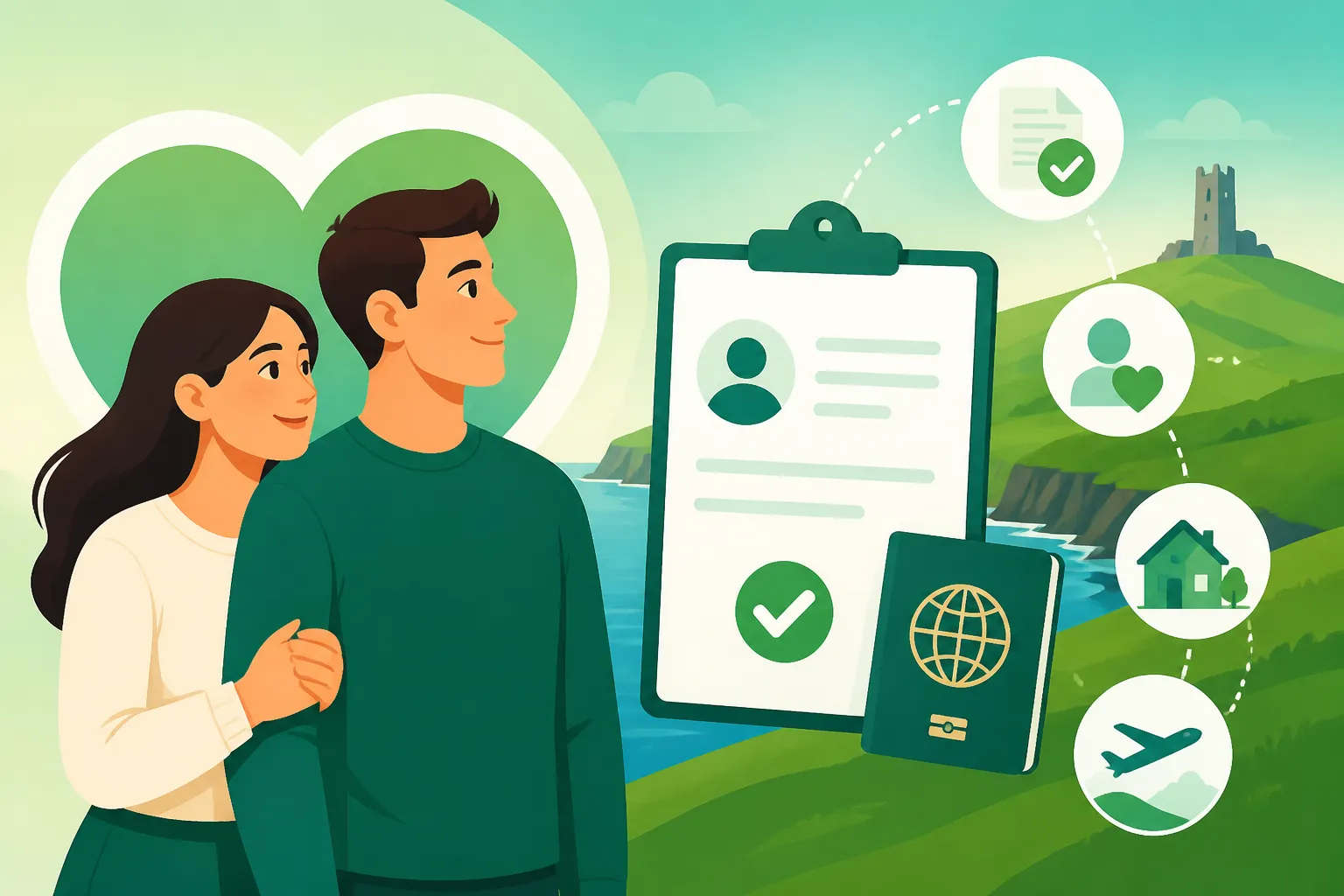
Navigating Ireland's immigration system to bring your beloved partner over can feel like an absolute bureaucratic labyrinth, riddled with confusing terminology, endless paperwork, and the gut-wrenching anxiety of separation. It's a journey many of us expats have faced, longing to reunite with our loved ones in this beautiful country. This guide is here to untangle the complexities, offering a clear, empathetic roadmap on how to apply for permission for your spouse or de facto partner to join you here in Ireland, focusing on the realistic steps and common pitfalls.
Navigating the System: What "Spouse Visa" Really Means in Ireland
First things first, let's clear up some common confusion. While many countries have a straightforward "spouse visa," Ireland's system is a bit more nuanced. For non-EEA (European Economic Area) citizens, it's less about a specific "spouse visa" and more about obtaining permission to reside in Ireland based on your relationship with a resident here. The process can differ significantly depending on your partner's nationality and their immigration status in Ireland. This isn't just semantics; understanding this distinction is key to choosing the right application path and avoiding frustrating delays.
The general principle is that your non-EEA spouse or de facto partner will apply for an Irish Long Stay (D) Visa for 'join family' or 'residence' purposes if they are from a visa-required country, or directly seek permission to reside if they are visa-exempt. Once they arrive, or if they are already here and seeking to change their immigration status, they will then need to register their permission with the Immigration Service Delivery (ISD) and obtain an IRP Card and Registering with Immigration (2026). The type of "stamp" they receive, and thus their rights (like the ability to work), will heavily depend on your immigration status.
EU/EEA Citizen Partner vs. Non-EEA Citizen Partner
The biggest split in the road depends on whether you, the sponsor, are an EU/EEA citizen or a non-EEA citizen. This distinction is paramount, as the legal frameworks and required documents are entirely different.
If you are an EU/EEA citizen exercising your Treaty Rights in Ireland, your non-EEA spouse or de facto partner falls under EU Free Movement rules. This means they apply for a "residence card" as a family member of an EU citizen. The process is generally more straightforward, with specific forms and a strong emphasis on proving the relationship. They usually don't need an entry visa if they possess a valid residence card from another EU/EEA country, but it's always best to check the specific requirements based on their nationality. The core here is proving the genuine and subsisting nature of your relationship and your continuous residence in Ireland.
However, if you are a non-EEA citizen living in Ireland, perhaps on a Critical Skills Employment Permit or a General Employment Permit, the process for your partner is governed by national Irish immigration law. This is where it gets a bit more complex, and often, more financially demanding. Your partner will typically apply under the Family Reunification in Ireland: Bringing Your Spouse and Children (2027) guidelines. If you hold a Critical Skills Employment Permit, your spouse or de facto partner may be eligible for a Stamp 1G or Stamp 4, which often grants them the right to work without needing a separate employment permit. This is a huge benefit and a reason many expats prioritize the Critical Skills route if possible. If you hold a General Employment Permit, your spouse may initially receive a Stamp 3, which does not grant the right to work, meaning they would need to apply for their own employment permit if they wish to seek employment.
Married vs. De Facto Relationships: What's the Difference?
Ireland recognizes both legally married spouses and de facto partners. The critical difference lies in the proof required and, sometimes, the duration of your cohabitation.
For married spouses, you will need to provide a valid, original marriage certificate. The marriage must be legally recognized in Ireland. This is usually the easier path because the legal status of marriage itself provides a strong foundation for the application.
For de facto partners, the bar for proof is significantly higher. You must demonstrate that you have been in a "durable, verifiable relationship akin to marriage" for a specified period, typically at least two years. This means providing a mountain of evidence that proves joint life, shared finances, cohabitation, and mutual commitment. We're talking joint bank statements, utility bills addressed to both of you at the same address, tenancy agreements showing both names, shared health insurance policies, travel itineraries together, photos, affidavits from friends and family – anything and everything to convince the immigration authorities that your relationship is genuine, subsisting, and long-term. This can feel incredibly invasive, but it's crucial. I've heard countless stories from people who found gathering these documents one of the most stressful parts of the entire moving process. The specific criteria for de facto partners are detailed under the How to Apply for a De Facto Partner or Spouse Visa in Ireland section on the ISD website, so make sure to comb through that thoroughly.
The Step-by-Step Journey to Bring Your Partner to Ireland
Let's walk through the general application process. Keep in mind that depending on your specific circumstances (e.g., your nationality, your partner's nationality, your immigration stamp, whether you're married or de facto), some steps might be slightly different or certain documents might be emphasized more. However, this framework should give you a solid starting point.
Step 1: Determine Eligibility and Gather Documentation
Before you even think about filling out forms, you need to be brutally honest with yourselves about eligibility. Are you an eligible sponsor? Does your income meet the Family Reunification Rules and Income Thresholds in Ireland? Is your relationship genuine and provable? If you're a non-EEA national, you usually need to be legally resident in Ireland for at least 12 months on a Stamp 1, 1A, 2, 2A, 3, or 4 permission, with a minimum income requirement. For those holding Critical Skills Employment Permits, the criteria can be a bit more favourable, allowing family reunification earlier and with fewer hurdles, often leading to a Stamp 1G or Stamp 4 for the spouse right away. You can delve into the specifics of The Expat Guide to the Critical Skills Employment Permit in Ireland (2027) for more details on that path.
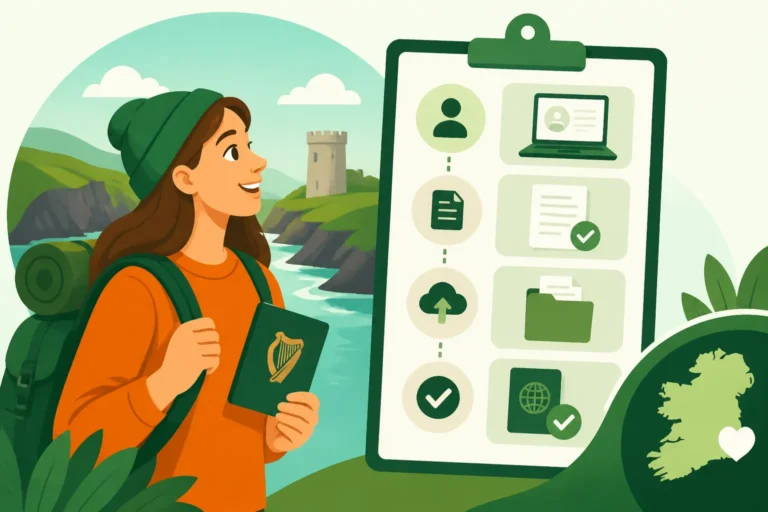
Once you’re confident you meet the criteria, the document-gathering begins. This is often the most time-consuming and frustrating part. You'll need:
- Proof of Identity: Passports for both you and your partner, valid for at least 6 months beyond the intended stay.
- Proof of Relationship: Marriage certificate (if applicable), or an exhaustive portfolio of evidence for de facto partners (joint tenancy agreements, bank statements, utility bills, photos, travel history, letters of support).
- Sponsor's Immigration Status: Your IRP card, employment permit (if applicable), and proof of your current permission to reside in Ireland.
- Financial Proof: Bank statements, payslips, employment contracts for the sponsor, demonstrating sufficient funds to support both of you without recourse to public funds. The exact income threshold can vary, so check the latest ISD guidelines. This is where many applications can stumble if the income isn't clearly demonstrated or doesn't meet the minimum.
- Accommodation Proof: Tenancy agreement or property deeds, demonstrating suitable housing for both of you.
- Medical Insurance: Evidence that your partner will have private medical insurance (if they are not eligible for public healthcare, which many newcomers aren't immediately). This is a crucial point many people overlook, but companies like Cigna Global offer comprehensive plans specifically designed for expats, providing peace of mind and meeting immigration requirements. Remember, accessing public healthcare, as explained in The Complete Guide to Healthcare in Ireland for Expats (2027), might not be immediate for your partner.
- Police Clearance Certificates: From any country where your partner has resided for 6 months or more in the last 5 years.
- A Detailed Cover Letter: Explaining your situation, your relationship, and outlining all the documents you've provided.
Step 2: Apply for an Entry Visa (If Required)
If your partner is from a country whose nationals require a visa to enter Ireland (check the Irish Immigration website for the full list), they must apply for a Long Stay (D) Visa online. This is done through the Irish Naturalisation and Immigration Service (INIS) AVATS online application system. When selecting the reason for travel, choose "Join Family (D)" or "Reside (D)" as appropriate.
After completing the online application, your partner will need to print the summary form, gather all supporting documents, and submit them to the relevant Irish embassy or consulate in their country of residence. This could involve an interview. It's incredibly important that the documents submitted for the visa application are consistent and thorough, as any discrepancies can lead to delays or refusal. The processing times for these visas can vary wildly, so patience is key. I've known people who waited months, sometimes over a year, so applying as early as possible is always the best strategy.
Step 3: Entering Ireland and Registering Your Permission
Once the long-stay visa is approved (if applicable), your partner can travel to Ireland. Upon arrival at the port of entry, an immigration officer will grant them a temporary permission to enter, typically for 90 days. During this time, they must register their permission with the Immigration Service Delivery (ISD).
This involves making an appointment with your local Garda National Immigration Bureau (GNIB) office or the Burgh Quay Registration Office in Dublin. Appointments, especially in Dublin, can be notoriously hard to get, so start trying to book one as soon as your partner arrives (or even before, if the system allows a future booking). At this appointment, your partner will present all the original documents, have their fingerprints and photograph taken, and pay the registration fee (currently €300). If successful, they will be issued with their Irish Residence Permit (IRP) card, which formally grants them their immigration stamp (e.g., Stamp 1G, Stamp 4, or Stamp 3). This IRP card is your partner's proof of legal residence in Ireland and is essential for everything from employment to accessing services. For a deeper dive into this, check out The Complete Guide to the IRP Card and Registering with Immigration (2027).
Common Hurdles and Essential Advice for Your Partner's Application
Bringing your partner to Ireland isn't always smooth sailing. There are common obstacles that trip up many applicants, but with foresight and preparation, you can navigate them successfully.
Proving a "Genuine and Subsisting" Relationship
This is perhaps the biggest hurdle for many, especially de facto partners. The Irish authorities want to see undeniable proof that your relationship is real, ongoing, and committed. It's not enough to say you're a couple; you need to demonstrate it through solid evidence.
Think about compiling a comprehensive "relationship portfolio" that includes:
- Joint Financials: Joint bank accounts, savings accounts, credit cards, loans, or shared investments.
- Shared Living: Lease agreements or mortgage statements with both names, utility bills addressed to both, official mail to both at the same address.
- Correspondence: Dated letters, emails, or chat logs that show the progression and nature of your relationship (be mindful of privacy and only share what’s necessary and genuinely reflects your relationship).
- Travel: Photos together, flight tickets, hotel bookings from shared holidays, particularly if they pre-date your move to Ireland.
- Statements: Affidavits from close friends and family, preferably Irish citizens or residents, confirming their knowledge of your relationship.
- Future Plans: Evidence of joint long-term planning, such as wills, life insurance policies where you're beneficiaries, or even shared property purchases.
The more comprehensive and compelling your evidence, the stronger your case will be. Remember, the immigration officer's job is to ensure the relationship is not one of convenience, so leave no room for doubt.
Meeting the Financial Requirements
The financial stability of the sponsor is a critical component of any family reunification application for non-EEA nationals. The Irish government wants to ensure that your partner will not become a burden on the state. This means you, as the sponsor, must demonstrate sufficient income to support both of you.
The exact income thresholds can be updated periodically, so always refer to the latest Understanding Family Reunification Rules and Income Thresholds in Ireland on the ISD website. Typically, they look for consistent income over the preceding 12-24 months. Provide clear, authenticated documents like official payslips, P60s, bank statements showing salary deposits, and a letter from your employer confirming your employment status and salary. If you're self-employed, you'll need tax returns and business accounts. Any gaps or inconsistencies in income will need thorough explanation.
It’s often beneficial to demonstrate savings as well, even if not strictly required, to show additional financial security. This reassures the authorities that you're well-prepared for life in Ireland as a couple.
Navigating Waiting Times and Appeals
Let's be realistic: Ireland's immigration system can be slow. Processing times vary significantly based on the type of application, the volume of applications, and the individual circumstances. Don't plan any critical life events around a specific, short timeline. Always factor in potential delays, which can be considerable. Checking the average processing times published by the ISD for relevant application types is a good starting point, but understand these are averages, not guarantees.
If your application is refused, don't despair immediately. You typically have the right to appeal the decision. A refusal letter will outline the reasons for denial, which you must address meticulously in your appeal. This might involve submitting additional documents, clarifying previous information, or seeking legal advice. An appeal is not a re-submission; it’s a formal request for a review of the original decision based on new information or a clarification of existing information. It can be another stressful period, but many successful outcomes are achieved through the appeal process.
Healthcare and Integration
One crucial aspect often overlooked in the immigration process is healthcare. While you might be settled, your partner arriving will need their own healthcare arrangements. As mentioned earlier, they may not immediately qualify for the full range of public health services, or there could be significant waiting lists. This is where private health insurance becomes not just an advantage, but often a requirement for their immigration permission.
Exploring options from providers like Cigna Global or local providers such as VHI, Laya Healthcare, or Irish Life Health is vital. A good health insurance plan ensures your partner has access to medical care from day one, without the financial stress of unexpected bills, which can be substantial in Ireland if you're not covered. For comprehensive details on options, check out Health Insurance in Ireland: VHI, Laya, Irish Life and Options Explained.
Beyond immediate needs, consider the broader integration. Will your partner seek employment? What about language classes or social groups? Settling into a new country as a partner of an expat can be isolating. Support networks, understanding Learning About Working Culture and the Irish Workplace: A Complete Guide, and proactively building a new life are just as important as the paperwork.
Making the Move: Logistics and Planning
Once the visa and permission are in sight, the practicalities of moving really kick in. If your partner is bringing belongings, consider logistics carefully. Companies like Sirelo can be invaluable resources, helping you find reputable international movers who specialize in shipping goods to Ireland. They can assist with everything from comparing quotes to understanding customs requirements. Proper planning here can save you a lot of headache and unexpected costs. It's not just about the legal entry, but making sure their physical transition is as smooth as possible.
Remember, the journey to reunite with your partner in Ireland is a marathon, not a sprint. It requires meticulous planning, immense patience, and often, a thick skin to deal with the bureaucratic hurdles. But for those of us who have walked this path, the joy of finally having our loved ones by our side makes every single step worth it.
Here's a quick overview of the requirements based on your status:
| Factor | EU/EEA Citizen Sponsor (Non-EEA Partner) | Non-EEA Critical Skills Permit Sponsor (Non-EEA Partner) | Non-EEA General Permit / Other Stamp Sponsor (Non-EEA Partner) |
|---|---|---|---|
| Legal Framework | EU Free Movement Regulations | Irish National Immigration Law (Family Reunification) | Irish National Immigration Law (Family Reunification) |
| Initial Visa Required? | Usually, no, if possessing EU residence card. Otherwise, Long Stay D visa for family reunification. | Yes, if from a visa-required country. Long Stay D visa for family reunification. | Yes, if from a visa-required country. Long Stay D visa for family reunification. |
| Sponsor Residence Min. | Exercising Treaty Rights in Ireland | 12 months minimum (Stamp 1, 1A, 2, 3, 4) | 12 months minimum (Stamp 1, 1A, 2, 3, 4) |
| Financial Req. | Proof of adequate resources (less strict than non-EEA) | Proof of sufficient income (e.g., €30,000+ p.a.) | Proof of sufficient income (e.g., €30,000+ p.a.) |
| Proof of Relationship | Marriage Certificate / De Facto Evidence | Marriage Certificate / De Facto Evidence | Marriage Certificate / De Facto Evidence |
| Partner's Work Rights | Yes, upon receiving residence card (Stamp 4EUFam) | Yes, typically on Stamp 1G or Stamp 4 | No, typically on Stamp 3 (needs separate Employment Permit) |
| Application Type | Residence Card as Family Member of EU Citizen | Long Stay D Visa (Join Family) / Permission to Reside | Long Stay D Visa (Join Family) / Permission to Reside |
| Key Documents | Marriage/birth certs, sponsor's EU passport/ID, proof of funds | Passports, marriage/de facto evidence, sponsor's IRP/Employment Permit, financial proof, police certs | Passports, marriage/de facto evidence, sponsor's IRP/Employment Permit, financial proof, police certs |
For a more comprehensive understanding of the entire immigration process when moving to Ireland, you might find The Complete Visa and Immigration Guide for Relocating to Ireland (2027) incredibly helpful. Remember that the rules and guidelines can change, so always refer to the official Immigration Service Delivery (ISD) website as your primary source of truth.
Disclaimer
The information provided in this guide is for general informational purposes only and does not constitute legal advice. While we strive to keep the information up-to-date and accurate, immigration laws and policies in Ireland can change frequently. It is highly recommended to consult with the official Immigration Service Delivery (ISD) website, or seek advice from a qualified immigration solicitor or legal professional for specific guidance regarding your individual circumstances. We cannot be held responsible for any inaccuracies or omissions, or for any actions taken based on the information provided herein.