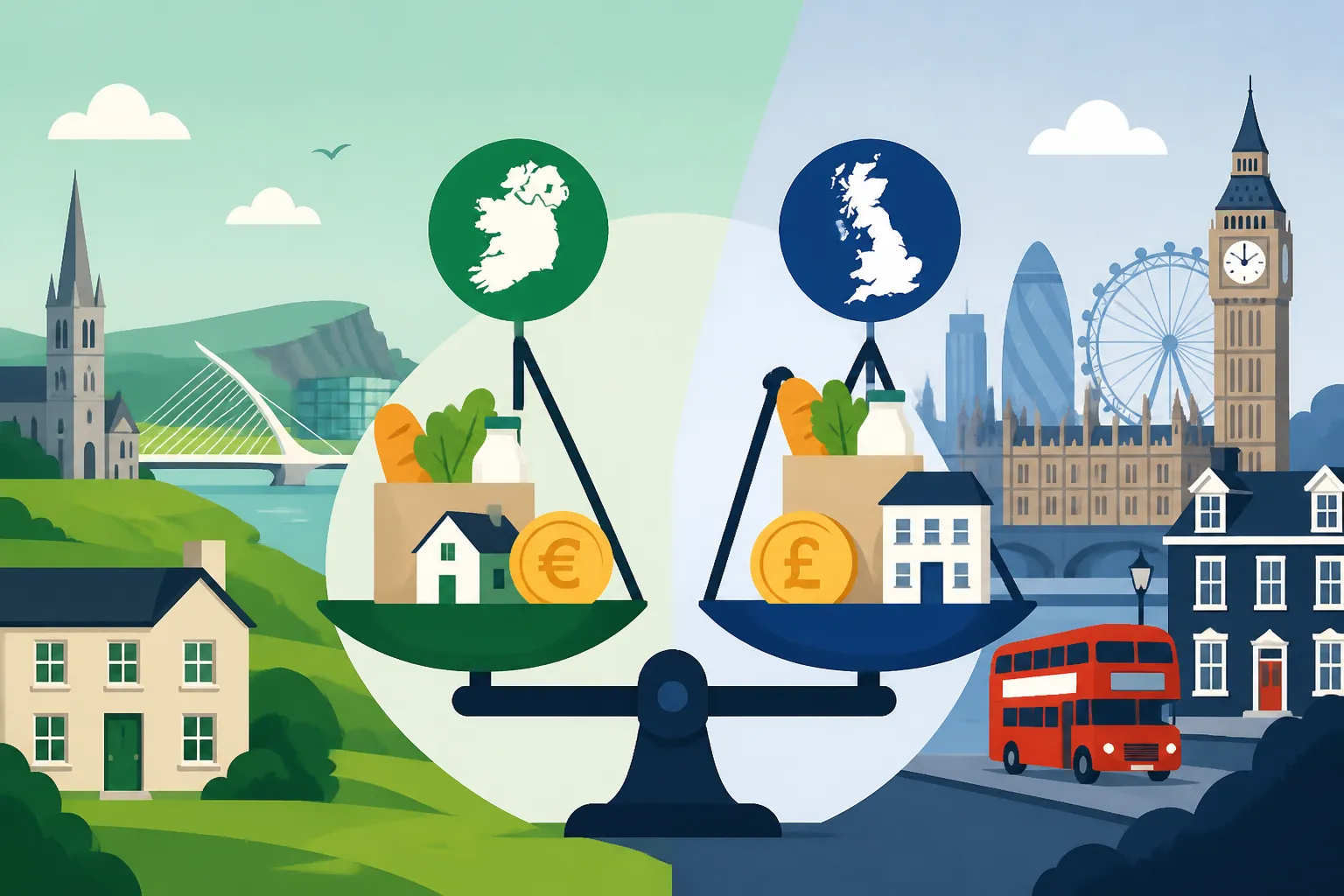
What Is the Cost of Living in Ireland vs the UK?
Oh, the age-old question that keeps many an expat awake at night, staring at spreadsheets and currency conversion apps! If you're pondering a move to Ireland from the UK, or vice versa, you're not alone in trying to decode the labyrinthine costs of daily life. It’s not just about what you earn, but what’s left in your pocket after the bills are paid, and frankly, both countries have their ways of making your wallet feel a bit lighter. This guide is here to untangle the real differences in the cost of living between Ireland and the United Kingdom, from the big-ticket items like housing to the everyday groceries.
The Big Picture: Overall Cost of Living Comparison
When you first start looking at Ireland and the UK, they seem quite similar on paper, geographically close, shared language (mostly!), and a lot of cultural overlap. But scratch beneath the surface, especially when it comes to your wallet, and you’ll find some stark differences. It’s less about one being universally "cheaper" and more about what is cheaper and where.
Housing: The Elephant in the Room
Let's not beat around the bush; housing is probably the single biggest factor influencing your cost of living in both Ireland and the UK, and it's almost always where the most significant chunk of your income disappears. Both countries are experiencing severe housing shortages, which drives up rental prices and property values, especially in major cities.
In Ireland, particularly in Dublin, the rental market is notoriously competitive and expensive. You might find yourself paying prices that rival or even exceed those in many parts of London for a comparable property, especially if you're looking for something central or a family home. For instance, a one-bedroom apartment in central Dublin could easily set you back €1,800-€2,200 per month or more. When you compare this to, say, Manchester or Glasgow in the UK, where a similar apartment might be £900-£1,200, the difference is palpable. Even compared to London, while the absolute highest rents in London are likely steeper, Dublin's average rental cost for its size can feel disproportionately high. Our guide, "How Much Does It Cost to Rent in Dublin in 2026?", delves into this quite a bit.
Moving further afield, cities like Cork and Galway in Ireland also have high rental costs, often comparable to larger regional UK cities like Bristol or Edinburgh. However, once you venture out into more rural areas in both countries, prices tend to drop considerably.
Buying a house is a different beast entirely. Property prices across Ireland have seen significant increases in recent years. While the UK also has an expensive property market, particularly in the south-east, the Central Bank of Ireland's mortgage rules can be a bit stricter for first-time buyers, requiring higher deposits and adhering to stricter loan-to-income ratios. This can make entering the property market challenging for expats in both nations. If you're thinking of taking the plunge, you'll find a lot of useful insights in our comprehensive guide on "How to Buy a House in Ireland as a Foreigner: The Full Guide (2027)". The bottom line for housing? Prepare for a significant outlay in both, but Dublin's rental market, for its scale, often feels particularly unforgiving compared to many UK cities outside of London. For a deeper understanding of the struggles, check out our piece on "Understanding the Irish Rental Market and the Housing Shortage (2027)".
Groceries and Everyday Essentials
When it comes to filling your fridge, the comparison gets a bit more nuanced. Generally, the UK tends to have slightly lower prices for staple groceries, thanks to its larger retail market and fierce competition among supermarket giants like Tesco, Sainsbury's, Asda, and Morrisons. You might find items like milk, bread, eggs, and certain meats a few pence or euros cheaper across the Irish Sea.
In Ireland, while you have international players like Tesco and Lidl, you also have strong domestic brands like SuperValu and Dunnes Stores. While these offer excellent quality and often support local producers, their prices for certain items can sometimes be a bit higher. Anecdotally, many expats report that their weekly shop tends to be a bit more expensive in Ireland, especially for imported goods or specialty items. Fresh produce can sometimes see more fluctuation in price due to seasonality and sourcing.
However, it’s not all one-sided. Certain goods might be competitively priced in Ireland, particularly some dairy products. The overall feeling, though, is that your grocery budget might stretch a little further in the UK, especially if you’re a savvy shopper hunting for deals at different supermarkets.
Transport: Getting Around
How you get around can significantly impact your monthly expenses. Both countries offer robust public transport networks, but their costs and efficiency can vary.
Public Transport:
In the UK, cities like London boast an extensive, albeit expensive, public transport system (think Tube, buses, DLR, Overground). An Oyster card or contactless payment makes travel seamless, but daily caps and monthly passes can still be pricey. In regional UK cities, public transport is often more affordable.
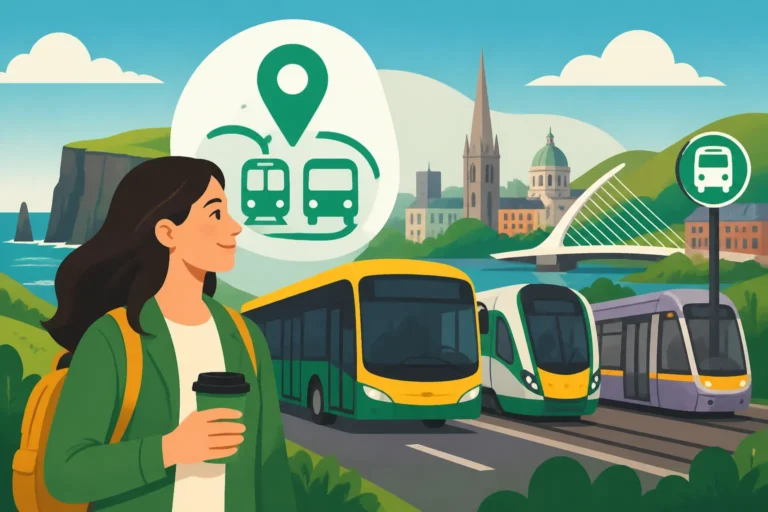
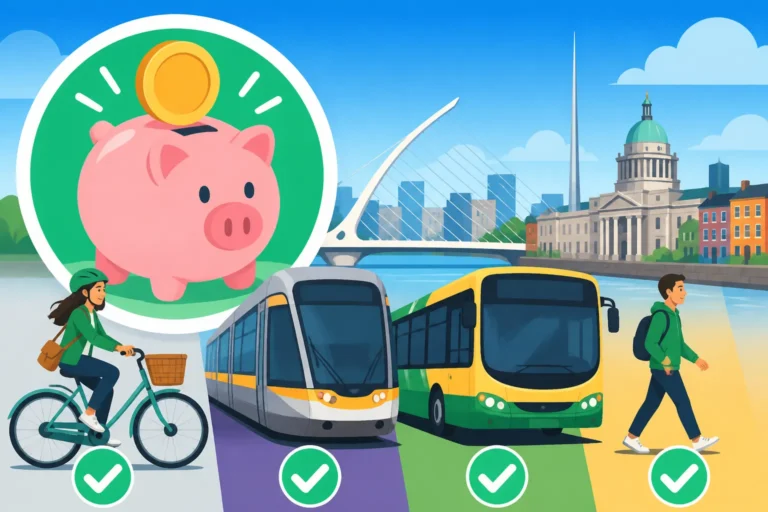
Ireland's public transport system, particularly in Dublin, comprises buses, the Luas (tram), and the DART (commuter rail). Using a Leap Card makes it more economical than single fares. While efficient for getting around the city, a monthly pass for Dublin Bus might be comparable to a TFL Zone 1-2 pass in London. Outside of Dublin, public transport can be less comprehensive, making a car more of a necessity. Our guide "The Expat Guide to Public Transport in Ireland" gives you a good overview of your options.
Car Ownership:
This is where Ireland can feel significantly more expensive. Fuel prices are consistently high in both countries, but historically, they have often been slightly higher in Ireland. The real shock for many expats in Ireland comes with car insurance. It can be incredibly expensive, especially for new drivers or those with foreign driving licenses, often significantly more than in the UK, even for drivers with a clean record. Motor tax (road tax) is also a factor, varying by engine size and emissions.
In the UK, car insurance, while still a considerable expense, tends to be more competitive. Importing a car to Ireland can also incur significant Vehicle Registration Tax (VRT), adding another layer of cost that you wouldn't necessarily face when moving within the UK. If you're planning to bring or buy a car, make sure to read "Driving in Ireland: Licences, Registration and Rules for Expats (2027)".
Deeper Dive: Specific Expenses
Beyond the big three of housing, food, and transport, countless smaller expenses add up. It’s these daily costs that really define the rhythm of your financial life in your new home.
Utilities and Household Bills
Utility bills are a universal pain, and unfortunately, neither Ireland nor the UK are immune to rising energy costs. However, there can be subtle differences.
- Electricity & Gas: Ireland typically has slightly higher electricity and gas prices than the UK. This is often attributed to its smaller market and reliance on imported energy. You'll typically pay for electricity through providers like ESB Networks or Bord Gáis Energy, and gas is generally provided by Bord Gáis Energy or Flogas. In the UK, you have a wider array of providers like British Gas, EDF, E.ON, etc., often leading to more competitive deals, though recent global events have impacted both markets.
- Broadband & Mobile Phones: Internet and mobile services are generally competitive in both countries. In Ireland, providers like Eir, Vodafone, and Virgin Media offer various broadband and mobile packages. The UK also has a competitive market with similar global players and local ones. Prices for high-speed fibre broadband are comparable, but some expats report that UK mobile plans might offer slightly better value for data allowances. Don't forget, when you're first moving and getting set up, an eSIM from a provider like Airalo can be a lifesaver to stay connected immediately without hunting for a local SIM. For a deeper dive into home setup, check out "The Expat Guide to Setting Up Utilities (Electricity, Gas, Water) in Ireland".
- TV Licence: Both countries have a TV Licence fee. In Ireland, it’s currently €160 annually, and in the UK, it's £169.50 annually. This is a mandatory fee if you watch live television or use certain streaming services.
Healthcare and Insurance
Healthcare is a fundamental concern for any expat, and the systems in Ireland and the UK, while both publicly funded, operate quite differently in practice.
The UK's National Health Service (NHS) is largely free at the point of use for residents, covering GP visits, hospital care, and most prescriptions (though prescription charges apply in England for those not exempt). While waiting lists for certain procedures can be long, the core principle is universal access without direct payment.
In Ireland, the public healthcare system (HSE) is a mixed model. While hospital stays are generally free for residents, you’ll typically pay a GP visit fee (around €60-€70) unless you qualify for a Medical Card or GP Visit Card. Accident & Emergency (A&E) visits also incur a charge unless you are admitted to hospital. Prescription medications have charges, though the Drugs Payment Scheme caps monthly costs. Because of these out-of-pocket expenses and often longer public waiting lists, many expats in Ireland opt for private health insurance from providers like VHI, Laya Healthcare, or Irish Life Health to get quicker access to specialists and private hospital care. This adds a significant cost to your monthly budget, which is less common for UK residents relying solely on the NHS. For a detailed comparison, see "Public vs Private Healthcare in Ireland: Which Should Expats Choose?" and our comprehensive guide, "The Complete Guide to Healthcare in Ireland for Expats (2027)".
Dining Out, Entertainment, and Lifestyle
Ah, the fun stuff! Socialising and enjoying your new surroundings are vital for expat life, but what will it cost you?
- Dining Out: Dublin's restaurant scene can easily rival London's in terms of price, especially for mid-to-high range establishments. A casual dinner for two with drinks might set you back €70-€100 in Dublin, while a similar experience in a non-London UK city might be £50-£80. The iconic pint of Guinness is also a topic of much discussion; while prices vary, a pint in Dublin often costs €6-€7, which is generally more expensive than in many UK pubs outside central London.
- Coffee & Takeaways: Your daily coffee habit might pinch a little more in Ireland, with specialty coffees often costing €3.50-€4.50. Takeaway meals are also generally comparable, perhaps slightly higher in Ireland.
- Entertainment: Cinema tickets, theatre, concerts, and gym memberships usually fall into a similar price bracket across both countries, with major city centres always being at the higher end. However, access to free cultural events or slightly cheaper local sports activities might vary regionally.
Salary, Taxes, and Purchasing Power
It's all well and good to compare costs, but it means little without considering what you'll earn and how much of it you'll get to keep.
Average Salaries and Income Tax
Salaries are a tricky one, as they vary wildly by industry, experience, and location. Broadly speaking, major cities like London often boast higher nominal salaries than Dublin, especially in sectors like finance and tech. However, this is usually offset by London's exceptionally high cost of living, particularly housing.
In Ireland, sectors like tech, pharmaceuticals, and finance also offer very competitive salaries, especially in Dublin, Cork, and Galway. For many roles, the average salary in Ireland might be slightly lower than in London, but potentially higher than in many regional UK cities. For a full picture of the Irish job market, check out "The Complete Guide to Working in Ireland as a Foreigner (2027)".
Taxes: This is a crucial area. Both countries have progressive income tax systems, but the structures and rates differ.
In the UK, you have Income Tax and National Insurance contributions. The personal allowance (tax-free threshold) is generally higher in the UK than in Ireland.
In Ireland, you'll encounter three main deductions:
- Income Tax (PAYE): Applied at a standard rate (20%) and a higher rate (40%) above certain thresholds.
- Universal Social Charge (USC): An additional tax on gross income, with various rates depending on income level.
- PRSI (Pay Related Social Insurance): Contributions towards social welfare benefits, similar to National Insurance.
When you add these up, many expats find that the combined tax and social security deductions in Ireland can be quite significant, potentially leaving them with less net income than they might expect for a similar gross salary in some parts of the UK. For more on this, our "The Complete Guide to Taxes in Ireland for Expats (2027)" is indispensable.
The Value for Money Equation
This is the ultimate question, isn't it? Is a higher gross salary in London worth it if your rent eats up an even larger percentage? Or is a slightly lower gross salary in Ireland still enough to give you a better quality of life and more disposable income?
The answer, frustratingly, depends entirely on your personal circumstances, lifestyle, and priorities.
- For single professionals: If you're able to find house shares in major cities, the lower individual housing cost might make the UK (outside London) feel more affordable. Dublin's house-sharing market is also very competitive.
- For families: Space is a huge factor. Access to larger, more affordable housing, combined with school choices and childcare costs, can swing the balance. Childcare costs are notoriously high in both countries.
- Quality of Life: Beyond the numbers, consider what you value. Do you prefer the fast pace and vast opportunities of London, or the slightly more relaxed, community-focused vibe of many Irish towns and cities? The "cost of living" isn't just financial; it's about your overall experience.
While Dublin might have higher housing costs and potentially higher overall taxation, it also boasts a thriving economy, beautiful natural landscapes a stone's throw away, and a unique cultural charm that many find irresistible.
Navigating the Move: Practical Considerations
Deciding between Ireland and the UK is a huge step, and the practicalities of the move itself come with their own set of costs.
Moving Costs and Initial Setup
Whether you're moving from a third country to either Ireland or the UK, or even between the two, there will be significant upfront expenses.
- Shipping Belongings: The cost of hiring an international removal company will depend on the volume of your possessions and the distance. This can range from a few hundred euros/pounds for a few boxes to several thousands for a full household container. Services like Sirelo can help you compare quotes from various moving companies, making this part of the process a bit less daunting.
- Flights and Temporary Accommodation: Factor in the cost of flights for yourself and your family, plus any initial temporary accommodation (like Airbnbs or hotels) while you secure long-term housing. This can be substantial, especially in high-demand cities.
- Visa and Immigration Fees: Depending on your nationality, you might need to factor in visa application fees and other immigration-related costs, which can add up. Our comprehensive guide on "The Complete Visa and Immigration Guide for Relocating to Ireland (2027)" can offer clarity on this side.
Connectivity for Expats
Once you land, one of the first things you'll want to sort out is how to stay connected. Getting a local SIM card is crucial, but before you get your PPSN (Personal Public Service Number) in Ireland or your National Insurance Number in the UK, and before you've even picked a provider, you might need an immediate solution. This is where eSIMs really shine. Using a service like Airalo allows you to purchase a data plan for Ireland or the UK before you even leave home, activate it instantly upon arrival, and hit the ground running with internet access. It’s incredibly convenient for navigating, communicating with new landlords or employers, and just generally reducing the stress of those first few days.
No matter which country you choose, a deep dive into "The Complete Guide to Cost of Living in Ireland for Expats (2026)" will give you a detailed breakdown of expenses specific to Ireland. The cost of living is a complex tapestry woven with individual choices, national policies, and global economic winds. While the UK might generally offer slightly cheaper groceries and a 'freer' public healthcare system, Ireland's unique charm, thriving job markets in certain sectors, and overall quality of life make it a compelling choice for many. Ultimately, it’s about weighing those financial trade-offs against the lifestyle you're seeking.
Disclaimer
Please note that all cost estimations and comparisons provided in this article are approximate and subject to change based on market fluctuations, personal lifestyle choices, and specific regional variations. While every effort has been made to provide accurate and up-to-date information, readers should conduct their own thorough research and consult with financial advisors for personalized advice.