How to Get Your Documents Apostilled for Irish Immigration
Oh, the sheer joy of planning a move to the Emerald Isle! It's an exciting time, full of dreams of rolling green hills, cosy pubs, and maybe even a bit of craic. But then, reality hits, and you find yourself staring at a list of documents for Irish immigration, with that one cryptic word leaping out: "apostille." It sounds complicated, a bureaucratic hurdle designed purely to test your patience, and often, it feels exactly like that. This guide is going to walk you through exactly what an apostille means, why it’s essential for your move to Ireland, and how to get those all-important stamps and seals without pulling your hair out.
Understanding the Apostille and Why It Matters for Ireland
Navigating the administrative maze when moving to a new country can be incredibly frustrating. You’ve got your job offer, your visa application is in progress, and then you're told you need your birth certificate, marriage certificate, or academic qualifications to be "apostilled." For many, this is a completely foreign concept, adding another layer of confusion to an already complex process. But trust me, understanding it now will save you a world of headaches later on when you're dealing with the Immigration Service Delivery (ISD) or applying for various services in Ireland.
The Hague Apostille Convention: A Global Standard
The term "apostille" actually comes from the Hague Convention Abolishing the Requirement of Legalisation for Foreign Public Documents, often just called the "Apostille Convention." This international treaty, established in 1961, simplifies the process of authenticating documents for use in foreign countries. Before this convention, if you needed to use an official document from your home country in another country, you'd often have to go through a complex "legalisation" process involving multiple government departments and even the foreign country's embassy or consulate. It was a tedious, costly, and time-consuming affair.
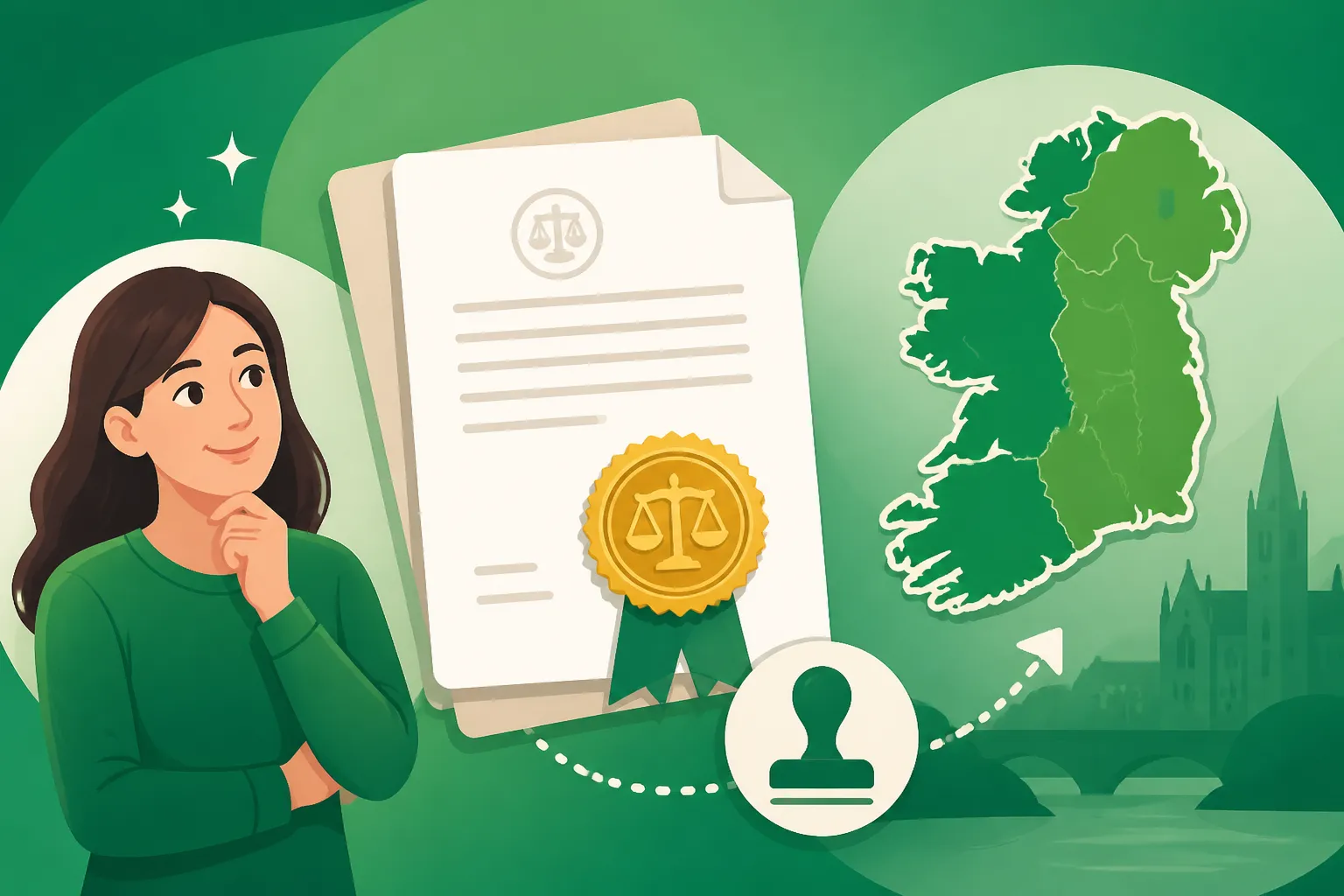
The Apostille Convention cut through all that red tape. For countries that are signatories to the convention (and both Ireland and many other nations are), a single certification – the apostille – is all that's needed to prove the authenticity of the signature, the capacity in which the person signing the document acted, and, where appropriate, the identity of the seal or stamp which the document bears. It's essentially a universally recognised certificate that confirms your public document is legitimate and can be accepted by another member country without further authentication. Think of it as a golden seal of approval that says, "Yes, this is real, you can trust it."
Ireland's Specific Requirements for Foreign Documents
Because Ireland is a signatory to the Hague Apostille Convention, it generally accepts apostilled documents from other signatory countries. This is great news, as it means you typically won't need to go through the older, more cumbersome process of full legalisation (which we'll touch on later). When Irish immigration officials, universities, employers, or other authorities ask for an apostilled document, they are looking for this specific certification attached to your original document or a certified copy.
The requirement for an apostille stems from the need to prevent fraud and ensure that all official documents submitted are genuinely issued by a competent authority in your home country. Imagine the chaos if anyone could just submit a homemade birth certificate! For vital processes like obtaining an Irish Residence Permit (IRP) card, applying for Irish Citizenship: Naturalisation and Citizenship by Descent Explained, or registering for certain services, the integrity of your documents is paramount. So, while it feels like another hurdle, it's a necessary step to maintain the security and validity of official processes in Ireland.
Key Documents That Typically Need an Apostille for Irish Immigration
It's easy to feel overwhelmed by the sheer volume of paperwork involved in an international move. Knowing which documents actually require an apostille for Irish immigration purposes is half the battle won. The answer isn't a simple 'all of them' or 'none of them'; it depends on what you're applying for and what country your documents are coming from. The general rule of thumb is that if a document is a public record issued by a government authority in your home country and you need to present it as proof of identity, civil status, or qualifications in Ireland, it will likely need an apostille.
Personal Identity and Civil Status Documents
These are often the first documents that come to mind because they are fundamental to establishing your identity and personal circumstances in a new country. When you're making the big move, organising your life with a reliable relocation service like Sirelo can help you keep track of all your documents.
- Birth Certificates: Almost universally required, especially if you're applying for family visas, residency, or sometimes even just registering for a PPS number. Your birth certificate proves your identity, parentage, and place of birth.
- Marriage Certificates: If you're moving with your spouse, or if your spouse is joining you later through Family Reunification in Ireland: Bringing Your Spouse and Children, your marriage certificate will absolutely need to be apostilled. This proves the legal validity of your marriage.
- Divorce Decrees: Similarly, if you're divorced, the official decree proving the dissolution of your previous marriage will likely need an apostille for official recognition in Ireland.
- Death Certificates: If you're a widow/widower and your civil status needs to be proven for official applications, a death certificate, particularly if it's for a pension or inheritance claim, would need this certification.
- Power of Attorney: If you've granted someone power of attorney in your home country that needs to be recognised legally in Ireland, this document will also require an apostille.
These personal documents are crucial for virtually every official interaction you'll have in Ireland, from initial visa applications to longer-term residency.
Educational and Professional Credentials
For many expats, moving to Ireland is all about career opportunities or further education. Therefore, proving your academic achievements and professional standing is incredibly important.
- Degrees and Diplomas: Whether you're coming to Ireland to study or work, your university degrees, diplomas, and sometimes even transcripts will almost certainly need an apostille. This validates that your qualification is legitimate and was issued by a recognised educational institution. If you're trying to get How to Get Your Foreign Qualification Recognised in Ireland, an apostille is a non-negotiable first step.
- Professional Certificates: If your profession requires specific licensing or certification (e.g., medical professionals, engineers, teachers), any certificates proving these qualifications will likely need an apostille. This is critical for getting your professional credentials recognised and being able to practise your profession legally in Ireland.
- References/Letters of Good Standing: In some cases, particularly for certain regulated professions, a letter of good standing from a previous employer or professional body might be requested, which could also need an apostille to verify its authenticity.
Always check the specific requirements of your Irish employer, educational institution, or professional regulatory body, as they might have additional or slightly different demands regarding the certification of your qualifications.
Legal and Financial Records
While less common for every expat, certain legal and financial documents may also require an apostille depending on your circumstances.
- Police Clearance Certificates / Certificates of Character: Many visa and immigration applications, especially for long-term residency or The Complete Guide to Irish Visas and Immigration Permission for Expats (2027), will ask for a police clearance certificate from your home country (and any country you've lived in for a significant period). This document, proving you have no criminal record, often needs an apostille.
- Court Documents: Any official court orders or judgments that need to be enforced or recognised in Ireland would require an apostille. This could include adoption papers, custody orders, or civil judgments.
- Company Registration Documents: If you're an entrepreneur or self-employed and need to register your foreign company in Ireland, the official company registration documents might need an apostille to verify their legitimacy.
- Bank Statements or Financial Affidavits: While usually not apostilled, in very specific cases where proof of funds needs an extra layer of authentication for a high-value transaction or investment visa, an apostille on a bank's official statement or a financial affidavit might be requested. However, this is quite rare for standard immigration.
Remember, the need for an apostille isn't always immediately obvious. When in doubt, always clarify with the specific Irish authority requesting the document. It's far better to be proactive than to face delays because a crucial piece of paper isn't properly certified.
Here's a quick overview of common documents and their typical apostille needs:
| Document Type | Typical Need for Apostille in Ireland | Common Issuing Authority (Home Country) |
|---|---|---|
| Birth Certificate | High | Vital Statistics Office, Civil Registry |
| Marriage Certificate | High | Vital Statistics Office, Civil Registry |
| Divorce Decree | High | Court, Legalisation Department |
| Degree/Diploma | High | University Registrar, Ministry of Education |
| Professional Certificates | High | Professional Body, Licensing Authority |
| Police Clearance Certificate | High | National Police/Law Enforcement Agency |
| Power of Attorney | Medium (if to be used legally) | Notary Public (then apostille by state/federal) |
| Transcripts | Medium (often part of degree process) | University Registrar |
| Death Certificate | Low (specific cases) | Vital Statistics Office, Civil Registry |
| Bank Statements | Very Low (specific cases) | Bank (then apostille by state/federal on affidavit) |
The Practical Steps to Get Your Documents Apostilled
Alright, now that you know what an apostille is and which documents likely need one, let's get down to the brass tacks: how do you actually get one? This is where many expats get tripped up, because the process isn't universally identical across all countries. It largely depends on where your document originated. However, there's a general framework you can follow to ensure you're on the right track.
Identifying the Competent Authority in Your Home Country
The very first and most crucial step is to identify the "competent authority" in your home country responsible for issuing apostilles. This is the government body officially designated by your country to affix the apostille certificate. It's rarely a local city council or a small notary office, but rather a more centralised government department.
- For the United States: This process varies by state. For documents issued by a state (like a birth certificate or marriage license), you'll need to contact the Secretary of State's office in that specific state. For federal documents (like FBI background checks), you'll contact the U.S. Department of State in Washington, D.C. Each state Secretary of State's website will have specific instructions, fees, and processing times.
- For the United Kingdom: The Foreign, Commonwealth & Development Office (FCDO) is the competent authority for all UK documents. They have a legalisation office that handles all apostille requests. You can usually apply online or by post.
- For Canada: Canada is not a signatory to the Hague Apostille Convention. This is a common point of confusion for Canadians moving to Ireland. Instead of an apostille, Canadian documents require "legalisation" (also known as authentication and consular legalisation). This involves two steps: first, authentication by Global Affairs Canada in Ottawa, and then legalisation by the Irish Embassy or Consulate in Canada. This is a critical distinction that can cause major delays if not understood early.
- For Australia: The Department of Foreign Affairs and Trade (DFAT) is responsible for apostilles. They have offices in various cities, and you can apply online or in person.
- For India: The Ministry of External Affairs (MEA) is the main authority. However, often documents need to be attested by various state-level departments (e.g., Home Department, HRD) before the MEA will apostille them. It's a multi-layered process.
- For South Africa: The Department of International Relations and Cooperation (DIRCO) handles apostilles.
Always do a quick search for "apostille [your country name]" or "document legalisation [your country name]" to find the most up-to-date information for your specific jurisdiction. Look for official government websites, as third-party services can be costly and sometimes unreliable if not accredited.
Navigating the Application and Verification Process
Once you've identified the competent authority, the next step is the actual application. This typically involves submitting your original document (or a certified true copy, depending on the document and the authority's rules) along with an application form and the relevant fee.
- Prepare Your Documents: Ensure your documents are in perfect condition. Any damage, alterations, or unofficial markings can lead to rejection. For some documents, especially academic ones, you might need to get them notarised before they can be apostilled. For instance, a university degree might need to be verified by a local notary public who certifies it's a true copy of the original before the state authority will apostille it.
- Complete the Application Form: Fill out the apostille application form thoroughly. Double-check all details to avoid delays. These forms are usually available on the competent authority's website.
- Pay the Fee: There will be a fee associated with each apostille. These fees vary significantly by country and sometimes even by document type. Be prepared for this cost, as it can add up if you have multiple documents.
- Submit Your Application: Depending on your country, you might be able to submit your application online, by mail, or in person. Online applications are becoming more common and often more efficient. If mailing, ensure you use a secure, trackable service.
- Await Processing: Processing times can vary wildly, from a few days to several weeks, or even months in some cases. Factor this into your overall timeline for The Complete Guide to Moving to Ireland: Your First 90 Days (2027). It's always wise to start this process as early as possible.
- Receive and Verify: Once processed, you'll receive your document back with the apostille certificate securely attached. This certificate is typically a stamp or a separate page affixed to your document, bearing the official seal and signature of the competent authority. Verify all details on the apostille, ensuring it correctly identifies your document and the issuing authority.
For those moving from a country that isn't part of the Hague Convention, like Canada, your process will look a little different. Instead of a single apostille, you'll need full legalisation, which means: (1) getting your document authenticated by your home country's foreign affairs department, and then (2) getting it legalised by the Irish Embassy or Consulate in your home country. This extra step adds more time and cost.
Common Pitfalls and Pro Tips
Even with a clear process, things can still go wrong. Trust me, I’ve seen it all, from documents stuck in transit to applications rejected for tiny errors.
- Incorrect Document Preparation: One of the biggest pitfalls is submitting a document that isn't ready for an apostille. For example, a photocopy that isn't a certified true copy, or a document that lacks the required official signature or seal from its original issuing body. Always ensure you're sending the original public document unless the authority explicitly states a certified copy is acceptable.
- Choosing the Wrong Authority: Sending your document to the wrong apostille authority (e.g., a federal document to a state office in the US) will simply lead to rejection and wasted time.
- Missing or Incorrect Information: A small typo on the application form, an outdated address, or forgetting to include the payment can all cause significant delays. Double-check everything.
- Underestimating Processing Times: Don't wait until the last minute. Immigration processes are rarely fast, and waiting for an apostille can be a major bottleneck. Build in plenty of buffer time.
- Lost in Transit: If mailing documents, always use a reputable courier service with tracking and consider purchasing insurance. Losing an original birth certificate in the mail is a nightmare nobody wants.
- Forgetting Translations: An apostille only certifies the authenticity of the document's origin, not its content. If your document is not in English (or Irish), you will likely need a certified translation by a professional translator once it has been apostilled. This is a separate step and cost.
Pro Tip: Take clear photos or scans of all your documents before sending them off for apostille, and after they return with the apostille. This way, you have a digital record of everything, which can be invaluable for your own peace of mind and if any issues arise. Keep all original documents and their apostilles in a safe, easily accessible place. When packing your life with the help of a moving company like Sirelo, ensure these critical papers travel with you personally, not in a shipping container.
Beyond the Apostille: Full Legalisation and Other Considerations
While the Apostille Convention has simplified things for many, not every country is a signatory. And even if your country is, there might be specific situations where an apostille isn't the final word or isn't even required. Understanding these nuances can prevent unnecessary delays and costs.
Consular Legalisation for Non-Hague Countries
If your home country is not a signatory to the Hague Apostille Convention, then the simplified apostille process isn't available to you. Instead, you'll need to go through what's known as "full legalisation" or "consular legalisation." This is the older, more complex, two-step process that the Apostille Convention sought to replace.
- Authentication by Your Home Country's Foreign Affairs Ministry: First, your document must be authenticated by the Ministry of Foreign Affairs (or equivalent) in your home country. This step certifies the authenticity of the signature and seal of the official who issued your original public document. It's essentially your country's government saying, "Yes, this document and the official who signed it are legitimate."
- Legalisation by the Irish Embassy or Consulate: Once your document has been authenticated by your home country, you then need to take it to the Irish Embassy or Consulate in your home country. They will then "legalise" the document, which means they are confirming that your foreign affairs ministry's authentication is legitimate and that the document can now be officially recognised for use in Ireland.
As you can imagine, this two-step process is more time-consuming and often more expensive than a single apostille. It requires coordination between multiple government bodies and can involve sending documents to different cities. For example, if you're a Canadian, you'd send your documents to Global Affairs Canada for authentication, and then to the Embassy of Ireland in Ottawa for legalisation. Always budget extra time and money if you're coming from a non-Hague country.
When an Apostille Might Not Be Required or What to Do Instead
It's tempting to get every single document apostilled "just in case," but that can be costly and unnecessary. There are situations where an apostille might not be required, or where alternative forms of certification are accepted.
- Documents from EU/EEA Member States: Thanks to EU regulations, certain public documents issued by authorities in an EU/EEA member state (like a birth certificate, marriage certificate, or certificate of no impediment to marriage) do not require an apostille for use in another EU/EEA country, including Ireland. This is a massive simplification for those moving within the European Economic Area. You'll often see specific EU multi-lingual standard forms that can be requested, or certified copies that bypass the need for an apostille.
- Private Documents: Documents that are not considered "public documents" (e.g., a personal letter, a company's internal memo, or an unofficial reference letter) cannot be apostilled. The apostille is specifically for official public documents issued by a government authority. If you need a private document certified for some reason, you'd typically go through a local notary public in Ireland who can certify your signature or a copy of the document.
- Employer or University Discretion: In rare cases, an employer or university might waive the apostille requirement for certain documents if they have direct means of verifying authenticity or if the document is only for internal purposes and not for submission to the Irish state. However, do not assume this will be the case; always confirm in writing. It's much safer to get the apostille if you're unsure.
- Copies vs. Originals: An apostille is usually affixed to the original document. If you need multiple certified copies for different applications, you'll often need to make certified true copies (sometimes notarised) of the apostilled original, rather than getting multiple apostilles on copies of the original. Clarify this with the requesting authority.
Dealing with Translations and Certified Copies
Once you have your beautifully apostilled (or legalised) documents, there's one more crucial step to consider: translation. If your documents are not in English or Irish, they will almost certainly need to be translated.
- Certified Translations: This isn't just a matter of running your document through Google Translate. Irish authorities require certified translations. This means the translation must be done by a professional, accredited translator who certifies that it is a true and accurate translation of the original document. The translator typically stamps and signs the translation, and provides their contact details and accreditation.
- Where to Get Translations: You can often find accredited translators in your home country or in Ireland. Embassies or consulates sometimes maintain lists of approved translators. Companies like Translate Ireland are examples of professional translation services that can provide certified translations accepted by Irish authorities.
- Order Matters: Crucially, get your document apostilled first, then translated. The apostille certifies the original document (or certified copy). The translation then translates that certified document. If you translate first and then apostille, the apostille will only refer to the untranslated document, and the translation itself might then need its own certification or an affidavit to attest to its accuracy. Always check the specific requirements of the Irish body you are submitting to, but the sequence of "Original -> Apostille -> Translation" is generally the safest bet.
Integrating Apostilled Documents into Your Wider Irish Immigration Plan
Getting your documents apostilled is a significant achievement on your journey to Ireland, but it's just one piece of a much larger puzzle. Thinking about how these documents fit into your overall immigration and relocation strategy will help you manage expectations and minimise stress. Remember, moving to Ireland is exciting, but it demands careful planning.
The Importance of Timeliness and Document Organisation
As I've probably hammered home enough by now, time is of the essence. Delays in getting your documents apostilled can have a domino effect, pushing back visa appointments, job start dates, and even your ability to get an IRP Card and Registering with Immigration (2026).
- Start Early: Begin the apostille process as soon as you know which documents you'll need. Don't wait until your visa interview is scheduled.
- Create a Master Checklist: Keep a detailed list of all documents required, their current status (e.g., "sent for apostille," "awaiting translation," "ready for submission"), and their respective deadlines.
- Digital and Physical Copies: Always keep high-quality digital scans of all original and apostilled documents. Store them securely in cloud storage and on a portable drive. Physically, keep your originals and apostilles in a waterproof, fireproof document holder. When you travel to Ireland, these vital documents should be in your carry-on luggage, not in checked baggage or shipped containers. This is non-negotiable!
- Multiple Copies: Once apostilled and translated (if necessary), consider making several certified true copies of these complete document sets (original + apostille + translation). Some applications might require you to submit physical copies, and having extras means you don't have to scramble if one gets lost or you need to submit to multiple authorities.
Thinking ahead about how your documents will be used throughout your relocation process is crucial. Whether you're applying for How to Get an Employment Permit to Work in Ireland (2027), a critical skills permit, or even a How to Apply for a Spouse Visa to Join My Partner in Ireland?, having these papers in order is foundational.
Planning for Arrival: Housing, Healthcare, and Beyond
Your apostilled documents are key to getting permission to live and work in Ireland, but your journey doesn't end there. Once you land, a whole new set of tasks awaits, many of which rely on the official status you've just established.
- Settling In: With your immigration status secured, you can focus on other critical aspects of settling into your new life. This includes finding accommodation, opening a bank account, and sorting out your transport. You'll need to know How to Get an Irish Driving Licence? for example. Relocation specialists can be invaluable here. Sirelo can connect you with reliable movers and provide resources to help you manage everything from finding a new home to shipping your belongings, ensuring your focus can be on the bigger picture of your new life.
- Healthcare is Paramount: One of the most important things to sort out upon arrival is your healthcare. While Ireland has a public healthcare system, many expats opt for private health insurance for peace of mind, shorter waiting lists, and access to a wider range of services. Companies like Cigna Global offer comprehensive international health insurance plans that can cover you from the moment you arrive, ensuring you have access to quality care without the worry of unexpected medical bills. Understanding How to Buy Private Health Insurance as a Newcomer in Ireland is a critical step for many.
- Long-Term Planning: As you settle, your apostilled documents may come into play again for things like applying for long-term residency (e.g., Stamp 4 after a Critical Skills Employment Permit in Ireland (2026)) or eventually for Irish Citizenship. Keeping them meticulously organised will serve you well for years to come. The initial effort you put into getting your documents correctly apostilled will pay dividends throughout your time in Ireland, making future administrative tasks significantly smoother.
Disclaimer
Please remember that immigration laws and requirements are subject to change. While every effort has been made to provide accurate and up-to-date information, this guide is for informational purposes only and does not constitute legal advice. Always consult with the official Irish Immigration Service Delivery (ISD) website, your country's competent authority for apostilles, or a qualified immigration solicitor for personalised advice regarding your specific circumstances.