How to Use Private Hospitals Like the Mater, Beacon and Blackrock in Ireland
Navigating the Irish healthcare system can feel like solving a puzzle where the pieces keep changing shape. Many expats arrive expecting a straightforward public system, only to be met with multi-year waiting lists that cause genuine anxiety. This guide solves that frustration by explaining exactly how to bypass the public queues and access elite care at Ireland's premier private hospitals.
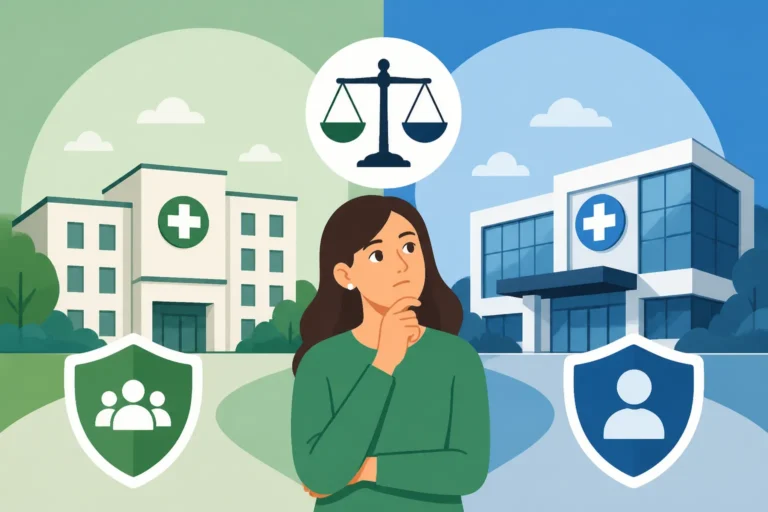
The Reality of the Two-Tier Health System in Ireland
When you first land in Ireland, the sheer complexity of the "two-tier" health system can be overwhelming. On one hand, you have the Health Service Executive (HSE), which provides public care to everyone. On the other, you have a robust private sector that operates almost like a parallel universe. For an expat, the difference isn't necessarily about the quality of the doctors—many consultants work in both systems—but rather about the speed of access and the comfort of the facilities.
The public system is often plagued by "trolley crises" and administrative bottlenecks. It is not uncommon for a non-urgent surgery to have a waiting list of eighteen months or more. This is where private hospitals like the Mater Private, the Beacon, and Blackrock Clinic come into play. They offer a way to get diagnosed, treated, and recovered in a fraction of the time. Understanding How Ireland's Health System Works: The HSE vs Private Explained (2027) is the first step in deciding which path is right for your specific medical needs.
Choosing the private route means you are essentially paying for time. You are paying to see a consultant next Tuesday instead of next year. For many of us living here, that peace of mind is worth the administrative hurdles and the insurance premiums. However, you cannot simply walk into these hospitals and demand a bed; there is a very specific "Irish way" of doing things that involves gatekeepers and paperwork.
Why Expats Often Prefer the Private Route
For those of us used to more streamlined systems in the US, UAE, or parts of Europe, the public system’s pace can be frightening. If you are here on a critical skills permit or a high-pressure tech job, you likely don't have the luxury of waiting months for an MRI. Private hospitals offer a "concierge" feel that aligns more closely with international expectations of healthcare. They provide private rooms, better catering, and significantly more flexible visiting hours.
Moreover, if you are a newcomer still waiting for your full residency status to be processed, you might find that How Ordinary Residence Affects Your Healthcare Entitlement in Ireland makes the public system slightly more complicated to navigate initially. Having a plan in place to use private facilities ensures that no matter your paperwork status with the HSE, your physical health is never on hold.
The Mindset Shift: From Public to Private
It is important to realize that in Ireland, "Private" does not mean "Exclusive to the Rich." A huge portion of the Irish population—nearly 45%—holds some form of private health insurance. It is a standard part of life here. When you discuss health with your colleagues, you’ll hear them mention their "plan" or their "excess" as casually as they talk about the weather.
If you are currently uninsured or waiting for a corporate plan to kick in, you might consider a flexible option like SafetyWing to cover gaps, especially if you are traveling frequently while settling in. While SafetyWing is excellent for nomadic transitions and unexpected emergencies, local private hospitals often require direct settlement agreements with Irish providers for elective surgeries, which we will break down later in this guide.
The Big Three: Mater Private, Beacon, and Blackrock Clinic
If you live in Dublin or the surrounding counties, these three names will come up constantly. Each has its own reputation, specialties, and "vibe." Understanding which one suits your needs can save you a lot of time during the referral process.
The Mater Private: The Specialist Powerhouse
Located on the north side of Dublin city center (with a smaller facility in Cork), the Mater Private is often considered the gold standard for complex cardiac and oncology care. It is physically connected to the public Mater Misericordiae University Hospital, which means it has access to a massive pool of academic expertise and research.
If you have a serious heart condition or require complex cancer treatment, the Mater Private is usually the first recommendation from a GP. The facility itself feels clinical and efficient. It’s a busy hospital, and while the rooms are private and high-end, the focus here is very much on high-acuity medical intervention. Because it is a "high-tech" hospital, you need to check if your insurance plan covers it, as many entry-level plans exclude the high-tech category. You can learn more about this in our guide on Understanding Private Health Insurance Plans in Ireland.
The Beacon Hospital: The Tech-Forward Choice
Located in Sandyford, South Dublin, the Beacon is the "new kid on the block" compared to the century-old institutions. It feels more like a five-star hotel than a traditional hospital. It is famous for its rapid diagnostics; they have some of the most advanced imaging technology in the country.
The Beacon is a favorite among the expat community in South Dublin and the "tech corridor." It has a dedicated private Emergency Department (A&E), which is a massive advantage. While a public A&E might have a 12-hour wait, the Beacon’s private A&E usually sees patients much faster, though you will pay a significant out-of-pocket fee (usually around €200-€250) just to walk through the door. This is a crucial distinction to understand, especially when Understanding Public Hospital Charges and the A&E Fee in Ireland.
Blackrock Clinic: The Classic Luxury Experience
Blackrock Clinic is arguably the most prestigious private hospital in Ireland. Located on the coast in South Dublin, it has a long-standing reputation for orthopedics and cardiac care. It was the first hospital in Ireland to offer many advanced surgical techniques.
The experience at Blackrock is very refined. The staff-to-patient ratio is excellent, and the environment is designed to be as low-stress as possible. For expats, Blackrock Clinic represents the pinnacle of the Irish private system. Like the Mater Private, it is classified as a high-tech hospital, meaning the costs are higher and insurance requirements are more stringent. If you are looking for The Cost of Healthcare in Ireland: A Complete Breakdown for Foreigners (2026), Blackrock will be at the higher end of that spectrum.
The Practical Path: How to Get Through the Door
You cannot simply call the Beacon Hospital and book a surgery because your knee hurts. The Irish healthcare system is built on the "Referral Model." Even if you are paying 100% out of pocket, you almost always need a gatekeeper to vouch for you.
Step 1: The GP is the Gatekeeper
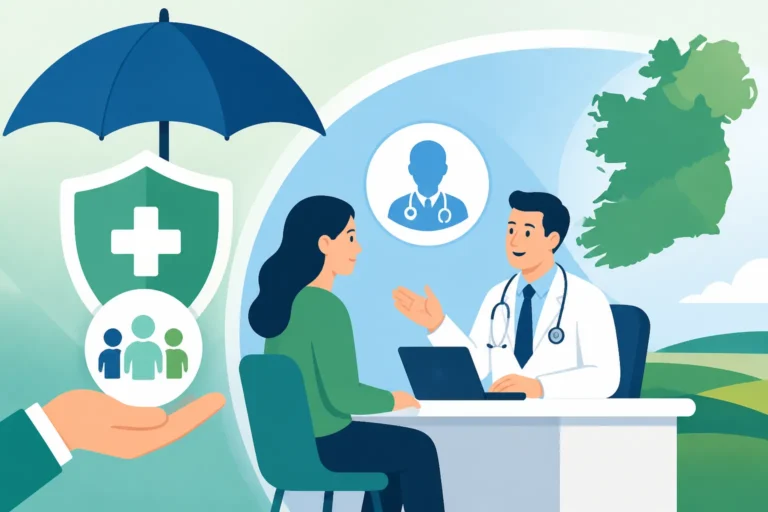
Your journey to a private hospital nearly always begins in a small local doctor's office. You must first find a doctor and go through the process of Registering with a GP in Ireland: The Complete Expat Guide (2027). During your consultation, you explain your symptoms. If the GP agrees that you need specialist intervention, you must explicitly ask: "Can you refer me privately?"
If you don't specify "private," the GP might default to the public system, and your referral letter will end up at the bottom of a very large pile. When you ask for a private referral, the GP will write a letter addressed to a specific consultant who has "admitting privileges" at a hospital like the Mater Private or Blackrock Clinic.
Step 2: Choosing Your Consultant
In the private system, you aren't just choosing a hospital; you are choosing a person. Most consultants in Ireland are independent practitioners who rent space and surgical time at these hospitals. Your GP might suggest someone, but you are well within your rights to do your own research.
Once the referral is sent, the consultant’s secretary will contact you to book an initial consultation. This first meeting is almost always an out-of-pocket expense, typically ranging from €150 to €300. Even if you have a top-tier insurance plan, you usually pay this upfront and claim a portion back later. If you are using an international plan like SafetyWing for your general health needs, make sure to keep every receipt, as the reimbursement process for specialist visits requires meticulous documentation.
Step 3: Navigating the Private A&E
One of the most direct ways to use a private hospital is through their emergency department. The Beacon and the Mater Private both offer these services. This is for when you have an urgent but non-life-threatening issue—like a broken bone, a deep laceration, or sudden severe pain—and you want to avoid the chaos of a public hospital.
When you arrive at a private A&E, you will be triaged just like in a public one, but the volume of patients is lower. You will be asked for your insurance details immediately. It is vital to know that Understanding Hospital Admission and Billing in Ireland is key here: your insurance might cover the "admission" if you are kept overnight, but it rarely covers the full cost of the initial A&E "visit" fee.
| Feature | Mater Private | Beacon Hospital | Blackrock Clinic |
|---|---|---|---|
| Primary Location | Dublin 7 (Northside) | Sandyford (Southside) | Blackrock (Southside) |
| Private A&E | Yes | Yes | No (Urgent Care only) |
| Key Specialty | Heart & Cancer Care | Diagnostics & Ortho | Ortho & Cardiac |
| Atmosphere | Clinical/Academic | Modern/High-Tech | Prestige/Traditional |
| Insurance Category | High-Tech | High-Tech | High-Tech |
Navigating Costs and Insurance Coverage
The biggest mistake expats make is assuming that because they have "Private Health Insurance," everything is free. In Ireland, the "private" system is a mix of insurance coverage, government levies, and personal "excess" payments.
Understanding Direct Settlement
The "Holy Grail" of Irish private healthcare is direct settlement. This means the hospital sends the bill directly to your insurer (VHI, Laya, or Irish Life), and you never see the six-figure invoice for your surgery. Most private hospitals have these agreements in place with the major Irish providers.
However, if you are using international insurance or a plan like SafetyWing, you may have to "pay and claim." This involves paying the hospital yourself and then seeking reimbursement. Given that a major surgery can cost €20,000 or more, this is not feasible for everyone. Always call the hospital's "Insurance Office" before you are admitted to ask: "Do you have a direct settlement agreement with my specific provider and plan?"
The Concept of the "Excess" and "Shortfall"
Even with a great plan, you will likely encounter an "excess." This is a fixed amount (e.g., €150) that you pay per admission. There is also the "shortfall," which is more common in high-tech hospitals like the Mater Private. A shortfall is a daily charge (often around €200-€300) that the insurance company refuses to pay, leaving you to cover the gap.
Before you agree to a procedure, the hospital will usually provide you with a "swipe" of your insurance card and a cost estimate. Do not skip this step. If the costs look daunting, you can check How to Claim Tax Relief on Medical Expenses in Ireland to see how you can recoup 20% of these out-of-pocket costs at the end of the year.
The "High-Tech" Hospital Trap
I mentioned this earlier, but it bears repeating: Mater Private, Beacon, and Blackrock are "High-Tech" hospitals. Many "budget" or "family" insurance plans only cover "Public" or "Private" hospitals but exclude "High-Tech." If you show up at Blackrock Clinic with a plan that only covers "Private" hospitals (like the Bon Secours or St. Vincent’s Private), you may be liable for thousands of euros in uncovered costs.
Always check your table of benefits. If you are unsure, our guide on Understanding Private Health Insurance Plans in Ireland explains how to decode these tiers. If your employer provides your insurance, don't assume it’s a "top" plan—many corporate schemes are mid-tier to save costs.
The In-Patient and Out-Patient Experience
Once you are "in" the private system, the experience changes dramatically. The administrative friction of the Irish state disappears, replaced by a much more customer-focused approach.
What to Expect During Admission
When you are admitted to a place like the Beacon, you will likely have a private room with an en-suite bathroom, a TV, and a menu that actually offers choices. You will be assigned a lead consultant who is responsible for your care. Unlike the public system, where you might see a different junior doctor every morning, your consultant will usually visit you personally once or twice a day.
This level of consistency is one of the main reasons people choose private care. You have a direct line to the person making the decisions. If you are worried about the logistics of your stay, reading about Understanding Hospital Admission and Billing in Ireland will help you prepare for the discharge process, which is often much faster than in public facilities.
Diagnostics and Out-Patient Scans
You don't have to be a "patient" in a bed to use these hospitals. They are the primary hubs for blood tests, X-rays, and MRIs. If your GP thinks you need an MRI, you can often get an appointment at the Beacon or Mater Private within 24 to 48 hours if you are paying or have insurance.
When you go for a scan, you will pay at the reception desk. Many insurance plans allow you to claim this back, but often only at a percentage (e.g., 50% or 75%). For expats who are frequently on the move or whose local insurance hasn't fully activated, having a backup like SafetyWing can provide an extra layer of security for the unexpected injuries that lead to these diagnostic needs in the first place.
Maternity Care: A Special Case
Maternity is one area where the choice between public and private is most stark. Hospitals like the Mount Carmel Clinic used to be the private go-to, but now private maternity care is usually delivered in "private wings" of large public hospitals like the Rotunda or Holles Street. However, some private consultants operate their clinics out of the Beacon or Blackrock.
If you are planning a family, you must decide early. How to Choose Between Public and Private Maternity Care in Ireland is a vital resource because the private route for childbirth involves significant consultant fees (often €3,000+) that are rarely fully covered by insurance.
Specific Considerations for Expats
As a veteran expat, I’ve seen many newcomers get "stuck" in the system because they applied their home-country logic to Ireland. Here are a few "pro-tips" for navigating the Mater, Beacon, and Blackrock successfully.
The Waiting Period Warning
If you just moved to Ireland and bought a private health insurance plan today, you cannot go to the Mater Private for a heart surgery tomorrow. There is a "waiting period" for pre-existing conditions—usually five years for those over a certain age.
However, for new conditions that arise after you join, the waiting period is usually much shorter (typically 26 weeks). If you are in that "gap" where you have a new insurance policy but aren't yet fully covered for everything, this is where having international health coverage like SafetyWing is a lifesaver. It bridges the gap for accidents and emergencies while your local Irish "clock" is ticking down. You can find more detail on this in our article on Understanding Health Insurance Waiting Periods and Lifetime Loading in Ireland.
Language and Communication
While these hospitals are all English-speaking, they are incredibly multicultural. You will find consultants and nurses from every corner of the globe. If you are struggling with medical terminology in English, don't be afraid to ask for clarification. The private sector prides itself on "patient experience," so they are generally much more patient with questions than a harried HSE doctor might be.
If you are specifically looking for a doctor who speaks your native language, you might find success by searching the consultant directories on the hospital websites. Many list the languages spoken by their specialists. For more on this, see How to Find an English-Speaking Doctor in Ireland.
Transferring Medical Records
When you arrive at a private hospital for the first time, they will have no history of your health. It is your responsibility to bring your records. I always recommend having a digital folder (Dropbox or a secure drive) with your previous surgeries, scan results, and a list of medications.
The Irish system is still surprisingly reliant on paper and fax machines. If you can hand a consultant a clear summary of your medical history from your home country, you will save hours of repetitive questioning and potentially avoid unnecessary duplicate tests. For more tips on the logistics of moving your medical life, check out How Do I Access My Medical Records in Ireland.
Safety and Quality: Are They Better?
It is a common misconception that private hospitals are "safer." In reality, for a major trauma (like a car accident) or a massive stroke, you want to be in a large public teaching hospital. The public hospitals have the massive intensive care units and the multi-disciplinary teams required for life-saving emergencies.
Private hospitals are specialized. They are perfect for "scheduled" care—think hip replacements, cardiac stents, gall bladder removals, and cancer treatments. They are "safer" in the sense that they have lower infection rates (due to private rooms) and more personalized nursing care. But always remember: in a true, immediate life-or-death emergency, the ambulance will take you to the nearest public A&E, not the Mater Private. Knowing What Should I Do in a Medical Emergency in Dublin is essential for every expat.
Summary of the Private Hospital Workflow
To make this as clear as possible, here is the exact sequence of events you should follow if you want to use these elite facilities:
- Join an Insurance Plan: Ensure it includes "High-Tech" hospitals.
- See a GP: Get a private referral letter to a specific consultant.
- Book the Consultation: Pay the consultant's fee (and keep the receipt).
- Verify Coverage: Once a procedure is recommended, call your insurer with the "Procedure Code" provided by the consultant's secretary.
- Check the "Shortfall": Ask the hospital's billing office exactly what your out-of-pocket cost will be.
- Admission: Present your insurance card and IRP (Irish Residence Permit) or passport.
- Tax Relief: Save all receipts to claim 20% back via Revenue at year-end.
By following this path, you can navigate the Irish health system with the confidence of someone who has lived here for twenty years. It might seem like a lot of steps, but once you’ve experienced the speed and comfort of the private system, it’s hard to go back to the public waiting lists.
Disclaimer
This guide is for informational purposes only and does not constitute medical or legal advice. Healthcare regulations and insurance policies in Ireland change frequently. Always verify coverage directly with your insurance provider and consult with a qualified medical professional for any health concerns. Registration and residency requirements may affect your eligibility for certain services.