Understanding the Role of the HSE in Irish Healthcare
Most expats arriving in Ireland are caught off guard by the sheer complexity of the healthcare landscape, which feels like a confusing middle ground between the UK's NHS and the American private system. You might find yourself wondering why some services are free while others cost sixty Euro out of pocket. This guide deconstructs the Health Service Executive (HSE) to help you master the public system and avoid unnecessary expenses.
What Exactly is the HSE and Why Does It Matter
The Health Service Executive, or HSE, is the massive government body responsible for providing all of Ireland's public health and social services. Unlike some countries where the "Ministry of Health" just makes the rules, the HSE actually runs the hospitals, employs the nurses, and manages the local clinics you see in every town from Letterkenny to Skibbereen. When you hear people talking about "the public system," they are talking about the HSE.
The Massive Scope of the Health Service Executive
The HSE is Ireland’s largest employer, and its reach is incredibly broad. It doesn't just manage the big acute hospitals like St. James's in Dublin or University Hospital Galway; it also handles primary care, mental health services, disability supports, and care for the elderly. For a newcomer, it is helpful to think of the HSE as a vast umbrella. Underneath that umbrella, the country is divided into different Community Healthcare Organisations (CHOs). Each CHO is responsible for the health services in a specific geographic area, which is why your experience might vary slightly depending on whether you live in North Dublin or rural County Mayo.
The organization is funded primarily through general taxation and the PRSI (Pay Related Social Insurance) contributions deducted from your paycheck. However, being a taxpayer doesn't automatically mean everything is free. The system is designed to provide a safety net, but it often requires co-payments unless you hold specific eligibility cards. This is a common point of frustration for expats who assume that because they are paying high taxes, they shouldn't have to reach for their wallet at a doctor's office. Understanding How Ireland's Health System Works: The HSE vs Private Explained (2027) is the first step in managing your expectations.
How the HSE Differs from Other National Systems
If you are coming from a country with a purely socialized medicine model, the Irish HSE system will feel fragmented. In many ways, the HSE acts as a contractor. For instance, most General Practitioners (GPs) are not actually HSE employees; they are private business owners who hold contracts with the HSE to treat public patients. This means the HSE sets the standards and pays for some of the care, but the delivery happens in a private setting. This "two-tier" nature is perhaps the most defining characteristic of Irish healthcare.
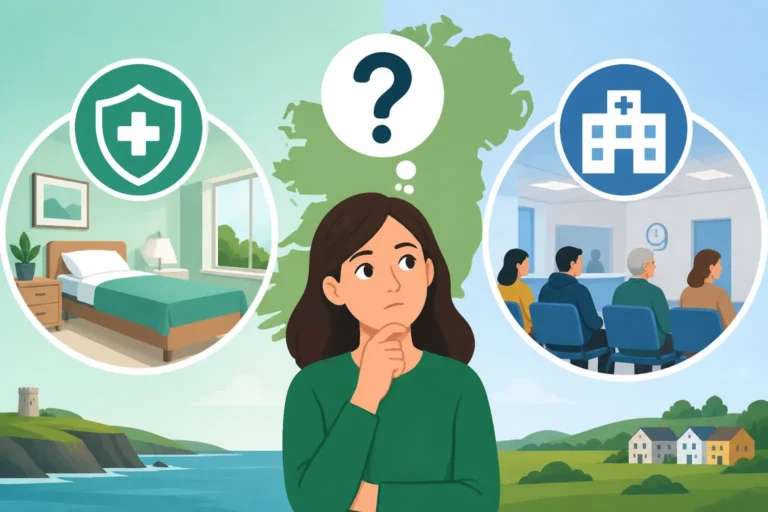
Furthermore, the HSE operates alongside a very robust private hospital sector. Hospitals like the Blackrock Clinic or the Beacon are entirely separate from the HSE, though the public system sometimes "buys" space in these hospitals to clear its own backlogs. Because of this, Public vs Private Healthcare in Ireland: Which Should Expats Choose? is a question every newcomer needs to answer based on their budget and health needs. While the HSE provides world-class emergency and complex care, it struggles with elective procedures and chronic management wait times, which is why many locals and expats opt for supplemental coverage.
The Hierarchy: From National Policy to Local Clinics
Navigating the HSE hierarchy is about knowing who to talk to when things go wrong. At the top, the Department of Health sets the policy, but the HSE executes it. For you, the most important level is the "Primary Care Team." This is a group of health professionals—doctors, nurses, physiotherapists, and social workers—who work in your local community. If you need a blood test or a dressing changed, you generally won't go to a big hospital; you will go to a local HSE Health Centre.
It is worth noting that the HSE is currently undergoing a massive reorganization into "Regional Health Areas" (RHAs). The goal is to make the system more integrated so that your records follow you from your local GP to the hospital and back again. Currently, the system can feel a bit "siloed." You might find that the HSE hospital doesn't have the notes from your HSE-funded GP visit. Patience is a virtue here; carrying your own medical history and records is a pro-tip for any expat navigating the transition.
Primary Care and the Gatekeeper System
In Ireland, the HSE relies heavily on a "gatekeeper" model. This means you cannot simply book an appointment with a specialist or walk into a hospital for a non-emergency issue. Everything starts with primary care, specifically your GP. If you attempt to bypass this system, you will likely face significantly higher fees or be turned away at the door of a specialty clinic.
Finding and Registering with a GP
The GP is the sun around which the Irish healthcare planet revolves. Your first task upon arrival should be Registering with a GP in Ireland: The Complete Expat Guide (2027). Be warned: Ireland is currently facing a shortage of family doctors. In busy urban areas like Dublin 2 or Cork City, many practices have "closed lists," meaning they aren't taking new patients. I’ve seen expats wait until they are actually sick to look for a doctor, only to find that no one in a five-mile radius can see them.
Once you find a GP, you are considered a "private patient" unless you have a Medical Card or GP Visit Card. This means you will pay between €50 and €80 per consultation. The HSE regulates the quality of care, but they do not set the prices for private consultations. If you find the cost of frequent visits daunting, it is worth looking into How to Claim Tax Relief on Medical Expenses in Ireland at the end of the year to recoup some of those costs. While you are waiting for your residency to be fully established and your GP registration to clear, having a backup plan like SafetyWing can be a lifesaver for unexpected illnesses that fall outside the "routine" GP scope.
HSE Health Centres and Community Care
Beyond the GP clinic, the HSE operates "Health Centres" in most neighborhoods. These are not for general doctor visits but for "allied health" services. If you need to see a Public Health Nurse (PHN), a community podiatrist, or an occupational therapist, this is where you go. These services are often free or heavily subsidized if you are referred by your GP. For expat parents, the local Health Centre is where you will go for developmental check-ups for your children and certain immunizations.
The Community Care system also manages "Section 39" organizations—these are non-profits that receive HSE funding to provide specialized care, like cancer support or disability services. Knowing where your local HSE Health Centre is located is as important as knowing where the nearest supermarket is. They are the hub for community-based wellness and are often much more accessible than the massive, intimidating hospital complexes.
Out-of-Hours Care and Urgent Clinics
Sickness never happens during business hours. If you get a fever at 9:00 PM on a Saturday, do not go to the A&E (Emergency Department) unless it is a life-threatening emergency. Instead, you should use the HSE-funded "Out-of-Hours" GP services. These are regional cooperatives with names like "D-Doc" in Dublin, "SouthDoc" in Cork, or "WestDoc" in Galway. You call a central number, speak to a triage nurse, and they will give you an appointment at a local clinic.
These services are a godsend because they keep you out of the 12-hour wait lines at the hospital. The cost is usually the same as a standard GP visit. Additionally, there are "Injury Units" across the country. If you think you’ve broken a wrist or have a minor burn, these HSE units are much faster than an A&E. They are staffed by experts who specialize in "minor" injuries, and they are a vital but underutilized part of the HSE network.
The Public Hospital Experience and Acute Care
When people complain about the HSE, they are usually talking about the public hospital system. Ireland has some of the most talented medical professionals in the world, but the infrastructure is under significant pressure. If you are admitted to a public hospital, you are in the "Acute Care" sector.
Navigating the A&E and Acute Services
The A&E (Accident & Emergency) department is the front door to the hospital. If you walk in without a referral letter from a GP, you will be charged a standard fee of €100. This is the HSE's way of discouraging people from using the emergency room for minor issues. However, if your GP writes a letter saying you need urgent hospital assessment, that fee is waived. Understanding Public Hospital Charges and the A&E Fee in Ireland is crucial because these costs can add up if you have a family.
Once inside, you will be triaged based on the severity of your condition, not the time you arrived. If you have a broken toe, expect to wait. If you are having a heart attack, you will be seen instantly. For those in the middle—say, a severe abdominal pain—the wait can be grueling. During your first few months in Ireland, while you are still getting used to the local pace, supplemental insurance from providers like SafetyWing can provide an extra layer of security, especially if you need to travel or haven't fully integrated into the public system's long-term structures yet.
Understanding Public Hospital Charges and Fees
If you are admitted to a public hospital as an inpatient, there used to be a daily charge. However, in a major move toward "Sláintecare" (Ireland's ten-year plan for universal healthcare), the Irish government abolished inpatient charges for public hospitals in April 2023. This was a massive win for expats and locals alike. Now, if you are a resident and stay overnight in a public ward, the hospital stay itself is free.
However, "free" applies to the stay and the treatment in a public capacity. If you choose to be treated as a "private patient" within a public hospital (to see a specific consultant or get a private room), you will be charged private rates, which are thousands of Euro per night. This is where many people get confused. Unless you have private health insurance and explicitly "sign in" as a private patient, the HSE will treat you as a public patient by default, which is now generally free of charge for residents.
The Reality of Waiting Lists for Consultants
The Achilles' heel of the HSE is the waiting list for "Outpatient Consultant Appointments." If your GP refers you to a dermatologist or an orthopaedic surgeon for a non-urgent issue, the wait in the public system can range from six months to over two years. This is the "hidden cost" of the HSE. The care is excellent once you get it, but getting there takes time.
This is why the "two-tier" system exists. A person with private insurance might see that same consultant in two weeks at a private clinic. For many expats, this delay is unacceptable, leading them to pay out of pocket for a private initial consultation (usually €200-€300) just to get a diagnosis, even if they plan to return to the HSE for the eventual surgery or treatment.
| Service Type | HSE Public System | Private System |
|---|---|---|
| GP Visit | €50-€80 (unless card holder) | Same (€50-€80) |
| A&E Visit | €100 (waived with GP referral) | €150-€250 (at private A&Es) |
| Inpatient Stay | Free (for residents) | €1,000+ per night |
| Specialist Wait | 6 months to 2+ years | 1 to 4 weeks |
| Maternity Care | Free (Maternity Scheme) | €3,000-€6,000 (Private) |
Eligibility, Cards, and Social Protections
Not everyone pays the same for HSE services. Your eligibility depends on your "means" (income) and your "residence" status. This is where you can save a significant amount of money if you qualify.
The Medical Card vs. GP Visit Card
The most coveted document in the Irish health system is the Medical Card. If you have one, almost all HSE services are free: GP visits, dental, optical, aural, and hospital services. You also pay a very small "prescription charge" for medicines. This card is means-tested, meaning your income must be below a certain threshold. Understanding the Medical Card Means Test in Ireland is essential if you are moving for a lower-paying job or are a student.
If your income is slightly too high for a Medical Card, you might still qualify for a GP Visit Card. This covers the cost of seeing your family doctor but doesn't cover prescriptions or other hospital services. The government recently expanded the income limits for the GP Visit Card, so many middle-income expat families now qualify. It’s a simple online application, and it can save a family of four over €1,000 a year in doctor’s fees.
The Drugs Payment Scheme (DPS)
Even if you don't qualify for any card, the HSE protects you from high medication costs through the Drugs Payment Scheme. Under this scheme, no individual or family in Ireland pays more than a set amount (currently €80 per month) for approved prescription medicines. This is a brilliant safety net. If you have a chronic condition that requires €500 worth of biological drugs every month, you still only pay €80.
To benefit, you must register for the scheme. It is not automatic. You get a plastic card in the mail, which you show to your pharmacist. Understanding the Drugs Payment Scheme (DPS) in Ireland is one of the most important administrative "to-dos" for any new expat. Even if you are healthy now, register anyway; you never know when an emergency might require expensive meds.
Proving Ordinary Residence
To access these HSE benefits, you must be "Ordinarily Resident." This does not mean you have a specific visa; it means you have moved to Ireland with the intention of staying for at least one year. You prove this using a lease agreement, a contract of employment, or utility bills. If you are here as a tourist, you are generally not entitled to free or subsidized HSE care, except for certain emergency situations.
For those in the "limbo" period—the first few weeks when you haven't yet received your PPS number or signed a long-term lease—it can be tricky to prove residency to the HSE. This is another scenario where SafetyWing can provide that vital bridge, ensuring you are covered until you can officially "enter" the Irish public system as an ordinary resident. Once you are in, the system is quite generous, but the door only opens once you can prove you’re here to stay.
Specialized HSE Services for Expat Families
If you are moving to Ireland with children or planning to start a family, the HSE becomes your best friend. Despite the long waits for some services, the maternal and pediatric care systems are robust and, in many cases, entirely free.
The Maternity and Infant Care Scheme
One of the best things about the HSE is the Maternity and Infant Care Scheme. It provides a program of care to all expectant mothers who are ordinarily resident in Ireland. This service is provided by your GP and a hospital obstetrician. The best part? It is free of charge. It covers a certain number of prenatal visits, the birth itself, and postnatal check-ups for both mother and baby.
You can choose to go "Fully Public," where you see whatever midwife or doctor is on duty, or "Semi-Private," where you pay a fee for more consistency. Regardless of your choice, the core medical care is managed under the HSE. Understanding Maternity and Prenatal Care Under the HSE in Ireland will help you navigate the choice between the big three Dublin maternity hospitals: The Rotunda, The Coombe, and the National Maternity Hospital (Holles Street).
Child Health and School Immunisations
The HSE provides a series of free health checks for children from birth until they start primary school. These are usually carried out by the Public Health Nurse (PHN) at your local Health Centre. They check developmental milestones like hearing, vision, and motor skills. If the PHN notices anything concerning, they can refer your child to a specialist within the HSE system.
Immunisations are also free. The HSE follows a strict schedule that starts at two months of age. Most of these vaccines are administered at your GP’s office. When your child reaches school age, the HSE sends teams into the schools to provide boosters and the HPV vaccine. It is an incredibly organized system that takes the financial burden off parents, ensuring every child in Ireland has a healthy start regardless of their parents' income.
Mental Health Services under the HSE
Mental health is an area where the HSE has faced significant criticism regarding wait times, yet it remains the primary provider for most people. If you are struggling, the first step is always your GP. They can refer you to the local Community Mental Health Team (CMHT). This team includes psychiatrists, psychologists, and psychiatric nurses.
For counseling, the HSE offers "Counselling in Primary Care" (CIPC) for those with Medical Cards. For others, there are HSE-funded organizations like Pieta House or regional services that offer low-cost or free talk therapy. While the public wait for a psychologist can be long, the HSE's emergency mental health services (via A&E or specialized crisis teams) are available 24/7. It is important to know that How to Access Mental Health Services in Ireland as an Expat requires a proactive approach and a strong relationship with your GP.
Supplementing the HSE with Private Solutions
Living in Ireland long-term usually means learning to dance between the public and private systems. While the HSE is excellent for "need-it-now" emergencies and "big-ticket" items like cancer care or childbirth, it often falls short on the "quality of life" issues like chronic knee pain or skin conditions.
When the Public System Isn't Enough
The most common reason people look beyond the HSE is the waiting lists. If you are an active person and you tear a ligament, waiting 18 months for a scan and surgery in the public system is not feasible. This is why over 40% of the Irish population carries private health insurance. Private insurance doesn't replace the HSE; it allows you to "jump the queue" into private hospitals for elective procedures.
Private insurance also gives you access to "Digital Doctors" and quicker diagnostic imaging (MRIs and CT scans). If you are an expat working in tech or finance, there is a high chance your employer provides this as a benefit. If not, it is a significant out-of-pocket expense, but one that many find necessary for peace of mind.
Integrating Global Coverage with Local Care
For many expats, the transition period is the riskiest. You might be covered by your home country's insurance until the day you fly, but then you enter a "grey zone" while waiting for your Irish residency and PPS number to be processed. This is exactly where SafetyWing thrives. It provides a flexible, month-to-month solution that covers you globally, including in Ireland, during that awkward transition phase.
Once you are settled, you might keep a global plan for travel while relying on the HSE for your daily needs. The key is to never be "uncovered." The Irish system is built on residency, and until you are firmly rooted, having a backup ensures that a simple slip on a rainy Dublin sidewalk doesn't result in a massive bill that could have been avoided. By combining the safety net of the HSE with supplemental coverage, you get the best of both worlds: the high-tech, expensive care for free (eventually) and the immediate, convenient care when you need it today.
Disclaimer
The information provided in this guide is for informational purposes only and does not constitute legal or medical advice. Healthcare regulations, fees, and eligibility criteria in Ireland are subject to change by the HSE and the Irish government. Always consult with the HSE directly or a qualified medical professional regarding your specific health needs and eligibility.