How Do I Get My IRP Card After My Permit Is Approved in Ireland?
So, you’ve done it! You’ve navigated the labyrinthine process of securing an employment permit for Ireland. That feeling of relief, that little jig you did when you saw that official letter, it's totally deserved. But then, the next question hits: what about actually living here legally, beyond just having the right to work? This is where the Irish Residence Permit (IRP) card comes into play, and trust me, it's often a source of fresh confusion for newcomers. This comprehensive guide is here to walk you through every step of obtaining your IRP card after your permit has been approved, smoothing out the bumps in what can feel like another bureaucratic hurdle.
Understanding Your Immigration Journey So Far: Permit vs. Permission
When you first land in Ireland, it's easy to get lost in the terminology. You've heard "permit" and "permission" and "visa" so many times, they start to blur into one giant, confusing blob. But understanding the distinction between your employment permit and your IRP card is absolutely crucial. They serve different, albeit complementary, purposes in your journey to settling into Irish life.
The Employment Permit – Your Initial Green Light
Think of your employment permit as your golden ticket to work in Ireland. It’s the formal authorisation from the Department of Enterprise, Trade and Employment that confirms an Irish employer can hire you, a non-EEA national, for a specific job. For many expats, getting this permit is the first major administrative hurdle, often involving months of waiting, meticulous document gathering, and more than a few anxious moments refreshing email inboxes. Whether you've secured a Critical Skills Employment Permit in Ireland or a General Employment Permit, that letter in your hand is the tangible proof that you have a job and are permitted to contribute to the Irish economy. It’s a massive achievement and the very foundation of your stay here.
However, and this is where the common misunderstanding often begins, your employment permit alone doesn't grant you the right to reside in Ireland. It doesn't allow you to travel freely in and out of the country without issues, nor does it serve as a comprehensive identity document for opening bank accounts or setting up utilities. It’s solely about your right to work. You still need to register your presence and immigration permission with the Irish authorities, and that’s precisely what the IRP card is for. It’s a subtle but significant difference that can trip up even the most prepared expats, leading to questions like "How Do I Get a Visa to Work in Ireland?" or "Can I Work in Ireland While Waiting for My Employment Permit?".
The IRP Card – Your Official Proof of Residence
Now, once your employment permit is secured, your next crucial step is to obtain your Irish Residence Permit (IRP) card. This card is your physical proof of registration with the Immigration Service Delivery (ISD), formerly known as the Garda National Immigration Bureau (GNIB). It formally confirms your permission to reside in Ireland, detailing your immigration "stamp" (e.g., Stamp 1 for employment permit holders), and its expiry date. This little plastic card is your lifeline for practically everything else you'll need to do in Ireland. It's your official ID, your travel document for re-entering the country after international trips, and a vital piece of documentation for various administrative tasks.
For many of us, navigating these early steps feels like constantly being asked for one document to get another, only to find the new document is needed for something else entirely. The IRP card effectively streamlines many of these needs into one official, government-issued document. It validates your presence, your right to stay, and the specific conditions of your stay. Without it, you’re stuck in a bureaucratic limbo, unable to fully participate in many aspects of Irish life, from accessing certain public services to confirming your identity for something as simple as collecting a parcel. Understanding the Irish Immigration Stamp System (Stamp 1, 2, 4) is a fundamental part of comprehending what your IRP card represents.
Your Step-by-Step Guide to Getting Your IRP Card
Alright, let's get down to brass tacks. You've got your employment permit, you're here (or about to be here), and you need that IRP card. This isn't just about ticking a box; it's about making your life here functional and legitimate. The process can feel a bit like a treasure hunt, but with these steps, you'll be well on your way.
Booking Your Appointment with Immigration
This is arguably the trickiest part, especially if you're living in Dublin. The Immigration Service Delivery (ISD) has specific procedures depending on your location. For those residing in Dublin, you'll need to book an appointment online for the Burgh Quay Registration Office. I won't lie, securing a slot can be incredibly frustrating. These appointments are released at specific times, and they get snapped up faster than tickets to a U2 concert. My advice, and something I've heard countless expats swear by, is to be online right when the slots are released – often in the early morning (around 8-10 AM) or sometimes late at night. Persistence is key; refresh that page, check every day, and don't give up.
If you're living outside of Dublin, the process is slightly different but often less frantic. You’ll register at your local Garda Síochána (police) station that handles immigration matters. While you might still need to call ahead or check their specific procedures, it's generally a more straightforward process than the online booking system for Dublin. Always double-check the relevant Garda station's opening hours and whether they require appointments or operate on a first-come, first-served basis for immigration registration. Remember, whether in Dublin or elsewhere, this appointment is your official date with the state to register your presence and intention to reside. It's the moment where your employment permit transforms into legitimate residency permission.
Gathering Your Essential Documents
Preparation is everything when dealing with Irish immigration. Arriving at your appointment with a missing document is a surefire way to be sent packing and have to re-book (and re-endure the booking nightmare). The officials are quite strict, and for good reason, so ensure you have everything meticulously organised. I cannot stress enough: bring originals of everything, and clear, legible photocopies of everything too.
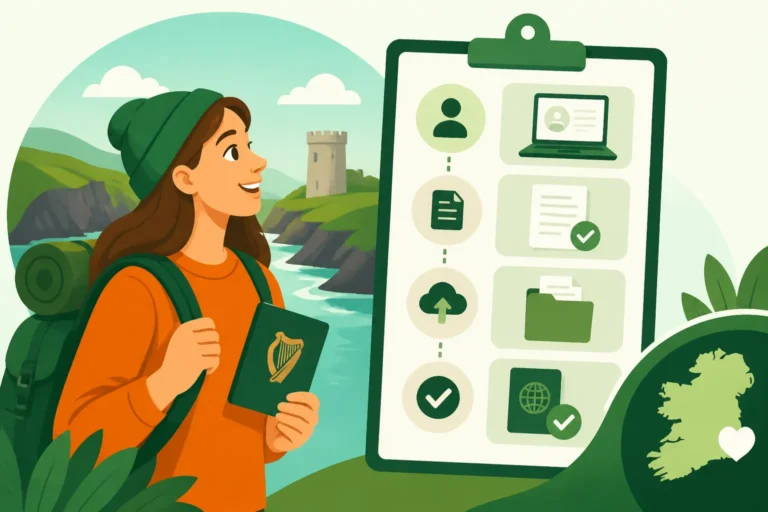
Here’s a checklist of the core documents you will almost certainly need:
- Your Valid Passport: This is your primary form of identification. Ensure it’s valid for the entire period of your intended stay, or at least for the duration of the permit you're applying for.
- Your Original Employment Permit Letter: The official letter from the Department of Enterprise, Trade and Employment that confirms your work authorisation. This is the whole reason you're getting the IRP card.
- Proof of Your Irish Address: This is critical. You need to show you actually live where you say you live. Accepted documents typically include a recent utility bill (electricity, gas, or broadband bill in your name), a bank statement with your Irish address, or a formal letter from your landlord or employer confirming your residential address. If you've just arrived, sometimes a letter from your employer confirming your temporary accommodation or even a rental agreement for your apartment can work, but a utility bill is often preferred. Learning how to set up electricity and gas in your Irish home is usually one of the very first things you'll tackle upon arrival, and that bill becomes your proof.
- Proof of Private Health Insurance: While not always explicitly asked for every single time, it is a legal requirement for non-EEA permit holders to have private health insurance in Ireland. A letter from your insurance provider, or your policy document showing coverage, is what they'll look for. Companies like Cigna Global offer comprehensive plans tailored for expats, and having this sorted before your appointment is a huge weight off your shoulders. Make sure your policy clearly states it covers you in Ireland and aligns with the requirements set by the Department of Justice.
- Your Appointment Confirmation: If you booked online for Dublin, print out that confirmation email. For regional offices, any email or note you have about your appointment will be helpful.
- Proof of Funds/Financial Stability: Depending on the type of permit and your specific circumstances, you might be asked to show bank statements, recent payslips (if you’ve already started working), or your employment contract detailing your salary. This is to ensure you can support yourself financially during your stay without becoming a burden on the state. For some permits, there's a specific salary threshold, and they want to verify you meet it.
Take your time with this. Lay all documents out, tick them off, and get those photocopies done. This attention to detail will save you a lot of grief.
The Immigration Registration Appointment Itself
The day of your appointment can feel a bit like going for a job interview, with a mix of nerves and anticipation. When you arrive at the Burgh Quay Registration Office (or your local Garda station), you'll go through a queueing system. Once your turn comes, an immigration officer will review all your documents. They'll ask you a few questions about your purpose for being in Ireland, your job, and your living situation. This is generally a straightforward process, but it's important to be polite, clear, and honest in your responses. They'll verify your details against your employment permit.
You’ll then have your fingerprints taken and a digital photograph captured. This data is essential for your IRP card and for the national immigration system. Finally, you’ll be asked to pay the registration fee. As of early 2024, this fee is €300 per person. This must be paid by credit or debit card, as cash is generally not accepted. Once the payment is processed and all details are confirmed, you'll be given a receipt, which serves as temporary proof of your registration until your physical card arrives. This receipt is important; don't lose it! Remember, securing your IRP card is also a key step in understanding The Complete Guide to Irish Visas and Immigration Permission for Expats (2027).
What Happens After Your Appointment: Waiting for the IRP
So, you've survived the appointment, handed over your documents, and paid your fee. You walk out with a receipt and a sense of relief. But where’s the card? The IRP card isn't issued on the spot; there's a waiting period.
The Waiting Game
After your appointment, the Immigration Service Delivery processes your application and prepares your IRP card. This typically takes 5 to 10 working days, but sometimes it can be longer, especially during peak periods or if there are any issues with your information. The card will be sent by post to the Irish address you provided during your registration. This is why having accurate and verifiable proof of address is so vital during your appointment. You’ll just have to play the waiting game, constantly checking your letterbox.
If your card hasn't arrived within a reasonable timeframe (say, two to three weeks), it's important to contact the ISD. There's usually a dedicated email address or phone line for queries regarding IRP card delivery. Keep your appointment receipt handy, as it will contain a reference number they'll need. For those moving countries, resources like Sirelo can be incredibly helpful for managing all the details of relocation, including advising on postal services and tracking, alleviating some of the stress of waiting for important documents.
Understanding Your IRP Card Details
Once your IRP card finally arrives, take a moment to understand what’s on it. It will clearly display your name, date of birth, nationality, a unique registration number, your photograph, and, most importantly, your immigration "stamp" (e.g., Stamp 1 for employment permit holders) and its expiry date. The stamp indicates the conditions under which you are permitted to reside in Ireland. For example, a Stamp 1 means you have permission to work in Ireland, usually under the specific terms of your employment permit.
The expiry date is crucial. It dictates how long your current permission lasts. Mark this date in your calendar with multiple reminders, because you'll need to begin the process to renew your IRP and immigration permission in Ireland well in advance of its expiration. Letting it lapse can lead to serious immigration issues. Keep your card safe; it's an official government document, and losing it can be a significant hassle, requiring you to report it to the Gardaí and apply for a replacement.
Life with Your IRP Card
Having your physical IRP card transforms your experience in Ireland. It acts as your official proof of identity and residence, simplifying many aspects of daily life that were previously bogged down by lacking this one document.
- Travel: Your IRP card, combined with your passport, is what allows you to re-enter Ireland after travelling abroad. Without it, even with a valid employment permit, you could face difficulties at the border, potentially being denied re-entry or subjected to lengthy questioning. It’s your undeniable proof of permission to be here.
- Administrative Tasks: This is where the IRP truly shines. It’s the key document for things like opening a bank account (though you might have already initiated this with your employment permit and proof of address – check out The Expat Guide to Opening a Bank Account in Ireland for more on this), accessing certain public services, confirming your identity for online applications, or even registering for a library card. It simplifies interactions with various government agencies and private entities that require proof of your legal status.
- Long-Term Planning: The IRP card is a tangible step on your path to potentially longer-term residency or even citizenship. The stamps and their durations are recorded, forming a history of your reckonable residence in Ireland. Each renewal and extension of your IRP builds towards the total time you’ll need if you eventually decide to apply for Irish citizenship by naturalisation.
Finally, getting your IRP card is often the last major bureaucratic hurdle that connects your right to work with your right to live. It’s a moment to breathe a sigh of relief, knowing you’re officially settled.
| Document Category | Required Documents | Notes |
|---|---|---|
| Identity & Entry | Valid Passport | Ensure it has sufficient validity. |
| Work Permission | Original Employment Permit Letter | The official letter from the Department of Enterprise, Trade and Employment. |
| Address Proof | Recent Utility Bill (Electricity, Gas, Broadband), Bank Statement, or Formal Letter | Must be in your name and show your Irish address. |
| Health Coverage | Proof of Private Health Insurance (e.g., policy document, letter from provider like Cigna Global) | Mandatory for non-EEA permit holders. Policy should cover you in Ireland. |
| Appointment Evidence | Printed Appointment Confirmation (for Dublin) or related communication (for regional offices) | Essential to prove you have a scheduled slot. |
| Financial Means (If req.) | Bank Statements, Payslips, Employment Contract | To demonstrate financial self-sufficiency. Especially relevant if your permit has a salary threshold, or if your immigration permission involves showing proof of adequate funds. |
| Copies | Photocopies of ALL original documents | Officials will keep these. Don't forget this crucial step! |
| Payment | Credit or Debit Card | The €300 registration fee must be paid by card. |
Disclaimer
The information provided in this guide is intended for general informational purposes only and does not constitute legal or immigration advice. While every effort has been made to ensure accuracy, immigration policies and procedures in Ireland can change frequently. It is always recommended to consult the official Immigration Service Delivery (ISD) website, or a qualified immigration solicitor for the most up-to-date and personalised advice regarding your specific situation. Reliance on any information provided in this article is solely at your own risk.