How Do I Choose a Good School Catchment Area in Ireland?
Moving to a new country like Ireland is exhilarating, but the practicalities, especially when you have children, can feel like an endless maze. One of the biggest headaches I hear from expat parents, and certainly experienced myself, is trying to figure out the school system – specifically, how on earth to choose a good school when your choice of home is so deeply intertwined with where your children can actually get a place. This guide is here to walk you through the complexities of school catchment areas in Ireland, offering practical advice and a bit of reassurance that you’re not alone in this particular struggle.
Understanding the Irish School System Landscape
Before we dive into catchment areas, it’s crucial to grasp the basic structure of education here in Ireland. It's not always as straightforward as you might expect if you're coming from a different system, and misunderstanding it can lead to a lot of frustration.
Primary vs. Secondary Education
First off, children in Ireland typically attend primary school from ages 4 or 5 up to around 12 or 13, covering junior infants through to sixth class. After that, they transition to secondary school, which goes from first year up to sixth year, preparing them for the Leaving Certificate exams.
The vast majority of primary and secondary schools in Ireland are publicly funded, meaning they are either run by the state or by private bodies (often religious orders) but receive significant state funding. These schools are generally free to attend, though "voluntary contributions" are common and, let’s be honest, often expected to help with school running costs, especially in secondary schools. It's also worth noting that while some schools have a specific religious ethos (the majority are Catholic), there's a growing number of multi-denominational schools, like Educate Together schools, that aim for inclusivity. For a deeper dive, our comprehensive guide on Schools and Education in Ireland: A Complete Guide for Expat Families offers more details.
The Role of Private and International Schools
While the public system is robust, some expat families opt for private or international schools, particularly if they anticipate further international moves or prefer a curriculum aligned with their home country. These schools charge fees, which can be substantial, especially in larger cities like Dublin. They often have their own admission criteria and are less bound by strict geographic catchment rules, though proximity is still a factor for convenience. This can be a huge relief for some families, but it comes at a cost, as you can read about in How Much Are Private School Fees in Dublin?. While Are Private Schools Common in Ireland? explores their prevalence, for most expat families, the state-funded system is the primary consideration due to accessibility and cost.
What Exactly Is a "School Catchment Area" in Ireland?
Alright, let's get to the crux of the matter: what does "school catchment area" actually mean in an Irish context? Unlike some countries where school zones are clearly demarcated on a map, Ireland's system is a bit more nuanced and, frankly, can feel a bit like a moving target.
Defining the "Designated Area"
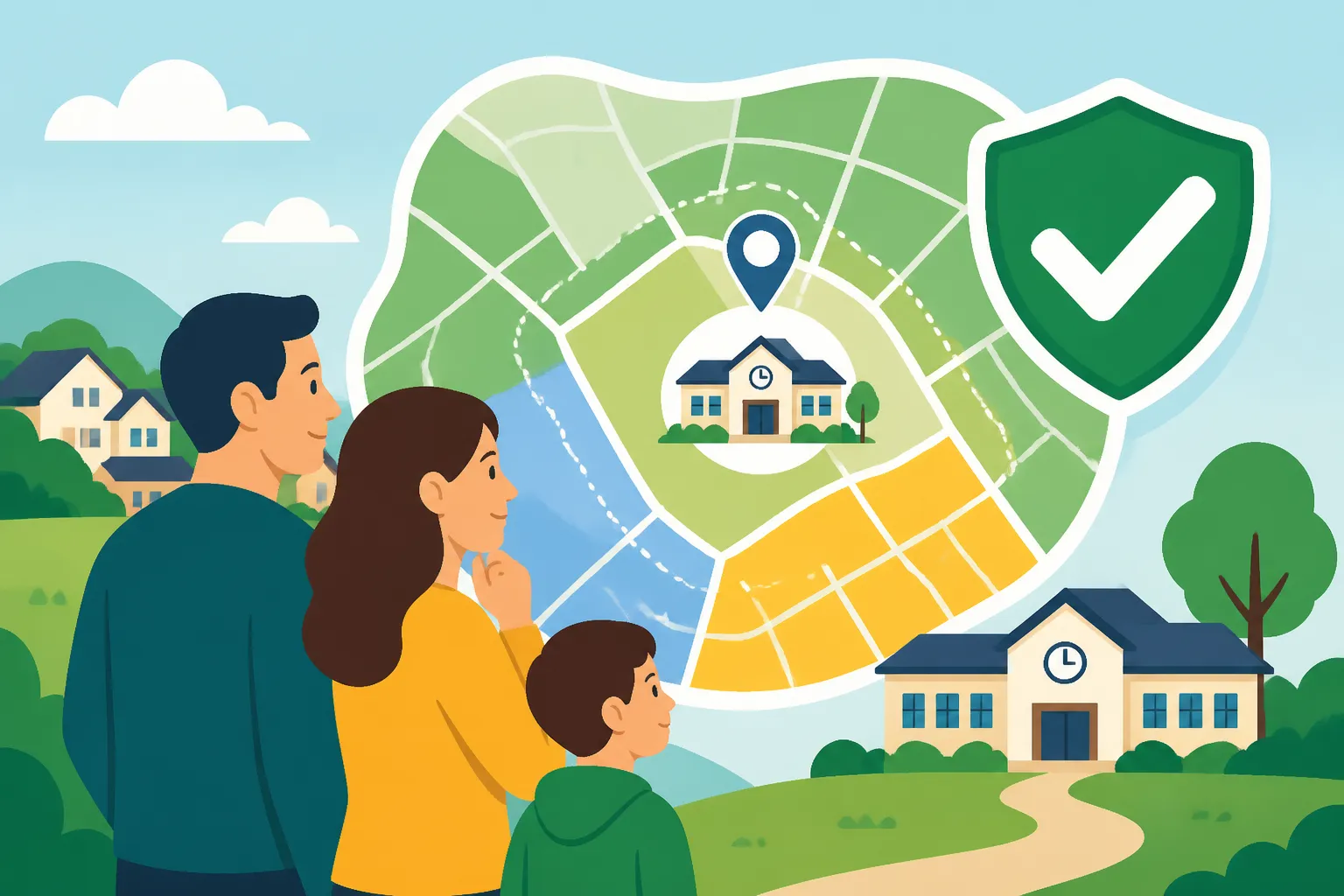
In Ireland, primary and secondary schools typically have an "admissions policy" that outlines their criteria for accepting students. A key part of this policy is often a "designated catchment area" or "catchment area" for short. This isn't usually a hard-and-fast line on a map drawn by the Department of Education. Instead, it's generally defined by the school itself, often based on a list of local streets, housing estates, or a specific geographic radius around the school. The idea is to prioritise students who live closest to the school or within a traditional community served by the school.
However, here’s where the expat frustration often kicks in: these areas aren't always publicly advertised in a uniform, easy-to-find manner. You'll usually need to check the admissions policy of each individual school you're interested in. These policies are generally available on the school's website. If not, a quick phone call or email to the school secretary will usually get you the information you need. When you’re trying to secure a home, and potentially coordinating an international move with services like Sirelo, this extra layer of research can feel overwhelming.
The Impact of Oversubscription
The biggest challenge with catchment areas in Ireland, especially in popular urban and suburban areas, is oversubscription. This means that more children apply for places than the school has available. When this happens, the school's admissions policy comes into full play, and the criteria are applied rigorously.
Typically, the hierarchy of admissions goes something like this:
- Siblings: Children who already have a brother or sister attending the school are often given top priority.
- Catchment Area Residents: Children living within the school's designated catchment area come next. This is where your address becomes critical.
- Children of Staff: Sometimes, children of school staff members are prioritised.
- Proximity: If there are still places after the above, proximity (living closest to the school outside the catchment area) can be the deciding factor, often measured by distance from the child's home to the school gate via the shortest walking route.
- Date of Application: In some cases, if all other factors are equal, the date of application can play a role, making early application advantageous.
It's a common scenario for expat families to find a perfect house only to discover that the local schools are oversubscribed, or their children aren't high enough on the admissions priority list. This is particularly true in desirable areas of Dublin or Cork. So, researching school policies before committing to a rental or purchase is absolutely paramount.
Key Factors for Choosing a Good School Catchment Area
Choosing a good school catchment area isn't just about finding any school; it's about finding the right school and the right community for your family. This requires a multi-faceted approach.
Researching School Admissions Policies Early
This cannot be stressed enough: start your school research as early as possible. Before you even begin serious house hunting, identify a few potential areas you'd like to live in, and then look up the admissions policies for the primary and secondary schools in those areas.
- Visit School Websites: Most schools publish their current admissions policy and application forms online. Pay close attention to the definition of their catchment area and their criteria for oversubscription.
- Contact Schools Directly: Don't be afraid to call the school office. They can clarify their policies and often give you a realistic picture of demand. They might even tell you if they currently have long waiting lists or if they anticipate being oversubscribed for the coming year.
- Check Enrolment Dates: Be aware of application timelines. For primary schools, applications often open in October/November for the following September intake. Secondary school applications can be even earlier. Missing a deadline can severely reduce your child's chances. Our guide on How to Enrol Your Child in an Irish School gives more specific details on this process.
Prioritising Location and Commute
Once you understand the school landscape, you need to think about how your home choice will impact daily life. Ireland, particularly around major cities, can have significant traffic.
- Walkability/Public Transport: Consider if the school is within walking distance or easily accessible by public transport. This is not just for your child, but for you too, for drop-offs, pickups, and school events. Information on using the Leap Card and Public Transport in Ireland can be helpful here.
- Family-Friendly Neighbourhoods: Look for areas that are not just near good schools, but also offer amenities for families: parks, playgrounds, community centres, and local shops. This adds immense value to your quality of life. For Dublin, specifically, you might find valuable insights in How to Find Family-Friendly Areas in Dublin.
- Commute for Parents: Don't forget your own commute to work. A short school run is great, but not if it means an hour-long drive for you afterwards. Balance is key. When you're constantly on the go, navigating school routes and new neighbourhoods, having reliable connectivity is a godsend. An eSIM from Airalo can be a real lifesaver, ensuring you always have data to check maps, school websites, or communicate with new contacts without hunting for Wi-Fi.
Examining School Performance and Ethos
While test scores aren't the be-all and end-all, school performance and ethos are important considerations.
- Inspectorate Reports: The Department of Education and Skills conducts regular inspections of all schools. These reports are publicly available on the Department's website and provide an independent assessment of the school's quality, teaching, and management. Reading these gives you a fantastic, objective overview.
- Curriculum and Extracurriculars: Does the school offer a broad curriculum? What extracurricular activities are available? For secondary schools, what kind of Leaving Certificate results do they typically achieve, and where do students progress afterwards?
- School Ethos: Does the school's ethos align with your family's values? This is particularly relevant with the strong presence of denominational schools. For example, some schools have a strong sporting tradition, while others might focus more on arts or academic excellence. A school with an ethos that resonates with your child can make a significant difference to their happiness and success.
Table: Key Considerations for School Catchment Areas in Ireland
| Factor | Description | Why it Matters for Expats |
|---|---|---|
| Admissions Policy | Document outlining a school's criteria for accepting students, including catchment area definition and oversubscription rules. | These are not standardised; each school sets its own. You must read these before committing to an area, especially in competitive urban zones. |
| Catchment Definition | The specific geographic area (streets, estates, radius) from which a school prioritises admissions. | Often unstated on general public maps. Can be vaguely defined or change, making pre-move planning difficult. Direct school contact is vital. |
| Oversubscription | When a school receives more applications than it has places, triggering strict application of admission criteria. | Very common in desirable areas, especially in Dublin. Living within the catchment might still not guarantee a place if higher priority applicants (e.g., siblings) fill places. |
| Proximity Rules | If not strictly by catchment, often schools prioritise based on the shortest distance from a child's home to the school. | Even a few streets can make a difference. Use online mapping tools to measure distances when comparing potential homes to schools. |
| School Ethos/Type | Denominational (e.g., Catholic, Church of Ireland) vs. multi-denominational (e.g., Educate Together) vs. Gaelscoileanna (Irish-speaking). | Crucial for family values and integration. Consider if a religious ethos suits your family, or if you prefer a secular or Irish-language environment. |
| Inspectorate Reports | Independent assessments of school quality by the Department of Education. | Provides objective insight into teaching standards, resources, and school environment beyond local hearsay. |
| Commute & Transport | Ease of access to school by walking, cycling, public transport, or car, considering traffic. | Daily reality check. A great school becomes a nightmare if the commute is arduous. Research local bus/DART/Luas routes. |
| Local Amenities | Parks, sports clubs, libraries, community centres, shops in the vicinity of the school and home. | Beyond academics, a vibrant community contributes significantly to family well-being and helps with integration. |
Navigating the Realities: Challenges and Solutions
Let's face it, finding a good school catchment area in Ireland as an expat can feel like a game of three-dimensional chess while blindfolded. It's tough, but there are ways to make it less daunting.
The Dublin Dilemma and Urban Sprawl
Dublin, being the primary destination for many expats, presents the most significant challenges. The housing crisis in Ireland means that finding affordable and suitable accommodation in areas with good schools is incredibly competitive. You might find a great school, but struggle to find a home within its catchment, or vice-versa. Our guide on Understanding the Irish Rental Market and the Housing Shortage (2027) delves into the broader context of this issue.
- Expand Your Search: Don't limit yourself to central Dublin. Consider the commuter towns in surrounding counties like Kildare, Meath, or Wicklow. Many of these towns have excellent schools and a more manageable pace of life, though you'll need to factor in commute times. Our guide on The Best Places to Live in Ireland for Expats: A Complete Guide (2027) offers broader suggestions beyond the capital.
- Prioritise: Decide what's most important to your family. Is it a specific type of school, a shorter commute for you, or having a larger home? Sometimes, you can't have it all, and compromise is necessary.
The "First Come, First Served" Myth
While some schools might consider the date of application, it's rarely the only or primary factor, especially in oversubscribed schools. Living within the catchment area and having siblings already attending almost always take precedence. So, don't fall into the trap of thinking a very early application will guarantee a place if you don't meet the higher-priority criteria.
Connecting with Other Expat Parents
One of the most valuable resources you'll find as an expat in Ireland is other expat parents. Join local online forums, Facebook groups for expats in Ireland, or community groups. They can offer anecdotal evidence, share their experiences with specific schools, and give you a realistic picture of what it's like to apply to schools in certain areas. This ground-level intelligence can be incredibly insightful and save you a lot of wasted time. While getting settled, having constant communication with these groups is easy with an Airalo eSIM keeping you connected.
Consider a Temporary Rental
If you're really struggling to balance the school search with the housing search, consider securing a short-term or temporary rental initially. This allows you to be physically present in Ireland, visit schools, meet principals, and get a feel for different neighbourhoods before committing to a longer lease or purchase. This strategy can reduce stress and ensure you make a more informed decision about your permanent home. When you’re ready to make that permanent move, having a reliable moving service can alleviate a lot of stress. Companies found through platforms like Sirelo can assist with international shipping and logistics, allowing you to focus on the local intricacies of school selection.
Remember, the goal is to find a good fit, not just a good school. A 'good' school in a 'good' catchment area is one that supports your child's learning and happiness, and where your family feels at home in the wider community. It takes time, patience, and a bit of detective work, but it is absolutely achievable. Just breathe, plan, and lean on the wisdom of those who've navigated these waters before you.
Disclaimer
The information provided in this guide is for general informational purposes only and does not constitute professional advice. While we strive to keep the content up-to-date and accurate, school admissions policies, housing market conditions, and educational regulations in Ireland can change. Always verify information directly with relevant schools, the Department of Education, or legal and educational professionals before making any decisions.