How to Use the Leap Card and Public Transport in Ireland
Moving to Ireland means a lot of exciting new adventures, but let's be honest, figuring out a new country's public transport system can feel like trying to decipher an ancient scroll in a language you don't speak. You arrive, you're exhausted, and suddenly you're faced with different bus companies, train lines, and payment methods that make you wish you'd just packed your walking shoes. Trust me, I've been there, staring blankly at a ticket machine, wondering if I was about to board the right bus or end up in Timbuktu. But fear not, because once you get the hang of it, especially with the trusty Leap Card in your pocket, navigating public transport in Ireland becomes second nature. This comprehensive guide is here to demystify the system, helping you get around the Emerald Isle like a seasoned local.
Getting Started with the Leap Card: Your Essential Travel Companion
The Leap Card truly is your best friend when it comes to Irish public transport. It's designed to simplify your journeys and, crucially, save you a bit of cash along the way. Think of it as your golden ticket to smooth sailing across buses, trams, and trains.
What Exactly is a Leap Card?
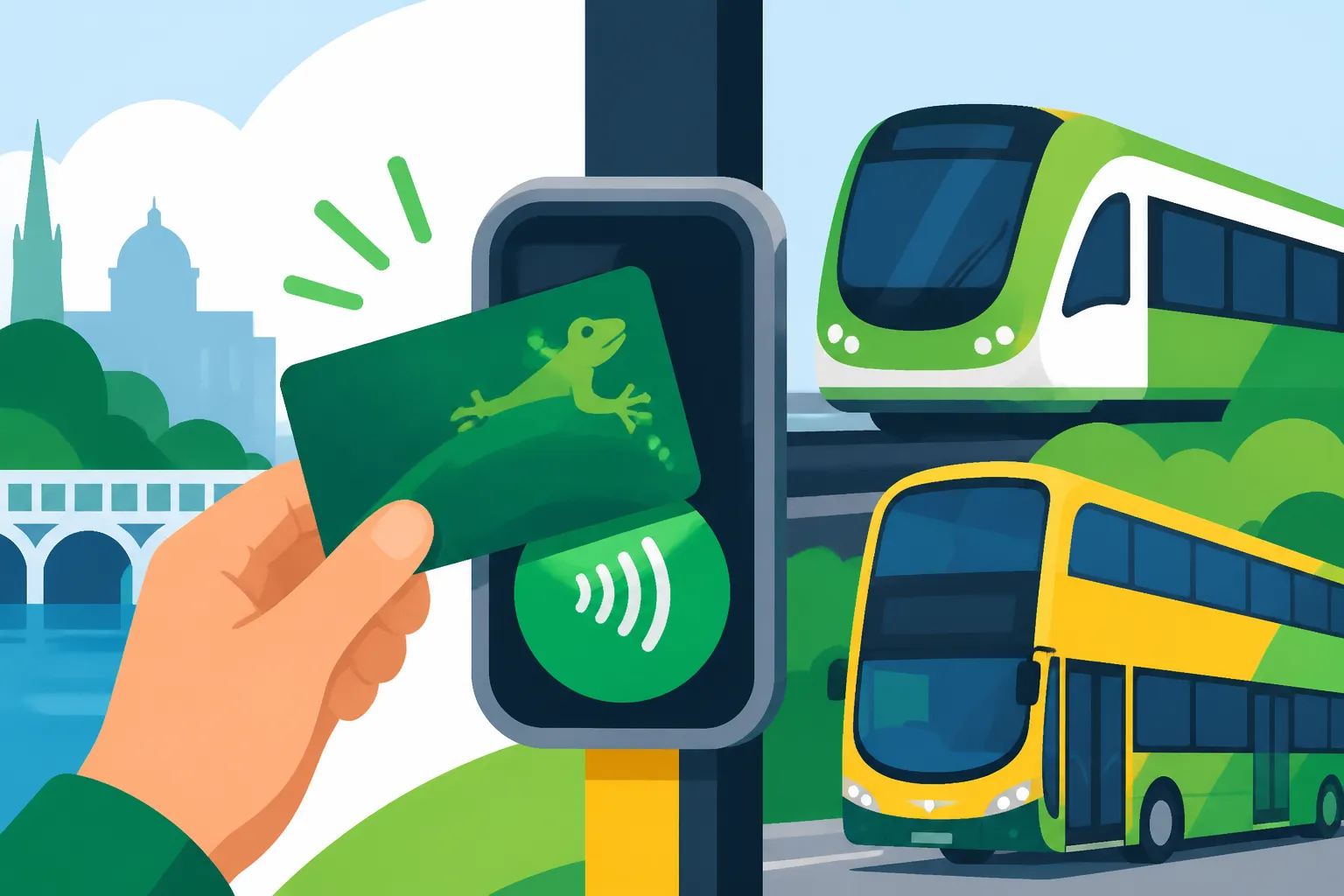
At its core, a Leap Card is a reusable, contactless smart card that allows you to pay for public transport fares across Ireland. Instead of fumbling for coins or worrying about exact change, you simply "tag on" when you start your journey and "tag off" when you finish. It’s a bit like a debit card for travel, pre-loaded with credit. It’s far more convenient and often cheaper than paying with cash, which on many services, like Dublin Bus, can be a real headache as you often need the exact fare and no change is given. The beauty of the Leap Card is its widespread acceptance: it works on Dublin Bus, Go-Ahead Ireland services, the Luas (Dublin's tram system), DART and Commuter Rail services within the Dublin Short Hop Zone, and even many Bus Éireann routes both in cities and intercity.
The system calculates the correct fare for your journey automatically, often applying daily or weekly "capping" limits, meaning you'll never pay more than a certain amount within a day or a week, regardless of how many journeys you make. This is a huge benefit, especially if you're exploring a lot or have a busy week commuting. It removes the stress of trying to calculate fares manually and ensures you always get the best value.
Types of Leap Cards Available
The good news is that there's a Leap Card designed for almost every type of traveler, from permanent residents to fleeting tourists. Understanding which one suits you best is the first step towards seamless travel.
For most adults living and working here, the Adult Leap Card is the standard choice. It's straightforward, easy to top up, and grants access to all the fare benefits. If you're studying in Ireland, the Student Leap Card is an absolute must-have. It offers significantly discounted fares, making your commute to lectures much more affordable. To get one, you'll need to be a full-time student at a recognized institution, and there's an application process that often involves verifying your student status online or at a designated agent. Don't skip this if you qualify, as the savings really add up!
For families, there are Child Leap Cards. These come in two types: the Child Leap Card (4-15 years) and the Child Leap Card (16-18 years). Both offer reduced fares, but the 16-18 year old card requires proof of age and a photo, similar to the student card, to ensure eligibility until their 19th birthday. For visitors and tourists, the Visitor Leap Card is specifically tailored for short stays. You can buy them for 1, 3, or 7 days of unlimited travel on most public transport services in Dublin, which is fantastic for sightseeing without worrying about individual fares. Lastly, for those who use public transport regularly and want added security, a Personalised Leap Card allows you to register your card, protecting your balance if it's lost or stolen and enabling auto top-ups.
Where to Buy and Top Up Your Leap Card
Getting your hands on a Leap Card is incredibly easy. You can purchase an Adult or Visitor Leap Card from hundreds of retail agents displaying the Leap Card sign, typically newsagents, convenience stores, and PostPoint outlets found in almost every town and city across Ireland. Just walk in, ask for a Leap Card, pay the initial card fee (usually €5), and then add some travel credit. You can also buy them at major transport hubs, like Dublin Airport or Busáras (Dublin's central bus station).
Topping up your card is equally convenient. You can do it at any of the retail agents, or if you prefer the digital route, you can top up online through the official Leap Card website. If you choose the online option, remember that you'll need to "collect" your top-up by tagging your card at a Leap Card reader on a bus, Luas stop, or train station within 30 days. For those with NFC-enabled smartphones, the Leap Card app is a game-changer. You can instantly check your balance, view your travel history, and top up your card right from your phone, then tap the card to the back of your phone to apply the credit. It’s incredibly handy, especially when you're caught short before a journey. For regular commuters, setting up an automatic top-up online means your card will automatically top up from your bank account whenever your balance drops below a certain threshold, ensuring you're never left stranded.
Mastering Dublin's Public Transport Network
Dublin, being the capital and largest city, naturally has the most extensive and integrated public transport system. Learning its ins and outs is crucial for anyone living or frequently visiting the city.
Navigating Dublin Bus with Your Leap Card
Dublin Bus is the backbone of the city's public transport, serving practically every corner of the capital and its surrounding areas. With your Leap Card, fares are structured based on distance, divided into "stages." The system uses a "tag on, tag off" approach, which is vital to understand. When you board the bus, simply tap your Leap Card against the green validator located near the driver. This "tags on" your journey. When you exit the bus, you must remember to tag off at the red validator, usually located around the middle of the bus. If you forget to tag off, the system assumes you travelled the maximum distance, and you'll be charged the highest possible fare for that route, which can be a frustrating and unnecessary expense.
The fare capping system is one of the biggest advantages of using a Leap Card on Dublin Bus. Once you reach a certain spend limit within a day (€7.00 for adults) or a week (€27.50 for adults, Monday to Sunday), all subsequent journeys within that period become free. This means if you're out exploring for the day, or commuting regularly, you're always getting the best value. Keeping track of real-time bus information is also a lifesaver. The TFI Live app is excellent for this, showing you exactly when your next bus is due, which stops it serves, and allowing you to plan your journey across different modes of transport. You can also find electronic displays at many bus stops throughout the city providing real-time updates.
Riding the Luas (Tram) in Dublin
The Luas is Dublin's sleek and efficient tram system, comprising two main lines: the Green Line, which runs north-south, and the Red Line, which runs east-west. These lines are fantastic for getting across the city quickly, avoiding traffic, and connecting key areas like shopping districts, business hubs, and residential zones. For example, the Green Line is perfect for getting from the south side of the city centre (like St. Stephen's Green) out to areas like Sandyford, a major employment hub, or vice versa. The Red Line connects areas like Tallaght and Saggart in the west to Connolly and The Point in the east, servicing Heuston Station and Busáras along the way.
Using your Leap Card on the Luas is similar to the bus, but with a crucial difference: you tag on and tag off at the platforms, not on the tram itself. You'll find validators at the entrance to every Luas stop. Just tap your card on the validator before boarding the tram and tap it again on another validator when you exit the platform at your destination. Again, forgetting to tag off will result in a penalty fare, typically the maximum fare for a Luas journey, which is understandably annoying. Always double-check that your tag was successful; the validator will light up green and beep to confirm. Understanding the Dublin Luas, DART and Bus Network can provide more granular detail on routes and connections.
Exploring by DART and Commuter Rail
For those living along Dublin's stunning coastline or commuting from surrounding counties, the DART (Dublin Area Rapid Transit) and Commuter Rail services are invaluable. The DART is a electric rail line that hugs the coast, offering breathtaking sea views as it connects towns from Greystones in County Wicklow all the way up to Howth and Malahide in North County Dublin. It's a hugely popular mode of transport for commuters and weekend explorers alike, offering a comfortable and scenic alternative to road travel.
Commuter Rail services extend further inland, connecting Dublin to towns in Kildare, Meath, and other neighbouring counties. These services are crucial for those who work in the city but live in more affordable or quieter suburban and rural areas. Both the DART and Commuter Rail accept the Leap Card. Just like the Luas, you must tag on at the platform validator before you enter the train station and tag off at the validator when you exit at your destination. The fare is calculated based on the distance travelled, and the Leap Card capping also applies to these services, offering significant savings for regular users. These rail services are particularly useful if you’re living in one of The Best Places to Live in Ireland for Expats: A Complete Guide (2027) outside the immediate city centre but still need access to Dublin.
Expanding Your Horizons: Public Transport Beyond Dublin
While Dublin boasts the most comprehensive network, public transport isn't exclusive to the capital. Many other cities and regional areas in Ireland are well-served, and your Leap Card often comes in handy.
Using Bus Éireann and Go-Ahead Ireland
Beyond Dublin, Bus Éireann is the national bus company, providing a vast network of services across the entire island. They operate everything from intercity Expressway routes that connect major cities to local services within towns and rural areas. Go-Ahead Ireland operates a growing number of bus routes, particularly within the Dublin commuter belt and other regional hubs, often taking over routes previously run by Dublin Bus or Bus Éireann.
Your Leap Card is accepted on many Bus Éireann and Go-Ahead Ireland services, especially within city networks (like Cork, Galway, Limerick, Waterford city services) and on some regional routes. However, it’s always wise to check the specific route or service beforehand, as some longer-distance intercity Express services might require a pre-booked ticket or a different payment method. For instance, on some intercity Bus Éireann routes, while you can use Leap Card, you might get a better deal by booking online in advance, especially if it's a popular route or you're travelling during peak times. Generally, for urban and shorter regional routes, your Leap Card will work seamlessly, offering the same convenience as in Dublin.
Connecting with Other Regional Services
Beyond the major operators, smaller, more localised transport initiatives exist. Local Link services, for example, provide crucial rural transport options, connecting more isolated communities to larger towns and villages. These services are often demand-responsive, meaning you might need to book in advance. While some Local Link services accept the Leap Card, it's always best to check with the local operator as their payment methods can vary.
Other cities like Cork, Galway, Limerick, and Waterford each have their own city bus networks, predominantly operated by Bus Éireann or Go-Ahead Ireland. In these cities, the Leap Card generally works just as it does in Dublin, offering capped fares and contactless convenience. For example, if you're settling in Cork, you'll find the local Bus Éireann services cover the city well, and your Leap Card will be accepted. Always check the local transport provider's website or the TFI Live app for the most up-to-date information on routes, schedules, and Leap Card acceptance in specific regional areas. It's truly a fragmented but functional system once you know where to look.
Planning Longer Journeys Across Ireland
For those grander adventures that take you across the country, public transport offers a viable alternative to driving. You can integrate different modes, starting with a DART or Luas to a main train station, then catching an intercity train (Irish Rail) or an Expressway bus. The TFI Journey Planner (available as an app and on their website) is an indispensable tool for this. It allows you to input your start and end points anywhere in Ireland, and it will generate detailed itineraries combining buses, trains, and trams, complete with timings and estimated fares.
While public transport offers a fantastic way to see the country without the stress of navigating unfamiliar roads, it’s worth noting that for very remote areas or spontaneous road trips, having your own vehicle might be more flexible. For many expats, this leads to the perennial question of whether to rely solely on public transport or invest in a car. Considerations around this are explored in detail in Driving in Ireland: Licences, Registration and Rules for Expats (2027) and How to Buy a Car as a Newcomer in Ireland. The cost of fuel, insurance, and vehicle registration tax (VRT) in Ireland can be significant, making public transport an attractive option for budget-conscious travellers or those primarily based in cities.
Practical Tips and Troubleshooting for Expats
Even with a Leap Card, there are a few nuances and potential hiccups you might encounter. Being prepared can save you a lot of grief.
Understanding Fares, Capping, and Refunds
One of the best features of the Leap Card is its daily and weekly fare capping. This means that once you spend a certain amount on public transport within a given day or week (Monday to Sunday), all subsequent journeys are free. This is a brilliant system for regular commuters or those enjoying a day of sightseeing. For example, an adult in the Dublin area will hit a daily cap of around €7.00 and a weekly cap of approximately €27.50. These caps vary slightly depending on the service and card type (e.g., student cards have lower caps), but the principle remains the same.
You can easily check your balance and travel history via the Leap Card app or online at the Leap Card website. This is super helpful for tracking your spending and ensuring you tagged on and off correctly. If you have a personalised or registered Leap Card and it gets lost or stolen, you can report it to Leap Card customer services to have it blocked and your remaining balance transferred to a new card – a huge relief if you rely on it daily. Refunds for incorrect charges or issues are also handled by their customer service, but it's much easier if your card is registered. Just be aware that if your card has insufficient funds for a journey, the bus driver or Luas inspector will likely refuse service or issue a penalty, so always keep an eye on your balance.
Essential Apps and Digital Tools
In today’s connected world, a few key apps can transform your public transport experience from confusing to effortless. Top of the list is the TFI Live app. This incredible resource provides real-time information for Dublin Bus, Bus Éireann, Luas, DART, and Irish Rail services. You can see when your next bus or tram is actually arriving, plan journeys across different modes of transport, and even save your favourite stops or routes. It's genuinely indispensable for daily commuting and exploring.
The official Leap Card app (for NFC-enabled Android phones) allows you to instantly check your balance, view recent transactions, and top up your card on the go. This is a game-changer when you realise you’re low on credit just before needing to catch a bus. While it doesn't work on iPhones for instant top-ups, Apple users can still use the app for balance checks and online top-ups that need to be collected. And of course, don't underestimate the power of Google Maps! Its public transport option is excellent for route planning, providing timings and connections, and often integrating real-time data from TFI. To make the most of these apps, you’ll need reliable mobile data, which means getting a local SIM card or an eSIM. For newcomers, an eSIM from providers like Airalo can be a brilliant way to get instant connectivity as soon as you land, allowing you to use these crucial apps without hunting for a physical SIM card.
Common Pitfalls and How to Avoid Them
Even with the best intentions, new users often make a few common mistakes. The absolute most frequent one, and I’ve seen countless expats caught out by it, is forgetting to tag off. On Dublin Bus and the Luas, if you don't tag off, you’ll be charged the maximum fare for that route, which is a waste of your hard-earned money. Always, always remember to tag off when you complete your journey! Another pitfall is using the wrong type of card or an expired one. Child and Student Leap Cards have expiry dates, and if you use them past this date, you could face a penalty or refusal of travel.
Ensuring you have enough balance is also key. While the Leap Card app helps, sometimes you might just miss it. If you try to tag on with insufficient funds, the validator will flash red, and you won’t be able to travel. This can be especially inconvenient if you’re rushing or in an unfamiliar area. Lastly, be prepared for peak hours. Dublin’s public transport, particularly Dublin Bus and the DART, can get very crowded during morning and evening rush hours (typically 7-9 AM and 4-6 PM). Be patient, allow extra time, and don’t be surprised if you have to let a couple of full buses pass before you can squeeze on. And a little tip on public transport etiquette: always queue for the bus, don't just rush the door!
Pros and Cons of Relying on Public Transport
Deciding how much to rely on public transport versus other options, like a private car, is a common dilemma for expats in Ireland. Let's weigh up the advantages and disadvantages.
The Advantages for Expats
Relying on public transport in Ireland, especially in urban centres like Dublin, offers a wealth of benefits. First and foremost, there are significant cost savings. With the Leap Card's fare capping, you'll find that your daily and weekly transport expenses are predictable and often far less than the combined costs of fuel, insurance, road tax, parking, and maintenance that come with owning a car. For instance, How Much Does It Cost to Rent in Dublin in 2026? is a question often coupled with the cost of commuting, and public transport can significantly reduce that overall burden.
Beyond the financial, there's the sheer convenience in city centres. Navigating Dublin's often narrow and busy streets by car can be a nightmare, especially when it comes to finding and paying for parking. Public transport eliminates this stress entirely. You can sit back, relax, and let someone else do the driving, using your commute time to catch up on reading, emails, or just enjoying the scenery. It's also an excellent way to reduce your environmental footprint, which is a growing consideration for many. Furthermore, using public transport offers a fantastic opportunity to experience local life more intimately. You’ll observe daily routines, overhear conversations, and truly feel part of the community, rather than being isolated in your own vehicle. For many, this immersion is a key part of the expat experience. What Is the Cheapest Way to Commute in Dublin? very often points towards the Leap Card and public transport.
The Downsides and When to Consider Alternatives
While public transport in Ireland is good, it's not without its drawbacks, and these become more apparent the further you venture from major urban areas. The biggest limitation is limited coverage in rural areas. Outside of the main cities and towns, bus services become less frequent, less extensive, and sometimes non-existent. This can severely restrict your flexibility for spontaneous trips to more remote attractions, or even for daily errands if you live in a rural setting. If you're planning on exploring the Wild Atlantic Way or the Ring of Kerry, for example, a car will offer far greater freedom.
Another downside can be less flexibility for spontaneous trips even within urban areas. While schedules are generally reliable, you're still bound by them. If you suddenly decide to pop to a different part of the city or change your plans last minute, you might find yourself waiting for the next bus or tram. There's also the potential for delays and disruptions, particularly on bus services due to traffic congestion, or on rail services due to technical issues or unforeseen events. During peak times, services can be crowded, which can be uncomfortable, especially if you’re carrying luggage or travelling with young children. For those who need to transport a lot of shopping, bulky items, or have very specific schedules, these limitations can become frustrating. In such scenarios, or if you live in a less connected area, the question of Is It Worth Owning a Car in Dublin? or even How to Buy a Car as a Newcomer in Ireland becomes highly relevant.
| Transport Type | Leap Card Acceptance | Typical Coverage | Pros (with Leap Card) | Cons |
|---|---|---|---|---|
| Dublin Bus | Full | Dublin & Greater Dublin Area | Extensive routes, daily/weekly capping, frequent service | Can be subject to traffic delays, exact cash fare required if no Leap |
| Luas (Tram) | Full | Dublin City Centre & Suburbs | Fast, reliable, frequent, avoids traffic, easy to use | Limited to two main lines, must tag on/off correctly at platform |
| DART/Commuter Rail | Full (Short Hop Zone) | Dublin Coastline & Commuter Belt | Scenic routes, good for longer distances, avoids traffic | Less frequent outside peak, limited network compared to buses |
| Bus Éireann (City) | Full (Cork, Galway, etc.) | Major Cities (outside Dublin) | Local routes, convenient within cities | Coverage varies by city, less extensive than Dublin Bus |
| Bus Éireann (Intercity) | Some services, check | Nationwide | Connects major towns & cities, comfortable for long trips | May require pre-booking/cash for some routes, less flexible than car |
| Go-Ahead Ireland | Full | Dublin & Commuter Belt | Expanding network, part of integrated TFI system | Services can be subject to traffic |
| Local Link | Varies | Rural Areas | Essential for remote communities, demand-responsive | Often requires pre-booking, limited frequency, Leap acceptance varies |
Planning Your Move and Transport Logistics
Integrating public transport into your overall relocation plan is a smart move. It can significantly impact where you choose to live and how you budget for your initial months.
Integrating Transport into Your Relocation Plan
When you're first moving to Ireland, especially as a newcomer, transport planning should be high on your list of priorities. Before you even set foot on Irish soil, research the public transport options available in your prospective neighbourhood. Will you be close to a DART station, a Luas stop, or a frequent bus route? How long will your commute be to work or school using public transport? This foresight can help you decide between different areas, especially if you don't plan to buy a car immediately. Many expats prioritise proximity to public transport when looking for accommodation because it significantly improves quality of life and reduces daily stress.
Consider your initial transport upon arrival too. If you're flying into Dublin Airport, can you easily get to your temporary accommodation via public transport? Aircoach and Dublin Express services are private bus companies that run directly from the airport to various points in the city, offering a convenient if slightly more expensive option. Dublin Bus also serves the airport, and you can pay with your Leap Card. Thinking about how your daily routine will look, from grocery shopping to socialising, and matching that with public transport access, is key to a smooth transition. For more detailed advice on settling in, check out The Complete Guide to Moving to Ireland: Your First 90 Days (2027).
Essential Resources and Support
Navigating a new country's systems requires tapping into the right resources. For public transport in Ireland, the official Transport for Ireland (TFI) website (tfi.ie) is your primary source of truth. It hosts the journey planner, links to all individual operators (Dublin Bus, Luas, Irish Rail, Bus Éireann), and provides comprehensive information on fares, routes, and updates. The Leap Card website (leapcard.ie) is where you'll register your card, check balances, top up online, and find FAQs. These two websites should be bookmarked on your phone and computer.
Beyond the official channels, don't underestimate the power of expat forums and social media groups. Groups like "Irish Expats" or specific city expat groups on platforms like Facebook are goldmines of hyper-local tips, real-time updates on transport issues, and answers to niche questions that official sites might not cover. Locals and fellow expats often share invaluable advice on the fastest routes, how to deal with specific issues, or even where the best place to catch a particular bus is. If you encounter any issues with your Leap Card or a specific service, don't hesitate to contact their customer service directly – they are generally helpful. And remember, during your relocation, a company like Sirelo can assist with the logistics of moving your belongings, ensuring your focus remains on getting yourself settled and navigating your new environment with ease.
Disclaimer
Please note that while every effort has been made to ensure the accuracy and timeliness of the information provided in this guide, details regarding public transport routes, fares, card acceptance, and official procedures in Ireland are subject to change. Transport for Ireland (TFI) and individual operators regularly update their services. It is always recommended to check the official TFI and Leap Card websites, or the websites of specific transport providers, for the most current information before planning your journey. This guide is for informational purposes only and does not constitute official advice.