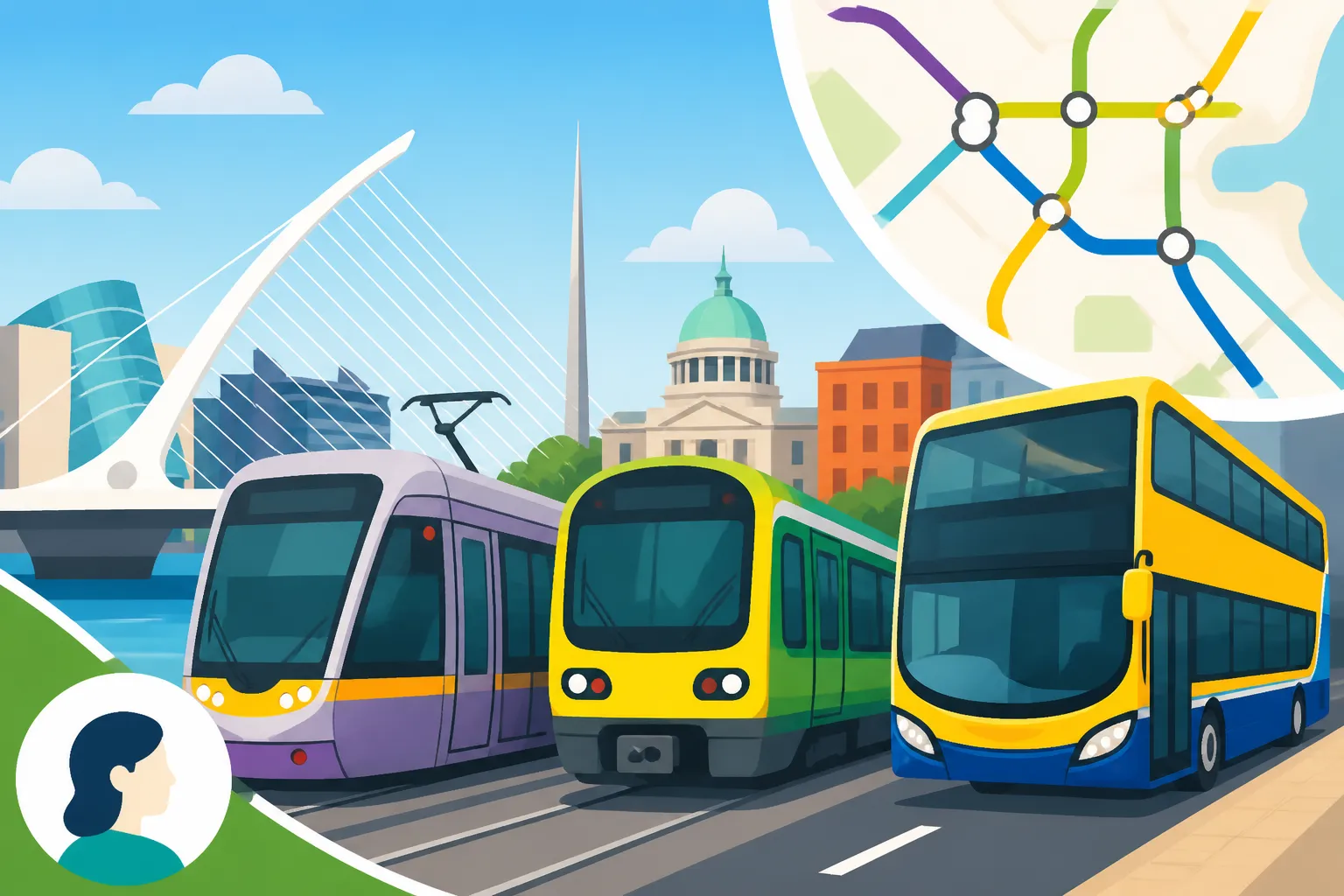
Understanding the Dublin Luas, DART and Bus Network
Arriving in Dublin and trying to wrap your head around getting from A to B can feel like deciphering a secret code, especially when you're used to a different public transport system. The bus network, the Luas trams, and the DART train all serve distinct purposes, and figuring out how they connect, how fares work, and which one to take can be a real headache. This guide is here to demystify Dublin's public transport network, offering an expat's perspective on how to navigate the city like a seasoned local.
Getting Started with Dublin's Public Transport: A Newcomer's Overview
When you first arrive in Dublin, the sheer volume of bus routes, the sleek green and red Luas trams gliding past, and the distinctive DART trains hugging the coast can be a bit overwhelming. It’s a far cry from what many are used to, and the initial confusion is completely normal. But trust me, once you get the hang of it, Dublin’s public transport system is quite efficient for getting around the city and its surrounding areas.
The Initial Culture Shock and Why It Matters
Let's be honest, the public transport experience here isn't always polished perfection, especially if you're coming from a city with an extensive underground metro or highly predictable schedules. Dublin buses, run by Dublin Bus, can sometimes be a bit of a mystery, with routes that might seem circuitous and occasional delays due to city traffic. The Luas is generally more punctual, being tram-based, while the DART offers breathtaking coastal views but can also face its own set of issues. The initial culture shock often comes from the lack of a single, unified ticketing system (beyond the Leap Card, which helps immensely) and the sheer volume of different operators. Understanding that each mode has its quirks, and building in a buffer for travel times, will save you a lot of stress. Don't expect seamless, split-second transfers every time, and embrace the unexpected detours or the chance to discover a new part of the city.
The Leap Card: Your Best Friend for Fares
Seriously, if you take one piece of advice from this whole guide, it’s this: get a Leap Card. This little card is your passport to most of Dublin's public transport and a few services beyond. You can pick one up at various retailers, newsagents, and even at Dublin Airport. Loading it with credit is simple – just top it up at a Leap Card agent, online, or using the Leap Top-Up app on your phone. It offers significantly cheaper fares than buying single tickets with cash, especially on Dublin Bus, where you need exact change if you’re paying with coins.
Using the Leap Card is straightforward: you tap it on the reader when you get on a bus, and for the Luas and DART, you tap on at the platform before boarding and tap off at your destination. Forgetting to tap off on the Luas or DART can lead to a default maximum fare being charged, which is a frustrating lesson to learn the hard way! There are different types of Leap Cards too – adult, child, student, and even a visitor card. If you're planning on being here for a while, an adult Leap Card is typically what you'll need. For more detailed information, I highly recommend checking out our comprehensive guide on How to Use the Leap Card and Public Transport in Ireland.
Mapping Your Journey: Essential Apps and Resources
In this day and age, technology is your best ally for navigating a new city. While Google Maps is always a solid starting point for planning routes, I strongly recommend downloading the official transport apps. The Dublin Bus app, for instance, provides real-time bus tracking and estimated arrival times, which is invaluable when you're standing at a stop in the pouring rain. Likewise, the TFI Live app (Transport for Ireland) is a fantastic resource that integrates real-time information for Dublin Bus, Luas, DART, and even regional bus services.
Having reliable mobile data is absolutely crucial for using these apps on the go. When you’re first settling in, consider getting an eSIM from a provider like Airalo for instant connectivity. It means you won't be scrambling for Wi-Fi just to figure out when your next bus is due, which can be a lifesaver when you're trying to meet friends or get to an appointment on time. These apps often include route planners, fare calculators, and service updates, helping you avoid unexpected disruptions or find alternative routes if something goes awry. They are indispensable tools for anyone trying to master Dublin's public transport.
Decoding the Dublin Bus Network: Your City Lifeline
The Dublin Bus network is by far the most extensive form of public transport within the city. It covers practically every neighbourhood and often provides the only direct link between certain areas. While it can sometimes feel like a labyrinth of routes, understanding how it operates is fundamental to moving freely around Dublin.
Understanding Routes and Schedules
Dublin Bus operates a vast network with hundreds of routes radiating out from the city centre, connecting residential areas, business parks, and suburban towns. Each bus stop will have a pole with a number indicating the specific stop and a list of routes that serve it. The digital displays at many stops offer real-time information, but as I mentioned, the Dublin Bus app is your best bet for accuracy.
Routes are numbered, and sometimes have a letter suffix (e.g., 14, 14c), indicating slight variations in the route. It's crucial to pay attention to the destination sign on the front of the bus, as sometimes different buses using the same number might go to different end points depending on the time of day or service type. Buses typically start running early in the morning, around 5:00 AM, and finish late at night, usually around 11:30 PM or midnight. Frequencies vary wildly; core city routes might have buses every 5-10 minutes during peak hours, while suburban routes could be every 30-60 minutes. Always check the schedule for your specific route on the app or website.
Fares, Tickets, and Onboard Etiquette
As previously stressed, the Leap Card is king for Dublin Bus. You tap your Leap Card on the reader just inside the door, and the correct fare is deducted. Cash fares are more expensive and require exact coins – bus drivers do not carry change. If you don't have the exact amount, you'll either overpay or, worse, be unable to board. A single journey in Dublin, typically up to 7 stages on a Leap Card, costs around €1.50-€2.00, but this can increase for longer journeys.
When you’re waiting at a bus stop, it’s customary to put your arm out to signal to the driver that you wish to board. Don't be surprised if a bus sails past if you haven't given a clear signal! Once on board, generally speaking, the front seats are often reserved for elderly or less-abled passengers – it's good practice to offer these seats if you're able. There's also a bell to ring when your stop is approaching; ringing it too early or too late can lead to confusion. It might seem like a lot to remember, but you'll pick it up quickly. For a more general overview of public transport in the city, check out The Expat Guide to Public Transport in Ireland.
Night Buses and Specialized Services
Dublin doesn’t just shut down when the regular buses stop running. For those late nights out, the Nitelink service comes to the rescue. These specialized routes operate on Friday and Saturday nights, typically from around midnight until 4:00 AM, offering a safe way home after you've enjoyed Dublin’s vibrant nightlife. Nitelink buses usually depart from specific stops in the city centre, such as Westmoreland Street, and cover many of the main daytime routes. Fares for Nitelink are usually higher than standard daytime fares, and while you can use your Leap Card, it’s also possible to buy tickets from the driver.
Beyond Nitelink, Dublin Bus also operates Airlink Express routes (though these have largely been replaced by regular buses like the 747 and 757, which are now standard routes) connecting Dublin Airport to the city centre. These routes are super convenient for arrivals and departures, and while a bit pricier than a regular city bus, they offer direct service with ample luggage space. Always confirm current routes and fare structures, as they can change.
Navigating the Luas Tram System: Quick and Convenient Connections
The Luas, Dublin's light rail tram system, is a modern and often much quicker way to traverse parts of the city compared to the buses, especially during peak traffic. With its distinct green and red lines, it’s relatively easy to understand once you know where each line goes.
The Green and Red Lines: Where They Go
The Luas network consists of two main lines: the Green Line and the Red Line. They do not physically connect, though they come close to each other in the city centre (at O'Connell Street/Marlborough Street for the Red Line and Parnell Street/Dominick Street for the Green Line).
The Green Line runs from Broombridge (north Dublin) through the city centre (hitting major spots like Parnell, St. Stephen’s Green, and Ranelagh) all the way down to Bride’s Glen in south Dublin. This line is incredibly useful for accessing areas like the bustling Sandyford business district, the residential hubs of Ranelagh and Milltown, and some of Dublin’s more affluent suburbs.
The Red Line operates from Tallaght or Saggart (west Dublin) into the city centre, passing through key locations like Heuston Station (for intercity trains), Smithfield, the Jervis Street shopping area, and the IFSC (International Financial Services Centre), before terminating at The Point in Dublin’s Docklands. It’s perfect for accessing entertainment venues like the 3Arena and areas undergoing significant regeneration. Knowing which line serves your destination is the first step to a smooth Luas journey.
Ticketing, Validation, and Penalties
Like with Dublin Bus, the Leap Card is the most convenient way to pay for Luas fares. Before you board any Luas tram, you must purchase a ticket from one of the ticket machines on the platform or tap on with your Leap Card at the validator. Remember to tap off your Leap Card at your destination station's validator as well. This is critical because the Luas operates on a zonal fare system; your fare is calculated based on the number of zones you travel through. If you forget to tap off, you'll be charged the maximum fare for that line, which can be a hefty €6.00 or more, even if you only travelled one stop.
Ticket machines accept coins and cards. Single journey tickets are also available, but again, they are more expensive than using a Leap Card. Revenue protection officers frequently patrol the Luas lines, and if you're caught without a valid ticket or without having correctly tapped on and off with your Leap Card, you'll face an on-the-spot fine, which can be quite substantial. There’s no arguing your way out of it; they are very strict, so always ensure you have a valid ticket or your Leap Card is correctly used.
Accessibility and Peak Hour Realities
The Luas trams are designed to be fully accessible, with level boarding from the platforms making them easy for wheelchair users, those with buggies, or anyone with luggage. Each tram has dedicated spaces for these passengers. This focus on accessibility is a major plus for families and individuals with mobility needs.
However, like any urban transport system, the Luas can get incredibly busy, especially during peak commuting hours (typically 7:00-9:30 AM and 4:30-7:00 PM on weekdays). Trams can be packed, particularly on the Green Line. If you have the flexibility, try to travel outside these times for a more comfortable experience. During peak times, expect to stand, and you might even have to wait for the next tram if the current one is too full. While the Luas generally adheres to its schedule, significant disruptions can occur, so always check for service updates via the TFI Live app or Luas website before you travel.
Riding the DART: Coastal Journeys and Commuter Routes
The DART (Dublin Area Rapid Transit) offers a different kind of public transport experience. This electrified commuter train hugs the coastline, providing not just efficient transport but also some of the most scenic views you'll get on your daily commute.
Exploring the DART Line and Its Destinations
The DART line stretches from Malahide and Howth in north County Dublin, through the city centre (stopping at Connolly Station and Tara Street Station, among others), and continues all the way down to Bray and Greystones in County Wicklow. It’s an invaluable link for commuters living in these popular coastal towns who work in the city, and equally fantastic for city dwellers looking to escape to the seaside for a day trip.
From Connolly Station, you can also connect to other regional and intercity train services, making the DART part of a larger rail network. The journey itself is a delight, especially the southern stretch from Dún Laoghaire to Greystones, which offers stunning panoramic views of the Irish Sea. Destinations like Howth, with its famous cliff walk and fresh seafood, and Bray, with its promenade and mountains, are easily accessible. If you’re considering What Are the Best Areas to Live in Ireland?, many of these DART-served towns frequently feature on the list due to their beauty and connectivity.
Fares, Zones, and Integrated Travel
Similar to the Luas, the DART operates on a zonal fare system. Again, your trusty Leap Card is the easiest and most cost-effective way to pay. You tap on at the entry barrier or validator at your departure station and tap off at your destination. Forgetting to tap off will result in a default maximum fare being charged. Paper tickets can also be purchased from machines at stations, but the Leap Card offers better value.
A DART journey through a few zones might cost a few euro on your Leap Card, with fares increasing as you travel further. While the DART is its own distinct service, your Leap Card provides a level of integrated travel, allowing seamless transfers between DART, Luas, and Dublin Bus without needing multiple tickets, provided you have sufficient credit. This integrated approach is a real benefit to overall public transport in Dublin and Ireland, although it's not a truly unified system across all operators.
Weekend Service and Scenic Views
While primarily a commuter service, the DART also runs on weekends, though with slightly reduced frequency. This makes it perfect for weekend excursions. Imagine hopping on a DART in the city centre and within 30-40 minutes, you're hiking the Howth Cliff Walk or strolling along Bray's beach. It’s a fantastic way to explore the beauty of Dublin's coastline without needing a car.
During peak summer months, the DART can be quite popular with tourists and locals alike heading to coastal spots. It's a truly unique aspect of Dublin's transport infrastructure that sets it apart from many other capital cities, offering a blend of practical commuting and picturesque travel. Even if you don’t live along the DART line, a day trip using it is a highly recommended experience.
Combining Your Commute: Transfers and Connectivity
One of the challenges, and indeed, one of the strengths, of Dublin’s public transport is how the different modes interact. It’s not a fully integrated system like some European capitals, but there are definite points of connection and strategies to make transfers smoother.
Seamless Journeys Between Modes
While Dublin lacks a single, central transport hub where all lines converge, many stations and stops are strategically located to facilitate transfers. For example, Connolly Station is a major interchange where you can switch between the DART, various regional train services, and several Dublin Bus routes, and it’s also a short walk to the Red Line Luas. Similarly, O'Connell Street is a major thoroughfare for Dublin Bus and is close to both Luas lines.
The real "seamlessness" comes from the Leap Card. Having a single card that works across Dublin Bus, Luas, DART, and even some regional bus services means you don't have to fumble for different tickets or exact change for each leg of your journey. You just tap on and off as needed, and the system generally calculates the correct fare, often with daily and weekly caps to prevent overspending, which is a fantastic feature. If you’re navigating your first few months, getting around the city efficiently is key. You might find our guide on The Complete Guide to Moving to Ireland: Your First 90 Days (2027) helpful for other initial settlement concerns.
Planning for Interchanges and Delays
Despite the best efforts, transfers aren’t always instantaneous. When planning a journey that involves switching between a bus and the Luas, or the DART and a bus, always factor in connection times. A five-minute walk between a bus stop and a Luas stop, plus potential waiting time for the next tram, can easily add 15-20 minutes to your journey. The real-time apps, like TFI Live, are crucial here for managing expectations and identifying potential delays.
Dublin traffic can be notoriously unpredictable, especially during rush hour, which primarily impacts the Dublin Bus network. Luas and DART are generally more reliable for their schedules, but they too can suffer from technical faults or incidents. Always check for live service updates before you leave, and have a backup plan if your journey is time-sensitive. Sometimes, walking a bit further to a different bus stop or a nearby Luas line can be a faster alternative than waiting for a delayed service.
Public Transport for Day Trips Beyond Dublin
Dublin's public transport network isn't just for city commuting; it's also your gateway to exploring the broader region. While the DART takes you along the coast to places like Bray and Greystones, other bus services extend even further afield. Bus Éireann operates a comprehensive network of intercity and regional buses that can take you to charming towns and scenic spots across the country.
For instance, you can catch a bus to Glendalough in County Wicklow, a stunning monastic site nestled in a valley, or venture further to places like Galway or Belfast. While these aren't part of the immediate Dublin network, they often depart from central bus stations easily accessible by Dublin Bus, Luas, or DART. This opens up a world of possibilities for weekend trips and explorations, making your life as an expat much richer. For those considering long-term plans, understanding The Complete Guide to Cost of Living in Ireland for Expats (2026) will help balance your transport costs with other expenses.
Practical Tips and Common Pitfalls for Expats
Navigating a new city's transport system involves more than just knowing routes; it's also about understanding the unwritten rules and preparing for the inevitable bumps in the road. Here are some practical tips to help you avoid common expat pitfalls.
Dealing with Delays and Disruptions
Let's face it, public transport anywhere can be a bit of a lottery, and Dublin is no exception. Buses get stuck in traffic, the Luas might have a technical fault, and the DART can experience signal issues. The best defence against delays is preparation. As mentioned, always use the real-time apps. If you see a significant delay, consider alternative routes. For example, if your bus route is notorious for traffic, is there a Luas or DART station within a reasonable walking distance that could get you closer to your destination?
Having a few favourite podcasts or a good book for those unexpected waiting times can also make a huge difference to your sanity. Irish people are generally quite understanding and empathetic when it comes to transport woes, so don't be afraid to ask fellow passengers for advice if you're feeling lost or confused by a disruption. Sometimes a local will know a shortcut or an alternative bus that Google Maps hasn't picked up on.
Safety and Security on Public Transport
Generally, public transport in Dublin is safe. However, like any major city, it's wise to be aware of your surroundings, especially late at night. On Nitelink services or late Luas/DART journeys, try to sit near other people or in well-lit areas. Keep an eye on your belongings, particularly in crowded spaces, as pickpocketing can occur. While it’s not rampant, being vigilant is always a good idea.
If you ever feel unsafe, don't hesitate to move to another part of the bus/tram/train or inform the driver or staff. Emergency services can be contacted by dialling 112 or 999 if needed. Most Luas and DART vehicles have CCTV, and many stations are monitored. Overall, you should feel comfortable using Dublin's public transport, but exercising basic urban common sense will serve you well.
Comparing Public Transport with Driving in Dublin
Many expats wrestle with the decision of whether to rely solely on public transport or to invest in a car. While Dublin's public transport network is extensive, owning a car certainly offers unparalleled freedom, particularly for exploring beyond the city limits or for those living in less-serviced suburban areas. However, driving in Dublin comes with its own set of significant challenges. Traffic can be horrendous, parking is expensive and often hard to find, and the cost of How Much Is Car Insurance in Ireland? can be shockingly high for new arrivals, especially if you don't have a long history of driving in Ireland. For details on bringing your vehicle, check out Driving in Ireland: Licences, Registration and Rules for Expats (2027).
For most daily commutes within Dublin, public transport is often the more economical and less stressful option. The cost of fuel, motor tax, insurance, and maintenance for a car adds up quickly. Living in the city centre or in areas well-served by Luas or DART often makes car ownership unnecessary. Many families manage perfectly well with a combination of public transport, walking, cycling, and occasional car-sharing or taxi services. Before deciding, consider your commute, your family's needs, and your budget for How Much Does It Cost to Rent in Dublin in 2026? to avoid areas with poor public transport links if you don't plan on driving. When you are planning your move, services like Sirelo can help you compare moving companies to Ireland, which can influence how much luggage or even if you bring a car across.
Here's a quick summary table to compare the three main modes of public transport in Dublin:
| Feature | Dublin Bus | Luas (Tram) | DART (Train) |
|---|---|---|---|
| Coverage | Extensive, city-wide and suburban | Two main lines (Red & Green) | Coastal routes, city centre connections |
| Frequency | Varies widely by route (5-60 min) | Generally high (5-15 min peak) | Moderate to high (10-30 min peak) |
| Speed | Variable, affected by traffic | Generally fast, unaffected by traffic | Fast, mostly unaffected by traffic |
| Fares | Zonal, cheaper with Leap Card (exact cash needed) | Zonal, cheaper with Leap Card (tap on/off req.) | Zonal, cheaper with Leap Card (tap on/off req.) |
| Operating Hours | Early morning to late night, Nitelink on weekends | Early morning to late night | Early morning to late night, weekend service |
| Accessibility | Modern buses accessible, older ones less so | High, level boarding | High, level boarding at most stations |
| Scenic Value | City views | Urban streetscapes | High, especially coastal routes |
| Key Use | Local travel, connecting neighbourhoods | Quick city centre/suburban links | Coastal commuting, day trips |
Remember, living in Dublin is an adventure, and getting around is a big part of it. While the public transport system might not be flawless, it's a vital tool for exploring your new home. With your Leap Card, a good app, and a bit of patience, you'll be navigating Dublin like a local in no time.
Disclaimer
The information provided in this guide is intended for general informational purposes only and does not constitute professional advice. While we strive to ensure the accuracy and timeliness of the content, public transport routes, schedules, fares, and regulations in Ireland can change. Always verify current information with official sources such as Dublin Bus, Luas, Irish Rail, and Transport for Ireland (TFI) before making travel plans. We recommend consulting official government websites or transport authority portals for the most up-to-date and accurate details.