How Do I Apply for a De Facto Partnership Visa in Ireland?
Navigating the labyrinthine world of Irish immigration can feel like an Olympic sport, especially when your relationship doesn't fit neatly into the "married" box. For many expat couples living together in Ireland, the idea of formalising their status as de facto partners is crucial, but the process often feels shrouded in mystery and endless paperwork. This guide will walk you through the precise steps and intricate details of applying for de facto partnership permission in Ireland, helping you understand the requirements, compile your application, and manage expectations, saving you from many of the headaches I and countless others have experienced.
Understanding De Facto Partnership in Ireland
Before you even think about gathering documents, it's vital to grasp what "de facto partnership" actually means in the eyes of Irish immigration authorities. It's not just about living together; it's about proving a deep, committed, and long-term relationship that is essentially "akin to marriage," but without the legal ceremony. This distinction is paramount, as the burden of proof rests heavily on you to demonstrate the genuine nature and longevity of your relationship.
Defining a "Relationship Akin to Marriage"
The term "relationship akin to marriage" is the cornerstone of a de facto partnership application. It's designed for non-married couples who share a mutual commitment to a shared life to the exclusion of all others, much like a married couple would. This isn't a casual fling or a flatmate situation; it's about interdependence, shared responsibilities, and a future together.
This definition is deliberately broad, allowing the Immigration Service Delivery (ISD) to assess each case on its merits, but it also means there's a degree of subjectivity. They're looking for evidence that you've effectively built a life together: cohabiting, sharing finances, making joint decisions, and presenting yourselves as a couple to the world. It’s about substantiating that emotional bond with tangible, documented proof. Without this deep understanding, you might find yourself gathering the wrong information or underestimating the level of detail required.
Who Can Apply as a De Facto Partner?
Generally, the de facto partnership permission is sought by a non-EEA (European Economic Area) national who is in a genuine and committed relationship with an eligible sponsor. The sponsor can be:
- An Irish citizen.
- An EEA national exercising treaty rights in Ireland.
- A non-EEA national with a specific type of long-term immigration permission in Ireland (e.g., a Critical Skills Employment Permit holder, or someone with Stamp 4 permission).
- A note on Critical Skills Employment Permits: If your partner holds a Critical Skills Employment Permit, they can potentially sponsor you, and this is often one of the more straightforward pathways for non-EEA couples. For more details, you might want to read about The Expat Guide to the Critical Skills Employment Permit in Ireland (2027).
The applicant (the non-EEA partner) must be living with the sponsor in Ireland. If you're currently living outside Ireland, the process might be slightly different, often involving an entry visa application first. The critical element is proving the relationship's existence and commitment before and during the application process, not just at the point of application.
Eligibility Criteria: Are You Truly Eligible?
Now, let's get into the nitty-gritty. The eligibility criteria for a de facto partnership application are quite stringent, and failing to meet even one can lead to disappointment. It’s less about ticking boxes and more about painting a comprehensive, undeniable picture of your shared life.
The Two-Year Cohabitation Rule
This is perhaps the most significant hurdle for many. You and your partner must have been cohabiting in a mutual, committed relationship for at least two years prior to the date of application. This isn't just about having shared a roof for a few months here and there; it means maintaining a common household and financial interdependence throughout this period.
- Evidence of cohabitation: This is where your paper trail becomes your best friend. Think joint utility bills (electricity, gas, broadband), tenancy agreements with both your names, letters addressed to both of you at the same address, bank statements showing transactions from the same address, and even correspondence from government bodies. Don't underestimate how many small documents add up to a strong case. If you're struggling to prove your shared address, you might find some useful tips in The Expat Guide to Setting Up Utilities (Electricity, Gas, Water) in Ireland.
- Breaks in cohabitation: Short breaks for holidays or work travel are generally acceptable, but long periods apart (e.g., several months due to work assignments in different countries) could weaken your case. You need to explain any significant gaps and provide evidence that the relationship continued during these times (e.g., communication records, travel together).
Financial Independence and Support
This is another critical area. The Irish authorities want assurance that the de facto couple will not become a burden on the State.
- Sponsor's income: The sponsoring partner must demonstrate sufficient earnings to support both themselves and the de facto partner without recourse to public funds. While there isn't a fixed, publicly stated "income threshold" for de facto partners as there might be for some other family reunification schemes, the general guideline often aligns with the income required for other family applications. This typically means a gross annual income that is above the minimum wage and allows for comfortable living in Ireland after tax. The exact amount can vary based on the cost of living and specific circumstances, so it’s always best to err on the side of caution. Consider looking at Understanding Family Reunification Rules and Income Thresholds in Ireland for broader context.
- Applicant's financial situation: While the sponsor's income is key, it also helps if the applicant can demonstrate their own financial stability, even if they aren't working in Ireland yet. This could include savings, investments, or income from abroad, though the primary expectation is that the sponsor can support.
- Health insurance: It's absolutely mandatory for the non-EEA de facto partner to have private health insurance for the entire duration of their requested permission, especially if they are not eligible for public healthcare (which often depends on Stamp status and duration of stay). Companies like Cigna Global offer plans specifically designed for expats, ensuring you meet the requirements and have peace of mind. Without adequate health insurance, your application will likely be refused. For more general information on health coverage, Health Insurance in Ireland: VHI, Laya, Irish Life and Options Explained could be a helpful read.
Other Requirements
- Both partners must be over 18. This seems obvious but is a fundamental legal requirement.
- No impediment to marriage: Neither partner can be married to or in a civil partnership with anyone else. This is to ensure the "exclusive" nature of the relationship. Divorce decrees or dissolution certificates for previous relationships must be provided if applicable.
- Clean criminal record: Both partners will typically need to provide police clearance certificates from any country they have resided in for significant periods.
- Bona fide intention: The ISD must be satisfied that the relationship is genuine and not entered into solely for immigration purposes. This goes back to proving the "akin to marriage" aspect.
The Application Process: Step-by-Step for De Facto Partnership Permission
Alright, deep breaths! This is where the rubber meets the road. The application process is detailed and requires meticulous organisation. There's no room for guesswork here; every document matters.
Step 1: Gather All Your Documents
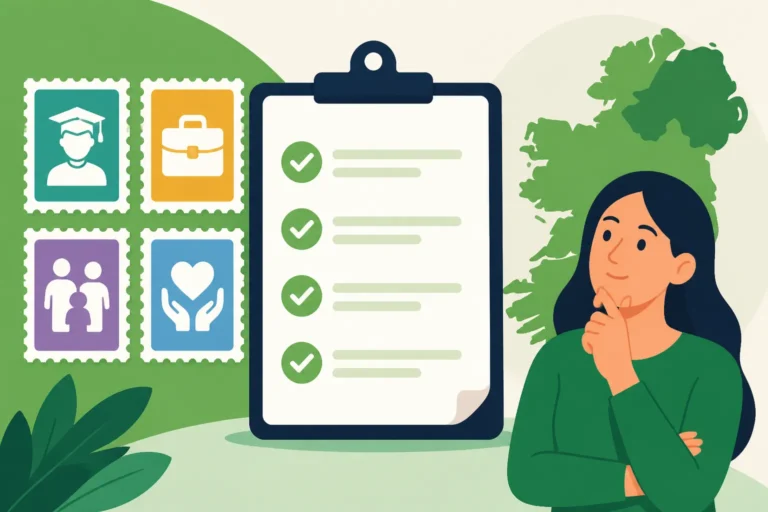
This is by far the most time-consuming part. Create a checklist and tick off each item. Always provide original documents where requested, or certified copies if originals are not required to be sent. Documents not in English must be accompanied by certified translations.
Essential Documents for Both Partners:
- Passports: Current passports and copies of all previous passports showing immigration stamps and travel history.
- Birth Certificates: Original or certified copies.
- Proof of Identity: National ID cards (if applicable), driver's licenses.
- Proof of Address: Utility bills (electricity, gas, internet), bank statements, official correspondence, tenancy agreements or mortgage statements from the last two years, clearly showing both names at the same address.
- Financial Documentation:
- Sponsor: Recent payslips (6-12 months), P60s/Employment Detail Summaries, bank statements (6-12 months) showing salary deposits, employment contract, tax returns.
- Applicant: Bank statements, proof of savings, any income from abroad.
- Police Clearance Certificates: From your home country and any country you've lived in for 6 months or more over the last 5-10 years.
- Proof of Relationship Longevity & Commitment:
- Marriage/Civil Partnership certificates of previous relationships (if applicable), with divorce/dissolution decrees.
- Joint bank accounts, shared credit cards. How to Open a Bank Account at an Irish Bank as a Foreigner can help with this.
- Shared tenancy agreements, property deeds.
- Joint insurance policies (e.g., car, home).
- Evidence of shared interests, hobbies, memberships.
- Photos of you together over the two-year period, with family and friends.
- Flight itineraries and hotel bookings from joint holidays.
- Communication records (e.g., call logs, WhatsApp messages, emails, if relevant and genuinely illustrative of sustained contact, though these are secondary to financial/cohabitation proofs).
- Witness statements or letters of support from family and friends, attesting to the genuine nature of your relationship.
- Any evidence of future plans together (e.g., property viewings, wedding planning if considering marriage, joint travel plans).
- Private Health Insurance Certificate: For the non-EEA partner, covering at least one year.
- Evidence of Previous Immigration Permissions in Ireland: If applicable, copies of IRP cards, previous permission letters, etc.
Step 2: Complete the Application Form
There isn't a specific standalone "de facto partnership visa form" readily available online for all scenarios. The process typically falls under "Non-EEA Family Reunification" and might involve contacting the ISD directly for the correct application form or guidance, especially if the sponsor is not an Irish/EEA national. For those sponsored by a Critical Skills Employment Permit holder, the process might involve an application for Dependant/Spousal/De Facto Partner permission. Always check the most current information on the Irish Immigration Service (ISD) website, as forms and procedures can change.
Ensure every section is filled out accurately and truthfully. Any discrepancies or omissions can cause significant delays or even refusal.
Step 3: Write a Detailed Cover Letter
This is your opportunity to narrate your story and summarise your evidence. The cover letter should:
- Clearly state the purpose of the application (permission to reside as a de facto partner).
- Introduce both partners, detailing your nationalities, current immigration status (for the sponsor), and PPS numbers.
- Provide a concise timeline of your relationship, including when and where you met, when you started cohabiting, and key milestones.
- Explain how your relationship meets the "akin to marriage" criteria, referencing the types of evidence you are providing.
- Address any potential ambiguities or gaps in your documentation (e.g., short periods of non-cohabitation with clear explanations).
- List all enclosed documents for easy cross-referencing.
This letter ties everything together and helps the case officer understand the context of your extensive documentation.
Step 4: Organise and Submit Your Application
Once you have everything, organise it neatly. A common and highly recommended approach is to:
- Place the cover letter at the very top.
- Follow with the completed application form.
- Then, group your supporting documents by category (e.g., identity, cohabitation, financial, relationship proof). Use dividers or tabs to make it easy for the case officer to navigate.
- Include a table of contents or a detailed checklist.
Applications are typically submitted by post to the dedicated Family Reunification Unit of the Immigration Service Delivery (ISD). Always send via registered post so you have proof of delivery. Keep a complete copy of your entire application for your records. Moving your life to Ireland requires a lot of paperwork, and if you've recently moved, you might have already dealt with some of this through a service like Sirelo, which can help with the logistical heavy lifting.
Step 5: Be Patient and Be Prepared for Queries
Processing times for de facto partnership applications can be lengthy. It's not uncommon for them to take several months, or even longer, due to the complexity and volume of applications.
- Don't chase too frequently: While it's tempting to call daily, wait until the stated processing times have passed before making enquiries.
- Respond promptly to requests: The ISD may request additional information or documents. Respond as quickly and comprehensively as possible to avoid further delays.
- Maintain your status: Ensure that the applicant maintains their current immigration permission (if any) while the de facto application is pending. Overstaying your previous permission can jeopardise your de facto application.
Life After Approval: What Your Permission Means
If your application is successful, congratulations! This is a huge milestone. But what exactly does this permission entail for your life in Ireland?
Immigration Stamp and Rights
Successful de facto partners are typically granted Stamp 4 permission. This is an excellent outcome, as Stamp 4 offers significant freedoms and stability:
- Ability to work: With Stamp 4, you are permitted to work in Ireland without the need for a separate employment permit. This opens up a world of opportunities, allowing you to contribute to the Irish economy and build your career here. You might be interested in exploring How to Get Your Foreign Qualification Recognised in Ireland if you plan to enter a regulated profession.
- Ability to study: You can also study in Ireland without needing an additional student visa.
- Access to certain public services: While private health insurance is initially mandatory, holding Stamp 4 can eventually grant access to some public services after a period of "ordinary residence." For a full understanding, reading The Expat Guide to the Medical Card and GP Visit Card in Ireland (2027) might be helpful down the line.
- Path to Long-Term Residency and Citizenship: Stamp 4 is a pathway to long-term residency and eventually, Irish citizenship through naturalisation, provided you meet the reckonable residence requirements. For more on this, check out Understanding Long-Term Residency and the Stamp 4 in Ireland.
Registering Your Permission with Immigration
Once your de facto partnership permission is granted, you will receive a letter from the ISD. You then need to register this permission at your local Garda National Immigration Bureau (GNIB) office or through the online registration system for Dublin residents. This is where you will get your Irish Residence Permit (IRP) card. The IRP card is your proof of registration and immigration permission in Ireland. You absolutely need to register promptly. For detailed guidance, see How to Register for an IRP Card with Immigration in Ireland.
Renewing Your Permission
Your initial Stamp 4 permission based on de facto partnership will typically be granted for a period of one to two years. Before it expires, you will need to apply for a renewal. The renewal process is generally less arduous than the initial application but still requires demonstrating that the relationship is continuing and that you continue to meet the financial requirements. You’ll need updated proof of cohabitation and financial stability, along with your expiring IRP card.
Maintaining Your Relationship and Records
Even after approval, it's wise to continue maintaining clear records of your shared life. Keep copies of joint bills, tenancy agreements, bank statements, and travel documents. Not only does this prepare you for renewals, but it also provides a continuous record should you eventually apply for Irish citizenship. Remember, the journey of building a life in Ireland as an expat is an ongoing one, and keeping your affairs in order makes every step smoother.
Final Thoughts on Your De Facto Partnership Application
Applying for de facto partnership permission in Ireland is a demanding but ultimately rewarding process for many couples. The key is thorough preparation, honest and comprehensive documentation, and a deep understanding of what the Irish immigration authorities are looking for. Don't be disheartened by the volume of paperwork; view it as an opportunity to meticulously document the genuine and loving relationship you share. Seek legal advice if your case is particularly complex, but empower yourself with knowledge first. Best of luck on your journey to building your life together in the Emerald Isle!
Disclaimer
Please note that immigration laws and policies in Ireland are subject to change. This guide provides general information based on current understanding as of 2026 and is not a substitute for professional legal advice. Always consult the official Irish Immigration Service (ISD) website or a qualified immigration solicitor for the most up-to-date and personalised guidance for your specific situation.