Is Healthcare Free in Ireland for Residents?
Many newcomers arrive in Dublin or Cork expecting a system like the UK’s NHS, only to be shocked when the GP receptionist asks for 65 Euro before they even see a doctor. The truth about whether healthcare is free in Ireland is complicated and often frustrating for expats. This guide explains exactly what you will pay for, who gets free care, and how to navigate the public-private divide.
The Concept of Ordinary Residence and Your Eligibility
When you first land in Ireland, you might assume that paying your PRSI (social insurance) through your paycheck entitles you to immediate free healthcare. Unfortunately, that is not how it works here. Eligibility for public health services is based on the concept of "ordinary residence" rather than your tax contributions. To be considered ordinarily resident, you must show the Health Service Executive (HSE) that you intend to live in Ireland for at least one year.
This administrative hurdle is one of the first major frustrations for expats. You may need to provide proof of your work contract, a long-term lease, or utility bills to convince the authorities that you aren't just passing through. If you cannot prove this, you might be treated as a private patient for everything, which can get incredibly expensive. Many expats use a flexible provider like SafetyWing during those first few months to ensure they have coverage while they are still getting their PPS numbers and local proof of address sorted.
Public vs Private vs Subsidized Care
Ireland operates a two-tier system that can feel quite contradictory. While there is a public health system (the HSE), it is not "free at the point of use" for the majority of the population. Instead, it is a subsidized system. Unless you hold a specific government-issued card, you will pay out-of-pocket for primary care, such as visiting a local family doctor.
The private system exists alongside the public one, often using the same consultants but in different wings of the same hospitals. For a deep dive into how these two worlds collide, you should read our guide on How Ireland's Health System Works: The HSE vs Private Explained (2027). Navigating this can be a headache, especially when you realize that even within the public system, there are varying levels of "free."
The One-Year Rule and Why It Matters
The "intent to stay for a year" rule is the gatekeeper for subsidized care. If you are a student or on a short-term work visa, the HSE might scrutinize your status. Once you are deemed ordinarily resident, you are entitled to the same subsidized public services as an Irish citizen. However, "entitled" does not mean "free." It simply means you pay the standard public rates instead of the much higher "non-resident" or "private" rates.
For digital nomads or those who aren't quite ready to commit to a year-long lease, the lack of immediate residency status can be a financial risk. This is where having a reliable international plan from SafetyWing can act as a safety net, covering you until you’ve officially crossed that residency threshold and can access the HSE system at the subsidized rate.
The Reality of Costs for the Average Resident
If you do not have a Medical Card, you are what the Irish system calls a "Category II" patient. This means you have to pay for almost everything at the primary care level. If you wake up with a sinus infection or need a prescription refill, your first stop is the GP. In major cities like Dublin or Galway, a single GP consultation usually costs between €60 and €75. If you need blood tests or a follow-up, those costs add up quickly.
We have a more detailed breakdown in our post on The Cost of Healthcare in Ireland: A Complete Breakdown for Foreigners (2026), but the general rule is to always have a small "health fund" set aside for these routine visits. Unlike some European neighbors, you don't get a portion of this back from the government later; it is a straight out-of-pocket expense.
Hospital Charges and Emergency Room Fees
The most common shock for expats is the A&E (Accident & Emergency) fee. If you walk into a public hospital's emergency room without a referral letter from a GP, you will be charged a flat fee of €100. This is designed to discourage people from using the emergency room for minor issues that a GP could handle. However, if you are referred by your GP, this fee is waived.
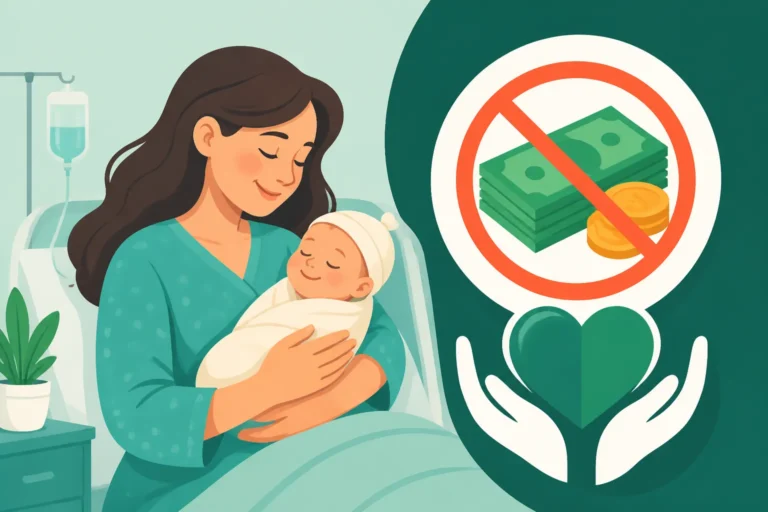
Once you are admitted to a public hospital as a public patient, the situation has actually improved recently. As of 2023, inpatient charges for public hospitals were abolished for all residents. This means if you are admitted for a three-night stay in a public ward, you won't receive a daily bed charge. You can find out more about these specific costs in Understanding Public Hospital Charges and the A&E Fee in Ireland.
The Drugs Payment Scheme (DPS)
While GP visits are expensive, Ireland has a very fair system for prescription medications called the Drugs Payment Scheme. No matter how much your medication actually costs—even if it is thousands of Euro for life-saving specialty drugs—no resident family has to pay more than €80 per month. This is a massive relief for those with chronic conditions.
You must register for this scheme; it doesn't happen automatically. It covers you, your spouse, and your children. For a step-by-step on how to get your card, check out Understanding the Drugs Payment Scheme (DPS) in Ireland. It is one of the few parts of the Irish system that feels genuinely supportive of the middle-class resident who doesn't qualify for a Medical Card.
| Service Type | Cost for Medical Card Holders | Cost for General Residents |
|---|---|---|
| GP Consultation | Free | €60 – €75 |
| Prescription Drugs | Small co-pay (€1.50/item) | Max €80 per month (DPS) |
| A&E (Emergency Room) | Free | €100 (Free with GP referral) |
| Public Hospital Inpatient | Free | Free |
| Specialist Consultant | Free (with long wait) | €100+ (public) / €250+ (private) |
Medical Cards and GP Visit Cards: The Path to Free Care
The only way to get truly "free" healthcare in Ireland is to qualify for a Medical Card. This card covers almost everything: GP visits, prescriptions (with a tiny co-pay), dental, optical, and hospital services. However, the catch is that it is means-tested. If you are an expat moving to Ireland for a high-paying tech or finance job, you are very unlikely to qualify.
For those on lower incomes or with specific long-term illnesses, the Medical Card is a lifesaver. There is also a middle-ground called the GP Visit Card. This card only covers the cost of seeing the doctor, but you still have to pay for your medications and other services. For a full explanation of the income thresholds, see The Expat Guide to the Medical Card and GP Visit Card in Ireland (2027).
The Means Test Frustration
The application process for these cards is notoriously bureaucratic. You will need to provide months of payslips, bank statements, and proof of your outgoings like rent or mortgage payments. The HSE looks at your "disposable income" after your essential bills are paid. Many expats find the process intrusive and slow, often taking months to get a decision.
If you are waiting for a decision on your card and get sick, you still have to pay the full price at the doctor's office. You cannot usually claim this back retrospectively. This gap in coverage is another reason why having temporary insurance like SafetyWing is a smart move, especially if you are transitioning between jobs or waiting for your administrative status to be confirmed.
Eligibility for Children and Seniors
There is some good news for families. In Ireland, all children under the age of 8 are eligible for a GP Visit Card regardless of the parents' income. This means your young children can see a doctor for free, though you will still pay for their medicine. Similarly, everyone over the age of 70 is entitled to a GP Visit Card. This universal approach for the young and old takes a significant weight off the shoulders of expat families.
Why Many Expats Opt for Private Health Insurance
If the public system is subsidized, why do nearly 50% of people in Ireland pay for private health insurance? The answer is simple: waiting lists. The public system in Ireland is plagued by some of the longest waiting lists in Europe. If you need a non-emergency procedure, such as a hip replacement or a specialized scan, you could be waiting for months or even years in the public system.
Private insurance allows you to bypass these lists and see a consultant in a matter of weeks. Companies like VHI, Laya, and Irish Life are the main players here. Most expats find that their employers provide health insurance as part of their benefits package. If yours doesn't, you should seriously consider buying it yourself. To understand the different plans, look at Health Insurance in Ireland: VHI, Laya, Irish Life and Options Explained.
Access to Private Hospitals
Having private insurance gives you access to private hospitals like the Beacon, Blackrock Clinic, or the Mater Private. These facilities feel more like hotels than hospitals, with private rooms and much faster service. Even with insurance, you may still have a "policy excess" (a fixed amount you pay per claim), but it is a fraction of the total cost.
When deciding whether to go private, it's a matter of peace of mind. Our guide on Public vs Private Healthcare in Ireland: Which Should Expats Choose? breaks down the pros and cons of each. For many, the ability to choose their own consultant and have a private room is worth the monthly premium.
Combining International and Local Coverage
A common strategy for expats, especially those who travel frequently or work remotely, is to use a combination of local and international coverage. While you might have a local Irish plan for major surgeries, an international provider like SafetyWing can be excellent for the times you are traveling back home or to other countries, providing a level of flexibility that local Irish insurers often lack.
It is also worth noting that if you have just arrived in Ireland and are over the age of 35, you might be hit with something called "Lifetime Community Rating" (LCR). This is a government-mandated loading on your insurance premium for every year you are over 34 and don't have local insurance. You have a grace period of nine months after moving to Ireland to get insurance without this penalty, so don't delay. You can find more details in our comparison on Is Public or Private Healthcare Better for Expats in Ireland?.
Important Disclaimer
The information provided in this guide is for general informational purposes only and does not constitute legal, financial, or medical advice. Healthcare regulations, costs, and eligibility criteria in Ireland are subject to frequent change by the Health Service Executive (HSE) and the Department of Health. Always verify your specific eligibility for the Medical Card, GP Visit Card, or public services directly with the HSE or a qualified professional. Prices mentioned are estimates based on 2024-2026 market averages and may vary by location.