How Do I Check What I Need to Move to Ireland?
Moving to a new country like Ireland can feel like staring at a giant, complicated jigsaw puzzle with half the pieces missing and no picture on the box. It’s easy to get overwhelmed trying to figure out the exact steps, the right order, and what paperwork you need before you even set foot on the Emerald Isle. This guide is here to help you piece together that puzzle, breaking down precisely what you need to consider and prepare for a smoother transition to life in Ireland.
Understanding Your Eligibility: The First Hurdle
Before you even dream of packing your bags, the absolute first thing you need to sort out is your legal right to live and, if applicable, work in Ireland. This isn't just a formality; it's the fundamental cornerstone of your entire move. Trust me, trying to do things backward or assume you'll figure it out when you arrive is a recipe for serious headaches and potential disappointment.
EU/EEA/Swiss Citizens: A Smoother Path
If you hold a passport from an EU/EEA country or Switzerland, you're in a much more straightforward position. Thanks to the principle of free movement, you generally don't need an employment permit or a specific visa to live and work in Ireland. You have the right to reside here, provided you meet certain criteria, like being employed, self-employed, a student, or having sufficient resources not to be a burden on the state.
While you don't need a visa, you still need to register your presence if you plan to stay for more than three months. For most, this means simply getting a Personal Public Service (PPS) Number, which is essential for working, paying taxes, and accessing public services. You'll also eventually need to register for your Irish Residence Permit (IRP) card if you're staying long-term, though the process for EU citizens is typically less cumbersome than for non-EU nationals. It’s more about confirming your presence rather than seeking permission. Even so, it's wise to read up on how EU/EEA and Non-EEA Citizens Move to Ireland: The Full Guide to understand the nuances of registration for longer stays.
Non-EU/EEA Citizens: Navigating the Permit Maze
Now, if you're coming from outside the EU/EEA/Switzerland, the landscape is considerably more complex, and frankly, it can be a bit of a bureaucratic minefield. Your eligibility hinges almost entirely on what kind of immigration permission you can secure. For most people looking to work, this means an employment permit.
Ireland has several types of employment permits, with the most sought-after being the Critical Skills Employment Permit. This is for highly skilled individuals in occupations that are in high demand in Ireland, such as in tech or healthcare. If your profession is on this list and you have a job offer meeting the salary threshold, this is your golden ticket. Otherwise, you might be looking at a General Employment Permit, which has a broader range of eligible occupations but typically more stringent conditions. It's crucial that your employer applies for this permit on your behalf before you move, as you cannot apply for it yourself. Without it, you simply cannot work legally in Ireland. For a deep dive into this, you'll want to check out How to Get an Employment Permit to Work in Ireland (2027) and especially The Expat Guide to the Critical Skills Employment Permit in Ireland (2027).
It's also worth noting that once you have your employment permit, you'll then need to apply for an entry visa (if you're from a visa-required country) to actually enter Ireland. Upon arrival, you'll register with immigration to receive your Irish Residence Permit (IRP) card, which will display your immigration "stamp" (e.g., Stamp 1 for employment). Understanding the Irish Immigration Stamp System (Stamp 1, 2, 4) (2026) is vital as this dictates what you can and cannot do in Ireland.
Considering Study or Retirement: Other Avenues
Moving to Ireland isn't solely about work, of course. Many choose to come here for educational purposes or to retire.
- Students: If you're coming to study, you'll need to secure acceptance into a recognised Irish educational institution. Once accepted, you'll apply for a long-stay 'D' student visa (if required for your nationality). This visa will grant you Stamp 2 immigration permission, which allows you to study and work part-time (usually up to 20 hours per week during term and 40 hours during holidays). After graduation, there are often schemes like the Third Level Graduate Scheme (leading to Stamp 1G) that allow you to stay and seek employment.
- Retirement or Independent Means: This path is generally more challenging and less common for non-EU/EEA citizens due to strict financial requirements. You would typically need to prove substantial financial independence, ensuring you won't be a burden on the state. The Stamp 0 is often associated with this, but it doesn't grant the right to work or access most public services. Requirements are very high and it's not a common route for general immigration.
Regardless of your reason for moving, the key takeaway here is: do your homework on immigration permissions first. It will save you immense heartache later. The official Irish Immigration Service Delivery (ISD) website is your best friend for accurate, up-to-date information.
Essential Pre-Arrival Checklist: What to Sort Before You Go
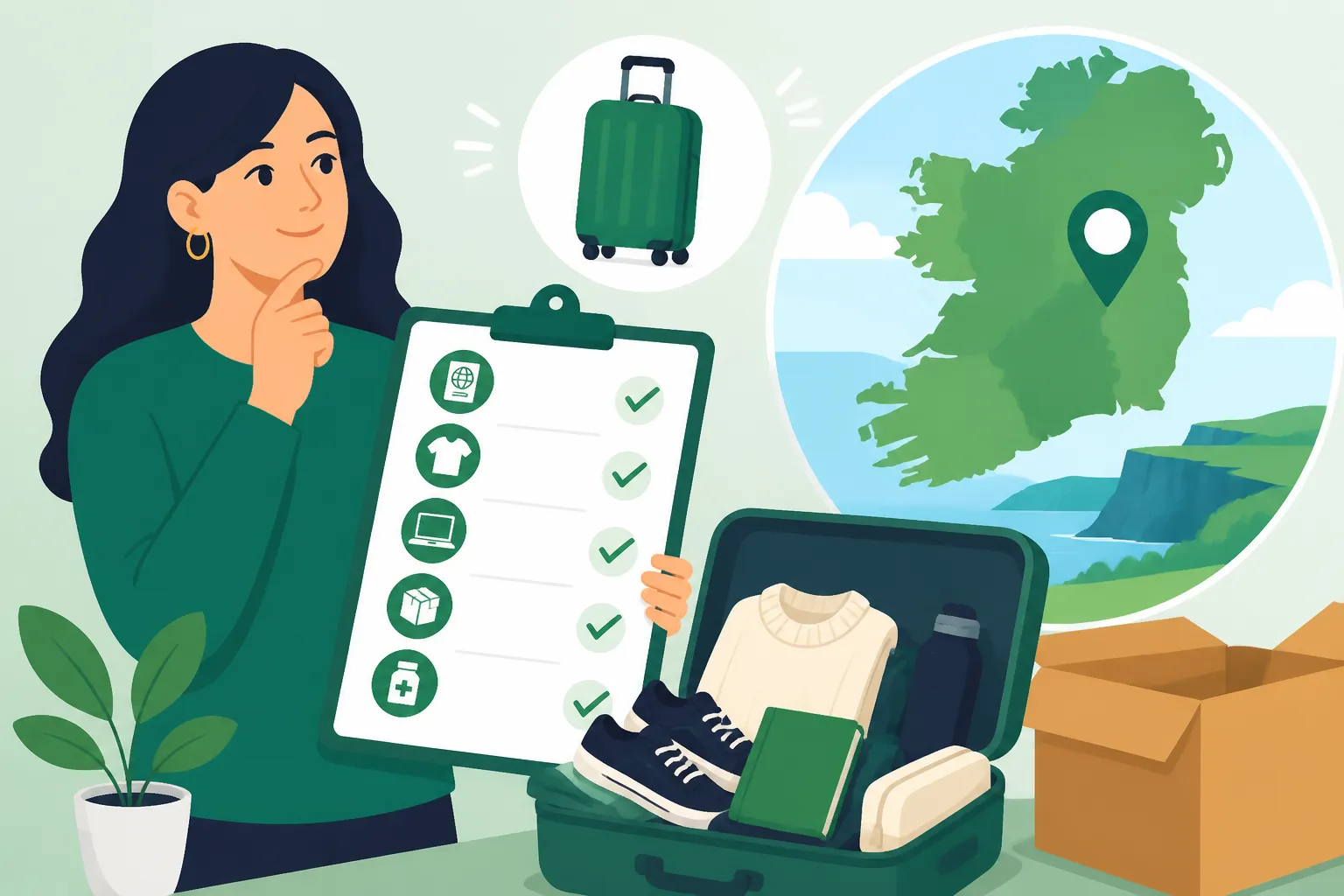
Once you've got your head wrapped around your eligibility and, ideally, have an employment permit or student acceptance in hand, it's time to start tackling the practicalities. This stage is all about preparation, ensuring you have everything lined up for a smoother landing.
Paperwork Pile: PPS, IRP, and Beyond
Ah, paperwork. The bane of every expat's existence, and Ireland is no exception. Beyond your visa and employment permit, there's a host of other essential documents you'll need, both for the move itself and for life once you arrive.
- Passport and Visa/Permit: Obvious, but ensure they are valid for well beyond your intended stay and that any necessary visas are stamped.
- Birth Certificates/Marriage Certificates: You'll need these for various registrations, especially if moving with family. Original documents, or certified copies, are often required.
- Academic Transcripts and Professional Qualifications: If you're working in a regulated profession (e.g., medicine, nursing, teaching), you'll need to get your qualifications recognised by the relevant Irish professional body. Even for other jobs, having these handy can be useful.
- Driving Licence: If you plan to drive, you'll need to understand the process for exchanging your foreign licence. More on that later, but bring your current one!
- Proof of Address: This is a big one. You'll need it for almost everything: opening a bank account, getting your PPS number, registering with a GP. This is often the trickiest part for newcomers, as you usually need an address to get an address. A letter from your employer or a short-term rental agreement can sometimes suffice initially.
- PPS Number Application: This is non-negotiable. You literally can't get paid, pay taxes, or access public services without it. You can't apply until you're in Ireland, but be prepared with all the required documents. This involves proving your identity, address, and 'need' for the number. A good starting point is our guide on How to Register for Tax and Get a PPS Number in Ireland.
- Irish Residence Permit (IRP) Registration: As a non-EU/EEA citizen, after you arrive and once you have your PPS number and a local address, you must register your immigration permission with the Garda National Immigration Bureau (GNIB) or local immigration office to get your IRP card. This card is your proof of legal residency in Ireland. Check out How to Register for an IRP Card with Immigration in Ireland for detailed steps.
Financial Foundations: Banks and Budgets
Money matters, especially when you're starting fresh in a new country. Sorting out your finances early will save you a lot of stress.
- Bank Account: You absolutely need an Irish bank account to receive your salary and manage daily expenses. Traditional banks like AIB and Bank of Ireland are popular, but digital banks like Revolut and N26 are also widely used by expats, often for their ease of setup and international transfer capabilities. Be warned, traditional banks can be notoriously slow and demanding when it comes to opening accounts for new arrivals, often requiring proof of address and PPS number that you might not have yet. It’s a bit of a chicken-and-egg situation! Our guide on The Expat Guide to Opening a Bank Account in Ireland has more details.
- Budgeting for the Move: Ireland can be expensive, especially in cities like Dublin. Factor in initial costs like flights, temporary accommodation, deposits for rentals, and the first month's rent. Don't forget setting-up costs for utilities, potentially buying furniture, and general living expenses before your first paycheck. Having a buffer is crucial. The Cost of Living in Ireland for Expats (2026) can give you a realistic overview.
- Transferring Funds: Decide how you'll get your money into Ireland. Services like Wise (formerly TransferWise) are excellent for international transfers, offering competitive rates and low fees compared to traditional banks.
- Credit History: Be aware that your credit history from your home country won't transfer. Building a credit history in Ireland takes time, which can impact things like getting loans or even certain phone contracts initially.
Finding a Home: The Renting Rollercoaster
Unless you're lucky enough to have employer-provided accommodation, finding a place to live is often the biggest headache for new arrivals. Ireland is currently experiencing a significant housing shortage, particularly in urban centres.
- Research Areas: Start researching areas that fit your budget, commute, and lifestyle. Dublin, Cork, and Galway are popular, but their rental markets are fiercely competitive. Places outside the main cities can be more affordable. The Best Places to Live in Ireland for Expats: A Complete Guide might offer some inspiration.
- Temporary Accommodation: It's highly advisable to book short-term accommodation for at least your first two to four weeks. This gives you a base while you actively search for a long-term rental, rather than rushing into something sight unseen.
- Be Prepared: When viewing properties, have your documents ready: proof of employment/study, references (previous landlord, employer), and proof of funds. Landlords and letting agents often get dozens of applications for a single property, so being organised is key. For more in-depth advice, check out The Complete Guide to Renting a Home in Ireland (2027).
- Deposit and First Month's Rent: Expect to pay a security deposit (typically one month's rent) and your first month's rent upfront. This is a significant outlay, so factor it into your initial budget.
Healthcare: Getting Covered from Day One
You absolutely don't want to be caught out without healthcare coverage. Understanding the Irish system can be confusing, as it's a mix of public and private options.
- Public Healthcare Entitlement: Once you are "ordinarily resident" in Ireland (meaning you intend to live here for at least one year), you are generally entitled to public health services. This means you can access a GP and public hospitals, though some services require fees or may have waiting lists.
- Private Health Insurance: Many expats opt for private health insurance to supplement public care, gain faster access to specialists, and avoid public hospital charges. Providers like VHI, Laya, and Irish Life Health are dominant in the market. For comprehensive international coverage, particularly before you're fully integrated into the local system, a provider like Cigna Global can offer peace of mind, especially if you anticipate needing certain treatments that might have waiting periods under local schemes. It's often recommended to have some form of insurance from day one. Our guide to The Complete Guide to Healthcare in Ireland for Expats (2027) is a must-read.
- European Health Insurance Card (EHIC): If you're an EU/EEA/Swiss citizen, your EHIC provides access to medically necessary public healthcare during your initial temporary stay, but it's not a substitute for comprehensive long-term coverage in Ireland.
- Registering with a GP: One of the first things you should do after settling in is register with a local GP (General Practitioner). This is your primary point of contact for non-emergency medical care and referrals to specialists. Finding a GP who is taking new patients can sometimes be a challenge, so start early.
Life on the Ground: Your First Weeks and Months in Ireland
You’ve arrived! The initial rush is over, but now the real work of settling in begins. The first few weeks and months are all about getting firmly established and navigating daily life.
Immigration Registration: Your IRP Card
For non-EU/EEA citizens, one of the most critical tasks upon arrival is to officially register your immigration permission. This is what transforms your entry visa into a legal right to reside here for the duration of your permit.
- Making an Appointment: Depending on where you live, you’ll either book an appointment online with the Garda National Immigration Bureau (GNIB) in Dublin (which can be notoriously difficult to get), or visit your local Garda (police) station if you're outside Dublin. Do this as soon as you can.
- Required Documents: You'll need your passport, your employment permit (if applicable), proof of address, and a debit/credit card to pay the registration fee (currently €300). They'll take your fingerprints and photograph.
- The IRP Card: Once processed, you'll receive your Irish Residence Permit (IRP) card in the mail, usually within a week or two. This small plastic card is your proof of legal residency in Ireland and will state your immigration 'Stamp' (e.g., Stamp 1, Stamp 2, Stamp 4). Keep it safe, as you'll need it for various identification purposes and when re-entering Ireland. Remember, the IRP card is your key to remaining legally in Ireland, and understanding the different stamps, as detailed in Understanding the Irish Immigration Stamp System (Stamp 1, 2, 4) (2027), is crucial for knowing your rights and limitations.
Setting Up Utilities and Services
Getting your home running smoothly means connecting to essential services.
- Electricity and Gas: Ireland's energy market is competitive, with several providers like ESB, Bord Gáis Energy, Electric Ireland, and SSE Airtricity. You'll need to choose a supplier, provide meter readings, and set up an account. You'll typically need your new address and possibly your PPS number for this.
- Broadband and Mobile Phone: Fast internet is widely available, with major providers including Eir, Vodafone, Virgin Media, and Sky. Mobile phone networks are also robust. Shop around for packages that suit your needs. You can usually get a pay-as-you-go SIM card easily, but contract phones might require proof of address and a bank account.
- Moving Your Belongings: Shipping your possessions can be a significant undertaking. Research international moving companies well in advance. Consider what you truly need and what can be replaced locally, as shipping costs can add up. Many expats find services like Sirelo invaluable for comparing removal quotes and finding reputable movers for their international relocation, helping you choose between sea freight, air freight, or partial loads.
Here's a quick overview of essential documents and when you might need them:
| Document Type | When You'll Need It | Notes |
|---|---|---|
| Passport | Travel, immigration registration, proof of ID | Ensure validity well beyond your planned stay. |
| Visa/Employment Permit | Entry to Ireland, immigration registration, starting work | Crucial for non-EU/EEA. Obtain before moving. |
| Proof of Address (Ireland) | PPS Number application, bank account, GP registration, utilities, IRP card | Often the hardest to get initially. Employer letter or temporary rental agreement can help. |
| PPS Number | Working, paying taxes, accessing public services, healthcare | Apply after arrival with proof of ID, address, and a 'need'. |
| IRP Card | Proof of legal residency, re-entry to Ireland, general ID | Register with immigration after arrival (non-EU/EEA only). |
| Driving Licence (Home Country) | Driving in Ireland, exchanging for an Irish licence | Bring original. May be valid for a period depending on country of issue. |
| Birth/Marriage Certificates | Family reunification, school enrolment, some official registrations | Original or certified copies may be required. |
| Educational/Professional Docs | Job applications, professional body registration, study applications | If needed for work, ensure they are translated and verified if necessary. |
| Health Insurance Policy | Accessing private healthcare, proof of coverage (especially if non-EU/EEA & awaiting public) | Essential for peace of mind, especially early on. |
| Bank Statements/Proof of Funds | Visa applications, proving financial stability for landlords | For initial entry and rental applications, having recent statements showing sufficient funds is beneficial. |
| References (Employer/Landlord) | Rental applications, job applications | Have written references ready; they speed up the rental process immensely. |
Getting Around: Transport and Licences
Navigating Ireland’s transport system is another important aspect of settling in.
- Public Transport: In Dublin, you'll find an extensive bus network, the Luas (tram), and the DART (commuter rail). Cork, Galway, Limerick, and Waterford also have good local bus services. The Leap Card is essential for discounted fares on most public transport. Our guide to The Expat Guide to Public Transport in Ireland has all the details.
- Driving: If you plan to drive, you'll need to understand the rules for your foreign licence. Depending on your country of origin, you might be able to simply exchange it for an Irish licence, or you might have to take a full driving test. Generally, you can drive on a valid foreign licence for up to 12 months, but after that, you must have an Irish licence. Get started on this process early. How to Exchange a Foreign Driving Licence in Ireland is your go-to resource.
- Buying a Car: If you decide to buy a car, be aware of the costs involved beyond the purchase price, including Vehicle Registration Tax (VRT), motor tax, and potentially high insurance premiums for new drivers in Ireland.
Navigating Irish Culture and Building a Life
Beyond the paperwork and logistics, truly moving to Ireland means embracing its unique culture and building a new life.
- The Irish Way: Be prepared for a blend of friendly banter, a relaxed pace (sometimes too relaxed for those used to efficiency), and a deep appreciation for craic (fun and lively conversation). Don't be afraid to strike up conversations; the Irish are generally very welcoming.
- Community and Social Life: Join clubs, societies, or expat groups. Websites like Meetup.com or local community centre listings can be great resources. Building a social network is crucial for well-being.
- Weather Realities: Yes, it rains. A lot. Embrace layers, waterproofs, and the beauty of green landscapes. Don't let the weather dampen your spirits – there's plenty to do indoors, too!
- Continuous Learning: The landscape of expat life is always evolving. Stay informed about changes to immigration rules, tax laws, or healthcare entitlements. Resources like The Complete Guide to Moving to Ireland: Your First 90 Days (2027) can be incredibly helpful for ongoing guidance.
Moving to Ireland is an adventure, filled with both excitement and challenges. By systematically tackling the requirements, getting your paperwork in order, and being prepared for the practicalities, you can significantly ease your transition. Don't be afraid to ask for help, connect with other expats, and most importantly, enjoy the journey of making Ireland your new home.
Disclaimer
The information provided in this guide is for general informational purposes only and does not constitute legal, financial, or immigration advice. While we strive to keep the information up-to-date and accurate, regulations and procedures in Ireland can change. Always consult official government websites (such as the Irish Immigration Service Delivery, Revenue, and Citizens Information) or seek professional advice from qualified legal or immigration experts for your specific situation. Reliance on any information in this guide is solely at your own risk.