How Do I Get the NCT (Car Test) Done in Ireland?
One of the first real tests of your patience and ability to navigate Irish bureaucracy as an expat often comes when you need to get your car road legal. The NCT, or National Car Test, is a rite of passage for every car owner here, and it can feel like a daunting gauntlet of checks and potential re-tests. This guide will walk you through exactly how to get your vehicle NCT'd in Ireland, offering practical, expat-friendly advice to help you pass with flying colours and minimal stress.
Understanding the NCT – What it is and Why it Matters
When you first arrive in Ireland, everything feels new and exciting, but then the realities of day-to-day life, like vehicle compliance, start to set in. The NCT is one of those essential hurdles. It’s not just a formality; it’s a critical part of ensuring road safety across the country.
The Purpose of the NCT and Who Needs It
The National Car Test (NCT) is essentially a mandatory roadworthiness inspection for most vehicles in Ireland. Think of it as a comprehensive health check for your car, designed to ensure it meets minimum safety and environmental standards. From the brakes and tyres to the lights and emissions, pretty much every critical component of your vehicle will be scrutinised.
Now, who exactly needs to get this done? Generally, private cars over four years old must undergo an NCT. For example, if you bought a brand-new car in 2022, its first NCT would be due in 2026. However, vehicles between five and nine years old need an NCT every two years, while cars ten years old and over require an annual test. It's a bit different for newer cars, which get a grace period. If you’re bringing in an imported vehicle, the rules can vary slightly depending on its age and origin, but generally, it will need to pass an NCT relatively soon after registration. Driving without a valid NCT certificate is a no-no; it can lead to fines, penalty points, and potentially even invalidate your car insurance in the event of an accident. Trust me, you don't want to find yourself in that situation, especially when you're still getting to grips with all the other aspects of How Much Is Car Insurance in Ireland?.
The goal of the NCT isn't to catch you out, even though it can sometimes feel that way. It's truly about preventing accidents caused by mechanical failures. An NCT certificate means your car is deemed safe enough to be on the road, giving you and other road users peace of mind.
NCT Frequency and Initial Test Requirements
The frequency of your NCT depends heavily on the age of your vehicle, and it’s one of those things that can trip up new arrivals. For private cars:
- Under 4 years old: No NCT required. These cars are considered new enough to be roadworthy without an inspection.
- Between 4 and 9 years old: Requires an NCT every two years. So, if your car is 5 years old and passed its NCT last year, it won't be due again until next year.
- 10 years old and over: Requires an NCT every year. Once your car hits this age, you’ll be seeing the NCT centre annually.
For imported vehicles, the rules can be a bit more immediate. If you've just gone through the process of Can I Import My Car to Ireland? and registered your car here, it will need an NCT based on its date of first registration in its country of origin, not when it was first registered in Ireland. So, if you've brought over a six-year-old car, it will need an NCT fairly quickly if its last test was more than two years ago. The exact timeline for imported vehicles to get their first Irish NCT will be communicated during the vehicle registration process with Revenue and the National Driver Licence Service (NDLS), so pay close attention to all correspondence you receive. Many expats find that the initial period after moving to Ireland, especially when dealing with vehicles, can be incredibly hectic. If you've just used a service like Sirelo for your big move, remember to factor in this initial NCT for your vehicle as part of your overall settling-in checklist. It’s just one more thing on the list when you’re figuring out The Complete Guide to Moving to Ireland: Your First 90 Days (2027).
Booking Your NCT and Preparing Your Vehicle
Okay, so you know what the NCT is and why it's important. Now for the practical part: how do you actually get it done? This stage is all about planning and preparation.
The Booking Process – Online, Phone, and What You Need
Booking your NCT appointment is surprisingly straightforward, which is a relief amongst the other administrative hurdles here. You have two main options:
- Online: The easiest and most common method is through the official NCT website, www.nct.ie. You'll need your vehicle registration number, your personal details, and a payment method. The website is pretty intuitive, allowing you to select your preferred test centre and check available dates and times. Be aware that popular centres, especially in major cities like Dublin or Cork, can have long waiting lists, so it’s always best to book well in advance of your NCT due date. I’m talking months, not weeks, sometimes!
- Phone: You can also book by calling the NCT helpline at 01 413 5992. This might be a good option if you have specific questions or need assistance, though for most people, the online system is quicker.
When you’re booking online, having a reliable internet connection is key. For those moments when you're on the go and need to secure that booking, having an eSIM from a provider like Airalo can be incredibly handy, ensuring you're never scrambling for Wi-Fi. It’s a small detail, but a consistent data connection can make all the difference when dealing with time-sensitive online tasks.
You’ll also need to decide which NCT centre to use. There are centres all over the country, from large ones in cities to smaller regional ones. Choose one that’s convenient for you, perhaps near your home or workplace. Once you’ve booked, you’ll receive a confirmation with your appointment details. Make sure you hold onto this, as it will have all the specifics, including what documents to bring on the day.
Preparing Your Car for the Test – What to Check
This is where you can really make a difference to your chances of passing first time. Many NCT failures are due to simple, easily preventable issues. Think of this as your pre-flight checklist.
Here’s a detailed breakdown of what to inspect before your appointment:
- Lights: This is a big one. Check all your lights – headlights (high and low beam), sidelights, indicators, brake lights (get a friend to help with these), reverse lights, fog lights, and even your number plate lights. Ensure they are all working and correctly aligned. Replace any blown bulbs. This is one of the most common reasons for failure.
- Tyres: Inspect the tyre tread depth (must be at least 1.6mm across the central three-quarters of the tread), and check for any bulges, cracks, or damage to the sidewalls. Also, make sure all four tyres are the same type (e.g., all radial) and of a compatible size, and crucially, check the tyre pressures. Don't forget the spare tyre if you have one, although it's not tested for roadworthiness, it should be in good condition.
- Fluid Levels: Ensure your engine oil, brake fluid, power steering fluid, and windscreen washer fluid are all at the correct levels. While these aren't always a direct fail point, low levels can indicate underlying issues that might be.
- Wipers and Washers: Make sure your windscreen wipers are clearing the screen effectively and that the washer jets are working and aimed correctly. Torn or ineffective wiper blades are an easy fix that can prevent a re-test.
- Seatbelts: Check all seatbelts for proper operation. They should retract smoothly, latch securely, and show no signs of fraying or damage.
- Horn: Give it a quick toot. It needs to work!
- Warning Lights: If any warning lights are illuminated on your dashboard (e.g., engine light, ABS light, airbag light), get them checked out by a mechanic before your test. These are almost guaranteed fails.
- Documentation: On the day, you'll need your Vehicle Registration Certificate (VRC) or your Log Book, and a form of identification. If someone else is bringing the car for you, they'll need a letter of authorisation from you as the registered owner.
- Cleanliness: While not a test point, a clean car, inside and out, creates a good impression and allows the inspector to clearly see all components. Remove any clutter, especially from the boot and around the driver's footwell.
- Number Plates: Ensure your number plates are clean, securely fixed, and correctly displayed, both front and back. They must also be in good condition, not faded or obscured.
Getting a pre-NCT check from a trusted mechanic can be a worthwhile investment, especially if you’re not mechanically inclined. They can often spot potential problems that you might miss, saving you the hassle and cost of a re-test. This proactive approach can make the process much smoother, letting you focus on other aspects of Driving in Ireland: Licences, Registration and Rules for Expats (2027).
What Happens on Test Day and Understanding the Results
You’ve booked, you’ve prepared, now it’s time for the big day. Knowing what to expect when you arrive at the NCT centre can really help calm those pre-test jitters.
Arriving at the NCT Centre and the Inspection Process
When you arrive at the NCT centre, you’ll typically be directed to a parking area. Head inside to the reception with your booking confirmation, vehicle registration certificate/log book, and ID. You'll check in, potentially pay the test fee if you haven't already (though it's usually paid online during booking), and then you’ll be asked to wait. The centres generally run quite efficiently, but delays can happen, so bring a book or ensure your phone is charged – again, Airalo’s data plans can keep you connected if you need to pass the time!
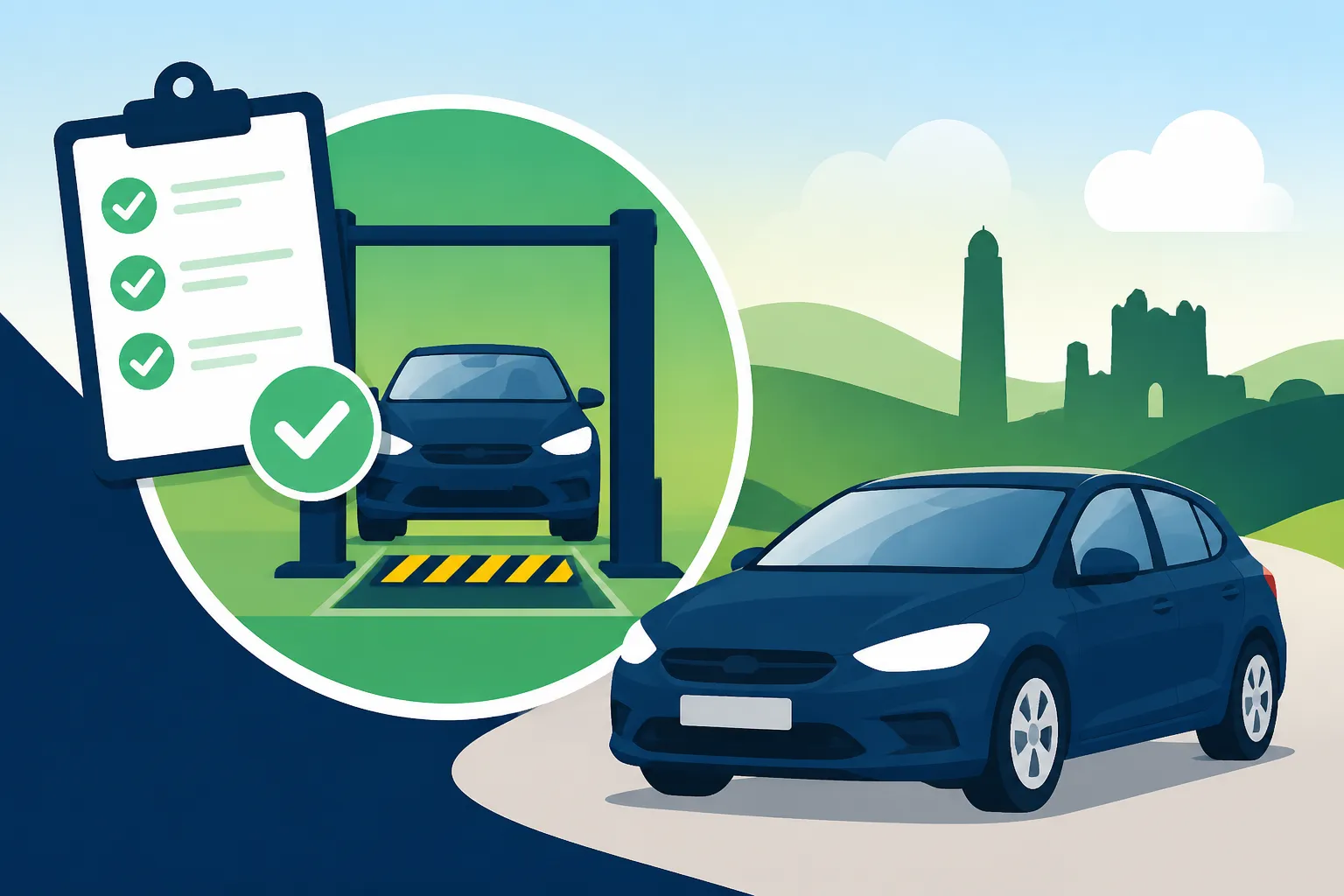
Once your car is called, an NCT inspector will take it into the test lane. You won't be with your car during the actual inspection; you'll wait in a designated area. The inspection itself is thorough and typically takes between 40 to 60 minutes. The inspector will perform a series of automated and manual checks, including:
- Visual Inspection: Checking for general condition, bodywork damage, rust, and the presence of necessary components.
- Brakes: Rigorous testing of the braking system on specialised equipment to measure efficiency and balance.
- Lights and Electrics: Checking all lights for operation, alignment, and intensity. Wiring and electrical components are also examined.
- Tyres and Wheels: Assessing tread depth, condition, and wheel bearings.
- Steering and Suspension: Testing the play in the steering, the condition of shock absorbers, and overall suspension integrity.
- Emissions: Measuring exhaust gas levels to ensure the car meets environmental standards. This is a common fail point for older diesel cars.
- Underbody: The car will be lifted to check for corrosion, leaks, and the condition of exhaust systems and structural components.
- Interior: Seatbelts, horn, speedometer accuracy, and dashboard warning lights are all checked.
The inspectors are professional and thorough. They follow strict guidelines to ensure consistency across all tests. Remember, they're not there to fix your car, but to assess its current condition against safety standards.
Interpreting Your NCT Report – Pass, Fail, and Re-Tests
Once the test is complete, you'll receive your NCT report. This document is crucial and will outline your vehicle's performance. There are a few possible outcomes:
- Pass: Congratulations! Your car has met all the NCT standards. You’ll be issued with an NCT certificate, which is valid for the appropriate period (one or two years, depending on your car's age). This certificate should be displayed on your windscreen. You’re good to go!
- Pass with Minor Defects: Your car has passed the test, but some minor issues were noted that didn't warrant a failure. These are advisory items that you should get fixed soon, but they won't prevent you from receiving your certificate.
- Fail (Major Defects): Your car has failed due to one or more significant issues that pose a safety risk or environmental concern. You will not receive an NCT certificate. The report will clearly list all the major defects.
- Fail (Dangerous Defects): This is the most serious outcome. Your car has failed due to a defect that is considered a direct and immediate risk to road safety. In this scenario, your car is deemed unroadworthy, and you should not drive it until the dangerous defect is rectified.
If your car fails, you'll need to get the identified defects repaired by a mechanic. You then have 21 days or 4,000 kilometres (whichever comes first) to present your car for a re-test. If you miss this window, you’ll have to pay for a full new test. The re-test fee depends on the type of re-test required:
| Re-Test Type | Fee (Approx. 2024) |
|---|---|
| Visual Only (e.g., lights, wipers, horn) | €28 |
| Centre-based (e.g., emissions, brake check) | €28 |
| Full Re-test (if you miss the 21-day window) | Full NCT Fee (€55) |
| No re-test fee for specific minor items fixed | €0 |
Note: Fees can change, so always check the official NCT website for the most current pricing.
The NCT report is quite detailed, highlighting exactly what failed and why. Common major failures often include emissions, headlight alignment, brake efficiency, and tyre condition. Don’t be discouraged if you fail; it happens to many people. Just view it as an opportunity to ensure your car is truly safe for the road. For many expats, this process might even remind them of the various inspections their belongings went through when moving to Ireland. If you shipped a car as part of your relocation, using a platform like Sirelo might have involved similar checks for your possessions upon arrival, so you’re already well-versed in inspections!
Common NCT Pitfalls and Expat-Specific Advice
Navigating the NCT can be a bit tricky, but with the right mindset and preparation, you can sail through it. Let's look at common problems and how expats can best approach this system.
Top Reasons for NCT Failure and How to Avoid Them
It's astonishing how often cars fail the NCT for issues that are relatively simple to fix. Here are some of the most frequent culprits and how you can proactively avoid them:
- Lights: As mentioned, this is a huge one. Misaligned headlights, blown bulbs (even a single one!), or incorrect light colours can lead to failure. Before your test, ask a friend to help you check every single light, including your brake lights, reverse lights, fog lights, and even your number plate lights. Headlight alignment is a bit trickier and usually requires a mechanic, but if your lights seem off, get them checked.
- Tyres: Worn tyres are a major safety hazard and an NCT failure point. Ensure your tread depth is above the legal minimum (1.6mm) and that there are no cuts, bulges, or damage to the sidewalls. Also, check that your tyre pressures are correct – this can affect handling and even fuel efficiency.
- Emissions: For many older vehicles, especially diesels, high emissions are a common problem. If your car is prone to this, consider taking it for a good long drive at motorway speeds before the test to help clear out the exhaust system. Some mechanics can also run a diagnostic check and perform an emissions-specific service.
- Brakes: Uneven braking or poor brake efficiency is another major safety issue. If your car pulls to one side when braking, or if the brake pedal feels spongy, get it checked by a mechanic. The handbrake also needs to be effective.
- Windscreen Wipers and Washers: Sounds minor, but a damaged wiper blade or a non-functioning washer jet is an automatic fail. Replace worn blades and ensure your washer bottle is full.
- Warning Lights: Any illuminated warning light on your dashboard (e.g., engine light, ABS, airbag, ESP) will result in a failure. These indicate an underlying fault that needs professional attention.
- Oil Leaks: Drips or significant oil leaks are an environmental concern and can lead to a failure. Have any leaks investigated and repaired.
- Interior Issues: Loose or non-functioning seatbelts, a missing spare wheel (if applicable and stated by the manufacturer), or an inaccurate speedometer can also cause problems. Ensure all seatbelts retract properly and are free from damage.
By being diligent with these common areas, you significantly increase your chances of a first-time pass. A little preparation goes a long way and helps you understand the general requirements for How Do I Register and Tax a Car in Ireland?.
NCT for Imported Vehicles and Dealing with Bureaucracy
For expats, the NCT process can have an added layer of complexity if you've brought your car from abroad. You’ve just navigated Can I Import My Car to Ireland? and the Vehicle Registration Tax (VRT) — now comes the NCT.
- Initial NCT for Imports: As mentioned earlier, imported vehicles need an NCT based on their original registration date. This can sometimes mean you need to get an NCT very soon after your car has been registered in Ireland, even if you’ve only just gotten it on Irish plates. It's an extra step that can feel a bit overwhelming when you're still adjusting to your new life here, figuring out things like The Expat Guide to Setting Up Utilities (Electricity, Gas, Water) in Ireland.
- Documentation: Ensure you have all the original vehicle documentation, including its previous registration certificate and any customs clearance papers. While the NCT focuses on the car's mechanics, having all your paperwork in order for the check-in is vital.
- Vehicle Specifications: Be aware that some minor differences in vehicle specifications between countries (e.g., headlight beam patterns in cars from left-hand drive countries) might need adjustment to meet Irish standards. If you’ve imported a car from a country that drives on the right-hand side, you’ll almost certainly need to get your headlights adjusted for driving on the left in Ireland, or it will fail its NCT. This is a common and often overlooked requirement.
- Emissions Standards: Different countries have varying emissions standards. If your imported car is older, it might struggle to meet Ireland's current emissions requirements. A pre-NCT check is highly recommended for imported vehicles for this very reason.
Dealing with the NCT, much like How Do I Exchange My Foreign Driving Licence in Ireland?, is just one of many administrative tasks that define the expat experience here. It can be frustrating, especially when you feel like you're constantly jumping through hoops. But remember, it's a standardised process for everyone, locals and expats alike. Take a deep breath, follow the steps, and don't hesitate to seek advice from a local garage if you're unsure about anything. Having a good local mechanic on speed dial will save you a world of pain and help you maintain your vehicle properly for its yearly or biennial checks.
Disclaimer
The information provided in this guide is for general informational purposes only and does not constitute professional advice. While we strive to keep the information up-to-date and accurate, regulations and procedures in Ireland can change. Always consult the official National Car Testing Service (NCTS) website (www.nct.ie) or relevant government bodies for the most current and specific information regarding your situation.