How Do I Buy a Motorbike or Scooter in Ireland?
Ah, the romance of the open road, isn't it? When you first arrive in Ireland, you might be dreaming of zipping along the Wild Atlantic Way or navigating Dublin's bustling streets on two wheels, feeling the wind in your hair and truly immersing yourself in the landscape. But then, reality hits: getting a motorbike or scooter here isn't quite as straightforward as walking into a shop and riding off. There's a particular process, a unique set of rules, and a few bureaucratic hoops that can feel incredibly daunting for anyone new to the system. This guide is here to walk you through every single step, from understanding the peculiar Irish licensing categories to finding the perfect ride and getting it legally on the road, validating every frustration you might encounter along the way.
Understanding the Irish Landscape for Two-Wheelers
Let's be honest, the Irish licensing system for motorbikes and scooters can feel like a labyrinth, especially if you're coming from a country with a simpler structure. It’s designed for safety, which is great, but the path to a full licence involves several stages and takes time, money, and patience. Don't be disheartened; countless expats have navigated it before you, and so can you.
Licence Requirements: The A, A1, A2, and AM Categories
In Ireland, you can't just get a "motorcycle licence" – it’s broken down into specific categories based on the power output of the bike. This staged approach means you typically start small and work your way up. It’s a bit like learning to walk before you run, but with a lot more paperwork!
The categories are as follows:
- AM (Mopeds and Light Quadricycles): This is for lightweight two- or three-wheel vehicles with a maximum design speed of 45 km/h and an engine capacity not exceeding 50cc (for internal combustion) or a maximum continuous rated power of 4kW (for electric motors). You can apply for a learner permit at 16, and after passing the relevant tests, you can get a full AM licence. Think small scooters, perfect for urban commuting if you're just starting out or prefer a more relaxed pace.
- A1 (Light Motorbikes): This category covers motorcycles with an engine capacity of up to 125cc, a power output of up. to 11kW, and a power-to-weight ratio not exceeding 0.1kW/kg. You can apply for a learner permit at 16. This is often the starting point for many new riders in Ireland, offering a bit more grunt than an AM but still manageable. You'll see a lot of these smaller bikes around, especially in cities like Cork or Galway, as they're economical and easier to handle for beginners.
- A2 (Medium Motorbikes): For motorcycles with a power output not exceeding 35kW and a power-to-weight ratio not exceeding 0.2kW/kg, and not derived from a vehicle of more than double its power. You need to be at least 18 years old to apply for an A2 learner permit. This is the next logical step for many riders, offering a significant increase in power and capability. If you've got some experience on an A1, this is a great progression.
- A (Unrestricted Motorbikes): This is the full, unrestricted motorcycle licence, allowing you to ride any motorcycle regardless of engine size or power. You must be at least 24 years old, or have held an A2 licence for a minimum of two years. If you're an experienced rider arriving from abroad, this is likely your ultimate goal, but be prepared for the process to still require a foundational understanding of the Irish system.
It's a step-by-step ladder, so if you're 16 and want to eventually ride a powerful motorbike, you'll start with an A1 learner permit, progress to an A1 full licence, then after two years, you can move to an A2, and two years after that, to an unrestricted A. It’s a long game, but it's all about ensuring you gain experience safely on Irish roads.
Initial Basic Training IBT and Progression
Forget just hopping on a bike with an experienced friend and figuring it out. In Ireland, you're required to complete Initial Basic Training (IBT) if you're applying for a first-time learner permit in the motorcycle categories A, A1, A2, or AM. This is a mandatory training course with a certified instructor, and it's a crucial part of the journey.
IBT isn't just a quick lesson; it's a structured programme that ensures you have fundamental riding skills before you ever hit the public roads unsupervised. For a standard A1 or A2 licence, it typically involves 16 hours of training, broken down into multiple modules. These cover everything from motorcycle controls and basic maintenance to road positioning, hazard awareness, and emergency braking. For AM, it’s a shorter 6-hour course. You'll learn on a designated training area and eventually, in a controlled environment on public roads. You'll get an IBT certificate upon successful completion, which you'll need for your practical driving test.
The typical progression looks like this:
- Apply for a Learner Permit: You need to pass a driver theory test first, specific to motorcycles. Then apply to the National Driver Licence Service (NDLS) for your relevant category learner permit.
- Complete IBT: Find an Approved IBT Instructor (searchable on the Road Safety Authority website) and complete your training.
- Practice on your Learner Permit: Once you have your IBT certificate and learner permit, you can ride on public roads. However, there are strict restrictions: you must display L-plates, you cannot carry a pillion passenger, and you cannot ride on motorways. Your learner permit has a validity of two years.
- Take the Practical Driving Test: After holding your learner permit for at least six months (and having completed IBT), you can apply for your practical driving test. This test assesses your ability to ride safely and competently in various road conditions.
- Apply for a Full Licence: Once you pass the practical test, you can finally apply for your full licence.
This process is designed to be thorough, and it can feel drawn out, especially if you're eager to get going. But it's vital for your safety and the safety of others on the road. For more details on the general rules for newcomers, take a look at our guide on Driving in Ireland: Licences, Registration and Rules for Expats. If you have a foreign driving licence already, there are also specific rules about How to Exchange a Foreign Driving Licence in Ireland.
The Cost of Learning and Licencing
Let's talk brass tacks: learning to ride and getting licenced in Ireland isn't free, and the costs can add up. Budgeting properly from the outset will save you a lot of stress.
Here’s a breakdown of typical expenses:
| Item | Estimated Cost (EUR) | Notes |
|---|---|---|
| Driver Theory Test | €45 | Mandatory before applying for a learner permit. |
| Learner Permit | €35 | Valid for two years. |
| Initial Basic Training (IBT) | €400 – €700 | Varies by instructor and location (Dublin tends to be higher). Covers the 16-hour course. |
| Practical Driving Test | €85 | Fee for the test itself. |
| Full Driving Licence | €55 (10-year) | Cost for the actual plastic card once you pass. |
| Additional Lessons | €50 – €70 per hour | Most people need a few extra lessons closer to their test date, typically 3-5 hours. |
| Motorbike/Scooter Rental for Test | €100 – €150 | If you don't own a suitable bike or your instructor provides one for the test. |
| Protective Gear | €500 – €1,500+ | Helmet, jacket, gloves, trousers, boots – a non-negotiable safety investment. |
So, you're looking at a minimum of €1,000 to €2,000 just for the training and licencing process, not including the cost of the bike itself or insurance. This is a significant investment, and it’s important to factor it into your overall What Is the Cost of Living in Ireland for Expats? It might seem steep, especially when you consider it's not a one-off payment but spread across the various stages of your progression. But remember, it’s an investment in your safety and your ability to enjoy the freedom of two wheels in this beautiful country.
Finding Your Ride: New vs. Used Market
Once you’re on the path to getting your licence, the exciting part begins: finding your motorbike or scooter! Just like cars, there are pros and cons to buying new versus used, and as an expat, understanding the local market nuances is key.
Navigating Dealerships for New Motorbikes and Scooters
Buying a brand-new motorbike or scooter from a dealership offers several distinct advantages, especially for someone new to Ireland. You get peace of mind with a warranty, often a year or two, covering any manufacturing defects. Dealerships can also offer financing options, which might make a new bike more accessible, although as a newcomer to the country, securing credit can sometimes be tricky.
You'll find authorised dealerships for major brands throughout Ireland. In Dublin, for instance, you have places like Dublin Motorcycle Centre or City Spares that stock a range of models from manufacturers like Honda, Yamaha, Kawasaki, and Suzuki. If you're looking for scooters, brands like Vespa and Piaggio are popular and have dedicated outlets.
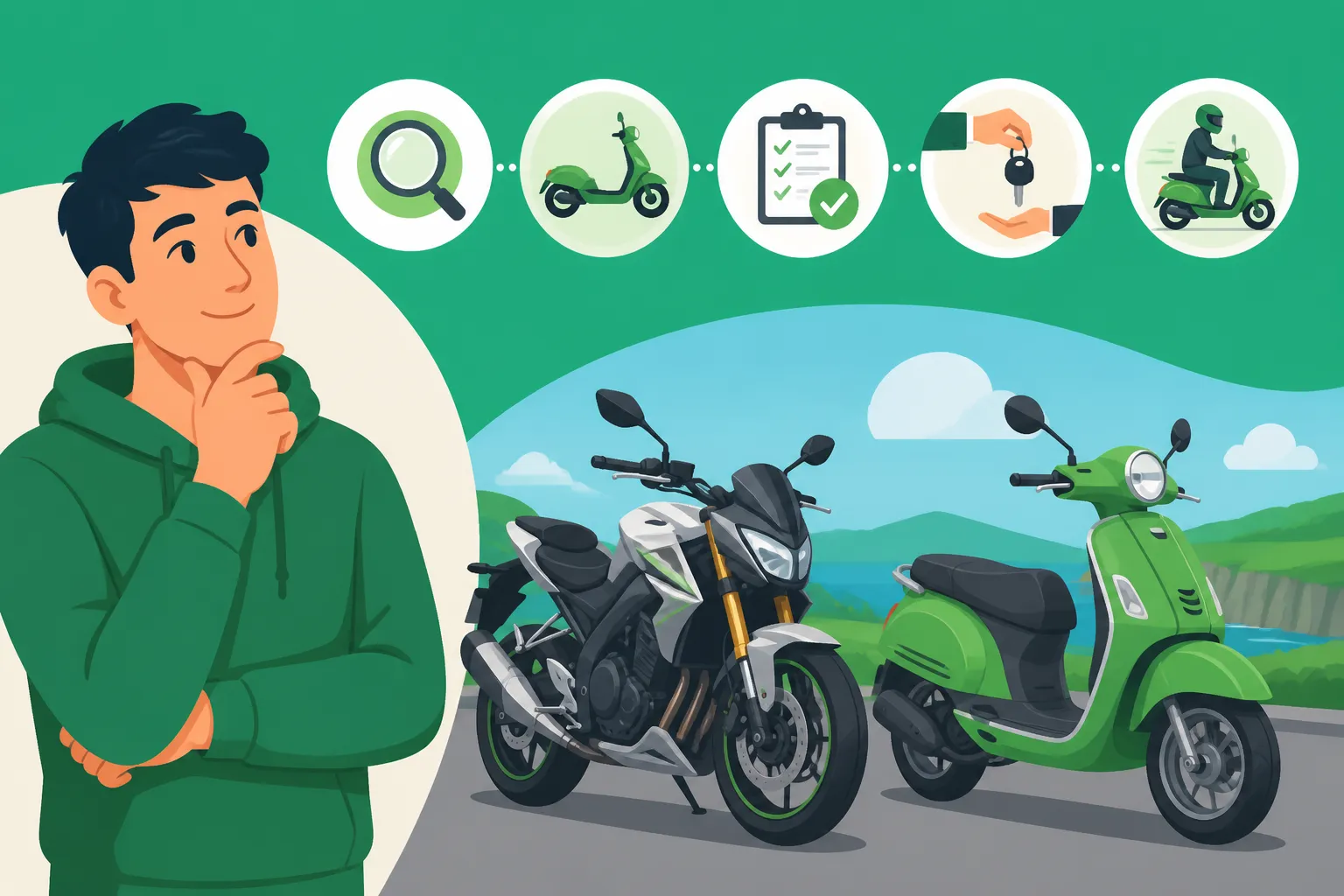
The process is generally straightforward:
- Browse and Test Ride: Visit a showroom, talk to sales staff, and if you have the appropriate learner permit and IBT certificate, you might be able to arrange a supervised test ride on a suitable bike. This is crucial for getting a feel for different models.
- Purchase and Paperwork: Once you choose your bike, the dealership handles most of the initial paperwork, including the Vehicle Registration Tax (VRT) and getting the vehicle registered with the Revenue Commissioners. They will essentially manage the first step of the process outlined in How Much Does It Cost to Register a Car in Ireland? – and while that guide focuses on cars, the VRT principles are similar for motorbikes and scooters. This can be a huge relief for expats trying to navigate a new administrative system.
- Collection and First Service: You’ll typically collect your new bike with a full tank of fuel, and the dealership will advise you on the run-in period and your first service schedule.
While buying new is more expensive upfront, the convenience, warranty, and support from a dealership can be well worth it, especially if you’re not confident inspecting a used vehicle.
The Second-Hand Market: Private Sales and Online Platforms
For many expats, especially those looking for their first bike or a scooter for daily commutes, the second-hand market offers much better value. You’ll find a wider variety of makes and models, and prices are generally significantly lower than new. However, this route also comes with a bit more risk and requires a keen eye.
The go-to platforms for used motorbikes and scooters in Ireland are:
- DoneDeal.ie: This is arguably the largest classifieds website in Ireland, and it’s teeming with listings for used motorbikes and scooters. You’ll find everything from vintage Vespas to powerful sportbikes here.
- Adverts.ie: Similar to DoneDeal, Adverts.ie is another popular platform for private sellers to list vehicles.
- Facebook Marketplace: Increasingly, local Facebook groups and Marketplace listings are becoming popular for second-hand sales. These can be great for finding local deals.
- Local Motorcycle Forums & Groups: Online communities for riders in Ireland often have classified sections, where enthusiasts sell their bikes. This can be a good way to find well-maintained machines.
When dealing with private sellers, it’s very much a case of "buyer beware." You're typically buying "as seen," with no warranty or guarantees. This is where your vigilance becomes crucial. While this guide focuses on motorbikes, many of the same principles for inspecting and purchasing apply to cars, so you might find our guide on How to Buy a Used Car in Ireland offers helpful crossover advice on what to look out for.
Important Checks Before You Buy
Whether you’re buying from a small dealer or a private seller, a thorough inspection is paramount. Don’t rush the process, and if you’re not mechanically inclined, bring someone who is!
Here are some critical checks to make:
- Documentation:
- Vehicle Registration Certificate (VRC): This is the Irish equivalent of a logbook or title. Ensure the seller's name and address match the VRC, and that the details of the bike (VIN, engine number) are correct. Without a valid VRC, you won't be able to tax the bike in your name.
- Service History: Ask for any service records or receipts for maintenance. A well-documented history is a good sign of a cared-for bike.
- Outstanding Finance: Crucially, check if there's any outstanding finance on the bike. You can do this through services like MotorCheck.ie by inputting the registration number. You do not want to buy a bike that still belongs to a finance company.
- Physical Inspection:
- Frame & Bodywork: Look for signs of accident damage (scratches, dents, misaligned panels). Check the frame for bends or cracks, particularly around the headstock and swingarm.
- Engine: Check for oil leaks around the engine block. Start the engine from cold (don't let the seller warm it up beforehand). Listen for unusual noises – rattles, knocks, or excessive smoke.
- Tyres: Check tread depth (minimum 1.6mm), cracks, and uneven wear, which could indicate suspension or alignment issues.
- Brakes: Test both front and rear brakes for feel and effectiveness. Look at the brake pads and discs for wear.
- Chain/Shaft Drive: For chain-driven bikes, check the chain tension and lubrication. Look for rust or kinked links.
- Electrics: Test all lights (headlight, tail light, indicators, brake light), horn, and dashboard warning lights.
- Suspension: Test the front forks and rear shock absorber for leaks and smooth operation.
- Test Ride (if licenced): If you have the correct licence category and are insured to ride the bike, a test ride is invaluable. Pay attention to how the bike handles, accelerates, brakes, and if there are any vibrations or strange noises. If you're not licenced, try to find a friend who is, or ask the seller to take you for a ride, or even better, ask if you can get it inspected by a local mechanic.
As you’re out inspecting potential bikes, having a reliable eSIM like Airalo can be a lifesaver. You can quickly check online reviews of models, look up common faults, research the seller, or even contact a mechanic on the spot for a second opinion without worrying about roaming charges or finding Wi-Fi. It’s an easy way to stay connected and informed when you’re on the move, doing your due diligence.
The Paperwork Trail: Registration, Tax, and Insurance
You've found your dream machine, or at least a trusty steed to get you started! Now comes the less glamorous but absolutely critical part: making it legal to ride on Irish roads. This involves registration, motor tax, and perhaps the biggest hurdle for expats – insurance.
Registering Your New or Imported Vehicle
Every vehicle on Irish roads needs to be registered with the Revenue Commissioners and have a Vehicle Registration Certificate (VRC), which is essentially the ownership document.
- For New Motorbikes/Scooters: If you're buying from a dealership, they will typically handle the initial registration process for you. The VRC will be issued in your name and sent to you by post. This is one of the many perks of buying new – letting someone else tackle the bureaucracy.
- For Used Motorbikes/Scooters (Purchased in Ireland): When you buy a used bike from a private seller, the VRC needs to be transferred into your name. The seller fills out the "Change of Ownership" section on the VRC, signs it, and you sign it too. The seller is then responsible for sending the completed VRC to the Vehicle Registration Unit (VRU) in Shannon, Co. Clare. The VRU will then issue a new VRC in your name and send it to your registered address. Ensure this is done promptly, as you cannot tax the vehicle in your name until you receive your new VRC.
- For Imported Motorbikes/Scooters: If you're bringing your own bike into Ireland from abroad (especially from outside the EU/EEA), you'll need to pay Vehicle Registration Tax (VRT) and register it yourself. This involves making an appointment at a National Car Testing Service (NCTS) centre, bringing all your documentation (proof of ownership, identity, address, customs declarations if applicable), and having the vehicle inspected. The VRT calculation can be complex, and you'll then receive your VRC. This process mirrors that for cars, so our guide How to Register and Tax a Vehicle in Ireland provides excellent insights, despite focusing on four-wheelers.
Remember, without a VRC in your name, you won't be able to pay motor tax, which means you won't be able to legally ride your bike.
Motor Tax: What You Need to Know
Motor tax is an annual levy you pay to the government to use public roads. It's a legal requirement, and failing to display valid motor tax can result in fines and even seizure of your vehicle.
- Calculation: For motorbikes and scooters, motor tax is primarily based on engine capacity (cc). The higher the engine size, the higher your annual tax. You can find the exact rates on the official MotorTax.ie website.
- How to Pay: You can pay your motor tax online at MotorTax.ie, in person at your local motor tax office, or by post. The easiest and most common method for most people is online. You can opt to pay for 3, 6, or 12 months, with annual payments usually offering a slight saving.
- Documents Needed: You'll need your VRC and proof of valid insurance to tax your vehicle. The system will usually automatically check your insurance details, but always have them handy.
- Displaying Tax Disc: Once paid, you'll receive a physical tax disc by post, which you must display clearly on your motorbike or scooter. There are special tax disc holders designed for two-wheelers.
Our guides on Understanding the NCT Vehicle Test and Motor Tax in Ireland and How Much Is Motor Tax for a Car in Ireland? offer further context on the motor tax system, much of which directly applies to motorbikes. It's a non-negotiable expense, so factor it into your annual budget.
Securing Insurance: A Major Hurdle for Expats
Let me tell you, this is often the biggest pain point for expats and new riders in Ireland. Insurance is mandatory, and it can be notoriously expensive, especially if you don't have a "no-claims bonus" history from an Irish insurer. Even if you've ridden for decades abroad, many Irish insurers won't fully recognise your foreign no-claims history, treating you almost as a new rider. It's a real kick in the teeth sometimes, feeling like you're starting from scratch.
- Why it's Difficult: Insurers perceive new riders (or those without Irish history) as higher risk. Motorbikes themselves are seen as higher risk than cars, and the initial cost can be exorbitant, particularly for powerful bikes or those living in urban centres like Dublin.
- Key Providers: Some of the main insurance providers that offer motorbike insurance in Ireland include Liberty Insurance, Carole Nash, Axa, and FBD. It's crucial to shop around and get multiple quotes. Don't just settle for the first one you find.
- Tips for Reducing Costs (Where Possible):
- Smaller Engine: Insuring a 125cc scooter will be significantly cheaper than a 600cc sportbike. Start small.
- Secure Parking: Insurers will ask where your bike is stored overnight. A locked garage or secure parking can reduce your premium.
- Advanced Training: Some insurers offer discounts if you've completed advanced riding courses (beyond IBT).
- Multi-Vehicle Policy: If you also have a car, some insurers might offer a discount for insuring both with them.
- Third-Party Only: Opting for third-party only cover (which covers damage to other vehicles/people, but not your own bike) is the cheapest option, but offers no protection for your own investment. Comprehensive cover is more expensive but gives you broader protection.
- Get Quotes Before You Buy! Seriously, I cannot stress this enough. Before you commit to buying a motorbike or scooter, get insurance quotes for it. You might find that the insurance alone makes a particular bike unaffordable. Give insurers the exact make, model, year, and engine size. Provide your full licence history, even foreign, and ask if they will recognise any no-claims bonus you might have accrued abroad. Be persistent!
Our guide on How Much Is Car Insurance in Ireland? offers broader context on the insurance market, and while car-focused, many of the challenges and advice apply to two-wheelers too. Don't let the insurance hurdle deter you, but be prepared for a fight, and budget accordingly.
After the Purchase: NCT and Ongoing Maintenance
So, you've got your bike, you're licenced, taxed, and insured. Fantastic! But the journey doesn't end there. Keeping your bike roadworthy and understanding ongoing requirements is essential for safe and legal riding in Ireland.
The National Car Test NCT for Motorbikes?
This is a common point of confusion for newcomers, particularly if you're used to regular vehicle inspections in your home country. For cars, the National Car Test (NCT) is mandatory every two years (or annually for older vehicles) to ensure roadworthiness.
However, and this is important: motorbikes and scooters in Ireland are NOT currently subject to the National Car Test (NCT).
That's right, while cars go through a rigorous inspection, two-wheelers do not have a mandatory periodic roadworthiness test. While this might sound like a relief, it places even greater responsibility on you, the owner, to ensure your bike is always in safe and roadworthy condition. There is no NCT certificate for a motorbike, unlike what is discussed in our guide on How Do I Get the NCT Car Test Done in Ireland?.
Even without a mandatory test, Gardai (Irish police) can pull you over and inspect your vehicle if they believe it's unsafe. Riding an unroadworthy bike is illegal and highly dangerous, and your insurance could be invalidated in the event of an accident if your bike is found to be defective. Therefore, regular checks and servicing are paramount.
Essential Maintenance and Servicing
Since there's no NCT for motorbikes, you become the primary guardian of your bike's health. Regular maintenance isn't just about prolonging the life of your machine; it's about your safety and the safety of others.
- Routine Checks: Make it a habit to do quick visual checks before every ride. This includes:
- Tyre Pressure and Tread: Incorrect pressure affects handling and safety. Check tread for wear and any punctures.
- Brakes: Check fluid levels, pad wear, and lever/pedal feel.
- Lights: Ensure all lights (headlight, tail, brake, indicators) are working.
- Chain (if applicable): Check tension, lubrication, and for any rust or tight spots.
- Oil and Fluid Levels: Ensure oil, coolant, and brake fluid levels are correct.
- Scheduled Servicing: Follow the manufacturer's recommended service intervals. This usually involves regular checks and replacement of wear-and-tear items by a qualified mechanic. Find a reputable motorcycle mechanic in your area – ask for recommendations in local bike clubs or online forums. A good mechanic is worth their weight in gold!
- Winter Care: If you plan to ride through the Irish winter, special attention to corrosion prevention and proper winter tyres (if extreme cold is expected) is vital. If you plan to lay up your bike for the colder, wetter months, ensure it's properly prepared for storage.
Being proactive with maintenance will not only keep you safe but also ensure your bike starts reliably every morning.
Riding Safely and Legally
Finally, let's talk about actually riding your motorbike or scooter in Ireland. Beyond the mechanical checks, there are specific legal and safety considerations that all riders, especially expats, need to be aware of. The general advice in Driving in Ireland: Licences, Registration and Rules for Expats applies, but here are some specifics for two wheels:
- Protective Gear is Non-Negotiable: While only helmets are legally mandatory, wearing full protective gear (approved helmet, armoured jacket, gloves, sturdy trousers, and motorcycle boots) is essential. Irish roads can be unforgiving, and the weather can change in an instant. This gear can literally save your life or prevent severe injury.
- Provisional Licence Restrictions: If you're on a learner permit (Provisional Licence), remember the strict rules:
- You must display L-plates.
- You cannot carry a pillion passenger.
- You cannot ride on motorways.
- You must be accompanied by an experienced rider (who has held a full A licence for at least 2 years) if you're on an A1, A2, or A learner permit, unless you have completed your IBT. This 'accompaniment' rule is less strict for motorcycles than cars, but the spirit of continuous learning and safety remains.
- You are also limited to a certain engine size, depending on your permit category.
Take extra care to ensure you understand these restrictions and adhere to them. Our guide on How Do I Get an Irish Driving Licence? details the full progression.
- Road Positioning and Visibility: On Irish roads, it's crucial to ride defensively and make yourself as visible as possible. Use your headlight at all times, wear bright gear, and position yourself in traffic to be seen by other road users. Assume other drivers haven't seen you.
- Filtering: While not strictly illegal, filtering through slow-moving or stationary traffic should be done with extreme caution and only when it is safe to do so. Irish drivers aren't always expecting it, and it can be risky.
- Weather Conditions: Ireland's weather is notoriously changeable. Rain, strong winds, and even hail can appear suddenly. Adjust your riding style, speed, and braking distances accordingly. Wet roads, especially after a dry spell, can be treacherous due to oil and debris.
- Road Surfaces: Be mindful of changing road surfaces, potholes, grates, and diesel spills, especially in rural areas or city centres.
Riding a motorbike or scooter in Ireland offers unparalleled freedom and a fantastic way to experience the country. It’s a journey, not just a purchase, and understanding the nuances of the Irish system will help you enjoy every mile safely and legally.
Disclaimer
Please note that while every effort has been made to provide accurate and up-to-date information, rules and regulations in Ireland, particularly concerning driving licences, vehicle registration, and insurance, can change. This guide is intended for informational purposes only and does not constitute legal or professional advice. It is highly recommended to consult official government sources, such as the Road Safety Authority (RSA), the National Driver Licence Service (NDLS), Revenue Commissioners, and reputable insurance providers, for the most current and specific information applicable to your individual circumstances.