How Do I Renew My Motor Tax in Ireland?
Ah, motor tax in Ireland. It’s one of those things that, when you first arrive, seems like another layer of administrative mystery on top of everything else. You’ve just landed, maybe you've just bought a car, and then you hear whispers of "motor tax discs." You’re probably thinking, "What now?" Trust me, you’re not alone. Many of us expats have stared blankly at the renewal form or the motortax.ie website, wondering if we’re missing some crucial, unwritten rule. This comprehensive guide is here to demystify the process and walk you through exactly how to renew your motor tax in Ireland, step by step, with no hidden surprises.
Understanding Motor Tax in Ireland: The Basics for Expats
When you first move to Ireland, there's a lot to wrap your head around, from understanding the local lingo to figuring out how the public transport works. Then, if you decide to buy a car, a whole new world of obligations opens up – and motor tax is right at the top of that list. It's not just a suggestion; it's a legal requirement that keeps your vehicle legitimately on Irish roads.
Why Motor Tax Matters and Who Needs to Pay It
Let's be clear: motor tax isn't a tax on driving per se, but rather a tax on having a vehicle on a public road in Ireland. It’s essentially your contribution to the upkeep and development of the country’s road infrastructure, and it’s a non-negotiable part of vehicle ownership here. If your vehicle is in use on any public road, it must be taxed. Failure to do so can lead to hefty fines, penalty points, and even seizure of your vehicle. And honestly, nobody wants that kind of hassle when you're just trying to enjoy your new life here.
This applies to pretty much everyone who owns a vehicle, whether you're a long-term resident or a brand-new arrival. It doesn't matter if your car is from your home country and you're in the process of Registering and Taxing a Vehicle in Ireland, or if you've just picked up a second-hand Irish-registered car. If it's on the road, it needs valid motor tax. It’s one of those fundamental rules that the Gardai (Irish police) take very seriously, and it's something you'll quickly learn to factor into your annual vehicle costs alongside insurance and the NCT.
Types of Motor Tax and Their Durations
The amount of motor tax you pay in Ireland largely depends on the type of vehicle you have and its emissions category (for cars registered after 1 July 2008) or engine size (for older vehicles). Private cars, commercial vehicles, motorcycles, taxis, and even vintage cars all have different tax rates and categories. So, the first thing you'll need to know is which category your vehicle falls into. This information is usually detailed on your vehicle's registration certificate.
One handy aspect for expats is the flexibility in how long you tax your vehicle for. You’re not just stuck with an annual payment. You can opt to tax your vehicle for 3, 6, or 12 months. This can be particularly useful if you're uncertain about your long-term plans in Ireland or if you're trying to manage your budget. However, a small word of caution: while it offers flexibility, paying for shorter periods (like 3 or 6 months) often works out slightly more expensive in the long run than paying for a full 12 months, as there's a small administrative premium added to shorter tax periods. It’s always worth checking the exact figures on the motortax.ie website to see what makes the most sense for your situation.
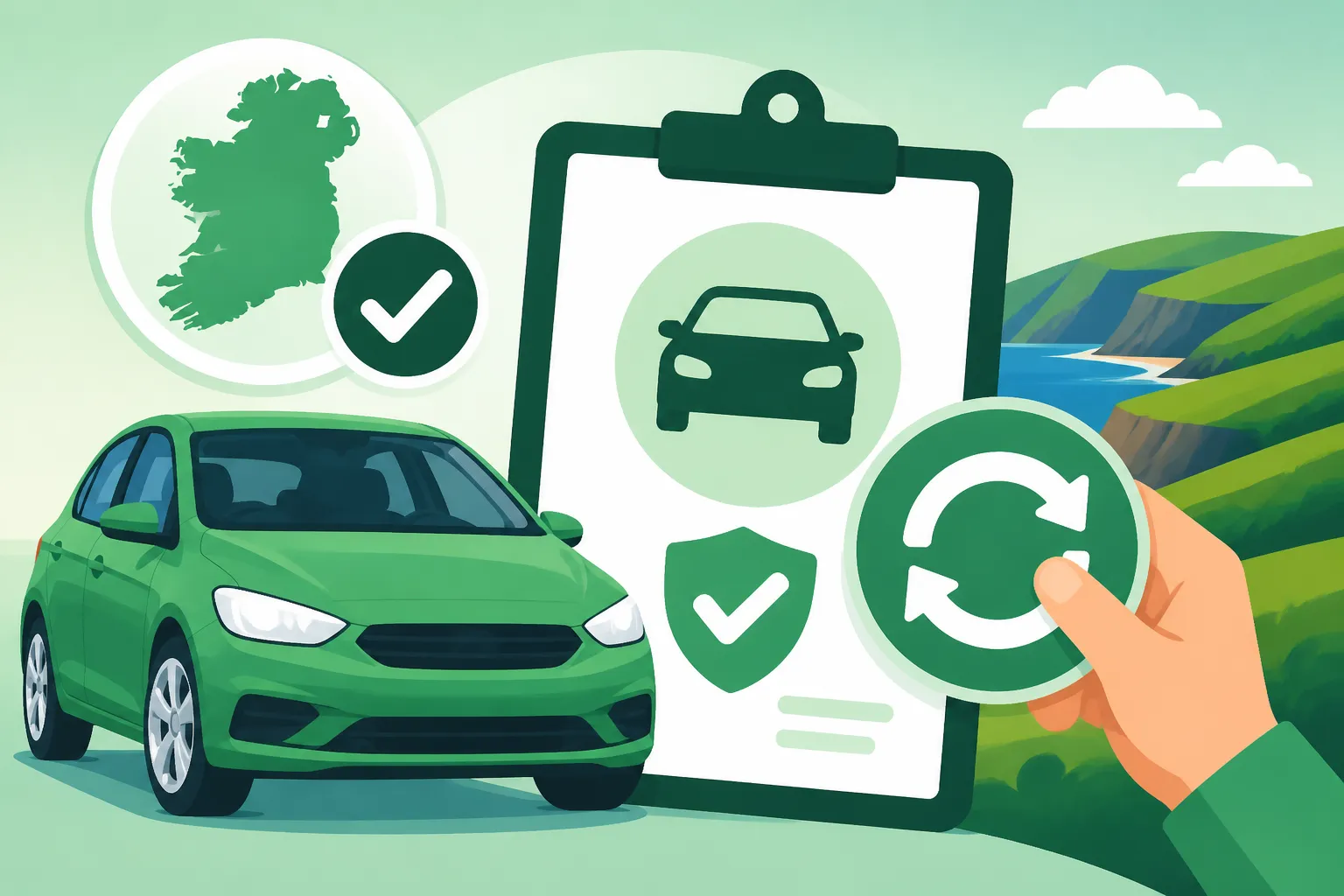
The motor tax disc needs to be prominently displayed on your vehicle’s windscreen, usually on the bottom left corner as you face the car. This little piece of paper acts as visible proof that your tax is up-to-date. If you’re used to systems where it's all digital, this can feel a bit old-school, but it's the Irish way!
Step-by-Step: How to Renew Your Motor Tax Online
The most common and by far the most convenient way to renew your motor tax in Ireland is online. It saves you a trip to the local Motor Tax Office, which can sometimes involve a bit of a wait, especially during peak times. The website, motortax.ie, is relatively straightforward once you know what you’re looking for.
Gathering Your Documents and Information
Before you even think about logging onto motortax.ie, do yourself a huge favour and gather all the necessary bits and bobs. Trust me, there's nothing more frustrating than getting halfway through an online form only to realise you're missing a key piece of information. The online system, like many Irish administrative processes, can be a little particular about having everything just so.
Here's what you'll need:
- Your PIN: This is arguably the most crucial piece of information. If your vehicle is already registered in your name, you should receive a motor tax renewal form (RF100B) in the post a few weeks before your current tax expires. This form contains a unique PIN (usually 11 digits long) that is specific to your vehicle and this renewal period. If you’re taxing a new car for the first time in your name, you'll use the PIN from the new vehicle owner's certificate of registration (form RF100A) which you should receive after the change of ownership is processed. This is a common point of confusion for expats, as post can sometimes be a bit hit-or-miss, especially if you’ve just moved or changed address. If you haven't received your RF100B, you can request a new PIN via the motortax.ie website using your vehicle registration details.
- Vehicle Registration Details: You'll need your vehicle's registration plate number (e.g., '231-D-12345'), make, and model. This is usually straightforward, as it's printed on your form, but always good to double-check.
- Insurance Details: You’ll need the name of your insurance company, your policy number, and the expiry date of your insurance. Remember, you absolutely must have valid motor insurance to renew your tax. If you’re a new arrival and still figuring out How Much Is Car Insurance in Ireland?, make sure this is sorted first.
- Payment Method: A valid debit or credit card is essential for online payment. Most major cards (Visa, Mastercard) are accepted.
It’s a good idea to have your phone nearby too. If you’re a new expat, you might be relying on a mobile data plan like those offered by Airalo for instant connectivity, which is perfect for ensuring you have stable internet access when dealing with online forms. Nothing worse than your connection dropping mid-transaction!
Navigating the Online Motor Tax System (motortax.ie)
With all your information at hand, head over to www.motortax.ie. The website is fairly intuitive, but let's break down the typical flow:
- Select 'Tax Your Vehicle': On the homepage, you'll see a clear option to 'Tax Your Vehicle'. Click this to begin the process.
- Enter Your PIN: You'll be prompted to enter the 11-digit PIN from your RF100B or RF100A form. Double-check this carefully, as a single wrong digit will halt your progress.
- Confirm Vehicle Details: The system will then display your vehicle's details (make, model, registration number, chassis number). Verify that these are all correct. If anything looks amiss, you might have to contact your local Motor Tax Office directly, but this is rare.
- Choose Tax Period: Here, you'll select whether you want to tax your vehicle for 3, 6, or 12 months. The system will automatically calculate the fee for each option, including any pro-rata charges if you're taxing a vehicle that has been off the road or has a lapsed tax. This is where you can clearly see the slight difference in cost for shorter periods.
- Enter Insurance Details: Carefully input your insurance company's name, your policy number, and its expiry date. The system will do a quick check to ensure the policy is valid.
- Confirm and Pay: Review all the details one last time. Make sure the dates are right, the cost is what you expected, and all your personal and vehicle information is accurate. Then, proceed to the payment gateway. Enter your card details as you would for any online purchase.
It might seem like a lot of steps, but it's designed to ensure accuracy. If you encounter any technical glitches or error messages, don't panic. Sometimes the system can be a bit sensitive. Try clearing your browser cache, using a different browser, or even waiting a few hours and trying again. Persistence is often key with online administrative systems! If you're new to Ireland and have a vehicle that you've How to Buy a Car as a Newcomer in Ireland and are wondering about how the entire process of vehicle ownership works, the Department of Transport's website also has useful guides.
Confirmation and Displaying Your New Disc
Once your payment is successfully processed, you should immediately receive a confirmation email. This email often contains a printable receipt that serves as temporary proof of tax until your physical disc arrives. Hold onto this email! It's your immediate proof if you're stopped by the Gardai before your disc arrives.
The physical motor tax disc is usually dispatched within 3-5 working days. However, as any expat who’s dealt with Irish postal services will tell you, sometimes things can take a little longer. I’ve known discs to arrive in two days, and others to take over a week, especially around public holidays or during busy periods. So, don't fret if it's not on your doorstep the next day. Once it does arrive, carefully remove it from the envelope and display it clearly on the bottom left corner of your front windscreen, facing outwards.
What if your disc doesn't arrive within a reasonable timeframe (say, 10 working days)? Don't just ignore it. You should contact your local Motor Tax Office directly. You can usually find their contact details on the motortax.ie website or your local county council's site. They can investigate the delay and arrange for a replacement if needed. Remember, driving without a visible, valid tax disc, even if you’ve paid for it, can lead to questions from the Gardai, so it's best to resolve any issues promptly.
Alternative Renewal Methods and Common Expat Questions
While online renewal is the norm these days, it's not the only option. And for us expats, there are always a few extra curveballs to consider when it comes to vehicle ownership in a new country.
Renewing by Post or In Person
For those who prefer a more traditional approach, or if you're facing an issue that prevents online renewal (like a missing PIN you can't retrieve online), you still have a couple of offline options:
- By Post: You can mail your completed RF100B renewal form (or RF100A for a new vehicle) along with a cheque, bank draft, or postal order for the correct amount to your local Motor Tax Office. Make sure the cheque is made payable to your "County Council Motor Tax Account" (e.g., "Dublin City Council Motor Tax Account"). Always ensure you send it well in advance of your expiry date, as postal renewals will naturally take longer to process than online ones, factoring in both mailing time and processing time at the office.
- In Person: You can visit your local Motor Tax Office, which is usually located within your County Council offices. Bring your completed RF100B or RF100A form, your insurance details, and your preferred payment method (cash, debit card, credit card, cheque, or postal order). Renewing in person can be useful if you have any complex queries or issues with your vehicle registration that require direct assistance. However, be prepared for potential queues, especially at the end of the month when many people renew. While you’re sorting out the vehicle admin, you might also find yourself needing to sort out your How Do I Get an Irish Driving Licence? or understand the rules for Driving in Ireland: Licences, Registration and Rules for Expats.
Dealing with Lapses, Penalties, and Special Circumstances
It happens. Life gets busy, and you might accidentally let your motor tax lapse. Or perhaps you've just arrived, and you're still getting to grips with The Complete Guide to Moving to Ireland: Your First 90 Days and all the bureaucracy that comes with it. If your motor tax expires, you can still renew it, but be prepared for some implications.
- Lapsed Tax and Penalties: If you renew your motor tax after the expiry date, you will be liable for any unpaid back tax. This means you’ll pay for the period your vehicle was untaxed, plus potential penalties. The system is designed to discourage lapses, so it's always best to renew on time. You can’t simply start a new tax period from the date you renew if you’ve had a gap; you'll be charged from the expiry date of your previous disc.
- Declaring a Vehicle Off the Road (RF150): If you know your vehicle won't be on a public road for a period (e.g., it's in storage, being repaired, or you're simply not using it), you can declare it "off the road" using a Form RF150. You must do this before your current tax expires. This exempts you from paying motor tax for that period, but the vehicle must not be used on any public road during the declared off-road period. Once you want to use it again, you simply tax it from that date. This is a crucial form for many expats who might leave Ireland for extended periods or who own a secondary vehicle that isn't always in use.
- New Vehicle Ownership: When you How to Buy a Car as a Newcomer in Ireland, the motor tax situation needs careful attention. Make sure the previous owner has properly completed and submitted the change of ownership details to the Department of Transport. You will then receive an RF100A form in the post, which you'll use to tax the vehicle in your name for the first time. It's often easier to buy a car that comes with a valid NCT and some tax remaining, just to simplify things when you're already juggling so much. Companies like Sirelo, who help with international moves, often highlight the importance of understanding all these local vehicle regulations.
Ensuring You're Covered: Insurance and Vehicle Checks
Renewing your motor tax isn't just about paying a fee; it's part of a broader compliance framework that ensures road safety and accountability.
As mentioned, valid motor insurance is a prerequisite for taxing your vehicle. The online system checks against a national database, and if your insurance details don’t match up, you won’t be able to proceed. This reinforces the importance of having your insurance in order, and not just the minimum third-party coverage. When living abroad, understanding the nuances of local insurance policies can be complex, so ensure you read up on How Much Is Car Insurance in Ireland? and choose a reputable provider.
Furthermore, for vehicles aged four years or older, having a valid National Car Test (NCT) certificate is generally a requirement for motor tax renewal. The NCT is Ireland's compulsory vehicle inspection programme, similar to an MOT in the UK or TÜV in Germany. If your vehicle needs an NCT and hasn't passed, you might only be able to tax it for a shorter period, or not at all, until the NCT is up to date. The system usually flags this during the online renewal process. Understanding the NCT (Vehicle Test) and Motor Tax in Ireland is key to staying compliant.
Here's a quick comparison of the different motor tax renewal methods:
| Feature | Online (motortax.ie) | By Post | In Person (Motor Tax Office) |
|---|---|---|---|
| Convenience | High – available 24/7, from anywhere. | Medium – requires postage, slower. | Medium – requires travel, potential queues. |
| Speed | Fastest – immediate confirmation, disc mailed in days. | Slowest – reliant on postal service and processing. | Fast – disc often issued on the spot if documents clear. |
| Requirements | PIN (RF100B/RF100A), vehicle & insurance details, debit/credit card. | Completed RF100B/RF100A, cheque/postal order, insurance details. | Completed RF100B/RF100A, payment (cash/card/cheque), insurance details. |
| Payment Options | Debit/Credit Card (Visa, Mastercard) | Cheque, Postal Order, Bank Draft | Cash, Debit/Credit Card, Cheque, Postal Order, Bank Draft |
| Troubleshooting | Limited online support, may require phone call. | Can be difficult to track or resolve issues remotely. | Direct assistance for complex queries or missing documents. |
| Expat Friendliness | High – accessible if you have all details and internet (e.g., via Airalo). | Low – reliance on postal system can be frustrating for new arrivals. | Medium – requires understanding of local office locations and processes. |
No matter how long you've been an expat in Ireland, staying on top of your motor tax is a fundamental aspect of vehicle ownership. While it might seem like another bureaucratic hurdle at first, with a little preparation, it's a straightforward process that ensures you can enjoy Ireland's beautiful roads without a worry.
Disclaimer
The information provided in this guide is for general informational purposes only and does not constitute legal, financial, or professional advice. While we strive to keep the information up-to-date and accurate, regulations and procedures can change. Always refer to the official Irish government websites, such as motortax.ie and citizensinformation.ie, or consult with relevant authorities for the most current and specific advice pertaining to your individual circumstances.