How Do I Set Up a Mobile Phone Plan in Ireland?
Landing in a new country like Ireland can feel overwhelming, with a never-ending checklist of things to sort out. One of the very first, and most crucial, steps is getting connected – not just to the internet in your new home, but to a mobile network that keeps you in touch with family, friends, and your new life here. Forget the generic advice; this guide is going to walk you through everything you need to know about setting up a mobile phone plan in Ireland, from the perspective of someone who's actually been through the glorious bureaucratic maze myself.
Understanding Your Options: Pay-As-You-Go vs. Bill Pay Contracts
When you first arrive in Ireland, the world of mobile phone plans might seem a bit similar to what you’re used to, but there are nuances. The main choice you'll face is between "Pay-As-You-Go" (what many of us would call prepaid) and "Bill Pay" (a contract). Each has its own benefits and drawbacks, especially for someone new to the country.
The Flexibility of Pay-As-You-Go (Prepaid)
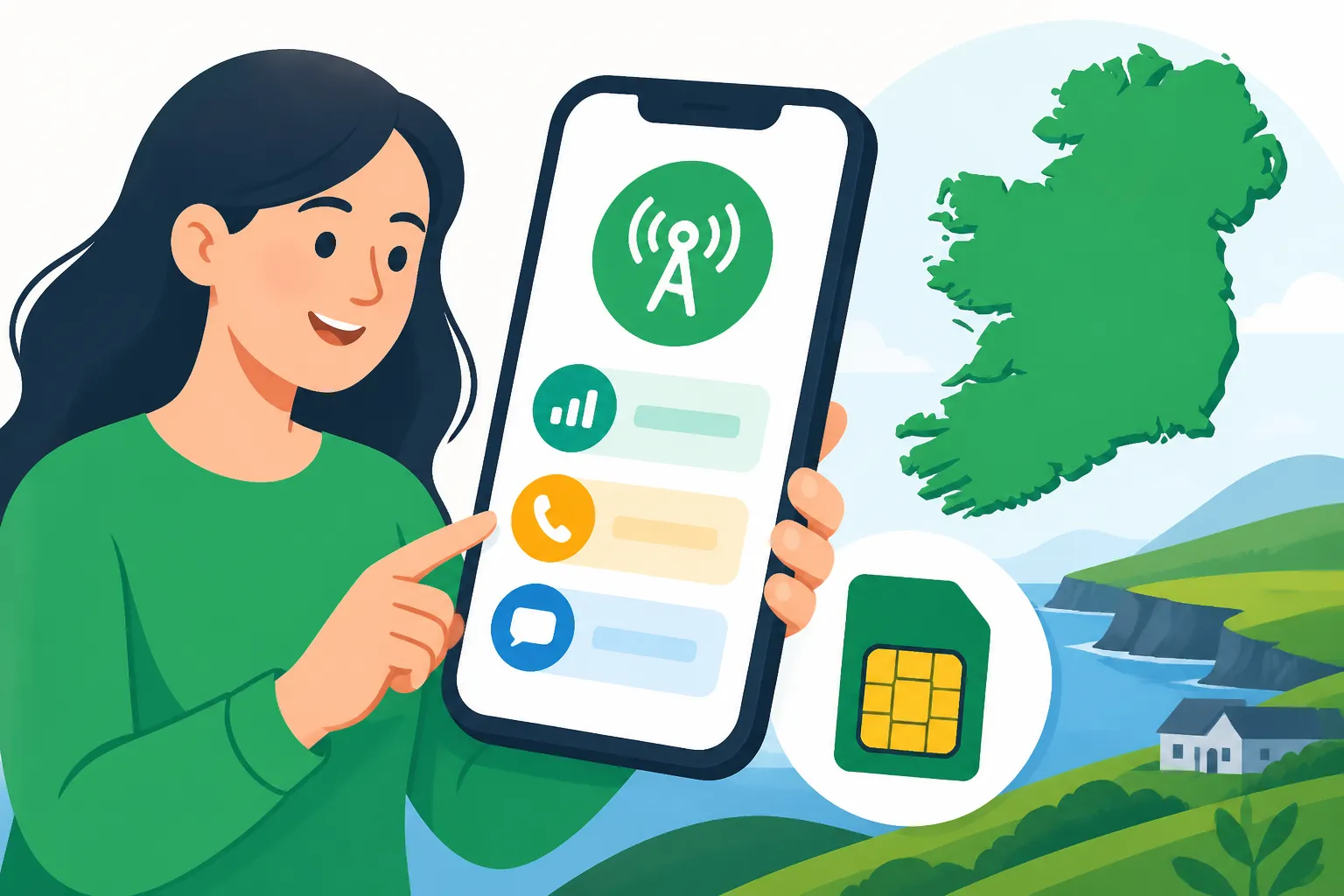
This is often the go-to option for new arrivals, and for very good reasons. With a Pay-As-You-Go plan, you're not committing to a long-term contract, which is a huge relief when you're still finding your feet. You essentially buy a SIM card, top it up with credit, and then purchase bundles of data, calls, and texts that last for a certain period, usually 28 or 30 days.
The biggest advantage here is flexibility. You can switch providers easily if you find a better deal, and you don't need to worry about credit checks or providing extensive proof of address, which can be a nightmare for expats without a solid history in Ireland. Imagine arriving, fresh off the plane, and needing to instantly look up directions or contact your new landlord. Having an active SIM is paramount. Companies like Airalo offer eSIM options for travellers, which can be an absolute lifesaver for immediate connectivity the moment you land, giving you time to sort out a local Irish SIM without panic. These immediate solutions are fantastic for that initial, urgent need for data.
To get started, you usually just walk into a phone shop, a supermarket, or even a newsagent, pick up a SIM card from a provider like Vodafone, Three, Eir, or even one of the smaller MVNOs (Mobile Virtual Network Operators) we'll discuss later. You'll put some credit on it, typically €10-€20, and then you can activate a bundle. If you run out of data before the month is up, you just top up again. It’s simple, transparent, and puts you in control of your spending. This is particularly helpful when you're still figuring out your The Complete Guide to Cost of Living in Ireland for Expats (2026) and might be on a tighter budget.
The Commitment of Bill Pay (Contract)
Bill Pay plans, on the other hand, are more akin to traditional phone contracts. You sign up for a fixed period, usually 12, 18, or 24 months, and you receive a monthly bill for a set package of calls, texts, and data. These plans often come with a new phone included (or heavily subsidised), which can be appealing if you're due for an upgrade.
The main hurdle for expats with Bill Pay is the credit check. Irish mobile providers will typically want to see a history of residency, a consistent income, and sometimes even an Irish bank account to assess your creditworthiness. This can be a significant barrier for newcomers who haven't yet established a financial footprint here. You might be asked for your How to Register for Tax and Get a PPS Number in Ireland, proof of address (like a utility bill in your name, which you might not have right away if you're still navigating Understanding Tenant and Landlord Rights Under the RTB in Ireland), and sometimes even bank statements. It's a classic chicken-and-egg situation: you need a phone plan for life, but you need a life for a phone plan!
However, if you're planning a long-term stay, have already secured employment, and have managed to The Expat Guide to Opening a Bank Account in Ireland, a Bill Pay contract can offer better value for money in the long run. The bundles are often more generous than Pay-As-You-Go options, especially for unlimited data plans, and you get the convenience of a predictable monthly payment. Just be prepared for the paperwork and the potential initial rejection if your Irish financial history is still sparse.
Navigating the Major Mobile Providers in Ireland
Ireland's mobile market is dominated by a few key players, but there are also some excellent smaller operators worth considering, especially if budget and flexibility are your top priorities.
The Big Players: Vodafone, Three, and Eir
These are the three main network operators in Ireland, each owning and operating their own infrastructure. They offer a full range of services, from Pay-As-You-Go to Bill Pay, and often have physical stores in towns and cities across the country.
-
Vodafone Ireland: Often perceived as the premium network, Vodafone generally has a reputation for strong coverage, particularly in rural areas, and good customer service. Their plans can be a bit pricier, but many expats find the reliability and breadth of their offerings worth it. They're a solid choice if you value consistent signal quality, especially if you plan on travelling outside major urban centres. For new arrivals, they might be more stringent with credit checks for Bill Pay, but their Pay-As-You-Go options are readily available.
-
Three Ireland: Three is known for being very competitive on data, often offering "all-you-can-eat" or very generous unlimited data plans. This makes them a popular choice for heavy data users, including many younger expats or those who rely heavily on streaming and social media. Their network coverage is generally very good in urban areas and along major routes, though it can sometimes be a bit spottier in very remote regions compared to Vodafone. They've aggressively targeted the data-hungry market, so if you're constantly connected, they're definitely one to look at.
-
Eir Mobile: Eir (formerly eMobile) is Ireland's incumbent telecommunications provider, offering a wide range of services including broadband and landlines in addition to mobile. Their mobile network has improved significantly over the years, and they often have competitive bundles, especially if you're looking to package mobile with your How Do I Set Up Broadband in My Irish Home?. Their coverage is generally decent, mirroring the other two majors in most populated areas. Like Vodafone, they also have a strong retail presence, which can be helpful for in-person support.
Exploring Smaller & Virtual Operators (MVNOs)
Beyond the big three, Ireland has a thriving market of Mobile Virtual Network Operators (MVNOs). These companies don't own their own network infrastructure but instead lease capacity from one of the major providers. This often allows them to offer much more competitive prices, especially on Pay-As-You-Go plans, though sometimes with a trade-off in customer service being purely online or over the phone.
-
GoMo: Operating on the Eir network, GoMo made a huge splash when it launched, offering incredibly cheap SIM-only plans with unlimited data, calls, and texts. Their model is entirely online, meaning you sign up, manage your account, and get support through their website or app. This keeps costs down, making them a very attractive option if you're comfortable with digital-first service. They're particularly popular among expats and students looking for maximum value.
-
48: Geared towards a younger demographic, 48 uses the Three network and offers very flexible, budget-friendly plans, often with large data allowances. Similar to GoMo, their service is primarily online and app-based. They're excellent for those who want a good data deal without a long contract and don't mind managing things themselves digitally.
-
Lycamobile & Tesco Mobile: These are two other prominent MVNOs. Lycamobile often targets international callers with competitive rates for calling specific countries, while Tesco Mobile (using the Three network) integrates with the Tesco supermarket loyalty program, offering perks for shoppers. Both offer reliable, budget-conscious Pay-As-You-Go options that can be easily topped up in their respective stores.
When considering an MVNO, always check which major network they operate on, as this will dictate your actual coverage. For instance, if GoMo uses Eir, your coverage will be essentially the same as if you were an Eir customer.
Step-by-Step Guide to Getting Connected
So, you've arrived, maybe you've got your immediate data sorted with an eSIM, and now it's time to get that proper Irish number. Here’s a practical walkthrough.
What You'll Need: Documents and Practicalities
The required documents will vary significantly depending on whether you opt for Pay-As-You-Go or Bill Pay.
For Pay-As-You-Go:
- Proof of ID: Generally, you just need a valid passport or national ID card. Some smaller shops might not even ask for this, but it’s always best to have it on hand.
- Cash or Card: To purchase the SIM and your first top-up.
That’s usually it! This simplicity is why Pay-As-You-Go is so appealing for newcomers.
For Bill Pay Contracts:
This is where it gets a bit more involved, as providers need to verify your identity and creditworthiness.
- Proof of Identity: A valid passport or national ID.
- Proof of Address: This is often the trickiest part for expats. You'll need an official document showing your name and Irish residential address, dated within the last 3 months. Examples include:
- A utility bill (electricity, gas, landline phone – not a mobile phone bill)
- A bank statement from an Irish bank
- An official letter from a government department (like Revenue or social welfare)
- A tenancy agreement registered with the Residential Tenancies Board (RTB) – though this needs to be quite official.
Keep in mind, providers will not usually accept a mobile phone bill, a driving license if it doesn't show your current Irish address, or a personal letter. This is where getting established with other services can help, as discussed in The Complete Guide to Moving to Ireland: Your First 90 Days (2027).
- Proof of PPSN (Personal Public Service Number): While not always explicitly required for the initial contract, having your PPSN readily available, especially if you have a job, will certainly help. It's crucial for How Do I Get My PPS Number in Ireland? and other administrative tasks.
- Irish Bank Account: You'll need this for direct debit payments, which is the standard way to pay monthly bills. If you haven't opened one yet, check out our guide on The Expat Guide to Opening a Bank Account in Ireland.
- Credit History: This is the big hurdle. If you're a recent arrival, you simply won't have an Irish credit history. Some providers might offer contracts to newcomers if you can provide proof of stable employment and a large deposit, but it's not guaranteed. Don't be disheartened if you're initially rejected; it's a common experience for expats. This is why starting with Pay-As-You-Go is often the most sensible path.
Activation and Porting Your Number
Once you have your SIM card, activation is generally straightforward:
- Insert the SIM: Pop the new SIM into your unlocked phone.
- Turn on your phone: It should connect to the network automatically.
- Activate (if needed): For some Pay-As-You-Go SIMs, you might need to make a quick call or send a text to activate it, or register it online. The instructions will usually be on the SIM pack.
- Top up and choose a bundle: Follow the instructions to add credit and select your desired data/call/text bundle.
If you already have an Irish mobile number (perhaps from a previous Pay-As-You-Go SIM) and want to keep it when switching to a new provider or contract, this is called "porting" your number. The new provider will handle this for you. You'll fill out a form, and they'll contact your old provider to transfer the number. It usually takes 1-3 working days, and you'll typically receive a text message confirming the switch. Keep your old SIM in your phone until it stops working, then swap it for the new one.
Special Considerations for New Arrivals and Tourists
For that absolute initial period, especially if you’re still waiting on permanent housing or banking details, a Pay-As-You-Go SIM is your best friend. As mentioned, an eSIM service like Airalo can offer an immediate digital solution, ensuring you have data from the moment you land. This bypasses the need for a physical SIM card and allows you to use your phone's internet capabilities right away, essential for navigation, communication, and those first crucial contacts.
If you don't have all the standard documents for a Bill Pay contract, many expats find themselves sticking with Pay-As-You-Go for several months, or even a year, until they have sufficient proof of address and an established financial history in Ireland. Don't feel pressured to get a contract right away if it's proving difficult. Many of the Pay-As-You-Go bundles offer excellent value now, rivalling basic contract plans.
Common Challenges and Troubleshooting
Life in Ireland, while wonderful, comes with its unique set of challenges, and your mobile plan won't always be smooth sailing.
Understanding Data Usage and Roaming
One of the biggest surprises for new expats can be understanding data usage and roaming. If you're coming from outside the EU, remember that while roaming within the EU/EEA is largely "Roam Like At Home," meaning you use your Irish plan's allowances at no extra cost, this doesn't apply to calls or data from Ireland to other EU/EEA countries. You'll still incur international charges.
If you plan to travel outside the EU, check your provider's roaming charges before you go. These can be astronomical, and it's almost always cheaper to buy a local SIM card in your destination country or use another eSIM from a service like Airalo for short trips. Data limits on "unlimited" plans can also be a tricky area – some providers have fair usage policies that kick in after a certain amount (e.g., 100GB), after which your speed might be throttled. Always read the fine print.
Customer Service and Language Barriers
While English is the primary language in Ireland, and most customer service agents will be fluent, navigating the specifics of a phone plan can still be frustrating. The terminology might be slightly different, and sometimes explanations can feel overly bureaucratic or unclear. My best advice? Be patient, be clear about your issue, and if you're not getting a satisfactory answer, don't hesitate to politely ask to speak to a supervisor. Many providers also offer online chat support, which can be useful for getting things in writing and taking your time to understand responses.
It can also be useful to check expat forums or social media groups for Ireland. Often, someone else has faced the exact same problem and can offer tips or even direct contacts within a specific company. Many relocation services, like Sirelo, also provide resources that indirectly help with these kinds of practical setups, as they understand the expat journey involves getting every little detail sorted.
Mobile Phone Plan Comparison in Ireland
To give you a quick overview, here's a general comparison of Pay-As-You-Go and Bill Pay options:
| Feature | Pay-As-You-Go (Prepaid) | Bill Pay (Contract) |
|---|---|---|
| Commitment | None, month-to-month bundles | 12, 18, or 24-month contract |
| Credit Check | Not required | Required (can be strict for new expats) |
| Documents | Photo ID (sometimes), cash/card | Photo ID, proof of address, PPSN, Irish bank account |
| Cost | Upfront top-up, flexible spending | Fixed monthly bill, often lower cost per GB data |
| New Phone | Buy outright or bring your own unlocked phone | Often included or heavily subsidised |
| Flexibility | High – switch providers easily | Low – tied to a contract, cancellation fees apply |
| Best For | New arrivals, short-term stays, budget control | Long-term residents, established credit, phone upgrades |
| Activation | Immediate | Can take a few days for approval and delivery |
Ultimately, getting your mobile phone plan sorted is a key step to feeling settled in Ireland. Don't rush into a contract you can't get out of, especially when you're just starting. Start simple, build your financial history, and then explore the full range of options. You'll be chatting and surfing like a local in no time!
Disclaimer
Please note that while every effort has been made to provide accurate and up-to-date information, telecommunications plans, prices, and regulations in Ireland can change. Always verify the latest details directly with the service providers or relevant official sources before making any decisions. This guide is for informational purposes only and does not constitute professional advice.