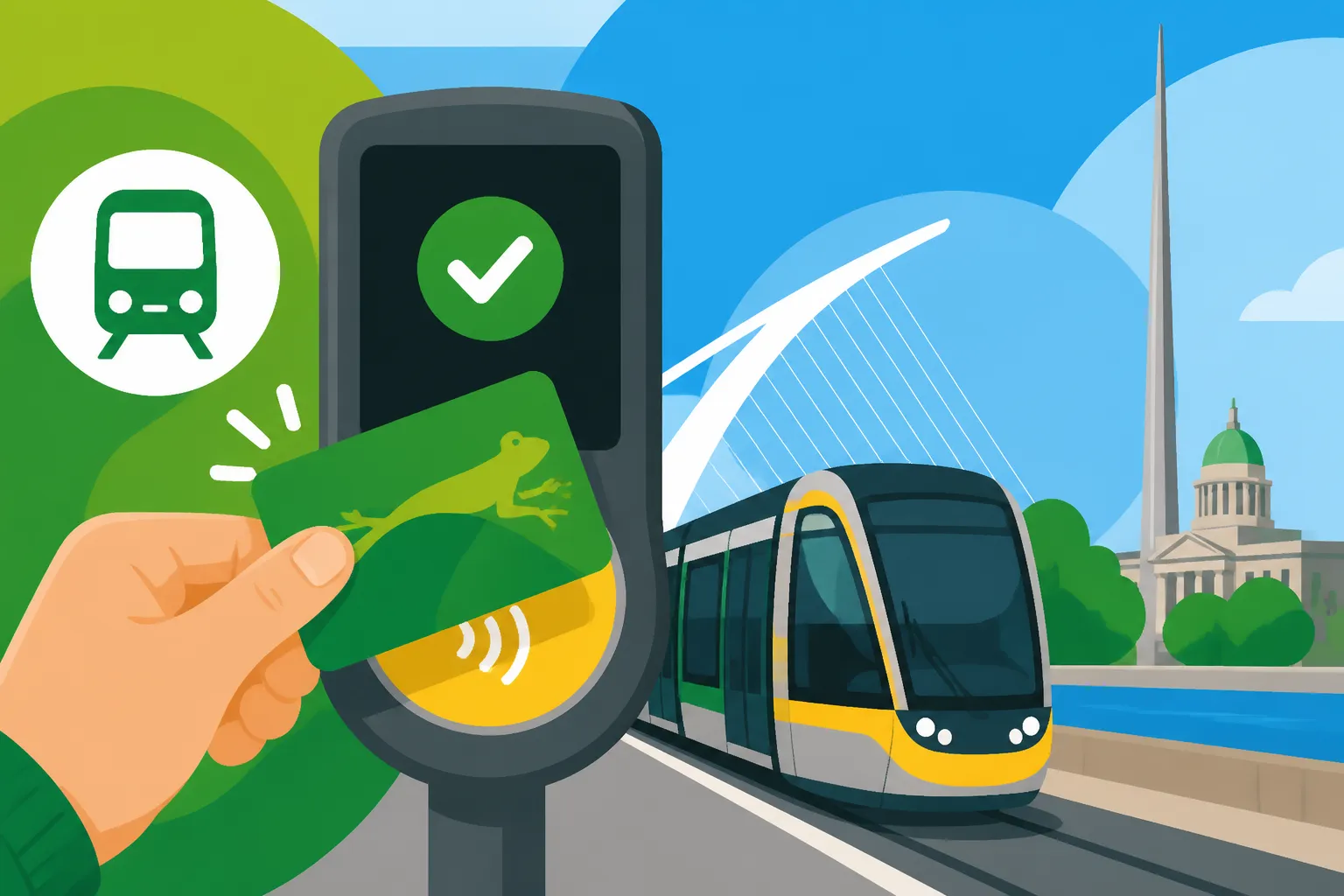
How Do I Use the Leap Card in Dublin?
Arriving in Dublin, the sheer volume of new information can be overwhelming, and figuring out public transport often feels like deciphering an ancient scroll. Many expats, myself included, have stood bewildered at a bus stop, fumbling for change or wondering which ticket to buy. Don't worry, the Leap Card is truly your sanity-saver, simplifying travel across the city. This guide will demystify exactly how to use it to glide through Dublin's transport network with ease, giving you one less thing to stress about as you settle into your new Irish life.
What is a Leap Card and Why It's Essential for Dublin Life
The Leap Card is an integrated ticketing system for public transport in Ireland, but it’s especially indispensable in Dublin. Think of it as your passport to the city's buses, trams (Luas), and commuter trains (DART and Irish Rail services). For anyone living or staying in Dublin for more than a few days, getting a Leap Card isn't just a convenience; it's practically a necessity.
Why the Leap Card is a Must-Have for Expats
When you first land in a new country, everything feels a bit alien, right? Public transport can be a real minefield, especially if you're used to systems that operate differently. In Dublin, trying to pay with cash on a bus can be a minor ordeal – you need exact change, and sometimes even the driver doesn't have it. This often leads to awkward situations where you're either begging strangers for coins or worse, having to get off the bus. The Leap Card completely eliminates this stress. Just tap and go! It makes your daily commute, whether it's to work or exploring a new neighbourhood, significantly smoother.
Beyond the sheer convenience, the Leap Card offers better value than cash fares. Single cash fares on Dublin Bus, for instance, are notoriously expensive compared to their Leap Card equivalents. If you're going to be using public transport regularly, even a few times a week, the savings accumulate quickly. This is particularly important when you're settling in and everything feels like a significant expense. Knowing you're getting the best possible fare takes a bit of financial pressure off your shoulders. For a broader look at getting around, check out our guide on The Expat Guide to Public Transport in Ireland.
Different Types of Leap Cards Available
Navigating the different Leap Card options can seem a bit much at first glance, but it's really quite straightforward once you know your likely usage patterns. Each card is designed for different user profiles, ensuring that everyone from a short-term visitor to a long-term resident gets the most suitable and cost-effective option.
- Standard Adult Leap Card: This is the workhorse, the everyday hero for most expats living and working in Dublin. It’s a reusable, reloadable smart card that offers discounted fares compared to cash for journeys on Dublin Bus, Luas, DART, and most Irish Rail commuter services within the Dublin region. It’s versatile, easy to top up, and can be registered online for balance protection – a real lifesaver if you ever lose your card. You'll definitely want one of these for daily commuting, like getting to work or exploring the city on weekends.
- Leap Visitor Card: While your main focus as an expat will likely be the Standard Adult card, it’s good to know about the Visitor Card for when friends and family come to visit. This card offers unlimited travel over specific periods (1, 3, or 7 days) and is ideal for tourists who want to hop on and off various services without worrying about topping up. It’s not meant for long-term use, but it's brilliant for that initial week of sightseeing or for visiting guests.
- Student Leap Card & Young Adult Leap Card: These are game-changers for students and young adults (ages 19-23) because they offer significantly reduced fares – often the cheapest way to travel. If you’re here for studies or are under 24, definitely look into getting one of these. They require proof of age or student status, but the savings are well worth the minor hassle of application. Understanding the discounts available can make a real difference to your How Much Is the Cost of Living in Ireland for Expats?
Getting Your Leap Card: Purchase, Registration, and Activation
So, you're convinced you need a Leap Card (and you absolutely do!). The next step is actually getting your hands on one and setting it up correctly. This process is generally quite smooth, but there are a few key things to remember to avoid any initial hiccups.
Where to Purchase Your Card
Unlike some cities where you might only find travel cards at main transport hubs, Leap Cards are widely available across Dublin, making it quite convenient to pick one up soon after you arrive. This accessibility is a huge plus when you're new and still finding your feet.
You can typically buy a new Leap Card at most convenience stores that display the blue 'Leap Card' sign, which includes popular chains like Centra, Spar, and Mace. Many newsagents and post offices also sell them. You'll likely spot these signs in shop windows near bus stops or train stations. Alternatively, you can purchase one at dedicated ticket machines at Luas stops and some DART/Irish Rail stations. The card itself costs €5, which is a refundable deposit, and you’ll need to top it up with a minimum of €5 travel credit when you buy it. It's a small initial investment for endless convenience.
If you're planning your move, you might even consider ordering one online before you arrive, though it usually needs an Irish address for delivery. When you’re first settling in, and possibly staying in temporary accommodation, it's often easier to just buy one in person. Before you can settle into a regular commute, you've got to, well, move here! Dealing with your belongings can be a huge headache, and companies like Sirelo can help manage the logistics of getting your stuff from A to B, giving you one less thing to stress about as you get your new life, and your Leap Card, sorted.
Registering Your Card Online
This step is absolutely crucial, and I cannot stress it enough: register your Leap Card online! It's a quick process that takes just a few minutes on the official Leap Card website (LeapCard.ie), but it offers invaluable protection. When you first move, losing things is unfortunately common – whether it's your wallet, phone, or even just your daily bus ticket. Registering your card means that if it's lost or stolen, you can report it, block it, and transfer any remaining credit to a new card. Without registration, that lost balance is gone forever. Trust me, I've seen friends learn this the hard way.
To register, you'll need the 16-digit card number printed on the back of your Leap Card and a few personal details. You'll also set up an online account. This account then becomes your hub for managing your card: checking your balance, viewing your travel history, and applying for refunds if needed. It's a seamless way to keep track of your transport spending and gives you peace of mind that your travel funds are secure. When moving over, the whole process can feel like a logistical marathon. Whether it's sorting out removals with a company like Sirelo or just figuring out how to get from the airport to your temporary accommodation, having your transport sorted with a Leap Card and a reliable data connection, perhaps from Airalo, makes a world of difference.
Mastering Your Leap Card: Topping Up, Tapping, and Fare Caps
Once you have your Leap Card, understanding how to keep it topped up and how to use it correctly on different modes of transport is key. Dublin's system isn't overly complex, but each mode has its own subtle nuances.
Adding Funds to Your Card
Keeping your Leap Card topped up is incredibly simple, with multiple convenient options available. This flexibility means you're rarely caught out without credit, which is a major relief when you're trying to get somewhere on time.
The most common way to top up is at any Leap Card agent, which, as mentioned, are the numerous shops displaying the Leap Card logo. You just hand over your card and the amount you want to add, and they'll process it. You can top up with cash or card, usually in increments of €5 or €10. Another popular method is using the official "Leap Card Top-Up" app on your smartphone, which is available for both Android (using NFC) and iOS (using NFC on newer iPhones or by registering your card and transferring the top-up via an agent). This app is fantastic because you can top up anytime, anywhere, and then simply tap your card to your phone to apply the credit.
For those who prefer a completely hands-off approach, you can set up Auto Top-Up online. This feature automatically adds a set amount of funds to your card whenever your balance falls below a certain threshold. It’s perfect for busy expats who don't want to constantly worry about their balance. The amount is charged to your linked bank card, and the top-up is applied the next time you tap your Leap Card on a validator. And don't forget, if you're trying to conserve data while figuring out your daily commute, many Leap Card kiosks and convenience stores offer free Wi-Fi, which can be a relief, especially if you're relying on a temporary eSIM solution like Airalo for your initial days.
Tapping On and Off: The Golden Rules
This is where the nuances of Dublin's public transport system come into play, and it’s important to get it right to avoid being overcharged or having an invalid journey. Each mode has a slightly different tapping requirement. For a deeper dive into the specific routes and times, our guide on Understanding the Dublin Luas, DART and Bus Network will be a huge help.
- Dublin Bus: On Dublin Bus, you must tap on when you board, usually on the validator located near the driver. You tell the driver your destination (or if you know the fare, select it yourself on the validator), and then tap your card. Crucially, you do NOT tap off when you alight. The system automatically calculates the correct fare based on where you tapped on and the maximum journey distance. If you just tap on and don’t indicate a destination, it will default to the highest fare for your journey zone. To get the correct fare, it's best to either tell the driver your destination or select the correct fare zone on the validator before tapping.
- Luas (Tram): For the Luas, it's the opposite of the bus. You must tap on at the platform validator before boarding the tram, and then tap off at the platform validator after alighting at your destination. This two-tap system ensures you're charged for the exact distance you've travelled. Forgetting to tap off will result in you being charged the maximum fare for that line, which can be a frustrating and costly mistake.
- DART & Irish Rail Commuter Services: Similar to the Luas, you must tap on at the entry gate/validator before boarding and tap off at the exit gate/validator when leaving the station. Again, this ensures you're charged for the precise journey you've made. Forgetting to tap off here can lead to issues with your card and being charged maximum fares.
Understanding Fare Structures and Daily/Weekly Caps
One of the brilliant features of the Leap Card for regular users is its "capping" system. This means that no matter how many journeys you make in a day or a week, you won't pay more than a certain amount. It's a fantastic benefit for expats who rely heavily on public transport.
Here’s a general idea of how it works (fares are subject to change, so always check the official Leap Card website):
| Leap Card Type | Daily Cap (approx.) | Weekly Cap (approx.) | Where to Use |
|---|---|---|---|
| Adult Leap | €7.00 – €10.00* | €28.00 – €40.00* | Dublin Bus, Luas, DART, Irish Rail Commuter |
| Young Adult (19-23) | €3.00 – €5.00* | €12.00 – €20.00* | Dublin Bus, Luas, DART, Irish Rail Commuter |
| Student | €3.00 – €5.00* | €12.00 – €20.00* | Dublin Bus, Luas, DART, Irish Rail Commuter |
*Caps vary depending on whether you're using Dublin Bus, Luas, or a combination of services.
The system automatically tracks your spending. Once you hit the daily cap, any further journeys that day will effectively be free. The same applies to the weekly cap, which runs from Monday to Sunday. This is incredibly cost-effective if you use public transport frequently for your commute and social life. It means you don't have to constantly calculate if a particular journey is "worth it"; the system takes care of it. This feature alone makes the Leap Card significantly better than buying single tickets for every journey.
Beyond the Basics: Special Leap Cards and Tax-Saving Perks
The standard Adult Leap Card covers most expat needs, but there are a few other options and benefits that are particularly relevant to certain groups or can offer additional savings. Always worth investigating to ensure you're getting the best deal!
Leap Visitor Card: A Quick Overview
While this guide focuses on long-term residents, it's worth a quick mention of the Leap Visitor Card. As previously noted, this card is specifically designed for tourists, offering unlimited travel on Dublin Bus, Luas, DART, and Bus Éireann services (within the Dublin region) for 1, 3, or 7 consecutive days. It can be a godsend for visiting family or friends who want to explore without the hassle of individual tickets.
However, for expats, it's generally not the best value in the long run. The daily and weekly caps on a regular Leap Card often work out cheaper for consistent, everyday commuting. The Visitor Card is more about convenience for a short, intensive period of sightseeing rather than daily life. It’s good to know it exists if you’re trying to recommend something to a new arrival who is just visiting. Before you even set foot on a Dublin Bus, having a reliable internet connection is a lifesaver for navigating. Many newcomers opt for an eSIM like those from Airalo to ensure they can use Google Maps or the Dublin Bus app from day one, even before securing a local SIM card. This way, you can figure out your route to the nearest Leap Card vendor without missing a beat.
Student and Young Adult Leap Cards
These are arguably the biggest perks for younger expats or those pursuing higher education in Ireland. The discounted fares offered by the Student Leap Card (for registered students) and the Young Adult Leap Card (for anyone aged 19-23) are substantial. Seriously, the difference in cost compared to an adult fare adds up to significant savings over a semester or year.
To get a Student Leap Card, you generally need to be a full-time student registered at an approved educational institution in Ireland. The application process usually involves applying online or at a designated agent, providing proof of your student status, and often getting your photo taken. The Young Adult Leap Card is even simpler; if you're between 19 and 23 years old, you're eligible. You apply online, verify your age, and that’s it. These cards offer their own set of daily and weekly caps, which are considerably lower than the adult caps. If you fit into either of these categories, do not miss out on these savings. Every euro saved on transport is a euro you can put towards enjoying your new home, whether it’s exploring the wild Atlantic coast or enjoying a pint in a traditional pub.
The Leap Card TaxSaver Scheme
Now, this is where things get really interesting for working expats in Ireland, and it's a benefit often overlooked by newcomers. The TaxSaver scheme allows employers to purchase annual or monthly public transport tickets (including Leap Cards) for their employees. The catch? The cost is deducted from your gross salary before tax, PRSI, and USC (Universal Social Charge) are applied. This effectively means you don't pay tax on the cost of your annual or monthly travel pass, leading to significant savings. If you're employed, you'll want to understand Understanding PAYE, PRSI and USC Deductions for Employees in Ireland.
For example, if an annual Leap Card pass costs €1,000, and you're in the higher tax bracket, you could save hundreds of euros a year because that €1,000 isn't subject to income tax, PRSI, or USC. It’s a win-win: you get unlimited travel, and your taxable income is reduced. Most large companies offer this as part of their employee benefits package, and it’s always worth asking your HR department about it during onboarding or at your annual review. If you're looking for work, you might want to consider employers who offer this benefit as you explore The Expat Guide to Finding a Job in Ireland (2027).
This scheme is particularly advantageous if you have a consistent daily commute. It means you don't have to worry about topping up your card or hitting caps; your travel is covered for the entire year. Thinking about the overall cost of setting up home, from getting your furniture delivered (perhaps after a move coordinated by Sirelo) to understanding your daily commute costs with the Leap Card, it’s all part of the expat budgeting puzzle. This helps mitigate the cost of travel, which can sometimes be overlooked when calculating your The Complete Guide to Cost of Living in Ireland for Expats (2026).
In essence, the Leap Card isn't just a payment method; it's an integral part of navigating life in Dublin efficiently and affordably. Taking the time to understand its nuances, from tapping rules to the TaxSaver scheme, will pay dividends in both convenience and cost savings throughout your expat journey. Make sure to factor this into your overall plan when you're going through The Complete Guide to Moving to Ireland: Your First 90 Days (2027).
Disclaimer
The information provided in this guide is for general informational purposes only and does not constitute professional advice. While we strive to keep the information up-to-date and accurate, details regarding public transport fares, schemes, and application processes in Ireland can change. Always refer to the official Leap Card website (LeapCard.ie) and relevant transport operator websites (e.g., Dublin Bus, Luas, Irish Rail) for the most current and authoritative information. We recommend consulting with official sources for any specific queries or before making any decisions based on this information.