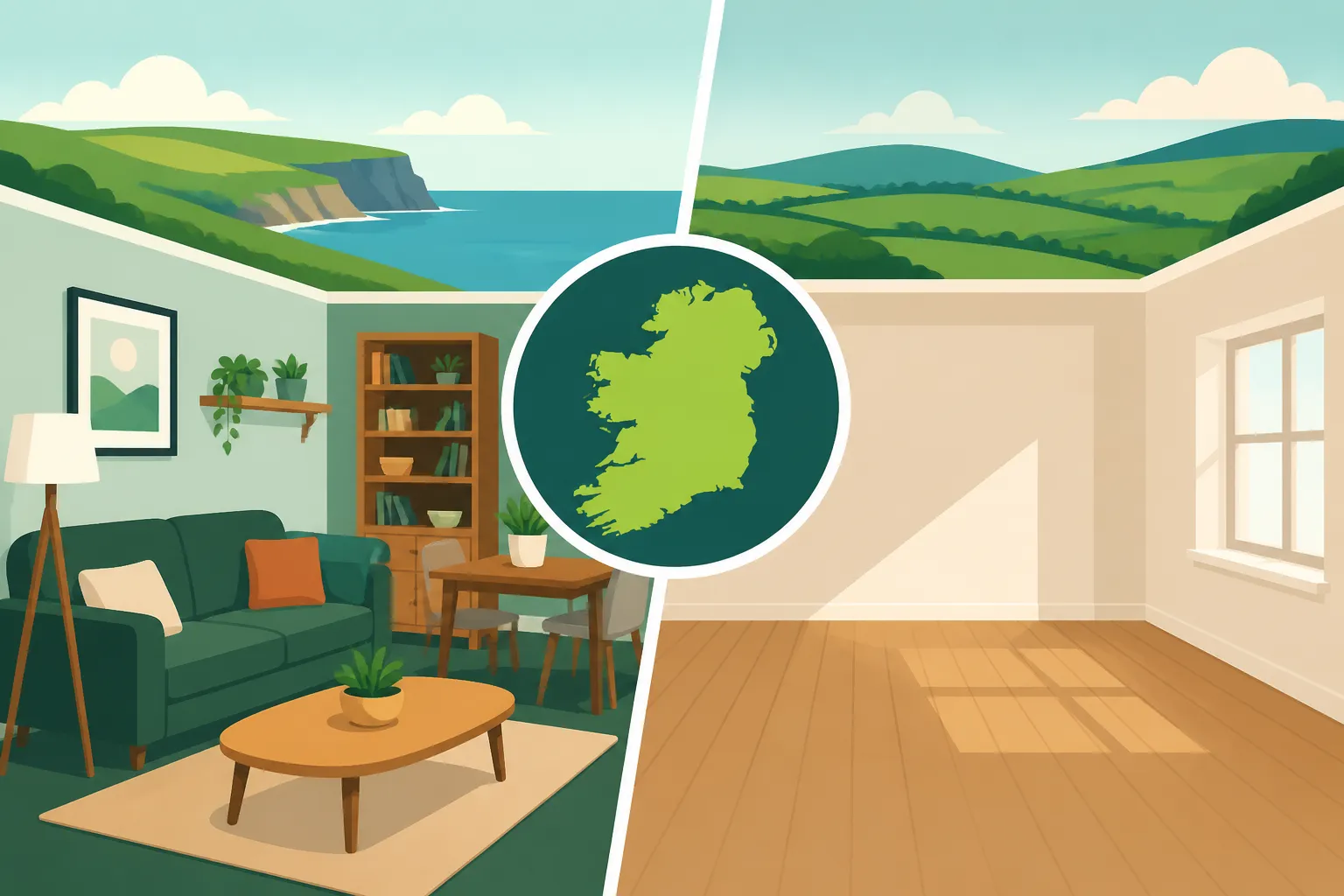
Understanding Furnished vs Unfurnished Rentals in Ireland
One of the trickiest decisions you'll face when you first land in Ireland, especially if you're coming from abroad, is whether to go for a furnished or unfurnished rental. It’s not just about what comes with the place; it dictates your initial budget, your personal nesting ability, and even the stress levels of your move. This guide will meticulously break down what "furnished" and "unfurnished" truly mean in the Irish rental landscape, helping you navigate this often-confusing choice with clarity and confidence.
The Landscape of Irish Rentals: A Common Dilemma for Expats
When you first start searching for a place to live in Ireland, whether you're eyeing the bustling streets of Dublin, the vibrant culture of Cork, or the charming west coast of Galway, you'll quickly encounter listings that simply state "furnished" or "unfurnished." For many expats, particularly those coming from countries with different rental norms, this distinction can be a real head-scratcher. It’s not always as straightforward as it seems, and making the wrong assumption can lead to unexpected costs and logistical nightmares. Understanding the nuances here is paramount to a smooth transition.
What "Furnished" Really Means in Ireland
In Ireland, a "furnished" rental typically implies that the property comes equipped with the basics you need to live there from day one. Think beds, wardrobes, a sofa, dining table and chairs, and often, essential kitchen appliances like a fridge, oven, and washing machine. Sometimes, you'll even find microwaves, kettles, and toasters included, though this isn't always a guarantee. The quality and style of the furniture can vary wildly, from brand new, modern pieces to older, well-worn items that have seen a few tenants come and go.
The critical thing to remember is that "furnished" rarely means "fully equipped." You'll still need to bring your own bedding, towels, kitchen utensils, pots, pans, and all those personal touches that make a house a home. It's a convenient option for those arriving with just a suitcase or two, as it significantly reduces the immediate shopping list and the hassle of arranging furniture delivery. However, it's always wise to ask for a detailed inventory list before signing any agreement, so you know exactly what you're getting and can avoid any unpleasant surprises upon arrival. Don't be shy about asking for photos of the actual furniture – glossy listing photos can sometimes be deceiving!
What to Expect from an "Unfurnished" Rental
On the flip side, an "unfurnished" rental in Ireland generally means a completely blank canvas. When you step through the door, you can expect an empty space, possibly with floor coverings (carpets or laminate), light fixtures, and sometimes window blinds or curtains, but that's about it. Crucially, the kitchen is often the exception to this rule. Most unfurnished properties in Ireland will still come with white goods – a fitted kitchen with an oven, hob, and often a fridge-freezer and washing machine. This is a significant difference compared to some other countries where even these core appliances might be absent.
For those who crave the freedom to stamp their own personality on a living space, an unfurnished property offers immense potential. You get to choose every piece of furniture, every accessory, and every colour scheme. This level of personalisation can be incredibly appealing, especially for long-term expats who plan to settle down for several years. However, it also means a much larger initial investment in time, money, and effort. You’ll be responsible for sourcing, buying, and moving in everything from your bed to your sofa, not to mention all the smaller household items. It’s a commitment, but one that many find deeply rewarding in the long run.
The Perks and Pitfalls of Going Furnished
Choosing a furnished rental often feels like the path of least resistance when you're first arriving in a new country like Ireland. You're probably grappling with sorting out your The Complete Guide to Irish Visas and Immigration Permission for Expats (2027), a new job, and just generally trying to find your feet. The thought of adding furniture shopping and moving logistics to that list can be utterly overwhelming. But like everything in life, convenience often comes with its own set of trade-offs.
Immediate Move-In and Convenience
The most obvious advantage of a furnished rental is the sheer convenience. Imagine stepping off the plane, heading straight to your new apartment, and finding a bed ready for you to collapse into after a long journey. There’s no frantic scramble to buy furniture, no waiting around for delivery trucks, and no wrestling with flat-pack instructions late into the night. This is particularly beneficial for those on short-term contracts, students, or individuals who aren't sure how long they'll be staying in Ireland.
For expats, this means you can hit the ground running, focusing your energy on securing a PPS number, opening a bank account, or even just exploring your new neighbourhood. You simply unpack your suitcases, get some groceries, and you’re essentially moved in. This can significantly reduce the initial stress and allow for a smoother acclimatisation period. If you’re only planning to be in Ireland for a year or two, or if your company is providing temporary accommodation, a furnished option simplifies everything from arrival to departure. Plus, you won't need to worry about selling or shipping furniture when it's time to move on, reducing your departure logistics. For those needing immediate connectivity on arrival, having an eSIM from a provider like Airalo can simplify getting online to coordinate these first steps.
The Cost Factor: Higher Rent and Depreciation
While convenient, furnished rentals almost always come with a higher monthly rent compared to their unfurnished counterparts. Landlords factor in the cost of purchasing, maintaining, and replacing furniture, which inevitably gets passed on to the tenant. Over the course of a year, this difference can add up to a substantial amount, often thousands of euros. This higher rent means you might be paying for items you don't particularly like or that aren't quite your style, simply for the sake of having them.
Furthermore, you’re also implicitly paying for the depreciation of the furniture. Items will naturally wear and tear with use, and while landlords expect a certain level of reasonable use, any damage beyond that could come out of your deposit. This can lead to disputes when you move out. It’s a good idea to thoroughly document the condition of all furniture with photos and videos when you move in, noting any pre-existing damage, to protect your Understanding the Deposit and RTB Registration for Rentals in Ireland. This careful documentation prevents you from being charged for damage you didn't cause, a common frustration for many tenants.
Lack of Personalisation and Wear and Tear Concerns
One of the biggest downsides of a furnished rental for anyone hoping to truly make a home is the limited scope for personalisation. You're essentially living in someone else's aesthetic, which might not align with your own. While you can add your personal touches with art, plants, and soft furnishings, you're usually stuck with the main pieces of furniture. This can feel impersonal and prevent you from truly settling in and feeling at home, especially if you have a strong sense of interior design.
Beyond aesthetics, there's the ongoing concern about wear and tear. Every scratch on the coffee table, every stain on the sofa, can feel like a potential deduction from your security deposit. This can lead to an unnecessary level of anxiety, making you feel less comfortable in your own space. While landlords understand normal wear, defining "normal" can sometimes be subjective. It adds an extra layer of caution to everyday living, particularly if you have children or pets. This constant worry can detract from the joy of living in your new Irish home.
Embracing the Blank Canvas: The Unfurnished Rental Experience
For those who are planning a longer stay in Ireland, or simply desire a living space that truly reflects their personality, an unfurnished rental can be an incredibly rewarding choice. It demands more upfront effort and expenditure, but it offers a level of freedom and comfort that a furnished property often cannot. It’s a choice that many expats ultimately lean towards once they've found their footing and are ready to put down more permanent roots.
Freedom to Personalise and Make it Your Own
Stepping into an empty unfurnished apartment or house is like being handed a blank canvas – the creative possibilities are endless. You get to choose every single piece of furniture, from the style of your sofa to the firmness of your mattress, ensuring everything suits your taste, comfort, and practical needs. This level of control allows you to create a living space that feels authentically yours, a genuine home away from home. For those who enjoy interior design or have cherished family heirlooms they wish to bring, this is invaluable.
This personalisation extends beyond just aesthetics. You can select furniture that perfectly fits the dimensions of each room, avoiding awkward layouts or cramped spaces. You can invest in quality pieces that will last, rather than making do with whatever the landlord provided. Over time, building your own collection of furniture and decor can contribute significantly to your overall sense of well-being and stability in your new country. It transforms a mere rental property into a true sanctuary that feels deeply personal and comforting, a crucial factor when adapting to life abroad.
Initial Outlay: The Big Furniture Shop
The trade-off for this freedom is, undeniably, a significant initial financial outlay. Furnishing an entire home from scratch requires a substantial budget, especially when you consider everything from major items like beds and sofas to smaller necessities like cutlery, lamps, and curtains. Even if you're resourceful and look for second-hand items, the costs quickly add up. You'll need to budget not only for the items themselves but also for delivery charges, which can be considerable, especially for larger pieces.
Many expats underestimate this cost, only to be surprised by the sheer expense of equipping a new home. You'll need to factor this into your overall The Complete Guide to Cost of Living in Ireland for Expats (2026) spreadsheet. Beyond the financial aspect, there's the time commitment involved in shopping, comparing prices, and coordinating deliveries. This can be particularly challenging if you're new to the country and unfamiliar with local retailers or public transport routes for smaller purchases. However, there are fantastic options like IKEA in Dublin or online retailers that deliver nationwide, which can make the process more streamlined.
Logistics of Moving and Setting Up
Moving into an unfurnished rental is a logistical marathon. You'll need to coordinate multiple deliveries for different items, often on different days, and be present to receive them. Assembling flat-pack furniture can be a time-consuming and often frustrating experience, especially if you're doing it solo after a long day of work. For larger items, you might need to enlist the help of friends or hire professional movers. Companies like Sirelo can be incredibly helpful in coordinating international moves and even local ones, ensuring your belongings arrive safely and are handled with care, which can alleviate a huge amount of stress.
Setting up utilities – electricity, gas, broadband, and TV – will also fall squarely on your shoulders. While this needs to be done for any rental, the added layer of furniture logistics can make the first few weeks feel like a never-ending to-do list. You’ll need to research providers, compare plans, and schedule installation appointments. This period can be intense, but once everything is set up and your home is furnished to your liking, the sense of accomplishment and comfort is truly unparalleled. Remember to check out guides like How to Set Up Electricity and Gas in Your Irish Home and How to Set Up Broadband and TV in Ireland to make this process smoother.
Cost Comparison: Beyond the Monthly Rent
When deciding between a furnished and unfurnished rental, it’s all too easy to just look at the monthly rent difference. However, that’s only scratching the surface of the true financial picture. There are numerous upfront costs, potential long-term savings, and hidden expenses that need to be factored into your decision. A thorough financial analysis is crucial to avoid unexpected budgetary strains and to make the most economical choice for your particular situation in Ireland.
Upfront Costs: Deposits, Furniture, and Utilities
Let's break down the initial financial hit for both options. For any rental in Ireland, you'll need to pay a security deposit, typically equivalent to one month's rent, and your first month's rent in advance. This is standard whether the place is furnished or not. However, the higher rent of a furnished apartment means a higher deposit too. For example, if a furnished flat costs €1,800 a month and an unfurnished one is €1,500, you're immediately paying an extra €300 in deposit alone for the furnished option. See How Much Deposit Do I Need to Rent in Ireland? for more details.
Now, for the unfurnished option, the big ticket item is furniture. Let's consider a basic setup for a one-bedroom apartment:
- Bed and mattress: €400 – €1,000+
- Sofa: €300 – €800+
- Dining table and chairs: €150 – €500+
- Wardrobe/chest of drawers: €100 – €300+
- Smaller items (lamps, curtains, kitchenware): €200 – €500+
Realistically, you're looking at an initial spend of anywhere from €1,150 to well over €3,000 to get the basics. This is a lump sum you need to have ready before you even move in. While a furnished place saves you this immediate expenditure, remember you're paying for it indirectly through higher monthly rent. So, calculate the difference in rent over your intended stay – if you plan to stay for two years, and the furnished place is €200 more expensive per month, that's €4,800 over two years. This perspective can quickly put the initial furniture investment into context.
Long-Term Savings and Investment
Looking beyond the immediate costs, an unfurnished rental often presents better long-term financial sense, especially if you plan to stay in Ireland for several years. The initial investment in furniture, while substantial, is a one-off cost. Over time, the cumulative difference in lower monthly rent for an unfurnished property will often exceed the cost of buying your own furniture. Once you own your furniture, it’s yours to keep, sell, or take with you to your next home. This builds equity, even if it's just in household goods.
Think of it as an investment in your comfort and future. Should you move to another unfurnished property in Ireland, you won't have to start from scratch again. Should you decide to move back home or to another country, you can sell your furniture, recouping some of your initial investment. In contrast, with a furnished rental, every extra euro you pay in rent is simply gone, with no tangible asset to show for it at the end of your tenancy. This long-term perspective can shift the financial calculation significantly in favour of an unfurnished option.
Hidden Costs to Consider
There are also some hidden costs associated with both choices that often get overlooked. For furnished properties, beyond the rent and deposit, you might face stricter clauses in your tenancy agreement regarding maintenance and cleanliness, potentially leading to more frequent professional cleaning costs to avoid deposit deductions. There’s also the mental cost of living with furniture you don't like or constantly worrying about damaging items that aren't yours.
For unfurnished properties, the "hidden" costs are more logistical. Think about transport fees for furniture if you buy from multiple stores or hire a van. There's also the time cost of shopping and assembling. Don't forget the cost of tools if you don't already own them for assembly, or the cost of hiring someone to help if you're not handy. Utilities themselves will be a cost for any rental, but setting them up often requires calls and time. Additionally, if you move frequently, repeatedly buying and selling furniture can become a hassle, diminishing the long-term savings. When planning your move, consider all these facets to truly understand How Much Does It Cost to Rent in Dublin in 2026? or elsewhere in Ireland.
| Feature | Furnished Rental (Typical in Ireland) | Unfurnished Rental (Typical in Ireland) |
|---|---|---|
| Included Items | Beds, sofas, dining set, wardrobes, essential kitchen appliances. | Empty rooms, usually with fitted kitchen appliances (oven, fridge, WM). |
| Monthly Rent | Higher | Lower |
| Upfront Costs | Deposit (higher due to rent), first month's rent. | Deposit (lower due to rent), first month's rent, ALL furniture costs. |
| Convenience | High – immediate move-in, less stress. | Low initially – significant time/effort for shopping & setup. |
| Personalisation | Limited – stuck with landlord's aesthetic. | Unlimited – complete freedom to design your space. |
| Long-term Value | No asset ownership, costs disappear with rent. | Builds asset ownership, potential to recoup costs on sale. |
| Ideal For | Short-term stays (1-2 years), corporate relocations, students. | Long-term residents (2+ years), families, those with own furniture. |
| Logistics | Simple move-in, simpler move-out. | Complex move-in, easier move-out (if selling/moving furniture). |
| Wear & Tear | Constant concern for landlord's property. | Only responsible for property structure; furniture is your own risk. |
Making the Right Choice: Factors to Weigh Up
Deciding between a furnished and unfurnished rental is a very personal choice, and what works perfectly for one expat might be completely unsuitable for another. It really comes down to a blend of your current circumstances, future plans, and personal preferences. There's no universal right answer, but by carefully considering several key factors, you can make an informed decision that aligns with your needs and makes your transition to life in Ireland as smooth as possible.
Your Stay Duration and Lifestyle
One of the most critical questions to ask yourself is: How long do you realistically plan to stay in Ireland? If your assignment is short-term, say 6 months to 2 years, a furnished rental makes a lot of sense. The convenience of simply moving in with your luggage, without the hassle of buying and eventually selling or shipping furniture, often outweighs the higher monthly rent. It reduces stress, saves time, and simplifies your eventual departure. This is particularly true for those on temporary contracts or students here for a specific course.
However, if you envision a longer stay – 2 years or more – or if you're moving with your family and planning to put down roots, the economics and emotional benefits lean heavily towards unfurnished. Over a longer period, the cumulative savings from lower rent can easily offset the initial cost of buying furniture, and the ability to create a truly personalised home environment becomes invaluable. Consider your lifestyle too: if you're a minimalist who doesn't own much, furnished might still be appealing. If you're someone who loves to collect unique items or has specific pieces you want to bring from home, unfurnished is the clear winner.
Budget and Financial Flexibility
Your current financial situation and how much disposable income you have for upfront costs will significantly influence your decision. An unfurnished rental demands a considerable initial investment for furniture, which, as we’ve discussed, can easily run into thousands of euros. If you're arriving in Ireland with limited savings after covering your visa, travel, and initial living expenses, shelling out for furniture might simply not be feasible. In such cases, the slightly higher monthly rent of a furnished apartment might be a more manageable expense spread out over time.
On the other hand, if you have a healthy moving budget and are looking to minimise ongoing monthly outgoings, the initial investment in furniture for an unfurnished place could be a smart move. Remember, the difference in rent between a furnished and unfurnished property can be quite significant in competitive markets like Dublin. For instance, How Much Is the Average Rent for a One-Bed Apartment in Cork in 2026? will be notably higher if furnished. Assess your financial flexibility thoroughly, including how much you can allocate to your The Complete Guide to Cost of Living in Ireland for Expats (2026). It's not just about what you can afford, but what provides you with the most financial comfort and long-term benefit.
Family Needs and Pet Considerations
If you're moving to Ireland with a family, especially with young children, this adds another layer of complexity. Children often have specific furniture needs, like cots, bunk beds, or age-appropriate desks. The furniture provided in a furnished rental might not be suitable, safe, or enough for your family. Furthermore, having your own furniture means you can create a child-friendly environment without worrying about damaging the landlord's property. The freedom to choose durable, easy-to-clean pieces becomes a major plus.
Pets are another crucial consideration. Finding pet-friendly rentals in Ireland can already be a challenge (though it's becoming slightly easier). If you do find one, a landlord with a furnished property might be less inclined to allow pets due to the increased risk of damage to their furniture. An unfurnished property, where you are responsible for your own furniture, might make landlords more amenable to pets, as their capital investment is protected. Always be upfront about pets from the very first inquiry, as it can be a deal-breaker for many landlords, regardless of whether the property is furnished or not.
Navigating the Rental Market: Tips for Both Options
Once you've made your decision between furnished and unfurnished, the real work of finding your new home in Ireland begins. The Irish rental market, particularly in urban centres, can be highly competitive, so being prepared and knowing what to look for is essential. Whether you’re searching for a ready-to-move-in apartment or a blank canvas, having a strategy will make the process smoother and increase your chances of securing a desirable property.
Where to Hunt for Your Ideal Rental
The primary online platforms for finding rentals in Ireland are Daft.ie and Rent.ie. These sites list the vast majority of available properties, both furnished and unfurnished, from individual landlords and letting agencies. Set up alerts for your preferred areas and property types so you're notified as soon as new listings appear, as good properties are snapped up quickly. It's often helpful to combine your search with local Facebook groups for expats in Ireland, as sometimes private listings or roommate opportunities (if you're looking for that) pop up there.
For those moving to Ireland with a lot of belongings, or needing specialised moving services, consider reaching out to companies like Sirelo. While primarily an international moving platform, they can also offer insights into local moving services once you've found your property. When you're actively searching, be prepared to act fast. How to Find a Property to Rent in Ireland is a challenging process, so having all your documents ready – references, proof of employment, bank statements, and your The Complete Guide to the IRP Card and Registering with Immigration (2027) or PPS number – will put you in a strong position.
Negotiating and Inspecting Your Future Home
Regardless of whether you choose a furnished or unfurnished option, never skip a thorough inspection of the property before signing any lease. For furnished properties, meticulously check the condition of every item of furniture. Take detailed photos and videos, noting any scratches, dents, stains, or damage. This is critical for protecting your Understanding the Deposit and RTB Registration for Rentals in Ireland when you move out. Ensure any pre-existing issues are documented and agreed upon in writing with the landlord or letting agent.
For unfurnished properties, focus your inspection on the structural integrity, appliances included in the kitchen, and general state of repair. Check for damp, mould, leaks, and ensure all fixtures and fittings (lights, heating, water pressure) are in good working order. Don't be afraid to ask questions about utility costs, previous tenant experiences, or any planned maintenance. Negotiation on rent is rare in Ireland's competitive market, especially in Rent Pressure Zones, but it's always worth enquiring about small improvements or repairs during the viewing. Familiarise yourself with Understanding Tenant and Landlord Rights Under the RTB in Ireland so you know your entitlements.
Getting Settled: Connecting Utilities and Services
Once you’ve secured your ideal rental, the next step is getting all your essential services connected. For both furnished and unfurnished properties, you'll need to set up accounts for electricity, gas (if applicable), and broadband. Providers like Electric Ireland, Bord Gáis Energy, and Energia are common for utilities, while Virgin Media and Eir are popular choices for broadband. It's wise to arrange these connections as soon as you have a move-in date to ensure you're not left without power or internet.
For unfurnished properties, this also means coordinating furniture deliveries. Don't underestimate the time it takes for items to arrive, especially larger pieces. Try to schedule essential deliveries for your first few days in the property. And for those first few days or weeks, while your home is still coming together, having reliable mobile connectivity is a lifesaver. Consider an eSIM from a provider like Airalo to ensure you have data and can make calls without fumbling for a local SIM card the moment you land, allowing you to coordinate deliveries and settle in seamlessly. Remember to consult guides like How to Set Up Electricity and Gas in Your Irish Home and How to Set Up Broadband and TV in Ireland for detailed steps.
Disclaimer
Please note that this guide provides general information based on typical experiences in Ireland and should not be considered legal advice. Rental laws and market conditions can change, and individual circumstances vary. Always consult with a qualified legal professional or an official letting agent for specific advice pertaining to your situation. Prices and availability of services mentioned are subject to change.