How Do I Register as Self-Employed for Tax in Ireland?
Arriving in Ireland as an expat is an adventure, but let's be honest, the moment you decide to strike out on your own and become self-employed, a whole new level of "adventure" begins – especially when it comes to understanding taxes. The Irish Revenue Commissioners have their own way of doing things, which can feel like trying to decipher an ancient Celtic manuscript if you're not used to it. This guide is here to walk you through the often-confusing process of registering as self-employed for tax in Ireland, making sure you know exactly what steps to take and what pitfalls to avoid.
Understanding Self-Employment in Ireland: What Does It Mean for Expats?
When you’re an expat in Ireland, the idea of being self-employed often conjures images of freedom, flexibility, and being your own boss. And while all of that is true, from a tax perspective, it means you’re taking on a significantly different role compared to being an employee. You’re no longer just getting a payslip with PAYE, PRSI, and USC already deducted for you; now, you’re responsible for calculating, reporting, and paying those taxes yourself. It’s a big shift, but one that many expats successfully navigate.
Defining a Sole Trader: More Than Just a Freelancer
In Ireland, the most common form of self-employment is operating as a "sole trader." This isn't just a fancy term; it has specific legal and tax implications. Essentially, as a sole trader, you are the business. There's no legal distinction between you and your enterprise. If you're freelancing, consulting, providing a service, or selling goods as an individual, you're likely a sole trader. This structure is typically straightforward to set up, making it a popular choice for many newcomers.
What does this mean in practice? It means your personal assets are generally not separate from your business assets, and you are personally liable for any business debts. While this might sound a bit daunting, for many small businesses and freelancers, the simplicity and lower administrative burden outweigh these considerations. You'll file your taxes through the self-assessment system, declaring your income and expenses, and ultimately paying tax on your profits. This is a stark contrast to the PAYE (Pay As You Earn) system that most employees are familiar with, which automatically deducts taxes from your salary.
The Importance of Tax Registration: Don't Get Caught Out!
Registering as self-employed with Revenue (Ireland’s tax authority) is not optional; it’s a legal requirement. Many expats, especially those new to self-employment, sometimes unknowingly operate for a period without proper registration, thinking they’ll sort it out later. This is a huge risk. Revenue is quite efficient at identifying unregistered businesses, and non-compliance can lead to penalties, fines, and interest charges on unpaid taxes. You certainly don't want to start your independent journey in Ireland on the wrong foot with the taxman!
Beyond avoiding penalties, proper registration ensures you can operate legitimately, issue proper invoices, and claim legitimate business expenses against your income. It's the foundation of running a transparent and compliant business in Ireland. Think of it as getting your official badge to play in the Irish entrepreneurial sandbox. Without it, you’re not just missing out on benefits; you’re exposed to potential trouble. It's a critical first step, just as important as setting up your business and finding clients.
Eligibility and Preliminary Steps Before You Register
Before you even think about logging onto Revenue's website, there are a few foundational pieces you need to have in place. These steps are crucial and can often be a source of frustration for new arrivals, but tackling them head-on will save you a lot of headaches down the line.
Do You Need a PPS Number? Absolutely!
If you’re planning on working, living, or paying taxes in Ireland, a Personal Public Service (PPS) number is non-negotiable. It’s your unique identifier for all interactions with public services and tax authorities in Ireland. Without a PPSN, you simply cannot register as self-employed, nor can you engage in any formal financial transactions related to your income in Ireland. Many expats already have one from previous employment, but if you’re new to Ireland or this is your first time formally engaging with Irish public services, obtaining a PPSN is step one.
The process involves applying through MyWelfare.ie, often requiring proof of identity (passport) and proof of address in Ireland. This can be tricky if you’ve just arrived and haven’t secured long-term accommodation or utility bills in your name. Persistence is key here. It’s a common hurdle, but once you have that nine-digit number, you’re well on your way. For a deeper dive into this, you might find our guide on How to Register for Tax and Get a PPS Number in Ireland incredibly useful.
Gathering Your Documentation: The Paperwork Trail
The Irish system, like many, loves its paperwork – or at least, the digital equivalent. Before you embark on the registration journey, ensure you have easy access to certain documents and information. This typically includes your PPS number, your current Irish address (and proof of it, like a utility bill or bank statement), and details about your business activity. While you might not need to upload physical documents during the initial online registration, Revenue can, and often does, request verification later.
It’s always a good idea to keep digital copies of everything, from your passport and visa (if applicable) to any correspondence you receive from Revenue. Setting up a dedicated folder for your business finances and tax documents will make your life significantly easier when it comes to filing your annual tax return or if Revenue has any queries. For instance, if you're a designer, have your business name, a description of your services, and the date you started trading clearly defined. Being organised from day one is a game-changer.
The Step-by-Step Guide to Registering as Self-Employed with Revenue
Alright, you've got your PPSN, you know what you're doing, and your paperwork is in order. Now it's time to actually tell Revenue that you're in business. This is primarily done online, and while the Revenue website can sometimes feel like a labyrinth, following the correct path will get you there.
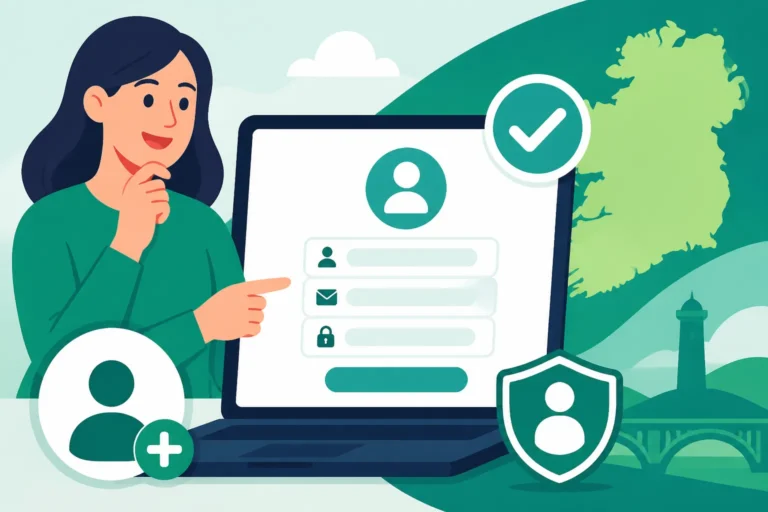
Registering on Revenue's Online Service (ROS) or myAccount
The primary way to interact with Revenue, especially for self-employed individuals, is through their online portals: myAccount or Revenue Online Service (ROS).
- myAccount: This is generally the starting point for most individual taxpayers in Ireland, including sole traders. If you’ve never registered for taxes in Ireland before, or if you were previously only a PAYE employee, you’ll likely start here. You can access myAccount using your PPS number and a password or through a pre-issued "MyGovID" login. Once you're in, you navigate to the "Manage My Record" section and then choose "Register a New Tax."
- Revenue Online Service (ROS): This is Revenue's more comprehensive online portal, designed for businesses and tax agents. While myAccount is sufficient for many sole traders, ROS offers more advanced features. Some self-employed individuals opt to register for ROS access once they become more established, or if they have an accountant managing their taxes. To register for ROS, you typically need to first be registered for tax on myAccount, and then you apply for a ROS digital certificate. This certificate acts as your secure login and digital signature.
Whichever path you choose, the key is to ensure you select the correct tax head for self-employment. This will be 'Income Tax' as a 'Self-Assessed' individual.
Declaring Your Business Activity and Commencement Date
During the online registration process, you'll be asked for specifics about your self-employment. This isn't just a formality; it's how Revenue categorises your business for tax purposes. You'll need to provide:
- Date of Commencement: This is the exact date you started your self-employed activity. It's crucial because your tax obligations begin from this date. Even if it was a small gig, if you earned money, that's your start date. Don't backdate or push it forward unnecessarily.
- Nature of Business: You'll need to describe what your business does. Be clear and concise. Are you a freelance graphic designer, an IT consultant, a private tutor, a yoga instructor? The more accurate you are, the better. There might be a list of categories to choose from, or a text box to describe it.
- Business Name: If you're operating under a business name other than your own personal name, you'll need to provide this. Note that registering a business name with the Companies Registration Office (CRO) is a separate process from tax registration, though often done in tandem. For most sole traders, simply operating under their own name is fine and doesn't require CRO registration.
Once you submit this information, Revenue processes your registration. You should receive confirmation, usually within a few days or weeks, depending on their workload. Keep this confirmation; it’s proof that you’ve met your obligation. You'll also likely receive information about your new tax reference number for self-assessment, which will be different from your PPSN.
Your Tax Obligations as a Self-Employed Individual in Ireland
Congratulations, you're officially registered! Now comes the exciting part: understanding what taxes you actually need to pay and when. This is where many expats often feel overwhelmed, but breaking it down makes it manageable. This is also where services like Taxes for Expats can be incredibly helpful, as they specialise in navigating these complexities for non-Irish citizens.
Income Tax, PRSI, and USC: The Triple Threat
Unlike employees, who see these deductions automatically taken from their pay, self-employed individuals are responsible for calculating and paying their own:
- Income Tax: This is levied on your profits (your income minus allowable business expenses). Ireland operates a progressive tax system with different tax bands and rates. As a self-employed individual, you'll benefit from certain tax credits, but the rates can go up to 40% for higher earners. Understanding Income Tax and Tax Bands in Ireland (2026) is key here.
- PRSI (Pay Related Social Insurance): This contributes to social welfare benefits like the State Pension, jobseeker's benefit, and maternity benefit. Self-employed individuals typically pay PRSI Class S, which in 2026 is 4% of all reckonable income, with a minimum annual payment. This is incredibly important for your future security in Ireland.
- USC (Universal Social Charge): This is another tax on your gross income, paid in addition to income tax and PRSI. It has its own set of rates and bands, which are also progressive.
The combined effect of these three taxes can mean a significant portion of your income goes to Revenue, so it's vital to factor this into your pricing and financial planning. Don't forget, these are based on your profits, so keeping track of every legitimate business expense is paramount.
Preliminary Tax: What It Is and Why It Matters
One of the unique aspects of being self-employed in Ireland is preliminary tax. This isn't an additional tax; it's an advance payment towards your income tax and USC liability for the current tax year. Revenue wants to get its money throughout the year, rather than waiting until the end.
For example, your preliminary tax for 2026 is based on your estimated tax liability for 2026. You generally need to pay it by 31 October 2026. You can choose to pay preliminary tax based on:
- 90% of your final liability for the current tax year.
- 100% of your final liability for the previous tax year.
- 105% of your final liability for the year before the previous tax year (this option only applies if you pay by Direct Debit and don't pay 100% of the previous year's liability).
Most sole traders opt for option 2, as it provides a known figure to work with. Missing your preliminary tax deadline or underpaying can result in interest charges, so mark those calendars!
Understanding VAT: When and If You Need to Register
VAT (Value Added Tax) is a consumption tax that applies to most goods and services in Ireland. As a self-employed individual, you only need to register for VAT if your annual turnover exceeds certain thresholds:
- €40,000 for services
- €80,000 for goods
These thresholds are for a 12-month period, so you need to constantly monitor your income. If your turnover crosses these limits, you must register for VAT. Once registered, you’ll charge VAT on your sales, collect it from your customers, and pay it to Revenue, typically on a bi-monthly basis. You can also reclaim VAT on your legitimate business expenses.
For many freelancers and consultants starting out, you might not hit these thresholds immediately, meaning you won’t need to register for VAT. This simplifies things considerably. However, if you are providing services to VAT-registered businesses in other EU countries, specific rules (Reverse Charge Mechanism) might apply, and you may still need to register for VAT even if you are below the Irish threshold for domestic supplies. It's a complex area, and Understanding VAT in Ireland for Businesses (2026) can provide more clarity.
Essential Tips for Managing Your Self-Employment Finances
Navigating self-employment tax in Ireland is a continuous process, not a one-time registration. Adopting good habits early will save you immense stress, time, and potentially money.
Keeping Meticulous Records: Your Best Friend at Tax Time
This cannot be stressed enough: keep everything. Every invoice issued, every receipt for an expense, every bank statement, every piece of correspondence from Revenue. As a sole trader, your records form the basis of your tax return, and Revenue can audit you. If you can't prove an expense, you can't claim it.
Consider using accounting software (like QuickBooks, Xero, or even a simple spreadsheet initially) to track your income and expenses systematically. Link your business bank account to it, if possible. While traditional Irish banks like AIB and Bank of Ireland are popular, digital banks like Revolut or N26, which our guide How to Use Revolut, N26 and Digital Banks in Ireland explores, can be fantastic for segregating business and personal finances and offering excellent tracking features. Keeping personal and business finances separate from day one is a golden rule that will make tax season infinitely easier.
Professional Advice: When to Call in the Experts
While this guide aims to equip you with the knowledge, there will likely be moments where you feel utterly lost. That’s perfectly normal, and it’s when seeking professional advice becomes invaluable. A qualified tax advisor or accountant specialising in self-employment and expat taxes in Ireland can:
- Help you accurately calculate your preliminary tax and final tax liabilities.
- Identify all legitimate business expenses you can claim, maximising your deductions.
- Ensure you comply with all filing deadlines, avoiding penalties.
- Advise on more complex scenarios, like working with international clients or understanding double taxation treaties if you have foreign income.
- Assist with Filing Your Tax Return with Revenue in Ireland: The Complete Walkthrough (2027) or even file it on your behalf.
Don't see it as an expense, but an investment. The peace of mind and potential tax savings can easily outweigh the cost. When dealing with intricate international financial matters, a specialist service like Taxes for Expats can be particularly adept at handling the nuances of your situation, ensuring you stay compliant both in Ireland and potentially in your home country. For example, if you're using international money transfer services like Wise to get paid by overseas clients or to send money home, an accountant can help clarify how these transactions impact your Irish tax obligations.
Understanding Deadlines and Filing Your Annual Return
The main annual deadline for self-assessed taxpayers in Ireland is 31 October following the tax year. So, for the 2025 tax year, your return (Form 11) is due by 31 October 2026. This is also generally the deadline for paying your preliminary tax for the current year (2026) and any balance of tax due for the previous year (2025).
Filing your tax return is crucial. Even if you think you don't owe any tax, you must file. Revenue uses your return to determine your PRSI contributions and your eligibility for social welfare benefits. You can file your tax return through myAccount or ROS. It’s a detailed process that asks for all your income sources, allowable expenses, capital allowances, and any tax credits you might be eligible for. The guide How to Pay Tax as a Sole Trader in Ireland provides further insights into the ongoing obligations.
| Tax Obligation | Description | Key Dates (approx.) | Notes |
|---|---|---|---|
| PPS Number | Personal Public Service Number | One-time application | Essential for all tax and public service interactions. Apply via MyWelfare.ie. |
| Tax Registration | Register as a self-assessed individual with Revenue | One-time (at commencement) | Done through myAccount or ROS. Declare business activity and start date. |
| Income Tax | Tax on your business profits (income – expenses) | Annual (by 31 Oct) | Paid via self-assessment. Rates and bands apply. |
| PRSI (Class S) | Pay Related Social Insurance for self-employed | Annual (by 31 Oct) | 4% of reckonable income (min. payment applies). Contributes to social welfare. |
| USC | Universal Social Charge on gross income | Annual (by 31 Oct) | Progressive charge based on income bands. |
| Preliminary Tax | Advance payment for current year's tax liability | Annual (by 31 Oct) | Based on 90% current year, or 100% previous year's liability. Avoids interest charges. |
| VAT Registration | Register for Value Added Tax | Ongoing (if thresholds met) | Mandatory if turnover >€40k (services) or >€80k (goods) in 12 months. |
| VAT Returns | Report VAT charged and reclaimable | Bi-monthly / Quarterly | If VAT registered, file returns and pay VAT due regularly. |
| Record Keeping | Maintain all income, expense, and tax records | Ongoing | Crucial for accurate returns and audit compliance. Keep records for at least 6 years. |
Claiming Tax Credits and Reliefs
Ireland offers various tax credits and reliefs that can reduce your overall tax liability. As a self-employed individual, you are automatically entitled to the Earned Income Credit, which is designed to mirror the PAYE Employee Tax Credit. Other common reliefs include medical expenses, tuition fees, and certain pension contributions.
It's worth reviewing available tax credits and reliefs annually to ensure you're claiming everything you're entitled to. Our guide Understanding Tax Credits and Reliefs Available in Ireland can give you a comprehensive overview. Missing out on these can mean paying more tax than necessary, so take the time to understand them or get professional help. Every little bit helps when you're trying to keep your hard-earned money!
Becoming self-employed in Ireland is a fantastic opportunity for many expats, offering a direct path to shaping your career and lifestyle. While the initial steps of tax registration and understanding your obligations might seem daunting, it's a completely manageable process once you break it down. Remember, thorough record-keeping and not being afraid to ask for expert help when needed are your greatest assets. With a bit of organisation and proactive engagement with Revenue, you can build a successful and compliant self-employed venture here in the Emerald Isle.
Disclaimer
The information provided in this guide is for general informational purposes only and does not constitute professional tax, legal, or financial advice. Tax laws and regulations in Ireland can change, and individual circumstances vary greatly. While we strive to provide accurate and up-to-date information, we strongly recommend consulting with a qualified Irish tax advisor or accountant for advice tailored to your specific situation. Reliance on any information provided in this guide is solely at your own risk.