Can I Study in Ireland on a Tourist Visa?
It's a common dream, isn't it? You arrive in Ireland on a short holiday, perhaps just a week or two, and you fall completely in love with the place. The vibrant culture, the friendly people, the stunning landscapes – it just clicks. Suddenly, you're thinking, "Could I actually stay here longer? Maybe even study?" Many expats, myself included, have felt that pull. However, the hard truth is that you cannot simply switch from a tourist visa to a student visa while remaining in Ireland. This guide will walk you through why that's the case and, more importantly, lay out the correct, step-by-step path to successfully pursue your academic dreams in the Emerald Isle.
The Fundamental Difference: Tourist vs. Student Permissions
Let's cut right to the chase because this is where many people get tripped up. A tourist visa and a student visa (or more accurately, immigration permission) are designed for entirely different purposes, and Ireland's immigration system is quite clear on this distinction. Trying to bend the rules or hope for an exception is usually a recipe for disappointment and a wasted journey.
Understanding the Limitations of a Short Stay 'C' Visa
When you enter Ireland as a tourist, whether you're from a visa-required country and received a Short Stay 'C' visa, or you're from a visa-exempt country (like the US, Canada, Australia, or many EU countries) and simply received a standard visitor's stamp upon arrival, your permission to be in the country is strictly for tourism, visiting family/friends, or short business trips. This short-stay permission generally allows you to remain in Ireland for a maximum of 90 days within any 180-day period.
During this time, your activities are explicitly restricted. You cannot work, you cannot conduct long-term business, and critically for your question, you cannot undertake any course of study that would require full-time enrolment or lead to a recognised qualification. The immigration officer who stamped your passport or approved your visa application did so on the understanding that your primary intention was a temporary visit, and that you would leave the country by the expiry date of your permission. Attempting to change that fundamental purpose while still in Ireland is simply not permitted under current immigration rules.
The Purpose of a Student Visa Stamp 2
In stark contrast, a student visa, which grants you a Stamp 2 or Stamp 2A immigration permission, is specifically for the purpose of full-time education. This type of permission comes with its own set of stringent requirements, which are completely different from those for a tourist. When you apply for a student visa, you are telling the Irish authorities that your primary intention for being in the country is to study at an accredited educational institution.
The application process for a student visa involves providing proof of acceptance onto a recognised course, demonstrating sufficient funds to cover your tuition and living expenses, and often, proving you have appropriate private medical insurance. The duration of your stay will be tied directly to the length of your course, and it permits you to undertake certain types of part-time work, which a tourist visa explicitly does not. It's a completely different legal and immigration pathway. For a deeper dive into the various permissions, you might find "Understanding the Irish Immigration Stamp System (Stamp 1, 2, 4) (2026)" to be incredibly helpful.
Your Proper Path to Studying in Ireland
So, if you can't just flip a switch from tourist to student, what's the right way to go about it? The answer is clear: you must apply for the correct long-stay permission before you arrive in Ireland with the intent to study. This means going back to square one, gathering all your documents, and applying from your home country or country of legal residence.
Applying for an Irish Entry Visa Long Stay 'D' Student
For non-EEA (European Economic Area) citizens, the journey begins with applying for a Long Stay 'D' (Student) entry visa. This is not just a formality; it's a comprehensive application where you must demonstrate your genuine intent to study, your financial stability, and your adherence to all immigration regulations. The Irish Immigration Service Delivery (ISD) processes these applications, and they look for specific evidence.
You'll need a formal letter of acceptance from a recognised Irish educational institution for a full-time course on the Interim List of Eligible Programmes (ILEP). You'll also need to prove you have paid your tuition fees, or at least a significant portion of them. Crucially, you must demonstrate access to sufficient funds to support yourself during your studies. This usually means having at least €10,000 readily available for living expenses for each year of your course, on top of your tuition fees. Furthermore, you'll need private medical insurance that covers you for the duration of your stay. Companies like Cigna Global offer comprehensive expat health insurance plans that meet these requirements, providing peace of mind while you focus on your studies. Remember, transparency and thoroughness are key here. Every document counts, and any inconsistencies can lead to delays or refusal. More details on this process can be found in "How to Apply for an Irish Entry Visa (Short Stay and Long Stay)".
Registering with Immigration and Getting Your IRP Card
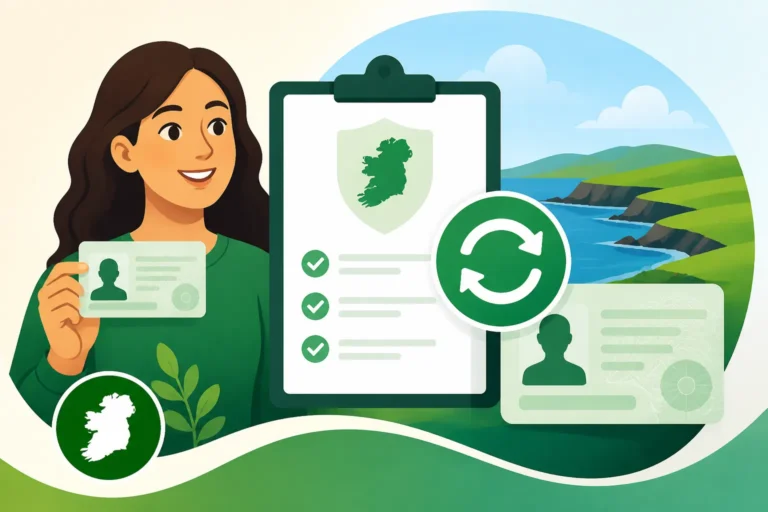
Once your Long Stay 'D' student visa is approved, and you've successfully arrived in Ireland, your immigration journey isn't quite complete. Within 90 days of your arrival, you must attend an appointment at your local Garda National Immigration Bureau (GNIB) registration office or the Burgh Quay Registration Office in Dublin to register your immigration permission. This is a mandatory step for all non-EEA nationals staying in Ireland for more than 90 days.
At this registration appointment, an immigration officer will verify your documents, including your passport, visa, acceptance letter, and proof of funds. If all is in order, they will grant you your Irish Residence Permit (IRP) card, which serves as proof of your registration and your immigration permission (typically a Stamp 2 for students). This card is extremely important – it's your official ID in Ireland and confirms your right to reside here for study purposes. Losing it is a hassle you don't want, so keep it safe! You can learn more about this vital step in "How to Register for an IRP Card with Immigration in Ireland" and "The Complete Guide to the IRP Card and Registering with Immigration (2027)".
Key Considerations for Aspiring International Students
Navigating immigration and study abroad is a complex process with many nuances. It's essential to be aware of the specific rules and expectations set by the Irish authorities.
Changing Your Immigration Status: Is It Possible?
This is perhaps the most common question I hear from people who've landed in Ireland on a tourist visa and then had a change of heart. Generally, the answer is a resounding "no" for non-EEA citizens. Irish immigration law typically does not permit a change of immigration stamp (e.g., from a visitor's stamp to a student stamp) while you are already in the country. The official policy is that you must apply for the correct visa/permission from outside Ireland, in your country of origin or legal residence.
There are extremely rare and exceptional circumstances where the Immigration Service Delivery might consider an in-country change of status, but these are typically for humanitarian reasons or in cases of international protection, not for a casual desire to switch from tourism to study. Relying on such an exception is highly ill-advised and will almost certainly lead to disappointment, potential overstay issues, and even future visa refusals. The safest and only recommended path is to leave Ireland, apply for the student visa from outside the country, and re-enter once it's approved. This ensures you're always operating within the legal framework. For context, even moving to Ireland as an EU/EEA citizen has its own registration requirements, which you can read about in "Understanding How EU/EEA Citizens Register for Residence in Ireland".
Financial Requirements and Proof of Funds
One of the biggest hurdles for international students is demonstrating sufficient financial capability. The Irish government wants to ensure that you can support yourself without becoming a burden on the state, or needing to work illegally to make ends meet. As of my last check, for non-EEA students, you generally need to show access to a minimum of €10,000 for each year of your study for living expenses, in addition to your tuition fees.
This isn't just a number they pull out of thin air; it's a realistic assessment of what it costs to live in Ireland. Rent, food, transport, books, social life – it all adds up quickly, especially in cities like Dublin, Cork, or Galway. You'll need to provide bank statements, a letter from your bank, or other official financial documents to prove these funds are genuinely available to you. They must be liquid funds, not assets you can't easily access. If someone else is sponsoring your studies, they will need to provide similar proof of funds, along with an affidavit confirming their commitment to support you. It's a significant financial commitment, so be realistic about your budget. To help with your planning, consider looking into "What Is the Cost of Living vs Salary for Students in Ireland?".
Working While Studying: What's Allowed on a Student Visa?
Having a student visa (Stamp 2) in Ireland does allow you to work part-time, but there are strict limitations. This is a privilege, not a right, and it's intended to supplement your income, not be your primary means of financial support. Typically, students on a Stamp 2 permission can work for up to 20 hours per week during term time.
During recognised holiday periods (June, July, August, and September, and from 15th December to 15th January), you are permitted to work full-time, up to 40 hours per week. This can be a fantastic way to gain some local experience and earn extra cash, but it's vital to stay within these limits. Working more than the permitted hours can jeopardise your immigration status and future renewals. Always ensure your employer is aware of your student visa restrictions, and that you have a valid PPS number for tax and social security purposes. This is quite different from other visa types, like employment permits which have different salary thresholds, as detailed in "Understanding the Salary Thresholds for Employment Permits in Ireland".
Planning Your Academic Journey: Practical Steps
Alright, so you've understood that the tourist visa isn't the way to go. Now, let's talk about how to do it right. A proper plan will save you a world of stress and increase your chances of a smooth transition.
Choosing Your Course and Institution
This is the very first and arguably most exciting step. Ireland boasts a world-class education system with excellent universities and colleges. Do your research! Think about what you want to study, what career path you envision, and which institutions specialise in those areas. Popular choices include Trinity College Dublin, University College Dublin, NUI Galway, University College Cork, and the Institutes of Technology dotted around the country.
Ensure the course you choose is full-time and listed on the Interim List of Eligible Programmes (ILEP). This list is crucial, as only programmes on it qualify for student immigration permission. Check the entry requirements carefully, as they can vary significantly between institutions and courses. Some might require specific academic qualifications, English language proficiency tests (like IELTS or TOEFL), or even interviews. Once you've identified your ideal course and received an offer of admission, that official acceptance letter will be a cornerstone of your visa application. You'll also need to consider what documents you need to enrol at an Irish university, which can be quite specific.
Getting Your Affairs in Order Before You Apply
The key to a successful student visa application is preparation. Before you even think about submitting that visa form, make sure all your ducks are in a row. This means:
- Passport Validity: Ensure your passport is valid for at least 12 months beyond your intended stay in Ireland.
- Financial Documentation: Gather all bank statements and financial proofs required to demonstrate your self-sufficiency (or your sponsor's). These should be recent and clearly show the required funds.
- Educational Documents: Have your acceptance letter from the Irish institution ready, along with any academic transcripts or certificates they required for admission.
- Health Insurance: Obtain comprehensive private medical insurance for the full duration of your stay. As mentioned, Cigna Global is one option that caters specifically to expats and international students.
- Accommodation Plan: While not always a strict visa requirement, having an initial plan for accommodation can strengthen your application and certainly reduce stress upon arrival.
- Travel Logistics: Plan your travel arrangements after your visa is approved. Don't book flights or accommodation before you have that stamp in your passport.
- Relocation Planning: Think about what you'll need to bring, how you'll ship your belongings, and who can help with the move. Companies like Sirelo can be invaluable in connecting you with international movers who understand the complexities of relocating to Ireland.
Remember, the goal is to present a clear, compelling, and fully compliant application that leaves no room for doubt about your intentions and your ability to succeed as a student in Ireland. Taking the time to get these affairs in order will make the entire process much smoother. And once you complete your studies, there are even options to remain, which you can explore in "How to Apply to Remain in Ireland After Your Studies".
| Feature | Tourist Visa/Permission (Short Stay 'C' or Visa-Exempt) | Student Visa/Permission (Long Stay 'D' / Stamp 2) |
|---|---|---|
| Primary Purpose | Tourism, visiting, short business trips | Full-time academic study |
| Duration | Up to 90 days within 180-day period | Up to the length of your course, typically 1 year renewable |
| Work Rights | Absolutely NO work permitted | Up to 20 hours/week during term, 40 hours/week during holidays |
| Application Location | From outside Ireland (for visa-required) or at port of entry | From outside Ireland |
| Eligibility | Proof of return, funds for short stay | Acceptance to ILEP course, significant funds for tuition/living, medical insurance |
| Change of Status | Generally NOT possible from within Ireland | N/A – it's the intended purpose |
| Primary Document | Passport stamp | IRP Card (after arrival and registration) |
Disclaimer
The information provided in this guide is intended for general informational purposes only and does not constitute legal advice. Immigration laws and policies in Ireland are subject to change. While every effort has been made to ensure accuracy, readers should consult the official Irish Immigration Service Delivery (ISD) website or seek professional legal advice from a qualified immigration solicitor for the most up-to-date and personalised information regarding their specific circumstances.