Can I Get a Personal Loan as a Newcomer in Ireland?
Moving to Ireland is an exhilarating adventure, isn't it? But amidst the excitement of new beginnings, the practicalities of setting up life here can quickly bring you back to earth. One of the biggest hurdles many newcomers face is the seemingly simple act of accessing credit, like a personal loan, especially when you're just starting out and desperately need funds for that unexpected cost or to simply get settled. It can feel like a Catch-22 – you need money to get established, but to get money, you need to be established. This guide is here to walk you through the realistic possibilities and significant challenges of securing a personal loan in Ireland as a newcomer, offering a veteran expat's perspective on how to navigate this often-frustrating landscape.
The Initial Hurdles: Why Getting a Personal Loan as a Newcomer is Tricky in Ireland
Oh, the joys of Irish bureaucracy and financial systems! Trust me, you are absolutely not alone if you've felt that wave of confusion and frustration when trying to sort out finances as an expat here. It's a completely different ballgame, and the concept of "creditworthiness" is deeply rooted in local history, which can feel like a massive wall when you've just arrived.
Lack of Credit History and Financial Footprint
This is, hands down, the biggest barrier you'll encounter. Irish banks, and indeed most lenders, rely heavily on what's called your Irish Credit Bureau (ICB) report. This report is essentially a detailed record of your borrowing and repayment history within Ireland. If you've just landed, your ICB report will be a blank slate, or at best, non-existent.
Imagine trying to prove you're a good driver without ever having sat behind the wheel in this country. That's what it feels like. Your excellent credit score from your home country, while commendable, simply doesn't transfer over here. Banks aren't equipped to assess foreign credit reports, and even if they were, the risk models are built around local data. This means that even if you've been a model borrower your entire adult life elsewhere, in Ireland, you're effectively starting from scratch. Lenders see a newcomer with no local credit history as a higher risk, regardless of your income or employment status. It's infuriating, I know. Many expats find themselves asking, "Do I Need Private Health Insurance in Ireland?" or "Can I Open an Irish Bank Account Without an Address?" without realising that these foundational steps contribute to their financial footprint.
"Ordinary Residence" and Bank Requirements
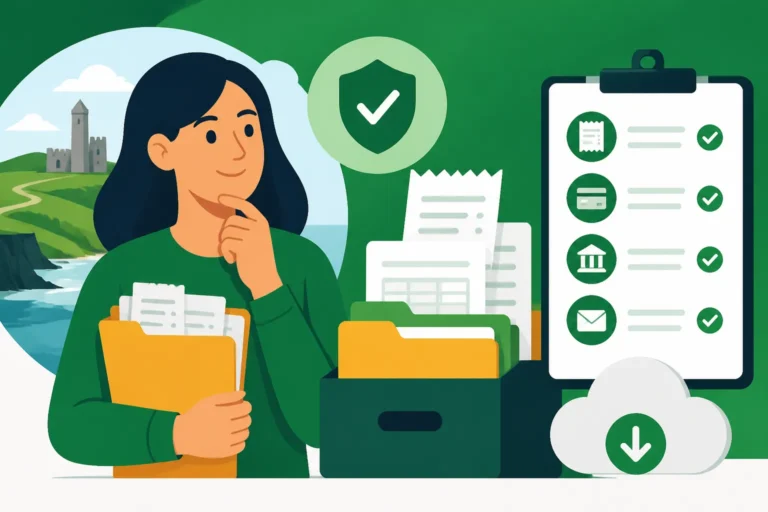
Another significant hurdle is the concept of "ordinary residence." This isn't just about having a roof over your head; it's about demonstrating a clear intention to reside in Ireland for the foreseeable future. Lenders want to see stability. For a personal loan, banks typically require a long list of documentation, and for newcomers, assembling this list can be a struggle:
- PPS Number (Personal Public Service Number): Absolutely essential. This is your tax and social welfare identifier. You won't get far without it. Getting your PPSN is one of the very first things you need to do, usually even before thinking about loans. You can find out more about how to get one in our guide on How to Register for Tax and Get a PPS Number in Ireland.
- Proof of Address: This is where many newcomers stumble. You'll need official documents like a utility bill (electricity, gas, landline phone, or broadband) in your name, a bank statement (from an Irish bank), or a tenancy agreement. A letter from your employer or a short-term accommodation booking usually won't cut it. This is why getting your utilities set up promptly is so important, as discussed in The Expat Guide to Setting Up Utilities (Electricity, Gas, Water) in Ireland.
- Proof of Income and Employment: Recent payslips (typically 3-6 months), an employment contract, and possibly a letter from your employer confirming your status and salary are standard. If you're self-employed, the requirements become even more complex, often needing a couple of years of Irish tax returns.
- Bank Statements: Lenders want to see regular income coming into an Irish bank account and how you manage your finances over several months. If you've only just opened your account (which itself can be a challenge, covered in The Expat Guide to Opening a Bank Account in Ireland), you simply won't have this history.
The irony here is that you often need a loan to cover initial costs before you've fully established all these proofs. It's a real chicken-and-egg situation that can leave you feeling trapped.
Exploring Your Options: Where Can Newcomers Potentially Get a Loan?
Given these hurdles, it's easy to feel defeated. But let's look at the avenues available. Each comes with its own set of requirements and considerations, and honestly, some are far more realistic for new arrivals than others.
Traditional Banks: The Uphill Battle
Ireland's main retail banks are AIB, Bank of Ireland, and Permanent TSB. They are the primary providers of personal loans here. They offer various types of loans for different purposes – car loans, home improvement loans, or just a general personal loan.
The Reality for Newcomers:
While these banks would be your first port of call in many other countries, for a newcomer in Ireland, securing a personal loan from them can be an uphill battle, at least initially. They are very conservative when it comes to lending without a proven track record.
- Established Relationship: You'll almost certainly need to have an active current account with them for several months, ideally with your salary being paid into it. They want to see consistent income and spending habits.
- Proof of Employment: A stable job with an Irish employer is usually non-negotiable. They'll scrutinise your employment contract and recent payslips.
- "Time in Country": While not an official rule, many anecdotal experiences suggest that banks prefer to see at least 6-12 months of residence in Ireland before considering a personal loan application from a newcomer. This gives them a chance to see your financial stability and build a basic local financial footprint.
- Credit Check: Every application will involve a credit check with the ICB. If it's blank, that's a red flag for them.
Pros of Traditional Banks (if you can get one):
- Generally competitive interest rates if you qualify.
- Reputable and regulated institutions.
- Convenient if you already bank with them.
Cons for Newcomers:
- Very difficult to qualify without established local credit history and time in the country.
- Strict eligibility criteria.
- Application processes can be lengthy.
Credit Unions: A More Accessible Alternative
Now, this is where things often get a bit more hopeful for expats. Ireland has a fantastic network of Credit Unions, which are community-based, member-owned financial cooperatives. They operate on a slightly different philosophy than commercial banks, focusing on serving their members.
The Reality for Newcomers:
Credit unions can be more flexible and understanding of individual circumstances, making them a potentially more accessible option for newcomers, especially for smaller loans.
- Membership is Key: To get a loan from a credit union, you first need to become a member. This usually requires you to live or work within their "common bond" – essentially, their local catchment area. For example, if you live in Glasnevin, you'd join the local Glasnevin Credit Union.
- Saving History: While not always strictly necessary, having a history of saving with the credit union significantly improves your chances. Many credit unions prefer to see that you're a committed member who has been regularly saving, even small amounts, for a few months. This demonstrates financial responsibility and commitment.
- Personal Assessment: Credit unions often take a more holistic view of your financial situation rather than relying solely on a rigid credit score. They might consider your employment stability, your ability to repay, and your commitment to the community.
- Loan Types: They offer various loans, often including personal loans for general expenses, car loans, or even student loans.
How to Approach a Credit Union:
- Find your local Credit Union: You can often find them by searching online for "Credit Union near me" or by visiting the Irish League of Credit Unions website.
- Become a Member: You'll need proof of identity (passport, IRP card) and proof of address.
- Start Saving: Even if you don't need a loan immediately, start saving regularly. This builds your "shares" with the credit union and establishes a relationship.
- Apply for a Loan: Once you have some savings and a bit of history, you can apply. Be prepared to explain your situation, employment, and why you need the loan.
Pros of Credit Unions for Newcomers:
- Potentially more flexible lending criteria.
- Focus on members' needs rather than just profit.
- Often lower interest rates than some other non-bank lenders.
- Builds a community connection.
Cons:
- Requires membership and often a saving history.
- Loan amounts might be smaller initially.
- The "common bond" can restrict your choice.
Online Lenders and Fintech: A Mixed Bag
In recent years, a new wave of online lenders and fintech companies has emerged. These include providers like Avant Money (who offer personal loans in Ireland) or potentially other digital-first banks that operate differently from traditional high-street banks.
The Reality for Newcomers:
These lenders often pride themselves on quicker application processes and sometimes more innovative ways of assessing creditworthiness. However, for newcomers, they still face the fundamental problem of no local credit history.
- Still Rely on ICB: While online, most reputable lenders in Ireland will still perform an ICB credit check. A blank slate remains a significant hurdle.
- Algorithmic Decisions: Their automated systems might be less flexible than a credit union officer assessing a personal case. If you don't fit their algorithmic profile (which often prioritises local credit history), you'll likely be declined.
- Interest Rates: While some can be competitive, always compare the Annual Percentage Rate (APR) carefully. Some quick online loans can come with very high interest rates, which you want to avoid.
- Digital Banks (e.g., Revolut, N26): While great for day-to-day banking and managing funds efficiently, platforms like Revolut and N26 typically do not offer traditional personal loans in Ireland for regular citizens, let alone newcomers. They are excellent for managing your money, especially for international transfers using services like Wise, but they aren't lending institutions in the same vein as AIB or a credit union for personal loans. You can read more about these in our guide How to Use Revolut, N26 and Digital Banks in Ireland.
Pros:
- Potentially faster application processes.
- Convenient online platforms.
Cons for Newcomers:
- Still heavily reliant on local credit data.
- Less personal assessment.
- Risk of high interest rates with less reputable lenders.
A Quick Overview of Loan Options for Newcomers
Here’s a snapshot of what you might expect from different loan providers:
| Lender Type | Initial Newcomer Feasibility | Key Requirements for Newcomers | Typical Interest Rates (APR) | Pros | Cons for Newcomers |
|---|---|---|---|---|---|
| Traditional Banks | Low | 6-12 months Irish bank account history, Irish employment, ICB history | 6% – 15% | Reputable, wide product range | Very difficult to qualify without local credit history |
| Credit Unions | Moderate to High | Membership, "common bond," savings history (ideally), Irish income | 4% – 13% | Flexible, community-focused, personal assessment | Requires membership, may need savings history, common bond restrictions |
| Online Lenders | Low | Irish employment, ICB history (still a factor), sometimes quicker | 7% – 25%+ (varies greatly) | Faster applications, online convenience | Still relies on ICB, less personal, potentially high APR |
Building Your Financial Foundation: Strategies for Future Loan Eligibility
The initial difficulty of getting a loan shouldn't discourage you. Instead, it should be a signal to focus on building a strong financial foundation in Ireland. Think of it as playing the long game – these steps will not only help you qualify for loans in the future but also make your overall financial life much smoother.
Establishing an Irish Financial History
This is paramount. Every financial interaction you have in Ireland contributes to your overall financial footprint, even if it's not a direct entry on your ICB report initially.
- Irish Bank Account: This is non-negotiable. If you haven't already, make opening an Irish current account a top priority. Use it for all your income and expenses. Banks want to see a consistent flow of money in and out. For help, refer to Banking in Ireland: A Complete Guide for Foreigners (2027).
- Regular Bills in Your Name: Get utility bills, broadband, and a mobile phone contract in your name. Paying these on time, every time, establishes you as a reliable payer. While not directly reported to the ICB, it creates a paper trail that lenders might look at.
- Consider a Credit Card (Small Limit): Once you've been in Ireland for a few months and have a stable income, you might be able to apply for a credit card, even if it's one with a very low limit. Use it for small purchases, and crucially, pay it off in full every single month. This is an excellent way to start building a positive ICB credit history. If you can't get an unsecured card, some banks might offer a secured credit card, where you deposit money as collateral, which can also help build credit.
- Rent Payments: While rent payments aren't typically reported to the ICB, proving a consistent history of on-time rental payments (e.g., through bank statements) can sometimes support a loan application, especially with credit unions. Understanding The Irish Rental Market and the Housing Shortage (2026) is also critical for your financial stability.
- Register with Revenue: Make sure your tax affairs are in order from day one. Register for your PPSN and ensure your employer has your correct tax details. Understanding The Complete Guide to Taxes in Ireland for Expats (2027) is vital. Being compliant with your tax obligations, through systems like PAYE for employees, means you'll have an accurate record with Revenue, which is always a positive indicator to financial institutions. Many expats rely on services like Taxes for Expats to ensure their tax situation is sorted, especially if they have income from multiple countries.
Alternative Funding and Financial Prudence
Sometimes, a personal loan isn't the only answer, or it might not be immediately achievable. It's important to consider other ways to manage your finances as you get settled.
- Tapping into Funds from Home: If you have savings in your home country, bringing them over might be your best initial option. Services like Wise (formerly TransferWise) are excellent for this, offering competitive exchange rates and lower fees than traditional banks when transferring money internationally. This can bridge the gap while you build your Irish financial standing. Wise helps thousands of expats move their money smoothly and cost-effectively.
- Employer Advances: In some cases, your employer might offer a salary advance to help with initial relocation costs. It's always worth enquiring, especially if you're in a critical skills role.
- Budgeting and Saving: This might sound obvious, but it's crucial. Ireland can be expensive, particularly in cities like Dublin. Having a realistic budget and actively saving, even small amounts, will help you manage unexpected expenses without needing to borrow. Our guide on The Complete Guide to Cost of Living in Ireland for Expats (2026) can help you plan this out.
- Guarantor Loans (Difficult for Newcomers): While theoretically an option, finding a guarantor in Ireland who is willing and able to co-sign a loan for a newcomer can be incredibly difficult. A guarantor usually needs to be a financially stable Irish resident with their own good credit history, and they take on the responsibility for your loan if you default. It's a big ask for anyone unless they are very close family or friends.
Key Considerations Before Applying for Any Loan
Even when you feel ready to apply for a loan, a bit of caution and diligence will serve you well. It's not just about getting the money; it's about getting it on terms you can comfortably manage.
Understanding Loan Terms and Conditions
Never, ever sign a loan agreement without fully understanding what you're committing to.
- Annual Percentage Rate (APR): This is the single most important figure. It includes the interest rate plus any other compulsory charges you have to pay. Compare the APR across different lenders. A lower APR means less cost for you over the life of the loan.
- Repayment Schedule: Understand how much you'll be paying each month and for how long. Make sure this fits comfortably within your budget. Don't overextend yourself.
- Fees: Check for any hidden fees, such as origination fees, early repayment penalties, or late payment charges.
- Total Cost of Loan: Calculate the total amount you will repay over the life of the loan, including all interest and fees. Is it worth it for the amount you are borrowing?
Impact on Your Credit Score
Every formal loan application you make will leave a "footprint" on your ICB report.
- Hard vs. Soft Checks: A "hard inquiry" (what happens when you apply for a loan) can slightly lower your credit score temporarily. Multiple hard inquiries in a short period can be seen as a sign of financial distress and further harm your score.
- Be Strategic: Only apply for a loan when you are reasonably confident you meet the criteria. Don't apply to multiple lenders simultaneously out of desperation; it could make your situation worse.
- Monitor Your ICB Report: You have a right to request a copy of your Irish Credit Bureau report. It's a good idea to check it periodically to ensure accuracy and to understand what information lenders are seeing. Building positive credit is crucial, so understanding how it's reported is key.
Getting a personal loan as a newcomer in Ireland is definitely a challenge, but it's not impossible. The key is to be realistic, patient, and strategic in building your financial standing here. Focus on establishing a solid banking relationship, proving your financial reliability, and exploring all your options carefully. Ireland is a wonderful place to live, and with a bit of planning, you can overcome these initial financial hurdles.
Disclaimer
Please note that this guide provides general information based on common expat experiences in Ireland as of 2026. Financial regulations and lending criteria can change. It is always recommended to consult directly with financial institutions, credit unions, or a qualified financial advisor in Ireland for advice tailored to your specific circumstances.