How Do I Access My Medical Records in Ireland?
Finding your footing in a new country like Ireland is a whirlwind, isn't it? Just when you think you’ve sorted out your PPS number and found a place to live, a medical need pops up, and suddenly you’re facing the daunting task of understanding a whole new healthcare system. One of the trickiest parts can be figuring out how to get your hands on your own medical records, whether they’re from a GP, a hospital visit, or a specialist. This guide is here to cut through the confusion and walk you through exactly how to access your medical records in Ireland, making this crucial aspect of your expat life a little less stressful.
Understanding Your Rights to Medical Records in Ireland
It’s completely understandable to feel a bit lost when it comes to something as personal and important as your health data in a new country. Many expats arrive in Ireland assuming their rights are the same as back home, only to find the system operates differently. The good news is, in Ireland, you absolutely have a fundamental right to access your own medical records. This isn’t a favour; it's a legal entitlement designed to give you control over your personal health information.
The Legal Framework: GDPR and Data Protection
Ireland, as part of the European Union, operates under the stringent General Data Protection Regulation (GDPR). This means that your personal data, including your medical records, is protected by robust laws. The Data Protection Act 2018 further solidifies these rights within Irish law, building on the principles of GDPR. What does this mean for you? It means you have the right to request a copy of your personal data, which includes your medical records, from any organisation that holds it. This right extends to seeing what information is held about you, understanding how it's being used, and even requesting corrections if you find inaccuracies.
This legal backing is powerful. It ensures that healthcare providers – be they public hospitals, private clinics, or your local GP – cannot simply refuse your request without a valid legal reason. They are legally obligated to facilitate your access. You don't need to justify why you want to see your records; it's simply your right. Understanding this can give you a lot of confidence when making your requests, especially if you encounter any initial resistance, which, let's be honest, can happen when dealing with busy administrative staff.
Who Owns Your Medical Data?
This is a common misconception. While your doctor or the hospital creates and holds your medical records, they don't actually own the information contained within them. You, the patient, are the data subject, and therefore, you own the personal data. The healthcare provider is simply the data controller or processor. This distinction is crucial because it underlines why you have the right to access them. Your medical team acts as custodians of your information, holding it securely and confidentially, but ultimately, it's your story of health and illness.
This ownership principle means you have a say in how your data is managed. You can ask for clarification, challenge entries, or even request that certain information not be shared without your explicit consent, barring specific legal or safety reasons. For expats, this is particularly reassuring as it means your health narrative, often fragmented across different countries and systems, remains under your control in Ireland. This is a good time to remember the value of being proactive about your health information, perhaps even considering travel medical insurance options like SafetyWing that empower you to keep track of your health journey, no matter where you are in the world.
Navigating the Maze: Where to Request Different Types of Records
One of the biggest headaches for anyone, especially newcomers, is knowing who to ask for what. The Irish healthcare system, with its mix of public and private services, can feel like a labyrinth. Your medical history isn't stored in one central database; instead, it's fragmented across various points of care. Understanding where each piece of your health puzzle resides is the first step to successfully accessing it.
Accessing Your GP (Family Doctor) Records
Your General Practitioner (GP) is often the first and most frequent point of contact with the Irish healthcare system. They are the gatekeepers to specialist referrals and often hold the most comprehensive, ongoing record of your health outside of acute hospital stays. Therefore, your GP's office is usually the primary place you’ll need to contact to access your everyday medical history. If you're a new arrival and haven't yet registered with a GP, it's vital to get this sorted, as it's the foundation of your local healthcare journey. Our guide on Registering with a GP in Ireland: The Complete Expat Guide (2027) can help you with this first step.
To access your GP records, you'll typically need to make a formal request to the practice. Many practices have a specific form for this, or they might ask you to put your request in writing. It's often best to call or visit the administrative staff at your GP surgery first to enquire about their specific procedure. They'll guide you on what information they need from you, such as your full name, date of birth, current address, and usually a form of identification to verify who you are. Remember, these records are crucial for continuity of care, especially if you move GPs or need to provide a comprehensive history to a new specialist.
Requesting Hospital Records Public and Private
Hospital records are a different beast entirely. If you’ve had an inpatient stay, visited an Emergency Department (A&E), or attended outpatient clinics at a hospital, your records will be held by that specific institution. This applies whether it was a public hospital under the Health Service Executive (HSE) umbrella or a private facility. The distinction between the two types of hospitals is important for knowing which administrative process you'll follow; you can learn more about this in How Ireland's Health System Works: The HSE vs Private Explained (2027).
For hospital records, you’ll generally need to contact the hospital’s Medical Records Department or their Freedom of Information (FOI) or Data Protection Office. Each hospital will have its own process, forms, and contact points, which you can usually find on their website. Be prepared to be specific about the dates of your visits, the departments you attended, and what type of records you are seeking (e.g., discharge summaries, test results, operation notes). This specificity helps them narrow down their search, as hospital records can be voluminous. While accessing these records might take a bit longer than GP records due to the volume and complexity, the process is still governed by the same data protection principles. It's also worth noting that if you end up in Emergency Medical Care in Ireland: What Every Expat Needs to Know, having prior records can significantly help medical staff make informed decisions, so ensuring you know how to access them is always a good idea.
Obtaining Records from Specialists or Clinics
Beyond your GP and general hospital visits, you might have also seen a consultant or attended a specialised clinic. For instance, if you've been referred to a physiotherapist, a dermatologist, or a mental health service, those individual practitioners or clinics will hold specific records relating to your treatment with them. These are typically separate from your main GP or hospital files. Understanding How Specialist and Consultant Referrals Work in Ireland can give you insight into this aspect of the healthcare journey.
To access these, you’ll need to directly contact the specific specialist or clinic you attended. Just like with GP practices, they will have their own procedures for data access requests. It's always a good practice to retain copies of any referral letters or appointment details, as these can help you identify the correct clinic and streamline your request. Remember, even if your GP referred you, the specialist’s detailed notes will reside with the specialist, not primarily with your GP (though a summary might be sent back to your GP).
Pharmacy Records and Prescriptions
Your pharmacy also holds vital records related to your health – specifically, a history of the medications you've been dispensed. This can be incredibly useful, especially if you're trying to track your medication usage over time, verify a prescription, or provide a medication list to a new doctor. For expats, understanding Prescription Medications and Pharmacies in Ireland: The Complete Guide is essential for navigating this aspect of daily life.
To access your pharmacy records, you simply need to ask the pharmacist at the specific pharmacy where you usually get your prescriptions filled. They can typically provide you with a printout of your dispensing history quickly. This is usually a more informal process than requesting GP or hospital records, but they will still need to verify your identity to ensure patient confidentiality. It's a straightforward way to keep a tab on your medication history, which can be invaluable, especially if you're managing multiple conditions or need to recall specific dosages for a new doctor or even for insurance purposes, like with providers such as SafetyWing.
The Practical Steps to Requesting Your Records
So, you know where to go. Now, let’s talk about the how. The process can feel a bit bureaucratic, but by being prepared and understanding the steps, you can navigate it efficiently. The key is to be organised and persistent.
Formal vs. Informal Requests: What to Expect
When you first approach a healthcare provider for your records, you might try an "informal" request. This could be simply asking your GP's receptionist for a copy of a specific test result or a discharge letter. Often, for simple requests or recent information, this can work just fine, and you might get what you need relatively quickly. This is common when you just need to know What Documents Do I Need to See a Doctor in Ireland? and you're gathering previous results.
However, for a comprehensive set of records, or if an informal request doesn't yield results, you'll need to make a "formal" Subject Access Request (SAR). This is your official GDPR right to access your personal data. Formal requests usually require you to fill out a specific form provided by the healthcare provider or to send a written letter clearly stating that you are making a Subject Access Request under GDPR and the Data Protection Act 2018. While informal methods are quicker for simple queries, the formal SAR is your legal safeguard for full access.
Essential Information and Documents for Your Request
Whether formal or informal, you’ll need to provide certain information to prove your identity and help the data controller locate your records. Here’s a checklist of what to typically have ready:
- Your Full Name: As it appears on your medical records.
- Date of Birth: Crucial for identification.
- Current Address: For correspondence and verification.
- Previous Addresses (if applicable): Especially if your records span several years or different locations.
- PPS Number (Personal Public Service Number): While not always strictly required for access, it can help link your records, especially in the HSE system.
- Proof of Identity: A copy of a government-issued photo ID (passport, driver's licence, IRP card) is almost always required. Some providers might ask for two forms of ID.
- Contact Information: Phone number and email address.
- Specifics of the Records You Need: Dates of visits, names of doctors/departments, and a clear description of the type of records (e.g., "all GP notes from 2020 to present," "discharge summary from my stay in [Hospital Name] in [Month, Year]").
Having all this prepared beforehand will significantly speed up the process and reduce back-and-forth communication.
Costs, Timelines, and Potential Delays
Under GDPR, healthcare providers generally cannot charge a fee for a Subject Access Request, unless the request is "manifestly unfounded or excessive," or if you're requesting further copies after already receiving the first free copy. In most standard cases, your first request for your medical records should be free of charge. However, some private practices might have a small administrative fee if they are solely a private entity and not operating under the HSE framework, but this should be clearly communicated.
In terms of timelines, once a valid Subject Access Request is received, the data controller (your GP, hospital, or clinic) has one month to respond. In complex cases, they can extend this by a further two months, but they must inform you of this extension and explain why it's necessary. Unfortunately, "complex" can sometimes be a broad term, and delays can be common, particularly with large hospital systems or during busy periods. Don't be afraid to follow up politely but persistently if you haven't heard back within the initial month. This follow-up is part of Navigating the Irish Healthcare System: An Expat's Roadmap (2027) and is a skill you'll develop as you become more familiar with the system.
Here's a quick summary table for your reference:
| Record Type | Primary Request Point | Typical Documents Needed | Fees (Generally) | Response Time (GDPR) |
|---|---|---|---|---|
| GP Records | GP Surgery Admin/Reception | ID, DOB, Address, Specifics | Free | 1 Month |
| Hospital Records | Hospital Medical Records/DPO | ID, DOB, Address, Dates, Dept. | Free | 1-3 Months |
| Specialist/Clinic | Clinic Admin/Specialist Directly | ID, DOB, Address, Dates, Type | Free (often) | 1 Month |
| Pharmacy Records | Your Regular Pharmacy | ID, DOB | Free | Immediate/Within Days |
Remember, while the law states timelines, real-world administrative burdens can sometimes push these limits. Patience, combined with polite persistence, is your best tool.
Special Considerations for Expats and Unique Situations
As an expat, your situation is often more complex than someone who has lived their entire life in Ireland. You're bridging healthcare systems, language nuances, and potentially different legal frameworks. These unique circumstances often require a bit more planning and understanding.
Transferring Records from Your Home Country to Ireland
This is a big one for many expats. You arrive in Ireland with a lifetime of medical history – vaccinations, previous conditions, allergies, and ongoing treatments – all documented in another country. While Irish healthcare providers can’t directly "pull" these records from your home country, you absolutely should bring them with you. Before you move, request copies of your essential medical records from your previous doctors and hospitals. These could include:
- Vaccination records.
- Summaries of major illnesses, surgeries, or hospitalisations.
- A list of all current medications, including dosages.
- Allergy information.
- Any chronic conditions and their management plans.
- Recent test results for ongoing conditions.
Ideally, get these translated into English if they’re not already, and ask your previous doctors to provide a summary letter. When you register with a GP in Ireland, you can provide these to them. While they won't become part of your official Irish medical record in the same way locally generated documents will, they are invaluable for your new GP to understand your medical history and provide appropriate care from day one. You can read more about setting up your health in Ireland in The Complete Guide to Healthcare in Ireland for Expats (2027).
Moving Within Ireland: Ensuring Continuity of Care
Life in Ireland can involve moving cities or even just across town, which might mean changing GPs or hospitals. When you transfer to a new GP practice within Ireland, your old GP can, with your consent, forward a summary or even your full records to your new practice. This process is usually quite seamless and ensures continuity of care. You’ll just need to sign a consent form at your new practice, authorising them to request the records from your previous GP.
For hospital records, these generally remain with the specific hospital where you were treated. However, if your new GP needs access to a particular hospital report, they can request it directly with your consent, just as you would. The key is always to inform your new healthcare providers about your previous care, so they know where to look. While the Irish healthcare system works differently, many of the principles of Navigating the Irish Healthcare System: An Expat's Roadmap (2027) apply across different regions.
Accessing Records for Dependents or Deceased Individuals
Accessing records for others is naturally more complex due to strict data protection and privacy laws.
- For Children/Dependents: As a parent or legal guardian, you generally have the right to access your minor child's medical records. However, as children mature and demonstrate the capacity to understand their own medical information, their right to privacy becomes more significant, and they may need to consent to you accessing their records. For adult dependents (e.g., an elderly parent), you would need to have legal authority (such as a power of attorney) to access their records unless they provide explicit written consent.
- For Deceased Individuals: This is the most sensitive area. Access to a deceased person's medical records is typically granted only to the executor or next of kin, and usually only where there is a clear legal basis or demonstrable need (e.g., for a legal claim, to understand the cause of death, or for family genetic history). The request often goes through the hospital or GP’s Data Protection Officer, and you'll need to provide proof of your relationship to the deceased and your legal standing. Each request is assessed on a case-by-case basis, balancing privacy rights with legitimate access needs.
Tips for Managing Your Own Health Information
Given the fragmented nature of medical records and the potential for delays when requesting them, one of the smartest things you can do as an expat in Ireland is to take an active role in managing your own health information. This isn't just about convenience; it's about empowerment and ensuring you always have vital data at your fingertips, especially in unforeseen circumstances.
Why Keeping Your Own Health Log is Smart
Imagine you're travelling or you experience a sudden illness far from your regular GP. Having a personal health log, even a simple one, can be a lifesaver. It allows you to quickly provide critical information to new medical professionals, preventing potential misdiagnoses or adverse reactions. For instance, knowing all your allergies, current medications, and past medical history can significantly impact the speed and quality of care you receive in an emergency. This proactive approach complements the services of travel medical insurance providers like SafetyWing, ensuring you're always prepared for the unexpected, no matter where you are.
Furthermore, keeping your own log helps you track your health journey over time. You can monitor chronic conditions, remember when you had specific tests, or recall key discussions with your doctors. This makes you a more informed participant in your own healthcare, enabling you to ask better questions and make more informed decisions alongside your medical team. It's an essential habit for expats who often have a more complex and geographically diverse medical history.
Digital Tools and Apps for Personal Health Records
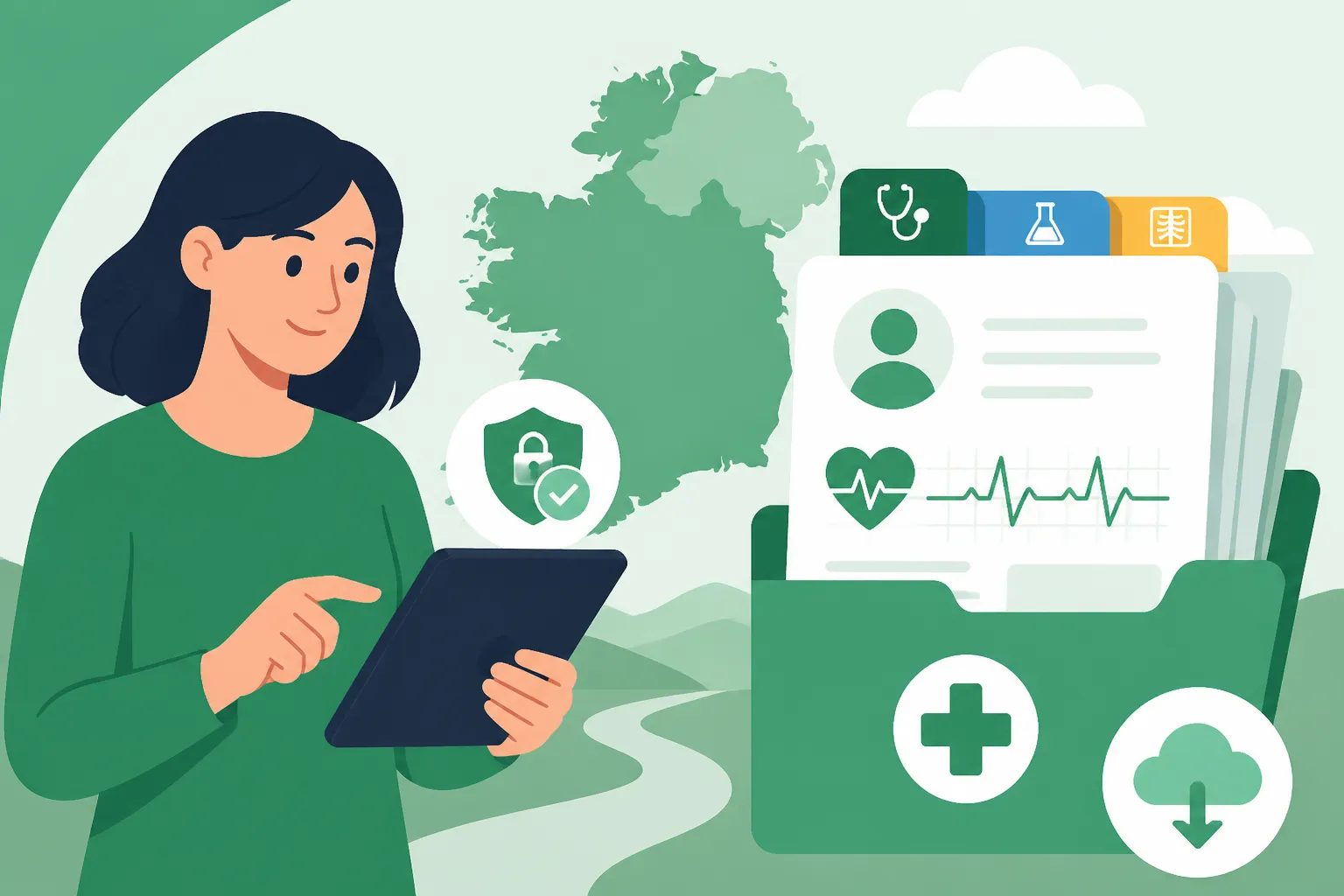
In today's digital age, managing your health records can be easier than ever. There are numerous apps and digital platforms designed to help you store, organise, and even share your health information securely. While Ireland doesn't yet have a universally adopted national digital health record system accessible directly by patients, you can create your own.
Consider using:
- Secure Cloud Storage: Services like Google Drive, Dropbox, or Apple iCloud can be used to store scanned copies of important documents like discharge letters, test results, and vaccination records. Just make sure to use strong passwords and two-factor authentication for maximum security.
- Health Tracking Apps: Many smartphone apps allow you to log medications, symptoms, vital signs (like blood pressure or glucose levels), and appointments. Some even integrate with wearable devices.
- Personal Health Record (PHR) Apps: These are designed specifically for managing health data. Look for apps that prioritise data security and privacy. Some might even allow you to create a shareable summary in an emergency.
Whichever method you choose, ensure it's secure, regularly updated, and accessible to you, but not just anyone. The goal is to have your essential medical history available at a moment's notice, whether for a routine doctor's visit or a sudden urgent care need. Being prepared with your own easily accessible health records is a practical step every expat should take to ease their journey through The Complete Guide to Healthcare in Ireland for Expats (2027) and beyond.
Disclaimer
The information provided in this guide is for general informational purposes only and does not constitute legal or medical advice. While every effort has been made to ensure accuracy and relevance for expats in Ireland as of 2026, healthcare policies and data protection regulations can change. Always consult with a qualified legal professional or your healthcare provider for advice tailored to your specific situation.