Can I Get Irish Citizenship Through Marriage?
When you fall in love with an Irish citizen and decide to build a life together on this beautiful island, the thought of becoming an Irish citizen yourself often follows quickly. However, many expats arrive with a common misconception: that marriage to an Irish national automatically fast-tracks you to citizenship. While marriage does provide a distinct pathway, it’s not an instant guarantee, and it certainly isn’t a simple swap of vows for a passport. This guide is here to unravel the realities of gaining Irish citizenship as the spouse of an Irish citizen, breaking down the process, the requirements, and what you can truly expect.
Understanding the Path to Irish Citizenship Through Marriage
Let's get one thing straight from the outset: there's no such thing as "instant citizenship by marriage" in Ireland. It's not like you get married, sign a form, and poof, you're Irish. I've seen so many people come here thinking it'll be a walk in the park, only to find themselves wading through paperwork and residence requirements just like many other applicants. What being married to an Irish citizen does offer is a specific route to naturalisation that comes with slightly relaxed residence criteria compared to the standard application. It’s still naturalisation, but with a friendly nudge from your marital status.
The Legal Framework and Key Requirements
The legal pathway for spouses of Irish citizens falls under the Irish Nationality and Citizenship Act. Essentially, it's a facilitated naturalisation process. This means you’re applying to become a naturalised Irish citizen, but your relationship with an Irish national changes some of the standard requirements.
The most significant difference lies in the reckonable residence requirement. For most general naturalisation applicants, you need a total of five years of reckonable residence in the Republic of Ireland out of the nine years immediately preceding your application, with one full year of continuous residence immediately before the application. For spouses of Irish citizens, this is reduced to three years of reckonable residence out of the five years immediately preceding your application, with one full year of continuous residence immediately before the application. That's a huge difference when you're counting the days and years!
Beyond the residence, there are other crucial elements:
- Valid and Subsisting Marriage: Your marriage must be legally recognised in Ireland and genuinely ongoing. This isn't just about the certificate; it's about proving you have a shared life together. The Department of Justice will look for evidence that your marriage is not one of convenience, but a real, committed relationship.
- Intent to Reside: You must have the intention, in good faith, to continue to reside in the State after naturalisation. This means Ireland needs to be your home for the foreseeable future, not just a stepping stone.
- Good Character: This is a universal requirement for all naturalisation applications. Essentially, you need to prove you're a law-abiding individual. Any criminal record, even minor ones, can complicate your application, so honesty and full disclosure are paramount.
- Spouse is an Irish Citizen: Your husband or wife must be an Irish citizen, either by birth, descent, or prior naturalisation.
It's a nuanced process, and it really helps to understand the full scope of Irish Citizenship: Naturalisation and Citizenship by Descent Explained (2027) to see how this specific route fits into the broader picture.
Dispelling Common Misconceptions
Oh, the stories I've heard! From people thinking a quick trip to the registry office means a passport in hand by Christmas, to those convinced they'll be exempt from any scrutiny. Let me bust a few myths right here:
Firstly, and I can't stress this enough: marriage to an Irish citizen does not grant you immediate or automatic citizenship. You still need to apply, you still need to meet specific criteria, and your application will still be assessed by the Immigration Service Delivery (ISD). It's a significant advantage, yes, but it doesn't bypass the system.
Secondly, you’re not exempt from all requirements. You still need to demonstrate good character, have the intention to reside in Ireland, and prove that your marriage is valid and subsisting. While the reckonable residence period is shorter, you absolutely still need to build up those years here. This isn't a loophole for those who just want an EU passport without actually living here.
Thirdly, many people confuse the process with Family Reunification in Ireland: Bringing Your Spouse and Children (2027). While family reunification deals with obtaining permission to live in Ireland with your Irish citizen spouse, naturalisation is about changing your nationality. These are two very distinct, albeit related, processes. One is about residency rights; the other is about full citizenship.
The Department of Justice scrutinises these applications carefully. They want to see genuine connections, a real life being built in Ireland. So, while your marriage is certainly a huge plus, don't let it lull you into a false sense of security that it’s an open-and-shut case. You’ll still need to provide ample evidence of your life together and your commitment to Ireland.
Navigating the Application Process for Spouses of Irish Citizens
So, you've understood the reality, and you're ready to tackle the application. Good on ya! It's a detailed process, and it demands thoroughness. Think of it less like filling out a quick online form and more like building a compelling case file about your life here. You're trying to prove to the State that you're genuinely integrated and committed.
Gathering Your Documents and Evidence
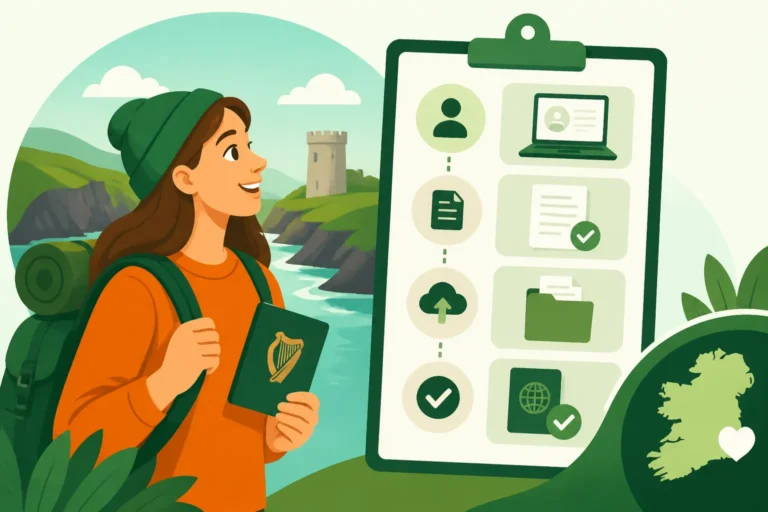
This is where the real work begins. The application is called Form 8 – application for naturalisation by a person of full age who is or was married to an Irish citizen. You’ll need a stack of documents, and my advice is to start collecting these well in advance. Don't leave it to the last minute!
Here’s a breakdown of what you’ll typically need:
- Your Passports: Current and previous, showing all entry and exit stamps for Ireland, proving your reckonable residence. This is critical for showing your Understanding the Reckonable Residence Requirement for Citizenship in Ireland.
- Your Irish Residence Permit (IRP) Cards: Again, current and previous. These are your official record of permission to reside in the State. Keeping up with How to Renew Your IRP and Immigration Permission in Ireland is vital throughout your journey to citizenship.
- Your Birth Certificate: An original or certified copy.
- Your Marriage Certificate: The original or a certified copy from the civil registration office.
- Spouse's Irish Passport/Birth Certificate: Proof of their Irish citizenship.
- Proof of Shared Address: This is huge. Think joint utility bills (electricity, gas – make sure they’re in both names if possible, or alternating names), bank statements showing both your names at the same address, rental agreements or mortgage statements, property deeds, tax documents from Revenue. The more evidence you have of living together at the same address over the required period, the better.
- Proof of Employment/Income: Pay slips, P60s, employment letters, or tax returns (Form 11/Form 12) to show your financial stability and contribution to the Irish economy.
- Evidence of Integration: While not explicitly listed for all applications, demonstrating your ties to the community can sometimes strengthen a case. Think club memberships, volunteer work, local tax payments, etc.
- Police Clearance Certificates: From any country you've lived in for six months or more in the last ten years, including Ireland (Garda vetting, if applicable).
Any documents not in English must be officially translated and certified. This isn’t a place to cut corners, as an improperly translated document can lead to delays or even rejection. When I moved here, even the simplest things needed professional translations, so be prepared for that extra step and cost.
Filling Out the Naturalisation Application Form
Form 8 is specifically designed for spouses of Irish citizens. It’s lengthy, detailed, and requires meticulous accuracy. Don't rush through it. Grab a cup of tea, find a quiet spot, and dedicate serious time to this.
Key sections to pay close attention to:
- Personal Details: Ensure every name, date, and address matches exactly with your official documents. Discrepancies, even minor ones, can raise flags.
- Residence History: This is perhaps the most critical section. You need to list every period of residence in Ireland, backed up by your passport stamps and IRP cards. Be precise with dates. This is how you prove your three years of reckonable residence. Remember, your The Complete Guide to Irish Visas and Immigration Permission for Expats (2027) dictates how you accumulate this residence.
- Marital Details: Provide all information about your marriage, including your spouse's details and proof of their Irish citizenship.
- Good Character Declaration: You'll have to declare any criminal convictions or ongoing proceedings. Honesty is key here.
- References: You'll need two referees who have known you personally for a certain period (usually at least three years for spouses). These should be reputable individuals who can vouch for your character and your connection to the community. They cannot be relatives, and one should generally be a professional (e.g., doctor, teacher, religious leader).
Many parts of the form will ask you to refer to accompanying guidance notes. Read them. Seriously, read them thoroughly. They clarify exactly what is expected. I’ve seen applications delayed because people skimmed past these crucial instructions.
The Application Fee and Submission Process
Once your form is complete and you’ve gathered all your supporting documents, you're almost there. The final steps involve paying the fee and submitting your application.
The current application fee for naturalisation (as of early 2024, but always check the ISD website for the most up-to-date figure) is generally €175. This is a non-refundable application fee. If your application is successful, there's a further certification fee: €950 for an adult. So, be prepared for these costs. They're not insignificant, but it's the price of a new chapter.
When it comes to submission, you typically send your application by registered post to the Citizenship Division of the Immigration Service Delivery (ISD). Keep proof of postage! It’s your safety net. You'll send original documents, so making copies for your own records before sending them off is an absolute must. Trust me, losing a birth certificate in the post is a nightmare you want to avoid.
The processing times for naturalisation applications can vary significantly. While the Department aims to process applications efficiently, they can take a considerable amount of time – often 12 to 18 months, sometimes even longer. This is why it’s so important to ensure your Understanding the Cost and Timeline of the Immigration Process in Ireland is realistic and that you factor this waiting period into your life plans.
Life as a Spouse of an Irish Citizen While Awaiting Citizenship
The waiting game for naturalisation can feel endless, like watching paint dry on a particularly damp Irish day. But life goes on, and you need to ensure you remain compliant with immigration rules throughout this period. It’s not a time to become complacent; your future citizenship depends on maintaining your legal status.
Maintaining Your Immigration Status
Just because you've applied for citizenship doesn't mean your current immigration permission is extended or automatically valid. You absolutely, positively must continue to renew your IRP card and immigration permission until you receive your certificate of naturalisation. Your IRP card, which outlines your immigration stamp, is your proof of legal residence. For many spouses of Irish citizens, you might be on a Stamp 4, which is a fantastic long-term residency permission. However, you still need to ensure it's kept up to date.
Failing to renew your permission could invalidate your residency and, by extension, jeopardise your citizenship application. It could also make you an "overstayer," which carries serious consequences. It's a critical detail, so set reminders and don't let it slip. Remember, Understanding the Irish Immigration Stamp System (Stamp 1, 2, 4) (2027) is your Bible for this.
If you're unsure about your current status or what stamp you should hold, don't hesitate to consult the ISD website or seek professional advice. Peace of mind during this period is priceless, especially when thinking about things like travel or even future plans.
Practical Considerations and Support
During this waiting period, you'll generally continue to enjoy the rights afforded by your current immigration stamp. If you're on a Stamp 4, for example, you have the right to work without an employment permit and access public services. This is a significant level of freedom.
Keep the ISD updated with any change of address or contact details. If they need to reach you regarding your application, you want to ensure they can. A simple email or letter can save a lot of headaches later.
For many expats, the journey to naturalisation is just one part of a bigger relocation story. You might have used a service like Sirelo to help with the physical move to Ireland, and now you’re firmly embedded. You’ll find that groups like Expat Women in Dublin or various online expat forums can provide a sense of community and shared experience during the waiting period. It really helps to know you're not alone in navigating this bureaucratic maze.
Also, don't forget about your personal wellbeing. While the Irish public healthcare system is available to residents, having comprehensive health insurance, especially international coverage like that offered by Cigna Global, can provide an extra layer of security and access to a broader range of services, which can be particularly reassuring if you're still getting to grips with The Complete Guide to Healthcare in Ireland for Expats (2027).
Should any complex issues arise with your application or immigration status, don't hesitate to seek advice from an immigration solicitor. They can offer tailored guidance and help you navigate any tricky situations.
Comparison: Standard Naturalisation vs. Spouse of Irish Citizen
Here's a quick look at how the spouse route compares to the standard naturalisation process:
| Feature | Standard Naturalisation (Non-Spouse) | Naturalisation (Spouse of Irish Citizen) |
|---|---|---|
| Reckonable Residence | 5 years out of the last 9 years, with 1 continuous year immediately before application | 3 years out of the last 5 years, with 1 continuous year immediately before application |
| Marriage Requirement | N/A | Must be legally married to an Irish citizen |
| Form Used | Form 8 (General) | Form 8 (Spouse of Irish Citizen) |
| Spouse's Citizenship | Not a factor | Spouse must be an Irish citizen |
| Character Requirement | Yes | Yes |
| Intent to Reside | Yes | Yes |
| Application Fee | €175 (non-refundable) | €175 (non-refundable) |
| Certification Fee | €950 (adult) | €950 (adult) |
As you can see, the main benefit for spouses is that shorter reckonable residence period. It’s a significant helping hand, but it doesn't remove the need for a thorough and compliant application.
Disclaimer
Please remember that I am an expat blogger sharing general information and personal experiences, not a legal professional. Immigration laws and regulations in Ireland can change. The information provided in this article is for general guidance only and does not constitute legal advice. You should always consult the official Irish Immigration Service Delivery (ISD) website or seek professional legal counsel for the most accurate and up-to-date information regarding your specific circumstances.