Understanding How EU/EEA Citizens Register for Residence in Ireland
Moving to Ireland as an EU/EEA citizen should be simple, right? The promise of free movement across Europe often leads to the assumption that you can just pack your bags and seamlessly slot into Irish life. The reality, however, is that while your right to live and work here is indeed protected, there are still crucial administrative steps to take. This guide cuts through the confusion, explaining exactly what "registration" means for you and how to navigate it without tearing your hair out.
The Initial Shock: Understanding Your EU/EEA Freedom (and the Catch)
When you're an EU/EEA citizen, the idea of "registration" for residency in another member state can feel a bit contradictory. After all, isn't the whole point of the European Union to remove borders and simplify movement? On paper, yes. In practice, while you won't need a visa or an employment permit, Ireland still needs a way to account for its residents, provide services, and ensure everyone is contributing fairly. This isn't about denying your rights; it's about integrating you into the administrative fabric of the country.
The Illusion of Seamless Movement: Why You Still Need to "Register"
Many expats from EU/EEA countries arrive in Ireland with the perfectly understandable assumption that they can simply walk in and start their new life. While the initial entry is indeed fuss-free – no border checks, no visa stamps, no prior permission needed – the administrative reality quickly sets in. You might not need to register with immigration in the same way a non-EU citizen does, but you absolutely need to engage with various governmental departments to access essential services and fulfil your civic duties.
Think of it less as "permission to reside" and more as "telling the relevant people you're here and what you're doing." Without this informal registration through various channels, you'll find yourself locked out of fundamental aspects of Irish life. From getting paid by an employer to accessing healthcare, enrolling children in school, or even opening a bank account, nearly every step requires some form of official recognition that you are indeed living here and have a legitimate reason for doing so. This might feel like a catch, but it's really just the local way of doing things.
Who Exactly is an EU/EEA Citizen? Defining Your Status
Before we dive deeper, let's quickly clarify what we mean by an EU/EEA citizen in the Irish context. The EU (European Union) comprises 27 member states. The EEA (European Economic Area) includes the EU countries plus Iceland, Liechtenstein, and Norway. Citizens of Switzerland also enjoy similar rights to EU/EEA citizens for free movement and residency. If your passport is from any of these nations, this guide is specifically for you, outlining your unique pathway to establishing residence in Ireland.
It’s crucial to understand that your rights stem directly from your citizenship. This means you have the right to live, work, study, or be self-employed in Ireland without needing an employment permit or special permission from the Irish government beyond what's outlined for all EU/EEA citizens. This is a significant advantage compared to third-country nationals, and it shapes the entire "registration" process into something much more straightforward, albeit still with its own quirks.
The Nuts and Bolts: Your Right to Reside and the Initial Period
Your journey in Ireland as an EU/EEA citizen begins with certain inherent rights, but these come with a few conditions, especially if you plan to stay long-term. Understanding these nuances from the outset can save you a lot of grief and ensure a smoother transition into your new life here. It’s not about being a second-class citizen; it’s about aligning with the administrative requirements of your new home.
The First Three Months: Exploring Ireland Without Bureaucracy
One of the greatest perks of being an EU/EEA citizen is the initial period of unrestricted movement. For the first three months after your arrival in Ireland, you generally don't need to do anything formal to establish your right to reside. You are free to enter the country and look for work, explore your options, and generally get a feel for your new surroundings. This period is a valuable window to sort out initial logistics like finding accommodation, exploring job prospects, and perhaps even setting up a temporary phone number.
This initial grace period is fantastic for getting your bearings, but don't let it lull you into a false sense of security regarding long-term planning. While you can technically wander around for three months without ticking any official boxes, you'll quickly realise that many day-to-day necessities, like opening a bank account or getting paid, often require a Personal Public Service (PPS) Number, which we'll discuss shortly. So, while you're legally "free," practical considerations will likely push you to start the administrative process sooner rather than later.
Beyond Three Months: The Conditions for Continued Residence
If you plan to stay in Ireland for longer than three months, your right to reside becomes conditional. This isn't a barrier, but rather a set of categories that legitimise your continued presence. Essentially, you need to fall into one of the following groups:
- Worker: You are employed or self-employed in Ireland. This is the most common and straightforward path.
- Student: You are enrolled in an accredited educational institution (public or private) and have sufficient resources to support yourself, plus comprehensive health insurance.
- Self-Sufficient Person: You have sufficient financial resources to support yourself and your family (if applicable) and comprehensive health insurance, ensuring you won't become an undue burden on the Irish social assistance system.
- Family Member: You are a family member of an EU/EEA citizen who meets one of the above criteria.
Most EU/EEA expats arriving in Ireland will fall under the 'worker' category. This means securing a job is your primary method of establishing long-term residence. Keep records of your employment contracts, payslips, and any correspondence related to your work, as these will be essential proofs of your status should you ever need them. For students, enrollment letters and proof of funds are key. For the self-sufficient, showing bank statements and proof of private health insurance (like from a provider such as Cigna Global) will be necessary.
The Importance of a PPS Number: Your Administrative Key
Even though you don't typically register with immigration directly, the single most important piece of identification you'll need as an EU/EEA citizen in Ireland is your Personal Public Service (PPS) Number. This is not just a tax number; it's your key to accessing nearly all public services, benefits, and employment. Without it, you simply cannot be paid by an employer, register for social welfare, access public healthcare, or apply for a driving licence.
Think of it as your unique identifier within the Irish administrative system. Getting one is often one of the first and most critical steps any new arrival in Ireland needs to take. You apply for it through the Department of Social Protection, and while the process can sometimes feel a bit like wading through treacle, it's absolutely non-negotiable. You can learn more about how to get this vital identifier by reading our guide on How to Register for Tax and Get a PPS Number in Ireland.
Formalising Your Stay: Registering for Residence – The Steps Involved
Unlike non-EU/EEA citizens who must register with the Garda National Immigration Bureau (GNIB) and receive an Irish Residence Permit (IRP) card, EU/EEA citizens do not undergo this specific process. Your "registration" is more indirect, a consequence of your engagement with various state services. It's a collection of administrative touchpoints rather than a single, overarching event.
The PPSN: Your First Essential Step
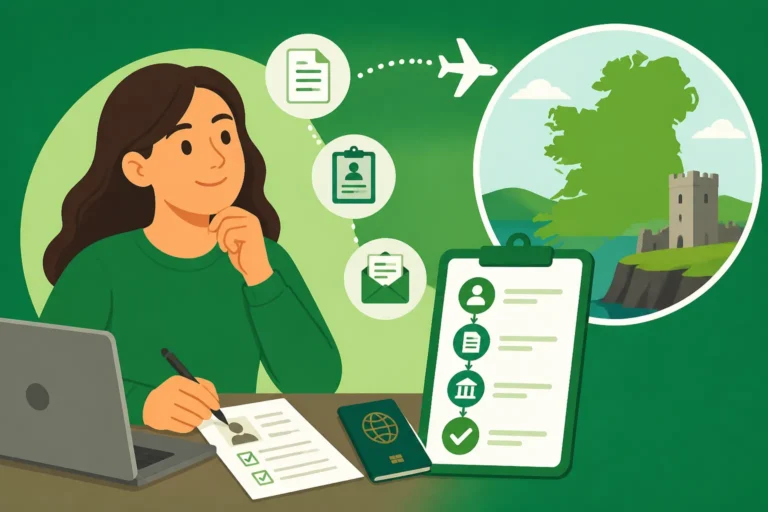
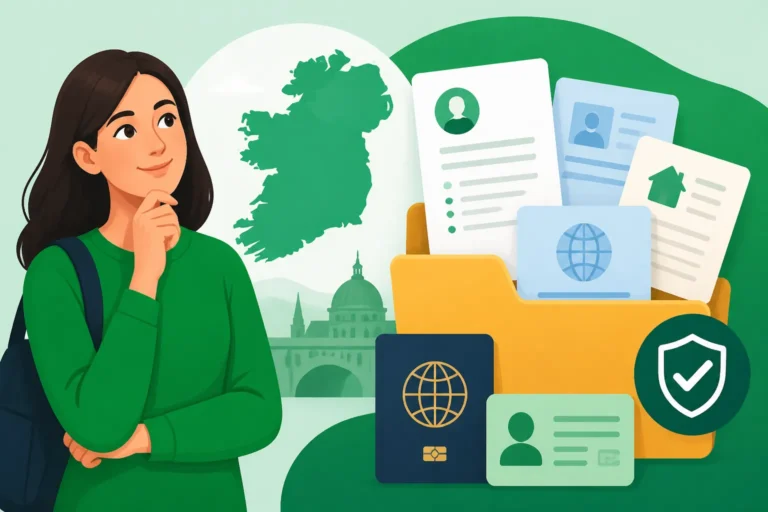
As we've touched upon, obtaining your PPS Number is paramount. Without it, your ability to integrate into Irish society, particularly economically, is severely hampered. To apply for a PPSN, you typically need to gather specific documents: photographic ID (your passport is usually best), proof of address in Ireland, and evidence of your reason for needing the PPSN (e.g., a job offer letter, an employment contract, or proof of enrolment in an educational institution).
The application is usually made online through MyWelfare.ie, followed by an appointment at a designated PPSN centre to verify your identity and documents. This is often one of your first direct interactions with Irish bureaucracy, and it can be a bit frustrating if your documents aren't exactly what they're looking for. Patience and meticulous organisation are your best friends here. Once you have this number, it will be used by your employer for payroll, by the Health Service Executive (HSE) for healthcare, and by Revenue for taxes.
Proving Your "Right to Reside": The Necessary Documentation
While there isn't a single document called an "EU/EEA Residence Permit" that you apply for, the various governmental bodies you interact with will indirectly confirm your right to reside through the documents you provide. For example:
- For Work: Your employment contract, payslips, P45 (when leaving a job) or P60 (annual statement of earnings and tax) serve as proof that you are exercising your right as a worker. Your employer will ask for your PPSN to pay you and deduct taxes, linking you into the system. You can explore job opportunities through our guide on The Expat Guide to Finding a Job in Ireland (2027).
- For Study: Your acceptance letter from an Irish university or college, along with proof of tuition payment and bank statements showing sufficient funds, demonstrates your student status. More information can be found in The Complete Guide to Studying at an Irish University (2027).
- For Self-Sufficiency: Comprehensive private health insurance documents and robust bank statements proving you won't rely on the state are essential.
- Proof of Address: This is a recurring headache for many expats. Utility bills (electricity, gas, internet), bank statements, or official letters from a landlord or employer are commonly accepted. It’s a bit of a chicken-and-egg situation sometimes – you need an address to get things, but you need things to prove your address! For assistance with initial housing, consult The Complete Guide to Renting a Home in Ireland (2027).
These documents, collected over time, form your de facto record of residence. Always keep copies of everything, and remember that original documents are often required for verification.
The Actual Registration Process (or lack thereof for many)
It's important to reiterate: for most EU/EEA citizens, there isn't a single, explicit "registration process" for residence with the Irish state, at least not in the sense that non-EU nationals experience it. Your right to reside is inherent. However, if you wish to have a formal document confirming your residence, perhaps for administrative ease in other countries or for peace of mind, you can apply for a "Certificate of Entitlement to Reside in the State" from the Immigration Service Delivery (ISD).
This certificate, typically issued after you have resided here for a period (e.g., five years, qualifying for permanent residence), simply formalises your existing rights. It's not a mandatory step for most EU/EEA citizens, but it can be useful in certain circumstances. Most EU/EEA expats find that by securing a PPSN, opening a bank account (see The Expat Guide to Opening a Bank Account in Ireland), and engaging in employment, they have sufficiently "registered" themselves within the Irish system.
What Changes After Five Years? Permanent Residence Explained
After five continuous years of living in Ireland, adhering to the conditions for residence (worker, student, self-sufficient, or family member), EU/EEA citizens acquire the right to permanent residence. This is a significant milestone, granting you a more secure and robust legal status, even if you temporarily stop working or studying.
Eligibility Criteria for Permanent Residence
To qualify for permanent residence, you must demonstrate that you have resided legally and continuously in Ireland for five years. "Continuous" generally means you haven't been absent for long periods that would break the chain of residence, although short holidays or business trips are usually fine. The core requirement is that for the majority of each of those five years, you have fallen into one of the "right to reside" categories we discussed earlier (worker, student, self-sufficient, or family member of such a person).
This means keeping meticulous records of your employment, studies, or financial self-sufficiency is absolutely vital. Gather old payslips, employment contracts, P60s, university enrolment letters, health insurance documents, and bank statements. These are your proof points. Without them, demonstrating five years of continuous, legal residence can become a real headache, turning a relatively straightforward application into a frustrating paper chase.
Applying for the Permanent Residence Document
While the right to permanent residence is acquired automatically after five years, you can apply to the Immigration Service Delivery (ISD) for a "Permanent Residence Document." This document explicitly confirms your status and can be particularly helpful for interactions with other countries, or if you later decide to apply for Irish citizenship. The application involves submitting a form along with all the supporting documentation proving your five years of continuous residence.
The process is generally simpler than for non-EU nationals seeking long-term residency, but it still requires diligence in compiling your paperwork. The ISD will review your application to ensure you meet the criteria. While it's not strictly mandatory to obtain this document, many expats choose to for the added security and clarity it provides. Remember, the right is automatic, the document is simply proof of that right.
The Practical Benefits of Permanent Residence
Holding a Permanent Residence Document offers several practical advantages. Firstly, it removes the need to consistently prove your status if you change jobs or briefly stop working/studying. Your right to reside is no longer conditional on your current economic activity, making it more robust. This can be a huge relief, especially if you're considering a career break, further education, or managing a period of unemployment.
Secondly, permanent residence is a prerequisite for applying for Irish citizenship through naturalisation. If becoming an Irish citizen is a long-term goal, securing your permanent residence status is a crucial step on that path. It also often simplifies interactions with various public services, as your settled status is clearly documented. Furthermore, it gives you peace of mind, knowing your long-term future in Ireland is secure.
The Importance of Comprehensive Planning: Beyond Residence
While understanding how EU/EEA citizens register for residence is crucial, it's just one piece of the puzzle. A successful move to Ireland requires comprehensive planning across many aspects of life. Thinking beyond just "registration" will make your transition much smoother and more enjoyable.
Securing Your Healthcare: Public vs. Private Options
Healthcare in Ireland can be a bit of a labyrinth, especially for newcomers. While the public healthcare system (HSE) is generally accessible to all ordinary residents, it's often characterised by long waiting lists for specialist appointments and non-emergency procedures. As an EU/EEA citizen, your European Health Insurance Card (EHIC) covers you for necessary medical care during temporary stays, but it's not a substitute for proper long-term healthcare provision.
Many expats opt for private health insurance to bypass these waiting lists and gain access to a wider choice of hospitals and consultants. Companies like VHI, Laya Healthcare, and Irish Life Health are the main players here, offering various plans. Deciding whether to rely solely on the public system or invest in private cover is a significant decision. You can delve into the complexities with our comprehensive guide, The Complete Guide to Healthcare in Ireland for Expats (2027), and further explore options in Health Insurance in Ireland: VHI, Laya, Irish Life and Options Explained. Don't forget to register with a local GP as soon as possible; our guide, How to Find and Register with a Local GP Practice in Ireland, can walk you through it.
Protecting Your Belongings: Insurance and Moving Logistics
Moving your life across countries, even within the EU/EEA, involves a lot of logistics. From shipping your furniture and personal effects to ensuring they're insured, there's much to consider. This is where services like Sirelo can be invaluable, helping you find reputable moving companies and compare quotes to transport your possessions safely and efficiently. Remember, accidents can happen, and having adequate transit insurance is non-negotiable to protect your valuables during the journey.
Beyond moving, once you're settled, think about content insurance for your home. Ireland, like any country, has its share of unpredictable events, and protecting your belongings from fire, theft, or flood is a wise investment. Don't underestimate the comfort of knowing your new home's contents are covered, especially when you're still adjusting to a new environment.
Building a New Life: Work, Study, and Social Integration
Your "residence" is more than just a legal status; it's about building a life. For many, this involves securing stable employment. Ireland's job market, particularly in sectors like tech, pharma, and finance, is robust, but navigating it as a newcomer still requires effort. Similarly, if you're here to study, integrating into university life and making connections is key. Our guide on The Complete Guide to Moving to Ireland: Your First 90 Days (2027) offers practical steps for these crucial initial months.
Social integration is often overlooked but profoundly impacts your expat experience. Joining local clubs, volunteering, learning a bit of Irish (even just "céad míle fáilte"!), and engaging with your community will make Ireland truly feel like home. Financial planning, including How to Transfer Money Into and Out of Ireland as an Expat is also a critical part of a smooth transition. Don't forget, the actual cost and timeline of setting up your life here can be quite different from what you expect, so reading Understanding the Cost and Timeline of the Immigration Process in Ireland can set realistic expectations, even for EU/EEA citizens whose "immigration" is less about visas and more about administrative integration.
Common Pitfalls and Expat Gripes
Even with the relative ease of moving here as an EU/EEA citizen, there are still frustrations and common missteps that many expats encounter. Being forewarned is being forearmed, and understanding these can help you avoid unnecessary stress.
The "Invisible" Bureaucracy: Where Confusion Arises
Perhaps the biggest pitfall for EU/EEA citizens is the very nature of their "registration." Because there isn't a single, clear "apply for residence" form like there is for non-EU citizens, the process can feel invisible and disjointed. You're effectively "registering" by applying for a PPSN, getting a job, opening a bank account, and engaging with the health service. Each step is an indirect form of registration.
This can lead to confusion, especially if you come from a country with a clear, single residency registration office. Expats often wonder if they've "done enough" or if there's a missing step. The key is to remember that by actively integrating into the administrative and economic life of Ireland, you are fulfilling your residency requirements. Don't wait for an official letter; proactively get your PPSN and find employment or enrol in study.
Maintaining Records: Why Every Document Matters
This cannot be stressed enough: keep every single official document, letter, and payslip. From your initial job offer to your monthly bank statements, utility bills, rental agreements, and annual P60 forms, these pieces of paper (or digital files) are your proof of continuous residence. As we discussed, if you eventually apply for a Permanent Residence Document or Irish citizenship, you'll need to demonstrate years of legal residence.
Losing documents or not keeping a clear timeline of your activities can turn a straightforward application into a nightmare. Create a dedicated folder, both physical and digital, for all your Irish paperwork. Scan important documents and back them up. Think of it as building your personal residency portfolio, one document at a time.
Seeking Support: When to Ask for Help
While this guide aims to be comprehensive, specific situations can always arise. Don't hesitate to seek official advice if you're unsure about your circumstances. The Citizens Information Board is an excellent resource, providing free and impartial advice on a vast range of public services, including social welfare, employment, and housing. They can often clarify specific situations or point you to the correct government department.
There are also various expat forums and social media groups where you can connect with other EU/EEA citizens who have navigated these waters. While these should never replace official advice, they can offer practical tips and a sense of community. Remember, you're not the first to find Irish bureaucracy a bit perplexing, and you certainly won't be the last.
| Key Administrative Steps for EU/EEA Citizens in Ireland | Purpose | Key Documents/Actions | Approximate Timeline | Mandatory? |
|---|---|---|---|---|
| Obtain PPS Number | Tax, employment, healthcare, social welfare | Passport, Proof of Address, Proof of "Need" (job offer/contract) | Within 2-4 weeks of application | Yes |
| Open an Irish Bank Account | Receive salary, pay bills | PPSN, Proof of Address, Photo ID | Varies (1-2 weeks once documents ready) | Highly Recommended |
| Register with a General Practitioner (GP) | Access primary healthcare | PPSN, Proof of Address, Photo ID | Immediately upon arrival | Recommended |
| Secure Employment / Enrol in Study | Establishes primary "right to reside" conditions | Employment Contract, University Acceptance Letter | Ongoing | Yes (for long-term stay) |
| Obtain Private Health Insurance (Optional) | Supplement public healthcare, meet self-sufficiency criteria | Varies by provider | Can be purchased pre-arrival | No (unless self-sufficient) |
| Acquire Permanent Residence Document | Formal proof of 5+ years residence (optional for EU/EEA) | Proof of 5 years continuous legal residence | After 5 years of residence | No (right is automatic) |
Disclaimer
This article is for general informational purposes only and does not constitute professional advice. Laws, prices and regulations vary by location and change over time. Consult a qualified professional for guidance on your specific situation.