How Much Is Petrol per Litre in Ireland in 2026?
Oh, the sheer dread of pulling into a petrol station in Ireland, especially when you’re new here and still figuring out how everything works. It’s a moment I remember well – a quick glance at the pump, a sharp intake of breath, and then the inevitable calculations in your head about how much this fill-up is going to set you back. If you've just moved to Ireland or are planning to, getting your head around the cost of fuel, particularly petrol, is a crucial part of managing your day-to-day expenses. This guide is going to break down exactly what you can expect to pay for petrol per litre in Ireland in 2026, and more importantly, how you can try to keep those costs down.
The Current Landscape of Petrol Prices in Ireland (2026)
Alright, let's dive straight into the numbers, because that's what we're all here for, isn't it? As we navigate 2026, the cost of fuel in Ireland remains a significant chunk of many expats' budgets. It's not just a simple price tag; it's a complex interplay of global markets, government policies, and even local competition that dictates what you pay at the pump. Don't worry, we'll peel back the layers on all of it.
Factors Influencing Fuel Costs
The price you see advertised on the big signs outside a petrol station isn't plucked out of thin air. A few major players dictate the tune here. Firstly, and perhaps most obviously, are global oil prices. Ireland, like most countries, imports its crude oil, so any fluctuations in the international market, be it due to geopolitical tensions, supply and demand shifts, or even natural disasters impacting oil-producing regions, will ripple straight through to your local pump. If Saudi Arabia sneezes, our petrol prices catch a cold, as they say.
Secondly, and perhaps the most frustrating from a consumer perspective, are taxes and levies imposed by the Irish government. We're talking about a substantial chunk of the price per litre being made up of excise duty and Value Added Tax (VAT). These aren't just minor additions; they are significant revenue generators for the state, and any changes to these can send prices soaring or, less commonly, dipping. We’ll delve deeper into these specific taxes shortly. Then there’s the exchange rate; as oil is typically traded in US dollars, a weaker euro against the dollar means it costs more for Irish importers to buy the same amount of oil. It’s a subtle but impactful factor that often goes unnoticed. Lastly, there are operational costs for the petrol stations themselves – everything from staffing and electricity to transportation and profit margins. Each of these elements adds to the final price.
Average Prices You Can Expect at the Pump
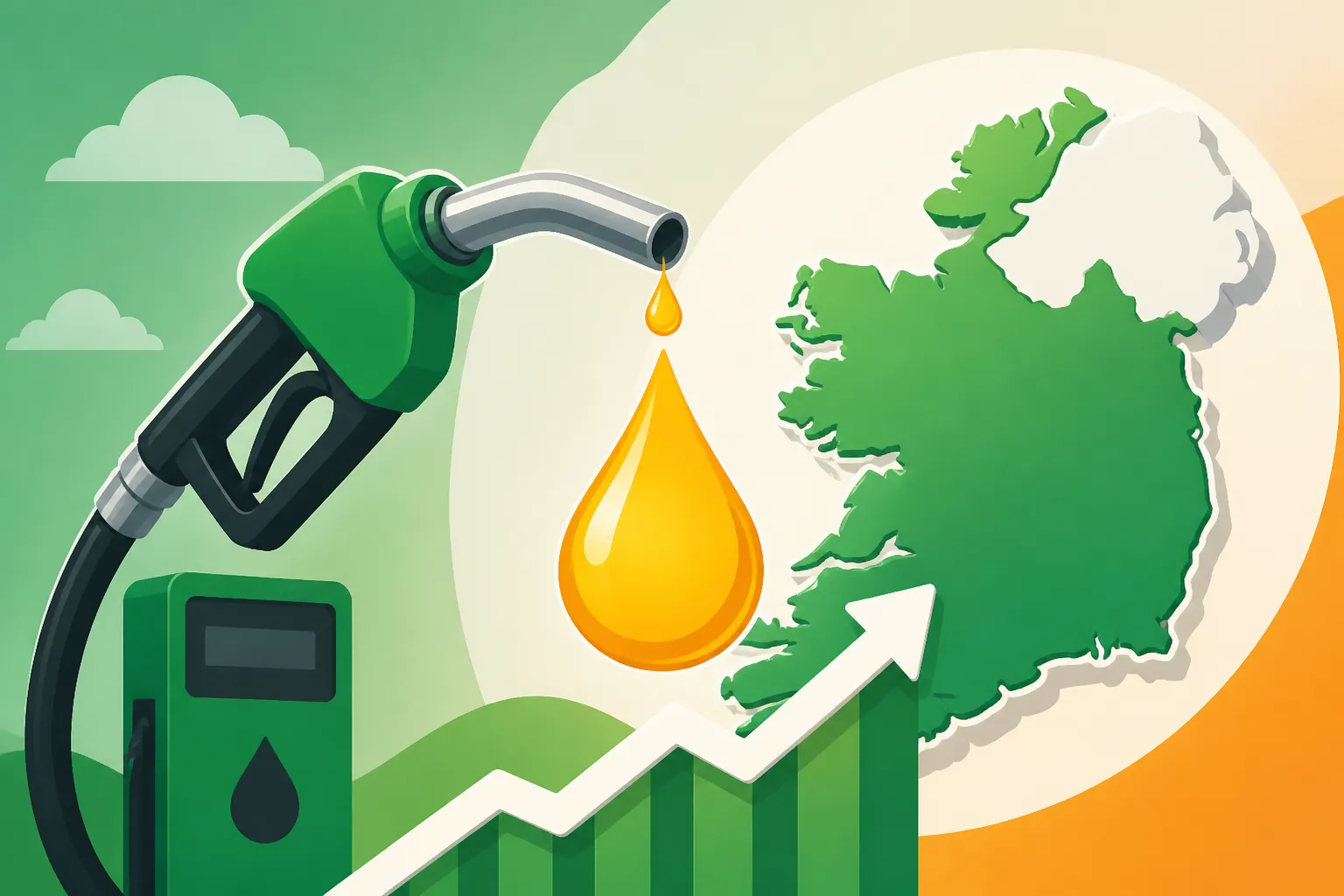
Based on current trends and projections for 2026, you can generally expect petrol (unleaded) prices in Ireland to hover around €1.75 to €1.95 per litre. Diesel, historically, has often been slightly cheaper or on par with petrol due to different taxation structures and demand, but this can fluctuate wildly. For 2026, diesel prices are projected to be in a similar range, perhaps €1.70 to €1.90 per litre, sometimes even surpassing petrol depending on global refinery outputs and specific market conditions. It's truly a day-by-day, week-by-week situation.
These figures aren't set in stone, of course. You might find prices dipping slightly below these averages in more competitive areas, or surging above them in remote locations or during peak holiday travel times. It’s a stark contrast to some other European nations where fuel might be noticeably cheaper, which can be a real shock if you're coming from a country with lower fuel taxes. This is where the expat frustration often kicks in – you just can’t escape the higher cost of living in Ireland, and fuel is a prime example. The golden rule here is to always check around before you commit to filling up, even if it means driving a few extra minutes down the road.
Breaking Down the Cost: Taxes, Levies, and the Irish Fuel Market
It's easy to grumble about high petrol prices, but understanding why they are what they are can sometimes make it feel… well, not better, but at least more comprehensible. A significant portion of what you pay at the pump isn't actually for the fuel itself, but for the privilege of driving on Irish roads and contributing to the national coffers.
Understanding the Excise Duty and VAT
Let's talk about the big hitters: excise duty and VAT. Excise duty is a tax on specific goods and services, and fuel is a prime target. The Irish government applies a fixed amount of excise duty per litre of petrol and diesel. This isn't a percentage; it's a flat rate. What this means is that even if the wholesale price of fuel drops dramatically, the excise duty component remains the same, providing a stable income for the government but less elasticity in consumer prices. For instance, in 2026, if there haven't been further adjustments, the excise duty on unleaded petrol could still be in the region of 50-60 cents per litre, with diesel being slightly less.
On top of this, we have Value Added Tax (VAT), which currently stands at 23% on fuel. And here’s the kicker: VAT is applied to the total price, which includes the excise duty. Yes, you read that right. You're essentially paying tax on a tax. This compounding effect significantly inflates the final price you pay. For example, if the base cost of a litre of petrol is €0.80 and the excise duty is €0.55, the price before VAT is €1.35. Add 23% VAT to €1.35, and you’re looking at an additional €0.31, bringing the total to €1.66 (these are illustrative figures, of course, to show the mechanism). It's a system that maximises revenue for the state but can feel like a punch to the wallet for drivers. The government occasionally tweaks these rates, often in response to global energy crises, so it's always worth keeping an eye on official announcements from bodies like Revenue.
Fuel Retailers and Competition
Ireland's fuel market is dominated by a handful of major players you'll quickly become familiar with: Circle K, Applegreen, Maxol, Top, and Texaco. These brands operate forecourts across the country, often with convenience stores attached (and delicious coffee, if I may say so). Each brand has its own pricing strategy, but generally, they remain competitive with each other, especially in urban areas where there are multiple stations within a short distance.
You might notice that prices can vary slightly even between stations of the same brand, depending on location. For example, a station on a major motorway might charge a few cents more per litre than one nestled in a town center. This is often down to higher operational costs, lack of local competition, or the convenience factor for drivers on long journeys. Don't discount smaller, independent stations, though. Sometimes, these can offer surprisingly good deals as they have lower overheads and can react more nimbly to price changes. It’s always worth checking a few spots if you're in an area you don't know well.
When planning your moves or considering your daily commute, remember these fuel costs are a major factor. If you're using a data plan to navigate to different stations to compare prices or even just planning your route efficiently, having reliable connectivity is a must. Options like Airalo for eSIMs can be incredibly handy for new arrivals, ensuring you're not caught out without data while trying to find the cheapest fill-up or even a bus route. When you're in the midst of a big move, trying to calculate the impact of these daily costs, considering the overall logistics with services like Sirelo can help put things into perspective, from moving your belongings to understanding your potential living costs including fuel.
| Component | Estimated Contribution (Petrol, 2026) |
|---|---|
| Wholesale Cost | ~€0.75 – €0.85 per litre |
| Excise Duty | ~€0.55 – €0.65 per litre |
| VAT (23%) | ~€0.30 – €0.40 per litre |
| Retailer Margin | ~€0.10 – €0.15 per litre |
| Total | ~€1.70 – €1.95 per litre |
Note: These figures are illustrative estimates for 2026 and can vary significantly based on global oil markets, government policy changes, and retailer specific pricing.
Practical Tips for Managing Fuel Costs as an Expat in Ireland
Living in Ireland, you quickly learn to be resourceful. High fuel prices are just one more area where a bit of savvy can save you a pretty penny. As an expat, these tips aren't just about saving money; they're about adapting to a new way of life where every cent counts.
Finding the Best Deals on Petrol
Gone are the days when you'd just pull into the first station you see. Now, it's about being strategic. One of the best tools at your disposal is technology. Websites and apps dedicated to fuel price comparison, like Pumps.ie, are lifesavers. They allow you to input your location and see the prices at nearby stations, helping you identify the cheapest option without driving around aimlessly (and burning more fuel!). These are frequently updated by other users, so you usually get pretty accurate, real-time data. It’s certainly worth checking before embarking on a longer journey or even your daily commute.
Another avenue for savings is loyalty programs. Many of the major fuel retailers, such as Circle K with their "Play or Park" system or Applegreen with their Applegreen Rewards, offer points, discounts, or special offers if you're a regular customer. These can add up over time, providing a small but welcome rebate. Make sure to sign up for these if you frequent a particular brand. Also, keep an eye out for promotions. Sometimes supermarkets or credit card companies partner with fuel stations to offer discounts.
Finally, while it’s not always feasible, consider timing your fills. Prices can sometimes fluctuate over the course of a week, often being slightly higher on weekends or during peak travel times. If you have the flexibility, filling up mid-week might save you a few cents per litre. It’s a small gain, but every little bit helps when you’re facing a full tank cost that feels like a small mortgage payment.
Driving Habits and Car Maintenance for Efficiency
Beyond hunting for the cheapest fuel, how you drive and maintain your car can significantly impact your consumption. This is about making your fuel go further. First off, eco-driving habits are key. Smooth acceleration and deceleration, avoiding harsh braking, and maintaining a steady speed can drastically improve your fuel economy. Imagine your car has a raw egg under the accelerator pedal – that gentle touch saves fuel. Using cruise control on motorways is also a great way to maintain a consistent speed and reduce unnecessary fuel burn.
Proper car maintenance is also non-negotiable. Regularly checking your tyre pressure is paramount. Underinflated tyres create more rolling resistance, meaning your engine has to work harder and uses more fuel. A simple check once a month can make a difference. Regular servicing also ensures your engine is running efficiently, spark plugs are firing correctly, and air filters aren't clogged, all of which contribute to better fuel economy. Don't carry unnecessary weight in your boot; every extra kilo makes your car work harder.
Think about alternatives to driving whenever possible. Ireland has a decent, though sometimes challenging, public transport in Ireland network, especially in urban areas. Consider using the Luas or DART in Dublin, or regional bus services. For shorter distances, cycling is a fantastic option, and many Irish towns are becoming more cycle-friendly. If you’re truly looking to future-proof your transport costs, perhaps even consider an electric vehicle (EV) for your next car. The initial outlay is higher, but the running costs are significantly lower, and the charging infrastructure is constantly improving. And again, having a reliable eSIM from Airalo can ensure your navigation for public transport or EV charging points is always spot on, especially when you're still learning the ropes in a new city.
Broader Financial Considerations
The cost of petrol isn't just about what you pay at the pump; it has a ripple effect on your entire cost of living in Ireland for expats. If you commute a long distance for work, your transport costs could quickly become one of your largest monthly outgoings. This needs to be factored into your overall budget. Many expats are surprised by the combined expense of motor tax, insurance, and the Vehicle Registration Tax (VRT) if you're importing a car, so it's not just about the fuel itself. Learning how to register and tax a vehicle in Ireland is an essential part of driving here.
When deciding where to live in Ireland, think about your commute. Living further out might seem cheaper for rent, but if it adds an extra €100-€200 a month in fuel, those savings quickly disappear. It's a delicate balance many expats grapple with. If you're pondering the idea of owning a car at all, it's worth reading up on "Is It Worth Owning a Car in Dublin?". For those coming from abroad, getting your driving licence sorted is a top priority, but understanding all associated costs, like car insurance in Ireland, should come right alongside it. Services like Sirelo can help you plan the financial implications of your move, providing insights into various costs that might catch you off guard, including transport.
The Outlook for Fuel Prices in Ireland
Predicting the future of fuel prices is a bit like predicting the Irish weather – notoriously difficult and often surprising! However, we can look at some key trends and government policies to get a sense of what might be coming down the road and beyond.
Future Trends and Predictions
Global oil markets are inherently volatile. Geopolitical events, production agreements (or disagreements) among major oil-producing nations, and the pace of global economic recovery all play significant roles. While we can’t say exactly where crude oil prices will be, volatility is a safe bet.
Domestically, a major factor influencing future prices will be the Irish government’s ongoing commitment to carbon taxes and green initiatives. Ireland has set ambitious climate targets, and carbon tax is a key mechanism to encourage a shift away from fossil fuels. This tax is typically increased year-on-year, directly adding to the price of petrol and diesel at the pump. While this is crucial for environmental goals, it means drivers should brace for a gradual increase in the tax component of fuel prices over the coming years, including into 2026. This is part of a broader strategy to incentivise people towards more sustainable transport options.
The shift towards electric vehicles (EVs) is also gaining momentum. As more people transition to EVs, demand for petrol and diesel will eventually decrease, which could theoretically lead to some price stabilisation or even reductions in the long term, though this is likely a way off given the current car parc. However, government revenue from fuel taxes will also decrease, potentially prompting alternative taxation methods for road users, such as road usage charges or revised motor tax structures, to make up the shortfall.
Long-Term Strategies for Expats
As an expat settling into Ireland, a long-term strategy for transport costs is vital. First and foremost, adapting to Irish living costs means understanding that certain expenses, like fuel, might be higher than you're used to. Integrate this reality into your financial planning from day one.
Secondly, really consider your reliance on car ownership. While a car offers undeniable convenience, especially outside major urban centres, it comes with a hefty price tag beyond just fuel – insurance, tax, maintenance, and parking. Explore whether public transport, cycling, or even car-sharing schemes could meet your needs. Many employers in Ireland also offer cycle-to-work schemes which can be a fantastic way to save on commuting costs and get some exercise.
Finally, stay informed. Keep an eye on government announcements regarding fuel taxes and transport policy. Follow local news outlets that report on consumer prices. Being aware of potential changes allows you to adjust your budget and habits accordingly, making your expat journey in Ireland a little smoother, even with the sometimes-shocking price of a full tank.
Disclaimer
Please note that the information provided in this article is for general guidance only and is based on projections for 2026. Fuel prices, tax rates, and market conditions are subject to change and can fluctuate without prior notice. Always consult official government sources (such as Revenue.ie) and reputable financial news outlets for the most current and accurate information.