How Much Is DIRT on Savings Interest in Ireland?
Moving to Ireland means embracing a vibrant culture and stunning landscapes, but it also means wading through a whole new set of financial rules. One of the common head-scratchers for expats is understanding Deposit Interest Retention Tax, or DIRT, especially when you're just trying to make sense of your savings. It's not always straightforward, and it can feel like your hard-earned interest is disappearing before you even see it. This guide is here to untangle the complexities of DIRT on savings interest in Ireland, helping you understand how it works and what it means for your money.
Demystifying DIRT: What Exactly Is It?
When you first arrive in Ireland and open a bank account, you quickly learn that taxes here have their own distinct flavour, and DIRT is certainly one of them. It’s not just another line item on a payslip; it’s a deduction that happens behind the scenes, often leaving new arrivals scratching their heads.
The Basics of Deposit Interest Retention Tax
So, what exactly is DIRT? It stands for Deposit Interest Retention Tax, and it's essentially a tax on the interest earned from savings and deposit accounts held with financial institutions in Ireland. For most of us, especially those who are considered tax residents, it’s applied automatically at source. This means the bank or financial institution takes their slice of tax directly from your interest before it even hits your account. You don't get a choice in the matter, which can be a bit jarring if you're used to managing your own tax declarations on interest income.
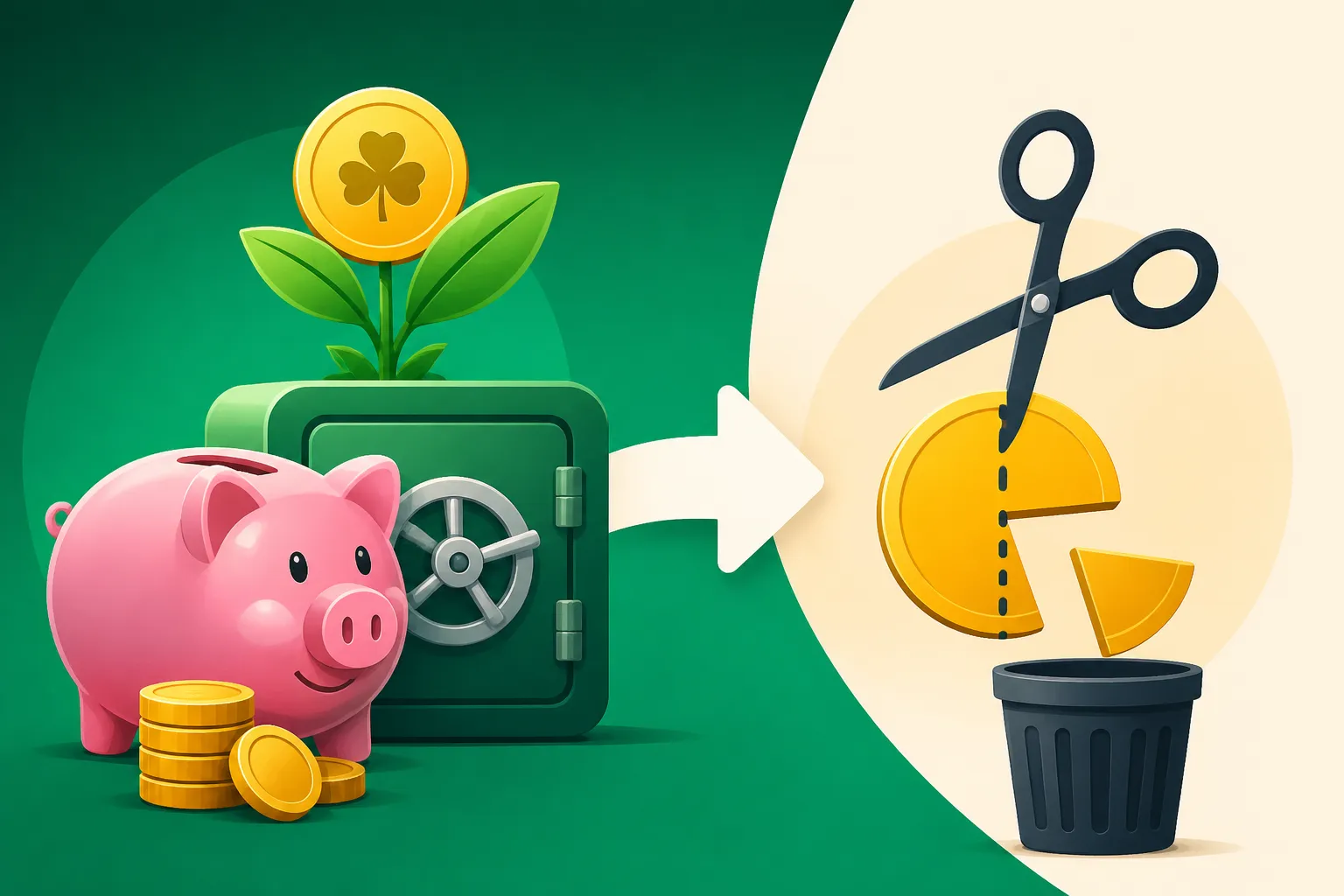
As of 2024, the standard DIRT rate in Ireland is 33%. That's a significant chunk, nearly a third, of any interest you earn on your savings. This rate has fluctuated over the years, but it has remained consistent at 33% for a while now. It applies to a wide range of accounts, from demand deposit accounts and notice deposit accounts to fixed-term accounts. The logic behind it, from the Revenue's perspective, is to simplify tax collection on deposit interest. However, for those of us living here from abroad, it can feel like just another hurdle to understand in the already complex world of Irish finance. Understanding How the Irish Tax System (Revenue) Works: PAYE, PRSI and USC Explained (2027) can provide a broader context to DIRT.
Why Expats Find DIRT Confusing
Let's be honest, for many expats, the concept of DIRT is a bit of a curveball. In many other countries, interest earned on savings is often treated as regular income and is taxed as part of your overall earnings through your annual tax return. The idea of a separate, automatic "retention tax" applied at a fixed, relatively high rate before you even see the money can be quite alien.
This "retention" aspect is what causes most of the confusion. You might be checking interest rates, doing your sums, and then when the interest is actually paid, it's significantly less than you expected. It's not just a small administrative fee; it's a substantial deduction. This can throw a wrench into your financial planning, especially if you're relying on that interest for specific short-term goals or simply to grow your nest egg. For someone fresh off the plane, trying to set up their finances and get a handle on The Complete Guide to Cost of Living in Ireland for Expats (2026), this hidden deduction can feel frustrating. It adds another layer of complexity to what should be a simple act of saving money, and it really drives home the reality that the Irish tax system has its own unique quirks.
How DIRT Works in Practice: Scenarios and Calculations
Knowing what DIRT is is one thing, but understanding where it applies and how it actually impacts your wallet is another. It's not just a theoretical concept; it's something that directly affects the return on your savings.
Understanding Where DIRT Applies
DIRT generally applies to interest paid or credited to deposit accounts held by individuals and certain other entities with financial institutions in Ireland. This includes:
- Standard Savings Accounts: The kind you open at traditional banks like AIB, Bank of Ireland, or Permanent TSB. If you’re opening The Expat Guide to Opening a Bank Account in Ireland, be aware that DIRT will apply to any interest-bearing accounts.
- Deposit Accounts: This covers everything from instant access accounts to fixed-term deposits where your money is locked away for a period in exchange for a higher interest rate.
- Credit Union Accounts: While many credit union accounts offer a dividend rather than interest, some may also have deposit accounts that yield interest, which would then be subject to DIRT. However, credit unions generally have slightly different rules; for instance, some smaller interest amounts might be exempt, or the payment might be considered a dividend and taxed differently. It's always best to check with your specific credit union.
It’s crucial to distinguish DIRT from taxes on other types of investments. If you’re investing in shares, bonds, or investment funds, the gains or income you derive from those are subject to different tax rules, such as Capital Gains Tax (CGT) or exit tax. DIRT is specifically for interest from deposits. So, while it covers your everyday savings, it doesn't extend to your stock portfolio. This distinction is vital for accurate financial planning, especially if you're exploring broader investment strategies beyond basic savings.
Calculating Your DIRT Liability
Let's look at a practical example to see how DIRT reduces your actual interest earnings. It's a simple calculation, but seeing the numbers can be quite eye-opening.
Scenario:
Imagine you have €10,000 in a savings account at an Irish bank.
The advertised Annual Equivalent Rate (AER) is 1.5%.
The DIRT rate is 33%.
Here’s how it breaks down:
- Gross Interest Earned: €10,000 * 1.5% = €150
- DIRT Deducted: €150 * 33% = €49.50
- Net Interest Received: €150 – €49.50 = €100.50
So, from your €150 in interest, €49.50 is automatically taken by the bank for DIRT, leaving you with €100.50. It’s a stark reminder that the advertised interest rate isn't what lands in your pocket.
Here’s a quick table to illustrate how DIRT impacts various savings amounts at a 1.5% AER:
| Deposit Amount (€) | Gross Interest (1.5% AER) (€) | DIRT (33%) (€) | Net Interest Received (€) |
|---|---|---|---|
| 1,000 | 15.00 | 4.95 | 10.05 |
| 5,000 | 75.00 | 24.75 | 50.25 |
| 10,000 | 150.00 | 49.50 | 100.50 |
| 20,000 | 300.00 | 99.00 | 201.00 |
As you can see, the higher your savings and the higher the interest rate, the more DIRT you'll pay. It’s an unavoidable deduction for most Irish residents, so it's essential to factor it into your financial planning.
The Impact on Your Take-Home Interest
The biggest impact of DIRT, especially for expats, is psychological and practical. You might meticulously compare interest rates from various banks, trying to squeeze every cent out of your savings, only to find that nearly a third vanishes before it reaches your account. This can significantly alter your perception of a "good" savings rate in Ireland compared to what you might be used to elsewhere.
This pre-deduction mechanism means the effective yield on your savings is always lower than the headline rate. For expats, this can affect how you budget for future goals. If you're saving for a down payment on a house, a child's education, or even just a rainy-day fund, you need to factor in that 33% reduction from the get-go. It often means you'll need to save more, or for longer, to reach your targets. It also underscores the importance of seeking out the absolute best interest rates available, even if the net gain still feels a bit deflated. Many expats find themselves re-evaluating their savings goals once they understand the full impact of DIRT.
Exemptions, Reliefs, and What Expats Need to Know
While DIRT is a broad tax, there are specific situations where exemptions or refunds might apply. This is where it gets particularly relevant and potentially beneficial for expats, as your tax residency status plays a crucial role.
Who Might Be Exempt from DIRT?
Navigating DIRT exemptions can feel like looking for a needle in a haystack, but for certain groups, relief is indeed available. Here’s a breakdown of who might be exempt:
- Individuals Aged 65 or Over: If you're 65 years or older and your total income (this includes your gross deposit interest) is below the annual exemption limits for income tax, you may be exempt from DIRT. This isn't automatic; you generally need to make a declaration to your financial institution.
- Non-Resident Individuals: This is often the most significant exemption for expats. If you are not ordinarily resident in Ireland for tax purposes, you may be exempt from DIRT on interest from Irish bank accounts. This doesn't mean you pay no tax at all; it means Ireland won't charge DIRT, but you'll likely still be liable for tax on that income in your country of tax residency. For a deep dive into this, it's vital to understand Tax Residency and Domicile in Ireland: A Definitive Guide for Expats (2027).
- Certain Savings Schemes: Specific government-backed savings initiatives, like some National Solidarity Bonds or State Savings products, may offer DIRT-free interest. These are designed to encourage long-term savings and typically have different tax treatments. However, these are exceptions rather than the rule for standard bank accounts.
- Charities and Approved Retirement Funds: These entities are typically exempt from DIRT.
For expats, the "non-resident" exemption is key. If you've moved to Ireland but haven't yet established ordinary residence for tax purposes, or if you're planning to leave soon and will cease to be ordinarily resident, you might be able to claim this exemption. However, it's not a blanket rule. If the interest is from a foreign bank account, it generally isn't subject to DIRT in Ireland, but you would still need to declare that income on your Irish tax return if you are a tax resident here. This is a complex area, and it's where professional advice can save you a lot of grief.
How to Claim DIRT Exemptions or Refunds
So, you think you might be exempt? Great! But getting that exemption or a refund isn’t always a simple flick of a switch.
For non-residents for tax purposes, the primary way to claim exemption from DIRT is to complete a declaration form, typically provided by your bank. This form, sometimes referred to as Form DIRT 1 or a similar declaration, attests to your non-resident status. You usually need to provide your Personal Public Service (PPS) Number and confirm that you are not ordinarily resident in Ireland. It's crucial to submit this form before interest is paid, if possible. If DIRT has already been deducted and you believe you were exempt, you can apply to Revenue for a refund using a Form 54 DIRT. This requires careful documentation of your tax residency status for the period in question.
The key here is understanding your tax residency status. This isn't always the same as your immigration status. You could be living in Ireland on a long-term visa, but still be considered non-resident for tax purposes in certain circumstances, especially in your first year here, or if you maintain strong ties to another country. This is where resources like The Complete Guide to Taxes in Ireland for Expats (2027) become incredibly useful. Many expats find that engaging with a tax specialist, such as Taxes for Expats, is the most reliable way to ensure they correctly navigate these rules and don't miss out on potential refunds or exemptions. The Revenue Commissioners are thorough, so accuracy is paramount.
Dealing with Foreign Savings and Dual Taxation
Life as an expat often means you have financial ties in more than one country. What about interest earned on savings accounts you hold outside of Ireland? This is where things can get even more intricate, particularly with the spectre of dual taxation.
If you are a tax resident in Ireland, any interest you earn from bank accounts outside Ireland is generally not subject to DIRT. However, it is subject to Irish income tax, which you'll need to declare on your annual tax return. This is typically done through your How to File Your Income Tax Return (Form 11 or Form 12) in Ireland if you’re a PAYE employee with other income to declare, or Form 11 if you're self-assessed.
The good news is that Ireland has double taxation treaties with many countries. These treaties are designed to prevent you from being taxed twice on the same income (e.g., your foreign interest income). If tax has already been paid on the interest in the source country, you may be able to claim a credit for that foreign tax against your Irish tax liability. However, applying these treaties correctly can be complex and depends heavily on the specific treaty with your home country and your individual circumstances.
This is a scenario where managing your international finances effectively, perhaps with services like Wise, can make a big difference in terms of fees and exchange rates when transferring money. But even with seamless transfers, the underlying tax obligations remain. You'll need to understand Understanding Double Taxation Treaties and Foreign Tax Credits in Ireland to ensure you comply with both Irish and foreign tax laws. Again, this is a prime example of why seeking expert advice from specialists like Taxes for Expats can be incredibly beneficial. Trying to figure this out on your own with differing tax years, foreign currencies, and complex treaty clauses can quickly become overwhelming.
Navigating Your Savings Strategy as an Expat
As an expat in Ireland, simply understanding DIRT is the first step. The next is figuring out how to manage your savings strategically to make your money work harder for you, even with taxes.
Maximising Your Savings Despite DIRT
While DIRT can feel like a bit of a dampener on your savings enthusiasm, it doesn't mean you should give up on saving! You just need to be a bit smarter about where you put your money.
Firstly, always compare interest rates. Even with 33% DIRT deducted, a higher gross interest rate will always result in a higher net interest payment. Don't just settle for the default rate your main bank offers. Look around for challenger banks or online-only options that might have more competitive rates.
Secondly, consider alternative savings vehicles that might have different tax treatments. For long-term goals, things like pensions are highly tax-efficient in Ireland. Contributions to a Personal Retirement Savings Account (PRSA), for example, generally qualify for tax relief. While pensions are for retirement and not readily accessible, they represent a significant way to grow wealth without the immediate bite of DIRT. Explore How to Set Up a Pension (PRSA) as an Expat in Ireland for more details.
For shorter-term savings, beyond seeking the best rates, evaluate whether the money truly needs to be in an Irish DIRT-subject account. If you're a non-resident for tax purposes, ensuring your bank knows this is critical, as discussed earlier. If you're planning on transferring funds internationally frequently, services like Wise can help minimise transfer fees, meaning more of your actual funds make it to their destination, whether that's an Irish or foreign account.
The Role of Financial Advice and Tax Planning
Honestly, if there's one piece of advice I can give you as a seasoned expat, it's this: don't try to go it alone when it comes to complex tax matters. The Irish tax system, like many, has nuances that can easily trip up someone unfamiliar with its intricacies. This is particularly true for expats with international assets, diverse income streams, or unique residency situations.
A good financial advisor, especially one with experience in expat finances, can help you structure your savings and investments in the most tax-efficient way possible, taking into account DIRT, income tax, and potential double taxation issues. They can help you understand if you qualify for any DIRT exemptions, or how to claim foreign tax credits effectively. Trying to decipher Revenue's guidelines, filling out complex forms, and keeping abreast of changing legislation can be incredibly time-consuming and stressful.
This is where professional services, such as Taxes for Expats, truly shine. They specialise in understanding the unique tax situations of individuals living and working abroad, including specific Irish tax legislation. Investing in professional advice can often save you much more in overpaid taxes or penalties than the cost of their services. The peace of mind alone is worth it, knowing that your financial affairs are in order and compliant with Irish law.
Important Considerations for Short-Term vs. Long-Term Savings
Your approach to DIRT should also depend on your savings goals.
For short-term savings, like an emergency fund or money for an upcoming holiday, accessibility and liquidity often trump the absolute highest net interest rate. You need to be able to get your hands on that cash quickly if needed. While DIRT will still apply, the primary focus here is having funds readily available. Chasing a marginally higher interest rate that locks your money away for an extended period might not be the best strategy for these critical funds.
For long-term savings and wealth building, the DIRT impact becomes more pronounced, and it makes sense to explore more tax-efficient avenues. As mentioned, pension products offer significant tax advantages. Beyond that, other investment vehicles (like shares or funds) are subject to Capital Gains Tax or exit tax, which have their own rules but might offer better returns over the long haul, even after taxes, compared to DIRT-impacted savings accounts. This is where a holistic financial plan that considers your time horizons, risk tolerance, and long-term goals becomes essential. Don't let the immediate deduction of DIRT deter you from saving, but do let it guide you towards smarter, more strategic financial decisions that align with your life as an expat in Ireland.
Disclaimer
Please remember that I am a lifestyle blogger and not a financial advisor or tax professional. The information provided in this article is for general informational purposes only and does not constitute financial, tax, or legal advice. Tax laws in Ireland, including DIRT, can change and individual circumstances vary greatly. It is crucial to consult with a qualified financial advisor or tax professional, such as the Revenue Commissioners or a specialist like Taxes for Expats, for advice tailored to your specific situation. Reliance on any information provided in this article is solely at your own risk.